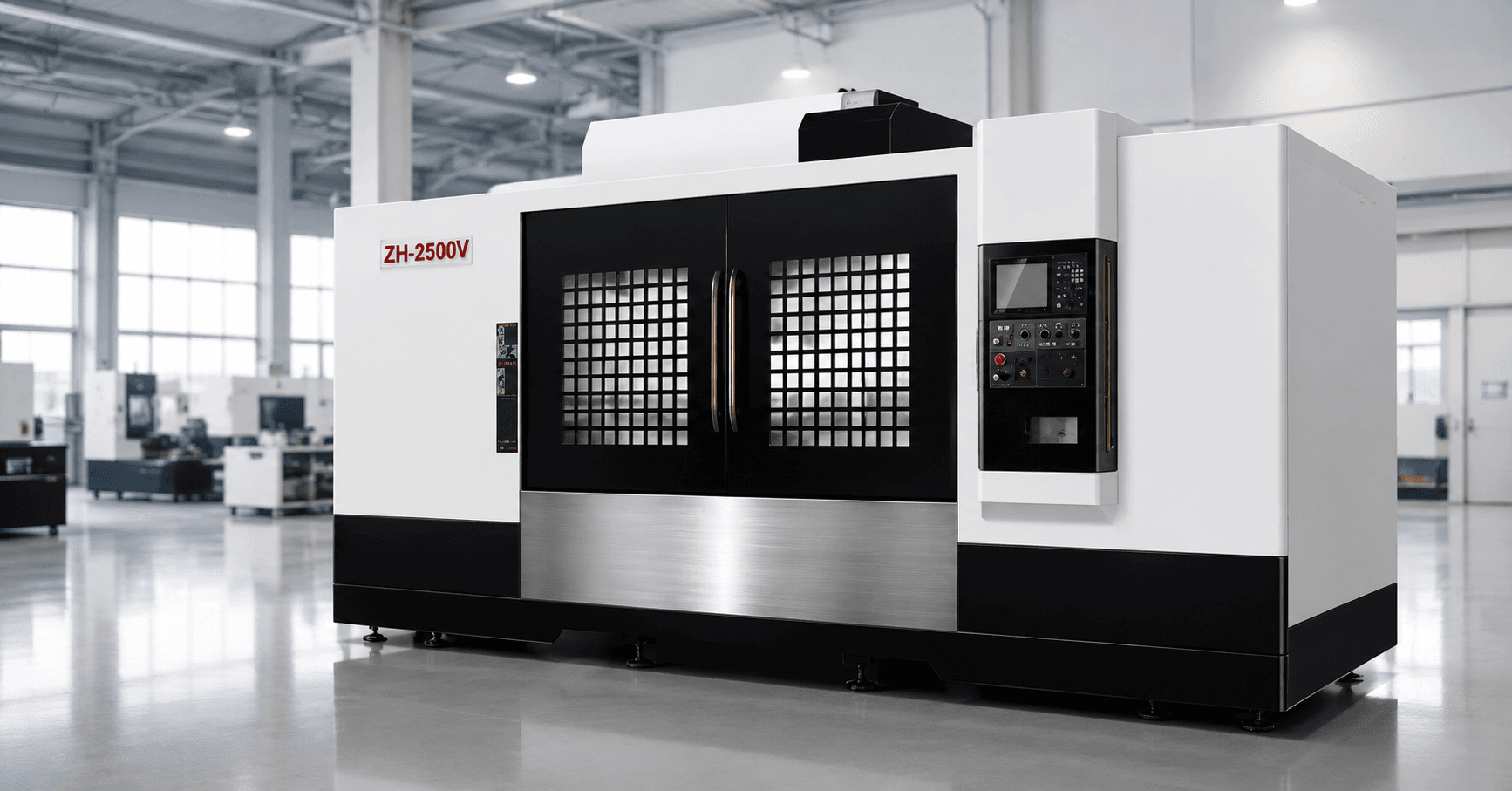
How the ZH-2000V Vertical Machining Center Improves Automation Beam and Robot Guide Rail Production
Automation equipment beams and robot guide rail mounting parts look simple at first glance. They are long. They are straight. They often contain repeated holes, milled surfaces, slots, and datum areas. Yet on the shop floor, these parts can become frustrating very quickly.
The reason is distance. Over a short part, small errors may be easier to control. Over a part close to two meters long, the same small error can become visible in flatness, hole alignment, and assembly accuracy. A machine with insufficient travel or weak rigidity may still cut the part, but it may not hold the result consistently.
That is why buyers producing automation beams, robot guide rails, linear motion mounting bases, and long equipment frames often need a vertical machining center designed for long-travel stability.
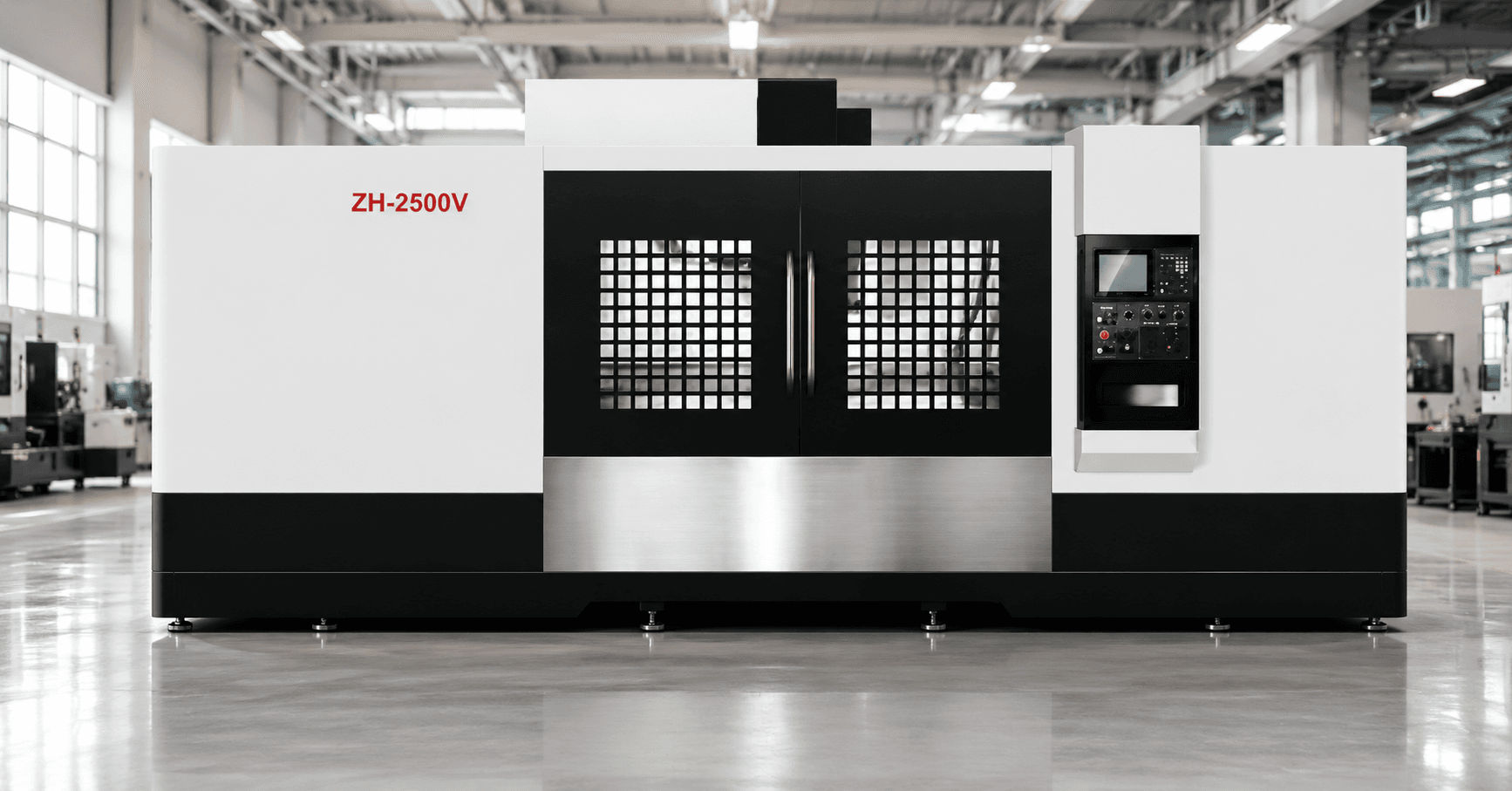
The ZH-2000V provides 2000 mm X-axis travel, 500 mm Y-axis travel, 500 mm Z-axis travel, a 2000 × 500 mm worktable, and 500 kg maximum table load. It is listed as suitable for long-profile and medium-sized parts, with target industries including robot guide rails and automation equipment.
Why Automation Beams Need Stable Long-Travel Machining
Automation beams are not decorative parts. They often support linear rails, moving platforms, sensors, actuators, or positioning systems. If the machined surfaces are not flat, or if holes drift, the assembly may require rework. Sometimes the machine builder only discovers the problem during final assembly.
For buyers, this creates hidden cost. The machining supplier may meet a basic dimensional requirement in one area, but the complete assembly still suffers because the long beam is not consistent enough across its full length.
A long-travel vertical machining center helps by keeping more operations within one setup. It can reduce the need for moving the part between machines or re-clamping it in sections. It also gives engineers better control over datum strategy.
The ZH-2000V product page includes an automation equipment linear guide mounting beam case. The workpiece was 45# carbon steel, with dimensions of 1950 × 180 × 120 mm. The customer’s existing process suffered from insufficient rigidity for nearly 2-meter parts, flatness deviation reaching 0.05 mm/m, frequent tool changes causing more than 30% non-cutting time, and batch precision fluctuation that led to hole misalignment during assembly.
These are exactly the problems many automation equipment suppliers face.
What Features Matter for This Application
For automation beams and robot guide rails, buyers should pay attention to more than spindle speed. The whole process depends on travel, rigidity, tool capacity, accuracy, and control stability.
The ZH-2000V product page lists C3-grade ball screws from HIWIN/PMI, linear/roller guides, a 24-tool BT40 arm-type magazine, MITSUBISHI M80VB controller, and optional Renishaw or Marposs probing for automatic alignment and in-process measurement. It also lists a chain-type chip conveyor, flood coolant, coolant tank, high-pressure wash gun, rear flush, and optional spindle center through-coolant.
| Production Need | ZH-2000V Feature | Practical Buyer Value |
|---|---|---|
| Long beam machining | 2000 mm X-axis travel | Reduces segmented clamping |
| Stable milling | BT40 spindle, 7.5 kW motor | Supports cutting rigidity |
| Batch repeatability | ±0.010 mm positioning, ±0.005 mm repeatability | Helps control repeated parts |
| Fewer tool interruptions | 24-tool arm-type magazine | Reduces non-cutting time |
| Long-travel feed stability | C3-grade ball screw + linear/roller guides | Supports smoother machining over distance |
| Setup support | Optional Renishaw / Marposs probe | Helps automatic alignment and measurement |
| Chip management | Chain-type chip conveyor and rear flush | Reduces cleaning interruptions |
These features should be checked against the buyer’s actual part family. A machine may look strong, but it must fit the workpiece and process.
Real Case: Automation Equipment Linear Guide Mounting Beam
The ZH-2000V product page reports a case involving an automation equipment linear guide mounting beam made from 45# carbon steel, measuring 1950 × 180 × 120 mm. The customer faced flatness deviation of 0.05 mm/m, tool-change-related non-cutting time above 30%, and batch precision fluctuation causing hole misalignment during assembly.
The solution used the ZH-2000V’s cross-slide structure, X/Y precision linear guides, C3-grade ball screws, 24-tool BT40 arm-type magazine, and MITSUBISHI M80VB system for rigid tapping and pitch error compensation. The reported results were: flatness controlled within 0.02 mm/m, auxiliary time reduced by 65%, cycle time shortened from 52 minutes to 35 minutes per piece, precision fluctuation kept within ±0.008 mm after 100 consecutive pieces, and assembly pass rate improved to 99.2%.
For buyers, this case is useful because it connects machine features to business results. Better flatness means easier assembly. Less auxiliary time means more capacity. More stable precision means fewer quality arguments with downstream assembly teams.
Why the ZH-2000V Has Advantages Over a Smaller Machine
A smaller vertical machining center may be easier to fit into the workshop and may cost less initially. For short parts, it can be a practical choice. But for automation beams and guide rail bases, smaller machines often force the process into compromise.
A buyer may need to clamp one end, machine it, then move the workpiece and machine the other end. That sounds simple, but it creates alignment risk. Long beams are not forgiving. If the datum changes or the beam flexes during clamping, the final assembly may suffer.
The ZH-2000V’s advantage is that its 2000 mm travel is aligned with long structural parts. The product page specifically positions it for high-precision batch production of long-profile and medium-sized parts.
Compared with ordinary smaller VMCs, the benefits may include:
- Fewer segmented setups
- Better long-distance hole consistency
- Improved flatness control
- Less non-cutting time
- Better suitability for long fixtures
- More stable batch production
- Stronger application match for automation equipment suppliers
The machine is not better because it is larger. It is better when the buyer’s parts truly need that working envelope and process stability.
Who Should Buy This Type of Machine?
This machine is suitable for companies that regularly process long and medium-sized metal parts. It may be especially relevant for:
- Automation equipment manufacturers
- Robot guide rail suppliers
- Linear motion system component manufacturers
- New energy equipment frame suppliers
- PV aluminum structure factories
- Battery tray and battery frame machining shops
- 3C electronics frame manufacturers
- Automotive equipment and component suppliers
- Contract machining shops serving long-profile parts
The common factor is simple: these factories need length, repeatability, and process stability.
If a company only machines small blocks, short plates, or simple brackets, the ZH-2000V may be more machine than necessary. But if long workpieces are a regular part of production, a smaller machine may cost more in hidden labor and rework.
How to Select a Vertical Machining Center for Long Beams
Buyers should not choose by catalog photos. The correct selection process starts with the production route.
| Selection Item | What Buyers Should Confirm |
|---|---|
| Part length | Can the machine complete the part in one clamping? |
| Fixture plan | Is there enough worktable space for clamps and support? |
| Flatness requirement | Can the machine and fixture maintain long-surface accuracy? |
| Hole position tolerance | Is positioning accuracy enough across the full length? |
| Tool list | Does the tool magazine support all required tools? |
| Material | Is spindle rigidity suitable for aluminum, steel, or mixed materials? |
| Batch output | Can the machine reduce cycle time and non-cutting time? |
| Inspection method | Are laser interferometer and ballbar verification available? |
The ZH-2000V page lists laser interferometer verification for positioning accuracy and repeatability, plus ballbar verification for circularity and servo matching. This kind of inspection basis is useful when buyers want more confidence before accepting a machine.
What Buyers Should Ask Before Placing an Order
Before ordering, buyers should ask the supplier:
- Can my longest part be machined in one setup?
- What fixture structure is recommended?
- Is the 500 kg table load enough after adding fixtures?
- Should I choose 10,000 rpm or optional 12,000 rpm spindle?
- Is a fourth-axis interface useful for my future parts?
- Do I need a probing system for alignment?
- Which coolant and chip conveyor configuration is recommended?
- What acceptance part should be used for trial cutting?
- What training is included after installation?
The ZH-2000V standard specifications include a 4th axis interface as standard, optional indexer or rotary table, optional Renishaw/Marposs probe, and coolant system options including optional spindle center through-coolant. These options should be selected based on the buyer’s production plan, not added blindly.
FAQ
Is the ZH-2000V suitable for robot guide rail machining?
Yes. The product page lists robot guide rails as a target industry and includes long-travel features suitable for guide rail and automation beam machining.
What is the main advantage for automation beam production?
The main advantage is the 2000 mm X-axis travel combined with stable structure, tool magazine capacity, and batch accuracy support, which can reduce segmented clamping and improve consistency.
Can it machine steel parts?
Yes. The product page lists carbon steel and low-carbon alloy steel among applicable materials.
Should buyers choose optional probing?
For long beams, probing can help with automatic alignment and in-process measurement. It is worth considering if the factory handles high-precision or frequent setup-change work.
Conclusion
Automation beams and robot guide rails require more than basic milling capacity. They require long-distance consistency, stable flatness, controlled hole alignment, efficient tool use, and reliable batch output.
The ZH-2000V is a strong fit for this type of production because it combines 2000 / 500 / 500 mm travel, 2000 × 500 mm worktable, 500 kg load capacity, BT40 spindle, 24-tool magazine, C3-grade ball screws, linear/roller guides, MITSUBISHI M80VB controller, chip conveyor, coolant support, optional probing, and proven application results in automation beam machining.
For buyers, the decision should come from the part drawing. If the factory’s long beams are creating setup loss, flatness issues, or assembly misalignment, the ZH-2000V deserves serious evaluation.