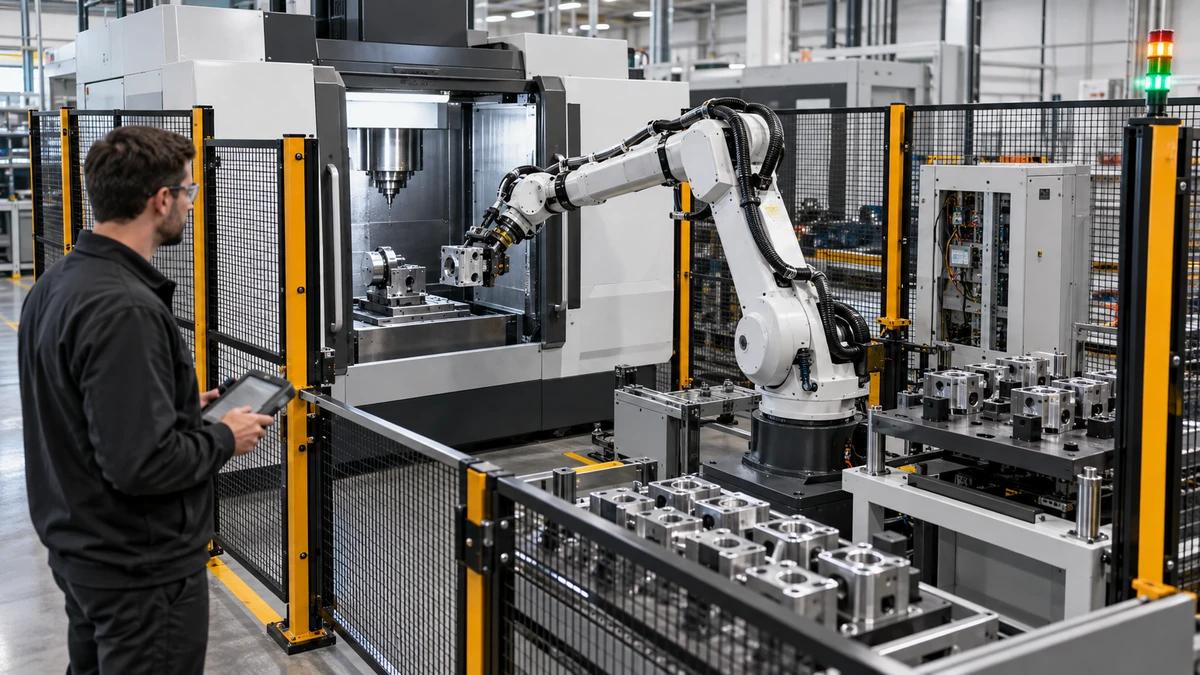
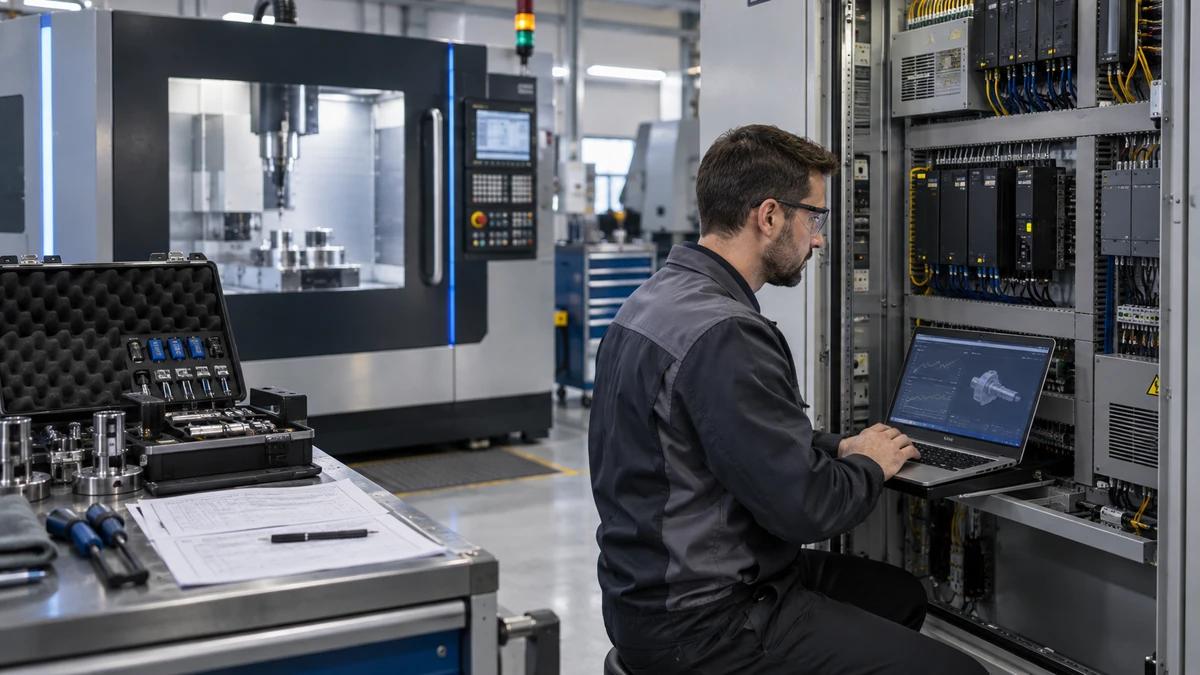
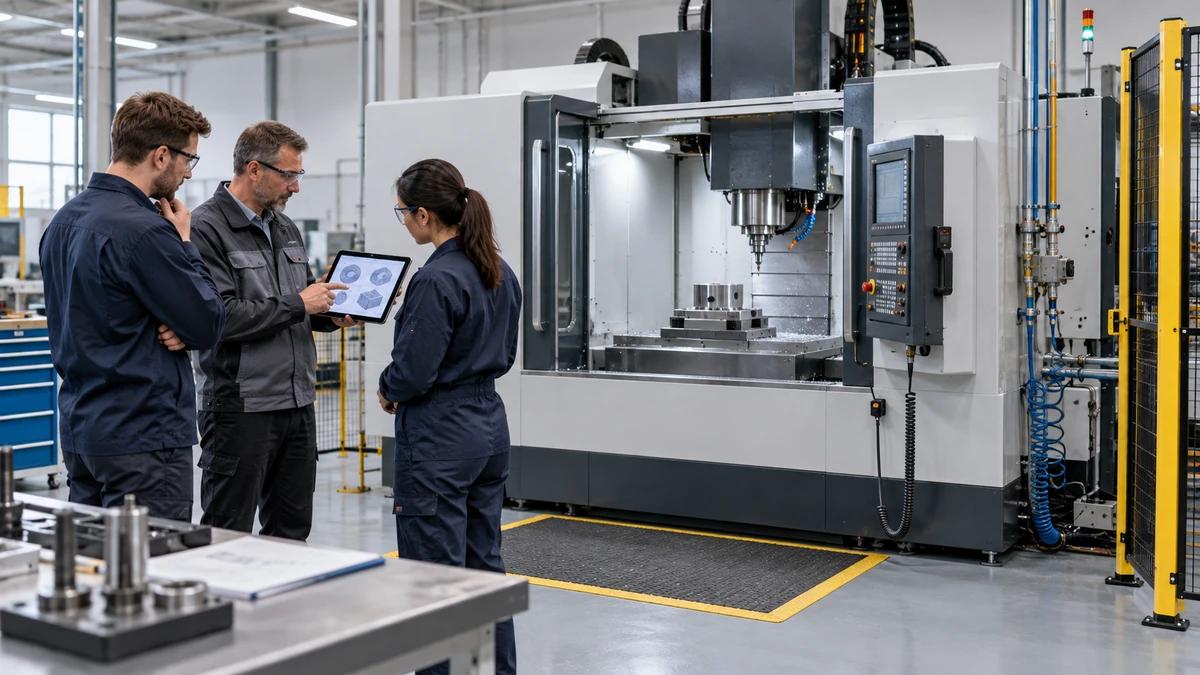
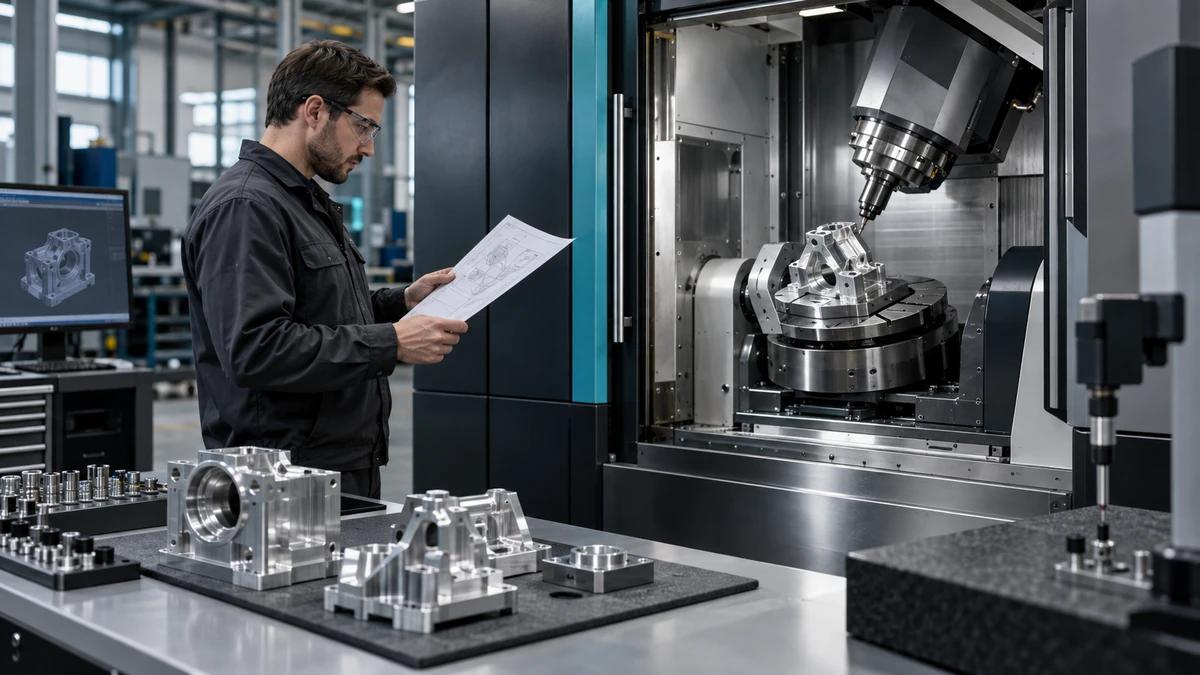
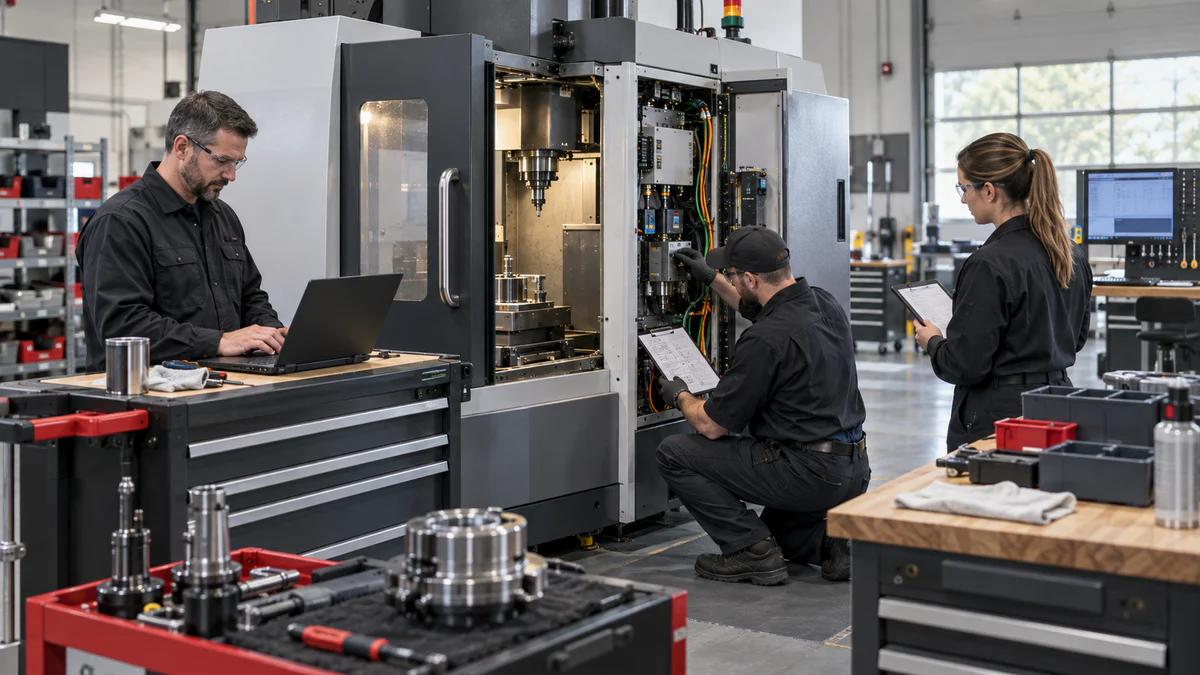
A China horizontal machining center should be evaluated as a queue of ready and unready pallets, not as one ideal part running continuously. Zhihe CNC uses four competing pallet scenarios to expose fixture, tool, chip, inspection, material, program, and recovery constraints before buyers promise unattended output.
The simulation is intended for component manufacturers, cell planners, process engineers, and sourcing teams. Each pallet represents a different production reality: the repeat runner, the new part, the heavy multi-face job, and the exception that returns after a tool or quality event.
Give Every Pallet a Readiness Token
A pallet receives a ready token only when material, fixture, program, revision, tools, offsets, inspection plan, operator authorization, and quality status are complete. Record who grants and removes the token.
Zhihe CNC recommends preventing incomplete work from entering the active queue. A pallet waiting on one hidden prerequisite can block expensive machine time and confuse dispatch decisions.
Pallet A: The Repeat Runner
This pallet uses a proven part, maintained fixture, stable tool list, approved program, known cycle, and established inspection. It tests baseline repeatability, expected tool events, chip behavior, and whether standards remain current.
The repeat runner provides a reference against which the other three pallets can be compared, but it should still include revision and condition checks.
Pallet B: The New Part
The new part adds first-piece programming, simulation, tool and holder validation, fixture prove-out, probing, offsets, sample inspection, and approval. It should not be allowed to borrow the repeat runner's readiness assumptions.
| New-part gate | Evidence | Queue status |
|---|---|---|
| Program | Approved simulation | Hold until signed |
| Fixture | Clearance and location | Trial ready |
| Tools | Assembly and pocket map | Tool ready |
| Inspection | Method and capacity | Quality ready |
| Release | First-piece decision | Production ready |
Pallet C: The Heavy Multi-Face Job
Calculate pallet, tombstone, fixture, clamps, blank parts, accessories, center of gravity, load distribution, and every rotated orientation. Map heavy cutting, reach, tool deflection, chip traps, coolant access, and table clearance.
Pallet D: The Exception Return
The exception pallet returns after a broken tool, probe alarm, quality hold, fixture concern, material question, or interrupted program. Preserve stock condition, completed operations, rotary state, offsets, tool status, inspection findings, and authorization.
A China horizontal machining center queue needs a controlled re-entry rule so exception work does not displace ready production without evidence.
Let Four Pallets Compete Under a Dispatch Rule
| Dispatch signal | Priority question | Do not use alone |
|---|---|---|
| Due date | Which customer need is critical? | Promise date without readiness |
| Ready token | Can work start safely now? | Readiness without value |
| Tool overlap | Can magazine state support it? | Tool convenience only |
| Inspection | Can output be released? | Machine cycle only |
| Risk | What failure consequence exists? | Subjective urgency |
The rule should explain decisions and allow controlled override with an owner and reason.
Model the Magazine Across the Whole Queue
List every tool assembly, holder, projection, diameter, neighboring-pocket restriction, life, sister tool, replacement stock, preset data, and part assignment. Simulate the combined mix rather than checking each pallet separately.
Zhihe CNC recommends identifying tools that create frequent unload-reload work, block adjacent pockets, or leave no capacity for recovery.
Make Chips Leave the Cut Before the Conveyor
Review orientation, cavities, cross holes, tombstone ledges, coolant direction, air, toolpath, recutting, washdown, conveyor, filtration, and cleaning between pallets. The conveyor can only move chips that reach it.
Different materials or chip forms may require queue rules for cleaning, coolant control, and contamination prevention.
Use Probing as a Decision, Not Decoration
Define probe qualification, datum logic, feature checks, offset limits, compensation authority, failed-check response, and independence from final inspection. Link readings to pallet, fixture station, part, program, and time.
A probe cycle adds value when it controls a stated risk and triggers a verified action.
Measure Fixture Repeatability by Station
Repeat loading, cleaning, locating, clamping, rotation, and measurement under normal production conditions. Separate fixture variation from part stock, probe, machine, and inspection noise. Track wear and maintenance by station.
A tombstone with multiple faces should not be treated as one uniform fixture if stations behave differently.
Link Queue Output to Inspection Capacity
Map sample frequency, gauges, CMM or other equipment, environment, report time, approval, nonconformance, and recheck. A fast pallet cycle can produce a quality queue that delays release and hides defects.
The China horizontal machining center business case should use accepted released output, not only machine unload count.
Rehearse a Queue Exception
Interrupt a controlled job, mark the pallet on hold, preserve state, dispatch another ready pallet, diagnose the event, restore tools or references, verify the exception part, and re-enter it under the rule. Record every handoff.
Zhihe CNC uses this rehearsal to test whether unattended claims survive ordinary production disturbances.
Keep Safety Attached to Pallet Motion
The OSHA machine guarding resource provides general context. Responsible teams must assess pallet exchange, rotating fixtures, loading, doors, interlocks, ejection, chips, coolant, manual recovery, maintenance, and local requirements.
The ISO 10791 series reference adds machining-centre test context; project process and safety validation remain specific.
Audit the China Horizontal Machining Center Queue
After representative production, compare readiness losses, dispatch overrides, magazine changes, fixture corrections, chip cleaning, probe exceptions, inspection delays, tool events, rejected parts, and recovery. Update tokens and rules using evidence.
A China horizontal machining center should reduce waiting through disciplined preparation, not by hiding work outside the model. Zhihe CNC uses the audit to separate machine capacity from queue readiness.
Test the Queue Against a Mixed-Week Schedule
Build a one-week simulation using real due dates, batch sizes, material arrivals, fixture availability, tool-life expectations, magazine capacity, inspection windows, maintenance, staffing, and known interruptions. Include at least one new part, one repeat family, one heavy pallet, and one exception return. The purpose is to expose conflicts before production teams solve them through unrecorded overtime or manual priority changes.
For every dispatch, record the chosen pallet, rejected alternatives, readiness token, expected completion, tool state, inspection capacity, and risk. When an override occurs, name the owner and reason. A useful rule can explain normal decisions and also show when business urgency justifies an exception.
The China horizontal machining center simulation should preserve shared resources outside the enclosure. A fixture crane, presetter, CMM, wash station, operator, or material handler can become the true queue constraint even when the machine has a pallet waiting.
Zhihe CNC recommends replaying the week with one disturbance: delayed material, failed probe, broken tool, unavailable gauge, or quality hold. Compare output, lateness, queue age, manual intervention, and recovery. The result reveals whether resilience comes from controlled alternatives or from one expert making undocumented decisions.
Track the end-of-week state as well as shipped quantity. Record unfinished pallets, consumed tool life, open quality holds, overdue maintenance, depleted spares, fixture conditions, and work transferred to the next schedule. Output that creates hidden future debt is not a complete production result.
Release the business case only when accepted output, inspection, maintenance, and exception recovery fit the same schedule. Nominal pallet exchange speed cannot compensate for a queue that is not ready.
Know What Four Pallets Cannot Guarantee
The simulation cannot guarantee demand, uptime, yield, tool life, cycle, or payback for every mix. Material, fixtures, tools, programs, staffing, maintenance, inspection, and due-date priorities change. It exposes queue dependencies; it cannot remove all production variability, urgent orders, supplier delays, or future scheduling shocks across the plant and supply chain.
FAQ
Why use four pallet scenarios?
They expose repeat, launch, heavy-load, and exception behavior that one ideal demonstration cannot represent.
What earns a ready token?
Material, fixture, program, tools, offsets, inspection, revision, quality status, and authorization must be complete.
Should due date always set priority?
No. Due date must be balanced with readiness, value, inspection capacity, tool state, and risk.
How is total rotating load calculated?
Include pallet, tombstone, fixtures, clamps, blanks, accessories, center of gravity, and orientation.
Why model tools across all pallets?
The combined mix reveals pocket conflicts, sister-tool needs, manual swaps, and limited recovery capacity.
Can a conveyor solve every chip problem?
No. Chips must first escape the cut, cavities, and fixture surfaces through process and coolant design.
When should an exception pallet re-enter?
Re-enter after state is preserved, cause is addressed, verification is defined, and the dispatch owner approves.
How is fixture variation isolated?
Repeat normal loading and measurement while separating station, stock, probe, machine, and inspection contributors.
Which output belongs in the business case?
Use accepted released parts after inspection and disposition, not simply pallets unloaded.
What should be sent to Zhihe CNC for an HMC study?
Send the part mix, mass, faces, fixtures, tools, batches, due dates, inspection, shifts, and recovery needs.
Build the Four-Pallet Simulation With Zhihe CNC
To evaluate a China horizontal machining center, send Zhihe CNC the part mix, CAD, blank mass, faces, fixture concepts, tools, cycles, batches, inspection, shifts, due-date rules, and exception scenarios. Review the horizontal machining center range, the complete portfolio, and the project contact route before freezing the queue model.