Three Questions Before the Supplier Call
A capable CNC machine tool supplier should answer three questions with evidence: what exact system is offered, what production result has been demonstrated, and who owns recovery after delivery. Zhihe CNC recommends starting with the buyer's part family instead of a generic catalog. Define material, stock, datums, fixtures, critical features, volume, inspection, operator coverage and service location. The supplier's answer should remain understandable when it moves from purchasing to engineering, quality, production and maintenance.
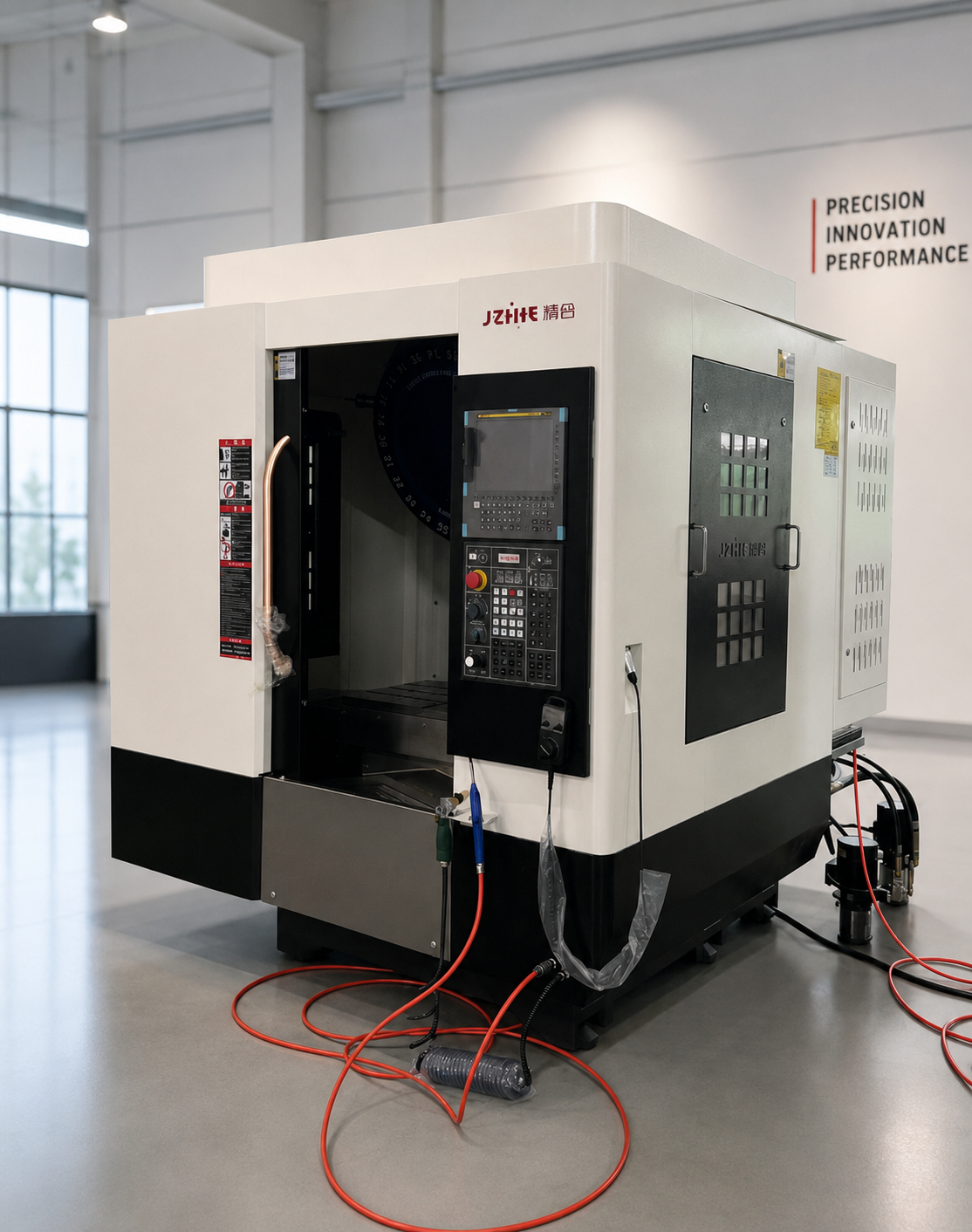
The Portable Evidence Test
| Question | Evidence that should travel | Failure signal |
|---|---|---|
| What is offered? | Model, controller, options, revision and exclusions | Brochure language without configuration identity |
| What was proven? | Part, material, fixture, tools, program and raw inspection data | Undated video or isolated best piece |
| Who restores output? | Service route, spares, backups, escalation and restart owner | No accountable handoff after shipment |
Use this table during every supplier conversation. If a claim cannot travel with its condition, date, owner and limitation, it is not ready for a purchase decision.
Freeze One Commercial Configuration
Record travel, spindle, table, controller, probing, coolant, chip handling, guarding, voltage, software, accessories and service scope on one revision. A CNC machine tool supplier should distinguish included equipment, optional equipment and buyer-supplied interfaces. Zhihe CNC keeps the configuration beside the quotation because an option change can alter cycle assumptions, acceptance work, installation readiness and total cost.
Ask the Factory for Traceable Work
Factory photos and capacity statements provide context, but they do not prove the buyer's route. Request machine identity, assembly and inspection records, calibration status, trial conditions and document ownership. The review should show how the offered configuration moves through assembly, test, correction, approval and release. This makes factory capability auditable without turning one demonstration into a universal performance claim.
Design a Representative Trial
Choose a part or test piece that contains the features that release the next operation: bores, planes, pockets, threads, transitions, difficult reach or unstable stock. Record drawing revision, material lot, fixture, tool assemblies, program checksum, offsets, temperature and inspection method. For a CNC machine tool supplier, a representative trial is more useful than a perfect but unrelated sample.
Follow a Held Part, Not Only a Good Part
Ask the supplier to demonstrate containment when a feature is outside the declared limit. Identify the affected quantity, machine state, tool condition, correction owner, retest and restart rule. Zhihe CNC treats the held part as a test of operating discipline. A supplier that preserves the original evidence and explains recovery is easier to manage than one that silently edits offsets and shows only the final piece.
Make Service Ownership Visible
List the response channel, time-zone coverage, remote support, on-site scope, spare parts, controller support, backups, preventive maintenance, training and escalation. Assign ownership across machine, spindle, probe, chip system, software and third-party automation. A CNC machine tool supplier should state regional limits before the order, because service uncertainty becomes production risk after commissioning.
Normalize the Quotation
Place tooling, workholding, gauges, programming, sample material, inspection, delivery, installation, training, travel and service beside the machine price. State whether the cycle includes loading, probing, cleaning, tool events and inspection. Zhihe CNC uses a normalized scope so two proposals are compared on delivered readiness rather than on different definitions of the base machine.
Audit the Change Route
Ask how drawing, material, fixture, tool, controller, software, gauge, site and service changes are requested, reviewed, tested and released. Preserve the previous baseline and name which evidence must be repeated. A controlled delta prevents a supplier from carrying an old result into a new condition without review, while avoiding unnecessary repetition of unaffected tests.
Check Training as a Production Deliverable
Training should name roles, tasks, attendance, materials, backups, supervised practice and competence checks. Include safe start, loading, program control, inspection, routine care, alarm response and escalation. Zhihe CNC recommends a retraining trigger after major software, tooling or staffing changes. Training is not complete merely because a classroom session occurred.
Score the Relationship With Documents
Score configuration clarity, trial relevance, evidence quality, limitation disclosure, service ownership, change control and commercial completeness. Keep the document or observation behind each score. For a CNC machine tool supplier, this approach separates a responsive sales conversation from a supportable production relationship and gives management a defensible reason for approval.
Red Flags That Deserve a Pause
- The machine model is named, but important options and software versions are not.
- The trial sample is unrelated to the buyer's material, fixture or critical features.
- Only the fastest cycle is shown, with no inspection or held-piece record.
- Service promises have no region, response route, spare list or escalation owner.
- A drawing or program change has no documented retest decision.
Zhihe CNC uses these signals to focus clarification. A red flag is not automatic rejection; it is a request for the evidence needed to close a specific risk.
Supplier Conversation Scorecard
| Lane | Approval evidence | Reopen when |
|---|---|---|
| Configuration | Dated offered scope and exclusions | Model or option changes |
| Process | Representative trial and raw data | Part, material, fixture or tool changes |
| Ownership | Service, training, backup and escalation | Region or interface changes |
| Commercial | Normalized price and milestone file | Scope or schedule changes |
Buyer FAQ: CNC Machine Tool Supplier
What should be sent before asking for a quotation?
Send controlled drawings, CAD, materials, stock, quantities, datums, inspection needs, site conditions and known failure modes.
Is a large factory enough proof?
No. Match factory records, trial evidence and service ownership to the offered configuration and buyer workload.
What belongs in a trial file?
Include revision, material, fixture, tools, program, offsets, machine state, inspection data, accepted pieces and held pieces.
Why normalize supplier quotations?
Two prices are comparable only when options, tooling, fixtures, inspection, installation, training and service assumptions match.
Should buyers request raw measurement data?
Yes. Raw data helps quality and engineering teams review the result and any correction without relying on a summary claim.
How should a supplier handle a failed feature?
Contain affected work, preserve state, identify cause, approve correction, retest and record the restart owner.
What should service terms identify?
Identify response channels, regions, spares, remote and on-site scope, backups, training and escalation limits.
How does Zhihe CNC support supplier evaluation?
Zhihe CNC connects the buyer's part family to a declared configuration, controlled trial and ownership file.
When should acceptance be reopened?
Reopen affected evidence after changes to part, material, fixture, tools, software, controller, gauge, site or maintenance state.
What is the final approval question?
Ask whether the complete evidence file can travel to the people who must run, inspect and recover production.
Carry the File Into the Purchase Order
Translate the approved evidence into purchase-order attachments: configuration revision, included and optional items, interface ownership, factory and site acceptance plans, payment milestones, training deliverables, service region, spare list, document handoff and open assumptions. Give every attachment a version and owner. A commercial order should not compress a detailed technical review into one product name, because that removes the conditions that made the supplier comparison meaningful.
At handoff, create a responsibility index for buyer purchasing, engineering, quality, production, maintenance and the supplier. Name who approves drawings, supplies sample material, prepares fixtures, confirms utilities, attends tests, accepts documents and closes open issues. Zhihe CNC recommends recording both the responsible person and the evidence expected at closure. This prevents a task from appearing complete merely because an email was sent.
Review the First 90 Days
Plan reviews after installation, first accepted part, the first normal tool-life event and a defined production window. Compare configuration, released quantity, holds, service requests, spare use, training gaps and changes against the original baseline. For a CNC machine tool supplier, the first 90 days test whether the evidence and ownership model work under real operating conditions. Preserve issues that remain open and set dates for retest or limitation updates.
Do not convert early production observations into universal claims. A result remains tied to part, material, fixture, tools, program, machine state, inspection, operator coverage and environment. The useful outcome is a dated operating record that makes the next supplier conversation faster and more specific. Close with one owner for commercial assumptions, one owner for technical evidence and a scheduled decision date so open issues do not disappear between departments.
Use a Closure Log Before Release
Keep every technical and commercial question in one closure log with issue, source, owner, required evidence, due date, status and approval authority. Separate facts that change configuration from questions that only need clarification. When an issue closes, link the dated drawing, test record, quotation revision or service statement that resolved it. This gives purchasing a clean approval trail and prevents the same uncertainty from returning during installation.
Review unresolved items at the final order meeting and label each as a blocker, accepted limitation or post-order deliverable. An accepted limitation should name the operational consequence and the person who accepted it. A post-order deliverable should have a milestone and payment connection where appropriate. The closure log becomes part of the handoff file rather than disappearing with the sourcing project.
Open the Zhihe CNC Engineering Review
Send Zhihe CNC the controlled drawing or CAD model, material and stock condition, annual volume, batch mix, datum plan, fixture concept, tool constraints, inspection method, site utilities and service region. Review the Zhihe CNC machine portfolio, the company and manufacturing profile, and the engineering inquiry route. For CNC machine tool supplier, request a dated configuration, trial boundary, acceptance record, open-assumption list and named service owner before commercial approval.
Standards and Safety Context
The ISO 10791 machining-centre reference provides machine-test context, while the OSHA machine-guarding guidance provides an additional reference for testing or safeguarding. These references do not replace the buyer's drawing-specific acceptance plan, local risk assessment, product certification or legal obligations.