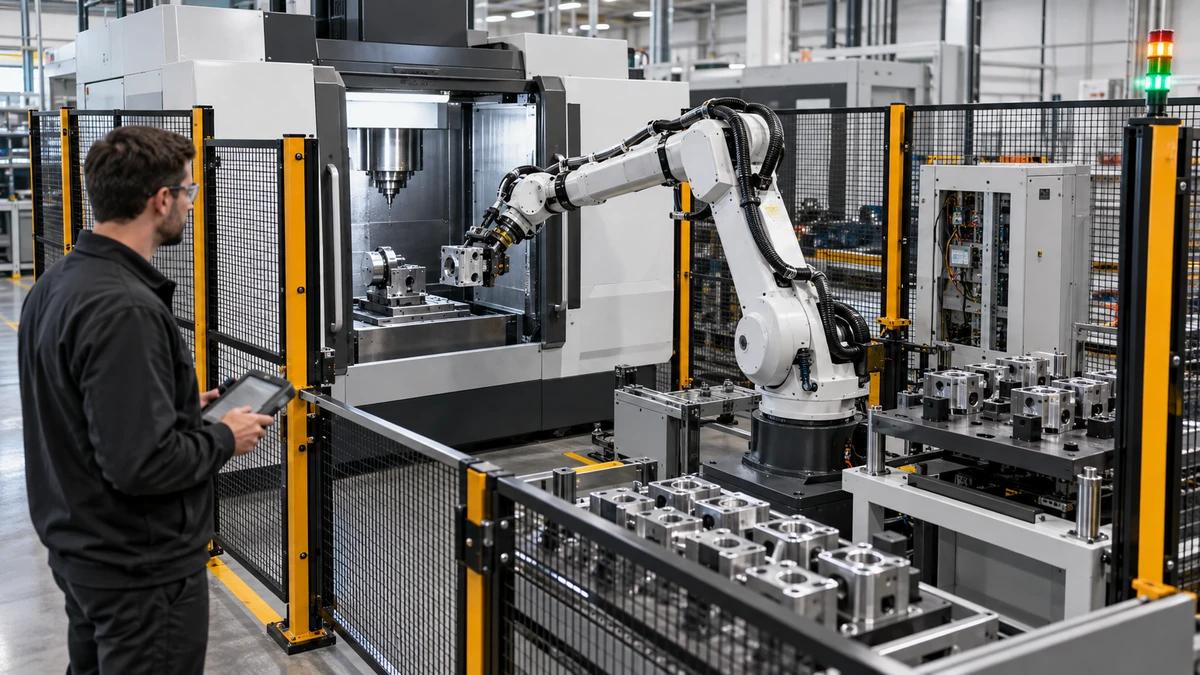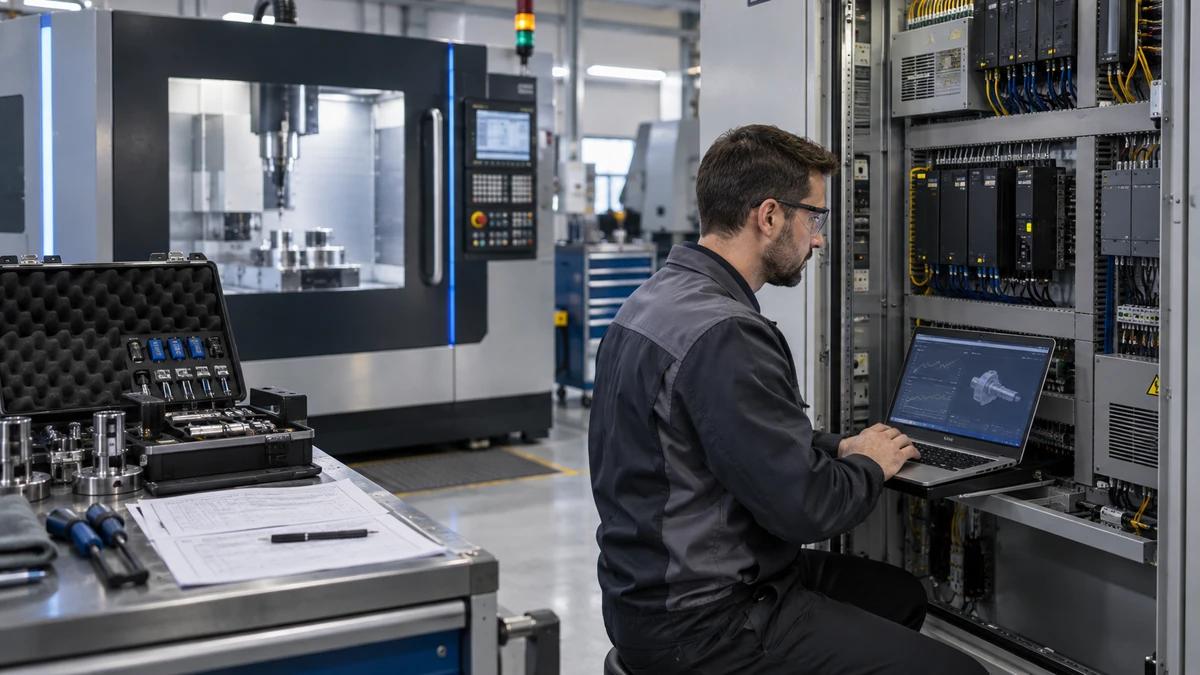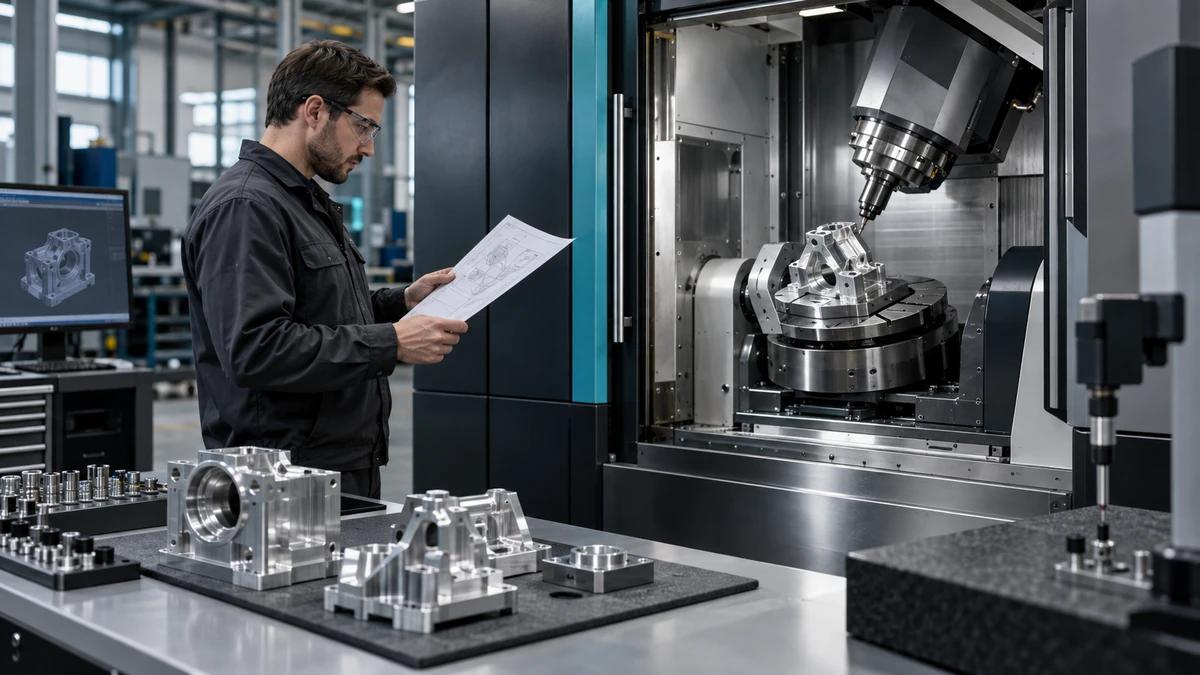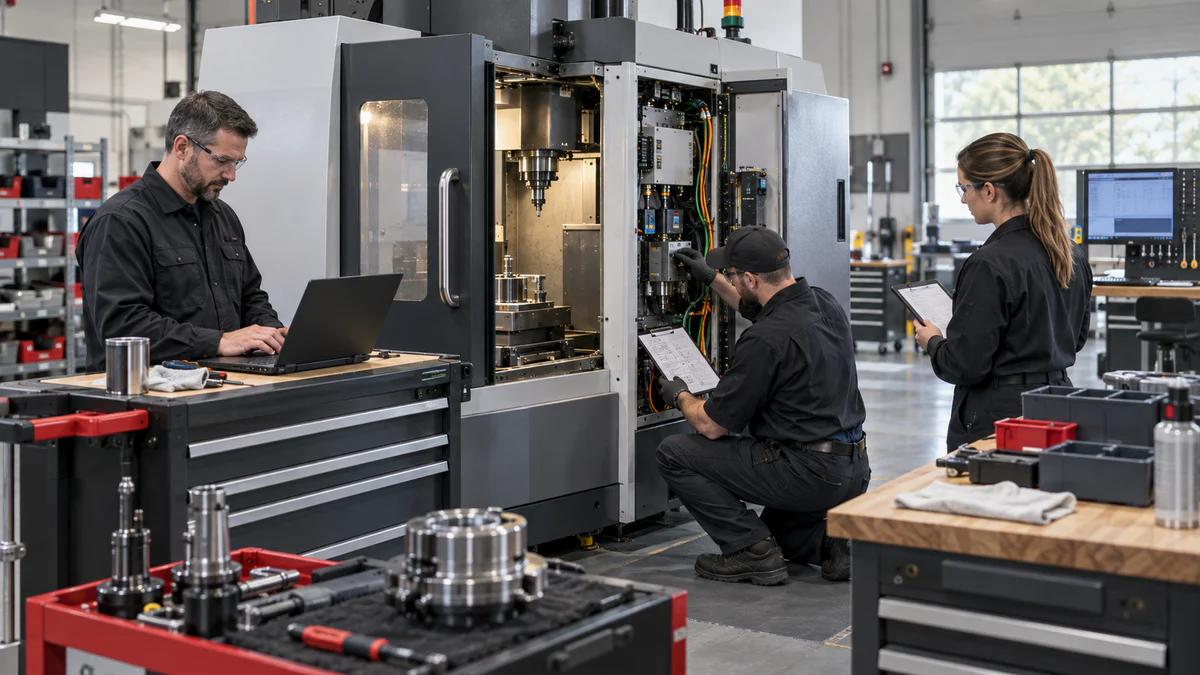
Buying a CNC machine installation and training package should end with a capable team, not a signed attendance sheet. The practical test is whether authorized people can start, run, inspect, maintain, and recover the machine safely after the supplier leaves. This article presents a staged handover that links site readiness, commissioning evidence, role-based training, and supervised production.
Work backward from independent operation
Start by describing the first independent shift. Which roles will be present? Which part will run? What tools, programs, gauges, workholding, materials, and safety controls are required? What alarms may operators clear, and which require escalation? Answering these questions makes the CNC machine installation and training scope concrete.
The handover should include a named owner for production release, maintenance release, and safety release. A project can be mechanically complete while still not being ready for production because the operator has not demonstrated competence or the maintenance team lacks a backup procedure.
For CNC machine installation and training, define the handover evidence before the technician books travel. That aligns the supplier's work plan with the plant's release process and prevents a late argument about whether a demonstration counted as qualification.
Gate one: site readiness before arrival
Installation time is often lost before the machine reaches the factory. Verify floor capacity, access route, door height, lifting plan, utilities, grounding, compressed air quality, coolant handling, network access, lighting, and exclusion zones. Confirm who supplies rigging, cranes, transformers, cables, and consumables.
Create a photo-backed site checklist. Mark the machine footprint, service clearances, operator sight lines, and emergency access. The supplier should review the checklist before dispatch, not discover a missing utility while a crate waits on the loading dock. ISO 12100 provides a useful reference for thinking about machinery risk assessment and protective measures.
Keep the chosen CNC machining center configuration, CNC milling machine documentation, and the precision machining process notes in the same project file, then use Zhihe CNC contact support for open installation questions.
| Before delivery | Owner | Evidence of closure |
|---|---|---|
| Route and lifting survey | Buyer / rigger | Approved route and lift plan |
| Power and grounding | Electrical team | Test record and connection point |
| Air and coolant | Facilities | Pressure, quality, and drain checks |
| Foundation or leveling area | Plant engineering | Marked footprint and surface check |
| Network and software access | IT / controls | Approved ports and backup path |
| Safety and access | EHS / supervisor | Risk review and exclusion plan |
Gate two: controlled unloading and placement
Record package condition, shock indicators if used, crate identifiers, and any preservation instructions before opening. Photograph the machine from several sides, then compare the delivered configuration with the approved packing list. Do not remove shipping locks or protective materials until the responsible technician confirms the sequence.
Placement is more than putting the machine inside the building. Align service clearances, operator access, chip flow, coolant handling, and future maintenance routes. Capture the final position and leveling results in the installation record. A clear record protects both sides if vibration, access, or utility questions appear later.
Gate three: mechanical, electrical, and software commissioning
The CNC machine installation and training plan should list commissioning checks in order. Typical stages include leveling, anchoring where required, utility connection, lubrication, coolant setup, control power-up, axis reference return, safety circuit verification, network connection, parameter backup, and tool or probe calibration.
Use a hold point before cutting metal. The technician should show that guarding, interlocks, emergency stops, limit protection, alarms, and recovery instructions are understood. Record control version, parameter backup location, installed options, and software revisions. A machine that cuts a sample before its configuration is backed up is difficult to recover responsibly.
Gate four: role-based training
Avoid one generic lecture for everyone. Operators need safe startup, workholding, tool loading, offsets, program selection, in-process checks, chip and coolant practices, normal shutdown, and alarm escalation. Maintenance technicians need lubrication, filters, backups, diagnostics, inspection points, and boundaries for intervention. Programmers need coordinate systems, probing macros, tool data, post-processor assumptions, and revision control. Supervisors need release criteria and escalation visibility.
| Role | Demonstration to require | Record to retain |
|---|---|---|
| Operator | Load, prove, run, inspect, and stop a defined part | Skills checklist |
| Setup technician | Establish work offset, tool data, and probing routine | Setup sheet and backup |
| Maintenance | Complete a planned check and retrieve a diagnostic record | Maintenance sign-off |
| Programmer | Transfer a controlled program and verify simulation assumptions | Program revision |
| Supervisor | Review release status and respond to an abnormal event | Handover report |
Competence should be demonstrated, not inferred from time spent in a classroom. Use a controlled part or training coupon. Let the trainee explain why each step exists, then observe the task without prompting. A second observer can verify that the procedure is repeatable.
The CNC machine installation and training record should distinguish attendance, observation, supervised practice, and independent sign-off. Those are four different levels of readiness and should not be collapsed into one signature.
Build a supervised production window
The first shift after CNC machine installation and training should be supervised. Choose a representative part with known inspection points, controlled tools, and a clear stop rule. The supplier technician observes; the local team performs. Record cycle assumptions, adjustments, alarms, inspection results, and questions.
Do not treat every adjustment as a failure. A handover becomes useful when the team learns which adjustments are normal, which require a documented change, and which must stop production. The supervisor should close each question with an owner and due date rather than relying on memory.
Provide recovery paths, not only normal paths
Operators need concise recovery instructions for common situations: tool breakage, power interruption, coolant alarm, probe fault, program mismatch, workholding issue, and unexpected surface condition. Each instruction should state what the operator may do, what evidence to capture, and when to call service. The OSHA machine guarding overview is a useful reminder that safeguards must remain effective during troubleshooting.
Create a recovery card near the control and a full procedure in the controlled document system. Include screenshots only when they match the installed control version. Mark the date, revision, and owner. An outdated screen image can be worse than no image because it encourages an incorrect action.
Close the documentation loop
The installation file should contain the final layout, utility readings, leveling report, configuration list, parameter backup, software versions, safety verification, maintenance schedule, spare-parts list, training attendance, competency records, and open actions. Store it where operators and service teams can reach it.
Link that file to the Zhihe CNC product guide and the approved contact route so a future operator can find both technical context and escalation ownership.
Use the ISO 9001 quality-management principles as a discipline for controlled documents and corrective actions, without pretending that certification alone proves machine capability. A clean record supports later troubleshooting, audits, expansion, and resale.
Set a 30-day review
The final CNC machine installation and training review should occur after real production has begun. Ask what alarms appeared, what tools were difficult to manage, which instructions were unclear, whether inspection records are complete, and where response times were too slow. Review utilization and quality data only in context; early learning is not a reason to hide issues.
Convert findings into three categories: local procedure update, supplier support request, and engineering change. Assign owners and dates. A short review after the first month often prevents small training gaps from becoming habits.
Know when the handover is complete
Handover is complete when the local team can operate the agreed part safely, perform routine checks, recover within defined limits, retrieve backups, call the correct support route, and explain what remains open. Signatures should confirm evidence, not replace it.
The strongest CNC machine installation and training program is staged, role-specific, and tested during actual work. It respects the difference between a powered machine and a production-ready capability.
Handover questions for the site team
What does CNC machine installation usually include?
It may include placement, leveling, anchoring, utility connection, commissioning, safety checks, calibration, software setup, and a documented handover. Confirm the exact boundary in the order.
How long should training last?
Duration depends on machine complexity, roles, prior competence, automation, and the part family. Define demonstrations and release criteria instead of buying a fixed number of classroom hours alone.
Should operators and maintenance staff train together?
They can share an orientation, but role-specific demonstrations should be separate. Operators and maintenance staff have different permissions, risks, and recovery responsibilities.
What evidence proves an operator is ready?
Observe the operator loading a controlled program, setting work and tool data, running the part, inspecting defined features, responding to a normal alarm, and stopping safely.
Who owns site readiness?
The buyer normally owns the building, utilities, access, rigging coordination, and local safety approvals. The supplier should provide requirements and verify them before arrival.
When should the first production part run?
After placement, commissioning, safety verification, backups, and training prerequisites are complete. Use a supervised run with a defined inspection and stop plan.
How should backup files be managed?
Store parameters, programs, offsets, macros, and software information in a controlled location with revision, date, owner, and recovery instructions.
What should an alarm recovery card contain?
It should state the safe stop action, permitted checks, evidence to capture, prohibited interventions, escalation contact, and restart authorization.
Is a translated manual enough for handover?
No. Teams also need a local operating procedure, role-specific checklists, installed-version screenshots, maintenance records, and a tested escalation route.
What is the best follow-up after training?
Run a supervised production window, capture questions and adjustments, then review performance after about 30 days and close the remaining actions.