The Four-Fit Answer
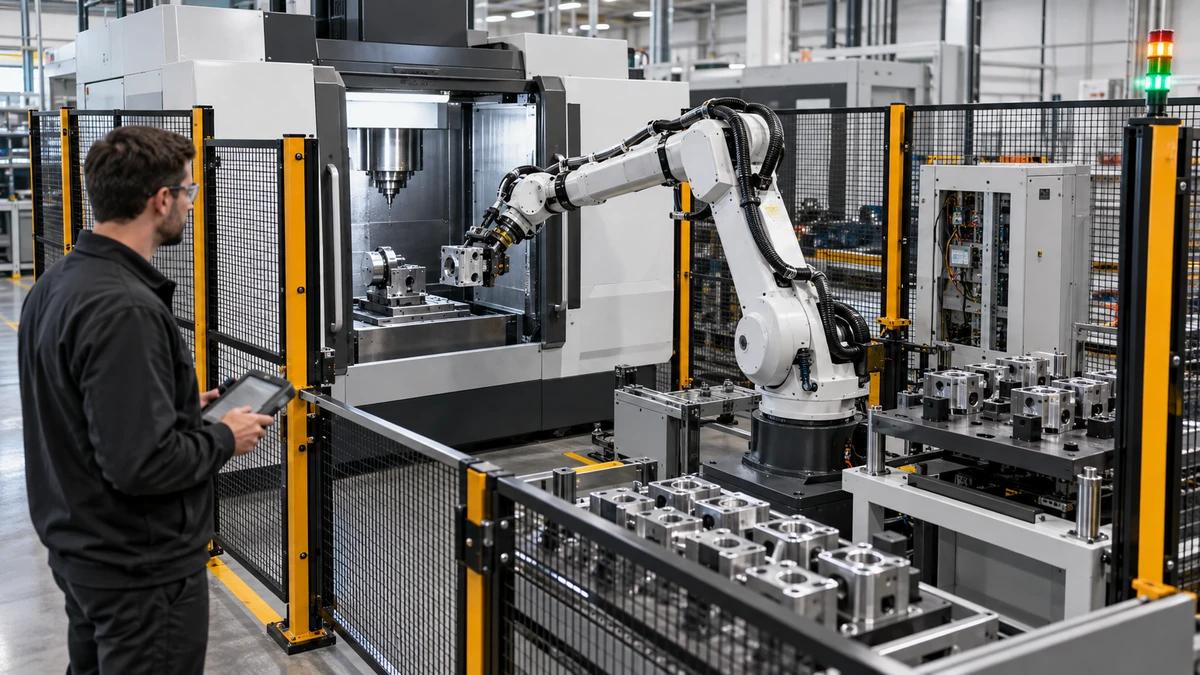
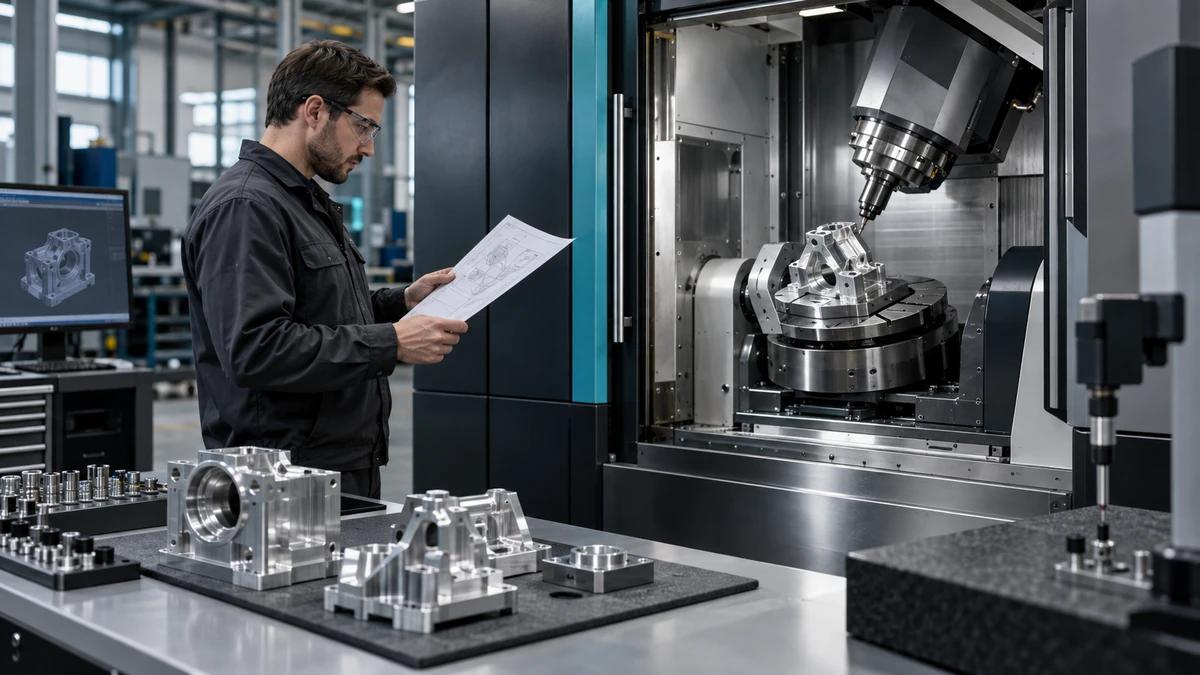
A vertical machining center is a good candidate only when four fits overlap: the mounted part fits the work envelope, the cutting route fits spindle and tool access, the production rhythm fits loading and inspection, and the plant can support utilities, chips, maintenance and service. Zhihe CNC begins with the complete mounted system rather than nominal part dimensions. A machine can look large enough on paper and still fail on fixture height, holder clearance, chip flow or operator access.
Fit 1: Draw the Mounted Envelope
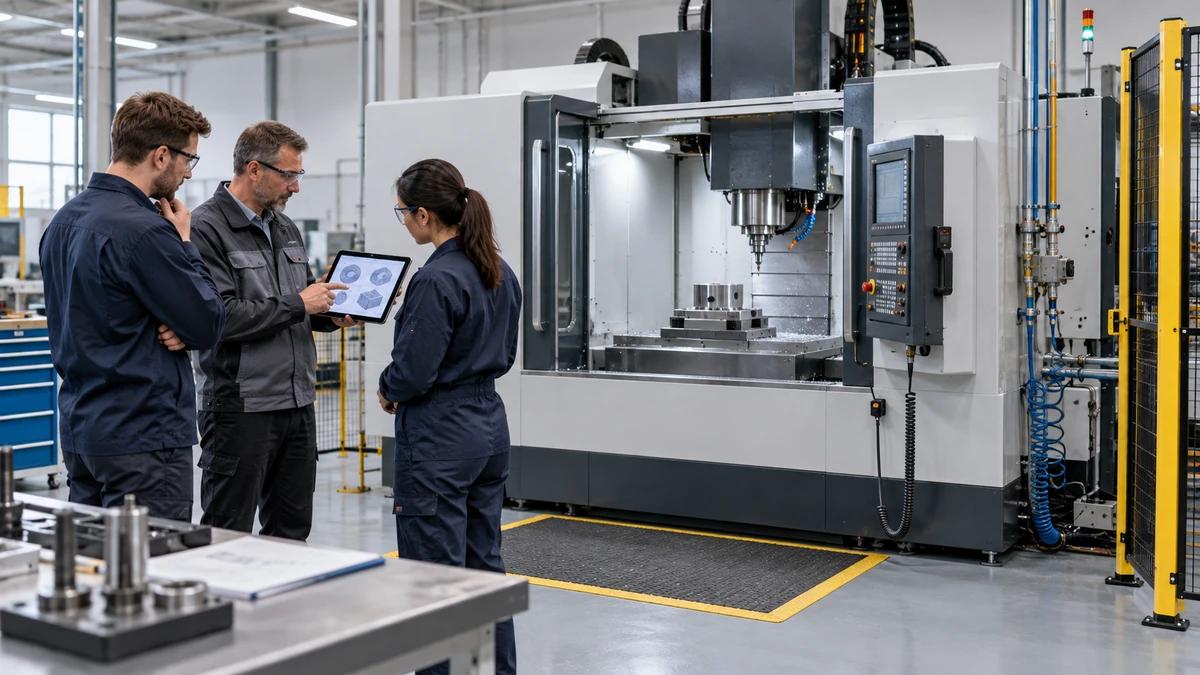
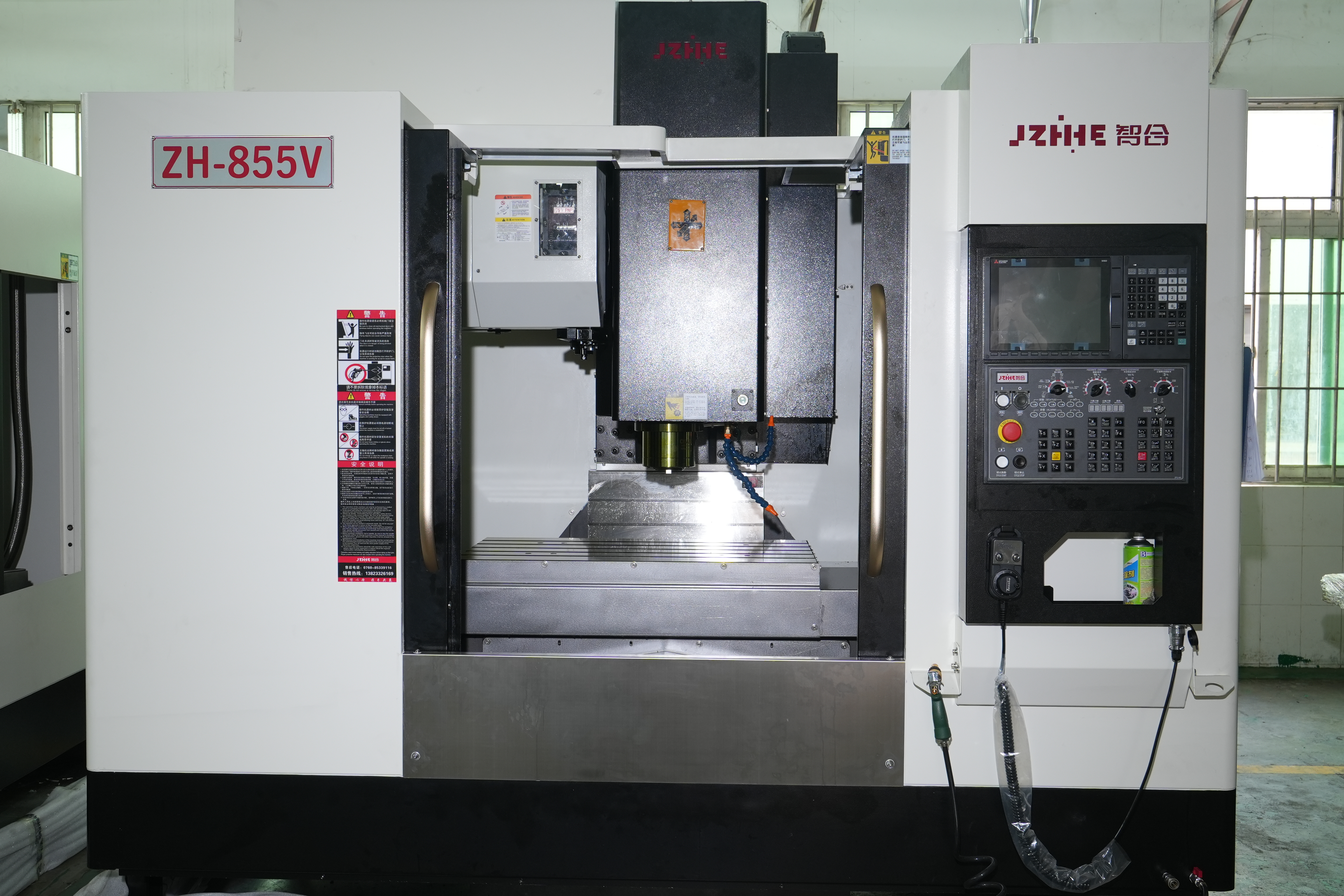
Place stock, finished geometry, fixture, clamps, supports, probes, tool holders and safe clearances in one model. Mark loading orientation, lifting points, access doors and the highest and lowest tool positions. For a vertical machining center, axis travel alone does not describe usable reach. Zhihe CNC asks buyers to identify the feature most likely to collide or lose support before selecting a model.
A Part-to-Machine Decision Tree
- Can the complete mounted part enter, clamp and index safely?
- Can every critical feature be reached with an acceptable holder and tool projection?
- Can chips and coolant leave deep pockets without contaminating datums?
- Can inspection confirm the release features at the required production rhythm?
- Can operators, maintenance and service teams access what they own?
If any answer is uncertain, turn it into a trial condition or an explicit limitation instead of assuming the catalog value resolves it.
Fit 2: Map Feature Access
Group faces, bores, pockets, slots, threads and surfaces by tool direction and datum. Separate features that can be completed in one setup from those that require a handoff. Record tool length, holder diameter, engagement, chip escape and inspection access. A vertical machining center can reduce handling for top-access work, but side features may change the fixture or require another operation.
Feature Access Matrix
| Feature family | Fit question | Evidence |
|---|---|---|
| Top faces and pockets | Can chips clear at depth? | Trial pocket, coolant and chip record |
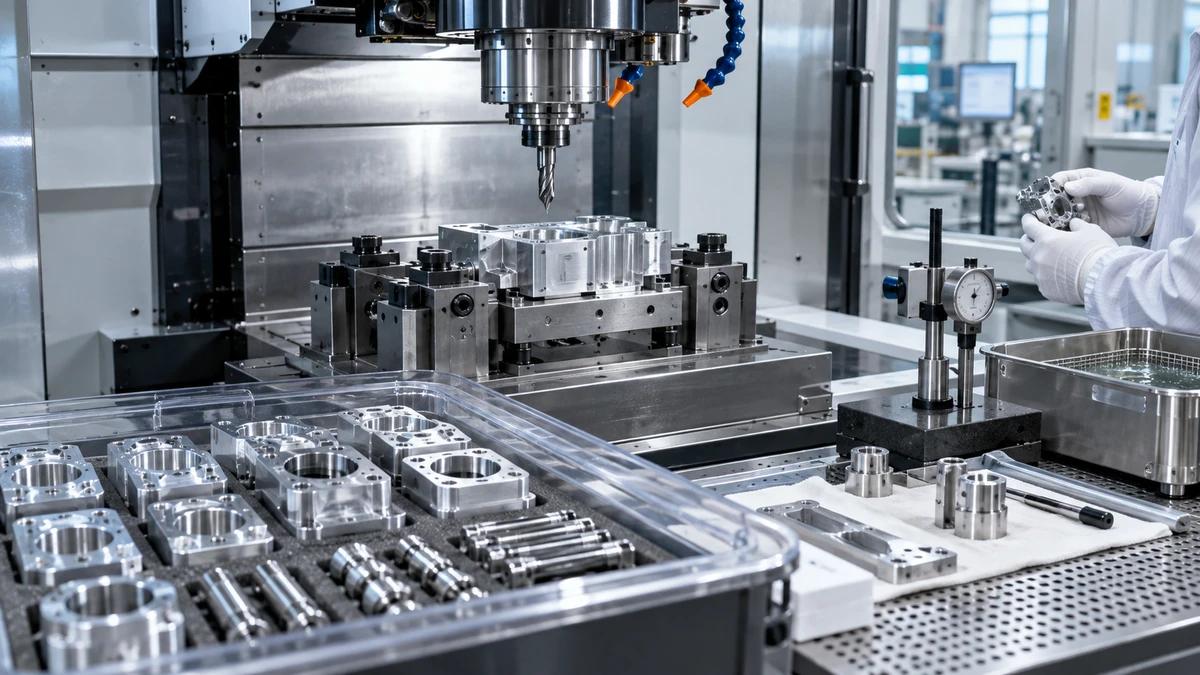
| Bores and hole patterns | Can position be held from the chosen datum? | Probe and inspection data |
| Tall walls and deep reach | Is tool projection stable? | Holder, cutting conditions and surface record |
| Side features | Is a handoff or index required? | Setup map and datum transfer result |
Fit 3: Build the Production Rhythm
List loading, fixture cleaning, probing, cutting, tool changes, chip removal, inspection, maintenance, held parts, rework and recovery. Use released pieces per declared shift rather than spindle time. Zhihe CNC recommends testing one normal tool-life event and one inspection hold so the production model includes work that occurs outside the ideal cutting sequence.
Test the Fixture Before the Spindle
Record base contact, clamp sequence, support, datum cleaning, repeat loading and distortion risk. Trial at least one unload and reload, then compare the release features. The fixture may dominate variation on thin, tall or irregular work. For a vertical machining center, fixture evidence keeps a dimensional issue from being blamed on the machine without a controlled check.
Treat Chips as a Process Variable
Observe where chips collect during roughing, deep-pocket work, drilling and tool changes. Define coolant delivery, filtration, cleaning intervals and safe access. Chips can alter seating, tool life, surface condition and operator time. Zhihe CNC includes chip state in the trial record because a clean first piece does not predict an unmanaged production shift.
Fit 4: Match the Receiving Plant
| Plant interface | Confirm before order | Owner |
|---|---|---|
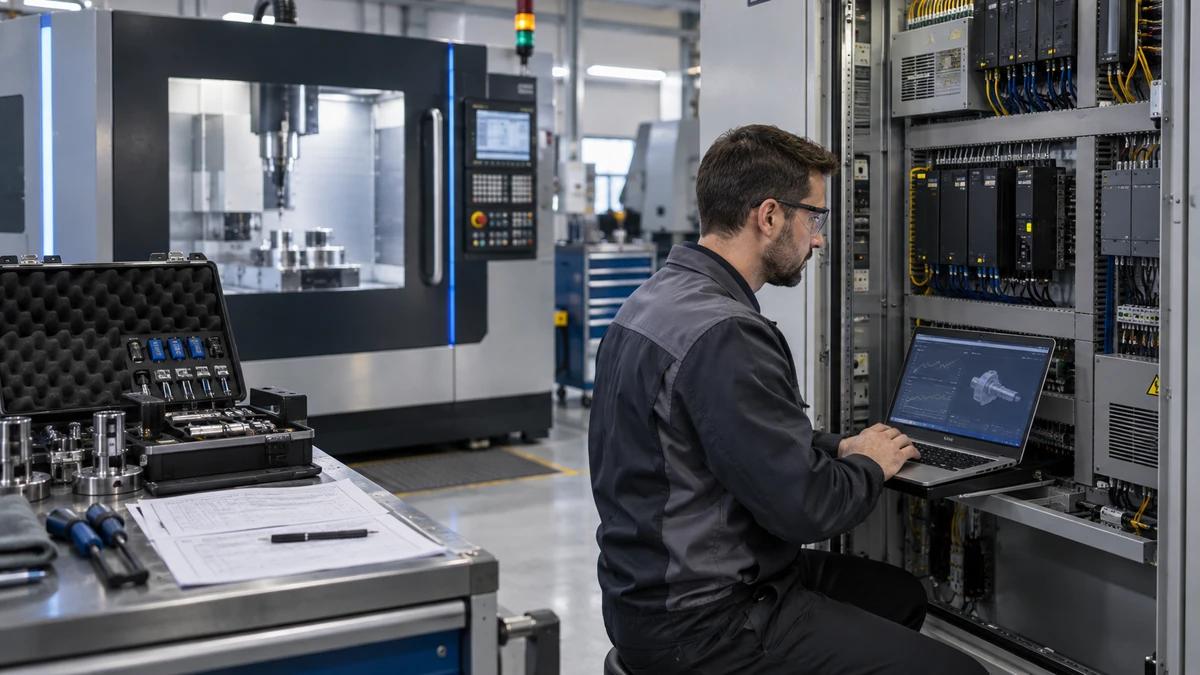
| Utilities | Power, air, coolant, drainage and environment | Buyer facilities |
| Material flow | Loading, lifting, queue and finished-part route | Production |
| Quality | Gauges, alignment, sampling and data ownership | Quality team |
| Service | Access, spares, backups and escalation | Supplier and maintenance |
A machine selection is incomplete until the receiving plant can install, run, inspect and maintain the offered configuration.
Run a Two-Window Acceptance
Use a short window to confirm geometry, tooling, program and measurement, then a production window to observe loading, temperature, chips, tool events, inspection and recovery. Keep accepted and held quantities visible. This prevents one carefully prepared part from standing in for the complete operating route and gives both teams a fair way to distinguish machine, process and plant effects.
Keep Precision Claims Conditional
Record machine warm-up, calibration state, environment, tool assemblies, fixture, program, inspection system and sampling. ISO references provide useful test context, but each acceptance result remains tied to declared conditions. Zhihe CNC avoids converting one measured feature into a promise for every part, material, tool, temperature or downstream product requirement.
Transfer the Baseline to Daily Work
Handoff configuration, fixtures, tool list, programs, offsets, probe routines, inspection plan, maintenance tasks, backups, alarm routes and change control. Name the owner of each file. Reopen affected evidence after a drawing, material, fixture, tool, software, gauge, site or maintenance change. A vertical machining center becomes productive when the baseline survives beyond commissioning.
Buyer FAQ: Vertical Machining Center
What should be checked before axis travel?
Check the complete mounted envelope, loading path, tool holders, probes, guards, chip space and service access.
When is a vertical layout a strong fit?
It is often suitable when critical features are mainly top-access and the fixture, chips and inspection route remain manageable.
Why model tool holders as well as tools?
Holder diameter and projection can limit reach, collision clearance, rigidity and surface results.
How should capacity be measured?
Measure released pieces after loading, probing, cutting, tool events, cleaning, inspection, maintenance and recovery.
What should a fixture trial include?
Include datum cleaning, clamp sequence, support, unload and reload, distortion checks and repeat inspection.
Can a trial prove every future material?
No. Trial conclusions remain tied to the declared material, stock, tools, fixture, program and machine state.
Why use two acceptance windows?
A short window confirms the route; a production window exposes temperature, chips, tool events, holds and recovery.
How does Zhihe CNC select a model?
Zhihe CNC maps the buyer's mounted envelope, feature access, production rhythm and plant interfaces to a configuration.
When should the baseline be reopened?
Reopen affected evidence when part, material, fixture, tools, software, gauge, site or maintenance conditions change.
What should a buyer send first?
Send drawings, CAD, stock, critical features, datums, fixtures, volumes, inspection and site constraints.
Build a First-Piece Route Card
Create a route card from stock receipt to released first piece. Include stock identity, fixture cleaning, clamp sequence, program revision, tool assemblies, offsets, probing, warm-up, chip checks, inspection alignment, raw-data location and disposition. Zhihe CNC recommends signing each release gate instead of relying on a final pass label. This makes it possible to trace a dimensional result back to the state that produced it.
Run the route card after a normal interruption such as a planned tool replacement, fixture reload or shift change. Compare the same release features and record any correction. A vertical machining center should demonstrate repeatable work after routine events, not only in the undisturbed conditions of a prepared demonstration. Keep the original and corrected states visible.
Test the Part Portfolio, Not Only the Largest Part
The largest workpiece may control travel and load, but the smallest, fastest or most frequent part can control changeover, tool capacity, inspection and labor. Build a portfolio table with envelope, material, critical features, batch, tools, fixture, cycle components and release method. Select one boundary part and one representative production part for review. This balances physical fit with everyday economics.
When the portfolio changes, reopen only the affected lanes. A new tall fixture may require reach and collision checks; a new material may reopen tooling and chips; a tighter feature may reopen inspection and thermal controls. Zhihe CNC uses this change map to preserve valid evidence while keeping the machine decision responsive to real production. Add a review date, accountable engineer and evidence location for every reopened lane.
Plan the Daily Care Window
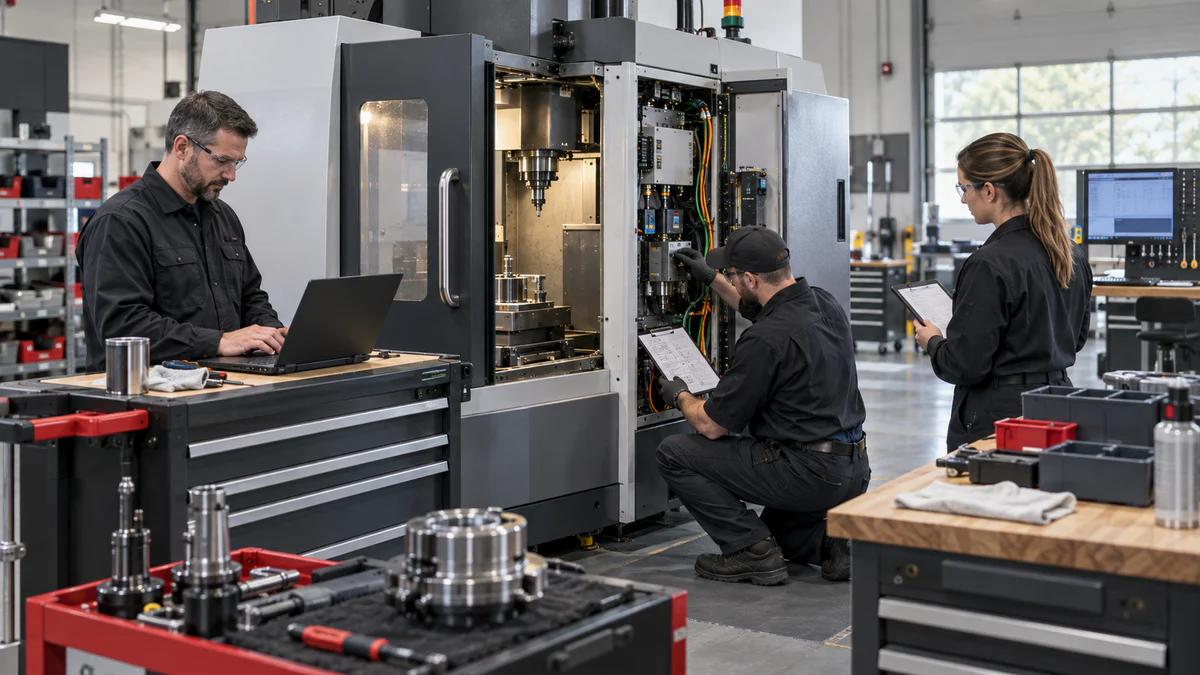
Define checks for lubrication, coolant, chips, spindle condition, tool magazine, probes, fixtures, guards, backups and housekeeping. Assign frequency, acceptable state, evidence and escalation. Place these tasks inside the production model rather than treating maintenance as invisible time. A short planned care window can protect availability only when operators know what to observe and who decides whether production continues.
During acceptance, demonstrate selected routine tasks with the delivered access and tools. Confirm that covers, filters, chip areas and service points can be reached under the plant's space constraints. Record any special lifting, lockout or supplier-support requirement. This practical review connects the fit map to the people who must keep the machine stable after the applications team leaves.
Open the Zhihe CNC Engineering Review
Send Zhihe CNC the controlled drawing or CAD model, material and stock condition, annual volume, batch mix, datum plan, fixture concept, tool constraints, inspection method, site utilities and service region. Review the Zhihe CNC machine portfolio, the company and manufacturing profile, and the engineering inquiry route. For vertical machining center, request a dated configuration, trial boundary, acceptance record, open-assumption list and named service owner before commercial approval.
Standards and Safety Context
The ISO 230-2 positioning reference provides machine-test context, while the ISO 10791 machining-centre reference provides an additional reference for testing or safeguarding. These references do not replace the buyer's drawing-specific acceptance plan, local risk assessment, product certification or legal obligations.