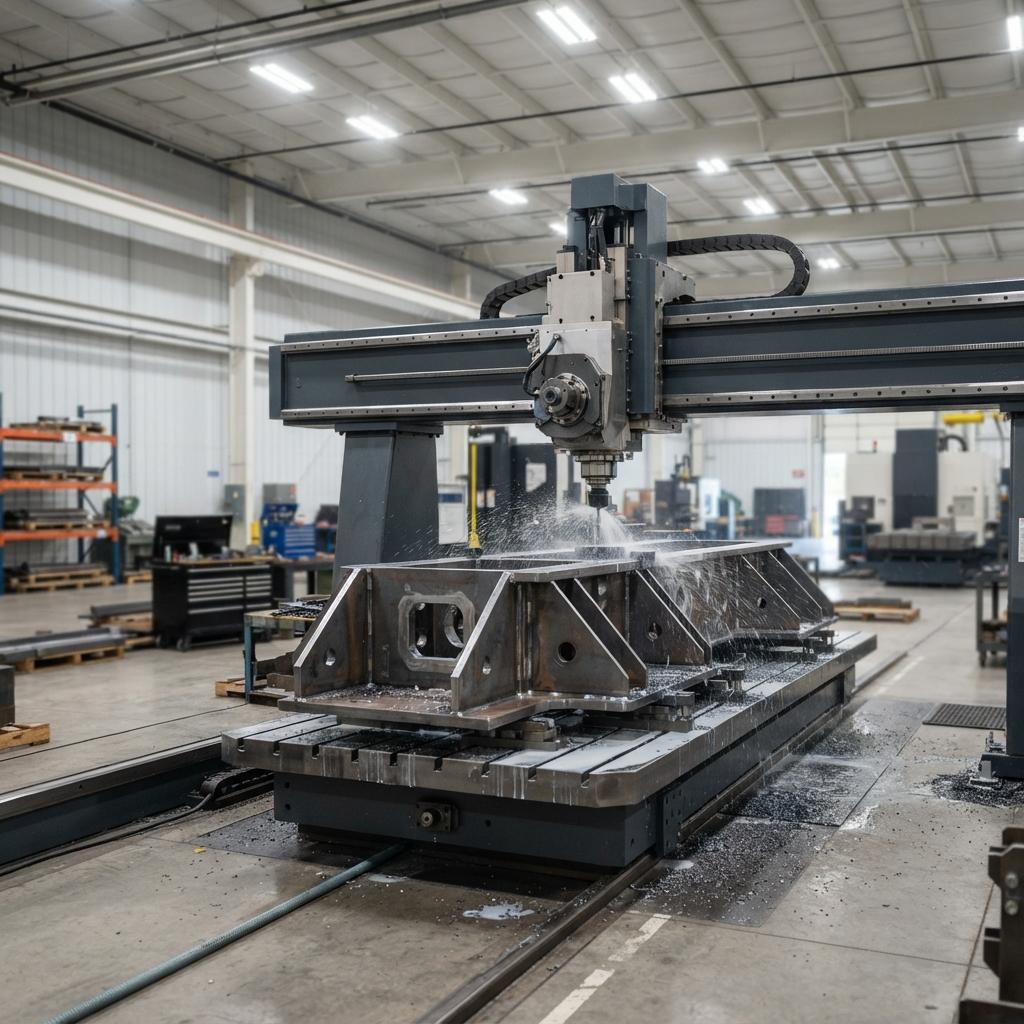
A tube sheet machining center should be selected from the finished drawing and production route, not the plate diameter alone. For a heat exchanger tube sheet, the buyer needs to know whether the complete blank and fixture fit, whether every required hole is accessible, and how the hole pattern and mating features will be inspected. A machine that reaches the outer edge may still be a poor choice if clamps obstruct drilling or the process cannot maintain the drawing's required relationships.
This guide helps procurement teams and manufacturing engineers compare machines for repeated tube sheet work. Any recommendation remains subject to the actual drawing, material, fixture, inspection method and confirmed machine configuration.
Define the Part Family Before Comparing Machines
Send more than a drawing of the largest plate. A useful part package includes the smallest and largest tube sheets you expect to produce, material and blank condition, thickness range, hole sizes and pattern, edge features, mating faces, expected quantities and drawing revisions.
Identify which requirements govern assembly. These may include the relationship between holes, the location of the pattern relative to a datum, the condition of a sealing face, or the position of mounting features. The approved drawing must define tolerances and inspection methods; a supplier should not infer them from a photo or nominal diameter.
| Buyer question | Information to provide |
|---|---|
| What must fit on the machine? | Largest blank, fixture, clamps and handling clearance |
| What operations are required? | Facing, drilling, boring, tapping and edge work specified by the drawing |
| What must be measured? | Critical hole and face relationships, datums and acceptance method |
| What determines capacity? | Part mix, batch quantity, tool changes, loading and inspection steps |
Check the Complete Working Envelope
Compare the plate with its fixture installed against the machine's usable work area. Include support points, clamps, toolholder diameter, tool length and safe travel around the perimeter. Confirm how the part will be lifted, located, turned if necessary and removed.
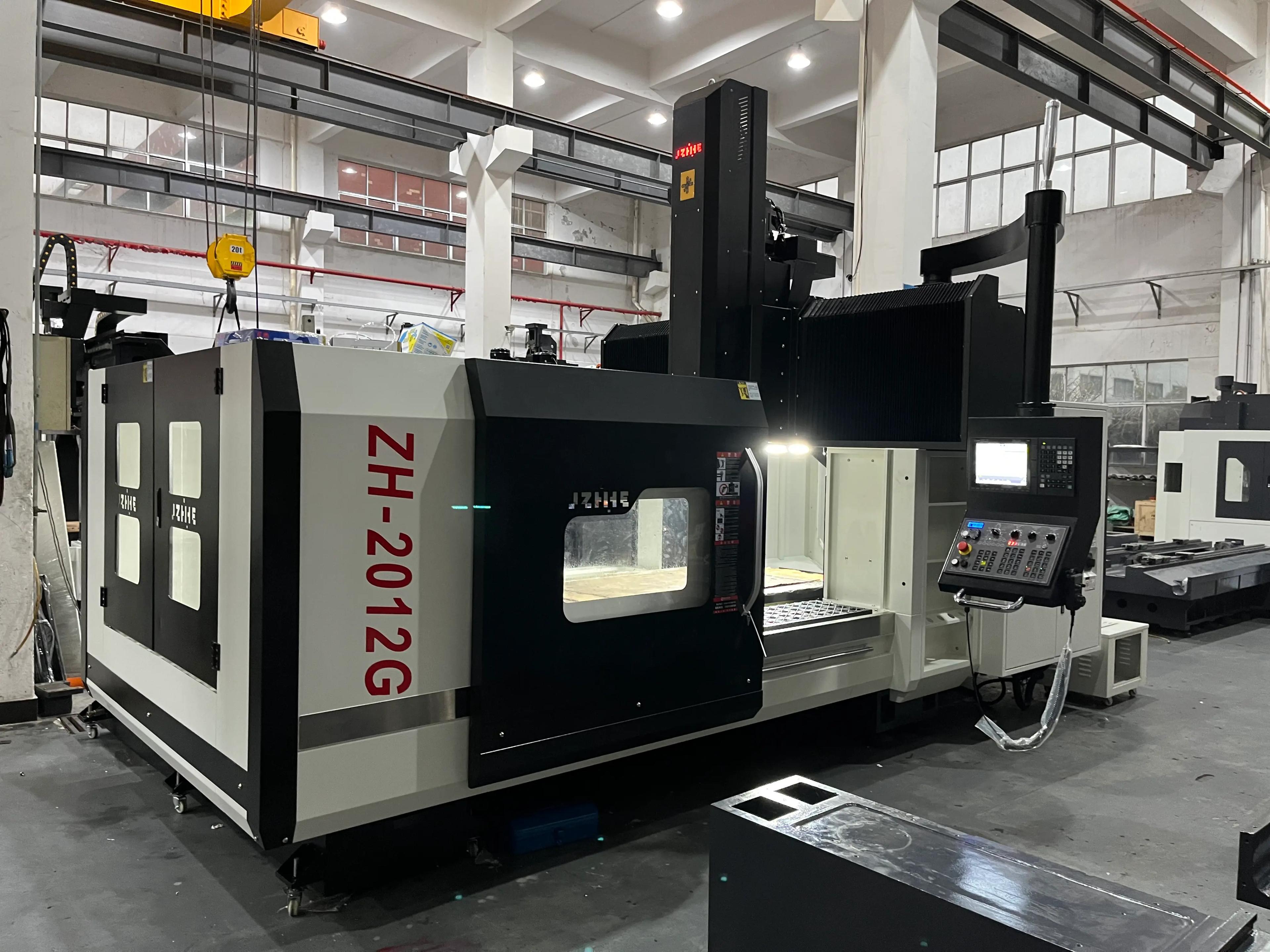
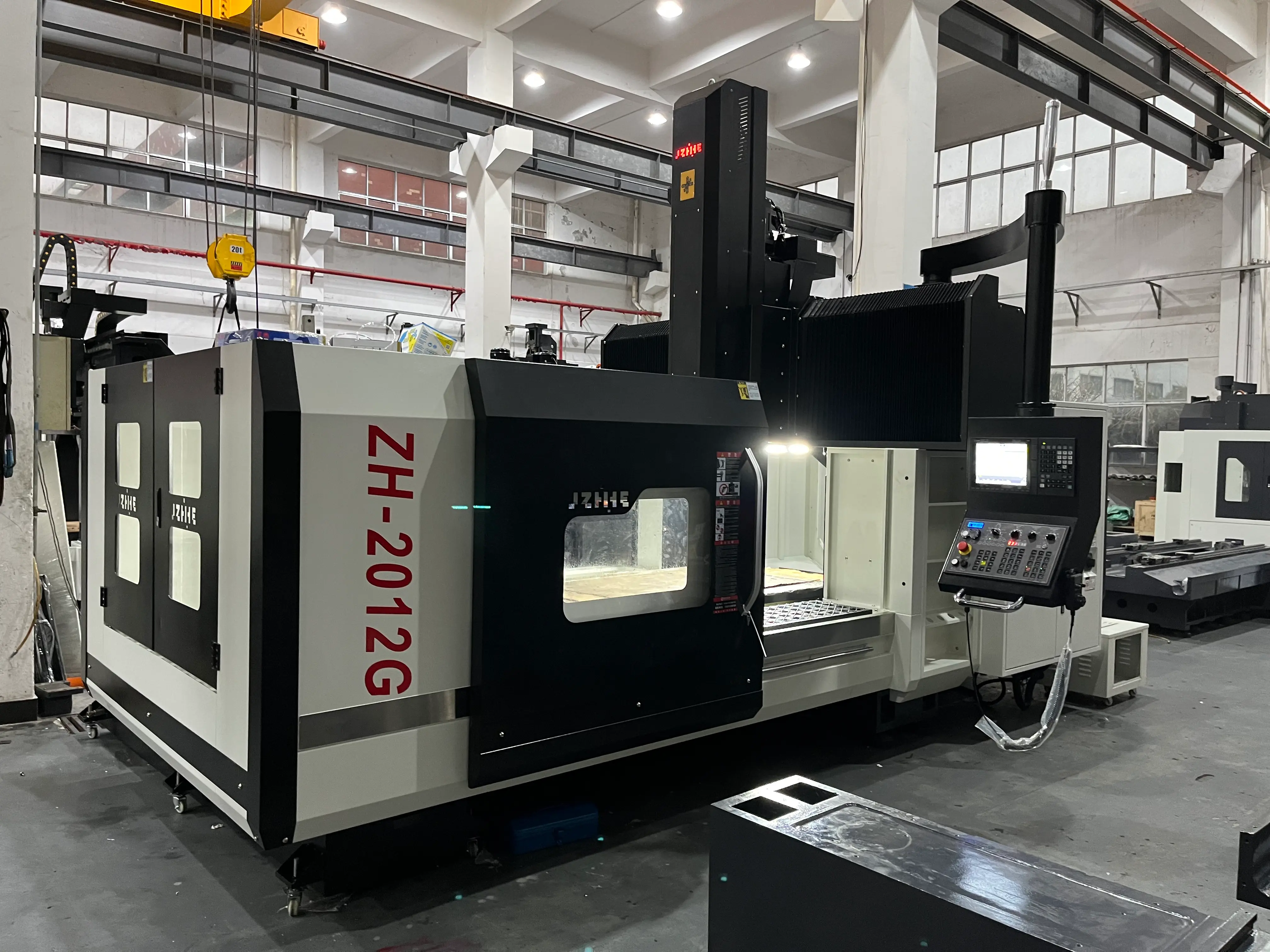
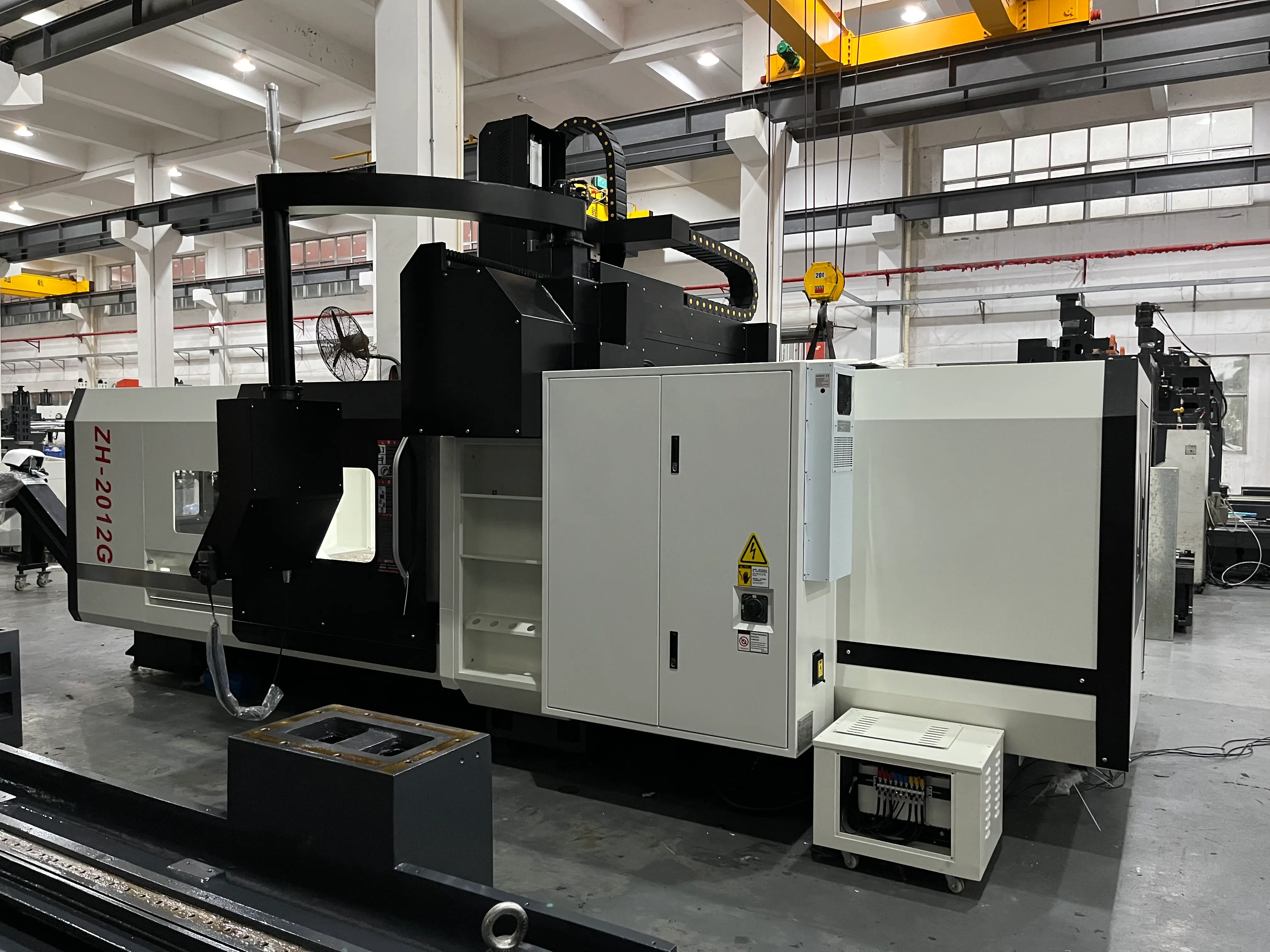
For a broad or heavy plate, a gantry machining center may be a candidate. Zhihe CNC's gantry machining center is presented for large industrial workpieces. That product description is a starting point for discussion, not proof that a particular tube sheet fits. Ask Zhihe CNC to confirm the proposed model's usable travel, table arrangement, load conditions, spindle and tooling configuration against your fixture drawing.
Treat the Hole Pattern as a Process, Not a Hole Count
A tube sheet may require many repeated holes, but 'can drill the holes' is only the first question. Ask how the process establishes datums, controls tool condition, manages chips, identifies a broken or worn tool, and checks the pattern during production. The answer should reflect the actual material and hole geometry.
A trial plan should state which holes will be measured, where they lie across the plate, and how results relate to the drawing's datums. Include central and boundary locations when they represent different travel or support conditions. If operations are required from both sides, document how the datum is transferred between setups.
Tooling and coolant choices depend on the material, hole dimensions and downstream requirements. Request a proposed tool list and process sequence, then review them with the drawing owner. Avoid accepting a cycle-time estimate that omits loading, tool changes, chip removal, deburring or inspection.
Make the Fixture and Inspection Plan Agree
Fixturing can influence the result measured on a large plate. Record where the blank is supported and clamped, which face establishes the datum, and whether a critical measurement is taken while clamped or after release. If the part will be assembled under a different support condition, the buyer and supplier should agree on the state used for acceptance.
The inspection plan should name the drawing revision, measuring method, sample locations, reporting format and acceptance owner. A report listing individual hole diameters cannot by itself establish that the complete pattern relates correctly to mating features.
Ask the Trial to Close the Buying Risks
Before a tube sheet machining center trial, agree on a representative blank, drawing revision, fixture concept, tool list and inspection record. The trial should answer the questions that drove the purchase: Does the setup fit with safe access? Can the planned operations be completed? Do the agreed measurements meet the drawing? What work remains after the machine cycle?
Keep the conclusion within the tested conditions. A successful trial on one material, blank and fixture does not automatically qualify every tube sheet in the buyer's range. Record untested sizes, configurations and downstream requirements as open items for the quotation and acceptance plan.
What to Send Zhihe CNC for a Useful Recommendation
For a tube sheet machining center review, send your controlled drawing or CAD file, material and blank condition, part-family range, approximate blank mass, critical features, expected quantities, fixture concept if available, inspection requirements and factory handling constraints. Ask for a model-specific configuration review, an operation and fixture proposal, and a list of assumptions requiring confirmation.
Contact Zhihe CNC with the part package. The goal of the first discussion is a machine and trial plan tied to your tube sheets, rather than a quotation based only on plate size.
FAQ
Is a gantry machine always necessary for a tube sheet?
No. The decision depends on the complete part and fixture envelope, access, material, required operations and production plan. Compare proposed alternatives against the same drawing.
Does table size prove that the whole hole pattern can be machined?
No. Clamps, toolholders, safe approach and travel limits must be reviewed together. Use a fixture layout and operation plan to check access.
Can a machine accuracy specification guarantee tube sheet acceptance?
No. The finished result also depends on the blank, fixture, tools, process sequence and measurement conditions. Agree on drawing-specific inspection and a representative trial.
What should a buyer request after trial cutting?
Request the controlled setup and tool information, measured results, deviations, corrective actions and a clear list of conditions the trial did and did not qualify.