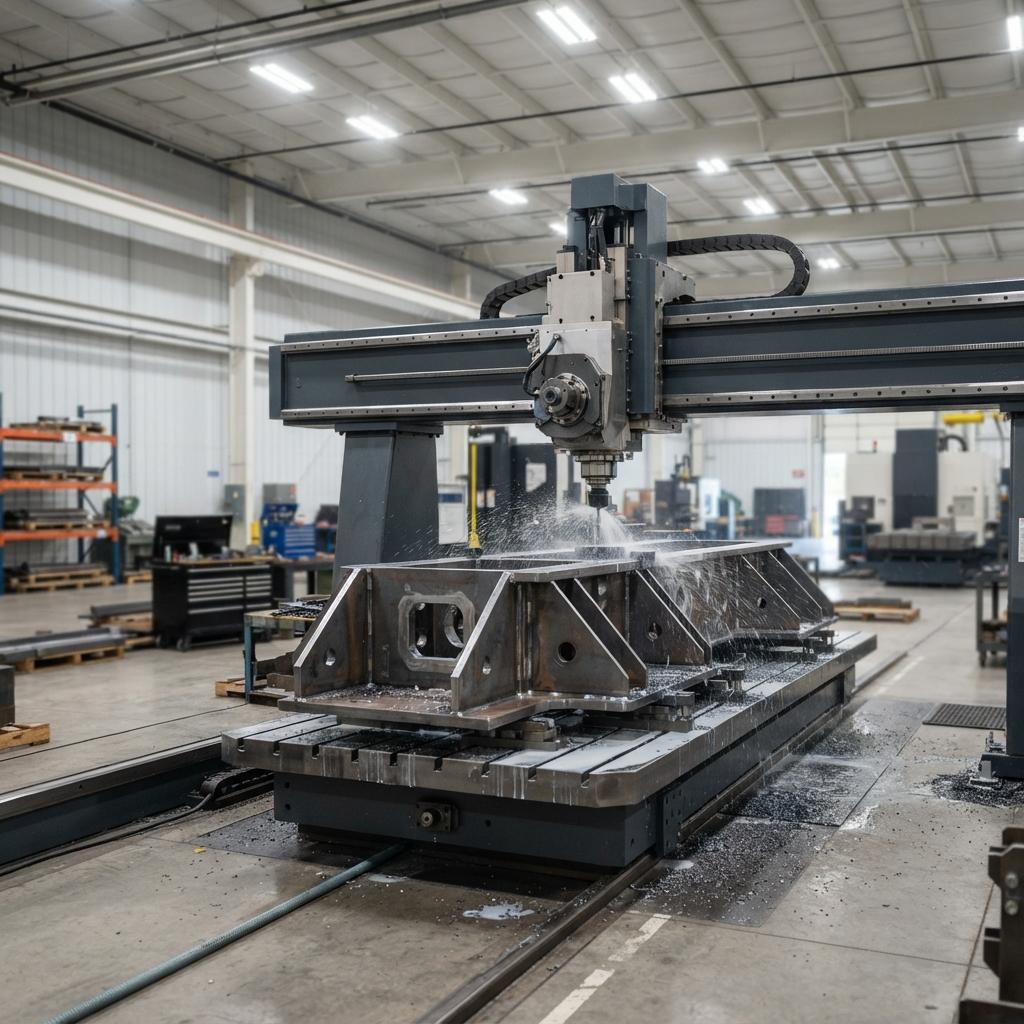
Gear reducer mounting plate machining begins with the assembly drawing. The purchasing question is whether the proposed machine and process can produce the mating face, locating features and bolt pattern in the relationships the reducer installation requires. Table size and spindle speed matter, but neither proves a finished plate will assemble correctly.
This guide gives overseas buyers a practical qualification sequence: identify the functional datums, review the blank and fixture, select a candidate machine, then agree on a measured trial before placing an order. The machine model, configuration and acceptance criteria must be checked against the actual drawing.
Put the Assembly-Critical Features on One Drawing
Start with the surfaces that locate the reducer and the components attached to it. Mark the mating face, locating bore or shoulders, bolt-hole pattern, any shaft or coupling clearance and the relationship to the mounting structure. Ask your engineer to distinguish dimensions that govern assembly from dimensions that merely describe the blank.
A useful drawing package identifies datum references, tolerances, inspection state and the material or blank condition. If flatness is specified, clarify whether it applies while clamped, after unclamping, or after assembly. If a bolt pattern must align to a locating feature, inspect both from the same datum scheme. Do not accept a trial report containing isolated dimensions if the actual risk is their relationship.
Review the Blank and Fixture as One System
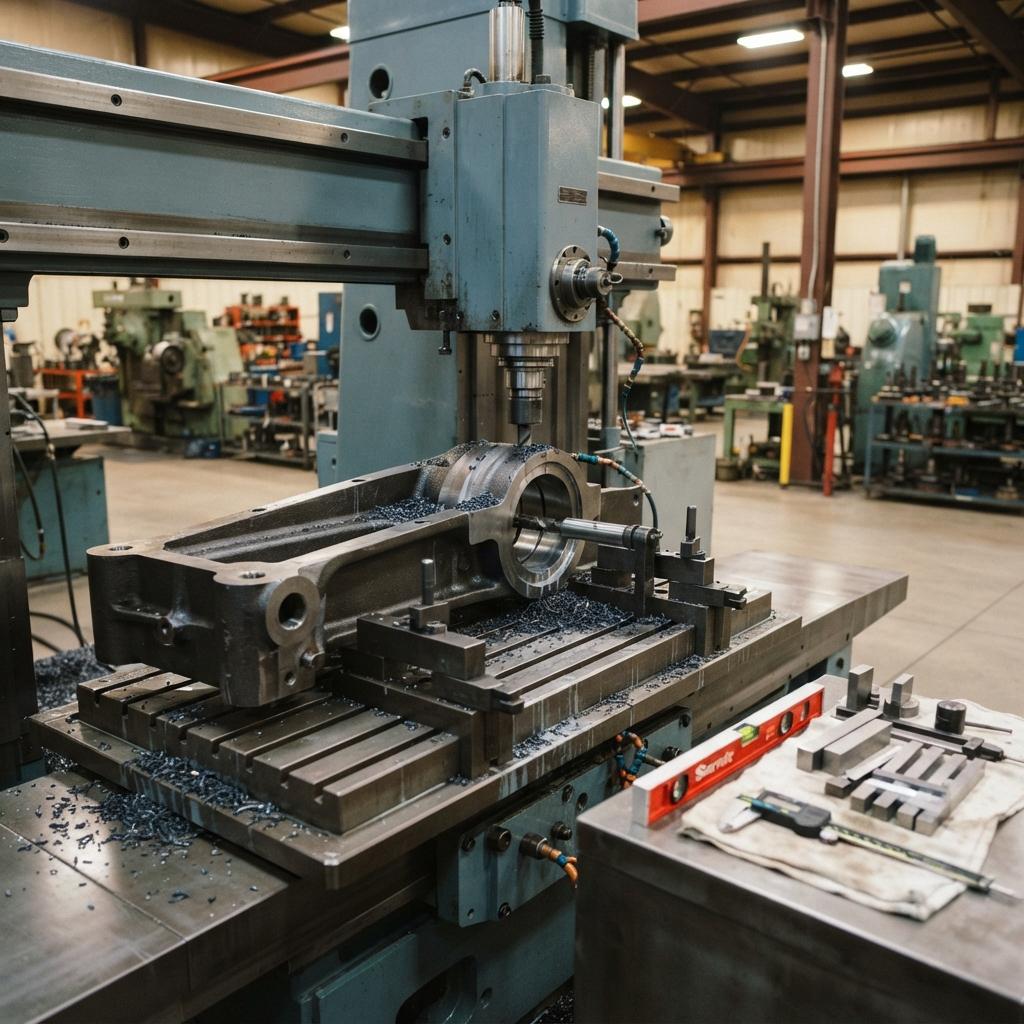
A mounting plate can fit within the nominal travel and still leave too little room for clamps, tool approach or chip evacuation. The fixture, workpiece and cutting tool occupy the working envelope together. Review the largest blank, its mass, lifting method and the position of every clamp before comparing machine models.
Blank condition also changes the process. A welded or cast plate may have variable stock and residual stress; a cut plate may need a different datum strategy. Decide which faces are prepared first and whether roughing, release and finishing require separate setups. A supplier should explain how the part is supported without distorting the face being qualified.
For gear reducer mounting plate machining, send a simple fixture sketch with the drawing. It should show support points, clamp locations, tool access and the surfaces that will be probed or inspected. This allows both sides to discuss a real setup rather than assuming that nominal table dimensions settle the question.
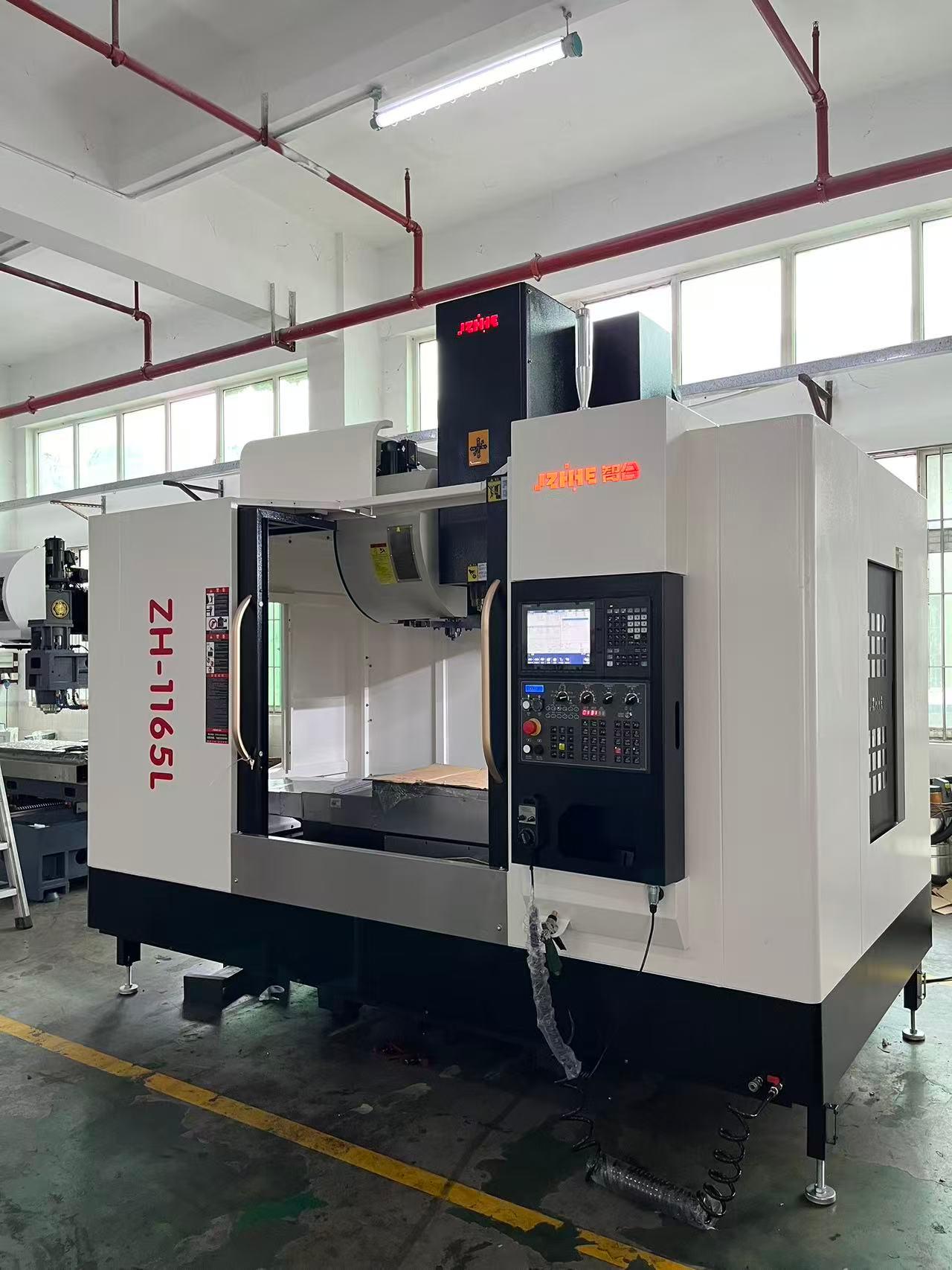
Use the ZH-1165L as a Candidate, Then Check the Drawing
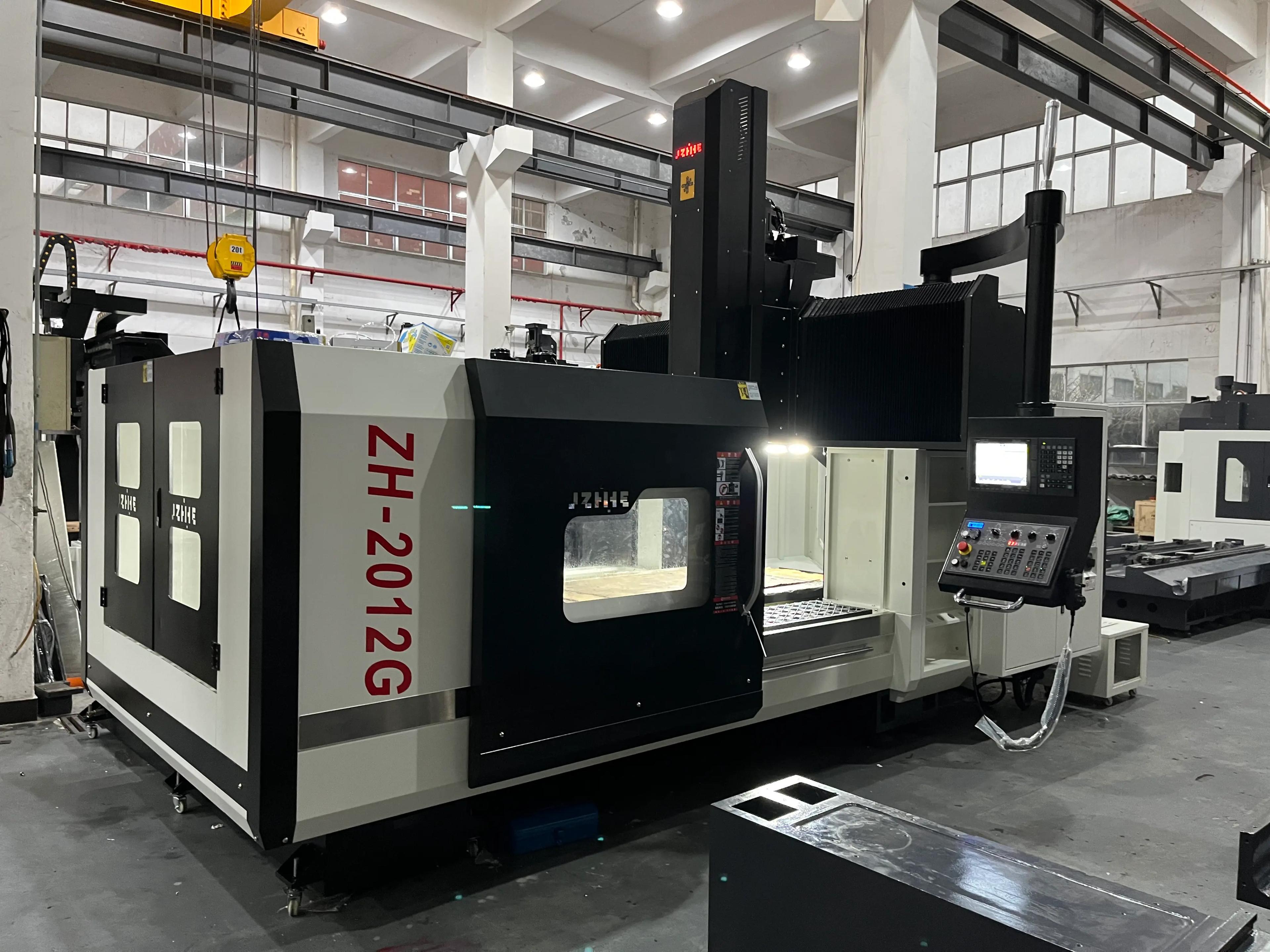
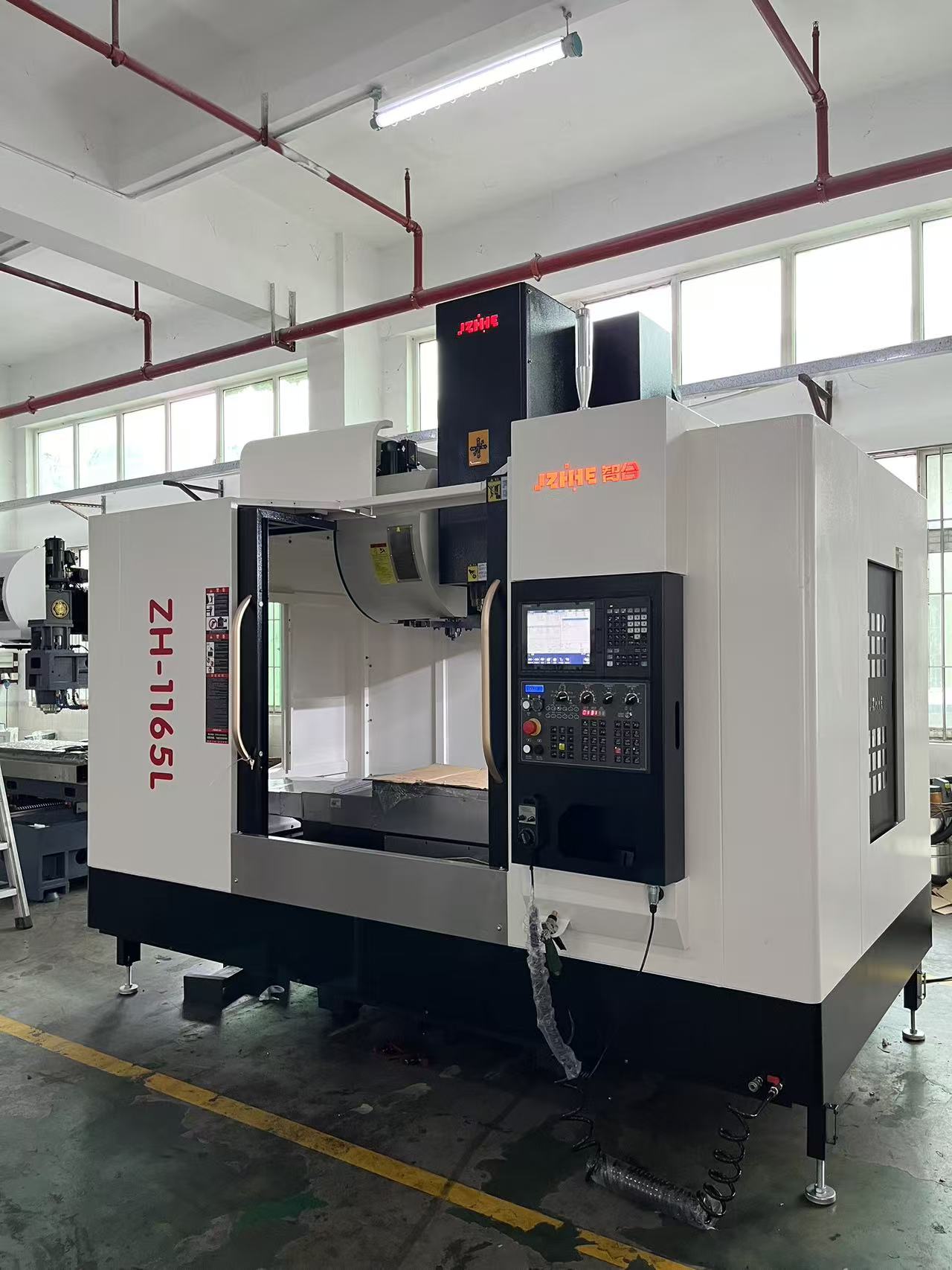
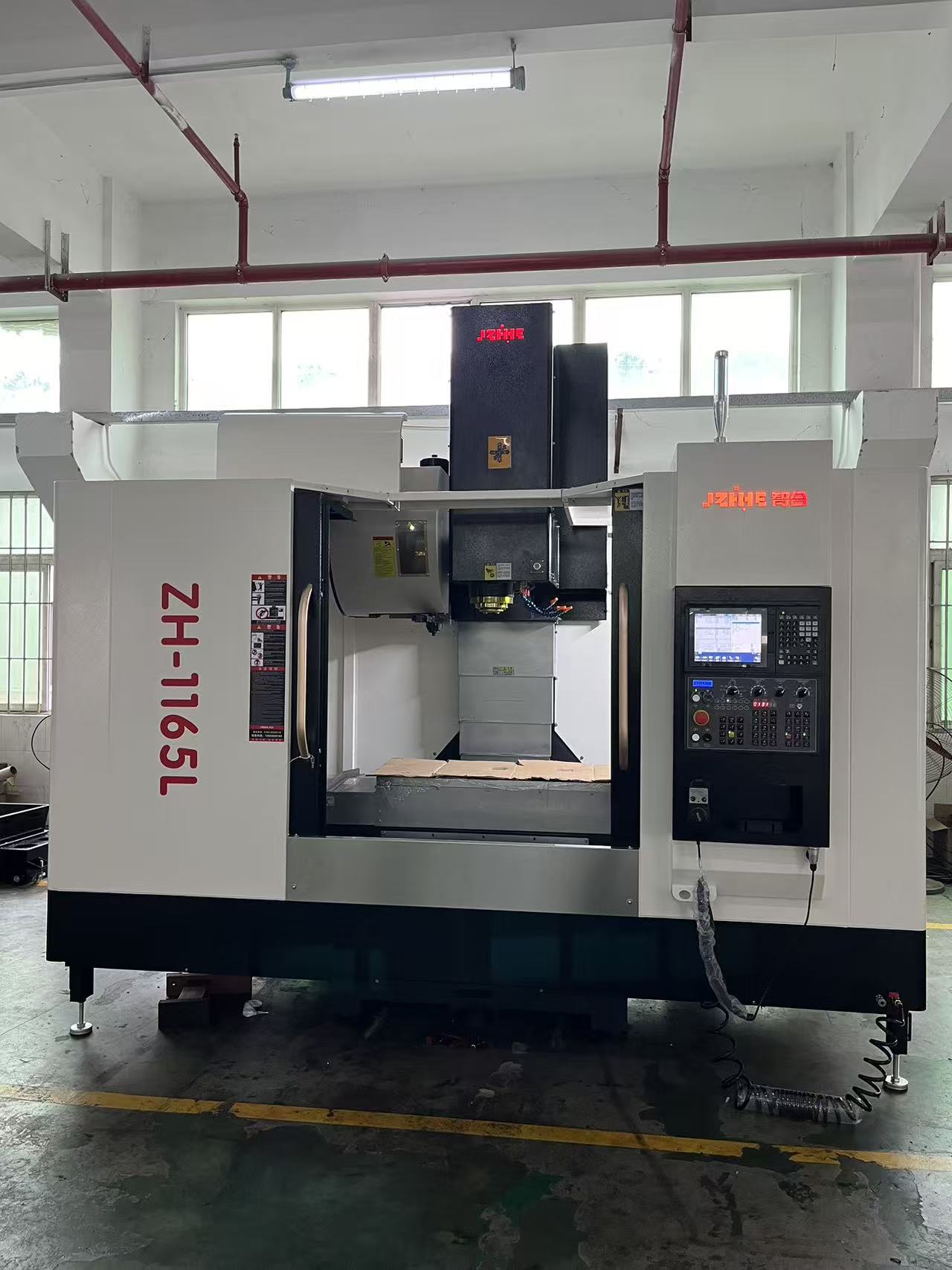
Zhihe CNC presents the ZH-1165L heavy-duty vertical machining center for work including general machinery and automation equipment bases. That makes it a candidate for review, not an automatic recommendation for every reducer plate. The right choice depends on the finished envelope, fixture, material, tool reach, required operations and agreed inspection standard.
Ask for the confirmed configuration of the exact machine under quotation. Compare usable work area, travel, table-load conditions, spindle and tool interface, guarding, coolant and chip handling with the proposed process. Ask which requirements are standard, optional or subject to engineering review. Treat any published specification as a starting point and confirm it in the quotation and acceptance documents.
Make the Trial Prove Assembly Relationships
Agree on a representative part or test piece before trial cutting. Record its material, blank condition, drawing revision, fixture arrangement and operations. Measure the mating face, locating features and bolt pattern against the same approved drawing. The measurement method, instrument and part condition should be agreed in advance.
A meaningful trial answers the buyer's key questions:
| Buyer question | Evidence to request |
|---|---|
| Does the complete setup fit? | Fixture layout, clamp position and tool-clearance review |
| Is the mating face acceptable? | Measurements against the drawing's datum and inspection method |
| Do locating features and bolt holes relate correctly? | Inspection report using the agreed datum scheme |
| Does the part remain acceptable after release? | Results in the agreed unclamped or assembled state |
| Can the process support the required output? | Recorded loading, machining, deburring and inspection steps |
One successful cut does not by itself establish repeatability. Discuss the number of parts, tool condition and measurement frequency needed for your acceptance decision. Any claimed accuracy, cycle time or capability must be supported by the agreed trial or confirmed configuration.
Send a Quotation Package That Exposes Open Questions
To evaluate gear reducer mounting plate machining on a Zhihe CNC machine, provide the drawing revision, 3D model if available, blank size and material, expected stock condition, critical assembly dimensions, target quantity, available floor space and preferred inspection method. Identify which parts or fixtures you can supply for a trial.
Ask the supplier to reply with a candidate model and configuration, proposed fixture concept, operations and open engineering questions. A useful quotation separates confirmed facts from items requiring drawing review or trial verification. This makes the machine comparison clearer and reduces late changes to tooling, handling and inspection plans.
FAQ
Is table size alone enough to select a machining center for a reducer mounting plate?
No. The blank, fixture, clamps and tool approach must fit together, and the process must meet the drawing's datum and inspection requirements.
Does a published machine accuracy figure guarantee plate flatness?
No. Plate flatness also depends on the blank, fixturing, cutting sequence, stress release and measurement state. Confirm the result on a representative part under agreed conditions.
Should we send the actual blank for a trial?
Where practical, a representative blank makes the trial more relevant. Agree on material, stock condition and drawing revision before interpreting the result.
What should be agreed before accepting a trial?
Agree on the setup, drawing, datums, measurements, instruments, part condition and acceptance criteria. Record any changes during the trial.
Planning a reducer mounting plate project? Contact Zhihe CNC with your drawing, blank and inspection needs. We can review a suitable machine and configuration against your application before you commit.