Buyer Answer: Start With the Learning Question
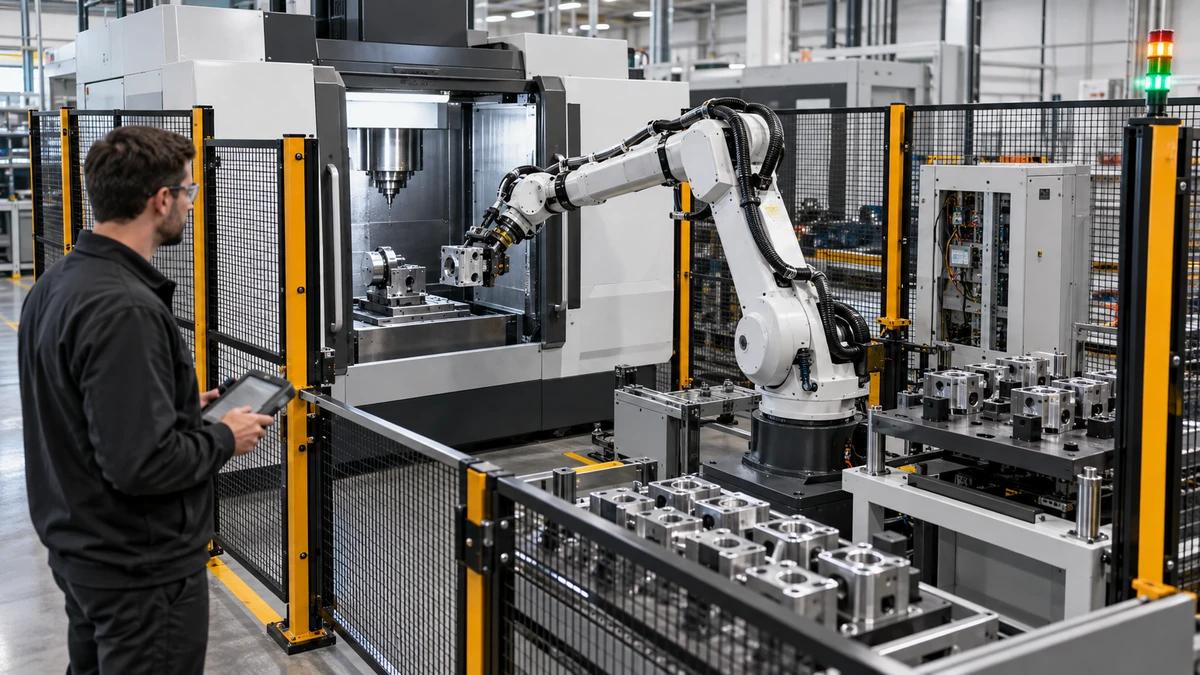
Zhihe CNC turns impeller prototyping into a repeatable loop covering blade access, stock strategy, inspection alignment, revision control and measured learning. The useful decision is whether the proposed route can preserve the feature relationships that matter after support release, inspection and downstream handoff.

Prototype Loop Board
| Loop | Question | Evidence |
|---|---|---|
| Reach | Can the tool access the blade? | Collision and feature record |
| Support | Does the stock stay stable? | Clamp and release comparison |
| Finish | Does the zone meet its intent? | Marked surface data |
| Revision | What changed and why? | Dated prototype log |
Name the Learning Question
A prototype should answer a question: blade thickness, hub transition, tool access, balance allowance, material behavior or an assembly interface. Write the question before choosing a strategy. Otherwise the trial becomes an expensive demonstration with no clear next decision.
For 5 axis CNC machining for impeller prototypes, Zhihe CNC asks buyers to identify the feature that must be learned first and the evidence that will close the loop. A model, a machine and a pretty surface are not the same as a decision.
Freeze the Revision Snapshot
Capture CAD revision, stock condition, material identity, blade count, hub definition, allowance, protected surfaces and the owner of each change. Store the snapshot with the program, postprocessor, fixture and inspection plan.
A prototype can change quickly, but each change still needs an identity. Mark experimental geometry separately from the geometry intended for later production or test.
Plan Blade Access From the Root Out
Map root fillets, pressure and suction surfaces, leading and trailing edges, tip clearance and hub transitions. Record tool direction, lead or tilt, holder clearance and the order in which evidence will be inspected.
Use indexed motion where it safely answers the question; use simultaneous motion where the feature path needs it. Keep collision checks tied to the actual tool assembly and fixture, not a generic virtual holder.
Choose Stock for the Question
Record billet or near-net stock, grain or material direction when supplied, allowance distribution and the roughing boundary. A prototype made from unrealistic stock can teach the wrong lesson about distortion, tool wear or cycle time.
Photograph and measure incoming stock. If the supplier, treatment or stock route changes, reopen the affected conclusion rather than assuming the previous loop transfers.
Four-Cycle Prototype Log
- Write the learning question.
- Run the access and collision check.
- Measure the feature and record the limitation.
- Change one variable and schedule the next loop.
Make the Hub Transition a Separate Gate
The hub-to-blade transition often controls access, blend quality and later balancing work. Define the transition zone, protected material, tool path evidence, measurement locations and downstream owner.
Do not hide the transition inside an average surface number. Keep a marked sample and a raw measurement for the common blade and the most difficult blade.
Use a Four-Cycle Prototype Log
Cycle one can test reach; cycle two can test stock and support; cycle three can test finish and inspection; cycle four can test the controlled revision. Keep each cycle’s hypothesis, change, result and open question on one page.
This log makes iteration visible to purchasing and engineering. It also prevents a later team from treating an experimental correction as a guaranteed production setting.
Align Rotary and Inspection Frames
State rotary zero, coordinate transforms, probing logic, inspection alignment, temperature context and raw-data storage. A blade can look correct in one frame while its hub relationship drifts in another.
Repeat one declared reference after a planned interruption. The goal is a recovery demonstration, not a universal accuracy promise.
Manage Thin Edges and Burr Intent
Classify leading edge, trailing edge, root, tip and handling zones. Define permitted edge break, burr limit, manual work, lighting or gauge and disposition. A visual polish is not a release criterion.
Retain accepted, held and reworked samples. If hand finishing follows machining, record allowance, tool, operator step and inspection owner.
Prototype Evidence Pairing
| Prototype record | Next decision | Do not infer |
|---|---|---|
| Blade access | Fixture or tool change | Production cycle |
| Hub transition | Finish or allowance change | Flow performance |
| Edge sample | Deburr route | Clinical or field use |
| Revision log | Next experiment | Qualification |
Separate Machining From Balance Testing
Machining can release declared geometry, surfaces, edges and inspection results. Balance, vibration, flow, fatigue and test-rig performance require their own fixture, method, conditions and owner.
Keep the two records linked but separate. This protects the buyer from overclaiming what a prototype machine run has proved.
Review Surface Evidence by Zone
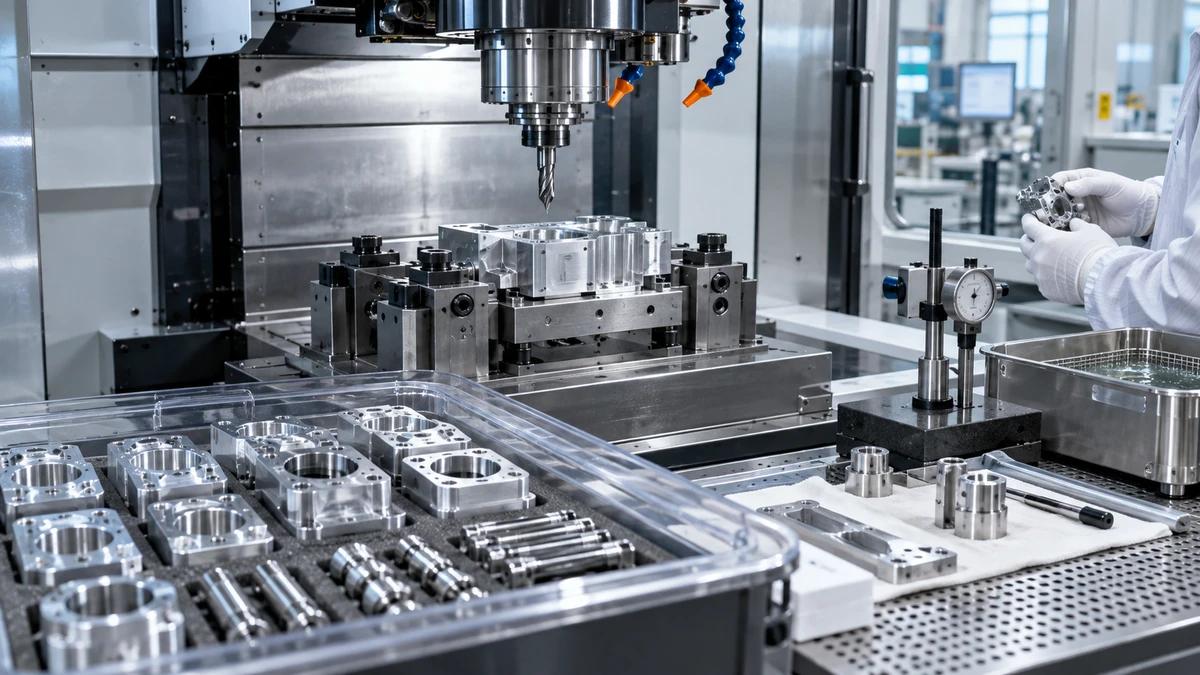
Connect surface results to tool, engagement, holder, path direction, material, temperature and measurement location. One attractive photograph cannot represent every blade channel.
For a 5 axis CNC machining for impeller prototypes trial, compare a common zone and a difficult transition. Preserve the raw values and the limitation of the measurement.
Calculate Learning per Prototype Hour
Count setup, probing, cutting, tool changes, inspection, rework, documentation and review. Then state what decision each hour produced. A short cycle that answers nothing is not efficient.
Zhihe CNC uses the log to decide whether the next loop needs a fixture change, tool change, program change, material check or a downstream test.
Lock the Handoff Package
Deliver the revision snapshot, program, fixture, tools, inspection, accepted samples, open questions and next experiment. Name who owns the next test and when the prototype status expires.
A dated package lets the team reproduce the useful state without pretending that a prototype is already a production qualification.
Prototype work benefits from a visible stopping rule. Decide what result is good enough to change the next tool, fixture, stock or program decision, and record what remains unknown. A small review after each loop is often more valuable than a long retrospective at the end. The buyer can then see which hours produced learning and which hours were simply recovery from an uncontrolled change.
For 5 axis CNC machining for impeller prototypes, keep the machine decision attached to a real part family, a dated trial and an acceptance owner. A 5 axis CNC machining for impeller prototypes review is strongest when the buyer can see the setup, the evidence and the limits together. That is how 5 axis CNC machining for impeller prototypes becomes a repeatable procurement conversation instead of a generic machine claim.
Impeller Prototype Buyer FAQ: 5 axis CNC machining for impeller prototypes
What is the first question for an impeller prototype?
Choose the feature or uncertainty the trial must resolve before selecting the machine route.
Why use 5 axis CNC machining for impeller prototypes?
It can expose blade access and hub transitions while keeping the test tied to one controlled setup.
Does a prototype prove production cycle time?
No. Stock, tools, fixtures, inspection and production controls may change.
How should blade edges be released?
Define edge class, burr limit, manual work, inspection and disposition for each zone.
What should be measured after an interruption?
Repeat a declared reference and compare the raw result to the approved baseline.
Can machining prove balance or flow?
No. Balance, vibration and flow need separate methods and owners.
How does Zhihe CNC structure iteration?
Zhihe CNC records each hypothesis, change, result and open question in a dated loop.
What belongs in the prototype package?
Revision, stock, fixture, tools, program, inspection, samples and the next decision.
When should the prototype conclusion reopen?
After changes to geometry, stock, material, fixture, tool, program, gauge or test condition.
What should an RFQ include?
Send blade model, hub, material, stock, tolerances, sample quantity and downstream test needs.
Start an Impeller Prototype Loop With Zhihe CNC
Send Zhihe CNC the controlled drawing or CAD, material and stock condition, critical datums, tolerances, annual volume, batch mix, fixture assumptions, inspection method, site conditions and service region. Review the Zhihe CNC machining center range, the company and factory profile, and the engineering inquiry route. Request a dated configuration, representative trial, acceptance boundary, open assumptions and named support owner.
Reference Boundary and Responsible Use
The first authoritative reference and second authoritative reference provide general machine-test, drawing, quality or safety context. They do not approve a particular machine, part, supplier or production site. Drawing-specific acceptance, local risk assessment, product validation and the buyer's operating procedures remain separate responsibilities.