5 Axis Machining Center for Complex Parts: Benefits, Cost and Selection Tips
A 5 axis machining center for complex parts is often considered when ordinary machining processes become too slow, too risky, or too dependent on repeated setups. The part may need angled holes, curved surfaces, multiple accurate faces, or tight relationships between features. A three-axis machine may still complete the job, but it may require several clamping steps and more manual correction.
That is where five-axis machining begins to make sense.
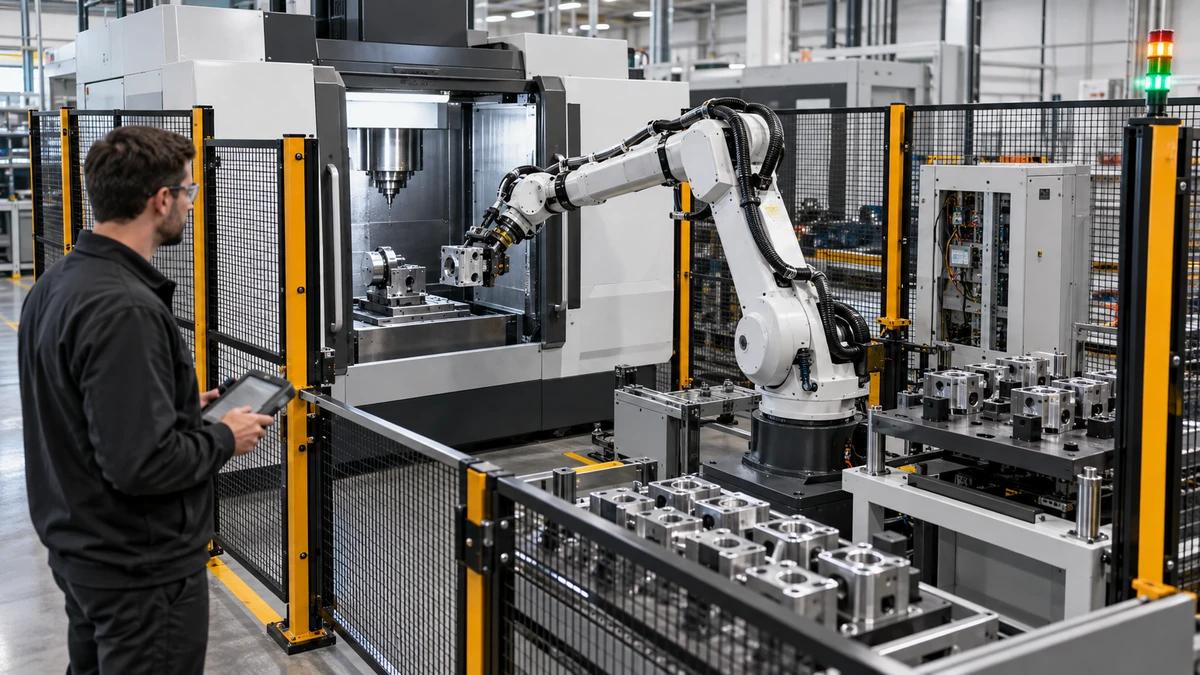
For manufacturers working with aerospace structural parts, automotive turbocharger housings, precision mold cavities, medical implants, and complex metal components, a five-axis machine can help reduce setup changes and improve tool access. The machine is not only more flexible. In the right application, it can make the process easier to control.
The ZH-500U 5-Axis Trunnion Machining Center is a useful reference. It is designed for high-precision, multi-sided machining of complex components, with 750 / 880 / 600 mm X/Y/Z travel, A-axis ±110°, C-axis 360° DDR direct drive, ±6 arcsec C-axis positioning accuracy, 20,000 rpm built-in motor BBT40 spindle, and LYNUC CNC controller.
Why Complex Parts Need Five-Axis Machining
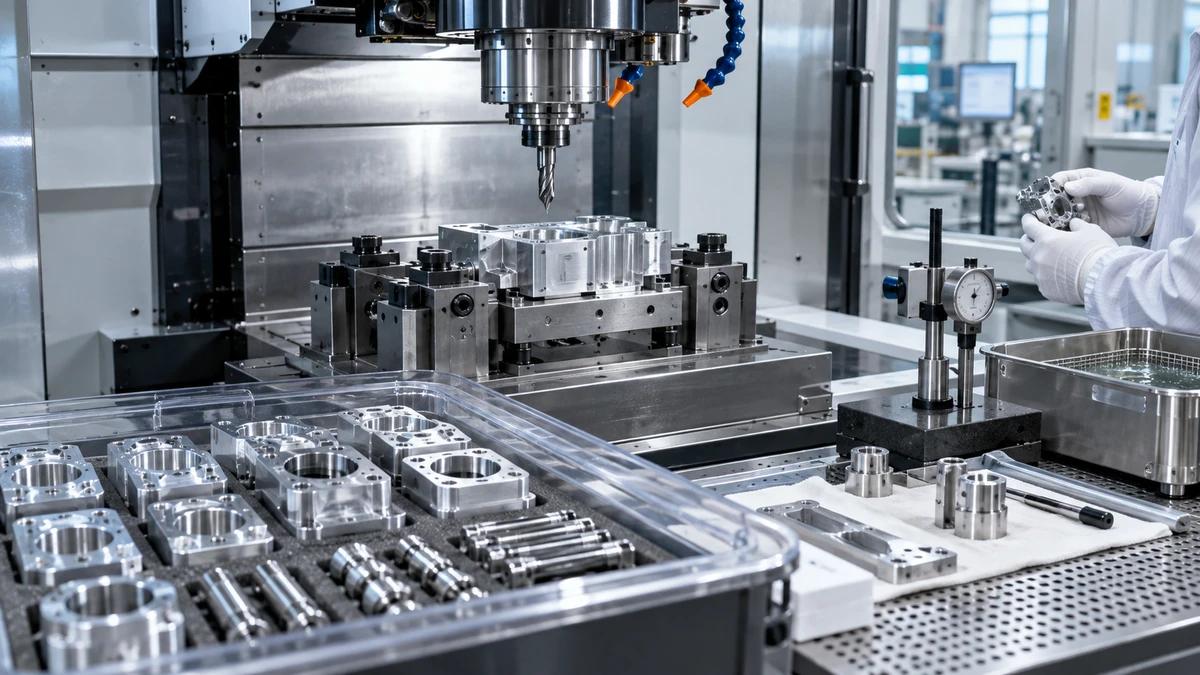
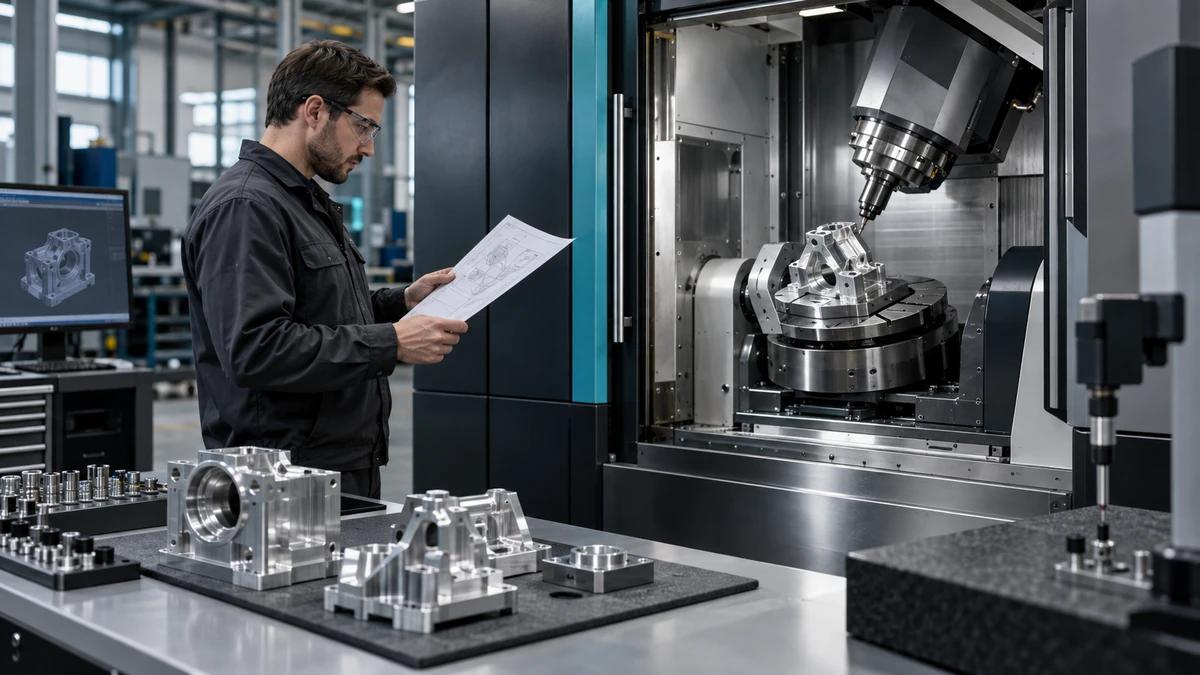
Complex parts are difficult because they rarely need only one operation. A housing may require machining on several faces. A mold cavity may need smooth contouring. A medical implant may include curved surfaces that cannot be cut easily from one direction. An aerospace part may contain thin walls, ribs, pockets, and angled features.
With a three-axis process, these features often require multiple setups. Every setup adds handling time and increases the chance of datum error. Even a careful operator cannot remove all risk from repeated reclamping.
A 5 axis machining center for complex parts allows the tool or workpiece to move through more angles. More surfaces can be reached in a single setup. The part stays fixed while the machine changes the cutting direction.
That is the real value: fewer interruptions and better control over geometry.
Main Benefits of a 5 Axis Machining Center
The benefits of five-axis machining are practical, not just technical.
| Benefit | Why It Matters in Production |
|---|---|
| Fewer setups | Reduces clamping time and alignment errors |
| Better tool access | Helps machine angled surfaces, pockets, and complex contours |
| Improved accuracy | Protects relationships between multiple faces |
| Shorter process route | Reduces secondary operations and manual correction |
| Better surface finish | Allows more suitable tool angles and smoother cutting |
| Higher flexibility | Supports mixed complex part families |
A 5-axis trunnion machining center such as the ZH-500U is especially useful when the part needs 5-side machining. The A-axis and C-axis allow the workpiece to be tilted and rotated, so the tool can reach features that would otherwise require repositioning.
This does not mean every part should move to five-axis machining. Simple plates, basic brackets, and low-tolerance parts may still be better served by a standard vertical machining center. Five-axis becomes valuable when complexity, accuracy, and setup reduction justify the investment.
Cost Factors Buyers Should Understand
The cost of a 5-axis CNC machine is not only the purchase price. Buyers should look at total investment and total production value.
Main cost factors include machine size, axis structure, spindle configuration, CNC controller, rotary table accuracy, tool magazine, probing system, coolant system, chip management, installation, training, fixtures, and after-sales support.
There are also process costs. Five-axis machining may require CAM software, operator training, better fixtures, more careful simulation, and stronger inspection methods. These costs should not be ignored.
At the same time, five-axis machining can reduce other costs. If one setup replaces three or four setups, labor time may decrease. If part accuracy improves, scrap and rework may drop. If tool access improves, surface finishing may become faster. The real question is not “Is the machine expensive?” The better question is “Can the machine reduce the cost of making this part correctly?”
For B2B buyers, that difference matters.
When the Higher Investment Is Worth It
A high precision 5-axis machining center is worth considering when the part has several of these conditions:
| Part Condition | Why Five-Axis May Help |
|---|---|
| Multiple machined faces | Reduces repeated clamping |
| Angled holes or pockets | Improves tool access |
| Complex curved surfaces | Supports smoother contour machining |
| Tight geometric relationships | Protects datum consistency |
| High-value materials | Reduces scrap risk |
| Small-to-medium complex batches | Improves setup efficiency |
| Aerospace, automotive, mold, or medical use | Matches demanding industry requirements |
If a buyer’s current process involves too many setups, unstable accuracy, long inspection loops, or excessive manual finishing, a five-axis solution may create strong value.
What Buyers Should Check Before Choosing a 5-Axis Machine
A good 5-axis machining center selection guide should begin with the part drawing. Buyers should not select the machine only by brand, machine size, or spindle rpm.
Check the workpiece size first. The part must fit within machine travel, but it also needs enough space for fixtures, tool holders, and rotary movement. The ZH-500U offers 750 / 880 / 600 mm travel, which makes it suitable for many complex medium-sized parts, but the final fit should always be checked against the actual setup.
Then check rotary axis capability. The ZH-500U has A-axis ±110° and C-axis 360°. This is important for angled access and multi-face machining. Buyers should compare these axis ranges with their real part geometry.
Spindle performance also matters. A 20,000 rpm BBT40 built-in motor spindle can support high-speed finishing and efficient machining for many precision parts. But the correct spindle choice still depends on material, tool size, surface finish, and cutting strategy.
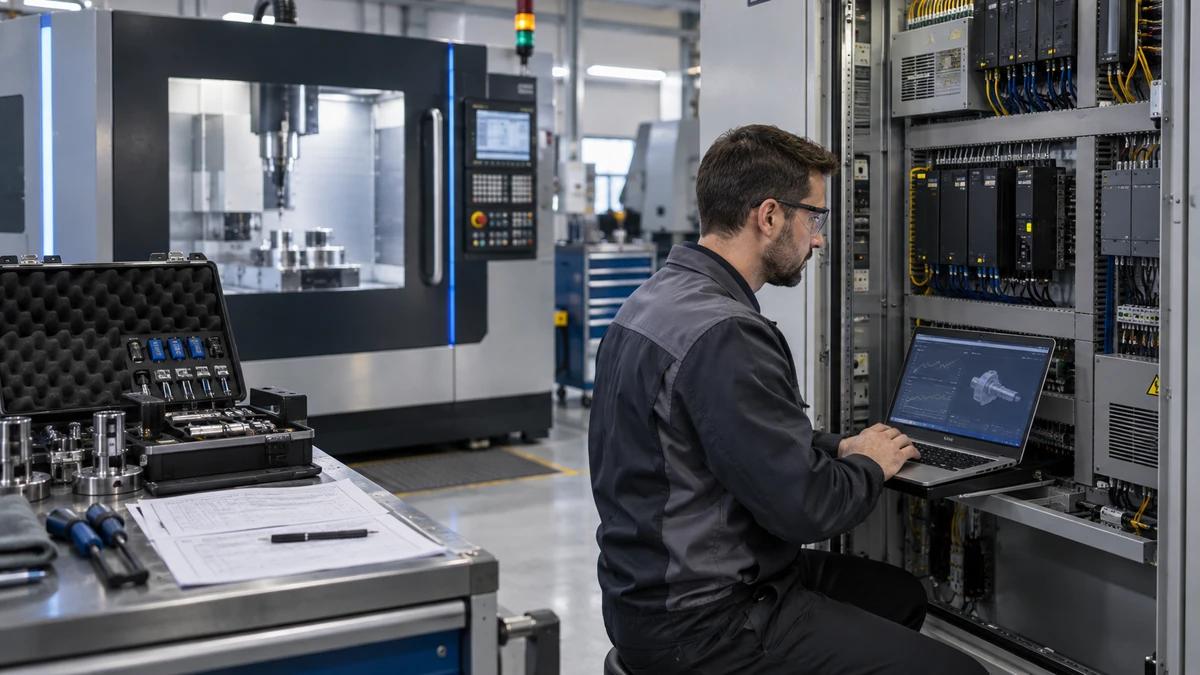
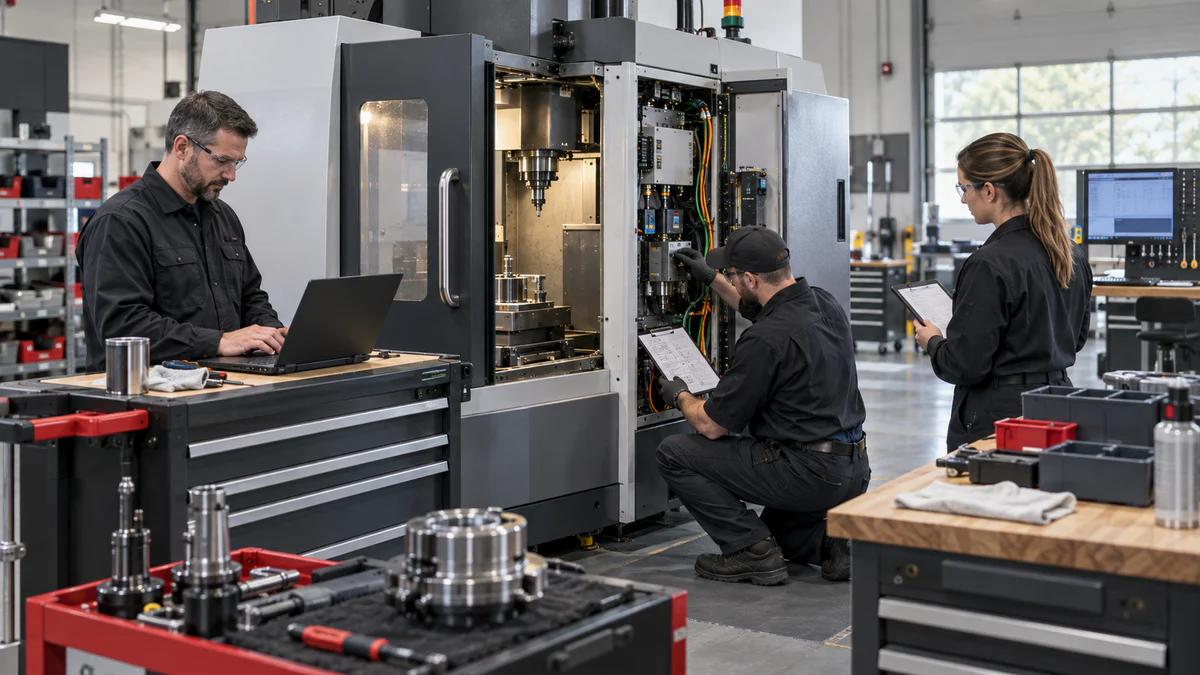
The controller and programming workflow should also be reviewed. Five-axis machining requires more planning than basic milling. CAM simulation, collision checking, toolpath strategy, and operator training are all part of the decision.
Common Selection Mistakes
One mistake is buying a five-axis machine only because it looks advanced. If the part does not need multi-angle access, the investment may not be justified.
Another mistake is ignoring fixtures. A five-axis machine still needs a stable clamping method. If the fixture blocks tool access or allows vibration, the machine cannot deliver its full value.
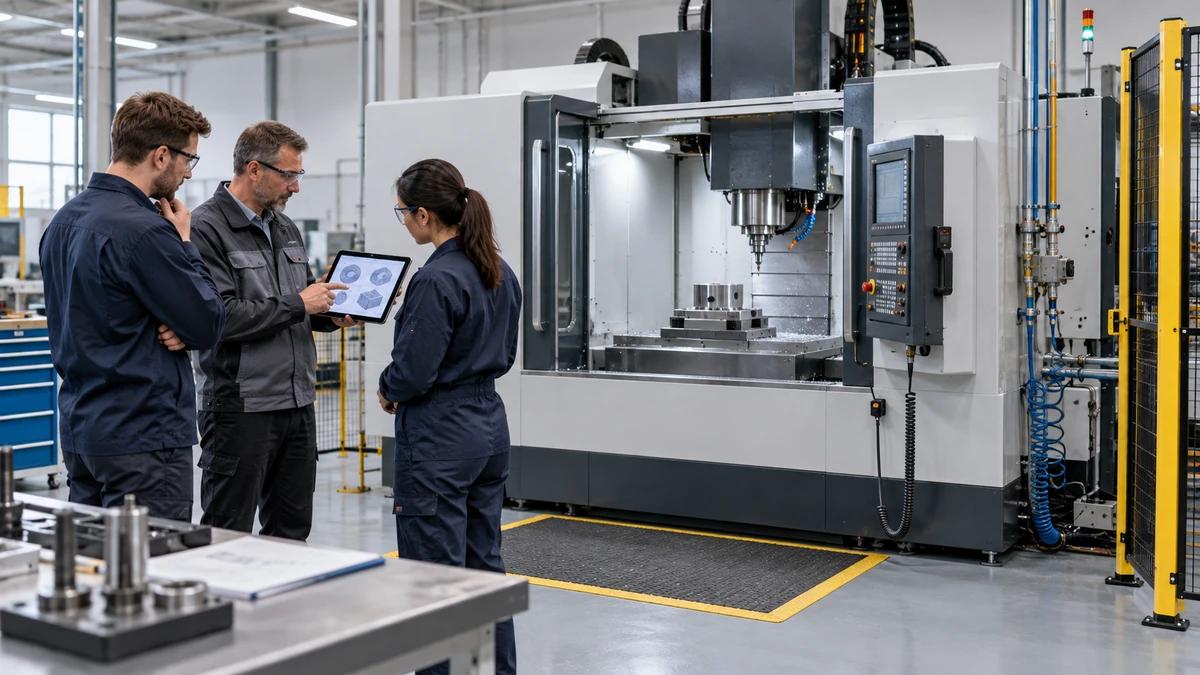
A third mistake is underestimating training. Five-axis machining requires skilled programming and careful process control. Without training, a capable machine may run like an ordinary machine.
Some buyers also focus too much on machine cost and not enough on scrap cost. For complex, high-value parts, reducing one failed batch may matter more than saving a small amount on the initial purchase.
Why ZH-500U Fits Complex Parts Manufacturing
The ZH-500U fits buyers who need multi-sided machining and complex contouring in one setup. Its trunnion structure, rotary axis range, DDR direct-drive C-axis, and high-speed spindle make it suitable for industries requiring more controlled machining.
Typical applications include aerospace structural parts, precision mold cavities, automotive turbocharger housings, and medical implants. These are parts where geometry, accuracy, and surface quality often matter more than simple cutting speed.
For buyers comparing different machine types, the ZH-500U sits closer to a flexible precision production platform than a basic milling machine. It is designed for shops where setup reduction, angular access, and process stability are part of the purchasing decision.
FAQ
What is a 5 axis machining center used for?
It is used for complex parts that require machining from multiple angles, such as aerospace components, automotive housings, mold cavities, medical implants, and precision metal parts.
Is a 5-axis machine always better than a 3-axis machine?
No. A 5-axis machine is better when the part requires multi-face machining, angled access, complex contouring, or fewer setups. For simple parts, a 3-axis machine may be more economical.
What affects 5-axis CNC machine cost?
Machine size, rotary axis accuracy, spindle type, controller, tool magazine, probing options, fixture requirements, training, installation, and after-sales service all affect total cost.
Why is the trunnion table important?
A trunnion table allows the workpiece to tilt and rotate, giving the cutting tool better access to different faces and angles while reducing manual repositioning.
What should buyers prepare before requesting a quote?
Buyers should prepare part drawings, materials, tolerances, surface finish requirements, batch size, current machining process, fixture needs, and expected output.
Conclusion
A 5 axis machining center for complex parts can improve production by reducing setups, improving tool access, protecting geometry, and supporting more stable complex contouring. Its value is strongest when the part is difficult, expensive, or sensitive to repeated clamping errors.
For buyers machining aerospace parts, automotive housings, mold cavities, medical implants, and other complex components, the ZH-500U provides a practical five-axis option. The right decision should be based on the actual part family, not only the machine category. When the workpiece demands multi-face accuracy and controlled machining, five-axis technology becomes more than an upgrade—it becomes a smarter production route.