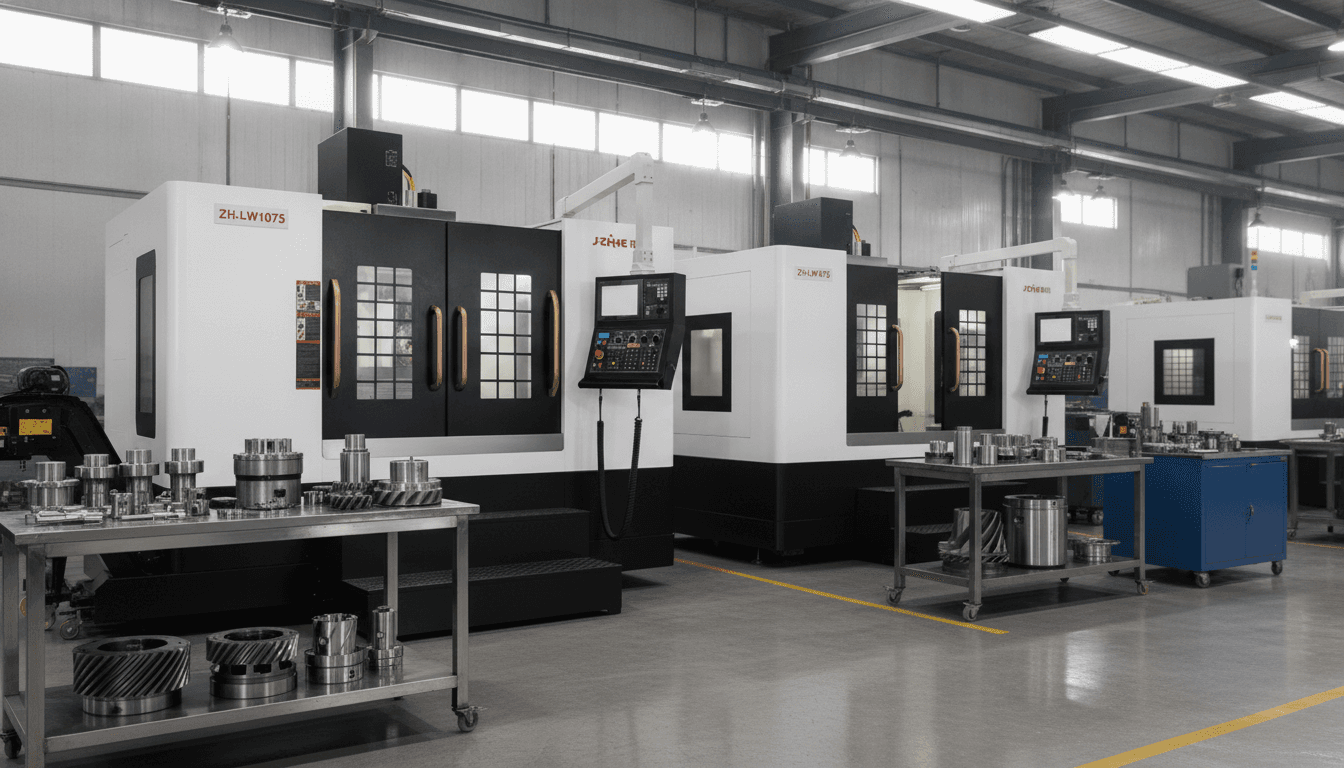
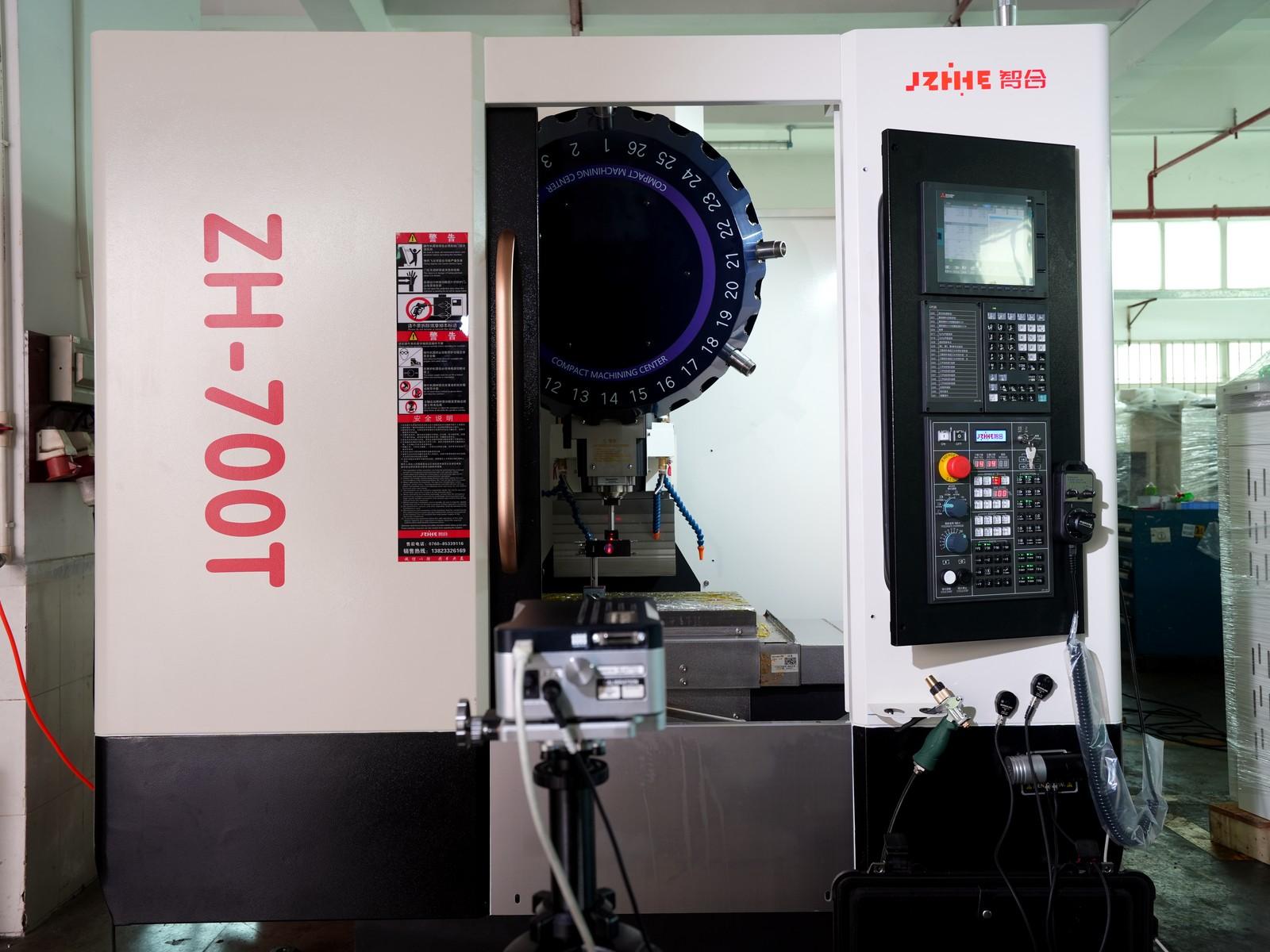
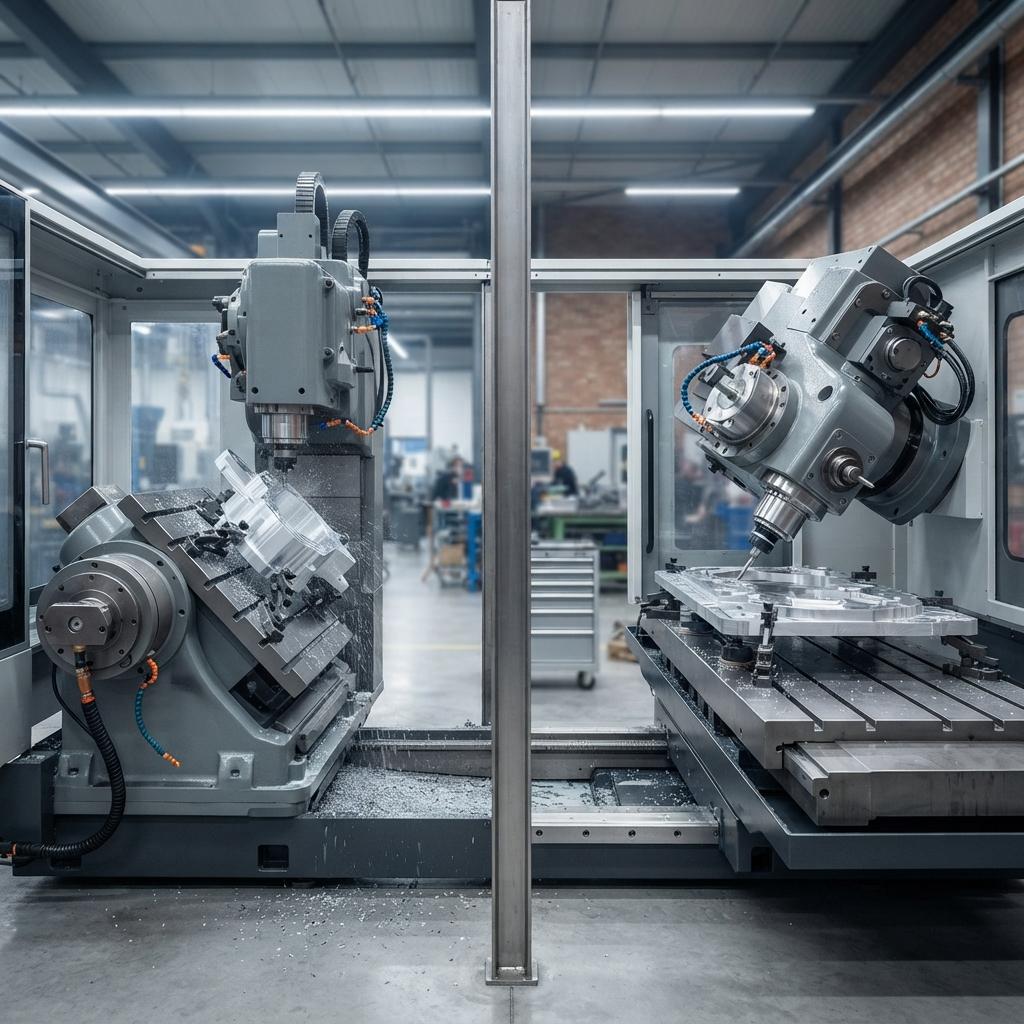
A 5-axis simultaneous machining center becomes important when a part cannot be machined cleanly from only one direction. Complex contouring often involves curved surfaces, angled pockets, deep cavities, and smooth transitions between features. If the tool cannot approach the surface properly, the process becomes slower, less stable, and more dependent on secondary finishing.
This is common in mold cavities, aerospace structural parts, automotive turbocharger housings, medical implants, and other complex components. The geometry is not flat. The tool path is not simple. The part needs controlled access from multiple angles.
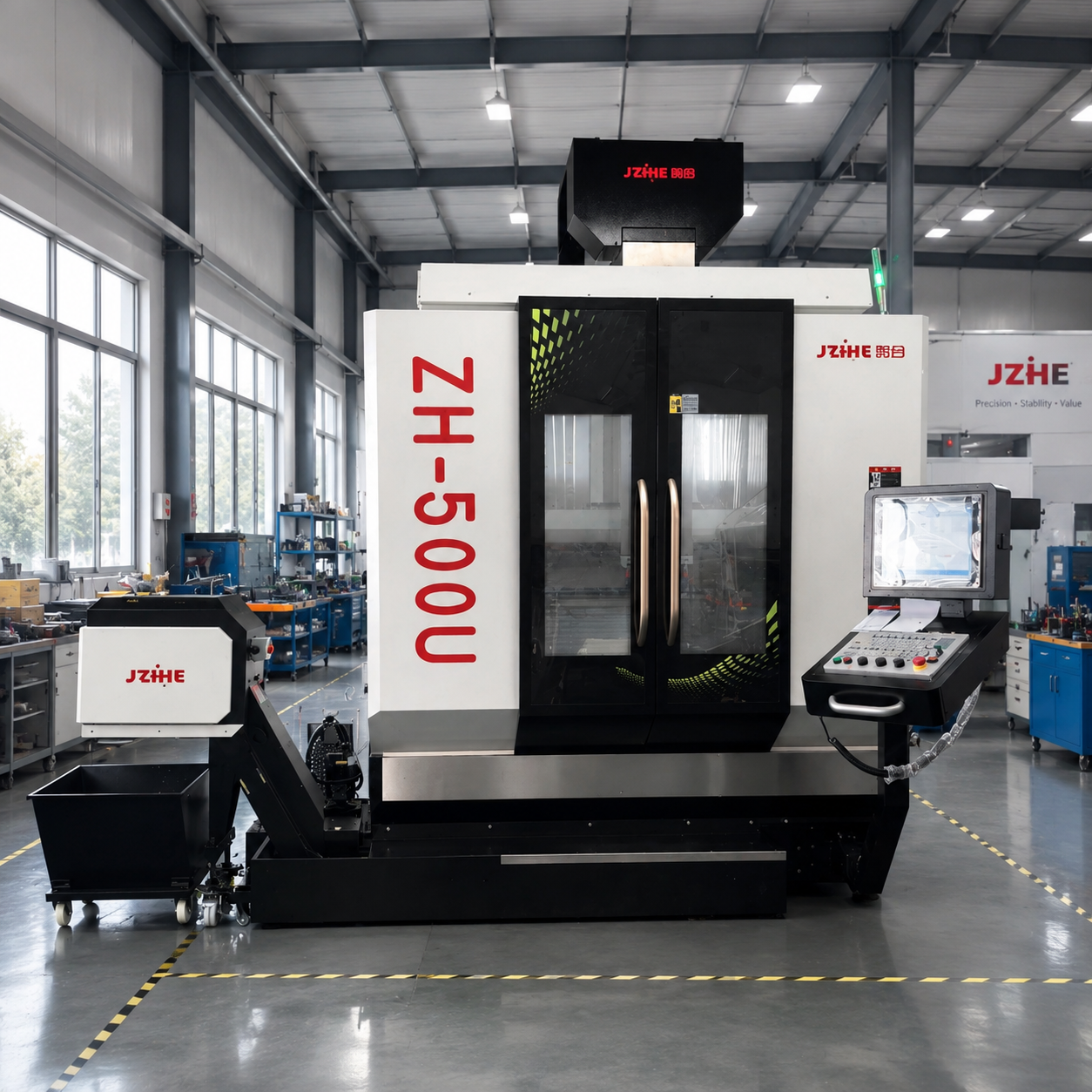
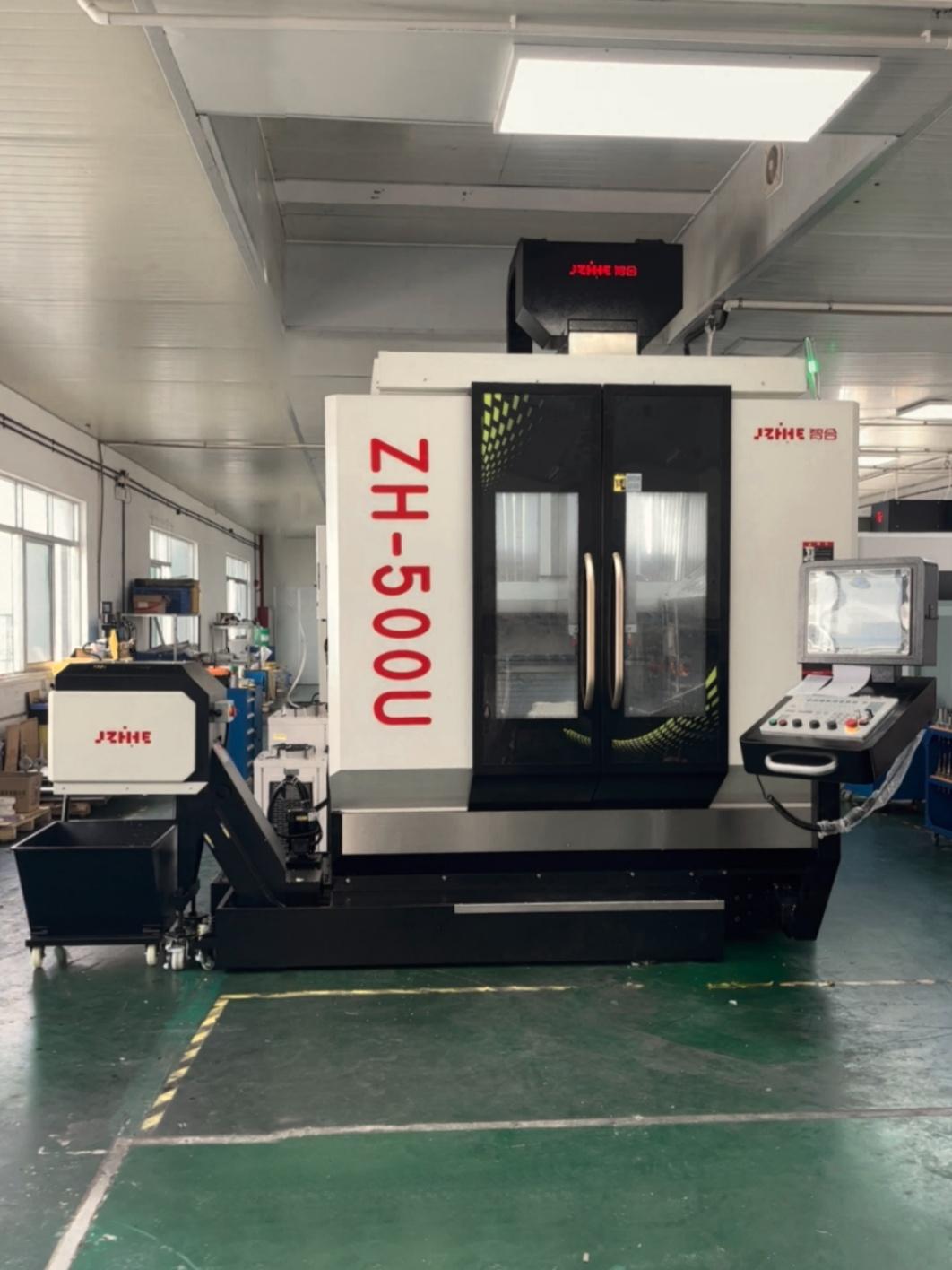
The ZH-500U 5-Axis Trunnion Machining Center is designed for this type of work. As a 5-Axis Simultaneous Machining Center · U Series model, it supports high-precision multi-sided machining and complex contouring in a single setup. Its A-axis ±110°, C-axis 360° DDR direct drive, and 20,000 rpm built-in motor BBT40 spindle make it suitable for buyers who need better control over complex surfaces.
Why Complex Contouring Is Hard on Standard Machines
Three-axis machining can produce many good parts. But complex contouring creates limitations.
When the tool approaches a curved surface from a fixed direction, the cutting angle may not stay ideal. Tool overhang may increase. Surface contact may become unstable. Certain areas may require smaller tools or longer machining time. In deep cavities, this can lead to vibration, poor surface finish, or excessive polishing after machining.
A 5-axis simultaneous machining center allows the tool and workpiece to move in a more coordinated way. The cutting direction can be adjusted during machining, helping the tool maintain better contact with the surface. For complex contours, that can improve both efficiency and finish quality.
How Five-Axis Simultaneous Motion Improves Surface Quality
Surface quality is not created by spindle speed alone. It also depends on tool engagement, tool angle, path smoothness, machine stability, and cutting parameters.
In complex contouring, five-axis motion can help the tool stay in a better cutting position. Instead of forcing the tool to reach awkward areas from one fixed direction, the machine can tilt and rotate the workpiece. This may reduce tool overhang, improve access, and help maintain more consistent contact.
For mold cavities and medical implants, this matters. A smoother machined surface may reduce later polishing. For aerospace and automotive parts, better contour control can improve dimensional consistency and reduce inspection issues.
The ZH-500U’s 20,000 rpm BBT40 spindle supports fine machining and finishing, while its trunnion structure gives the machine flexibility for angled surfaces and sculpted geometry.
Why One Setup Supports Better Contouring Accuracy
Complex contouring often includes related surfaces. If those surfaces are machined in separate setups, alignment becomes harder to control. Even a small re-clamping error can affect the transition between surfaces.
A 5-axis trunnion machining center helps keep more of the process inside one setup. The part can remain clamped while the table rotates and tilts. This protects the datum relationship and reduces the need for manual repositioning.
For buyers, this creates two practical advantages:
| Advantage | Production Value |
|---|---|
| Fewer setups | Less handling time and lower re-clamping risk |
| Better surface continuity | Improved transition between complex features |
| Improved tool access | Easier machining of angled and deep areas |
| More stable accuracy | Better consistency across related surfaces |
| Lower secondary work | Less polishing or correction after machining |
The result is not only a better-looking part. It is a more controlled process.
Best Applications for a 5-Axis Simultaneous Machining Center
A 5-axis simultaneous machining center is especially useful for parts that combine complex geometry and high accuracy requirements.
| Industry | Typical Parts | Why Five-Axis Simultaneous Machining Helps |
|---|---|---|
| Mold manufacturing | Mold cavities, inserts, die surfaces | Smooth contouring and reduced polishing |
| Aerospace | Structural parts, brackets, ribs | Multi-angle access and stable feature relationships |
| Automotive | Turbocharger housings, complex housings | Fewer setups and better surface control |
| Medical | Implants and precision components | Complex organic shapes and tight accuracy |
| Precision manufacturing | Custom metal parts | Flexible machining for mixed part families |
The ZH-500U fits these applications because it is not limited to one narrow part type. It is designed for complex components that need five-side machining, angled access, and high-precision contouring.
What Buyers Should Check Before Choosing This Machine Type
Before choosing a 5-axis simultaneous machining center, buyers should check whether their parts truly need simultaneous five-axis movement or mainly need indexed five-axis positioning.
Some parts only need the workpiece positioned at different angles before three-axis cutting begins. Other parts require continuous five-axis motion to create smooth surfaces. Understanding this difference can prevent overbuying or underbuying.
Buyers should ask:
| Question | Why It Matters |
|---|---|
| Does the part include curved 3D surfaces? | Shows whether simultaneous motion is useful |
| Are there angled features on several faces? | Helps evaluate trunnion table value |
| Is surface finish a major concern? | Influences spindle and toolpath requirements |
| Are current setups causing errors? | Shows whether one-setup machining can help |
| Is polishing time too high? | May indicate contouring improvement potential |
| Is the team ready for five-axis programming? | Affects actual production success |
A five-axis machine is powerful, but only when the process is prepared for it.
Common Mistakes in Complex Contouring Projects
One common mistake is assuming five-axis machining automatically improves every part. It does not. If the part is simple, a three-axis or standard vertical machining center may be more economical.
Another mistake is ignoring programming skill. Complex contouring depends heavily on CAM strategy, tool selection, and simulation. A good machine needs good process planning.
A third mistake is focusing only on machine movement while ignoring fixture design. The fixture must hold the part securely while leaving enough access for tilted and rotated machining. Without that, the machine cannot fully use its five-axis capability.
FAQ
What is a 5-axis simultaneous machining center?
It is a CNC machining center that can coordinate multiple axes at the same time, allowing the tool and workpiece to move together for complex surfaces, angled features, and smooth contouring.
Is simultaneous five-axis machining different from indexed five-axis machining?
Yes. Indexed machining positions the part at an angle and then cuts. Simultaneous machining coordinates axis movement during cutting, which is useful for smooth complex contours.
What parts benefit most from complex contouring?
Mold cavities, aerospace structural parts, medical implants, turbocharger housings, and other curved or multi-face components benefit strongly from five-axis contouring.
Why consider the ZH-500U?
The ZH-500U offers a trunnion table with A-axis ±110° and C-axis 360°, DDR direct drive, a 20,000 rpm BBT40 spindle, and a design aimed at complex multi-sided machining.
Conclusion
A 5-axis simultaneous machining center is a better choice for complex contouring when the part requires smooth surface transitions, angled access, and controlled machining from multiple directions. It helps reduce setup changes, improve tool access, and support better surface quality.
For manufacturers working with mold cavities, aerospace components, automotive housings, and medical implants, the ZH-500U provides a practical five-axis platform. Its trunnion design, high-speed spindle, rotary accuracy, and controlled machining capability make it suitable for complex parts that demand more than basic milling.
The right buying decision starts with the part geometry. If the drawing includes curved surfaces, angled features, and multi-face accuracy requirements, a five-axis simultaneous machining center may not be an upgrade for appearance—it may be the machine that makes stable production possible.