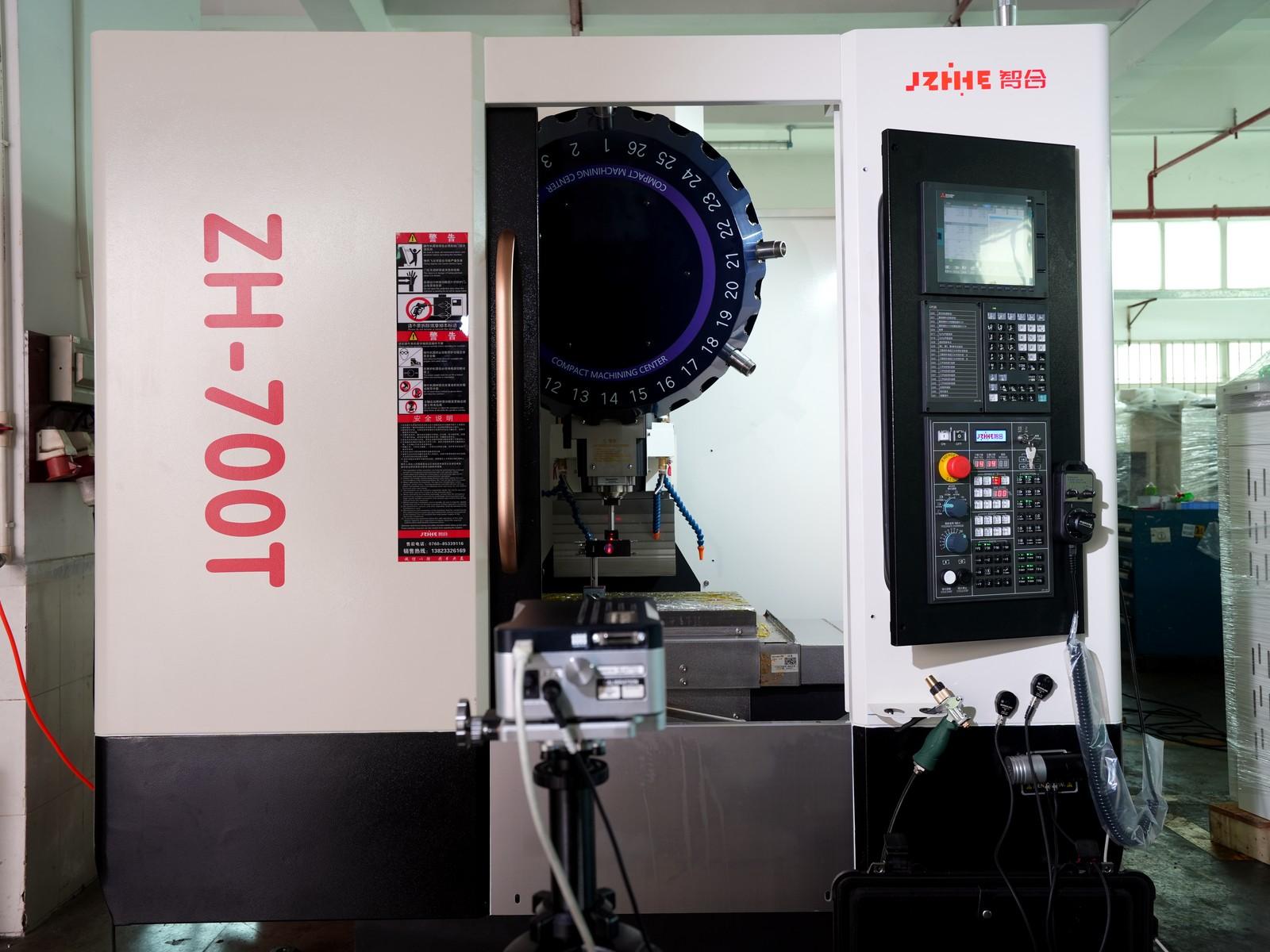
For buyers comparing ZH-600T vs ZH-700T, if your part and complete fixture fit comfortably inside the ZH-600T's working envelope, the larger ZH-700T is not automatically a better purchase. The published family comparison gives the ZH-700T 100 mm more X-axis travel and 100 mm more table length, while Y travel, Z travel and maximum table load remain the same. Choose between them by checking the full clamp and tool-path envelope of your current and likely future parts. If the extra length does not remove a real setup or access problem, ask why you need it.
This comparison is for production buyers with hole-intensive small or medium parts. It uses the current Zhihe drilling and tapping center family comparison as a starting point. The final configuration, options and acceptance limits belong in the quotation and technical agreement for the machine being ordered.
What the published comparison actually says
| Item | ZH-600T | ZH-700T | Buyer implication |
|---|---|---|---|
| X-axis travel | 600 mm | 700 mm | The main published reach difference is along X. |
| Y-axis travel | 400 mm | 400 mm | The larger model does not solve a Y-axis reach problem. |
| Z-axis travel | 300 mm | 300 mm | Check fixture stack and longest tool on either model. |
| Worktable area | 700 × 420 mm | 800 × 420 mm | Extra table length may help clamp placement. |
| Maximum table load | 250 kg | 250 kg | Extra length does not increase the published load rating. |
These are figures shown in the current product-family table, not a promise that every offered configuration is identical. Request the current model drawing and option list before approving a purchase. In particular, confirm spindle, controller, tool magazine, coolant, probing and any rotary equipment on the quoted machine.
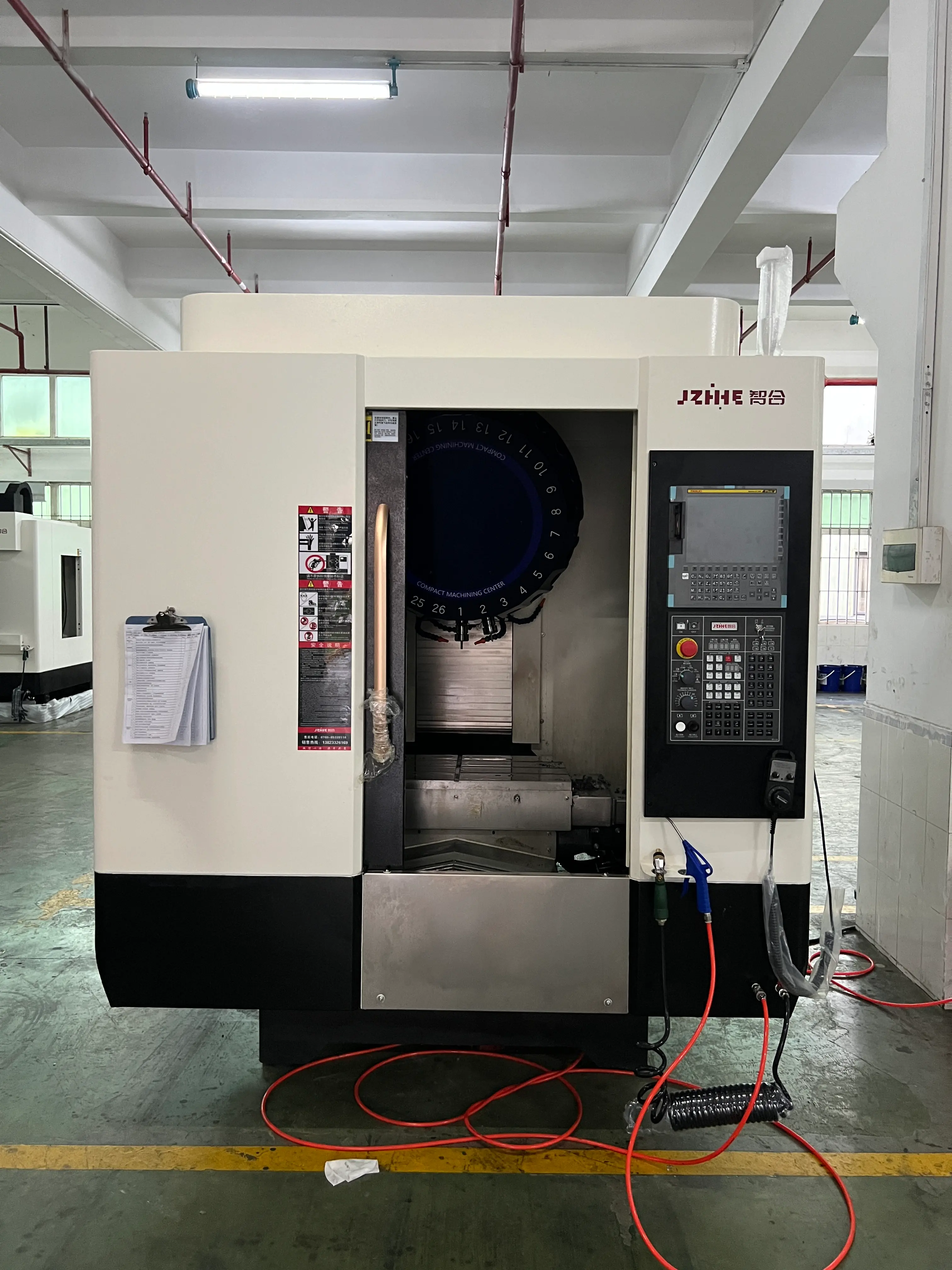
Why a longer table is not the same as a longer usable part
The part is only one item in the work envelope. A real setup includes the fixture body, locating stops, clamp swing, toolholder, longest tool, safe approach and clearance for loading. A plate may measure less than 600 mm along X yet need more travel because clamps occupy both ends. Conversely, a part slightly longer than the nominal X travel may not require its entire length to be machined; the actual cutting features and setup strategy decide.
Draw the setup in plan and side views. Mark the coordinates of the first and last machined features, then add tool approach and overtravel allowances from the approved process. Measure the complete fixture mass, not just the workpiece. Check spindle-to-table clearance at the tallest stack and the longest tool. Use the machine supplier's current layout to resolve any collision or loading uncertainty.
For a buyer comparing ZH-600T vs ZH-700T, the decisive question is: Which critical operation fails on the smaller setup, and does the larger X axis remove that failure without creating another one? If the problem is Y reach, Z clearance, load or heavier milling duty, the published ZH-700T difference alone is unlikely to solve it.
Build a three-part selection test
Choose three parts from the intended production mix:
- Frequent part: the component that consumes the most scheduled machine time.
- Boundary part: the longest or most awkward fixture and tool combination, not merely the largest bare part.
- Changeover part: a different job that exposes setup, tooling and inspection delays.
For each, record drawing revision, material and blank, feature locations, hole and thread schedule, fixture footprint, complete loaded mass, longest tool, expected batch size and acceptance dimensions. Map the features to one setup or state exactly where a transfer occurs. Do not infer a one-setup process from X-axis travel alone.
If all three fit the ZH-600T with a sensible margin for access and future adjustment, ask the supplier to quote it as the baseline. If the boundary part requires X travel beyond that model but fits the ZH-700T's complete setup, request both quotes against the same option list and trial plan. If neither machine passes, review a different size or machine family rather than forcing the process into the larger of the two.
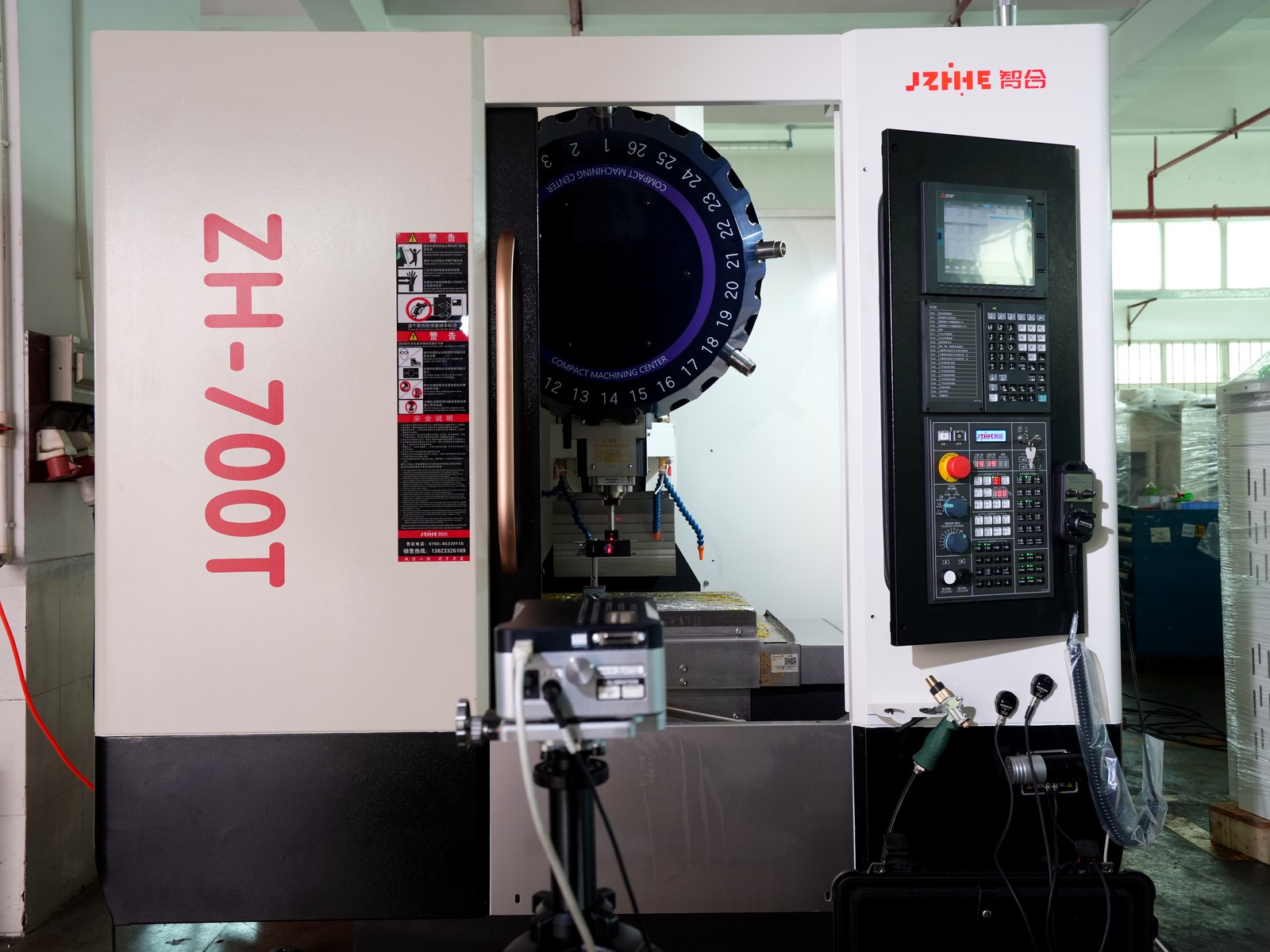
Run one comparable trial before the purchase order
Ask for a representative cutting trial only after the supplier has accepted the same drawing, fixture and configuration assumptions for both candidates. The trial should include the real hole and thread sequence, any light milling, normal tool changes, loading, chip removal and inspection. Measure the relationships that matter to assembly, such as hole pattern to locating face or thread to bore, using the drawing's datum system.
Record elapsed time from loading to accepted part, with setup and inspection stated separately. Include a repeat loading or normal tool-change event if that happens in production. An ideal cycle on a carefully prepared demonstration piece is useful for learning, but it is not a production-capacity guarantee. Confirm the required sample quantity and pass limits in the acceptance plan.
Send a quotation package that makes the answers comparable
Send both model requests with the same controlled drawing, CAD if available, part mix, material, fixture concept, tool list and target output. Ask Zhihe to state:
- The exact machine model and included options.
- The verified part, fixture and tool-clearance fit.
- The proposed operation sequence and number of setups.
- The trial part, measurement method and acceptance limits.
- The included tooling, fixture, coolant, chip-handling and service scope.
- The quotation assumptions that need buyer confirmation.
This lets procurement compare the extra reach against its real effect on accepted output and process risk. Confirm price, delivery, installation and warranty in the project quotation; no general article can establish those terms for an individual order.
FAQ
Is the ZH-700T more accurate than the ZH-600T?
The current family table lists the same positioning-accuracy and repeatability figures for both models over its stated measurement length. Those machine-level figures do not prove that either model will meet a particular part tolerance. Agree test conditions and a representative part inspection with the supplier.
Does the ZH-700T have a higher table-load rating?
The published comparison lists 250 kg for both. Include the workpiece, fixture, clamps and optional equipment in the loaded-mass calculation, and confirm the quoted configuration.
Can the extra X travel reduce setup count?
Sometimes. It can help if the complete feature span and fixture arrangement fit on the ZH-700T but not on the ZH-600T. Demonstrate the proposed one-setup process with tool access and inspection; the nominal travel difference alone is insufficient evidence.
When should I consider a general-purpose VMC instead?
Review a VMC when the work requires more Y or Z clearance, greater loaded capacity, larger tools, heavier material removal or broader part variation than the drilling and tapping center can reasonably support. Use the same drawing and acceptance plan for the comparison.
Request a model-fit review
Send Zhihe CNC your controlled drawing, three-part production mix, material, fixture concept, tool list and required inspection relationships through the inquiry page. Ask for a side-by-side ZH-600T vs ZH-700T fit review with the exact quoted configurations and an agreed trial plan. For additional context, see the ZH-700T guide versus a general-purpose VMC.