How a 5-Axis Trunnion Machining Center Improves Complex Parts Manufacturing
A 5-axis trunnion machining center is not purchased only because it looks more advanced than a standard three-axis machine. For most factories, the decision comes from a very practical problem: complex parts are becoming harder to finish with repeated setups, manual repositioning, and separate machining operations.
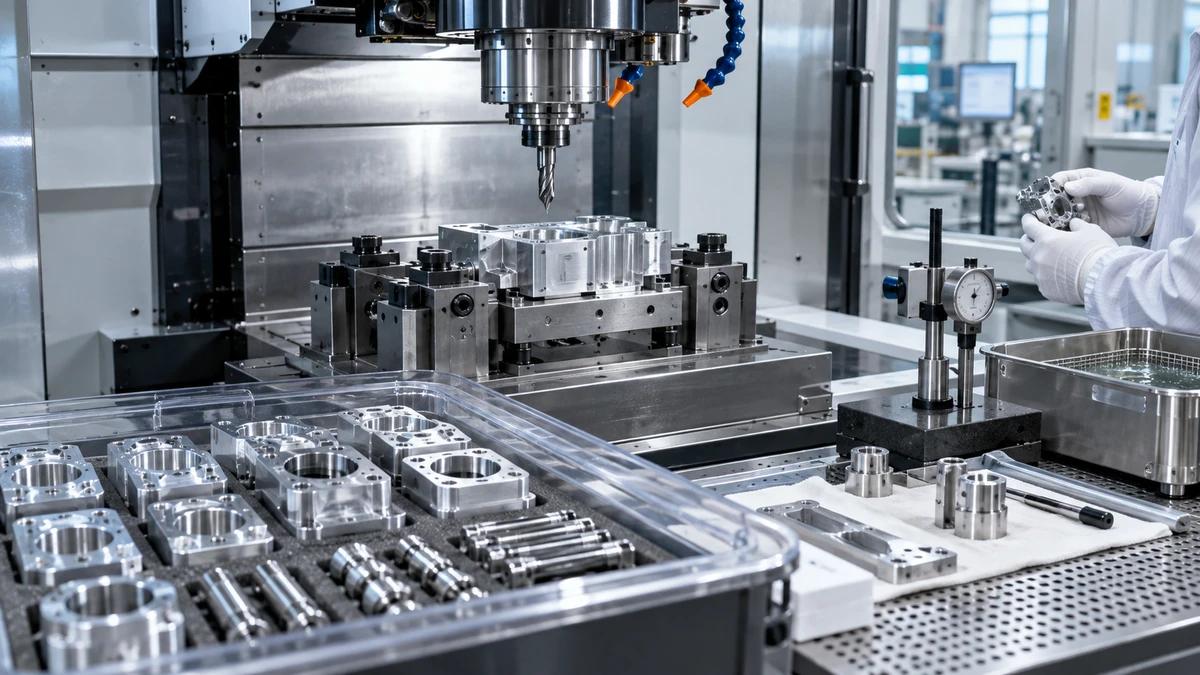
A bracket may need angled holes. A housing may require several accurate faces. A mold cavity may include curved surfaces that are difficult to reach from one direction. A medical or aerospace component may demand clean contouring and tight geometric consistency. When these features are machined through several clamping steps, small errors can slowly accumulate.
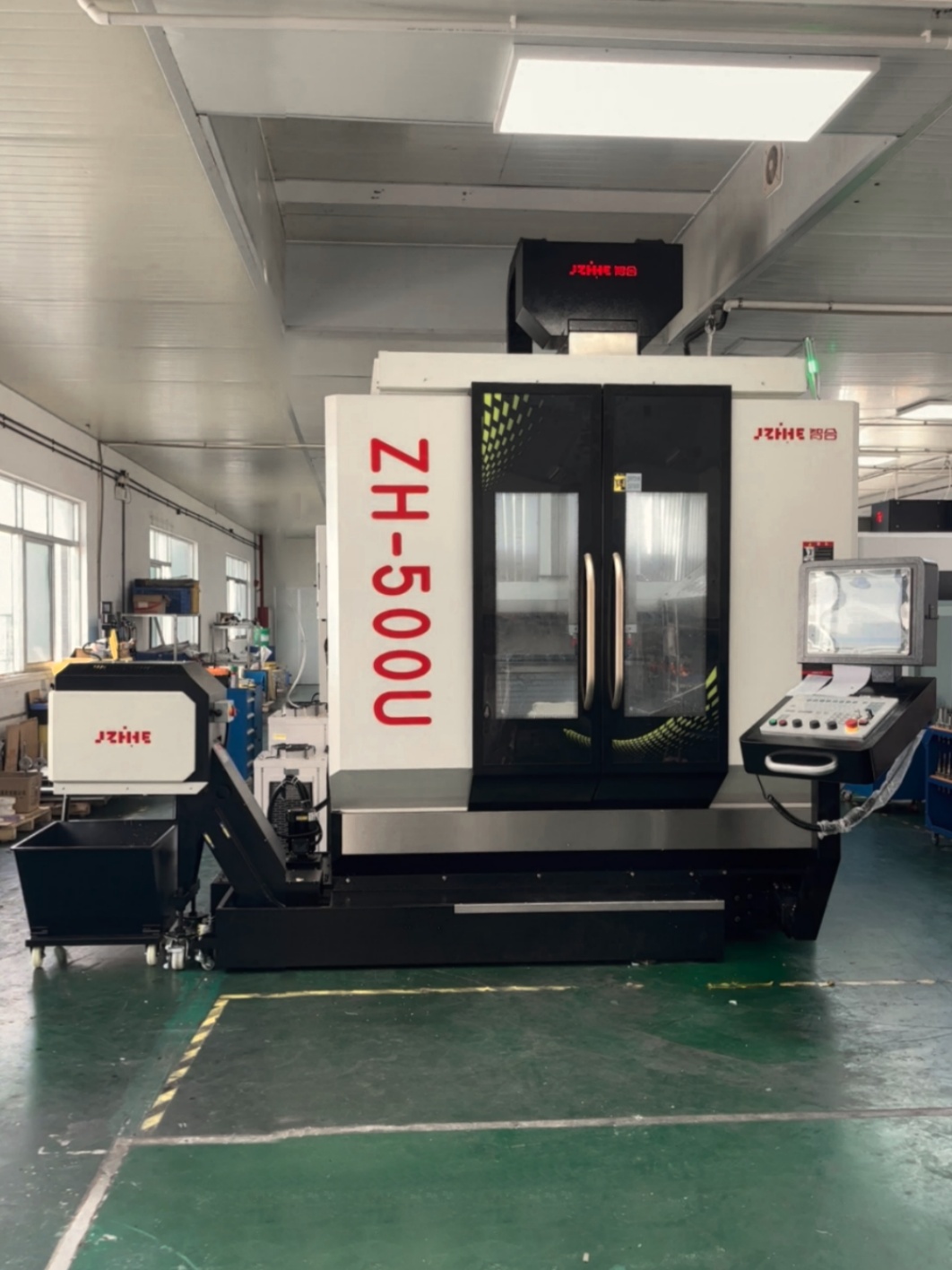
That is where a machine such as the ZH-500U 5-Axis Trunnion Machining Center becomes valuable. With 750 / 880 / 600 mm X/Y/Z travel, an A-axis ±110° trunnion table, C-axis 360° DDR direct drive, and a 20,000 rpm built-in motor BBT40 spindle, it is designed for high-precision, multi-sided machining of complex components.
Why Complex Parts Create Production Pressure
Complex parts rarely create only one machining challenge. They usually combine several problems at once: difficult access, multiple surfaces, tight tolerances, and strict inspection requirements.
A simple three-axis machining center may handle flat surfaces, drilling, and basic pocketing well. But when a part needs machining from different angles, the operator may need to remove the workpiece, reposition it, re-clamp it, and re-establish the datum. Each step takes time. Worse, each step creates risk.
In real production, the problem is not always dramatic. The part may not fail immediately. Instead, one hole shifts slightly. One surface loses alignment. One angled feature needs extra correction. Over a batch, those small issues can turn into scrap, rework, and delayed delivery.
A 5-axis trunnion machining center helps reduce this risk by allowing more features to be completed in one setup.
How One Setup Improves Accuracy
The strongest advantage of five-axis machining is not only movement. It is control.
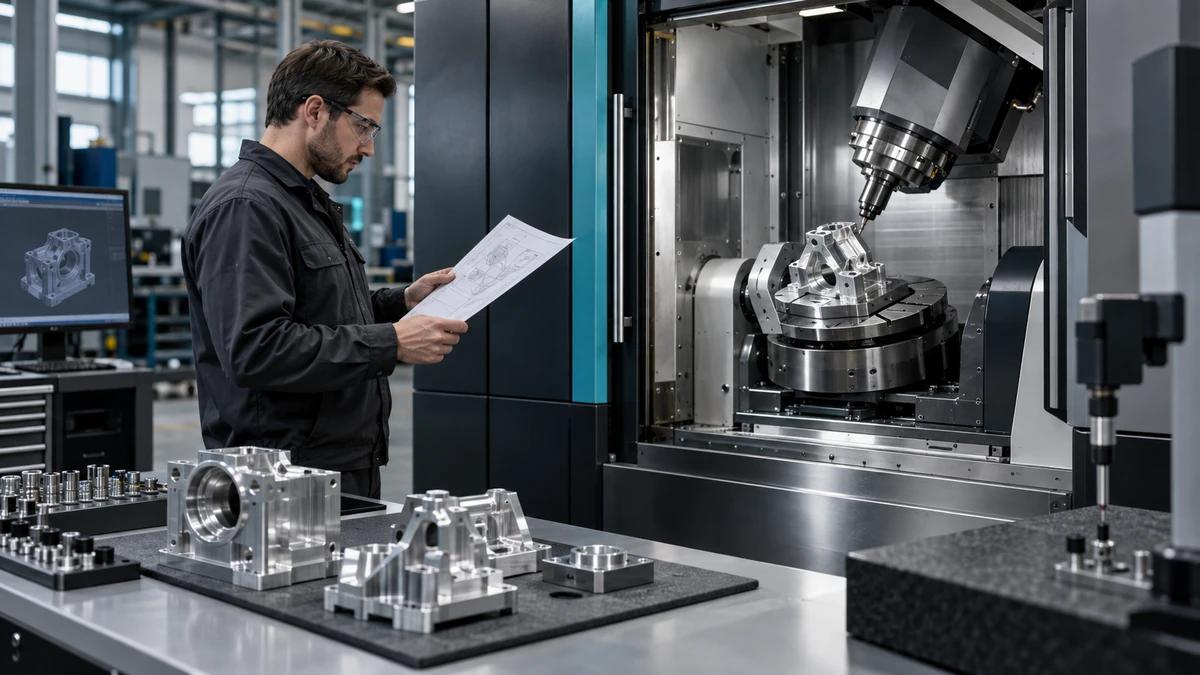
When the workpiece stays clamped in one position, the relationship between different faces is easier to preserve. The machine can approach the part from different angles while the original datum remains stable. That is especially important for parts with angled pockets, curved surfaces, side holes, and complex contours.
For the ZH-500U, the A-axis ±110° and C-axis 360° give the machine strong positioning flexibility. The DDR direct-drive C-axis with ±6 arcsec positioning accuracy also supports precise angular control. For manufacturers handling high-value parts, this kind of stability can reduce inspection pressure and improve part-to-part consistency.
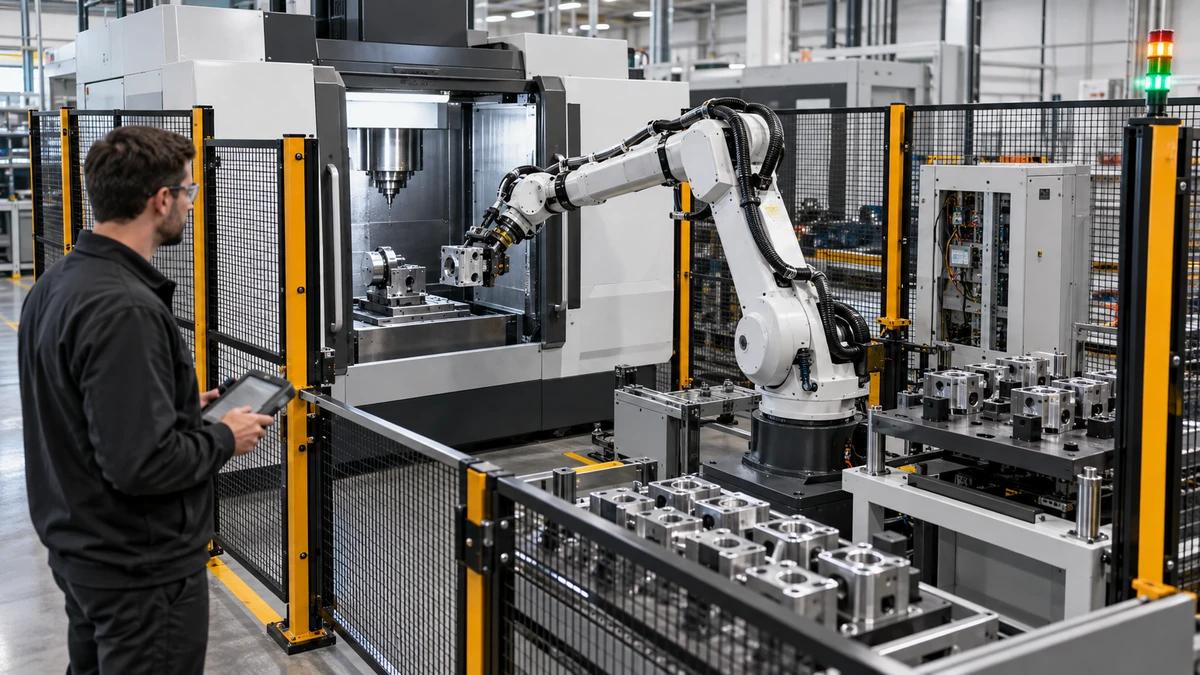
One setup also reduces labor. Operators spend less time moving the part and more time controlling the process. In small and medium batch production, that can be a major improvement.
Where a 5-Axis Trunnion Machining Center Fits Best
A 5-axis trunnion machining center is most useful when the part shape justifies the investment. Not every component needs five-axis machining, and buyers should be honest about that. But for certain industries, the advantages are easy to see.
| Application Area | Typical Parts | Why Five-Axis Helps |
|---|---|---|
| Aerospace | Structural parts, brackets, ribs | Multi-face machining and accurate contour control |
| Automotive | Turbocharger housings, complex brackets | Fewer setups and better feature alignment |
| Mold manufacturing | Mold cavities, inserts, dies | Smooth contouring and improved tool access |
| Medical | Implants, precision components | Complex surfaces and high accuracy requirements |
| Precision hardware | Small complex metal parts | Better efficiency for angled and multi-sided features |
The ZH-500U is designed for industries that need complete 5-side machining and complex contouring in a single setup. That makes it suitable for production environments where accuracy, repeatability, and process control matter more than basic cutting capacity.
Why Spindle Speed and Structure Both Matter
The 20,000 rpm BBT40 built-in motor spindle gives the ZH-500U the speed needed for fine milling, finishing, and efficient machining of certain precision components. High spindle speed can help improve surface quality, especially when machining aluminum, molds, or complex contours with smaller tools.
Still, spindle speed is only one part of the story.
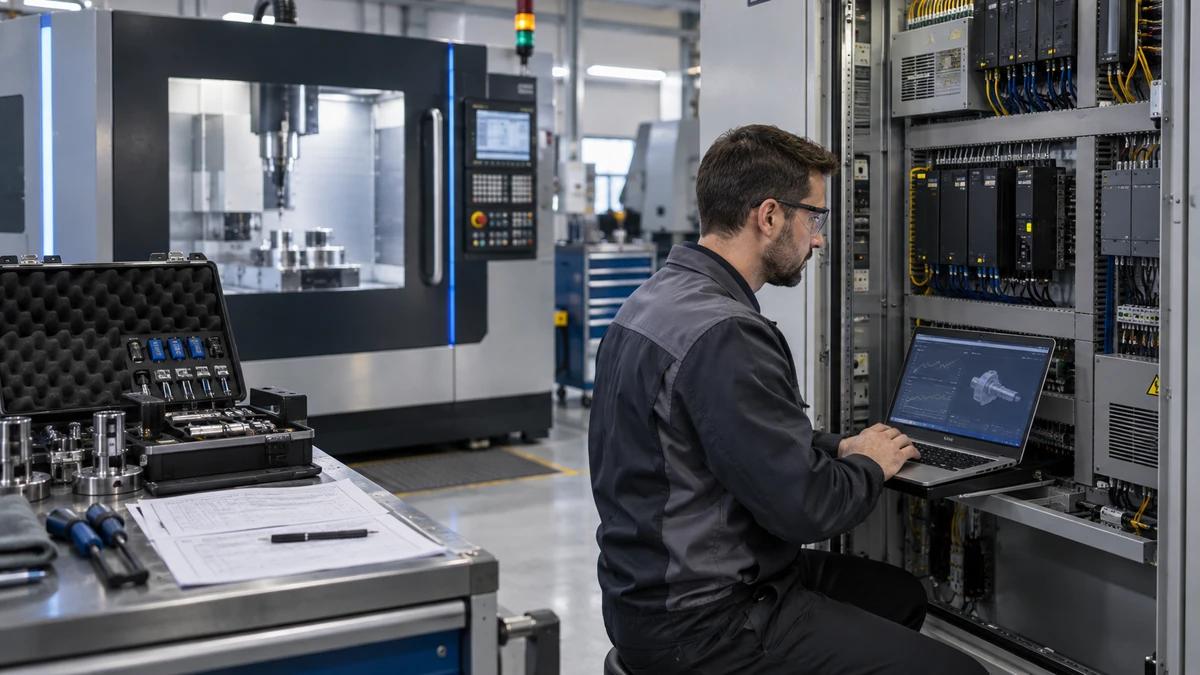
A five-axis machine must also remain stable during positioning and cutting. The trunnion table must rotate accurately. The control system must coordinate motion smoothly. The machine structure must support repeated machining without vibration or drift.
That is why buyers should evaluate the whole machine, not just one impressive specification.
Buyer Checklist Before Choosing a 5-Axis Machine
Before selecting a 5-axis trunnion machining center, buyers should prepare the real part data:
| What to Check | Why It Matters |
|---|---|
| Part size | Confirms whether the workpiece fits the travel and rotary range |
| Material | Affects spindle choice, tooling, coolant, and cutting strategy |
| Number of setups now | Shows whether five-axis machining can reduce process time |
| Critical tolerances | Identifies where accuracy must be protected |
| Surface requirements | Helps evaluate spindle speed and finishing capability |
| Fixture method | Decides whether one-setup machining is realistic |
| Batch size | Determines whether the investment improves production cost |
The right machine choice starts from the drawing, not the machine catalog.
FAQ
Is a 5-axis trunnion machining center only for aerospace parts?
No. It is also suitable for automotive housings, precision mold cavities, medical implants, complex brackets, and other multi-sided components.
Does five-axis machining always reduce cost?
Not always. It reduces cost when fewer setups, better accuracy, shorter handling time, and lower scrap justify the machine investment.
Why does trunnion table accuracy matter?
The trunnion table controls angular positioning. If the angle is unstable, holes, surfaces, and contours may not align correctly.
Conclusion
A 5-axis trunnion machining center improves complex parts manufacturing by reducing setups, protecting geometric accuracy, and giving the tool better access to difficult features. For parts that require multi-face machining, angled surfaces, and complex contouring, the ZH-500U offers a practical production platform.
Its travel range, A/C-axis trunnion table, DDR direct drive, high-speed BBT40 spindle, and LYNUC controller make it suitable for manufacturers that need controlled machining rather than repeated manual repositioning. For buyers, the key is simple: match the machine to the part family, the fixture plan, and the production rhythm.