

CNC machine energy consumption becomes useful to a buyer only when the meter boundary, time window, machine state, auxiliary equipment, part mix, and accepted output are declared. A nameplate, connection rating, or idle snapshot cannot answer the commercial question by itself. Measure a complete production route and keep rejected or held work visible. For a Zhihe CNC comparison, buyers should provide the representative part family, material, batch mix, shift pattern, program, utilities, peripherals, inspection route, and local energy cost method. Zhihe CNC can help define the quoted configuration and a trial boundary. The actual plant result depends on site conditions and operating choices. Choose the Denominator Before the Meter Energy per hour, per cycle, per kilogram removed, per feature, and per accepted part tell different stories. For procurement, accepted parts often connect energy with production value, but only when the quality and time boundary are explicit. A research or process team may need several denominators. Write the denominator at the top of the test sheet. Define what counts as accepted, when inspection is complete, how rework is treated, and whether upstream or downstream processes are included. Do not discard the energy attached to held or failed work; put it in a separate lane. Draw the Meter Boundary in Red Sketch the feeds that enter the machine system. Include the machine, coolant pumps, spindle cooling, chip conveyor, chiller, mist extraction, transformer losses where relevant, compressed air, hydraulic unit, robot, pallet system, inspection station, and external computer. Mark what the meter sees and what it does not. A meter on the main machine feed may miss separately powered accessories. A plant-level meter may include unrelated users. Neither reading is wrong when its scope is clear. The error comes from comparing two proposals with different boundaries. Boundary choice What it can answer What it may miss Record needed Machine main feed Electrical pattern of the connected machine package Separate auxiliaries and central utilities Configuration and option map Cell feed Combined electrical use of machine and cell equipment Central air, extraction, or cooling Cell one-line diagram Facility submeter Area or line consumption Allocation between machines and jobs Time-synchronized production log Utility estimate Cost allocation for electricity/air/cooling Fast changes and local losses Method, rates, assumptions, date Accepted-part model Commercial energy intensity Causes hidden without state data Meter trace plus quality disposition Use one primary boundary and disclose supplementary estimates. Divide the Shift Into Observable States Create states that operators can identify: off, energized standby, warm-up, setup, cutting, tool change, probing, chip or coolant service, inspection wait, fault hold, planned stop, and shutdown. Record timestamps automatically where possible and verify the definitions on the floor. This state map explains why two shifts with the same program can use different energy. One may wait energized for a fixture. Another may batch tool preparation and shorten standby. CNC machine energy consumption is partly an equipment question and partly a production-system question. Run a Representative Production Window Choose a window long enough to include ordinary events: setup, warm-up, loading, machining, tool changes, cleaning, inspection, planned pauses, and a realistic part mix. Freeze the configuration and identify deviations. A short hero cycle can exclude the very states that dominate a high-mix factory. Do not force faults or unsafe conditions. Use naturally occurring or safely planned events. If the trial omits breakdowns, maintenance, or seasonal temperature effects, say so. The report should distinguish observed values from later estimates. Keep Power, Energy, and Capacity Separate Power is a rate at a moment or interval. Energy accumulates across time. Connection data supports installation design. Capacity describes released output under a defined route. Mixing these terms produces confident but meaningless comparisons. Record units on every chart and table. Synchronize the energy trace with the machine-state and production log. If sampling resolution, meter accuracy, or data gaps affect interpretation, document them. Do not invent precision beyond the instrument and method. Use ISO 14955 as a Boundary Reminder ISO 14955-1:2017 addresses energy efficiency of machine tools during their use stage and describes reproducible quantification of supplied energy. Its abstract also warns that the result achieved depends on application-specific workpiece and production factors, and that the standard is not intended as a simple machine-comparison recipe. That caution belongs in procurement. A fair comparison needs equivalent parts, properties, constraints, states, and boundaries. Cite the applicable standard and qualified assessment where required; do not claim compliance from a blog checklist. Put Compressed Air on Its Own Ledger Compressed air may power tool-change functions, sealing, cleaning, automation, or peripherals. The machine feed meter will not see the compressor's electricity. Record required air quality and operating information from the selected configuration, then measure or estimate site use with an approved facility method. The U.S. Department of Energy's compressed air systems resource provides assessment tools and guidance for industrial users. It treats supply and demand as a system. Do not apply a generic cost per cubic meter without documenting compressor performance, pressure, treatment, distribution losses, and local rates. Compare Four Routes, Not Four Catalogs The same part may run through a fast single setup, a slower stable route, a flexible high-mix route, or an automated cell. Compare complete accepted-output routes. A faster spindle cycle may need more coolant, air, setup, or inspection. An automated route may reduce waiting while adding robot and peripheral loads. Route question Data to collect Commercial risk if omitted How many setups? Fixture changes, probing, manual alignment Hidden energized preparation time How are tools managed? Presetting, changes, sister tools, breakage checks Stops and scrap assigned to the wrong cause When is quality released? Sampling, queue, held work, rework Denominator inflated by unreleased pieces Which auxiliaries run? Pumps, chiller, extraction, conveyor, robot Different meter boundaries compared as equal What happens between batches? Idle, shutdown, warm-up, cleaning High-mix losses erased from the model This route table is more durable than a single consumption claim. Find the Idle Policy Hidden in the Schedule Map gaps by duration and cause. Some gaps are predictable, such as inspection queues or material changes. Others indicate poor coordination. Review which systems can enter an approved standby state, which must remain active, and what restart evidence is required. Follow machine and accessory instructions. Avoid universal shutdown thresholds. Thermal stability, lubrication, safety, controller state, network services, coolant, and production urgency vary. Test an approved policy under the real shift pattern and track effects on energy and accepted output. Document the result as part of the CNC machine energy consumption baseline so an idle-policy change is not mistaken for a machine-design difference. Price Energy With a Dated Local Model Record energy units, tariff structure, demand or time-of-use treatment where applicable, currency, taxes or surcharges if included, compressed-air allocation, and effective date. Separate measured quantities from financial assumptions. A future-rate scenario should be labeled as a scenario. Avoid promising a payback from a single week. Add production volume, mix, utilization, maintenance, tooling, floor space, labor, quality loss, financing, and service factors to the wider total-cost model. Energy is material, but it is not the whole purchase decision. Investigate Spikes With a Cause Code When the trace changes, look for a synchronized event: spindle acceleration, heavy cut, chiller start, conveyor run, tool change, pump control, extended idle, blocked filter, air leak, or production interruption. Use a cause code and attach evidence. Do not label every spike as waste. Some short peaks are necessary for the process. Some long plateaus reveal an accessory or policy issue. The value of a trace is the ability to ask a better question, not the aesthetic of a flat chart. Use that cause-coded trace when reviewing CNC machine energy consumption with production, maintenance, and purchasing; each team owns a different part of the pattern. Turn the Trial Into an Acceptance Record Freeze the part, material, stock, program, tools, fixture, machine and option configuration, auxiliary state, ambient context, warm-up, operators, meter boundary, sampling method, time window, quality method, and disposition. Record raw data and calculations with version control. Agree pass/fail or comparison logic before the run. The CNC machine energy consumption record should state what was observed and what remains outside scope. It cannot prove every future part mix, season, tariff, maintenance state, or operator pattern. Reopen the Baseline When the System Changes Review the affected states after a new spindle option, chiller, conveyor, pump control, robot, program, tool path, material, fixture, shift policy, tariff, air system, or maintenance intervention. Do not overwrite the original baseline. Add a dated comparison and explain the changed assumption. A small process improvement may reduce energy per accepted part even when hourly energy is similar because more good parts are released. The opposite can also occur. Keep both numerator and denominator visible. Ten Questions About CNC Machine Energy Consumption Can nameplate power predict monthly electricity cost? Not reliably by itself. Build a model from measured operating states, schedule, auxiliaries, accepted output, local rates, and declared assumptions. What should the meter include? Choose and document the boundary. Include or separately account for machine, accessories, cell equipment, compressed air, cooling, and extraction as relevant. Is energy per cycle a fair comparison? Only when cycles, parts, quality status, setups, waits, and boundaries are equivalent. Accepted-part and complete-window measures often expose more context. How long should an energy trial run? Long enough to represent the intended mix and ordinary states. State what the window omits rather than claiming universality. Should idle energy be counted? Yes when the machine remains energized within the production boundary. Identify the cause and whether an approved alternative policy exists. How is compressed air converted into cost? Use a documented facility method based on the real compressor system, pressure, treatment, losses, measurement, and local energy rates. Does lower energy always mean the better machine? No. Compare accepted output, quality, process coverage, service, tooling, capacity, and total cost under the same requirements. What happens to energy used on rejected parts? Keep it visible. Separate accepted, held, reworked, and rejected output so quality loss is not hidden from the denominator. When should the energy baseline be repeated? After material changes to configuration, program, product mix, auxiliaries, maintenance, site utilities, operating policy, or cost assumptions. What should I send Zhihe CNC? Send parts, materials, annual mix, programs or process route, shifts, options, utilities, auxiliaries, quality method, energy boundary, and local objectives. Build the Measurement Plan With Zhihe CNC Review the Zhihe CNC product portfolio and company information, then submit the representative process and utility map through the contact page. Ask for the final configuration and option list, utility information, auxiliary boundaries, representative trial, production-state log, raw-data handoff, open assumptions, and service responsibilities. A credible CNC machine energy consumption discussion ends with a repeatable measurement plan, not a number floating free of the parts that earned it.
Count Accepted Parts: A CNC Machine Energy Consumption Method
- Machine Selection Guide
Posted by Zhihe CNC On Sep 10, 2026
Featured Blogs
Tag:
Share On
Featured Blogs
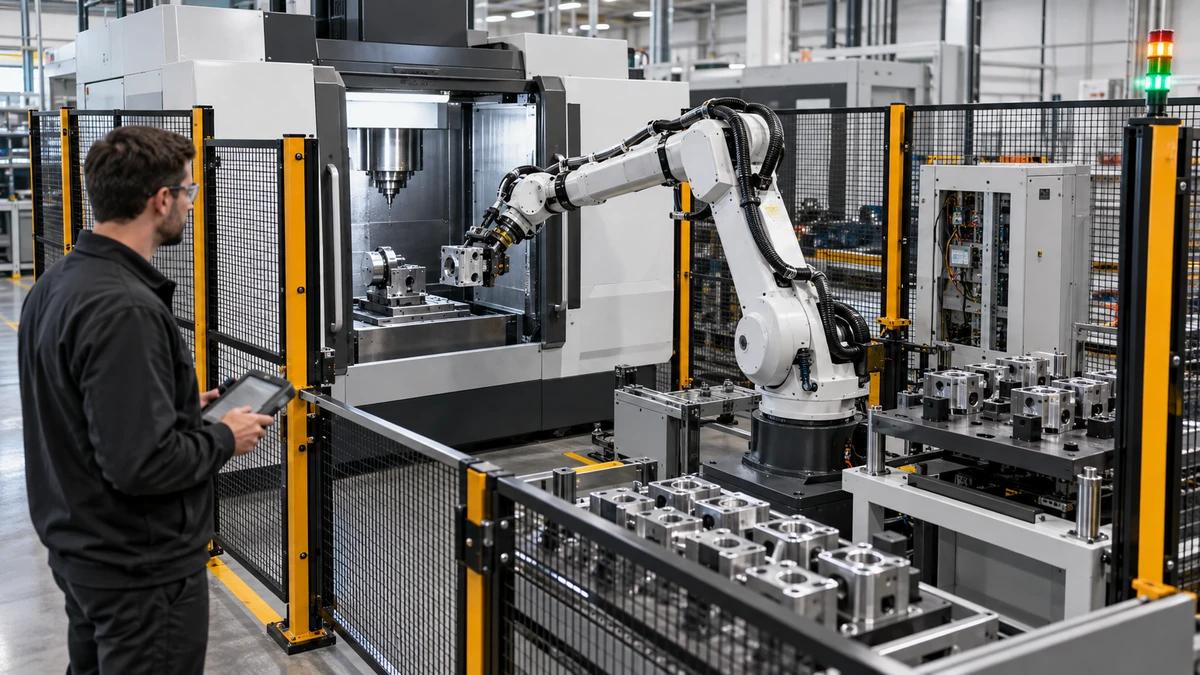
Custom CNC Automation Solution: Write the Interface Contract Before the Robot Arrives
Design a custom CNC automation solution around explicit machine, robot, fixture, safety, data, recovery, and changeover interfaces before integration.
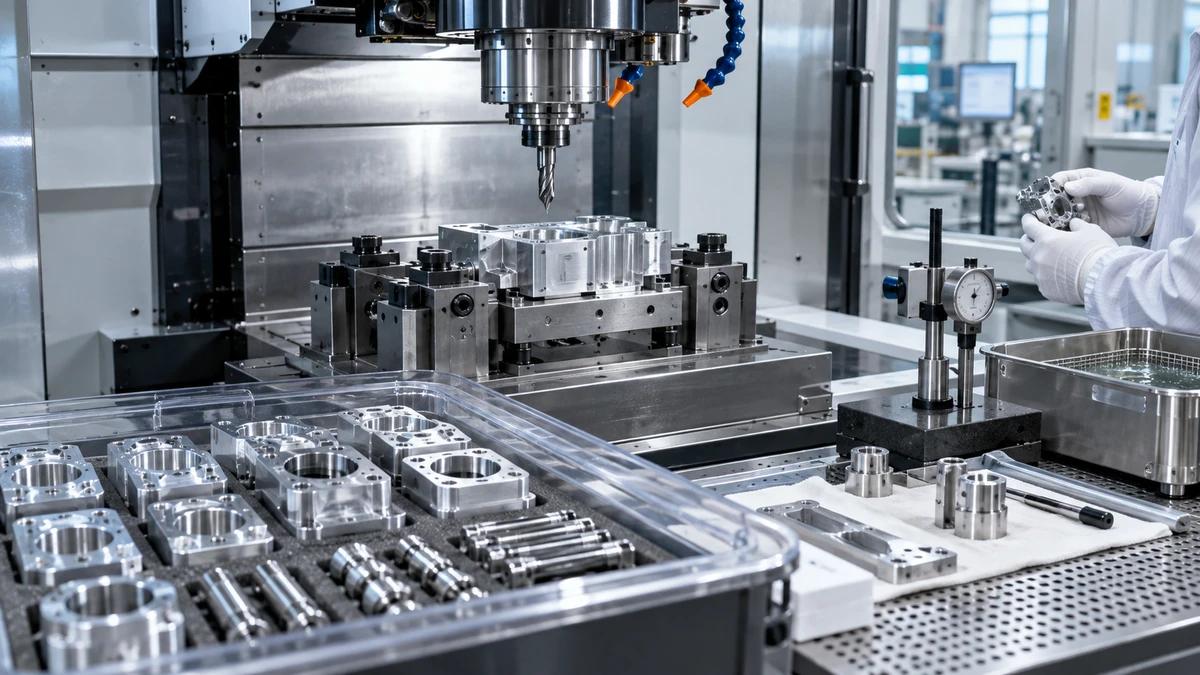
CNC Machine for Lithium Battery Equipment Parts: Control Contamination and Interfaces Together
Select a CNC machine for lithium battery equipment parts by linking datum control, contamination prevention, fixture design, cleaning, inspection, and traceability.
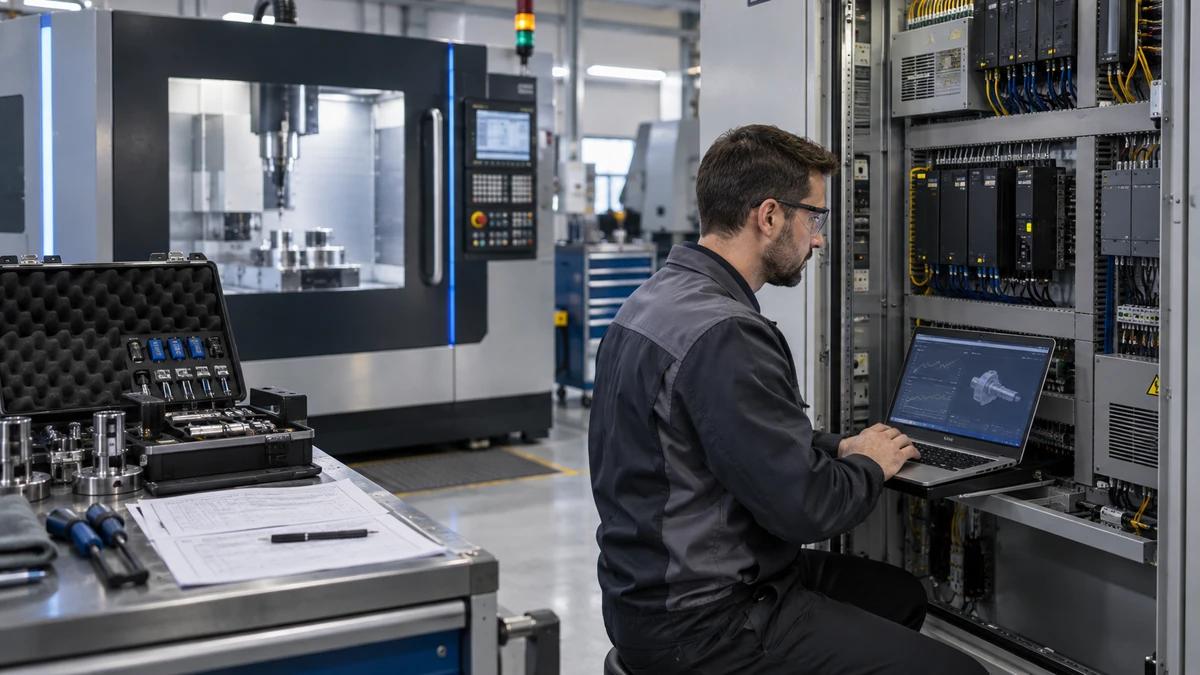
CNC Machine After Sales Service: Build a Severity-Based Recovery Playbook
Evaluate CNC machine after sales service through a severity-based playbook covering intake, triage, escalation, spare parts, remote support, and closure evidence.
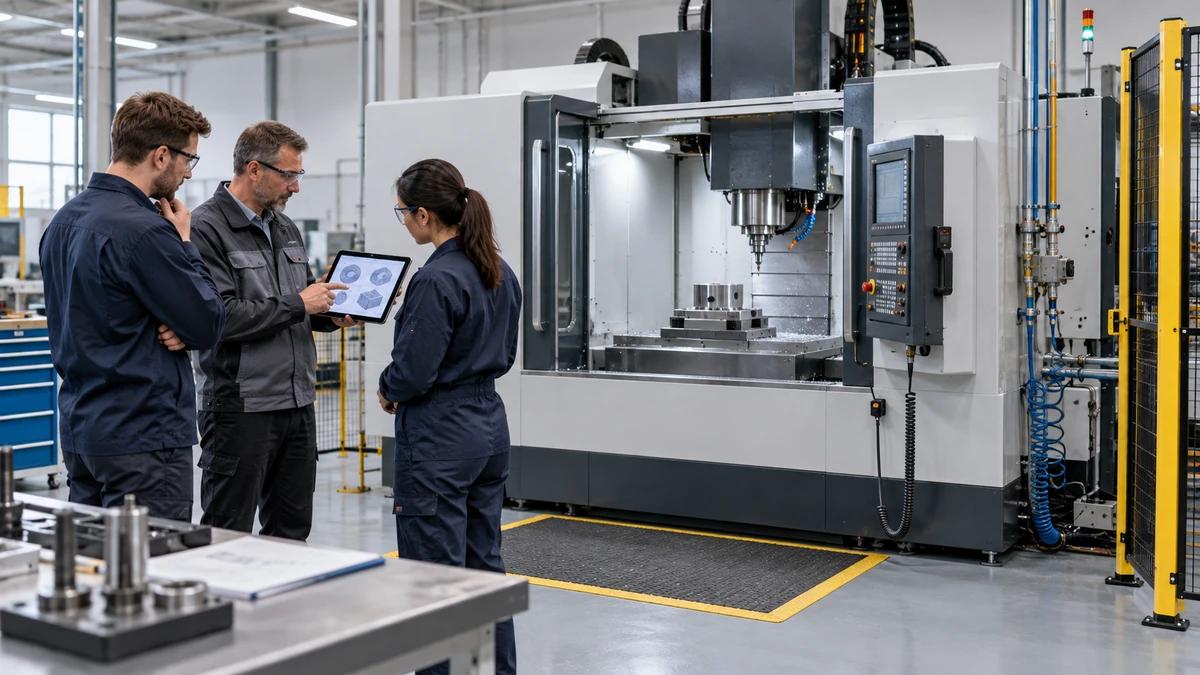
CNC Machine Installation and Training: Design the Handover Around the First Independent Shift
Build a CNC machine installation and training handover around site readiness, commissioning evidence, role-based competence, recovery paths, and supervised production.
CNC Machining Center Quotation: Normalize the Scope Before Comparing Prices
Turn a CNC machining center quotation into a decision-ready scope by normalizing configuration, acceptance, delivery, training, warranty, and ownership assumptions.
Before Territory Launch: A CNC Machining Center Distributor Service Drill
Test a CNC machining center distributor before territory launch with practical service drills for intake, escalation, spare parts, field work, and response quality.