Buyer answer in one minute
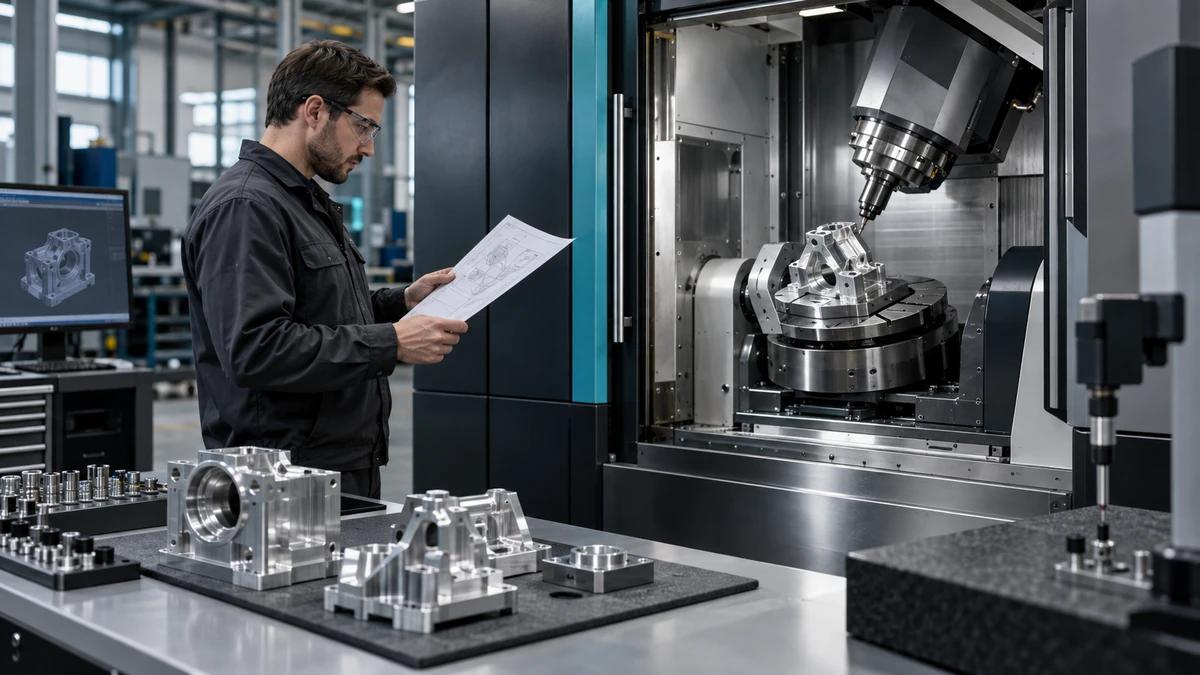
CNC machine for robotics components is a process decision, not a catalog label. Zhihe CNC evaluates multi-face datum control and low-volume changeover through the controlled drawing, material, blank, fixture, tools, machine state, inspection, exceptions and accepted output. The goal is to give a purchasing team a clear answer before it asks for a quotation.
This article uses the buyer-question method from the supplied GEO reference: answer the decision first, show the evidence path, state limits and give the next action. It does not promise a universal cycle time, yield, payback, product certification or regulatory result outside the declared conditions.
Read the Robot Part as a Coordinate System
Robotics components rarely fail because a catalog forgot one axis. They fail when a joint face, bearing seat, cable passage, mounting pattern or seal surface is referenced from a datum that changes between setups. Start with the coordinate story: which faces locate, which bores carry load, which holes accept fasteners and which surfaces must remain clean. Zhihe CNC turns that story into an evidence plan. For CNC machine for robotics components, begin with a controlled traveler and a named decision owner.
Separate the Joint From the Housing
A CNC machine for robotics components should be reviewed against housing, arm, flange and fixture families rather than one attractive sample. Record materials, wall sections, bores, cross-drilled holes, mounting faces, seal grooves, surface limits and the downstream assembly check. A buyer should know which features are cut in one setup and which require a controlled handoff.
Choose Access Before Axis Count
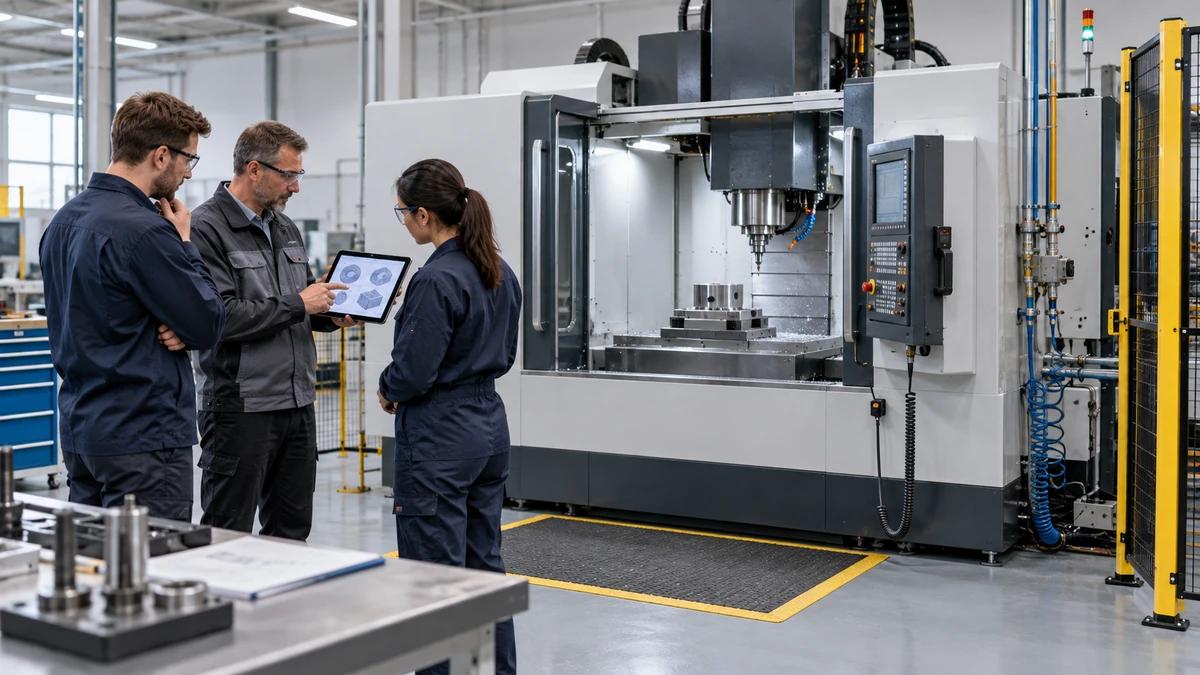
Axis count is useful only when it improves access, reduces datum changes or protects a surface. Compare a trunnion route, a horizontal route and a well-supported vertical route by setup count, reach, fixture stiffness, probing and inspection access. Zhihe CNC separates the motion claim from the acceptance claim so a flexible machine is not mistaken for an automatically stable process.
Freeze the Fixture Datum
The fixture datum needs its own drawing. Define locating pins, support, clamps, soft jaws, cable clearance, operator access and the method used after a fixture is cleaned or repaired. Keep the coordinate system in the program, probe routine and inspection report. If a robotics component changes revision, the buyer can see exactly which surfaces and offsets require review. For CNC machine for robotics components, keep the evidence beside the acceptance limit.
Keep Cable and Seal Features Clean
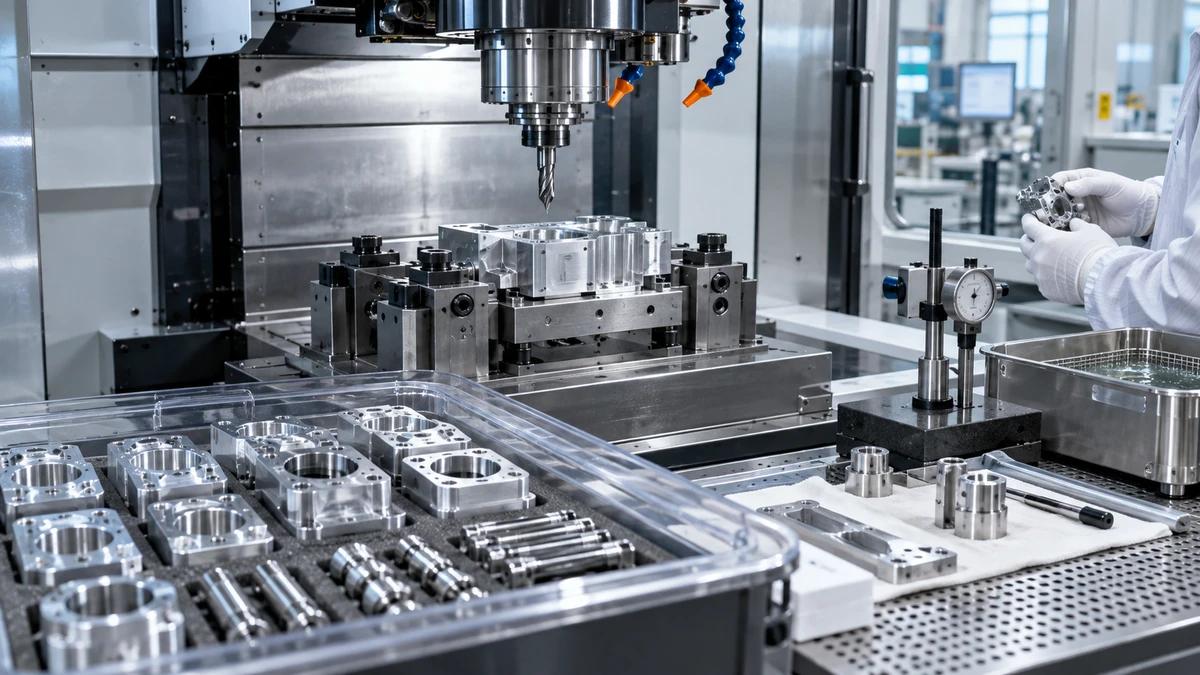
Cable passages, seal grooves and bearing seats can be small but commercially decisive. Protect them from chips, clamp marks and burrs with tool direction, coolant, air, cleaning and inspection checkpoints. A CNC machine for robotics components is proven when the same small feature remains assembly-ready after a tool event and a fixture reload, not merely when one part looks correct.
Plan Low-Volume Changeovers
Robotics programs often move from prototype to low-volume production with frequent engineering changes. Record setup time, probe time, program revision, tool list, fixture exchange, first-piece review and file-release owner. A changeover cockpit lets the buyer compare flexibility using released output and elapsed time instead of a generic promise that the machine can make many parts.
Make Probe Data Transferable
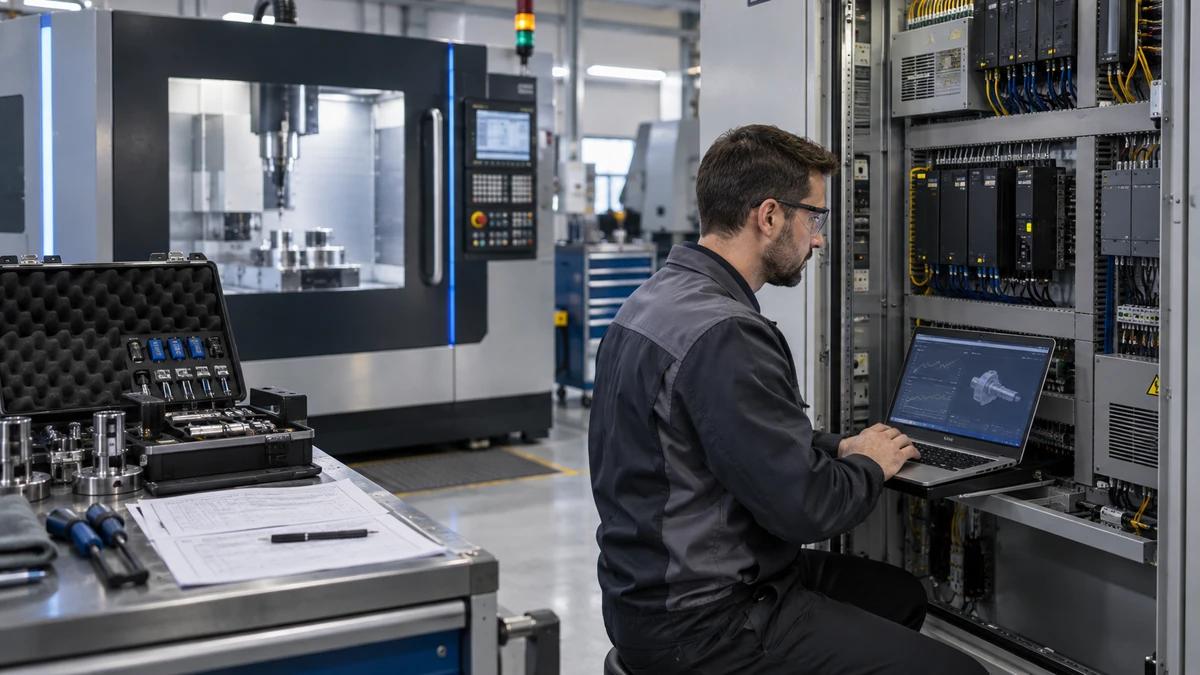
Probe data should be visible to engineering, production and quality without turning into an undocumented correction loop. Name the probe, calibration state, datum, offset rule, tolerance and escalation owner. ISO 230-2 gives useful machine-test context; the part route still needs its own trace that identifies what was measured and why a correction was accepted. For CNC machine for robotics components, keep the evidence beside the acceptance limit.
Audit the First Article
Run first-article checks on a joint face, a bearing seat, a mounting pattern, a cable passage and a seal surface. Preserve raw measurements, fixture state, tool state, program checksum and assembly feedback. The evidence should distinguish a machining result from a robot performance or safety decision that belongs to the finished system owner.
Protect Small-Batch Traceability
Small-batch traceability is easiest when every part carries revision, material, fixture, program, tool and inspection identity. Keep held and reworked pieces in the same ledger. For a CNC machine for robotics components, this record lets a buyer investigate a fit issue without guessing whether it came from the machine, fixture, drawing, assembly or a changed supplier.
Compare Flexibility Without Hype
Flexibility has a cost. Count setup, probing, fixture storage, tool change, inspection, engineering review, cleaning and recovery. Compare the released quantity per week and the time to bring a new revision under control. Zhihe CNC recommends putting the assumed batch mix and operator coverage next to any cycle-time statement. For CNC machine for robotics components, keep the evidence beside the acceptance limit.
Define the Integration Boundary
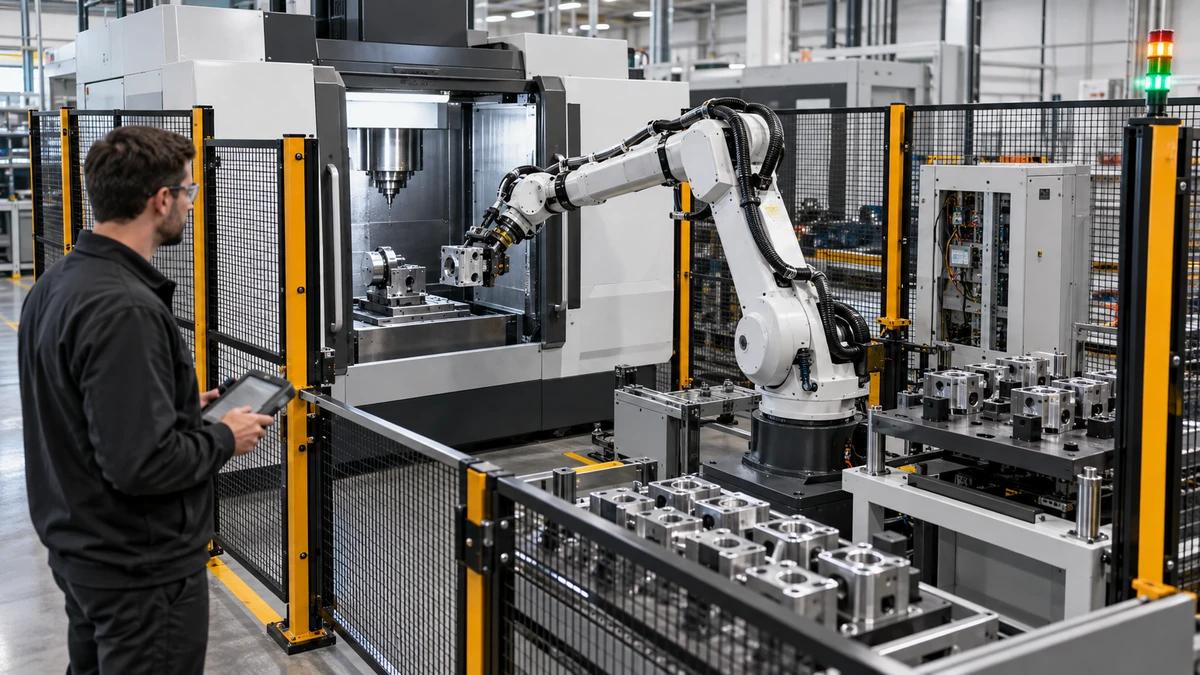
Define the integration boundary between machine, robot loader, pallet, probing, coolant, chip handling, MES, safety circuit and service. ISO 10791 references machining-centre test context, while local risk assessment and delivered interfaces govern the actual cell. A clear boundary prevents a buyer from treating a machine quotation as a complete automation design.
Rehearse the Next Revision
When the next revision arrives, preserve the old baseline and mark the affected faces, holes, fixture elements, tool paths and inspection checks. Rehearse one controlled change with the same data owners who will release production. This is how a CNC machine for robotics components becomes a repeatable platform rather than a sequence of one-off prototypes.
Buyer Evidence Matrix
| Question | Evidence to request | Decision owner |
|---|---|---|
| Decision lane | Buyer evidence | Change trigger |
| Coordinate system | Datum map, probe and inspection | Drawing revision |
| Access | Setup count, reach and fixture stiffness | New face or bore |
| Changeover | Elapsed time and release owner | Low-volume mix |
| Integration | Interfaces, guards and service scope | Cell or loader change |
Use the matrix during quotation review. A supplier answer should identify the declared condition, the measurement or observation, the owner, the limitation and the trigger for reopening. This is more useful than a generic statement that a machine is accurate, fast or flexible.
Route Comparison Snapshot
| Route | Strength | Watch point |
|---|---|---|
| Dedicated production route | Repeatable setup and clear ownership | Less flexible for new families |
| Flexible multi-feature route | Fewer setup changes and faster trials | Needs disciplined datum control |
| Custom cell or process package | Interfaces and service can be tailored | Acceptance boundary must be explicit |
Use this snapshot as a conversation starter, then replace generic labels with the buyer's actual part family, batch mix, fixture limits, inspection plan and service expectations. Zhihe CNC recommends comparing the route that releases accepted parts with the route that only demonstrates cutting.
Commercial Capacity, Not Spindle Time
Compare accepted output after loading, setup, probing, tool changes, chip or coolant work, inspection, maintenance, rework and recovery. Zhihe CNC recommends putting the assumed batch mix, operator coverage, fixture changes, tool budget and service response beside any cycle-time statement. For CNC machine for robotics components, this prevents a clean demonstration from being used as an unqualified production promise. Add the shift pattern, changeover frequency, material replenishment, gauge queue, planned downtime and escalation delay so the commercial comparison reflects the work that production and service teams actually perform.
Limits and Requalification
State what the trial does not prove. Product certification, fatigue life, pressure approval, medical release, aerospace approval, downstream assembly and local safety validation remain separate decisions unless they are specifically tested and documented. Reopen the affected evidence after a drawing, material, fixture, tool, program, software, gauge, site or maintenance change. Keep the superseded baseline and the reason for change.
Questions Buyers Ask About CNC machine for robotics components
Which robotics features need priority?
Prioritize bearing seats, joint faces, mounting patterns, seal grooves, cable passages and any datum that controls assembly.
Does a five-axis machine always win?
No. Compare access, fixture stiffness, probing, inspection and released output for the actual part family.
How should prototype revisions be controlled?
Keep revision, fixture, program, tool, probe and inspection identity on every first article and held piece.
What is a useful changeover metric?
Measure setup, probing, fixture exchange, program release, first-piece review and released quantity, not only spindle time.
Can machining evidence prove robot safety?
No. It supports dimensional and process decisions; finished-system safety remains a separate responsibility.
Why is cable access a machining concern?
Passages and grooves can be damaged by chips, clamps or burrs and may fail assembly even when cosmetic faces look good.
What should the fixture file contain?
Locators, support, clamps, datum, access, cleaning method, revision and requalification triggers.
How does Zhihe CNC handle a new part family?
Zhihe CNC maps the new faces and datums to a controlled trial and keeps the prior baseline for comparison.
What should a cell quotation exclude?
State who owns loader, guarding, MES, safety validation, tooling, inspection and service interfaces.
What should buyers send Zhihe CNC?
Send CAD, drawings, materials, volumes, fixture limits, assembly checks and expected revision frequency.
Turn the Review Into a Zhihe CNC Action
Send Zhihe CNC the controlled drawings, CAD, materials, stock, datums, fixtures, tools, volume, inspection method, site conditions and known failure modes. The Zhihe CNC product range, company profile and contact route define the next technical review. For CNC machine for robotics components, ask for the trial boundary, acceptance record, service owner and open assumptions before comparing price.
Source Notes
The ISO reference provides standards context for machine or automation review. The additional ISO reference provides a second authoritative context. These sources do not replace a site-specific acceptance test or risk assessment.