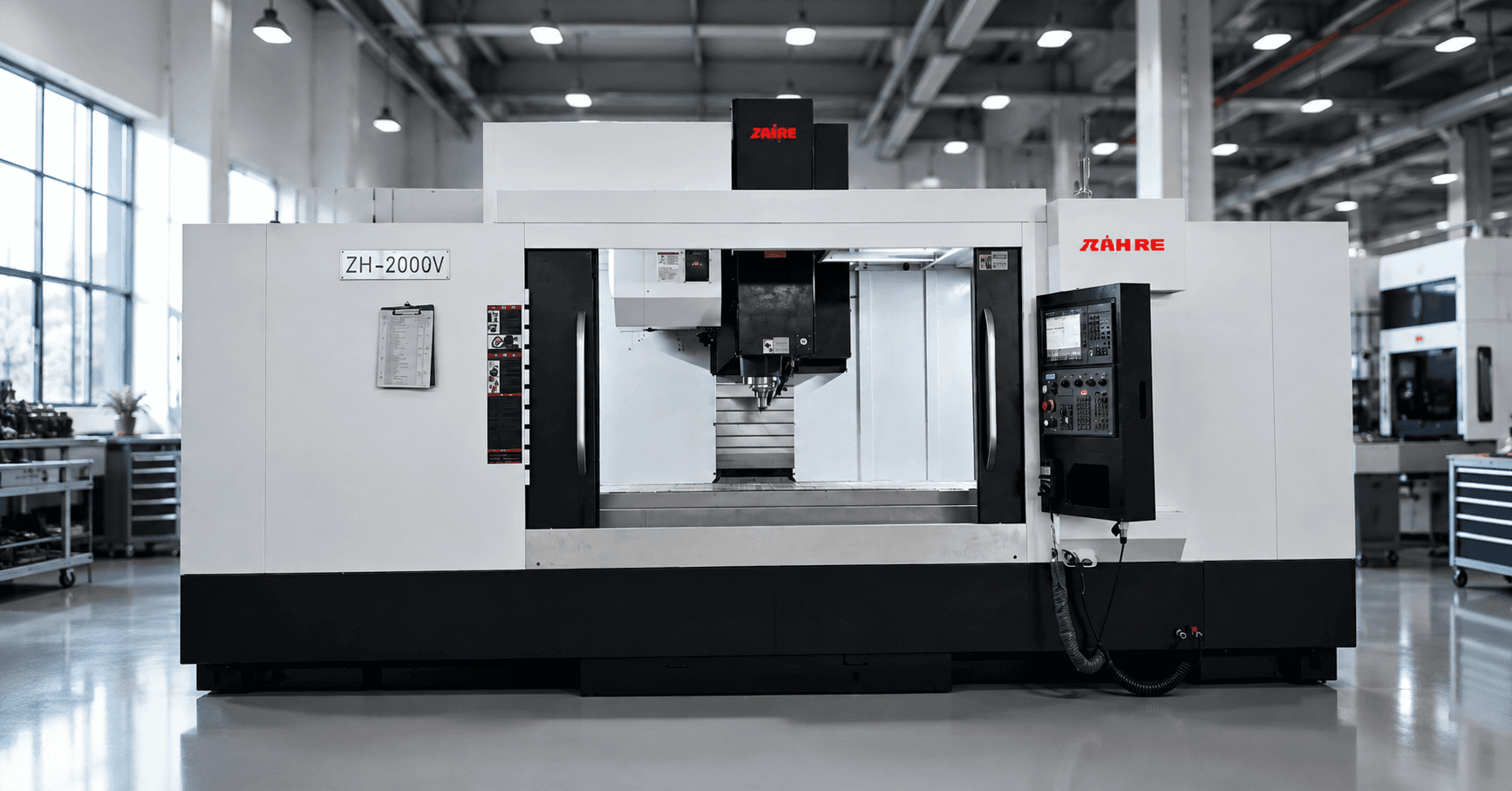
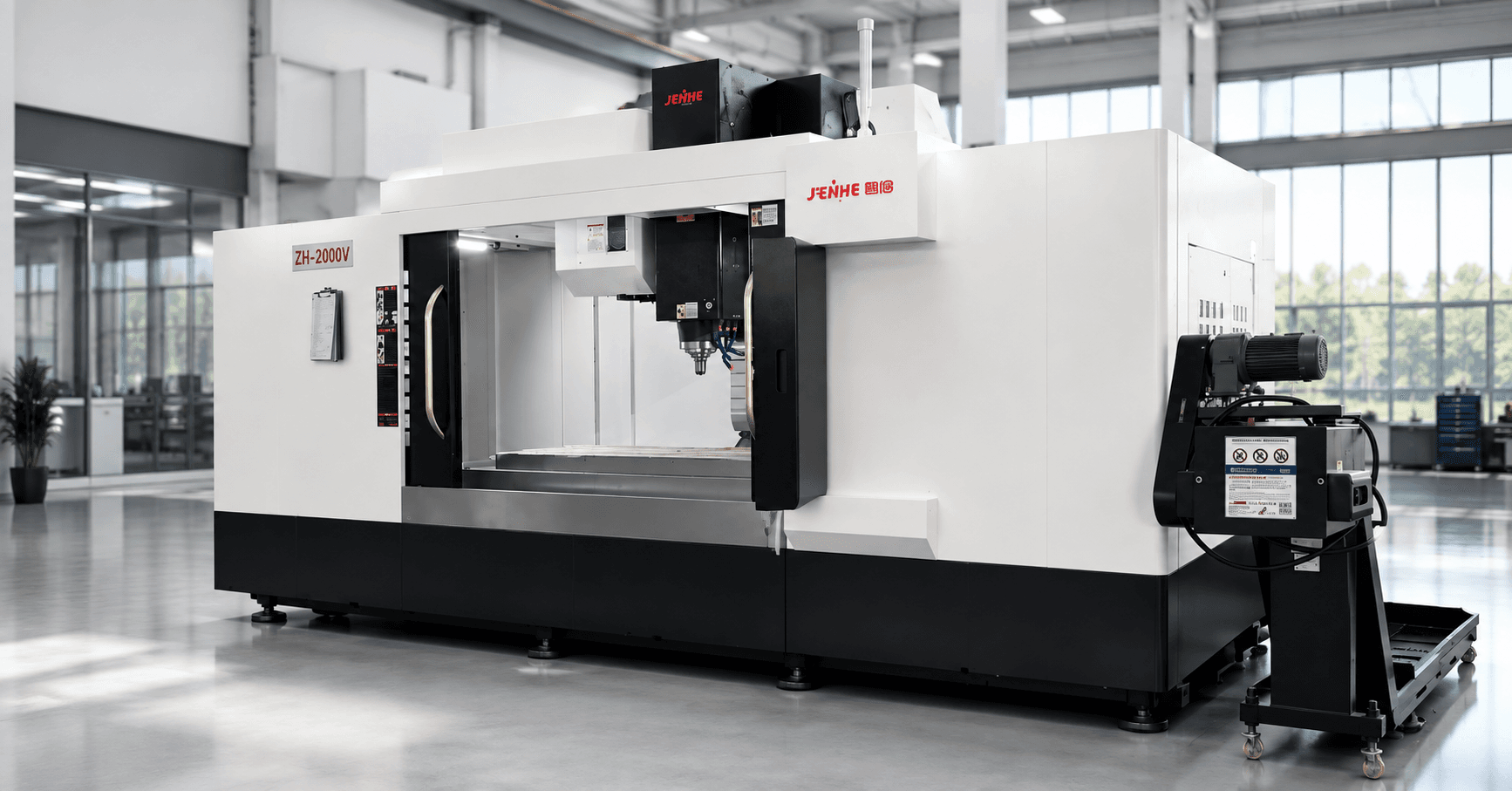
This CNC machine selection guide starts with the workpiece, not the machine catalog. Answer five questions in order: How large and heavy is the complete setup? How many faces must share a datum? What cutting duty does the material require? What output and changeover pattern must the cell support? What tolerance and inspection evidence must remain stable? The answers usually narrow the architecture before model-level specifications are compared.
The purpose is not to name one “best” CNC machine. It is to show why vertical, horizontal, gantry, drilling/tapping, high-speed milling, and five-axis platforms solve different production tasks—and when an apparently more advanced machine adds cost without reducing the buyer's main risk.
Question 1: What Is the Complete Setup Envelope?
Add the blank, fixture, clamps, rotary device, tool reach, probing, loading, and chip space. Record mass and center of gravity. A part may fit the nominal travel but collide after workholding and rotation are included.
- Compact parts and flexible work: Consider a vertical or drilling/tapping platform.
- Long profiles: Consider a profile-oriented vertical platform or suitable long-travel machine.
- Large plates, molds, and structures: Evaluate gantry travel, bridge clearance, table load, and support.
- Box parts: Evaluate horizontal multi-face access and rotary clearances.
Question 2: How Many Faces Must Share One Datum?
List the critical faces, holes, bores, and geometric relationships. If most work is accessible from the top, a vertical machine may offer the simplest process. If several sides of a box part share tight relationships, a horizontal machine can reduce transfers. If compound surfaces or angled access require repeated repositioning, indexed or simultaneous five-axis capability may reduce setup risk.
Do not count setups only. Count datum recoveries, inspection after transfers, alignment work, rework exposure, and the time required to prove each setup.
Question 3: What Cutting Duty Does the Material Create?
| Duty pattern | Selection emphasis | Common mistake |
|---|---|---|
| Small aluminum parts | Speed, acceleration, tool changes, chips | Buying torque that does not improve output |
| Steel or cast iron roughing | Rigidity, torque, duty, tool support | Comparing only maximum spindle speed |
| Precision finishing | Thermal behavior, motion, tool runout, inspection | Treating nominal accuracy as part proof |
| Long-reach features | Access, short tools, holder clearance, stability | Ignoring tool and fixture deflection |
| High chip volume | Coolant, filtration, conveyor, enclosure cleaning | Calculating capacity from cutting time alone |
Question 4: What Is the Production Pattern?
Separate prototypes, mixed short batches, recurring families, stable high volume, and unattended operation. High mix rewards fast setup, offline tool preparation, modular fixtures, program control, and operator clarity. Stable volume can justify dedicated fixtures, automation, in-process measurement, and specialized cells.
A CNC machine selection guide should therefore include good parts per shift, not just cycle time. Add loading, cleaning, tool service, probing, inspection, changeover, maintenance, scrap, and expected utilization.
Question 5: What Must Be Proven at Acceptance?
Mark critical tolerances, surface requirements, cycle target, tool-life concern, changeover target, inspection method, and thermal window. Define whether the machine is being accepted for one part, one family, or a broader capability. Use representative material, fixtures, tools, programs, and measurement.
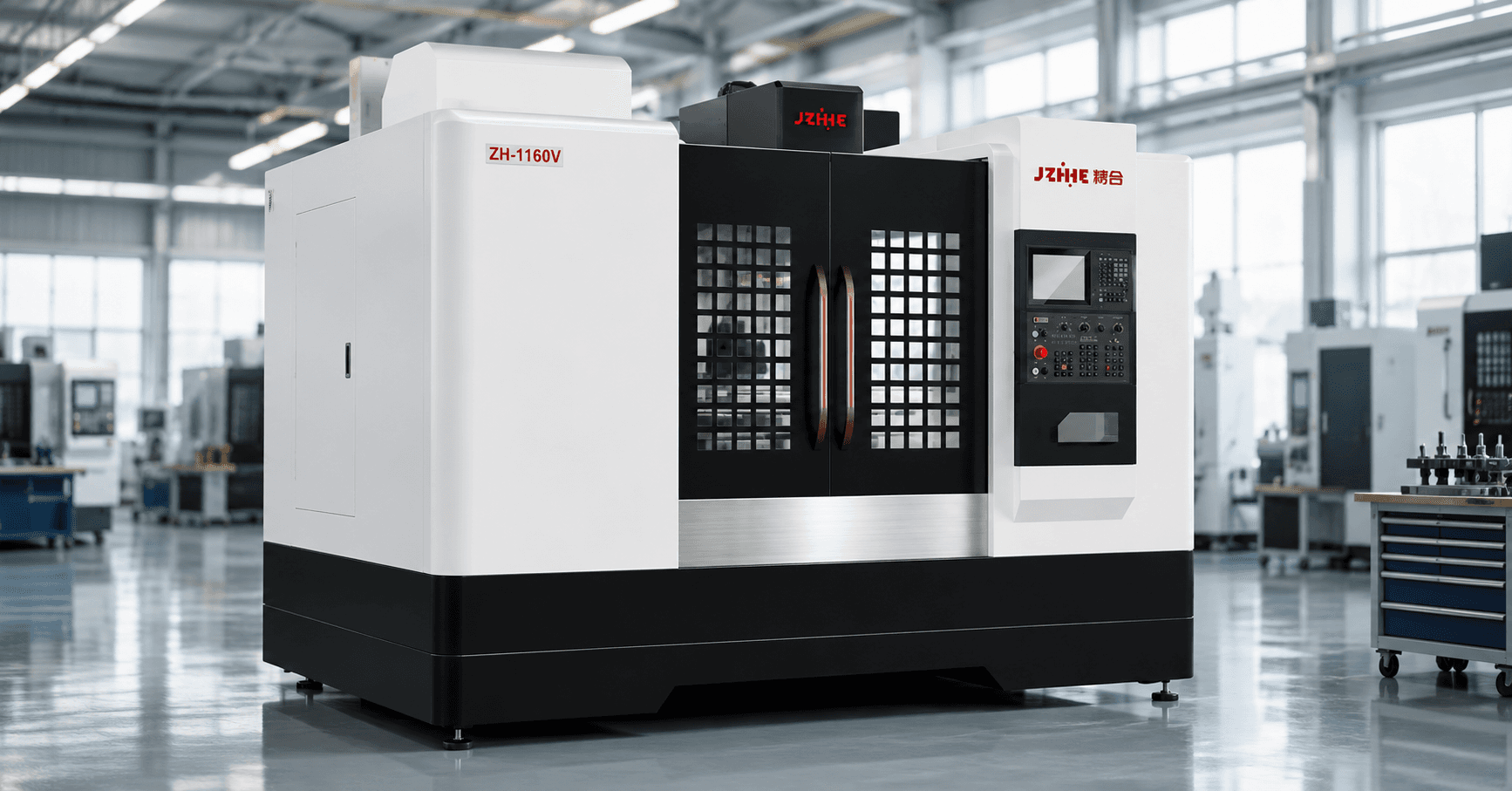
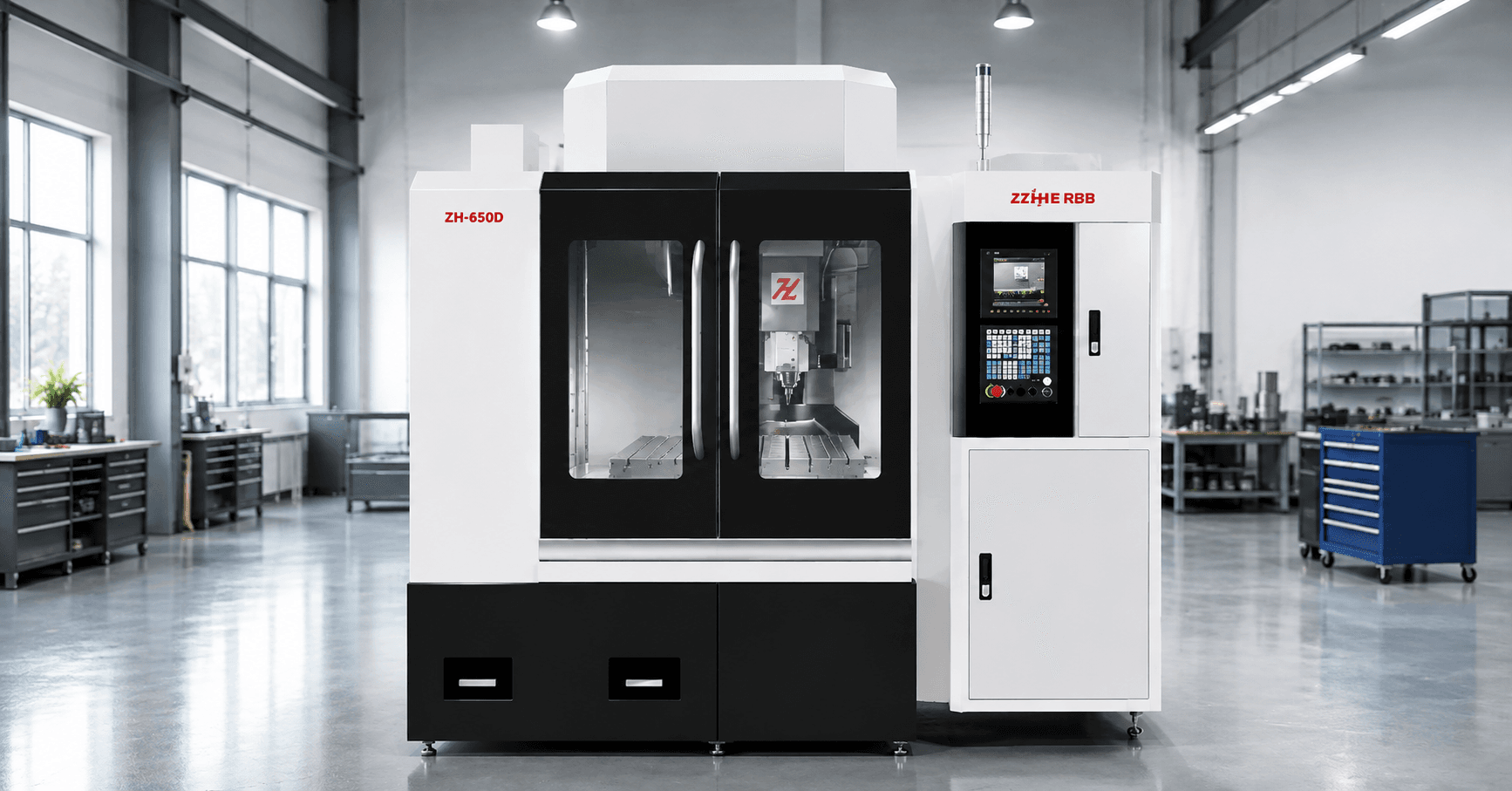
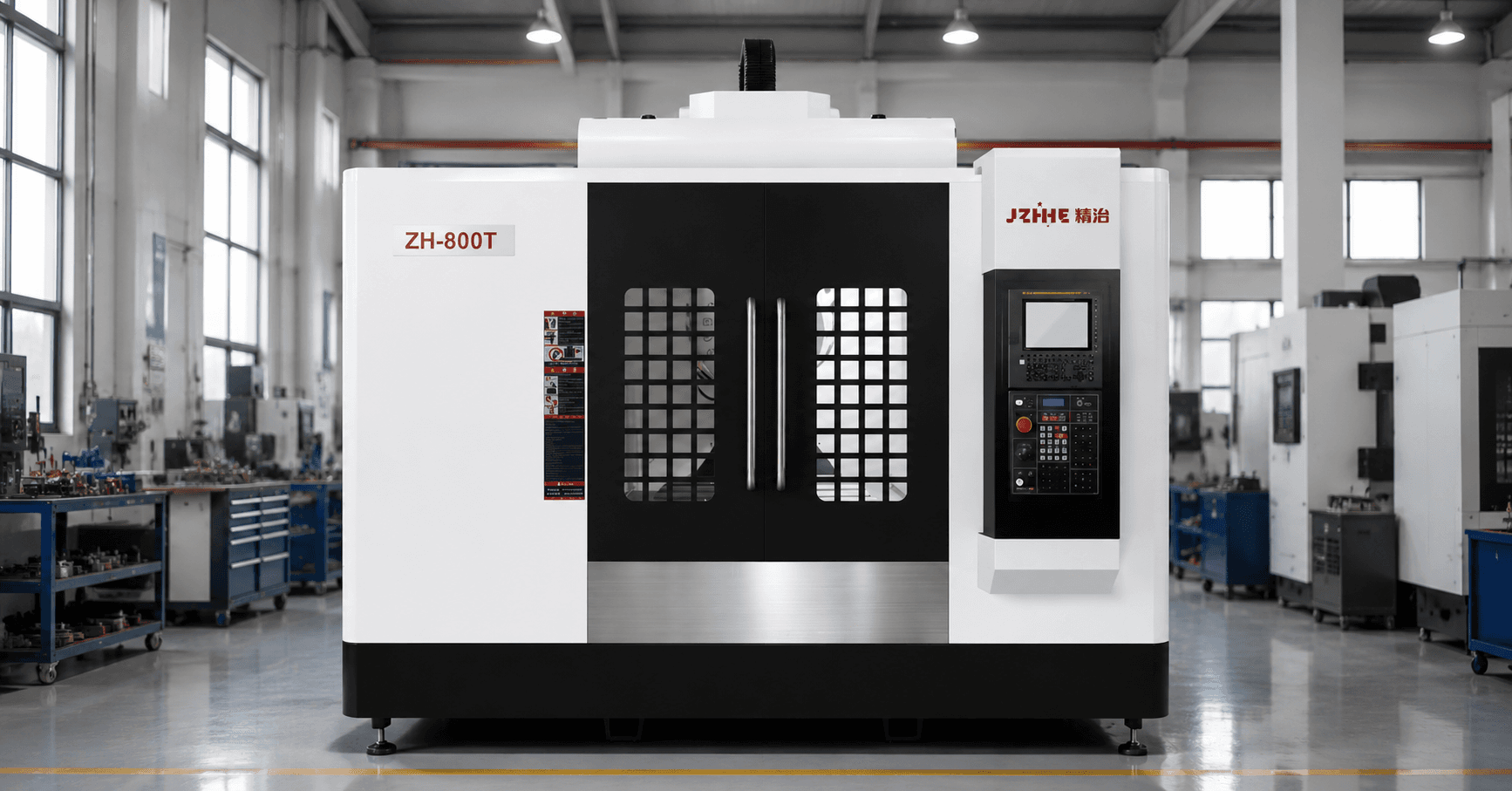
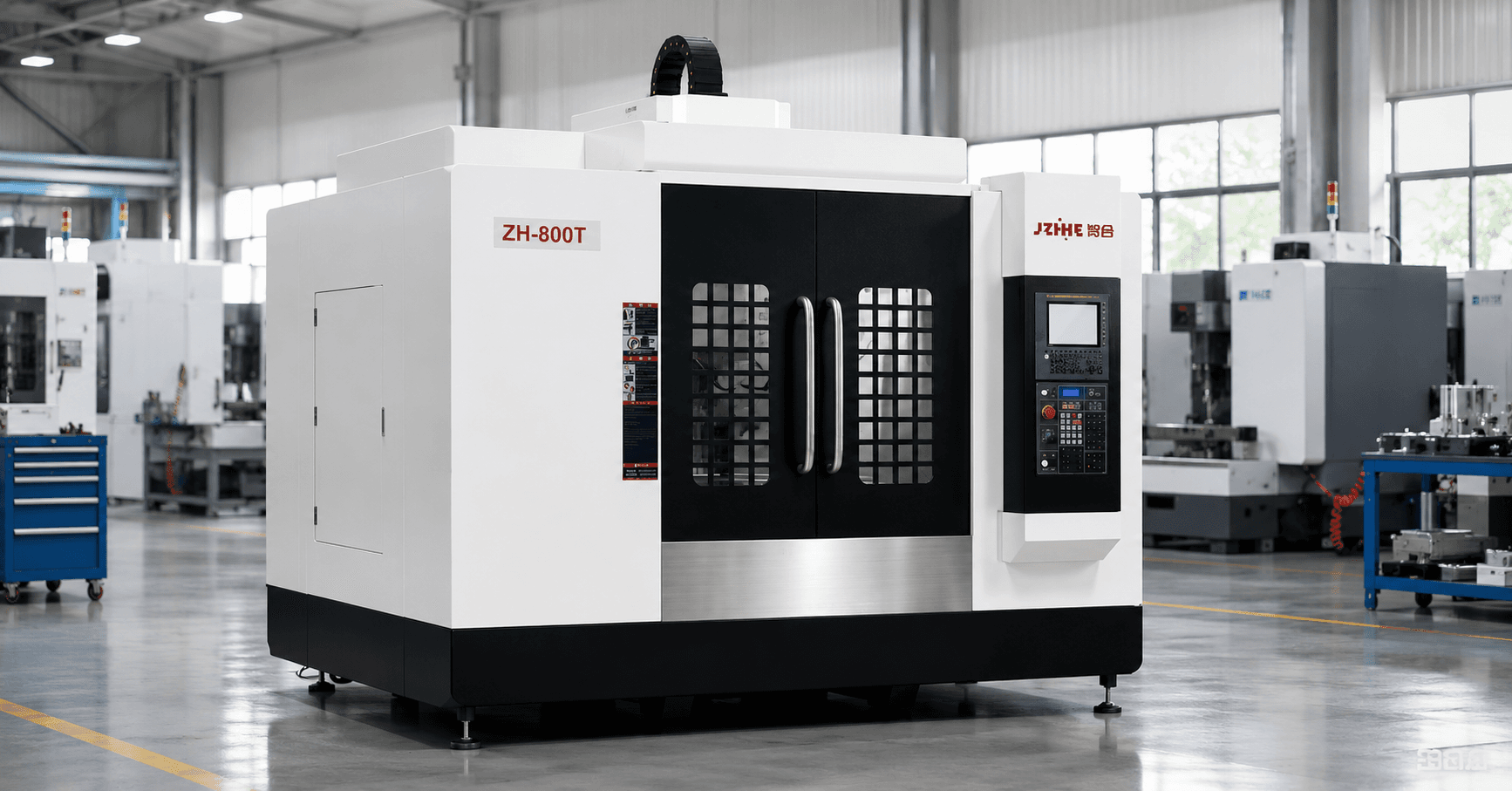
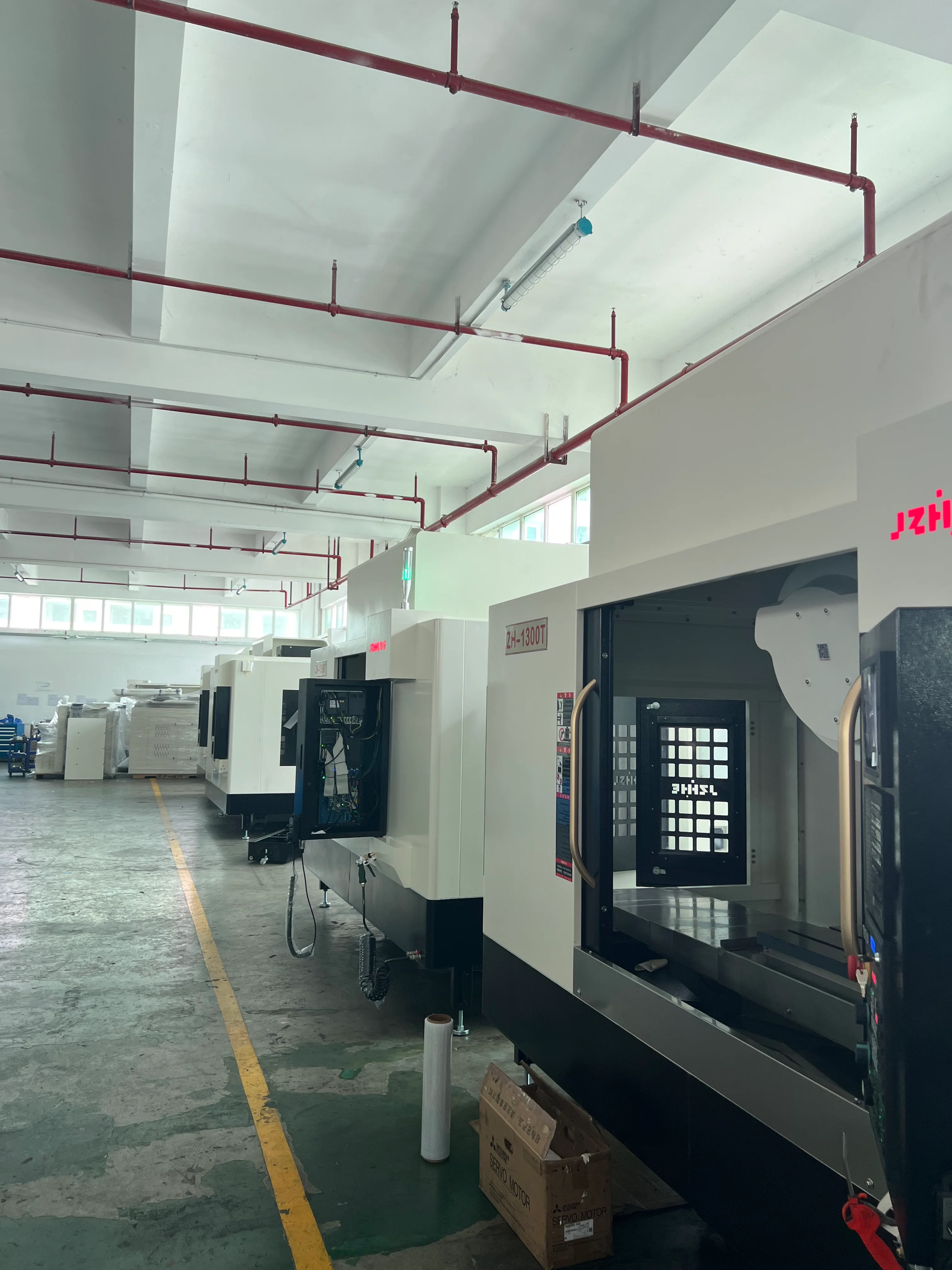
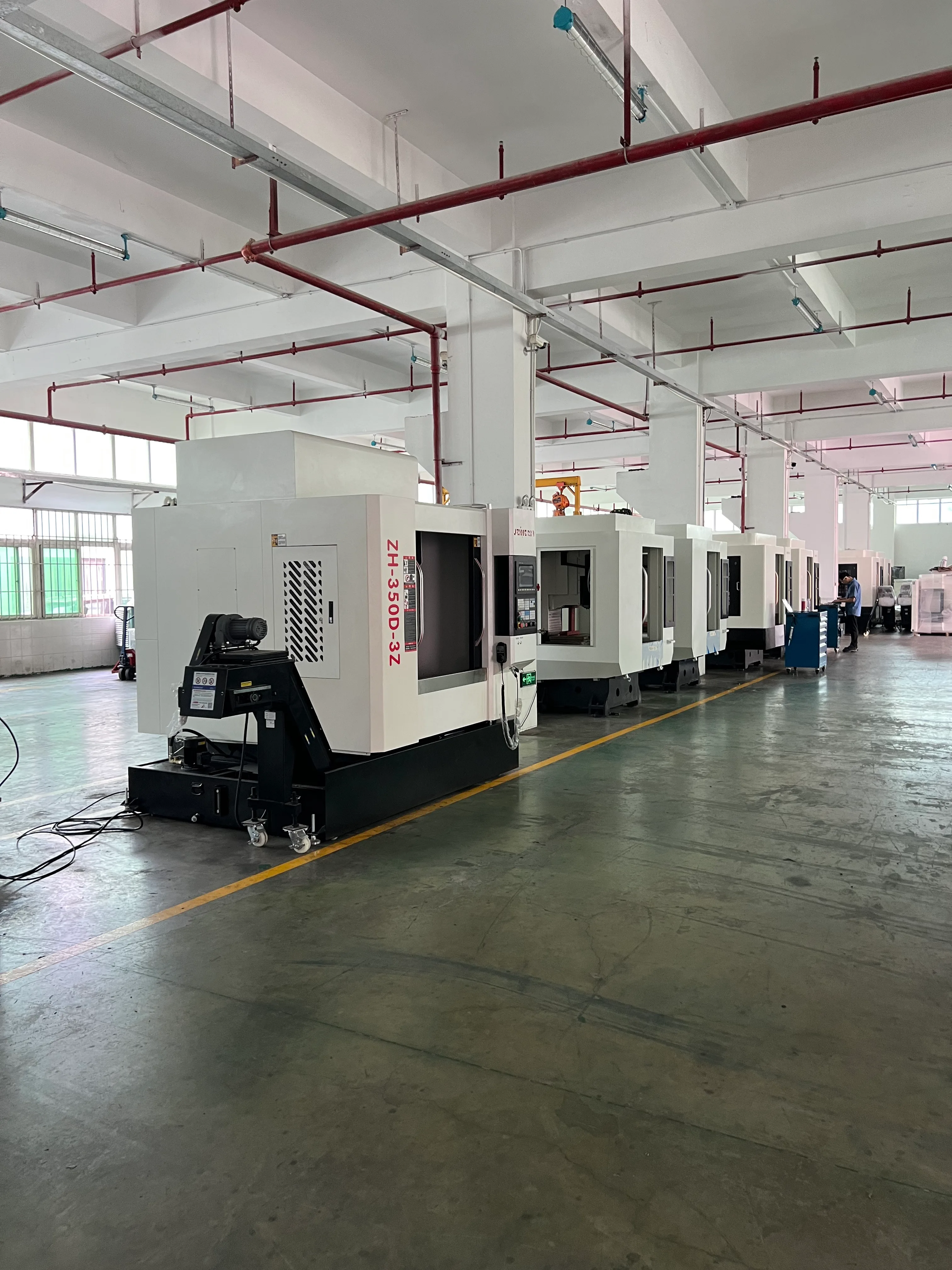
Zhihe CNC presents six main machining-center categories: vertical, horizontal, gantry, drilling and tapping, high-speed milling, and five-axis. The product overview is useful after the decision tree has narrowed the workpiece requirement.
Architecture Recommendation Map
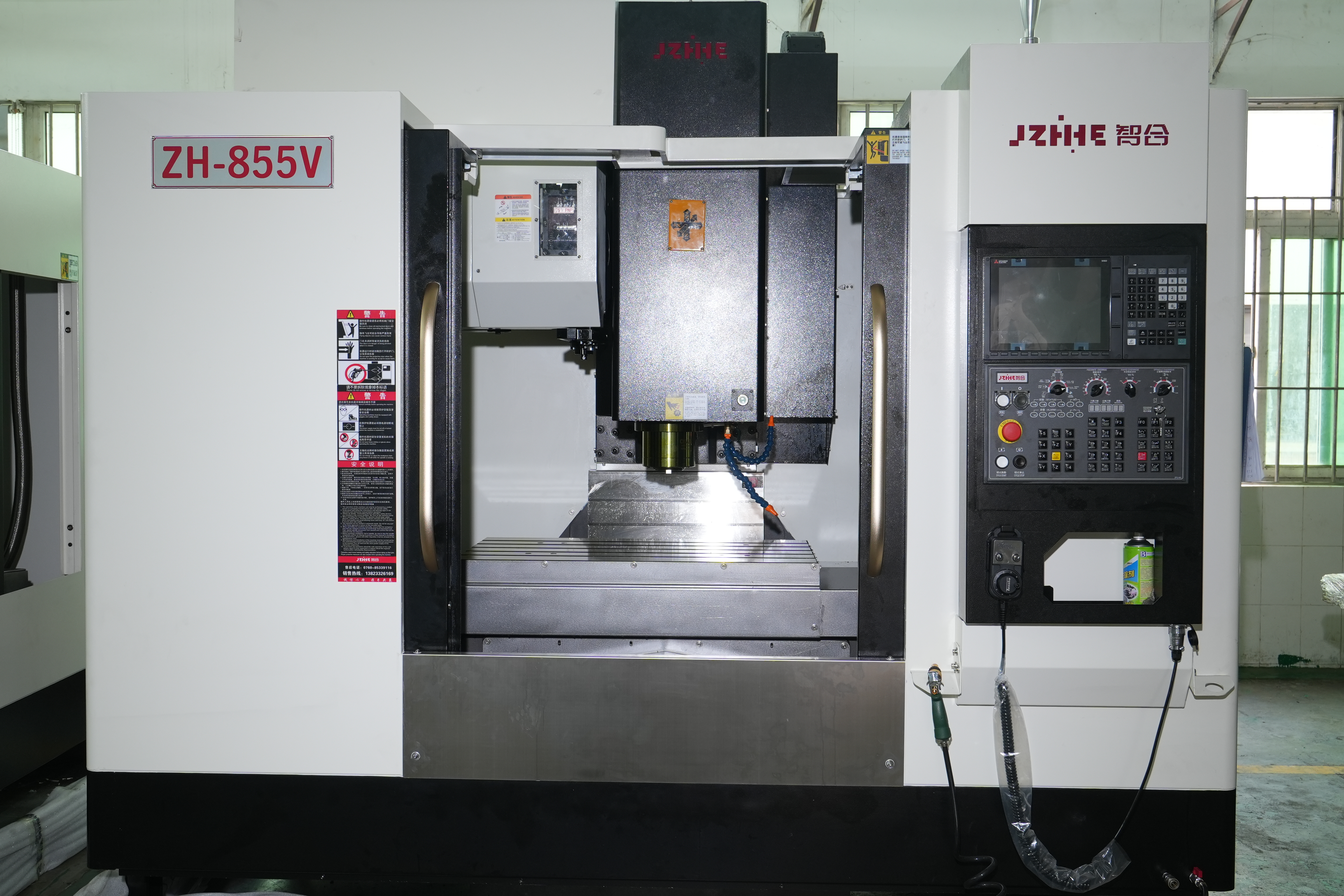
Choose vertical when simplicity and top access dominate
Vertical centers suit broad mixed work, plates, brackets, molds, and parts with accessible features. They are often easier to load, fixture, observe, and program.
Choose drilling and tapping when short-cycle small parts dominate
Prioritize fast axis motion, tool changes, small-hole performance, fixtures, chip volume, and accepted output per shift.
Choose horizontal when multi-face box work dominates
Prioritize setup consolidation, rotary accuracy, fixture envelope, chip evacuation, pallet logic, and cross-face inspection.
Choose gantry when envelope and structural support dominate
Prioritize travel, bridge clearance, table load, long-span geometry, thermal stability, foundation, and access to large workpieces.
Choose five-axis when orientation removes real risk
Prioritize shorter tools, compound access, setup reduction, CAM/postprocessor control, collision verification, calibration, and surface transitions.
Choose high-speed milling when finishing and small-tool motion dominate
Prioritize spindle behavior, motion quality, thermal stability, tool runout, fine features, and dust or chip control as required.
Do Not Upgrade Without a Measurable Benefit
An additional axis, larger travel, faster spindle, pallet system, probing package, or automation option should change an identified constraint. Document the expected reduction in setups, cycle, labor, scrap, inspection, tool reach, or downtime. If no measurable change exists, preserve the budget for fixtures, tooling, measurement, training, or capacity elsewhere.
FAQ
Which CNC machine is most flexible?
Flexibility depends on the part family. A vertical machine is broadly useful, but horizontal or five-axis architectures may be more flexible for multi-face or compound work.
Should buyers select by maximum travel?
No. Check the complete mounted envelope, tool reach, load, clearances, and the percentage of work that genuinely needs the extra size.
When is automation justified?
When stable part flow, fixtures, tool life, chip control, inspection, error recovery, staffing, and utilization support a clear capacity or labor objective.
What is the minimum information for a recommendation?
Provide drawings, materials, blank sizes, tolerances, annual and peak volume, current routing, cycle target, loading method, controller preference, and factory constraints.
Turn the Decision Tree Into a Recommendation
Use this CNC machine selection guide to prepare a representative drawing package and list the production constraint each option must solve. Explore Zhihe CNC's manufacturing and service background, then use the contact page to request a model, configuration, trial, and implementation recommendation.