Case Study: Why a Long-Travel Vertical Machining Center Became the Turning Point
For many job shops and component manufacturers, buying a Vertical Machining Center is not mainly about machine branding or brochure language. It is about whether a new machine can stabilize output, reduce repeated clamping, protect dimensional accuracy, and make production easier to control.
This becomes especially clear when the shop handles long-profile parts. A bracket, housing, or fixture component can often be managed on a standard VMC. But a battery tray profile, automation beam, robot guide rail, or long aluminum structure creates a different kind of pressure. If the machine travel is not long enough, operators may need to machine one section, re-clamp the part, re-align the datum, and continue. That extra handling can increase cycle time and cumulative error.
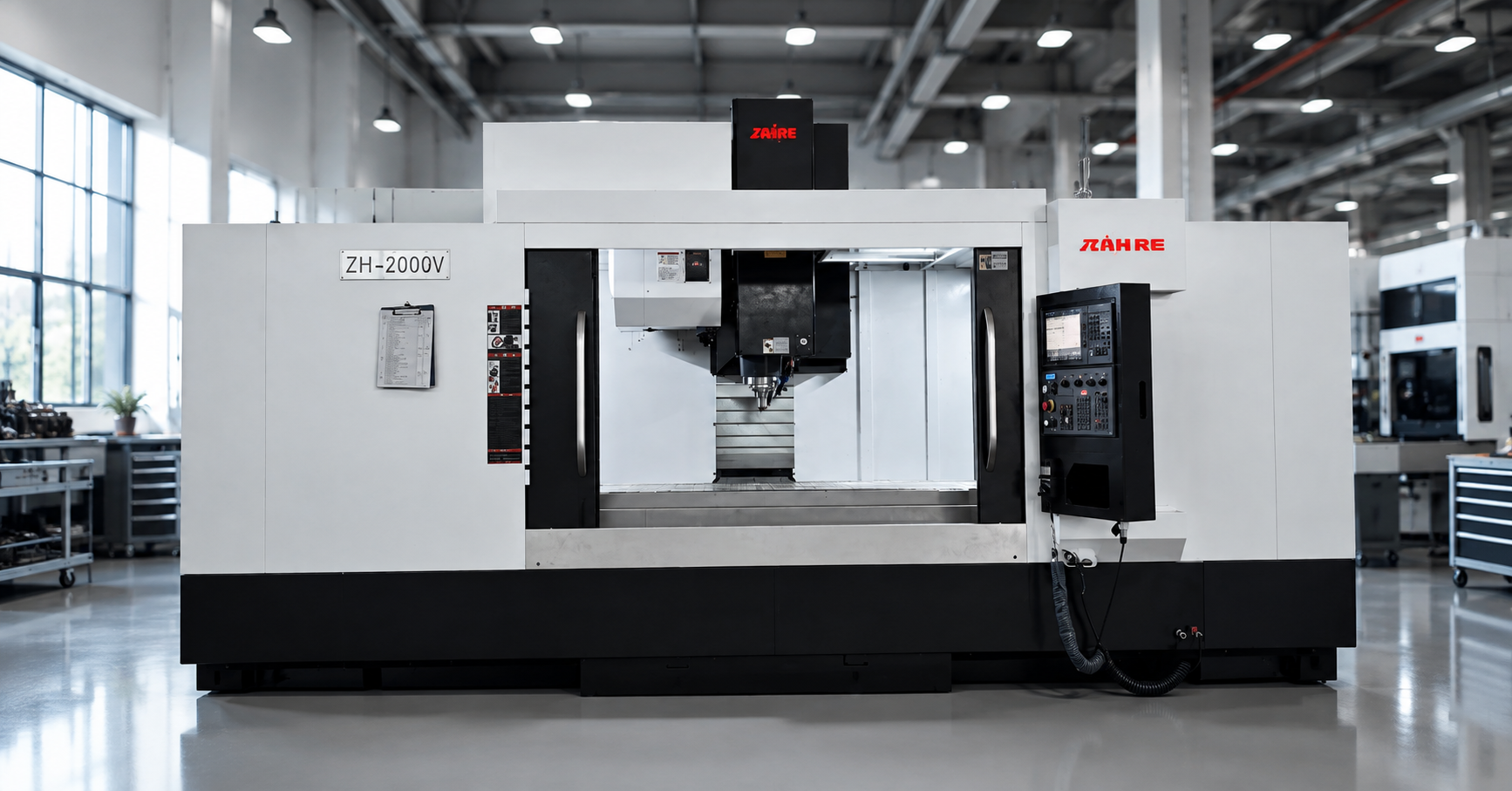
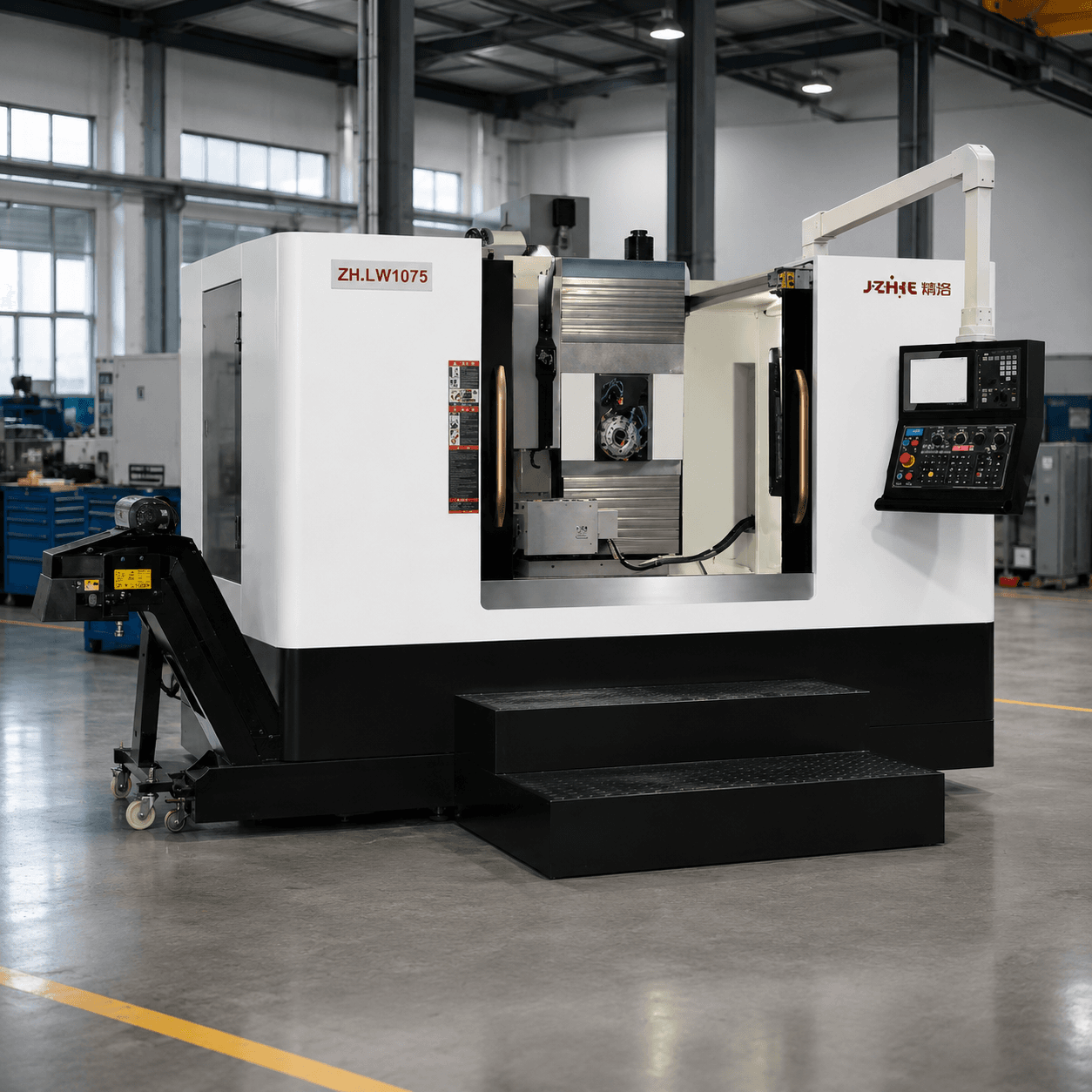
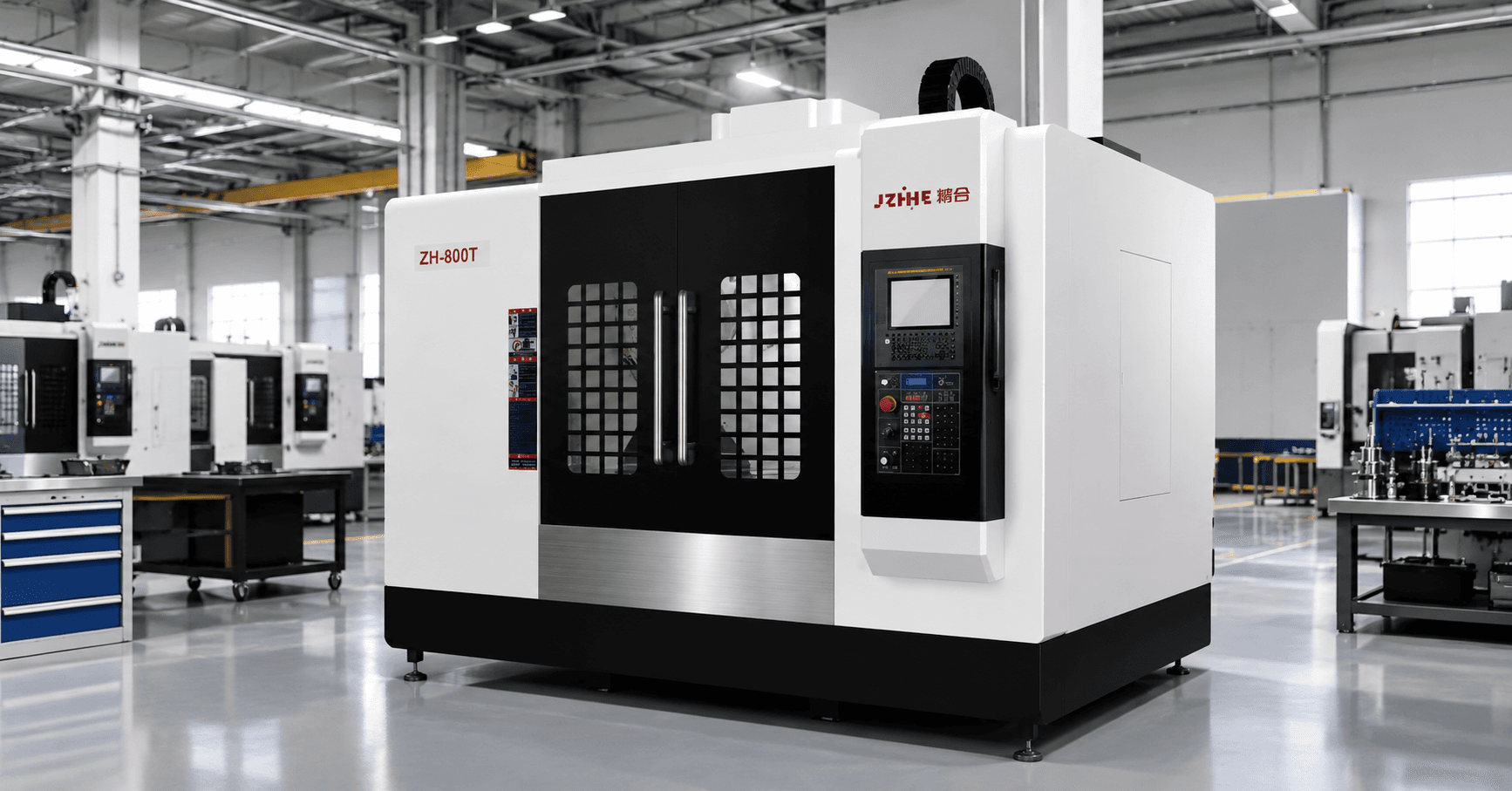
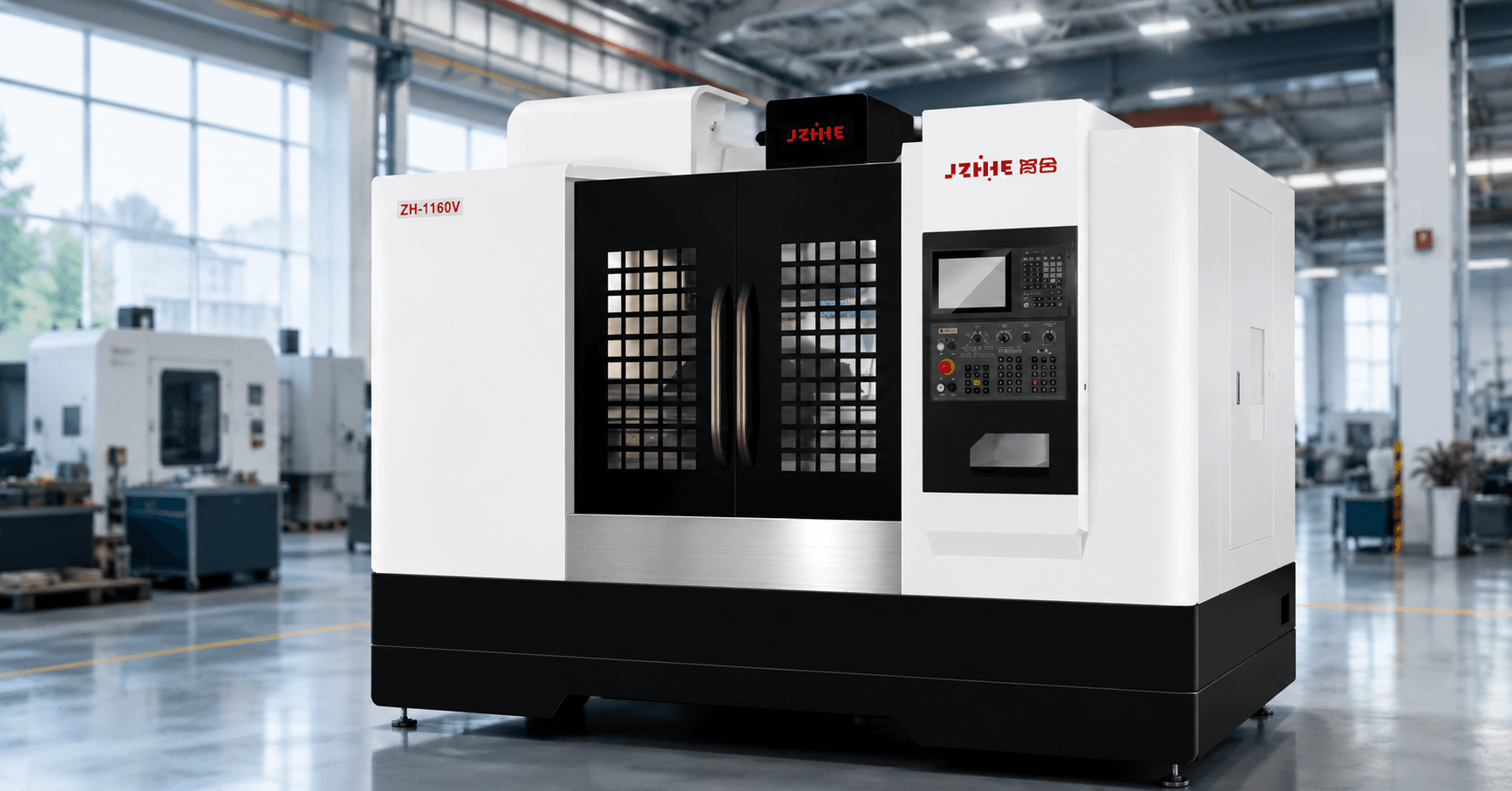
The linked Zhihe CNC machine is designed for this type of long-profile and medium-sized part production. Its product page lists 2000 / 500 / 500 mm X/Y/Z travel, a 2000 × 500 mm worktable, 500 kg maximum table load, BT40 belt-drive spindle, 7.5 kW spindle motor, 10,000 rpm maximum spindle speed with optional 12,000 rpm, and MITSUBISHI M80VB CNC controller.
The Shop-Floor Problem: Long Parts, Re-Clamping, and Unstable Consistency
Small and mid-sized manufacturers often begin with a general-purpose machine that works well for shorter parts. The problem appears when the part family changes. A new customer may request long aluminum profiles. A battery tray structure may need hole positions controlled across nearly two meters. An automation equipment beam may require stable flatness over its full length.
At first, the shop may try to solve the problem with process adjustments. Operators split the machining into sections. Fixtures are modified. Inspection frequency increases. Programs are adjusted to compensate. This may work for a few parts, but it becomes inefficient in batch production.
A CNC Vertical Machining Center with longer X-axis travel can reduce this issue by allowing more features to be machined in one setup. In the linked product page, the machine is positioned for high-precision batch production of long-profile and medium-sized parts, with target industries including 3C electronic frames, lithium battery and PV aluminum structures, robot guide rails, automotive parts, and automation equipment.
Why This Machine Type Fits Long-Profile Production
In this case, the key advantage is not only that the machine can mill, drill, and tap. Most VMCs can do that. The important point is whether the machine has the work envelope and structure to support long parts without forcing unnecessary re-clamping.
The machine’s 2000 mm X-axis travel and 2000 × 500 mm worktable are useful for parts such as battery tray profiles, guide rail mounting beams, PV aluminum structures, and automation frames. The listed maximum workpiece capacity is 2000 × 500 × 500 mm, which gives buyers a clear reference when comparing it with their own drawings.
| Buyer Concern | Product Data | Why It Matters |
|---|---|---|
| Long workpiece machining | 2000 mm X-axis travel | Helps reduce segmented clamping |
| Fixture space | 2000 × 500 mm worktable | Supports long-profile clamping layouts |
| Medium part capacity | 500 kg table load | Suitable for many profile fixtures and medium parts |
| Tool compatibility | BT40 belt-drive spindle | Common for milling, drilling, and tapping |
| Batch machining | MITSUBISHI M80VB controller | Supports production-oriented CNC operation |
| Tool efficiency | 24-tool arm-type BT40 magazine | Reduces interruption for multi-tool parts |
| Accuracy reference | ±0.010 mm positioning, ±0.005 mm repeatability | Helps buyers evaluate long-travel consistency |
These figures should still be checked against the buyer’s actual workpiece. A machine that fits one long-profile job may not automatically fit another. Fixture size, tool length, material, tolerance, and loading method all need to be reviewed.
Case Reference: New Energy Battery Tray Aluminum Profile
The product page gives a useful case involving a 6061 aluminum alloy new energy battery tray aluminum profile, with dimensions of 1800 × 300 × 80 mm. The previous process had insufficient travel, so the customer needed segmented clamping. That led to cumulative positioning error of ±0.08 mm, vibration during long-overhang cutting, hole concentricity problems, and a cycle time of about 45 minutes per piece.
The proposed solution used the machine’s 2000 mm X-axis travel to support one-time clamping of the full-length profile. The BT40 spindle and 7.5 kW motor were used to support machining rigidity, while the listed positioning accuracy helped maintain long-travel consistency. After the change, the reported cumulative positioning error was controlled within ±0.015 mm, cycle time was reduced to 28 minutes, efficiency increased by 38%, yield improved from 85% to 97%, and daily output increased from 12 to 20 pieces.
For sourcing teams, this case is valuable because it connects machine travel with a real production issue. The gain was not just faster cutting. It came from reducing the need to re-clamp and re-align the workpiece.
Case Reference: Automation Equipment Linear Guide Mounting Beam
Another case on the product page involves an automation equipment linear guide mounting beam made from 45# carbon steel, with dimensions of 1950 × 180 × 120 mm. The customer’s earlier equipment did not provide enough rigidity for a nearly two-meter part. Flatness deviation reached 0.05 mm/m, frequent tool changes caused more than 30% non-cutting time, and batch precision fluctuation led to hole misalignment during assembly.
The solution used the machine’s cross-slide structure, X/Y precision linear guides, C3-grade ball screws, 24-tool BT40 arm-type magazine, and MITSUBISHI M80VB system for rigid tapping and pitch error compensation. The reported result was flatness controlled within 0.02 mm/m, auxiliary time reduced by 65%, cycle time shortened from 52 minutes to 35 minutes per piece, precision fluctuation kept within ±0.008 mm after 100 consecutive pieces, and assembly pass rate improved to 99.2%.
This kind of case is relevant for automation equipment suppliers, robot guide rail manufacturers, and factories producing long mounting beams. The core issue is not only length. It is whether the machine can maintain flatness, hole alignment, and batch consistency over repeated work.
What the Buyer Should Look for First
Most engineers and sourcing managers should not start by asking for the longest specification list. They should start with the part.
For a long-profile machining project, the buyer should confirm:
- Maximum part length, width, and height
- Material grade
- Fixture design and clamping points
- Hole-position tolerance
- Flatness requirement
- Current number of setups
- Current cycle time
- Tool list
- Batch quantity
- Loading and unloading method
- Need for probing or 4th-axis expansion
The linked machine includes a standard 4th-axis interface, with optional indexer or rotary table. It also lists optional Renishaw / Marposs probing for automatic alignment and in-process measurement. These options should be selected based on actual production needs, not added simply because they sound advanced.
Why Enclosure and Chip Control Still Matter
Long-profile parts often create a large volume of chips, especially when machining aluminum structures or performing repeated drilling and tapping. A controlled work zone helps keep chips and coolant inside the machine area, making daily operation cleaner and more predictable.
The product page lists a chain-type chip conveyor with chip cart, flood coolant, coolant tank, high-pressure wash gun, rear flush, and optional spindle center through-coolant.
These details are not the most eye-catching part of a VMC, but they affect uptime. Poor chip handling can slow production, especially when the machine runs long cycles or repeated batches.
Common Mistakes Buyers Should Avoid
One common mistake is choosing by machine size alone. A long travel range is useful only when the part, fixture, and process truly need it.
Another mistake is ignoring fixture support. A 2000 mm X-axis travel does not automatically solve the problem if the long profile is poorly supported, clamped unevenly, or allowed to vibrate during machining.
A third mistake is focusing only on spindle speed. The linked product lists a maximum spindle speed of 10,000 rpm, with 12,000 rpm optional, but buyers should also review spindle taper, motor power, guideway structure, tool holder system, material, and coolant strategy.
A final mistake is skipping trial cutting. The product page states that buyers may conduct pre-acceptance trial cutting at the supplier’s facility after assembly and commissioning, followed by final acceptance trial cutting after delivery, installation, and commissioning at the buyer’s facility. The warranty period starts after successful final acceptance.
Service and Purchase Details Buyers Should Confirm
A VMC purchase is not finished when the machine is ordered. Delivery, installation, training, and spare parts support affect how quickly the machine can enter production.
The linked product page lists delivery time of approximately 45–60 working days after down payment and signed contract, standard export wooden case packaging with moisture-proof, shock-proof, and rust-proof treatment, sea or air freight options, on-site installation and commissioning by supplier engineers, free 2–3 days on-site training, 12-month warranty from final acceptance, and long-term genuine spare parts supply.
For overseas buyers, these details should be included in the technical and commercial review. The page also notes that the buyer is responsible for foundation, power supply, and lifting assistance, so preparation should begin before delivery.
What Changed After the Machine Choice
In a representative long-profile machining scenario, the biggest improvement is usually process control.
The shop can reduce segmented clamping. Operators have a clearer machining route. Fixtures can be standardized. Inspection becomes easier to manage because the datum changes less often. Tool changes can be reduced when the 24-tool magazine covers the full process. Long parts become less dependent on manual adjustment between operations.
The machine does not solve every production problem by itself. Tooling, fixtures, programming, coolant, and inspection still matter. But a machine with the right travel and configuration can remove enough process noise that the real bottlenecks become easier to identify and control.
FAQ
Is a long-travel VMC only for aluminum profiles?
No. The linked product page lists aluminum alloys, copper alloys, carbon steel, and low-carbon alloy steel as applicable materials. It is positioned for long-profile and medium-sized parts across several industries.
Why is 2000 mm X-axis travel important?
It can reduce segmented clamping for long parts. In the battery tray case, one-time clamping helped control cumulative positioning error within ±0.015 mm.
Should buyers choose probing?
Probing is useful when the shop frequently changes setups, needs automatic alignment, or wants in-process measurement. It should be selected according to real production needs.
What should buyers send before requesting a quote?
Send drawings, material, dimensions, tolerance requirements, flatness targets, current cycle time, setup count, batch quantity, and fixture information.
A Practical Next Step for Sourcing Teams
If you are comparing a Vertical Machining Center for long-profile parts, battery tray structures, robot guide rails, automation beams, or medium-sized precision components, start with the part drawing. Do not start with the catalogue alone.
The linked Zhihe CNC model is worth evaluating when your current process involves segmented clamping, long-part flatness problems, hole misalignment, excessive non-cutting time, or assembly instability. A better recommendation will come from clear workpiece data: material, dimensions, tolerance, fixture method, output target, and current machining problems.