What Buyers Really Mean When They Search for a Drilling and Tapping Center Supplier
When engineers and sourcing teams look for a drilling and tapping center supplier, they are usually not shopping for a machine brochure. They are trying to solve a production problem: how to make holes faster, tap threads more reliably, and complete light milling work without occupying a larger machining center that may be better used for heavier jobs.
In a busy shop, that decision affects cycle time, tool life, part quality, operator workload, and production balance. A machine can look suitable on paper and still become a bottleneck if it is too slow in non-cutting movement, weak in tapping stability, difficult to fixture, or poorly supported after installation.
That is why buyers often search not only for a supplier, but also for terms such as drilling tapping center manufacturer, CNC drilling and tapping center, BT30 drilling and tapping center, or high speed drilling and tapping center. The real goal is not only to buy equipment. It is to find a supplier that can recommend a practical machine configuration for the part, material, and output target.
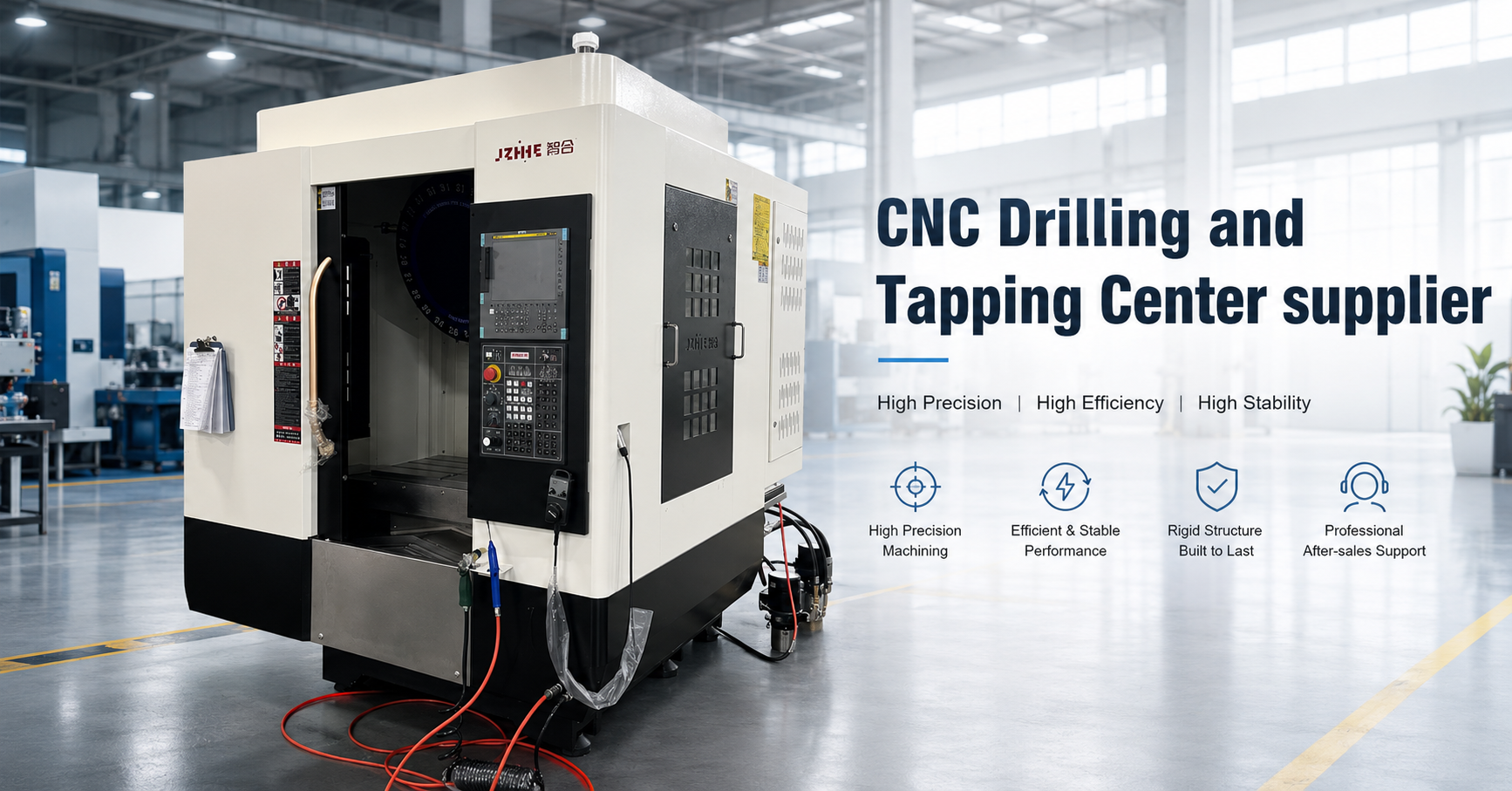
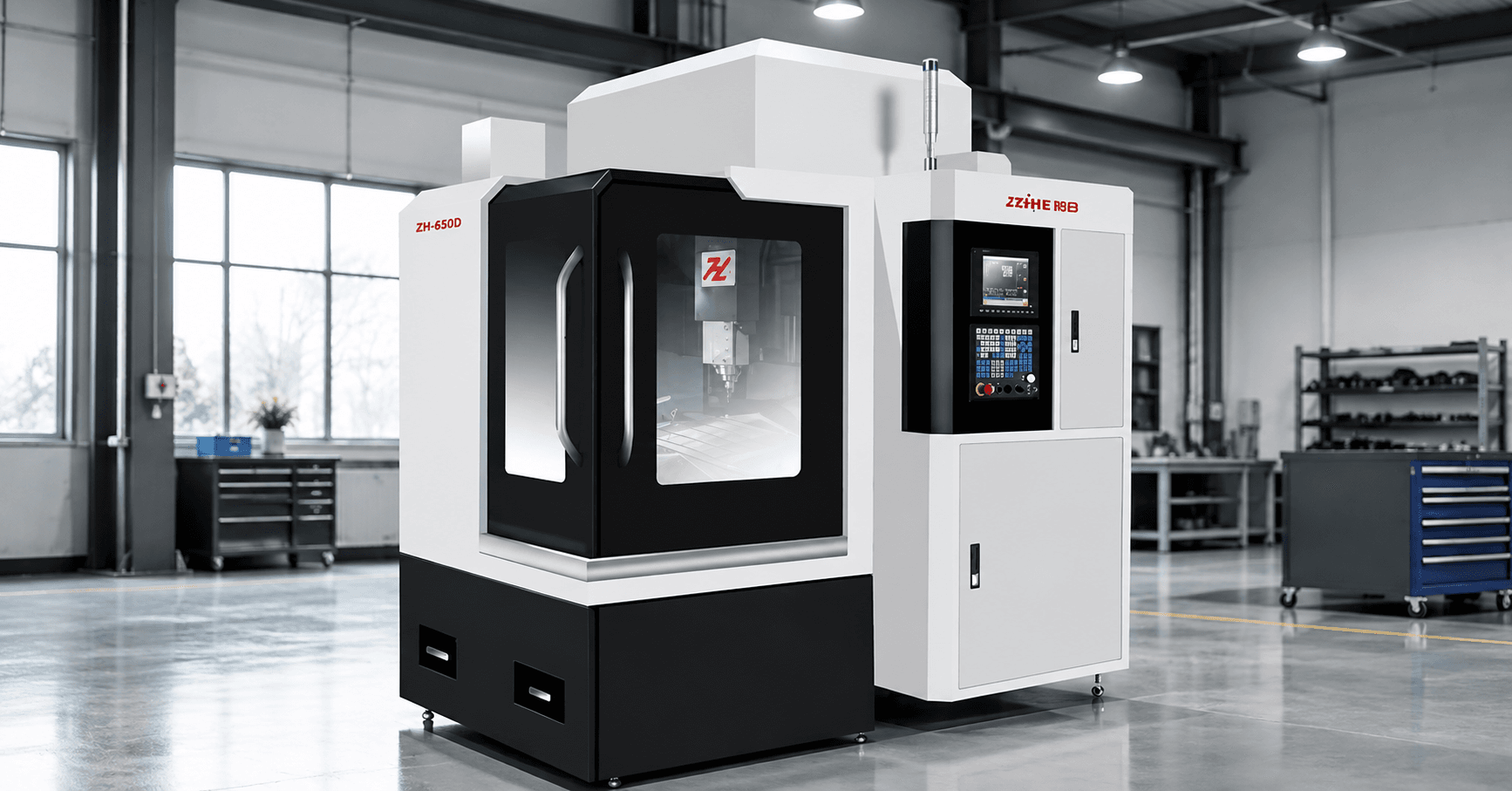
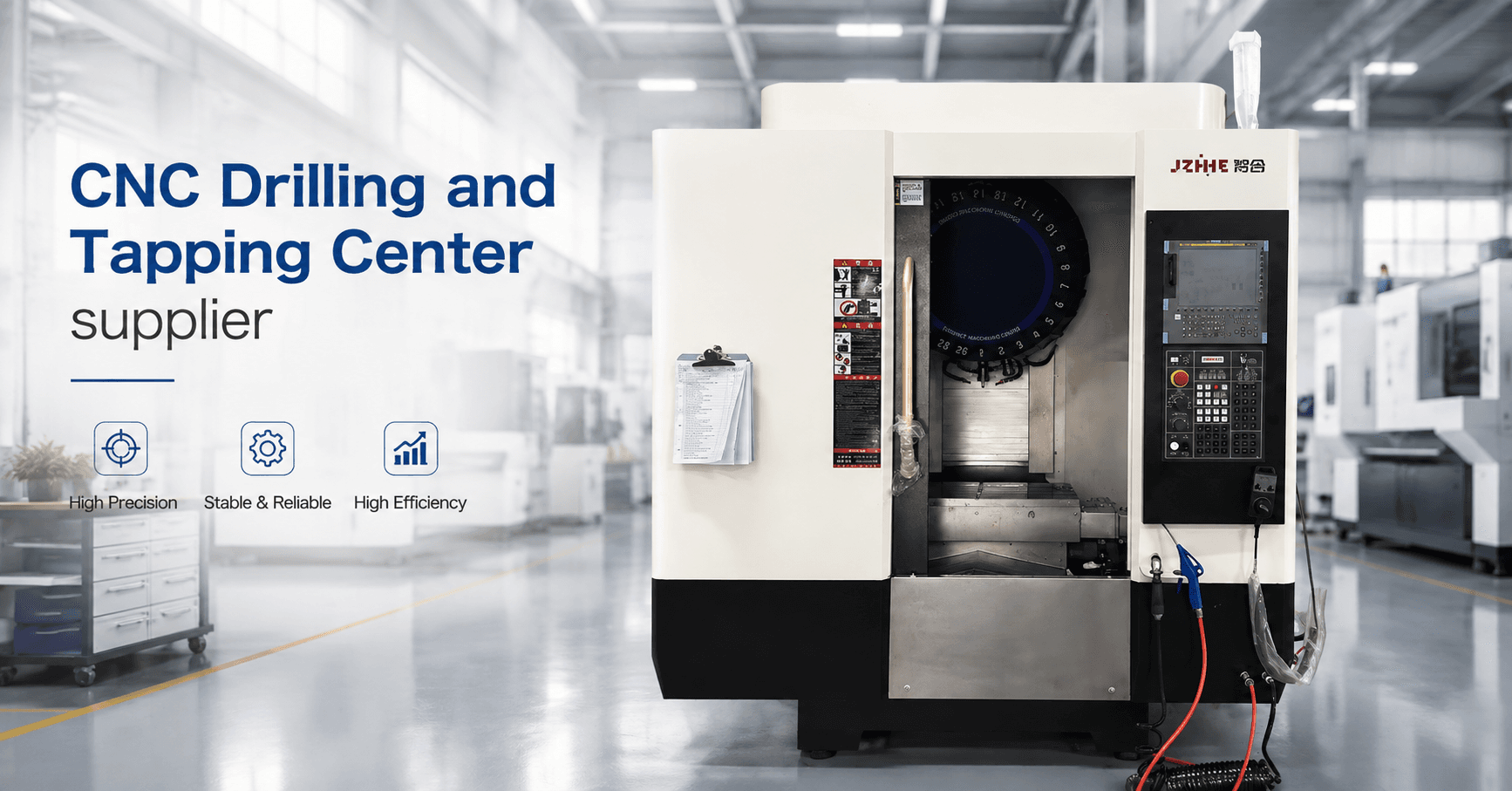
The Zhihe CNC product page for the ZH-600T Drilling & Tapping Center positions the machine for high-speed drilling, tapping, and light milling of small-to-medium precision parts, especially aluminum components, 3C parts, and batch-production metal parts. The page lists a 600 / 400 / 300 mm X/Y/Z travel, BT30 direct-drive spindle, maximum spindle speed of 20,000 rpm, 21-tool arm-type magazine, 48 m/min rapid traverse, and MITSUBISHI M80VB CNC controller.
Where a Drilling and Tapping Center Fits in the Shop
A drilling and tapping center is typically used for parts that need repeated hole patterns, thread cutting, chamfering, and light-to-moderate milling. It is common in automotive parts, 3C electronics, aluminum components, precision hardware, communication components, appliance metal parts, heat sinks, small brackets, and batch drilling/tapping parts.
This machine category often sits between manual drilling/tapping work and heavier machining centers. It is the machine a factory considers when the job is repetitive enough to require CNC discipline, but not so heavy or complex that a larger VMC must be tied up for every part.
For example, a high-speed drilling and tapping center is a practical choice when a part needs many tapped holes, short cycle time, fast tool changes, and stable repeatability across hundreds or thousands of pieces. It may not replace a heavy-duty machining center for large steel parts, but it can improve efficiency for smaller aluminum, copper, carbon steel, or low-carbon alloy steel components.
Product Data Buyers Should Review First
Before comparing suppliers, buyers should understand the basic machine configuration. The ZH-600T product page lists the following core data.
| Review Point | ZH-600T Product Data | Why It Matters to Buyers |
|---|---|---|
| X/Y/Z travel | 600 / 400 / 300 mm | Fits small-to-medium precision parts |
| Worktable area | 700 × 420 mm | Provides space for compact fixtures and batch parts |
| Maximum table load | 250 kg | Suitable for light-to-medium workpieces and fixtures |
| Spindle taper | BT30 | Common for high-speed drilling, tapping, and light milling |
| Spindle type | Direct-drive spindle | Supports high-speed response and stable rotation |
| Spindle speed | Max. 20,000 rpm, optional 15,000 rpm | Useful for aluminum parts, 3C components, and high-speed drilling |
| Tool magazine | 21-tool arm-type magazine | Supports multi-operation parts with fast tool changes |
| Rapid traverse | 48 / 48 / 48 m/min | Helps reduce non-cutting time |
| Controller | MITSUBISHI M80VB | Supports CNC production machining and tapping control |
| Accuracy | ±0.005 mm positioning, ±0.003 mm repeatability | Helps maintain batch consistency |
These numbers matter because drilling and tapping work is often judged by accepted parts per shift, not by machine appearance. Faster spindle speed alone is not enough. Buyers should also check tool change speed, rapid traverse, table size, fixture design, chip evacuation, coolant system, and real part results.
What Buyers Should Compare Before Choosing a Supplier
A good drilling and tapping center supplier should help match the machine to the part, not force the buyer into a generic model. In practice, this means asking for drawings, material data, hole sizes, thread forms, batch size, expected takt time, and current process problems.
The ZH-600T page lists applicable materials including aluminum alloys, copper alloys, carbon steel, and low-carbon alloy steel. It also identifies target industries such as automotive, precision molds, general machinery, and automation, with the machine positioned for high-efficiency batch production.
A buyer should ask:
- Are the parts mainly aluminum, copper, steel, or mixed materials?
- How many holes and tapped features are on each part?
- What is the current cycle time?
- Are tool changes causing downtime?
- Does the part need light side milling or only drilling and tapping?
- Is the table size enough for the fixture?
- Is a 4th-axis interface needed for future work?
- Is probing useful for automatic alignment or in-process measurement?
- Can the supplier support trial cutting before delivery?
These are practical questions. They reveal whether the supplier understands production, not only the equipment list.
Why Speed Matters, but Only When the Process Is Stable
Buyers often focus on high spindle speed when comparing drilling and tapping centers. That makes sense, especially for aluminum and 3C parts. The ZH-600T offers a maximum 20,000 rpm direct-drive BT30 spindle, which is relevant for fast drilling, tapping, and light milling work.
Still, speed by itself does not solve everything. A fast spindle is useful only when the machine can also handle tool changes, positioning movement, chip removal, fixture rigidity, and repeat accuracy.
The ZH-600T product page also lists a 21-tool arm-type magazine with tool change time shown as 1.8 seconds, plus 48 m/min rapid traverse on all three axes. In production, these details can reduce non-cutting time, especially on parts with many holes and several tool operations.
For buyers, the better question is not “how fast is the spindle?” The better question is: how many qualified parts can the full process produce per shift?
Case Reference: Automotive Aluminum Valve Body
The ZH-600T product page includes a case involving an automotive aluminum valve body made from ADC12 aluminum alloy, with dimensions of 350 × 250 × 120 mm. The customer’s previous issues included excessive cycle time of about 15 minutes per piece, frequent tool changes causing downtime, and unstable surface finish requiring rework in some batches.
The proposed solution used the ZH-600T’s 20,000 rpm direct-drive spindle, 21-tool arm-type magazine, 1.8-second tool change, 48 m/min rapid traverse, and ±0.005 mm positioning accuracy. The reported result was cycle time reduced to under 8 minutes, tool-change wait time reduced by 70%, surface roughness stabilized at Ra 1.6, and yield improved from 92% to 98.5%.
For sourcing teams, this case is useful because it shows how the machine affects more than cutting speed. It affects downtime, finish stability, and yield.
Case Reference: 3C Electronics Aluminum Mid-Frame
Another product-page case involves a 3C electronics aluminum mid-frame made from 6063 aluminum alloy, with dimensions of 280 × 160 × 12 mm. The customer’s challenges included a complex process involving drilling, tapping, and side milling; chatter marks on thin-walled parts caused by insufficient rigidity; and a production bottleneck that limited order fulfillment.
The solution used the machine’s 600 × 400 × 300 mm travel, axis motor power of 1.5 / 1.5 / 3.0 kW, and 4th-axis capability for multi-face machining in a single setup. The reported results were process consolidation, chatter marks eliminated, and daily output increased from 180 to 320 pieces, equal to a 77% productivity increase.
This case is especially relevant for buyers in 3C electronics, aluminum frame machining, communication components, and high-volume precision hardware production.
Key Areas to Review Before You Buy
| Buying Question | Why It Matters |
| What is the real part size? | Confirms whether 600 / 400 / 300 mm travel is suitable |
| How many tools are used per part? | Determines whether a 21-tool magazine is enough |
| Is the work mainly drilling and tapping? | Confirms whether a drilling/tapping center is better than a larger VMC |
| What material is being machined? | Affects spindle speed, tool choice, coolant, and chip evacuation |
| What is the current cycle time? | Helps calculate whether faster traverse and tool changing will matter |
| Is surface finish unstable? | Indicates whether rigidity, spindle stability, and coolant need review |
| Does the part require side machining? | A 4th-axis option may be useful |
| Is trial cutting available? | Verifies machine performance before final acceptance |
The ZH-600T page states that buyers may conduct pre-acceptance trial cutting at the supplier’s facility after assembly and commissioning, followed by final acceptance trial cutting after delivery, installation, and commissioning at the buyer’s facility. The warranty period begins after successful acceptance.
Optional Configurations Buyers Should Discuss
The product page lists several optional or selectable configurations, including FANUC, Mitsubishi, and Siemens controller options; high-speed spindle; BT30 spindle; disc-type or chain-type tool magazine; chip conveyor; coolant system; oil mist collector; automatic lubrication; optional 4th axis; custom fixture; and probe system.
Buyers should not add options only because they sound advanced. Each option should solve a real problem.
A 4th axis may help when the part requires indexed side machining. A probe may help when alignment and in-process measurement are important. A custom fixture may matter more than a faster spindle if the current issue is part movement or inconsistent clamping. An oil mist collector may be relevant for a cleaner workshop environment.
Common Mistakes Buyers Still Make
One common mistake is overspecifying. Some teams buy a larger machine than the job requires because it feels safer. That can raise purchase cost, footprint, and operating cost without improving output.
Another mistake is focusing only on the brochure while ignoring the daily process. If operators struggle with loading, chip removal, tool changes, or fixture repeatability, the machine’s theoretical speed will not turn into accepted parts.
A third mistake is assuming that a drilling and tapping center can replace every machining center. It cannot. This machine type is excellent for repeated drilling, tapping, and light milling on suitable parts, but it is not the best answer for heavy roughing, very large parts, or complex multi-axis machining.
A fourth mistake is skipping supplier support. Drilling and tapping jobs can fail because of fixture rigidity, toolpath strategy, tapping parameters, coolant, or chip evacuation. A supplier that can discuss these issues clearly is usually more valuable than one that only sends a price.
Why Supplier Support Matters as Much as Machine Structure
A machine can look solid in a showroom and still become a problem if the supplier cannot help with setup, training, process matching, or spare parts. For overseas buyers, packaging, shipping documents, delivery support, and commissioning planning also matter.
The ZH-600T product page lists standard export wooden case packaging with moisture-proof, shock-proof, and rust-proof treatment; sea or air freight options; on-site installation and commissioning by supplier engineers; free 2–3 days of on-site operation and maintenance training; a 12-month warranty from final acceptance; and long-term genuine spare parts supply.
For buyers, these details belong in the quotation discussion. A machine that arrives without clear installation and training support can sit idle longer than expected.
Practical Next Step for Sourcing Teams
If you are shortlisting a drilling and tapping center supplier, start with your part drawings and production targets. Then ask the supplier to recommend a machine and supporting setup based on those actual requirements.
Send:
- Workpiece drawing
- Material
- Dimensions
- Hole size and thread information
- Tolerance and surface finish target
- Current cycle time
- Current quality issues
- Batch quantity
- Fixture concept
- Need for 4th-axis machining
- Delivery destination and service needs
This is the right way to buy this category: match the machine to the production problem, verify the details that affect daily output, and avoid being guided only by a generic spec sheet.
FAQ
What is a drilling and tapping center used for?
It is used for high-speed drilling, tapping, and light milling of small-to-medium precision parts, especially parts with repeated holes and threads.
Is this machine suitable for automotive aluminum parts?
Yes. The ZH-600T product page includes an automotive aluminum valve body case using ADC12 aluminum alloy, with improvements in cycle time, tool-change downtime, surface roughness, and yield.
Is it suitable for 3C electronics parts?
Yes. The product page includes a 3C electronics aluminum mid-frame case using 6063 aluminum alloy, with reported improvements in process consolidation and daily output.
What should buyers confirm before ordering?
Confirm travel, worktable size, table load, spindle speed, spindle taper, controller, tool magazine, chip conveyor, coolant system, accuracy, optional 4th axis, probing, trial cutting, delivery, installation, training, and warranty terms.
Should buyers choose a drilling and tapping center instead of a VMC?
It depends on the part. If the work is mainly fast repeated drilling, tapping, and light milling on small-to-medium parts, a drilling and tapping center may be more efficient. If the part requires heavier milling, larger workpieces, or broader machining flexibility, a larger VMC may be more suitable.
Contact and Inquiry Information
For a more useful machine recommendation, send the drawings first. It saves time for both sides and helps the supplier match the machine to the real production problem.
For quotation or model selection discussion, the company contact provided is Liu Xiaobang. Email: zhcnclathe@gmail.com. WhatsApp/WeChat: +86 13620089178.