Why a Vertical Profile Machining Center Matters in Day-to-Day Production
A vertical profile machining center is often chosen for the same reason many shops keep returning to a vertical machining center: it offers a practical balance of accessibility, controlled chip handling, and repeatable CNC milling performance. For engineers and sourcing teams, the real question is not whether the machine can cut metal. It is whether the machine fits the part mix, the floor space, and the production rhythm without creating avoidable bottlenecks.
That question becomes more important when the shop handles long-profile workpieces. A compact VMC may be enough for short plates, brackets, and small housings. But when parts become longer—such as aluminum profiles, battery tray structures, robot guide rails, PV aluminum frames, and automation equipment beams—the buying logic changes. The machine must support longer travel, stable clamping, consistent hole positioning, and controlled machining over distance.
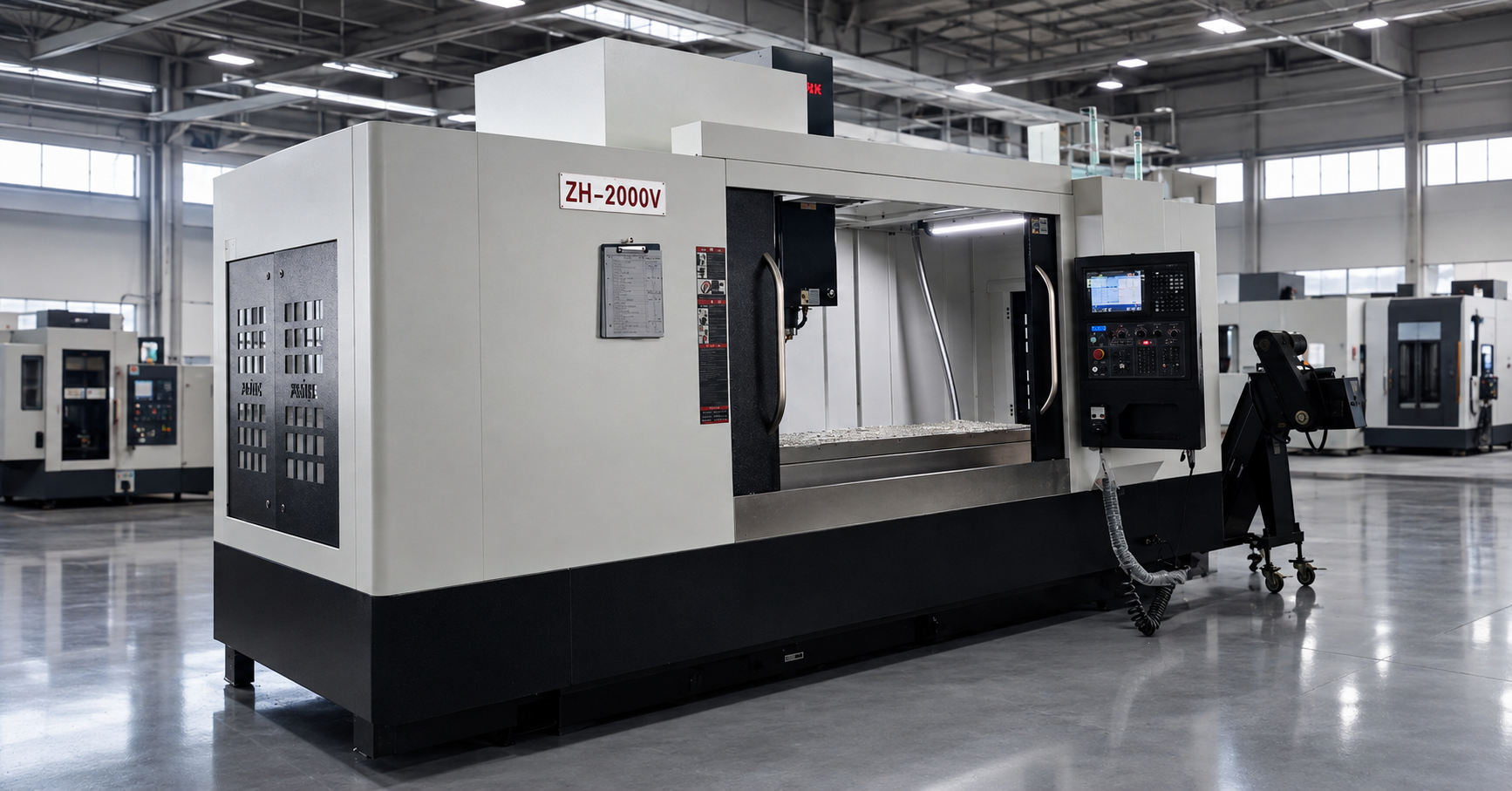
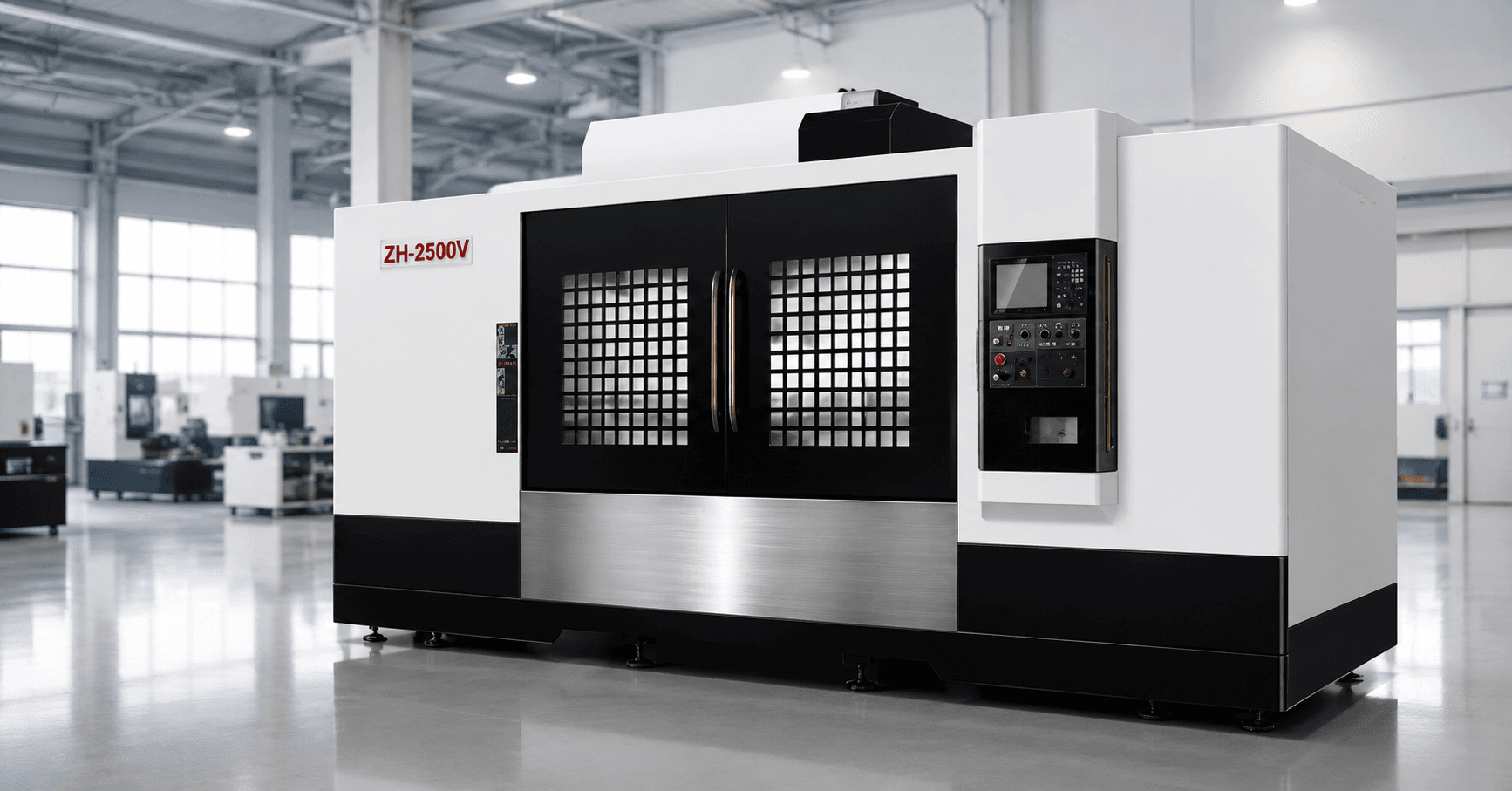
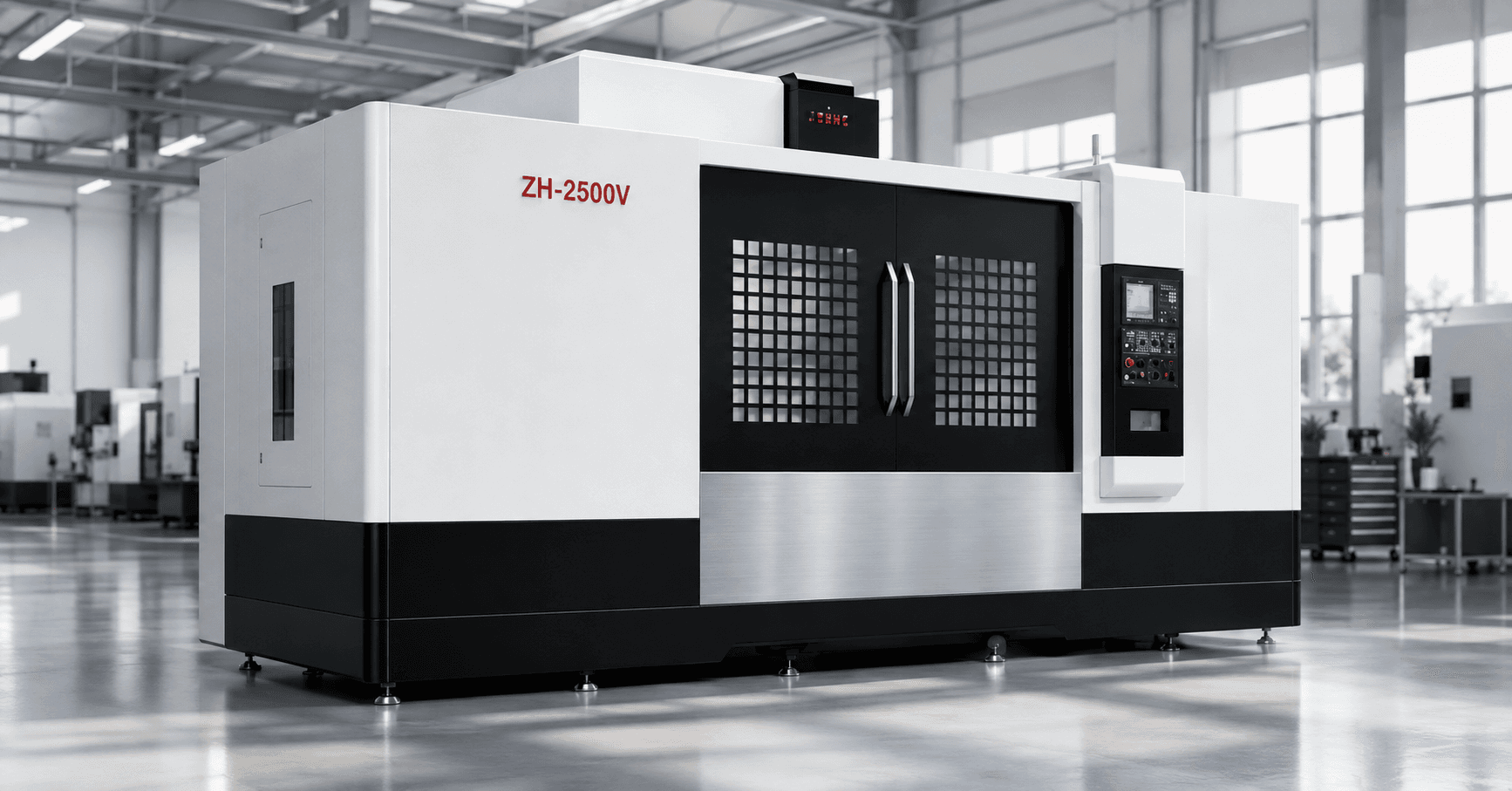
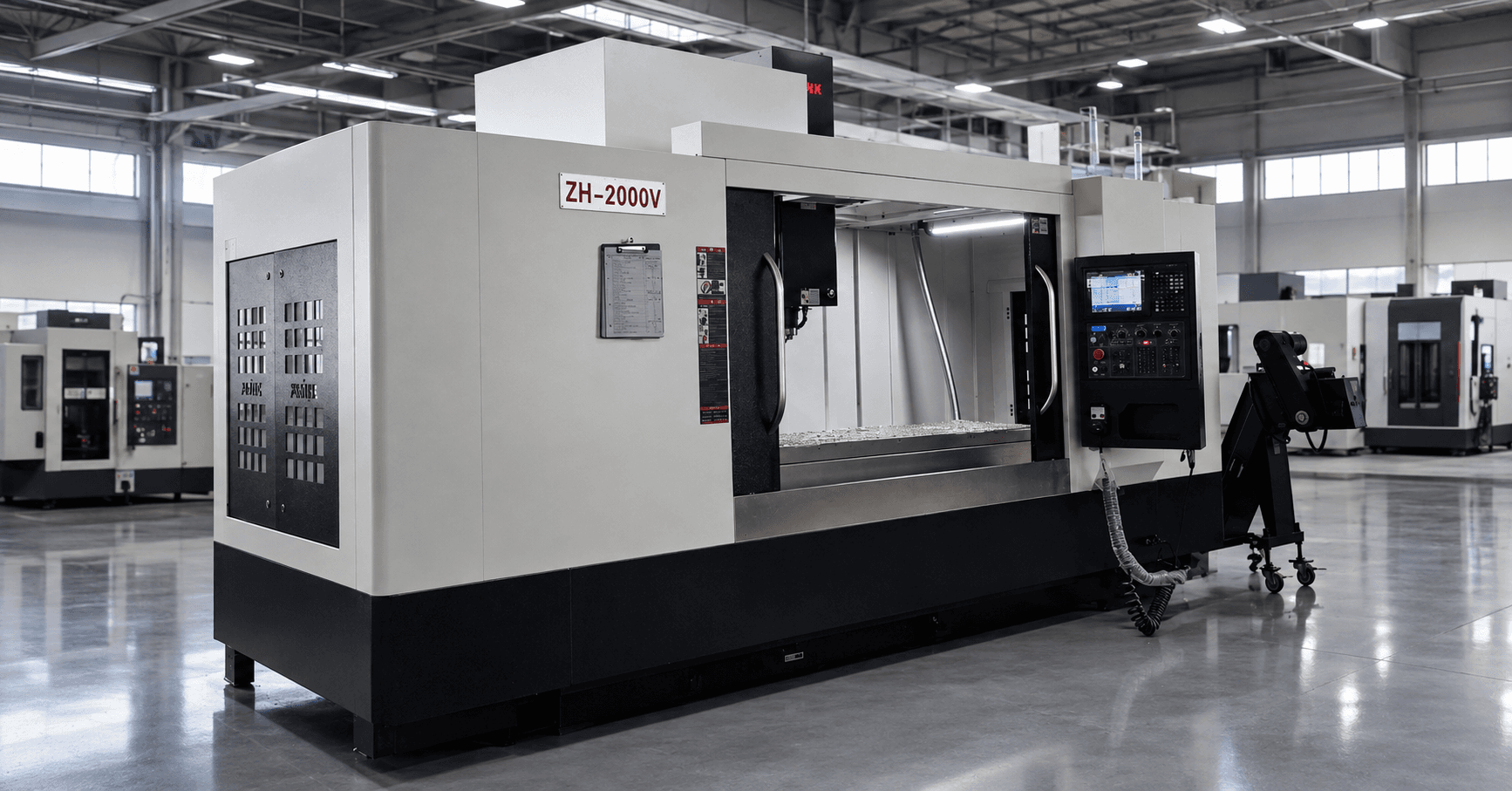
The linked Zhihe CNC machine is designed for long-profile and medium-sized part production. Its product page lists 2000 / 500 / 500 mm X/Y/Z travel, a 2000 × 500 mm worktable, 500 kg maximum table load, BT40 belt-drive spindle, 7.5 kW spindle motor, 10,000 rpm spindle speed with optional 12,000 rpm, and MITSUBISHI M80VB CNC controller.
What the Machine Is Designed to Do
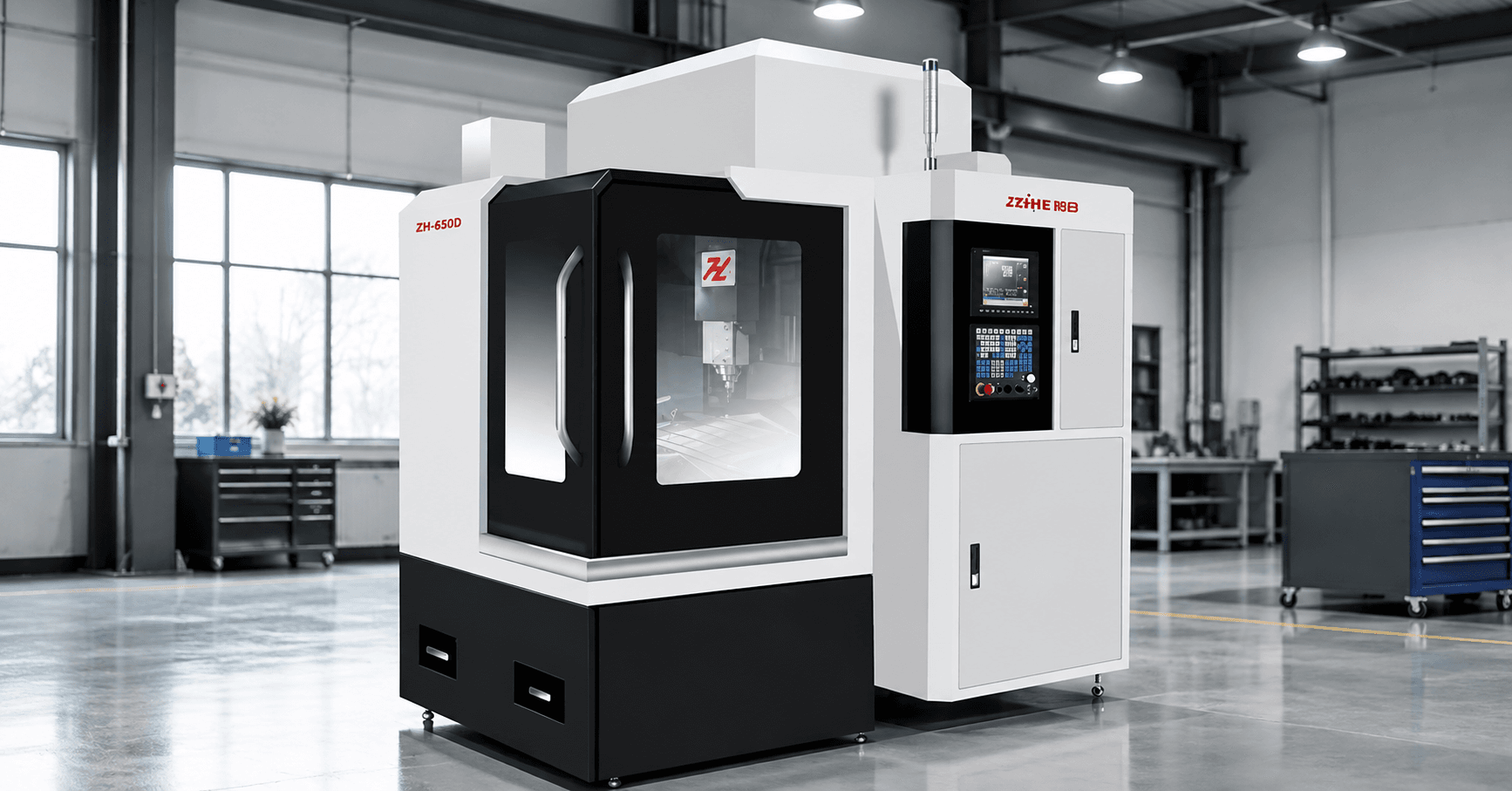
A vertical profile machining center is usually selected when a factory needs CNC milling, drilling, tapping, and contour machining for parts that are longer than standard compact workpieces. The vertical layout keeps loading and inspection relatively straightforward, while the enclosed structure helps contain chips and coolant during daily machining.
According to the product page, this machine is intended for high-precision batch production of long-profile and medium-sized parts. Its listed workpiece capacity is up to 2000 × 500 × 500 mm, and its target industries include 3C electronic frames, lithium battery and PV aluminum structures, robot guide rails, automotive parts, and automation equipment.
That makes it relevant to shops producing:
- Aluminum profile components
- New energy battery tray parts
- PV aluminum structures
- Robot guide rail mounting beams
- Automation equipment beams
- 3C electronic frames
- Automotive medium-sized parts
- Long fixture and structural components
For shops moving between prototype work and batch production, this type of machine can provide a more controlled process than repeatedly adapting smaller equipment to long parts.
Quick Buyer Takeaway: What to Check Before Comparing Quotations
| Buying Point | Product Data | Why It Matters |
|---|---|---|
| X/Y/Z travel | 2000 / 500 / 500 mm | Supports long-profile machining and reduces segmented clamping |
| Worktable area | 2000 × 500 mm | Provides space for long fixtures and profile parts |
| Maximum table load | 500 kg | Suitable for many medium-sized workpieces and fixtures |
| Spindle taper | BT40 | Common tooling interface for milling, drilling, and tapping |
| Spindle motor power | 7.5 kW | Supports general profile machining and batch cutting |
| Spindle speed | 10,000 rpm, optional 12,000 rpm | Useful for aluminum profiles and precision metal parts |
| Tool magazine | 24-tool arm-type BT40 magazine | Reduces interruption on multi-step machining |
| Controller | MITSUBISHI M80VB | Supports production CNC machining and rigid tapping |
| Accuracy | ±0.010 mm positioning, ±0.005 mm repeatability | Helps maintain consistency across long-travel machining |
These data points should be compared with actual workpiece drawings. A long-travel machine only makes sense when the part size, fixture method, and machining process truly need that working envelope.
Why Long-Profile Machining Needs a Different Machine Choice
Shops machining aluminum often care about speed, chip evacuation, and surface finish. Shops cutting steel profiles usually pay closer attention to rigidity, tool life, and flatness. A vertical machining center can serve both, but the best configuration depends on the dominant part family.
Long workpieces create one specific problem: segmented clamping. If the machine cannot cover the full part length, the operator has to machine one section, re-clamp, re-align, and continue. That adds time and may introduce cumulative error.
The product page includes a case involving a 6061 aluminum alloy new energy battery tray aluminum profile, sized 1800 × 300 × 80 mm. The previous process required segmented clamping because of insufficient travel, which led to cumulative positioning error of ±0.08 mm. After using the 2000 mm X-axis travel for one-time clamping, the reported cumulative positioning error was controlled within ±0.015 mm, cycle time was reduced to 28 minutes, efficiency increased by 38%, yield improved from 85% to 97%, and daily output increased from 12 to 20 pieces.
For buyers, this case shows why travel length is not just a catalog number. It can directly affect setup count, positioning consistency, and output.
How Shops Typically Use This Type of Machine
In daily production, a vertical profile machining center may run different types of long or medium-sized parts. One day it may machine aluminum profile frames. Another day it may process automation beams or steel mounting rails. If the shop has a disciplined fixture strategy, the same platform can support trial runs and repeat orders.
The Zhihe CNC product page lists a second case involving an automation equipment linear guide mounting beam made from 45# carbon steel, sized 1950 × 180 × 120 mm. The customer’s previous process had flatness deviation of 0.05 mm/m, more than 30% non-cutting time caused by frequent tool changes, and batch precision fluctuation that caused hole misalignment during assembly. After using the machine, flatness was controlled within 0.02 mm/m, auxiliary time was reduced by 65%, cycle time dropped from 52 minutes to 35 minutes per piece, precision fluctuation stayed within ±0.008 mm after 100 consecutive pieces, and assembly pass rate improved to 99.2%.
This kind of application is relevant to automation equipment factories, robot guide rail suppliers, and long structural part manufacturers. The value is not only that the machine cuts the part. The value is that it helps control the process repeatedly.
Selection Criteria That Are Easy to Overlook
Buyers usually ask about speed, accuracy, and price first. Those are important, but they are not enough.
For long-profile machining, buyers should also check fixture clearance, clamping points, support along the workpiece length, chip flow, table load, and tool magazine capacity. A profile may fit inside the travel range but still be difficult to machine if the fixture is unstable or if the operator cannot load the part efficiently.
The linked machine includes a standard 4th-axis interface, optional indexer or rotary table, optional Renishaw / Marposs probe for automatic alignment and in-process measurement, a chain-type chip conveyor with chip cart, flood coolant, coolant tank, high-pressure wash gun, rear flush, and optional spindle center through-coolant.
These options should be selected based on production needs. A probe may be useful when the shop changes setups often or needs alignment support. Through-spindle coolant may be useful for specific drilling or chip evacuation requirements. A 4th-axis setup may be useful if the factory expects indexed machining in the future.
Common Mistakes When Sourcing an Enclosed VMC
One common mistake is buying to maximum theoretical capacity instead of actual workload. A longer travel machine is useful only when the part family needs that travel.
Another mistake is focusing on spindle speed while ignoring workholding. The linked product lists 10,000 rpm spindle speed with optional 12,000 rpm, but spindle speed alone does not solve long-profile machining problems. Buyers should also review spindle taper, motor power, fixture stability, guideway structure, chip evacuation, and accuracy over travel.
A third mistake is skipping trial cutting. The product page states that buyers may conduct pre-acceptance trial cutting at the supplier’s facility after assembly and commissioning, followed by final acceptance trial cutting after delivery, installation, and commissioning at the buyer’s facility. The 12-month warranty starts after successful final acceptance.
For important production parts, that acceptance step can reveal whether the machine, fixture, tooling, program, and coolant setup truly match the work.
When This Machine Category Is a Sensible Fit
A vertical profile machining center is generally sensible when the shop needs enclosed CNC milling for long or medium-sized parts, relatively simple loading, and a machine footprint that fits a normal factory floor.
This machine category is especially suitable when the buyer faces one or more of these problems:
- Long parts require segmented clamping
- Hole positions drift after re-clamping
- Flatness is difficult to maintain on long beams
- Tool changes create too much non-cutting time
- Assembly pass rate is affected by machining variation
- Aluminum or steel profiles require repeatable batch production
- The shop needs a flexible VMC instead of a highly specialized system
For very small parts, simple plates, or loose-tolerance work, a smaller machine may be more economical. The stronger case for this machine appears when long-travel consistency and batch repeatability matter.
What to Ask the Supplier Before You Place an Order
Before requesting a quotation, buyers should provide the workpiece drawing, material, dimensions, tolerance, flatness requirement, target output, fixture method, and current machining problems. This helps the supplier recommend the correct machine configuration instead of offering a generic model.
Commercial support should also be reviewed. The product page lists delivery time of approximately 45–60 working days after down payment and signed contract, standard export wooden case packaging with moisture-proof, shock-proof, and rust-proof treatment, sea or air freight options, on-site installation and commissioning by supplier engineers, free 2–3 days on-site training, 12-month warranty, and long-term supply of genuine spare parts.
For overseas buyers, these details matter because installation preparation, lifting assistance, power supply, training, and acceptance all affect how quickly the machine can enter production.
FAQ
Is a vertical profile machining center only for aluminum?
No. The linked product page lists aluminum alloys, copper alloys, carbon steel, and low-carbon alloy steel as applicable materials. The best setup still depends on the part, tooling, fixture, and cutting parameters.
Can it handle both prototypes and batch work?
Yes, if the workpiece size and process requirements match the machine. The machine is positioned for high-precision batch production of long-profile and medium-sized parts, but it can also support trial production when properly fixtured.
Why is 2000 mm X-axis travel important?
It helps reduce segmented clamping for long parts. In the battery tray profile case, one-time clamping helped control cumulative positioning error within ±0.015 mm.
What should I request in the first inquiry?
Send the part drawing, material, dimensions, tolerance target, flatness requirement, fixture concept, tool list, expected output, and any current process problems.
Next Step
If you are evaluating a vertical profile machining center for a new line or replacement purchase, start with the actual part family and the daily production pattern. Then compare machine travel, table size, fixture access, control layout, tool capacity, chip handling, and service support.
For buyers machining long aluminum profiles, battery tray structures, PV aluminum parts, robot guide rails, and automation beams, the linked Zhihe CNC machine provides a practical reference point. Its 2000 mm X-axis travel, BT40 spindle, 24-tool magazine, Mitsubishi M80VB controller, chip conveyor, coolant options, and application case data make it worth evaluating when long-profile machining has become a daily production bottleneck.