Why a CNC Machining Center Matters in Automotive Production
A CNC machining center for automotive parts is not just another piece of shop-floor equipment. For engineers and sourcing teams, it sits at the point where part geometry, cycle time, repeatability, and fixture strategy all meet. In automotive machining, that matters because many parts are not simple one-side jobs. Brackets, housings, covers, and structural components often need milling, drilling, tapping, and multi-face machining in one controlled setup.
That is where a horizontal machining center can be especially useful. With a horizontal spindle layout, chips tend to clear more naturally than they do in some vertical setups, which can help during longer production runs and on parts with deeper pockets or multiple surfaces. It is not a magic fix, of course, but it is a practical advantage when you are trying to keep machining stable and reduce interruptions for chip buildup.
What Buyers Usually Need to Decide First
When a plant looks for automotive CNC machining capacity, the first question is rarely “which machine is the fastest?” It is more often: what kind of part mix are we running, how many surfaces need to be machined, and how consistent must the output be shift after shift?
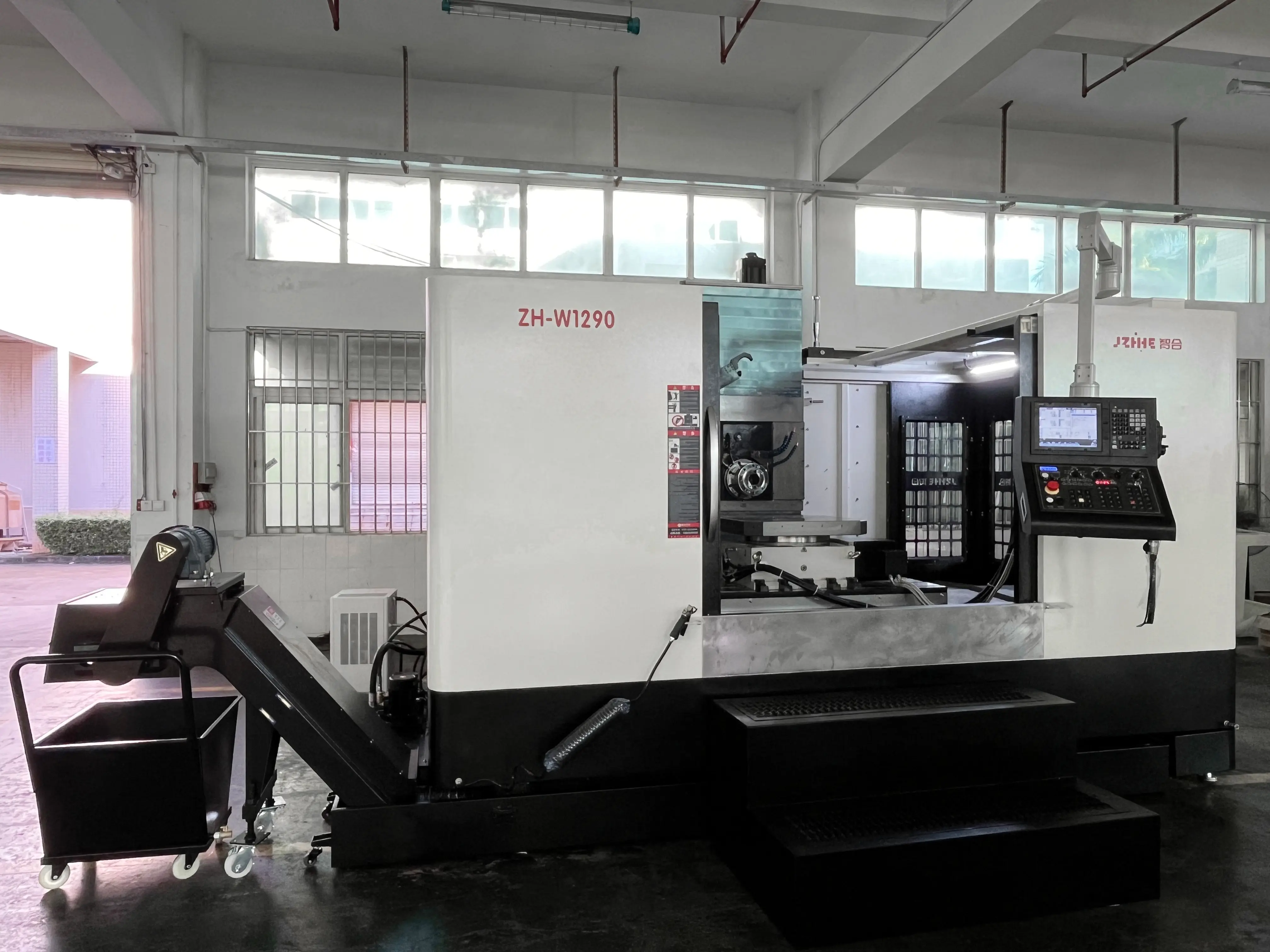
The horizontal machining center shown here, model ZH-LW1075, is presented as a CNC metal-cutting machine for milling, drilling, tapping, and multi-surface machining. Based on the visible structure, it includes an enclosed machine body, a front access opening, a right-side CNC control console, and what appears to be a chip-handling or conveyor attachment on the left. Those are the kinds of features buyers usually look for when they want a machine suited to production work rather than occasional job-shop use.
Where a Horizontal Machining Center Fits in Automotive Work
In automotive component production, a CNC milling for automotive components setup often needs to handle repeatable features on several sides of a workpiece. A horizontal machine can be a strong fit for cast housings, gearbox-related parts, fixture plates, and other parts that benefit from stable clamping and better chip evacuation.
That said, not every automotive part belongs on a horizontal machine. Smaller, simpler parts may be more economical on a vertical machining center or a dedicated drilling/tapping center. The right choice depends on part geometry, takt time, and how much manual intervention the process can tolerate. Buyers sometimes over-specify equipment because they want flexibility, only to discover later that the machine is larger or more complex than the application needs.
Practical Selection Criteria for Purchasing Teams
For teams comparing a CNC machining center for automotive parts, the useful questions are straightforward:
1. What operations must be completed in one setup?
If a part needs machining on multiple faces, a horizontal layout may reduce handling and help with consistency.
2. What is the production volume?
Batch production and repeat runs often justify a machine built for stable, enclosed operation. Lower-volume work may need more flexibility than raw throughput.
3. How sensitive is the part to chip evacuation and surface condition?
Chip removal is not a glamorous topic, but in real production it can make the difference between steady output and nuisance downtime.
4. What support is available around the machine?
Control selection, fixture support, trial cutting, operator training, and after-sales service can matter as much as the hardware itself.
What the Available Company Information Suggests
Zhongshan Zhihe CNC Technology Co., Ltd., founded in 2018, states that its product range includes vertical machining centers, horizontal machining centers, gantry machining centers, drilling and tapping centers, CNC milling machines, and five-axis machining centers. The company also indicates it supports engineering, assembly, inspection, and service capabilities, which is relevant for buyers who need more than a machine carton dropped at the dock.
Its stated customer base includes automotive parts, 3C electronics, aluminum parts processing, precision hardware, communications equipment, molds, home appliances, and lithium battery equipment. That mix is useful context: it suggests the company is positioned around general precision manufacturing rather than a single niche. For automotive buyers, that usually means the discussion should focus on process fit, fixturing, and production stability, not just catalog language.
Common Mistakes Buyers Make
One frequent mistake is choosing a machine based only on the largest part in the portfolio. That can lead to overcapacity on many jobs and poor economics. Another is ignoring the fixturing plan. If the fixture design is weak, even a well-built machining center will struggle to deliver repeatable parts.
Another practical caution: do not assume every horizontal machining center is automatically suited to every automotive component. Exact spindle power, axis count, table size, travels, accuracy, and automation level are not confirmed here, so those details still need to be matched to the actual drawing and production target.
How to Shortlist the Right Machine
A good sourcing workflow is usually simple. Share the workpiece drawing, material, dimensions, precision requirements, expected output, and the kinds of operations needed. Then ask for a machine recommendation, control system options, and if possible a trial cut on representative material. That is often more valuable than comparing brochure claims.
If the buyer is planning overseas shipment or multi-site deployment, packaging, transport coordination, delivery documents, and post-sale support also deserve attention. Those details are not glamorous either, but they influence project risk.
Quick Buyer FAQ
Is a horizontal machining center always better for automotive parts?
No. It is often better for multi-face work and chip control, but the part geometry decides the real answer.
Can one machine cover drilling, tapping, and milling?
In many production settings, yes, that is the point of a CNC machining center, provided the machine and tooling are selected correctly.
What should I request before buying?
Part drawings, material, precision targets, cycle expectations, fixture considerations, and support details from the supplier.
Next Step for a Real Purchasing Review
If you are evaluating a CNC machining center for automotive parts, start with the part family rather than the machine photo. The drawing will tell you more than a brochure ever will. For a machine recommendation or quotation request, prepare the workpiece details and production needs first, then compare machine fit, support scope, and after-sales service with a clear head.
That approach saves time, and in manufacturing, time usually saves money too.