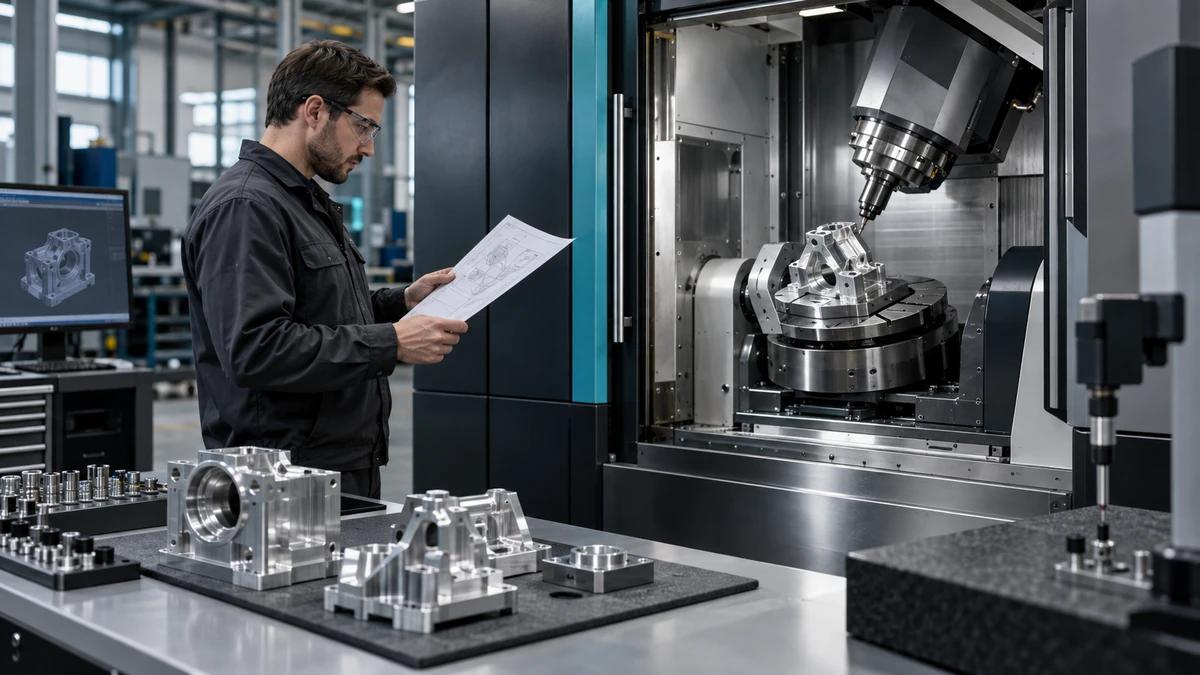
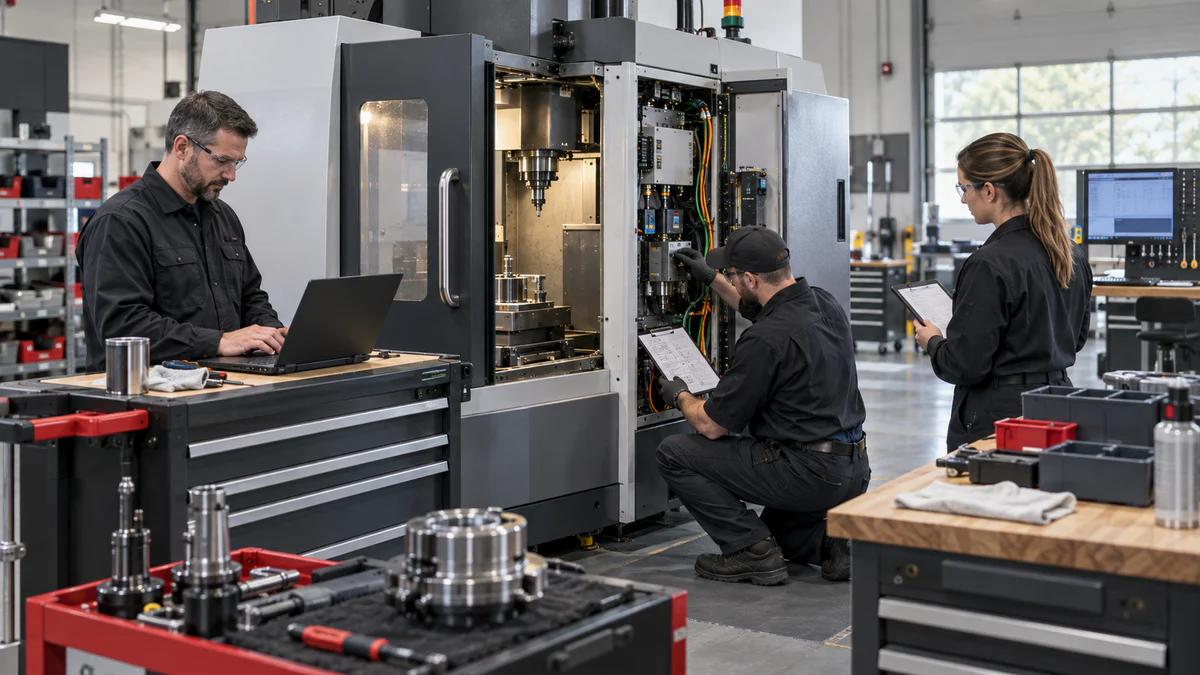
A CNC machining center for job shop work should be tested with a mixed week, because one optimized demonstration cannot represent changing materials, fixtures, programs, tools, priorities, and inspection queues. Zhihe CNC uses five arriving jobs to expose capacity between orders as well as during cutting.
The simulation is for contract manufacturers handling short runs, repeat orders, prototypes, repair work, and fluctuating schedules. It does not predict the exact future mix; it shows whether the proposed machine, information, tooling, and team can control credible variation.
Monday 08:00 — Release the Five Envelopes
Create five controlled job envelopes with part revision, CAD, material, blank, quantity, due date, priority, datums, tolerances, surfaces, fixture, tools, program status, inspection, outside process, packing, and customer constraints. Include at least one repeat job and one unfamiliar part.
Zhihe CNC recommends adding open questions and due dates before scheduling. A job without stock, gauge, tool, or approved program is demand, not ready work.
Make the Mix Difficult in Different Ways
| Job | Primary challenge | Evidence target |
|---|---|---|
| A: repeat aluminum | Fast verified restart | Baseline retrieval |
| B: steel fixture part | Force and chips | Stable rough-finish route |
| C: small urgent batch | Changeover speed | First-piece release |
| D: tall mixed-feature part | Envelope and tools | Clearance plus magazine map |
| E: interrupted return | Recovery state | Traceable re-entry |
The point is controlled diversity, not five versions of the same easy part.
Monday Afternoon — Price Readiness Before Cycle
Record engineering review, CAM, postprocessing, fixture preparation, soft-jaw work, tool assembly, presetting, material verification, program transfer, setup-sheet release, probe routines, gauge readiness, and operator briefing. Identify which work can overlap and which blocks machine start.
A CNC machining center for job shop production creates value only when the surrounding preparation can feed it without urgent undocumented shortcuts.
Tuesday — Run the Repeat Job From the Archive
Retrieve the approved drawing, model, program, postprocessor, setup, fixture, tools, offsets, inspection, photographs, lessons, and prior exceptions. Confirm current material, machine, software, tool, and customer conditions before reuse. Mark any change and its verification.
Wednesday Morning — Expose the Combined Tool Conflict
| Check | Question | Decision |
|---|---|---|
| Pocket demand | Do all active jobs fit? | Load, stage, or reschedule |
| Duplicate tools | Which jobs share assemblies? | Control life and ownership |
| Projection | Does the longest assembly clear? | Model and verify |
| Presetting | Can tools be prepared offline? | Assign queue and evidence |
| Broken-tool response | Which job is affected? | Contain and recover |
A combined map is more honest than reviewing five tool lists separately.
Wednesday Afternoon — Change Over Under Observation
Time the last accepted part, unload, cleanout, fixture removal, fixture installation, location, torque or clamp checks, tool exchange, program verification, offsets, probing, dry or safe prove-out, first-piece machining, inspection, correction, and release. Separate hands-on work from waiting.
Zhihe CNC uses the observation to find missing carts, gauges, cranes, documents, staged tools, cleaning methods, and approvals that a catalog cycle cannot show.
Thursday — Let an Urgent Job Enter the Queue
Define the approval authority and rules before injecting the urgent job. Record which work is paused, how material and process state are preserved, which due dates move, which tools and fixtures are displaced, and what evidence permits restart. Do not reward unmanaged interruption as flexibility.
The job shop should protect customer identity, revision, stock, completed operations, tool state, offsets, and inspection status across every priority change.
Thursday Night — Test the Inspection Bottleneck
Plan gauge availability, CMM or inspection programming, fixture needs, environmental conditions, sampling, review, nonconformance, and queue priority for all five jobs. Track when a machine-complete part becomes accepted output.
Faster cutting may simply transfer inventory to quality. Include measurement preparation and decision time in promised lead time and capacity.
Friday Morning — Recover the Interrupted Return
Open the return envelope and identify material, stock remaining, completed features, datums, fixture state, tools, program position, offsets, earlier measurements, reason for interruption, and approved re-entry plan. Use a safe verification step before continuing valuable work.
A controlled restart proves more job-shop capability than an uninterrupted showroom cycle, because real schedules contain holds, revisions, broken tools, and customer changes.
Friday Noon — Compare the Week With One Standard
Freeze the planned workload, configurations, tools, fixtures, programs, controller state, coolant, thermal conditions, inspection, limits, exceptions, and retest. The ISO 10791 series reference provides machining-centre test context. The mixed-week result should report accepted jobs, not only spindle utilization.
Keep job-specific results and shared resource losses visible.
Friday Afternoon — Hold the Safe-Work Review
The OSHA machine-guarding resource provides general guarding context. Responsible teams must assess each delivered fixture, blank, tool, door, interlock, ejection risk, chip condition, coolant task, loading method, maintenance, cleanout, and recovery route under local requirements.
Schedule pressure never authorizes bypassing protection or an unapproved setup.
Close the Books on Accepted-Output Economics
Allocate quotation review, engineering, CAM, fixtures, tools, presetting, setup, proving, cutting, tool events, chips, inspection, rework, scrap, maintenance, recovery, outside processing, and administration to each job. Distinguish invested reusable knowledge from one-time loss.
Review delivery performance, contribution, queue time, work in process, first-piece delay, changeover, inspection, and machine availability. A busy spindle can coexist with weak margins when preparation and exceptions remain invisible.
Zhihe CNC recommends repeating the simulation with the buyer's real mix and then changing one stressor: an urgent order, a missing gauge, a tool-life event, a revision, or a maintenance hold. Preserve all other conditions so the response can be interpreted.
Archive each released envelope and its actual result. When repeat work returns, verify the current conditions and reuse controlled knowledge without assuming nothing changed.
Stress the CNC Machining Center for Job Shop Work With a Sixth Surprise
After the five-job plan is stable, introduce a sixth envelope that represents a credible commercial surprise: a small rush order, a customer revision, a material delay, a broken-tool replacement, or a returning part with known history. Define the event before the test and keep it inside approved safety, quality, staffing, and machine limits.
Watch the dispatch decision. The team should identify revenue or customer priority without hiding technical readiness. Record which job moves, which fixture and tool resources change, what inspection capacity is consumed, and how due dates are communicated. Preserve every paused job's stock, completed operations, program state, tools, offsets, measurements, and restart authorization.
A CNC machining center for job shop production passes this stress only when the schedule changes without losing process identity. Time the added planning, staging, cleanout, changeover, first-piece release, displaced work, and recovery. Compare the urgent job's contribution with the delay and risk transferred to the rest of the queue.
At the weekly review, separate machine capability from management policy. Some losses may require a larger magazine, probing, offline presetting, modular workholding, or different machine configuration. Others may require better quoting, document control, staging, inspection capacity, or priority rules. The sixth surprise is valuable because it prevents the equipment purchase from being asked to solve every organizational constraint.
Repeat the surprise with a different constraint after the first response is stable, then compare delay, accepted output, intervention, and margin impact. This shows whether the CNC machining center for job shop plan improved as a controlled system or merely survived one event through individual effort.
Know What One Mixed Week Cannot Forecast
The simulation cannot guarantee future demand, margin, delivery, uptime, yield, or payback. A CNC machining center for job shop work remains dependent on order quality, quoting, staffing, materials, fixtures, tools, programs, inspection, maintenance, and customer changes. Use the week to expose assumptions and design better local evidence.
FAQ
Why test five jobs instead of one part?
A mixed set exposes preparation, tool, fixture, priority, inspection, and recovery constraints between cycles.
What makes a job ready?
Controlled inputs, material, program, fixture, tools, inspection, ownership, and approvals must be available.
Why include a repeat order?
It tests whether the shop can retrieve and verify prior process knowledge instead of rebuilding it from memory.
What belongs in changeover time?
Count cleanout, fixture work, tools, program checks, offsets, probing, prove-out, first-piece inspection, correction, and waiting.
How should urgent work enter?
Use defined authority, priority rules, preserved state, impact review, and a controlled restart for displaced jobs.
Why combine all tool lists?
Separate lists can hide magazine conflicts, duplicate assemblies, presetting queues, and ownership issues.
When is a job counted as output?
Count it when required operations, inspection, disposition, records, and downstream release are complete.
What should an interrupted-job envelope contain?
Keep identity, stock, completed work, fixtures, tools, program state, offsets, measurements, reason, and re-entry approval.
Can one week predict return on investment?
No. It reveals workflow evidence that should feed a buyer-specific capacity and financial model.
What should a job shop send Zhihe CNC?
Send a controlled mix of parts, materials, quantities, due dates, fixtures, tools, cycle history, inspection, and interruptions.
Run the Five-Job Week With Zhihe CNC
To evaluate a CNC machining center for job shop production, send Zhihe CNC five representative job envelopes with controlled CAD, drawings, materials, stock, quantities, datums, fixtures, tools, due dates, cycle history, inspection, and recovery cases. Review the machining center range, the product portfolio, and the contact route before Monday's release.