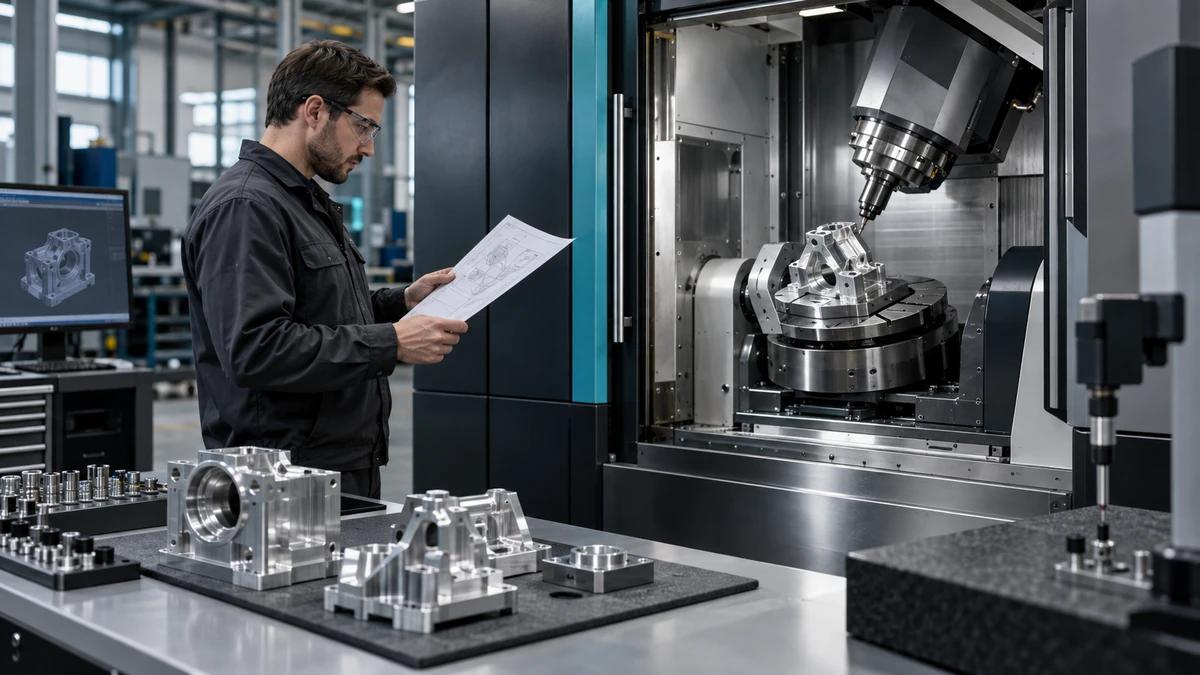
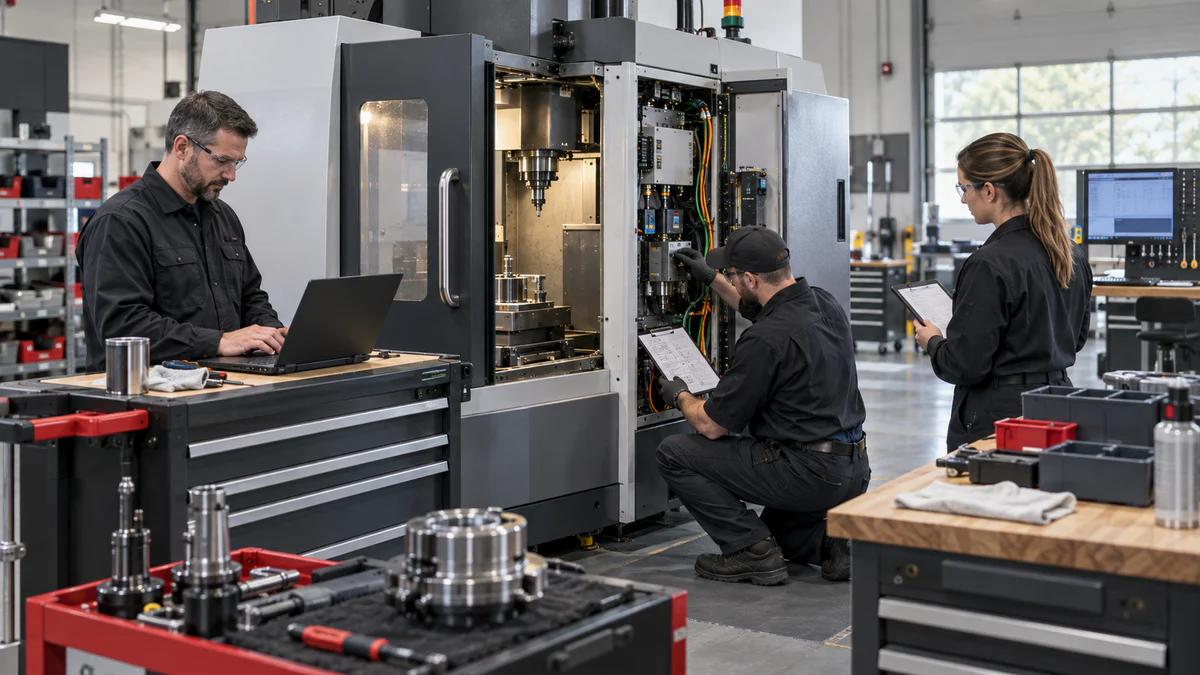
Why buyers look for a CNC machining center manufacturer, not just a machine seller
When sourcing precision parts, the phrase CNC machining center manufacturer usually signals something more practical than a catalog listing. Buyers are not only comparing machine size or spindle layout. They are trying to judge whether the supplier can hold dimensions, repeat parts consistently, and catch errors before boxes leave the shop. In other words, they want confidence in the process, not just a piece of equipment.
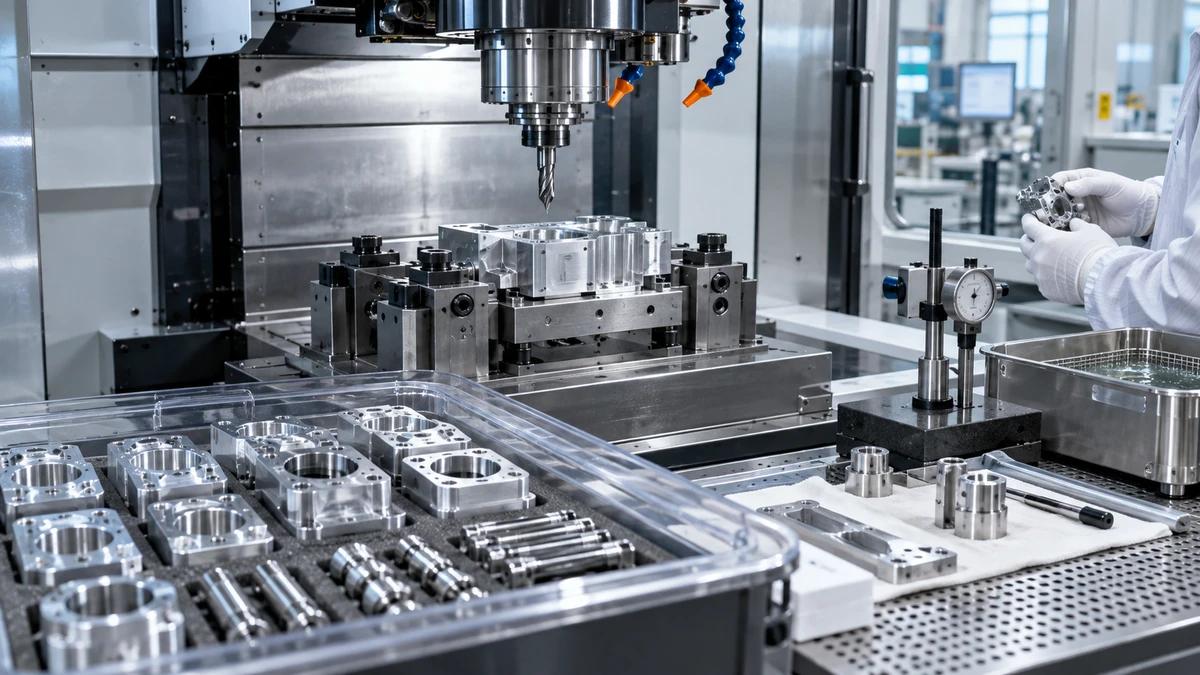
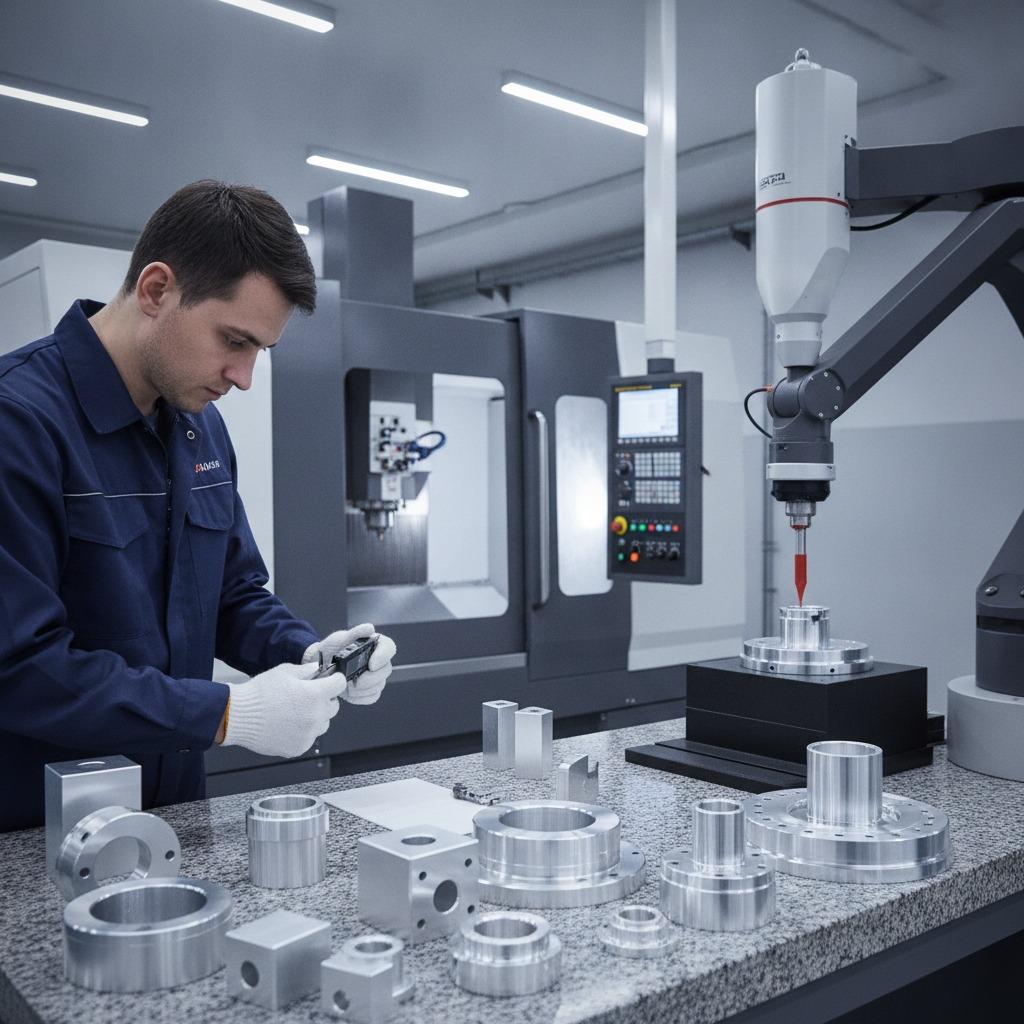
That matters because a machined flange, housing, fixture plate, or bracket can look acceptable at first glance and still fail during assembly. A few tenths of misalignment, a burr on a drilled hole, or a poorly controlled face finish can create trouble downstream. The image of an operator checking a machined component with calipers is a reminder that inspection is not an afterthought in CNC work; it is part of the job.
What the shop-floor scene suggests about capability
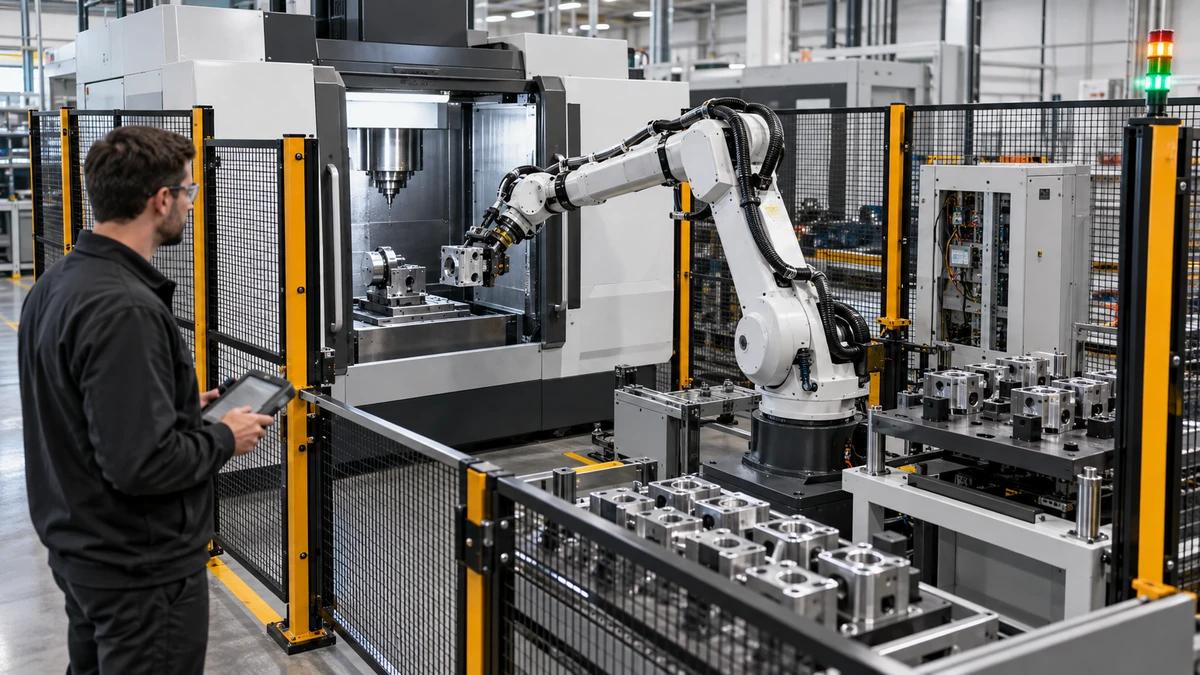
The visible setup shows an enclosed CNC machine with a vertical spindle, a rotary fixture or table inside the work area, and a control panel on the exterior. That combination is common in precision metal machining where the goal is repeatable milling, drilling, and possibly more complex multi-face work. The finished parts on the bench include blocks, flanges, and cylindrical pieces with drilled holes and milled faces, which points to a shop handling varied geometries rather than one simple part family.
This is useful for sourcing teams because variety often reveals more than a brochure does. A supplier that can machine multiple part shapes and then verify dimensions on the bench is usually closer to the real needs of prototype and small-batch work. It is not proof of any specific tolerance level, and it would be a mistake to assume that from a photo alone, but it does show a process mindset.
Quick reference: what buyers usually need from a machining partner
Most buyers comparing a CNC machining center supplier are trying to answer a few basic questions:
Can the shop machine the geometry cleanly, without excessive hand finishing?
Can it inspect critical dimensions before shipment?
Can it support one-off prototypes as well as small-batch production?
Can it communicate clearly when a print calls for a tricky feature, a tight fit, or a deburr requirement?
Those questions sound simple, but they separate a capable shop from a general metalworking vendor. A CNC machining center factory that understands part function will usually ask about mating surfaces, hole positions, and where the part is most likely to fail in service. That kind of practical questioning is often more valuable than a polished capabilities page.
Materials, part types, and where CNC machining fits
From the image, the parts appear to be machined metal, likely aluminum or steel, though the exact alloy is not identifiable. The surfaces show typical milled and drilled features, with some turned or circular features as well. That suggests the work could cover parts used in automation equipment, general machinery, fixtures, robotics, or industrial assemblies.
CNC machining is especially useful when buyers need a solid mix of accuracy, geometry control, and reasonable turnaround for low to medium volumes. Compared with casting or stamping, it is more flexible for design changes. Compared with full manual machining, it is better suited to repeatability. There is a tradeoff, of course: if a part is very simple and high volume, CNC may not be the most economical route. A good supplier will say that plainly.
What to ask before you place the order
1. How will critical dimensions be checked?
In-process inspection and final inspection are not the same thing. A shop may use calipers, micrometers, gauges, or other metrology tools depending on the feature. Ask which dimensions will be verified and when. If a hole pattern or mating face is critical, say so early.
2. What finish is realistically achievable?
Machining marks are normal on many functional parts. If you need a cleaner cosmetic surface, specific edge treatment, or later coating, bring that up before production starts. Unclear finish expectations are a common source of rework.
3. How much human handling is involved?
Some parts need secondary deburring, cleaning, or fit checks. That is not unusual, but it should be visible in the quoting and inspection plan. The best CNC machining center manufacturer will explain where automation ends and manual work begins.
Common mistakes buyers make
The biggest mistake is treating the machine as the product. In reality, the supplier’s process discipline matters more. Another common issue is sending a print without flagging the functional dimensions. If everything is marked equally critical, the shop may over-control the wrong features and miss the ones that matter most.
Buyers also sometimes assume that a supplier with a modern CNC machining center factory can automatically handle any material or part shape. That is not safe. Process know-how varies by geometry, wall thickness, hole depth, and the way the part will be fixtured. A cautious buyer should ask for process comments, not just a yes-or-no quote.
Practical takeaway for sourcing and engineering teams
If you are comparing suppliers, look for evidence of both machining and measurement. A shop that can cut a part cleanly and check it before shipment is usually better positioned to support prototypes, small batches, and repeat production. That is especially true for metal components with multiple faces, holes, or mating surfaces.
Use the first conversation to test how the supplier thinks. Do they ask about function, inspection points, and assembly risk? Do they talk about realistic machining paths rather than promising everything at once? Those small signals often tell you more than a page of marketing claims.
Next step
If you are shortlisting a CNC machining center manufacturer, start with one part that includes your most important features. Share the drawing, note the critical dimensions, and ask how the shop would inspect them. The answer will tell you a great deal about whether the supplier is a fit for production, not just for a sample order.