What buyers really need from a CNC machining center manufacturer
When engineers and sourcing teams start comparing a CNC machining center manufacturer, they are usually not shopping for a machine brochure. They are trying to reduce risk: can this supplier produce repeatable parts, hold the features that matter, and inspect them without turning every order into a project? That is the real decision underneath the RFQ.
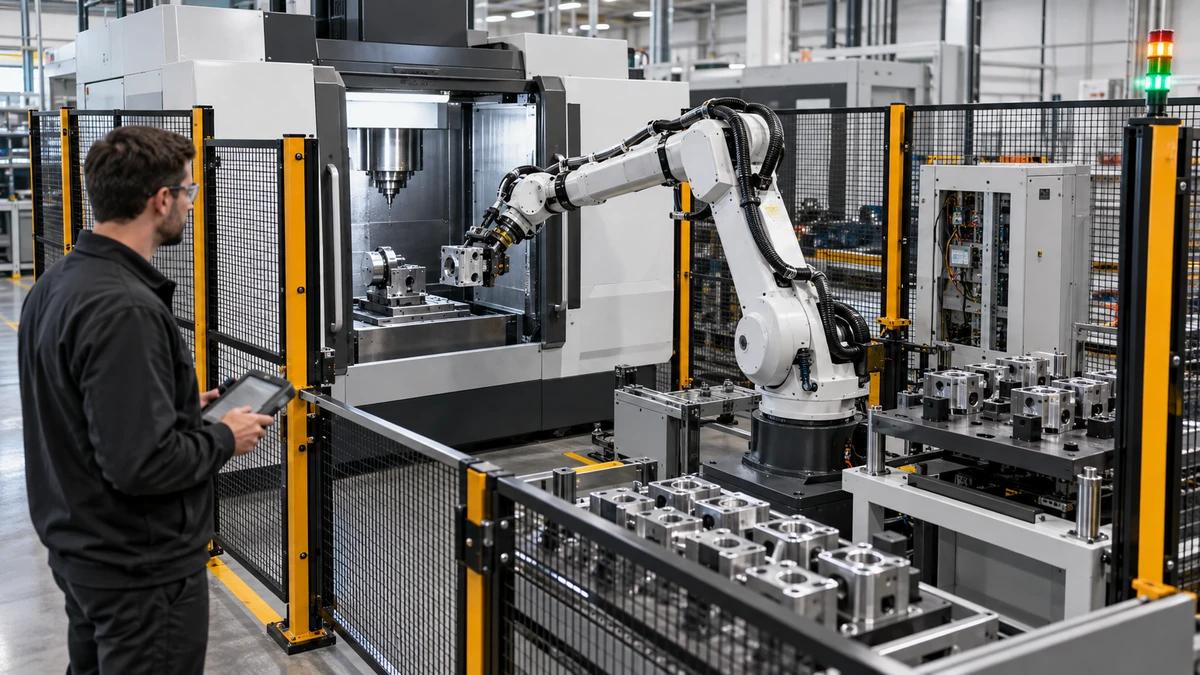
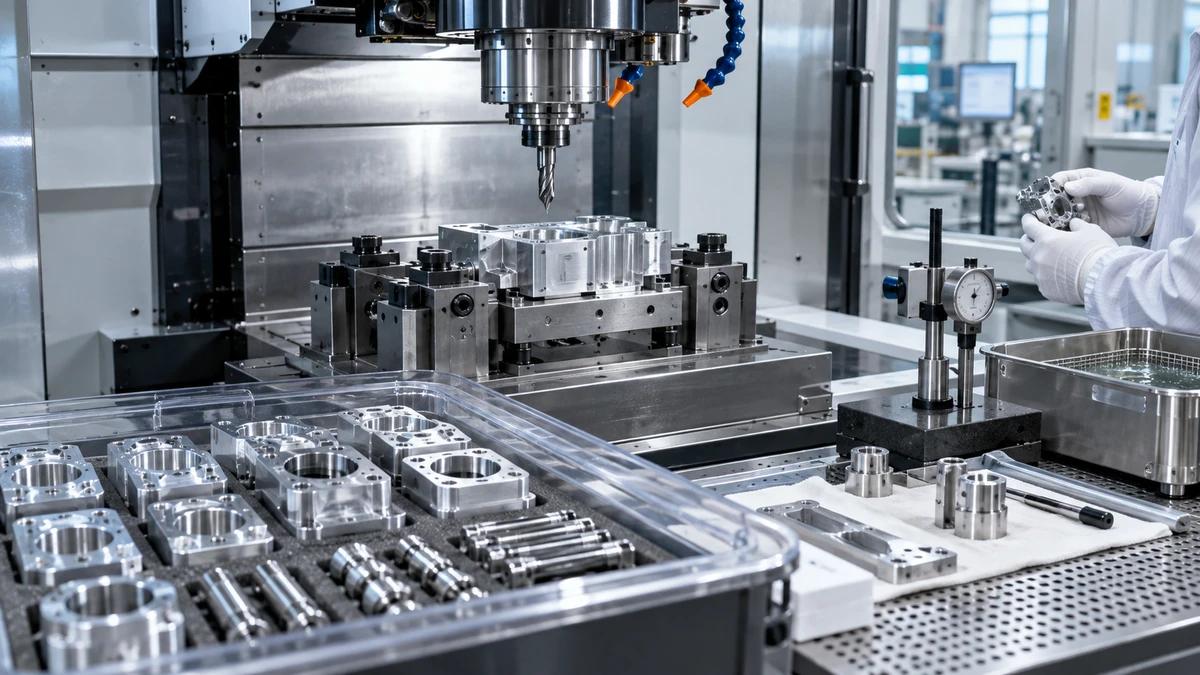
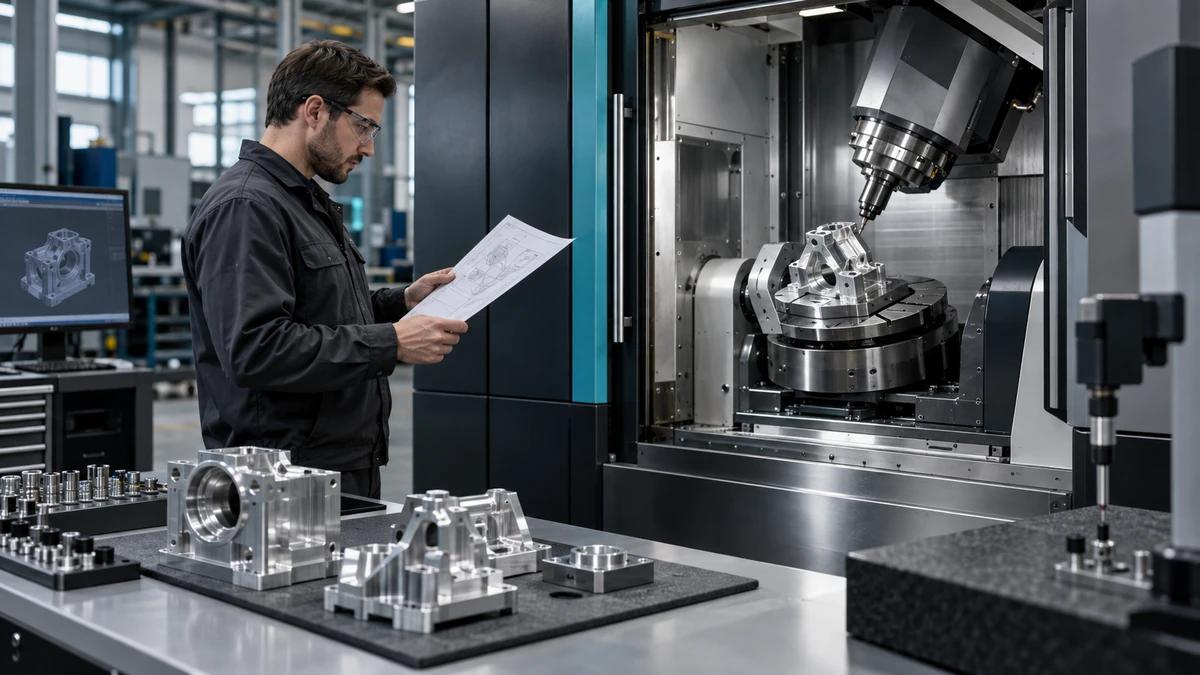
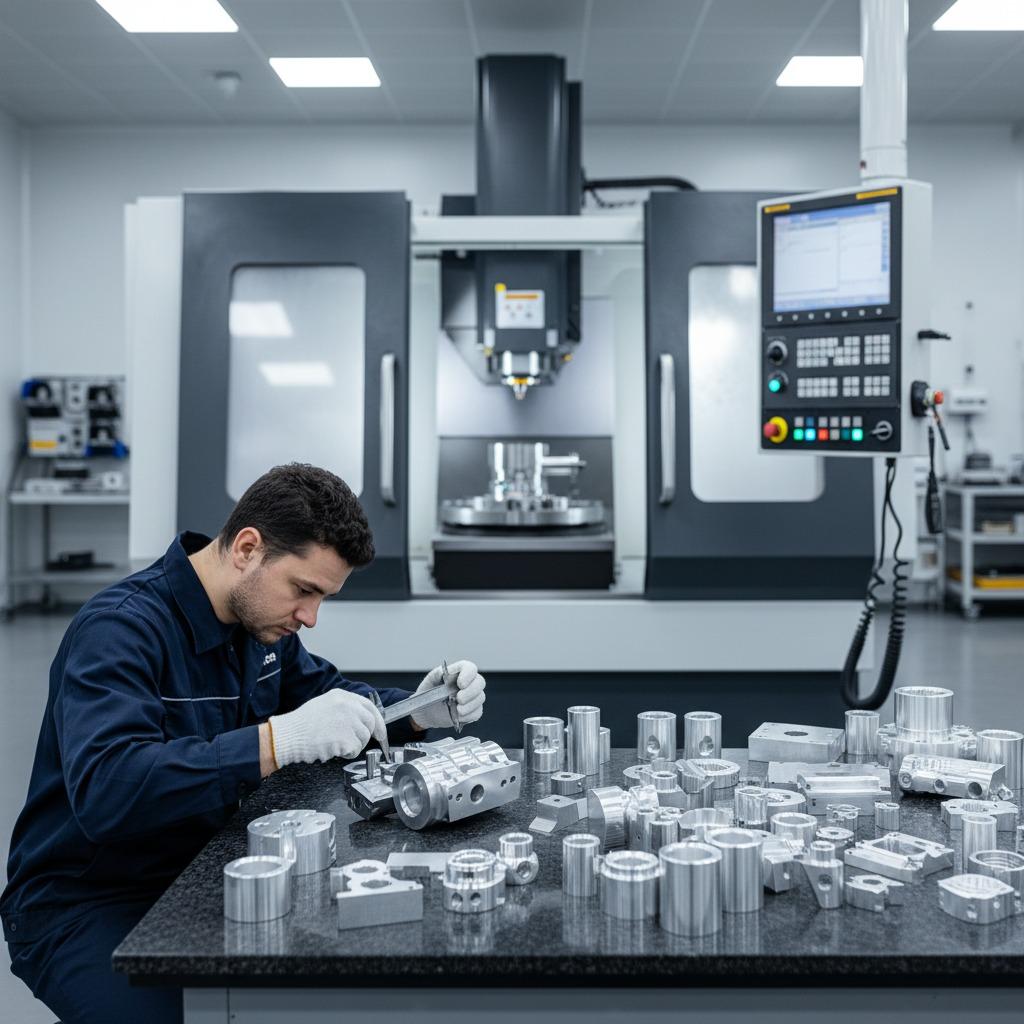
The visible workflow in the supplied material points to a practical setup: a machinist inspecting multiple metal parts beside a CNC machine, with a handheld caliper close at hand. That is a familiar scene in precision manufacturing. It tells you two things immediately. First, the shop is set up for milled, drilled, and contoured features. Second, inspection is built into the process rather than treated as an afterthought. For buyers of industrial machinery components, automation hardware, fixtures, housings, mounts, or flanges, that distinction matters.
Why this category matters for production teams
CNC machining is often chosen when parts need consistent geometry and a clean, machined finish across multiple pieces. The parts in the reference image appear to be metal, likely a light alloy such as aluminum or something similar, with blocky, cylindrical, and ring-shaped forms. That mix of shapes is common in precision mechanical assemblies where a part has to locate, support, seal, or align something else.
In practice, the buyer’s concern is not only whether a shop can cut metal. It is whether the supplier can make the same part again next month, and whether dimensional drift, surface damage, or burrs will show up late in the program. Those issues can slow assembly, affect fit, and create avoidable rework. A capable CNC machining center factory should be able to explain how parts are machined, checked, and released before shipment.
What a capable machining partner should demonstrate
A strong CNC machining center supplier will usually show more than a machine list. Look for evidence of process discipline: fixturing that keeps parts stable, visible inspection steps, and a workflow that moves from cutting to checking without a lot of hand-waving. The image suggests exactly that kind of sequence, with the machinist verifying parts against a measuring tool next to the machine.
That does not guarantee perfection, of course. A caliper is useful, but it is not the only answer for every feature. Hole position, flatness, and more demanding tolerances may require additional metrology depending on the part. Buyers should ask what inspection tools are used for critical dimensions, not just whether “quality control” exists on paper.
Useful questions to ask before you commit
What materials does the shop routinely machine? Can it handle aluminum, steel, or other metals relevant to your project? Which features are most common in its work: pockets, bores, stepped surfaces, threads, or contoured profiles? And how does it handle revisions when a prototype turns into a production run?
Those questions are boring in the best way. They reveal whether the shop is used to real manufacturing constraints or just short-term trial work.
Prototype parts versus production parts
Some buyers approach a CNC machining center manufacturer for one-off prototypes, while others need stable volume for ongoing assemblies. The requirements overlap, but the emphasis changes. Prototype work rewards speed and flexibility. Production work rewards repeatability, documentation, and consistent inspection.
For example, the machined parts shown in the source material look like they could belong to either stage. Their multiple geometries suggest a shop comfortable with custom metal components, but the image alone cannot tell us the order size or whether those parts are final goods or sample pieces. Buyers should avoid assuming that a good-looking prototype automatically scales cleanly to series production. Tool wear, fixture strategy, and inspection frequency start to matter more once the order repeats.
Common mistakes buyers make
One common mistake is focusing only on machine capability and ignoring the inspection workflow. Another is giving an incomplete drawing package and expecting the supplier to guess the functional priorities. If a bore location is critical, say so. If a cosmetic surface must remain clean, say that too. Machining shops can work miracles with clear information; they can also spend time and money chasing avoidable ambiguity.
It is also worth being cautious about surface finish assumptions. A bright metallic part can still need deburring, edge breaking, or secondary cleaning before it is ready for assembly. That is a small detail until a sharp edge damages a seal, a connector, or a mating surface.
How to compare suppliers without overcomplicating it
When comparing a CNC machining center manufacturer, keep the discussion grounded in the part itself. Ask for examples of similar geometries, the inspection methods used for key dimensions, and the shop’s approach to repeatability. If the supplier talks clearly about workholding, measuring, and part release, that is usually more useful than a polished sales pitch.
For sourcing managers, it helps to separate three questions: Can they make it? Can they check it? Can they make it again under the same conditions? If the answer is yes to all three, you are closer to a dependable supplier relationship.
Practical next step
If you are evaluating a CNC machining center manufacturer for custom metal components, start with the drawing, the critical dimensions, and the intended application. Then ask the shop to explain how it would machine and inspect the part family shown in the reference material: milled blocks, drilled flanges, stepped cylindrical pieces, and precision assemblies that need consistent fit. That conversation will tell you more than a generic capability list ever will.