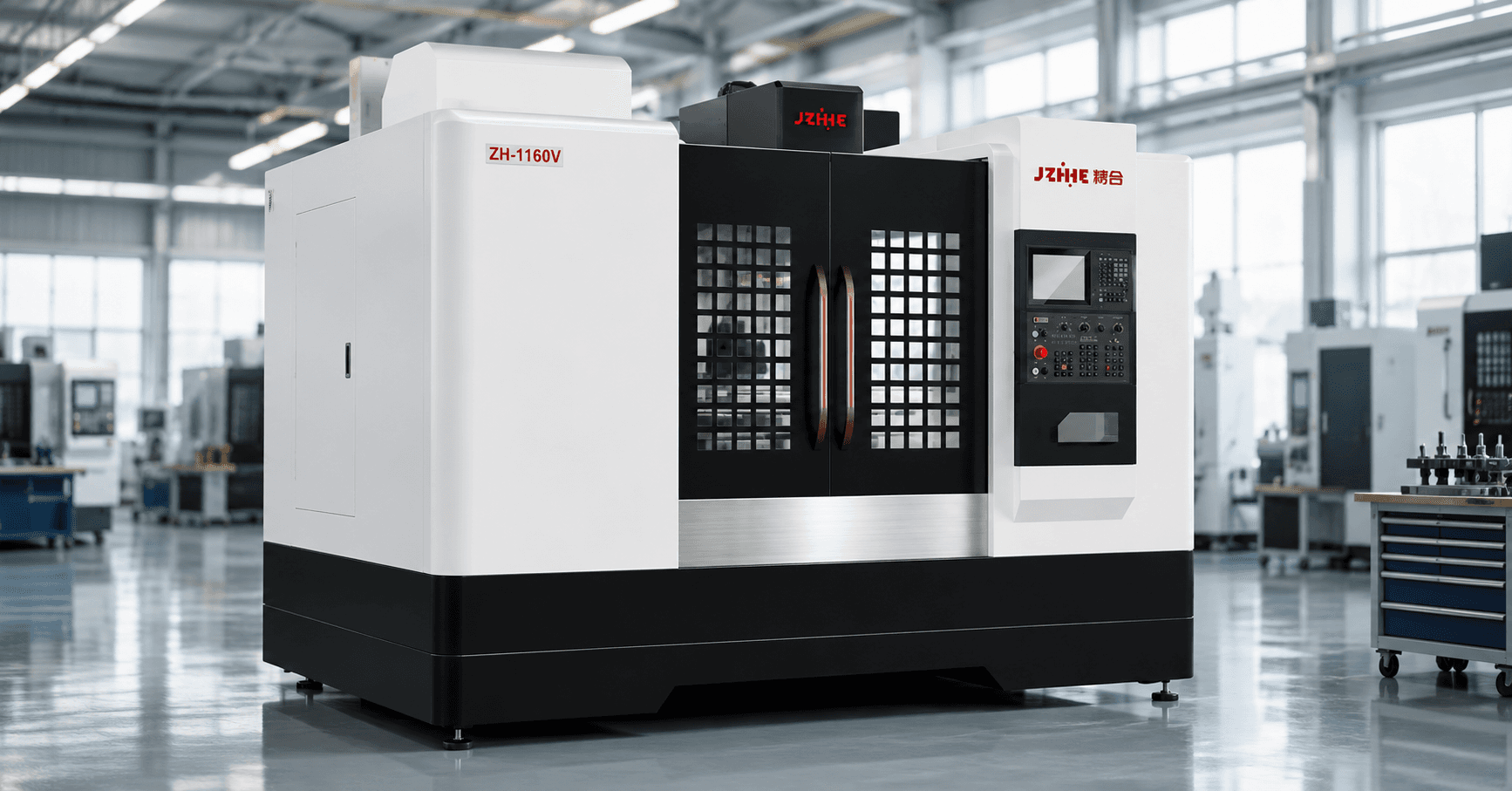
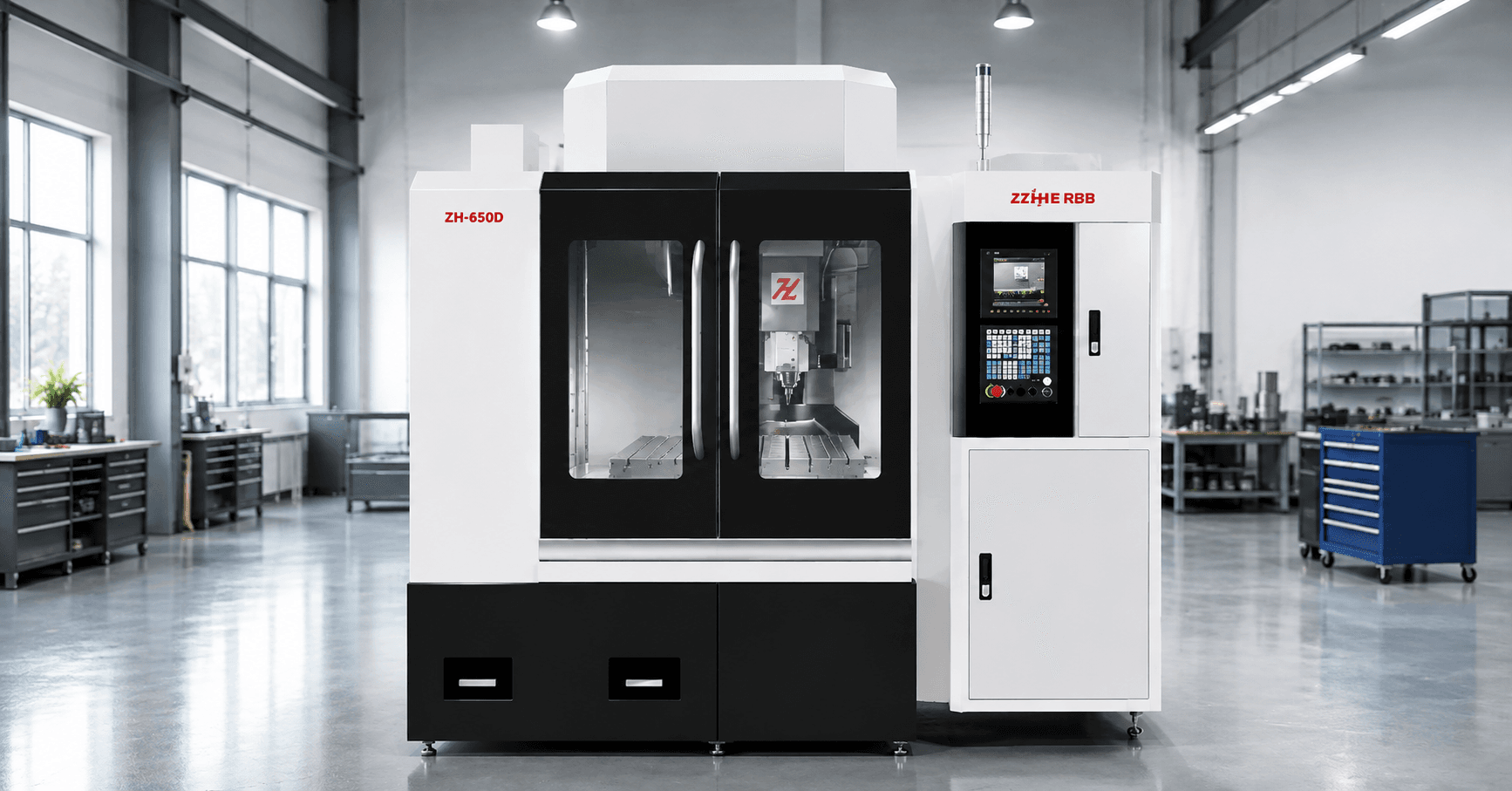
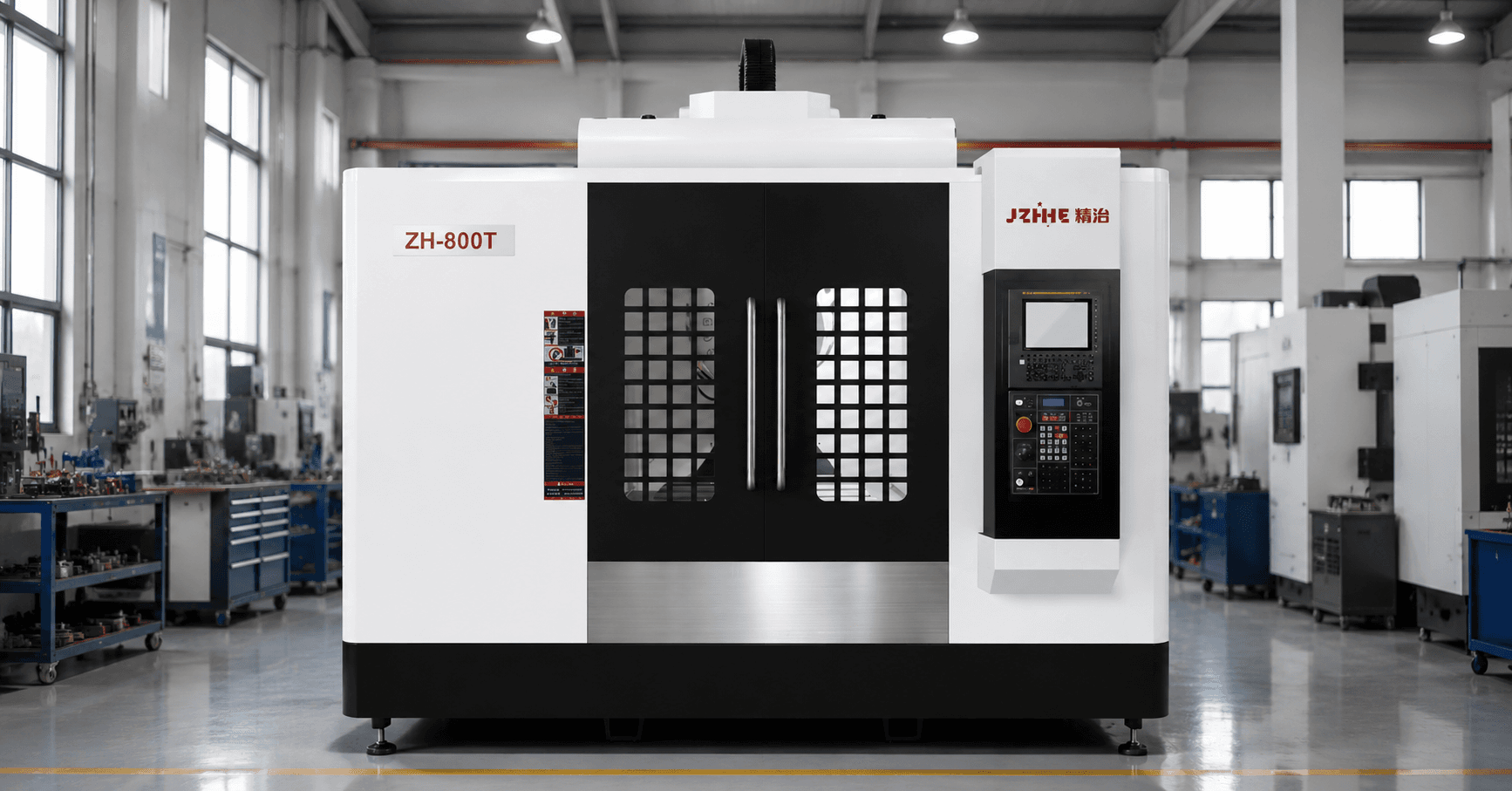
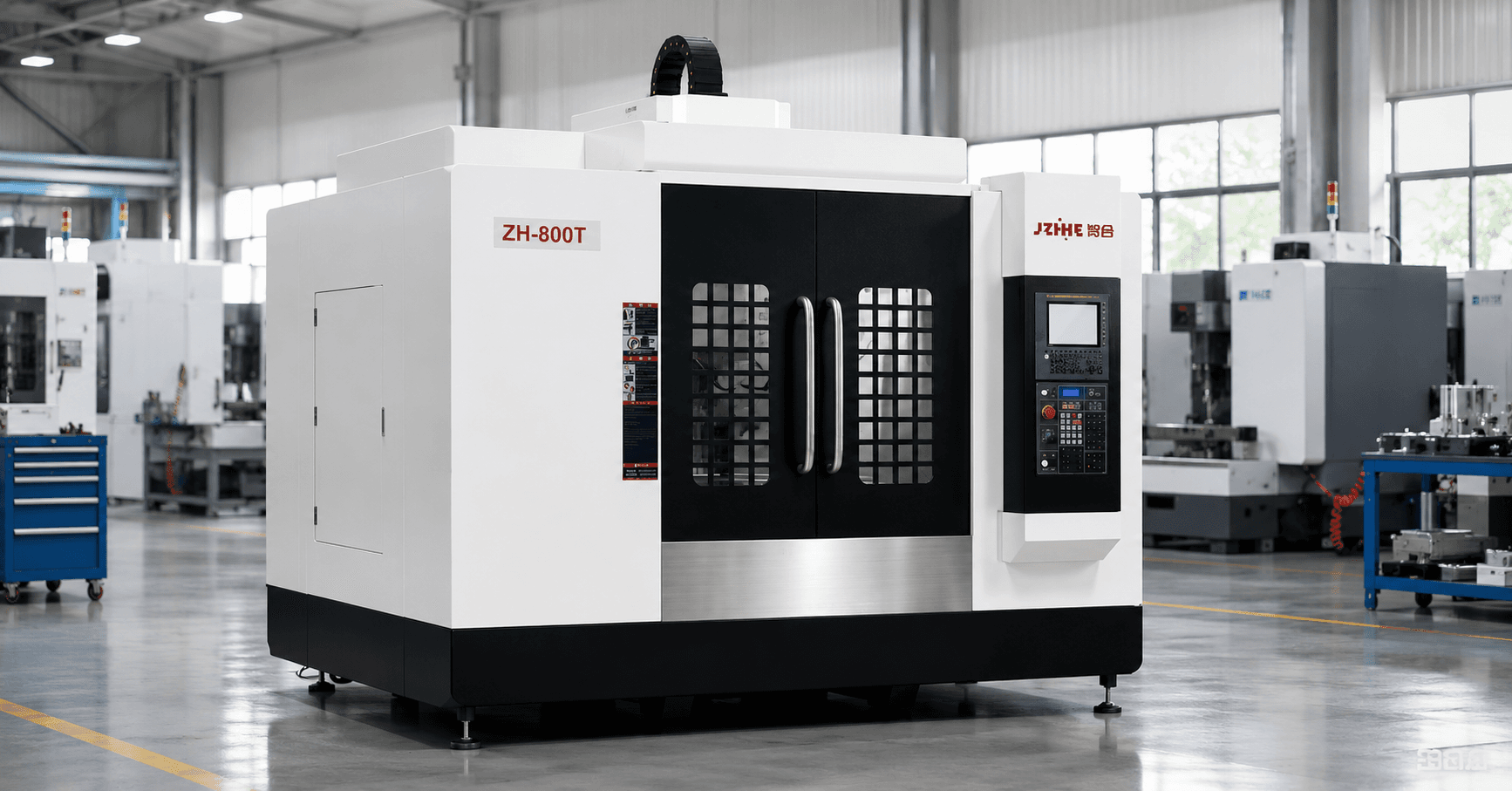
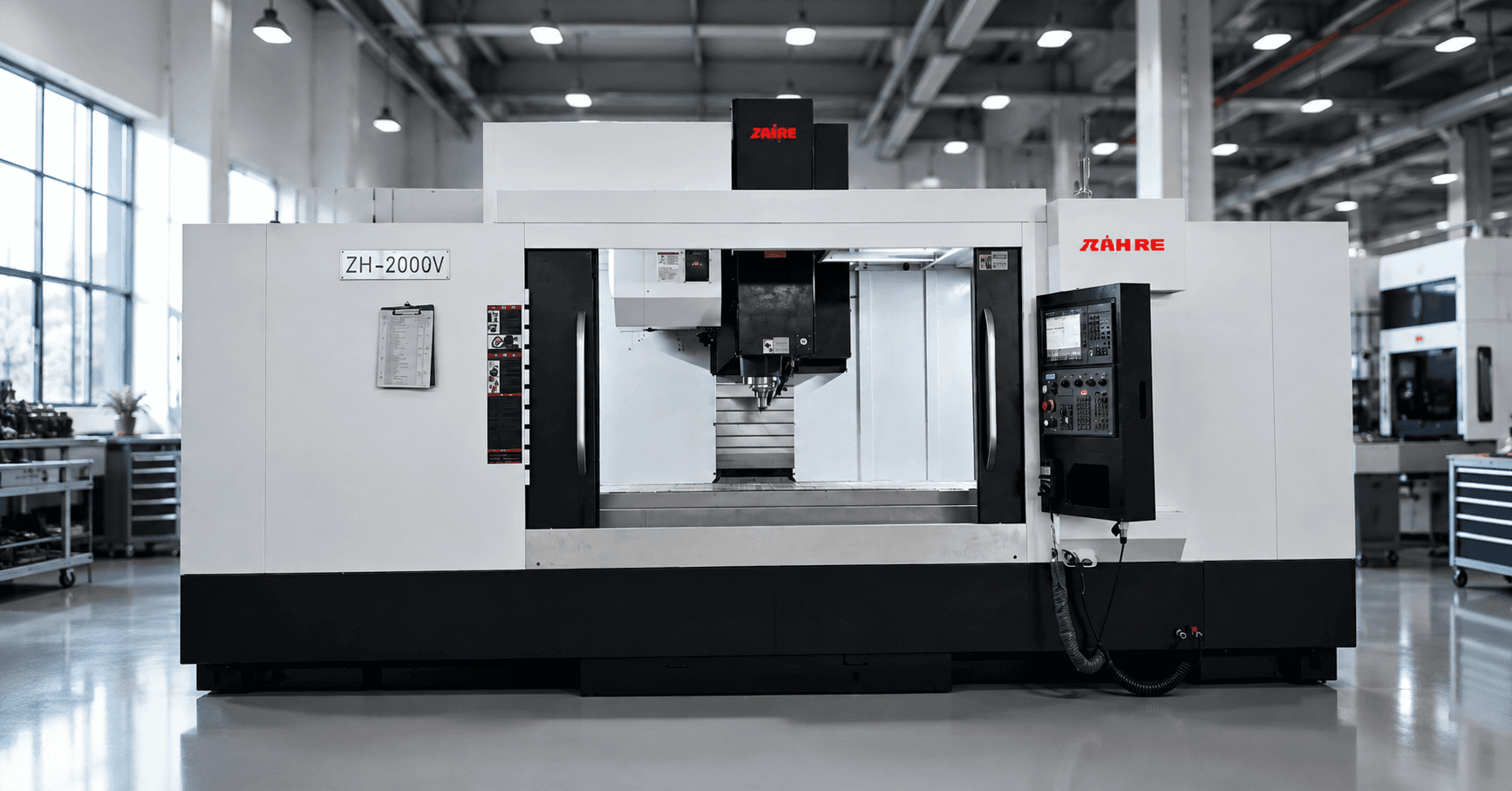
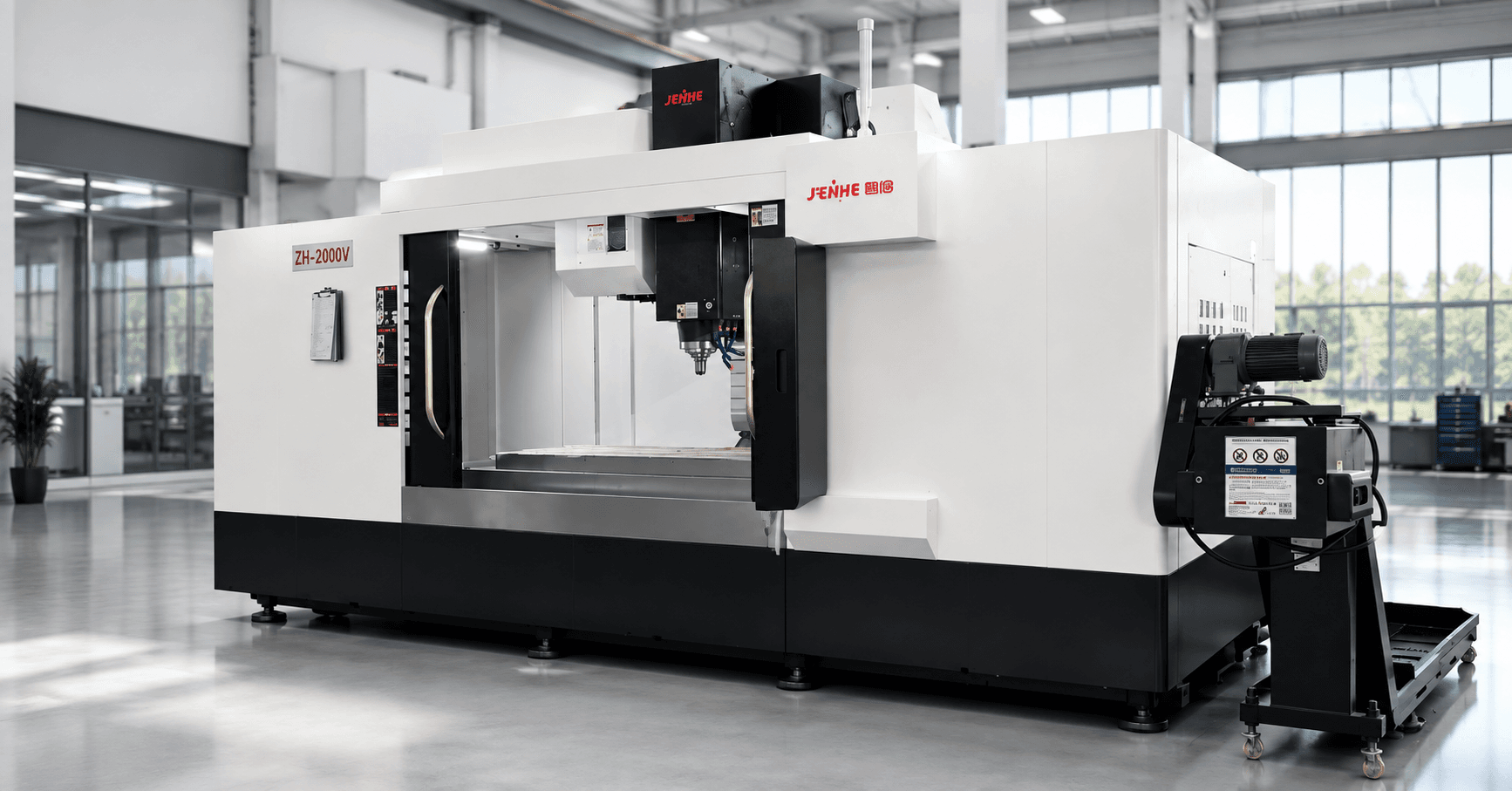
CNC machining center mist extraction should be planned with the process and the machine enclosure, not chosen from a collector catalogue after installation. A buyer needs to describe the fluid, the cutting cycle, when doors open, where the enclosure can connect to a duct, and who will maintain the air system. Then the machine supplier and a competent extraction specialist can agree on an interface and test it during representative production. No universal airflow figure or filter claim can replace that site-specific review.
This guide is for production engineers, EHS teams, facility planners and purchasers buying a wet-machining cell. It helps them frame an RFQ and an acceptance trial. It does not certify a particular Zhihe CNC model as including a mist collector, and it is not a substitute for local exposure assessment or ventilation design.
CNC machining center mist extraction is an interface question
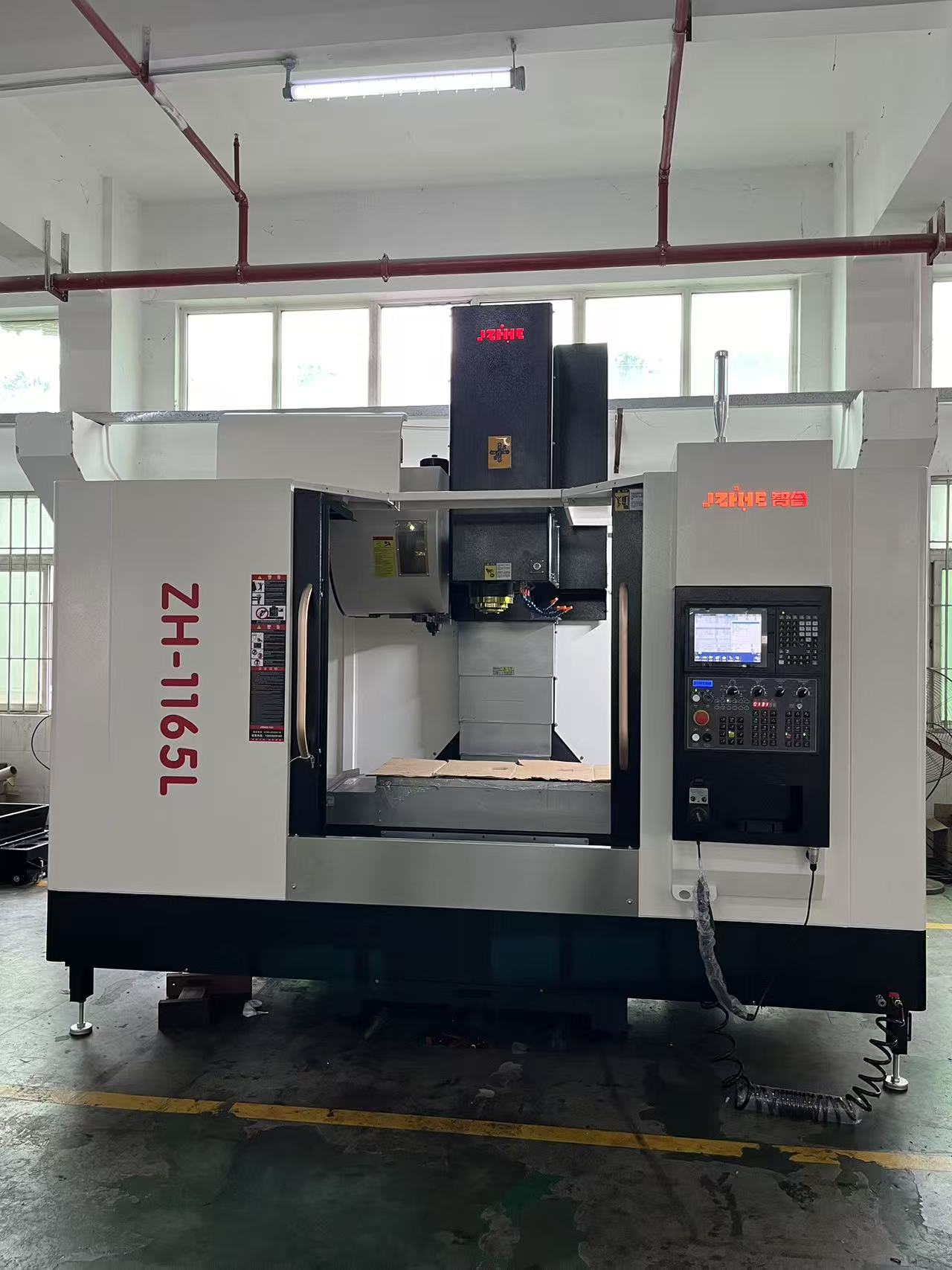
A coolant pump sends fluid to the cutting zone. Tool rotation, impingement, heat and compressed air can put droplets into the enclosure air. Opening the door may release some of that air into the operator's breathing zone. An enclosure can help contain splash, but containment alone does not prove the air is controlled. Extraction adds another path: enclosure opening to pickup, duct, separator or filter, fan, discharge or return, and service access. The system only works as intended if those paths suit the actual process.
The UK's Health and Safety Executive guidance on metalworking fluids identifies inhaled mist as an exposure route and calls for checking and maintaining enclosures and local exhaust ventilation. The US National Institute for Occupational Safety and Health reviews health evidence for metalworking-fluid aerosols in its occupational exposure criteria document. These sources explain why the issue deserves a risk assessment; they do not supply a one-size-fits-all extraction setting for every machine or establish a global legal limit.
Before comparing equipment, establish one owner for each boundary: machine enclosure and available connection, collector and controls, building ductwork, discharge or recirculation decision, installation, exposure assessment, and maintenance. CNC machining center mist extraction crosses all of these boundaries. If the quotation leaves one blank, ask who supplies and verifies it.
Record the process that will actually make mist
Ask the production team to identify the most demanding representative job, not just the easiest demonstration cut. A useful record has the part and material, tool speed and duty cycle, fluid type and supplier instructions, delivery method, nozzle arrangement, through-spindle use, compressed-air blow-off, enclosure door sequence, and shift duration. Capture whether the machine alternates wet and dry operations or different materials. Do not assume every operation creates the same aerosol.
On one page, sketch the machine from the operator side and mark the door openings, inspection windows, cable routes, coolant return, proposed extraction port and nearby occupied positions. Then walk the actual cycle: load; close; cut; pause; stop coolant; wait; open; remove part; clean. The moment the door opens is often a more informative observation for CNC machining center mist extraction than a brochure photograph of a fully closed machine.
| Buyer input | Ask the machine or extraction supplier to show | Why it changes the decision |
|---|---|---|
| Fluid and application method | Fluid safety data, nozzle layout and whether through-tool delivery is used | Droplet generation and filter service depend on the process |
| Representative cutting cycle | High-load and normal-load programs, run time and door-open timing | A short empty-machine demonstration can miss release at unload |
| Enclosure and proposed pickup | Port location, reinforcement, clearances and access panels | A poorly placed opening can compromise containment or maintenance |
| Building layout | Duct route, power point, discharge location and nearby workstations | Installation scope and responsibilities must be priced |
| Cleaning and service | Drain path, filter access, isolation and waste-handling plan | A system that cannot be serviced will not stay effective |
| Acceptance evidence | Commissioning report, inspection points and operator observation plan | A purchase order needs a verifiable finish line |
Use the table as an RFQ attachment. Leave unknown entries open rather than allowing the supplier to fill them with a generic machine rating. Zhihe CNC's published vertical machining center range gives buyers a starting point for machine selection, but mist extraction provision must be confirmed against the exact configuration and site layout.
Decide between three integration routes
An enclosed machine with an external collector can keep ventilation equipment separate from the machine. It suits sites with an existing extraction design team or multiple cells to coordinate. The quote must specify the connection, who sizes and installs the duct, how condensate is managed, and whether the collector can be isolated without disabling necessary machine protection.
A machine-specific integrated package may simplify mechanical fit and control signaling where the supplier offers and documents it. Do not infer that a pictured enclosure includes a collector. Ask for the collector make and model, included components, electrical and alarm interface, maintenance clearance, filter replacement method, and what is excluded. Confirm options in the signed configuration rather than in a general product-family description.
A shared extraction system can serve several cells where a competent designer evaluates simultaneous demand and branch behavior. It adds a coordination risk: one stopped branch, altered machine cycle or blocked filter can affect the rest. Define who owns balancing, isolation, monitoring and later additions. The apparent lower unit cost is not a complete comparison until ductwork, commissioning, monitoring and maintenance are included.
No route is inherently superior. A single high-variation prototype cell and a bank of repeat-production machines may need different decisions even when the enclosures look alike. Evaluate the CNC machining center mist extraction path as installed, not a nominal collector specification detached from the machine.
Put the interface in the purchase specification
The machine and extraction suppliers need a common drawing. Identify the proposed port and available space around it; whether any cutting zone, electrical cabinet or access panel is nearby; and what structural or warranty implications follow from a modification. Show the duct direction and the safe route for collected fluid to drain or be serviced. Separate a coolant return from a mist-collector drain unless the fluid supplier and equipment design permit a connection.
Agree how the system starts and stops relative to the cutting cycle. The buyer should ask what happens on fan failure, filter restriction, a door opening, loss of power, and a cleaning or maintenance intervention. A status light is not the same as a tested alarm response. Where a proposed interlock could affect machine safety, controls engineers should approve the design; this article does not prescribe one wiring scheme.
The HSE local exhaust ventilation resource treats commissioning and ongoing examination as distinct tasks. Use that distinction in the contract: first prove the installed arrangement works for the agreed process; then define how the site will know it still works after weeks of use. Local legal obligations and competent-person requirements vary by jurisdiction and should be checked at the destination site.
A practical acceptance trial
An acceptance test for CNC machining center mist extraction should use a real part, tool path, fluid condition and operator sequence approved in advance. Do not judge performance by a dry spindle run or a photograph taken while the door is closed. The protocol can be short, but it should be agreed before shipment and repeated as needed after the duct and collector are installed on site.
- Record the approved machine and collector configuration, drawings, filter condition and operating settings. State the tested process and duration.
- Observe the complete cycle, including the period after coolant stops and the door opens. Note visible escape, odour complaints or leakage points as observations, not proof of exposure compliance.
- Have the extraction specialist commission the installed system and document appropriate measurements at agreed points. The method and pass criteria belong in the site-specific design and contract; do not borrow a flow number from an unrelated machine.
- Test the agreed fault and maintenance states, including collector-off indication, access for isolation, and the procedure for changing filters or draining collected fluid.
- Record deviations, owner and retest date. Sign off only the configuration actually tested. If tooling, fluid, enclosure, duct route or duty cycle later changes materially, review the assessment again.
Visual observation is useful for finding obvious failures but cannot quantify personal exposure. EHS personnel should determine whether occupational sampling or health surveillance is needed under the applicable local rules. Keep the commissioning record, operating instructions and maintenance baseline with the machine's acceptance file.
Compare the installed cost, not a filter price
A CNC machining center mist extraction quote can omit the connection hardware, duct supports, electrical work, drainage, commissioning, filter elements, waste handling and recurring inspection. Ask for each as a separate line or an explicitly included deliverable. The total cost also changes if a collector is difficult to reach, requires frequent shutdowns or conflicts with part-loading access.
For example, a shop may have two suppliers offering similar machine enclosures. One includes a documented extraction connection and service clearance; the other leaves a blank panel and expects the buyer to cut a port later. The second may still be appropriate, but its lower machine quote is not comparable until the modification, warranty responsibility and on-site acceptance are priced. This is a decision illustration, not a Zhihe customer case or a measured saving.
Keep fluid management in scope. The related coolant-system selection guide covers delivery, return, contamination and sump access. Extraction addresses the airborne part of that loop; it does not cure poor fluid maintenance, excessive splash or unsafe cleaning practice. Likewise, do not assume recirculated air is acceptable without a site-specific assessment and the applicable requirements for the destination market.
What to send with a quotation request
For a CNC machining center mist extraction RFQ, send a part drawing or representative geometry, material, expected throughput, cutting and coolant information, fluid supplier documentation if selected, door-open sequence, floor plan, proposed duct destination and available utilities. Ask for a written interface drawing, option list, responsibility matrix, commissioning scope, service consumables and an acceptance protocol. If the fluid or process is not finalized, request the supplier's assumptions explicitly and schedule a review before the purchase order is frozen.
For a Zhihe CNC machine review, start with the relevant product range, then contact the engineering team with the process brief. Ask which enclosure and coolant features are included on the proposed model and what provision, if any, can be made for a separately engineered mist-extraction system. The right answer may be an interface plan rather than an accessory on a price list.
Buyer questions
Does every enclosed machining center need a mist collector?
Not automatically. The fluid, operation, enclosure behavior, worker exposure and local requirements determine the control strategy. An EHS assessment and representative process review should precede the equipment choice.
Can the collector be sized from spindle power or machine dimensions?
No. Those values do not describe aerosol generation, enclosure openings, door timing, duct losses or the installed pickup. Give the extraction designer the process and layout data, then agree on commissioning measurements.
Is an integrated collector included with a Zhihe CNC machine?
Do not assume so. Availability and scope vary by machine and quotation. Request a model-specific option list and interface drawing before ordering.
Can several machines share one system?
They can be considered together, but simultaneous demand, branch balancing, shutdowns, future expansion and maintenance ownership need a competent design. A shared fan rating alone is not an acceptance criterion.
What should the factory acceptance test cover?
At minimum, the agreed machine-side interface, included hardware, control signals and access. The installed extraction system must also be commissioned at the destination site because duct routing and discharge conditions are not present in a factory-only test.
What information helps Zhihe CNC respond to an RFQ?
Provide part, material, program or cycle description, coolant plan, shift pattern, door sequence, floor layout and destination-market requirements. That allows a configuration discussion without pretending one mist-control package fits every application.