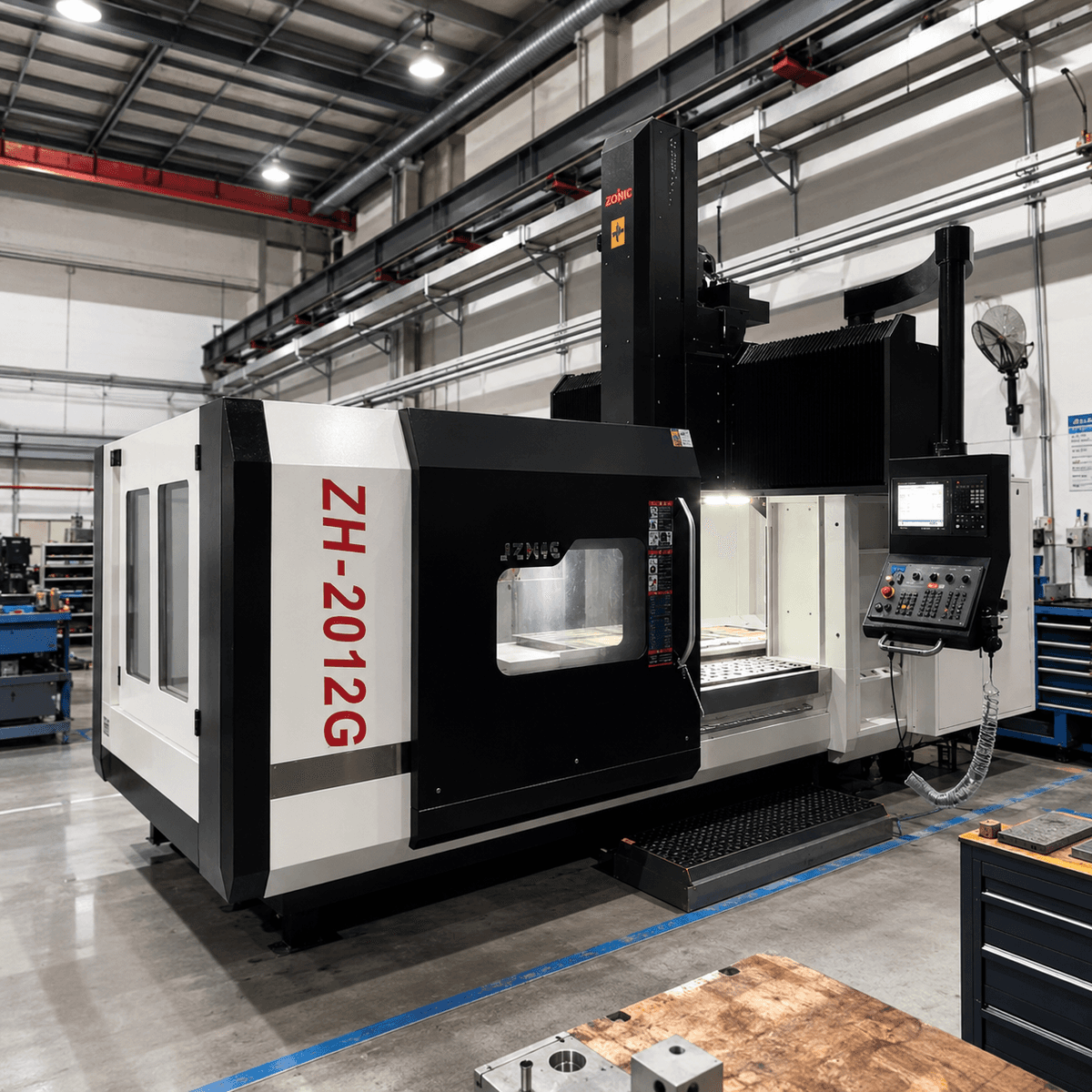
CNC machining center setup reduction begins by measuring the time between the last acceptable part from one job and the first acceptable part from the next. That boundary includes searching, preparation, fixture changes, setting references, trial cutting and the inspection needed to release production. Timing only the visible fixture swap leaves much of the problem outside the stopwatch.
Before buying a faster machine or another accessory from Zhihe CNC, find out which activities actually stop production. A machine option can solve a physical limitation. It cannot, by itself, resolve an unidentified fixture or a program that has not been approved. This diagnostic approach helps a buyer separate those two situations.
The sixty-minute changeover that looked like ten
Consider this hypothetical observation. The operator changes the fixture in ten minutes. A discussion focused on that activity might immediately turn to a new clamping arrangement. But the complete elapsed time is sixty minutes because the operator also searches for the correct fixture, assembles tools, establishes references and releases the first part.
The example is a planning exercise, not a measured Zhihe CNC installation or a promised improvement. It shows why the measurement boundary changes the purchasing decision.
| Observed activity in the example | Machine-stopped minutes | First question to investigate |
|---|---|---|
| Locate the approved fixture | 8 | Could it be identified and staged before the previous job ends? |
| Assemble and prepare the next tools | 16 | Which preparation can happen outside the machine? |
| Remove and replace the fixture | 10 | Is the physical interface the actual constraint? |
| Establish and verify references | 9 | What information and measurement are required? |
| Run the first trial part | 10 | Which checks are necessary for safe, correct first use? |
| Measure and release the part | 7 | Is the required gauge and reviewer available? |
| Total elapsed changeover | 60 | Which causes deserve a process change or equipment option? |
If all eight searching minutes and sixteen preparation minutes could safely occur earlier, the arithmetic would leave 36 stopped minutes. That is an upper-bound scenario under the example's assumptions, not an achieved result. External preparation still consumes somebody's time and may need equipment, information or space.
The first experiment should therefore be a better-prepared changeover, not an immediate claim of a forty-percent productivity gain. Measure the whole process again after the change.
Diagnose the delay before naming the solution
“We keep looking for things”
Start with identification and staging. Give the fixture, tools, gauge and approved documents a consistent job identity. Confirm the material and drawing revision before the last part finishes. Missing or contradictory information creates delay even when the hardware is suitable.
The right response may be a job kit and an ownership decision. This is not glamorous, but it can reveal whether an expensive machine option is addressing the real cause. Record preparation effort as well as machine availability so work is not merely shifted invisibly to another department.
“We know what to use, but mounting takes too long”
Now review the physical fixture interface. Compare accessibility, locating features, clamping sequence, cleanliness, part support and the required checks after mounting. Ask the fixture specialist and machine supplier which interfaces are compatible with the application.
Do not remove verification steps simply because they take time. A faster mounting action that leaves the part incorrectly located has not shortened the time to the first acceptable component. The fixture, machine table, workpiece and approved procedure need to be reviewed together.
“The first part needs repeated correction”
Separate uncertain references, unprepared tool information, program issues and material variation. Each has a different owner. Preserve the initial result and the correction so the next review can distinguish a repeatable method from an operator's undocumented adjustment.
Renishaw's machine-tool probing overview separates tool measurement from workpiece measurement. Those functions can support a prepared setup, but the buyer must still define what is measured, how the result is used and which checks remain independent.
Compare four approaches to CNC machining center setup reduction
The purpose of CNC machining center setup reduction is not to select the most automated response every time. Select the response that removes a demonstrated cause while preserving the required quality and safety checks.
| Proposed response | Delay it is intended to address | Limitation to test |
|---|---|---|
| Job kits and external preparation | Searching, missing documents and late tool preparation | The preparation team needs time, space and controlled information |
| Repeatable fixture interface | Repeated physical mounting and locating work | Compatibility, support and verification still require review |
| Tool or workpiece measurement option | Defined setting and checking activities | Integration, calibration, programs and training must be included |
| Pallet or automated handling arrangement | Repeated loading and fixture exchange in suitable work | Part mix, access, recovery and offline preparation may remain limiting |
Use the same part family and timing boundary for each proposal. Otherwise, one quotation may describe a carefully prepared production run while another includes every first-job uncertainty. Those are not comparable demonstrations.
A specification for the next configuration discussion
Bring evidence of the interruption into a Zhihe CNC inquiry. The table below describes information requirements rather than claiming a particular option is available on every model.
| Specification category | Buyer information | Requested supplier response |
|---|---|---|
| Part family | Representative drawings, material and batch mix | Suitable machine and fixture approach |
| Physical setup | Existing fixture interface, mass and working envelope | Configuration-specific compatibility and access confirmation |
| Tools | Assembly list, preparation method and replacement needs | Magazine, measurement and controller options to discuss |
| References | Datum scheme and first-part checks | Proposed setting method and responsibilities |
| Production target | Observed changeover record and operating schedule | Scoped demonstration with the same timing boundary |
| Quality evidence | Required dimensions, gauges and release authority | Reporting format, acceptance conditions and exclusions |
Material and stock condition belong in that discussion. A job moving between aluminum and steel may require different tools or process preparation. A fixture designed around one blank condition should not silently be treated as suitable for another. These questions are best resolved by the process and tooling specialists before a timing trial.
Run a trial that can survive the next shift
Prepare the next job using the proposed method, then observe the changeover from the same start point to the same release point. Record who performed the work and what information was available. Keep interruptions in the record rather than editing them out to make the trial attractive.
Repeat the relevant sequence with another part variant or trained operator when that change reflects normal production. The objective is to expose dependence on undocumented knowledge. Agree the scope and quantity with the parties involved; this article does not prescribe a universal validation sample.
Renishaw's machine-builder lifecycle discussion places commissioning and longer-term support in the same equipment lifecycle. Apply that perspective to setup improvements: the method should be teachable and supportable after the supplier's demonstration team leaves.
Check the quotation for work that has moved elsewhere
A proposal for CNC machining center setup reduction should identify fixtures, tooling, measurement equipment, controller functions, programming and training. List what the buyer must provide. If setup work moves to an external station, include that station's preparation and capacity in the review.
Zhihe CNC's company profile describes custom CNC solutions and project-based scheduling. Request a configuration and delivery plan tied to the agreed scope. Do not assume a custom fixture or integration task shares the delivery date of an otherwise standard machine.
Ask for the required quality documents and certificates separately from the timing demonstration. A shorter changeover is not a certificate of dimensional capability or destination compliance. Likewise, keep engineering changes controlled: an altered fixture or program may require renewed checks even when it appears to save time.
Questions from production and purchasing teams
What should count as setup time?
For this analysis, use the last acceptable part of the old job to the first acceptable part of the new job. Record narrower measures separately if they answer another question, and name their exclusions.
Is external preparation free time?
No. It uses labor, space and sometimes additional equipment. Its benefit is that suitable work may be completed without stopping the machine, not that the work disappears.
Should every job use the same fixture?
No. Common interfaces can be useful, but the actual part, support, access and quality requirements govern suitability. A shared fixture concept should be validated for the intended family.
Will a probe remove all first-part inspection?
Do not assume that. Define the probing function and the independent inspection required by the quality plan. Measurement integration does not automatically change the buyer's release requirements.
Can tool preparation happen before the previous job finishes?
Sometimes, if the required assemblies, information and personnel are available. Check whether tools are shared with the running job and whether the external preparation method is approved.
Does CNC machining center setup reduction require a new machine?
First determine whether the delay comes from a machine limitation or from preparation and information flow. Replacement is a substantial decision and should address evidence of the actual constraint.
How do small batches change the decision?
Frequent changeovers make their elapsed time more visible in the production schedule. Use the real batch mix rather than judging the process only during one long run of identical parts.
How should CNC machining center setup reduction be measured?
Use the same start and finish definition, comparable jobs and recorded operating conditions. Include quality holds and preparation effort so the apparent saving is not created by changing the boundary.
Who should attend the trial?
Include the people who prepare tools, mount fixtures, release quality and support the equipment. Purchasing also needs the agreed scope and exclusions to compare the commercial proposals fairly.
What should I send Zhihe CNC?
Send a representative drawing, material details, fixture and tooling information, the current changeover log and the desired operating schedule. Identify the delay you want the proposed equipment to remove.
Bring a timing record, not just a target
The most useful inquiry for CNC machining center setup reduction contains a specific interruption and the evidence behind it. It gives the supplier something concrete to evaluate and gives the buyer a basis for accepting or rejecting the proposal.
Share that record through Zhihe CNC's contact page. Ask for a response that distinguishes preparation changes, machine options and validation work. That is how a stopwatch observation becomes a better equipment decision.