

The right CNC machining center spindle selection begins with the hardest representative cut, not the largest number in a brochure. Define the material, cutter, engagement, required speed, torque region, tool projection, surface, duty pattern, thermal sensitivity, and recovery plan. Then compare complete spindle packages under the same production assumptions. Zhihe CNC can review a controlled part and process brief against available machine configurations. The buyer, tool supplier, programmer, quality team, and machine supplier still need to validate the final process. A spindle label alone cannot guarantee cycle time, tool life, finish, or part capability. Put One Difficult Feature on the Table Choose a feature that exposes the decision: a deep pocket with a long tool, a broad face requiring stable finish, a large bore, a small high-speed cutter, or an intermittent heavy cut. Attach the drawing revision, material and stock condition, fixture concept, tool assembly, quality requirement, and current failure mode. This feature is more useful than a list of every operation because it forces the team to explain where the spindle contributes and where it does not. A finish issue may originate in the tool, holder, fixture, path, temperature, measurement, or stock. Keep those lanes visible instead of asking the spindle to carry the entire process claim. Draw the Cut as a Load Story For each candidate operation, record cutter diameter, tooth count, cutting speed, spindle speed, feed, radial and axial engagement, tool projection, holder, coolant, entry and exit, and expected duty. Use values approved by the responsible process team; this article does not supply cutting data. Map when load rises, how long it remains, and what happens between cuts. A short peak and a sustained duty can demand different reviews. Include acceleration, tool changes, probing, and idle gaps because the production route is not a continuous test cut. Feature event Process input to freeze Spindle question Evidence during trial Entry into material Path, engagement, tool and holder Is response stable at entry? Load trend, sound, vibration observation, part result Sustained removal Material, engagement and time What duty is supported for this condition? Declared state and repeatable process record Finish pass Projection, step-over, temperature Which variables govern the required surface? Raw measurement and surface record Tool change Assembly, balance and retention Is the interface repeatable and serviceable? Tool identity, runout method, change record Restart after interruption Machine, tool, offset and thermal state How is a controlled recovery performed? Held-work decision and first verified result The table makes CNC machining center spindle selection a testable production question rather than a popularity contest. Read Speed, Torque, and Power as a Curve Maximum speed, peak torque, and rated power cannot be compared as three unrelated badges. Ask for the applicable performance information for the quoted spindle and understand the operating regions, duty definitions, limitations, and option dependencies. Compare the required process points with the available envelope. Do not interpolate outside published or engineering-confirmed information. Do not assume that two spindles with the same maximum speed behave alike at the cutter. Drive arrangement, motor characteristics, transmission, control, tool interface, cooling, and operating rules all affect the package. If a process needs both low-speed removal and small-tool high-speed work, plot both points. The most attractive spindle is the one that covers the declared mix with credible evidence and manageable compromises, not necessarily the one with the highest headline value. Include the Tool Interface and Bending Moment The spindle does not touch the material directly. The taper or interface, retention system, holder, extensions, cutter, projection, balance, and maintenance condition form the mechanical chain. Long assemblies can turn an acceptable motor calculation into an unstable cutting arrangement. Sandvik Coromant's official Silent Tools application guide advises users not to overload the spindle interface and to consider bending moment at the gauge line. That is a useful engineering principle, not approval for a specific Zhihe CNC configuration. Confirm limits with the relevant machine and tooling documentation. Sort Operations Into Four Spindle Demands Create four buckets: torque-sensitive, speed-sensitive, finish-sensitive, and reach-sensitive. An operation may sit in more than one bucket. Mark its annual volume and whether it controls acceptance or only a small percentage of work. This four-bucket view keeps CNC machining center spindle selection tied to the production mix instead of one dramatic sample cut. This prevents a rare extreme feature from silently defining an expensive machine while everyday jobs suffer. It also prevents the opposite mistake: optimizing the average operation and leaving the drawing's critical feature unproven. The weighting should come from the actual part mix, not from a generic industry label. Treat Thermal Behavior as a Production Variable Spindle rotation creates a thermal event that interacts with the machine structure, axes, coolant, fixture, and environment. Ask how the selected configuration is prepared, monitored, and accepted under the intended shift pattern. Keep warm-up, cold restart, planned stops, and long high-speed runs in the trial plan. ISO 10791-10:2022 specifies tests for thermal distortions of machining centers, including effects associated with a rotating spindle. It provides test context; it does not predict a buyer's part result or replace configuration-specific instructions and part evidence. Compare Drive Routes, Not Just Spindle Names Different spindle and drive architectures can change response, maintenance, heat, noise, service tasks, and cost. Request the configuration actually offered and ask which components, cooling arrangements, lubrication, sensors, and service procedures belong to it. Avoid assuming that a broad architecture name guarantees a particular result. Comparison lane Questions for the quotation Hidden ownership to expose Process coverage Which declared speed/load points are supported? Who validates tools and cutting conditions? Tool interface Which holders, limits, balance rules, and gauges apply? Who controls assembly condition? Thermal route What startup, cooling, and restart instructions apply? Who releases the first part? Maintenance What inspections, lubricants, filters, and service events apply? Who stocks parts and records condition? Recovery What happens after overload, collision, alarm, or spindle work? Who can diagnose, reset, test, and release? Commercial scope Which spindle option and accessories are included? Who owns exclusions and later changes? Use this matrix to compare the same process boundary across proposals. Make Surface Finish a Shared Evidence File When surface finish matters, record machine and spindle state, tool assembly, cutting path, material, fixture, coolant, temperature context, measurement method, filtering, and sampling. Keep raw data and photographs where useful. A single attractive sample does not isolate spindle contribution. Repeat the feature after a planned tool replacement or restart if those events occur in production. The purpose is not to manufacture an artificial failure. It is to confirm that the team can reproduce the approved state and recognize when the result has moved. Count Tool Changes and Magazine Reality A spindle choice must work with the shop's holders and magazine plan. Confirm allowed tool mass, dimensions, adjacent-pocket restrictions where applicable, pull-stud or retention requirements, balance expectations, cleaning, measurement, and tool-change recovery through the delivered documentation. Include the spindle probe or tool setter if it occupies a pocket or changes the sequence. Map who assembles, presets, verifies, loads, replaces, and quarantines a suspect tool. These tasks may control accepted output more than a small difference in cutting time. Design a Trial With a Boundary Piece The trial should include a representative operation and a boundary operation. The representative piece shows normal work. The boundary piece explores the difficult feature without claiming that every future part is covered. Freeze program, tool, holder, fixture, material, coolant, machine state, environment, measurement, and acceptance rule. Record accepted, held, reworked, and scrapped results separately. If a correction is made, preserve the original state and name the reason, amount, affected quantity, retest, and release owner. The CNC machining center spindle selection decision should be traceable to conditions, not remembered as a successful demonstration. Price the Spindle Package Across Its Life Compare purchase option cost, holders and gauges, cooling or filtration, electricity measurement, warm-up time, planned maintenance, spare strategy, service travel, downtime exposure, and training. Avoid invented payback. Use the buyer's rates and observed production route. A less expensive spindle can be costly if it forces extra setups or cannot support the critical feature. A premium spindle can also be poor value when the work mix never uses its advantage. State the utilization and part mix behind any financial conclusion. Keep the calculation beside the CNC machining center spindle selection evidence so later buyers can see which volume, tariff, and service assumptions drove the decision. Write the Failure and Recovery Script Ask what operators may do after load alarms, unusual noise, vibration, tool pullout, collision, loss of lubrication, temperature warning, or spindle service. Define the stop, containment, escalation, inspection, test, and part-release path. Safety procedures and authorization remain site responsibilities. Keep backups, parameter records where permitted, service contacts, and configuration identity controlled. After repair, use the supplier's required run-in or check and repeat the smallest evidence set that covers the affected process. Ten Questions About CNC Machining Center Spindle Selection Should I simply buy the highest spindle speed? No. Map the actual tools and materials to required speed, torque region, duty, reach, interface, thermal behavior, and accepted part evidence. Is peak power enough for comparison? No. Ask for the applicable performance envelope and duty definitions for the quoted package, then plot the real process points. Why start with the hardest cut? It exposes the constraint that an average operation can hide and gives the trial a clear technical boundary. Does more torque guarantee better finish? No. Tooling, holder, projection, path, fixture, material, temperature, coolant, and measurement also influence the surface. Which toolholder details belong in the review? Record interface, holder, cutter, projection, balance, retention component, assembly method, runout check, identity, and replacement rule. Should warm-up be part of spindle selection? Yes. Use the supplier's approved configuration-specific instructions and connect them to first-part and restart evidence. Can one trial part prove every application? No. State the tested geometry, material, tools, fixture, path, conditions, measurement, and limits; reopen evidence when those change. What belongs in the spindle maintenance cost? Count planned checks, lubrication or cooling tasks, filters, holders, gauges, spares, service access, downtime, and post-service verification. When should the spindle decision be reopened? After material, tool, holder, projection, program, fixture, duty, option, service, or quality requirements change materially. What should buyers send Zhihe CNC? Send drawings, CAD, materials, annual mix, difficult features, tools, holders, current process data, quality method, site conditions, and service region. Ask Zhihe CNC for a Process-Matched Review Start with the Zhihe CNC product range, review the manufacturing and company information, and submit the controlled application pack through the contact page. Request the quoted spindle configuration, applicable interface and operating information, tool limitations, thermal and maintenance instructions, trial plan, measurement boundary, training scope, and service ownership. A sound CNC machining center spindle selection does not claim to be perfect for every cut. It shows why the selected package fits the cuts the buyer has actually defined.
Your Hardest Cut Chooses the CNC Machining Center Spindle Selection
- Machine Selection Guide
Posted by Zhihe CNC On Sep 10, 2026
Featured Blogs
Tag:
Share On
Featured Blogs

Custom CNC Automation Solution: Write the Interface Contract Before the Robot Arrives
Design a custom CNC automation solution around explicit machine, robot, fixture, safety, data, recovery, and changeover interfaces before integration.

CNC Machine for Lithium Battery Equipment Parts: Control Contamination and Interfaces Together
Select a CNC machine for lithium battery equipment parts by linking datum control, contamination prevention, fixture design, cleaning, inspection, and traceability.
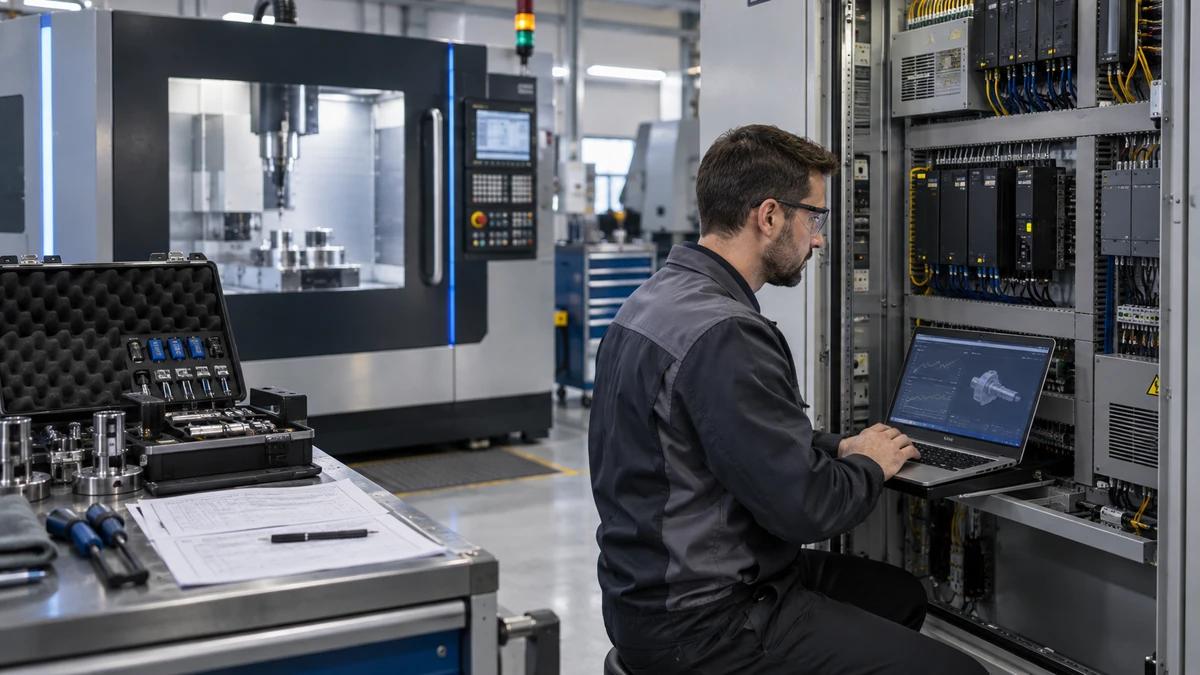
CNC Machine After Sales Service: Build a Severity-Based Recovery Playbook
Evaluate CNC machine after sales service through a severity-based playbook covering intake, triage, escalation, spare parts, remote support, and closure evidence.

CNC Machine Installation and Training: Design the Handover Around the First Independent Shift
Build a CNC machine installation and training handover around site readiness, commissioning evidence, role-based competence, recovery paths, and supervised production.
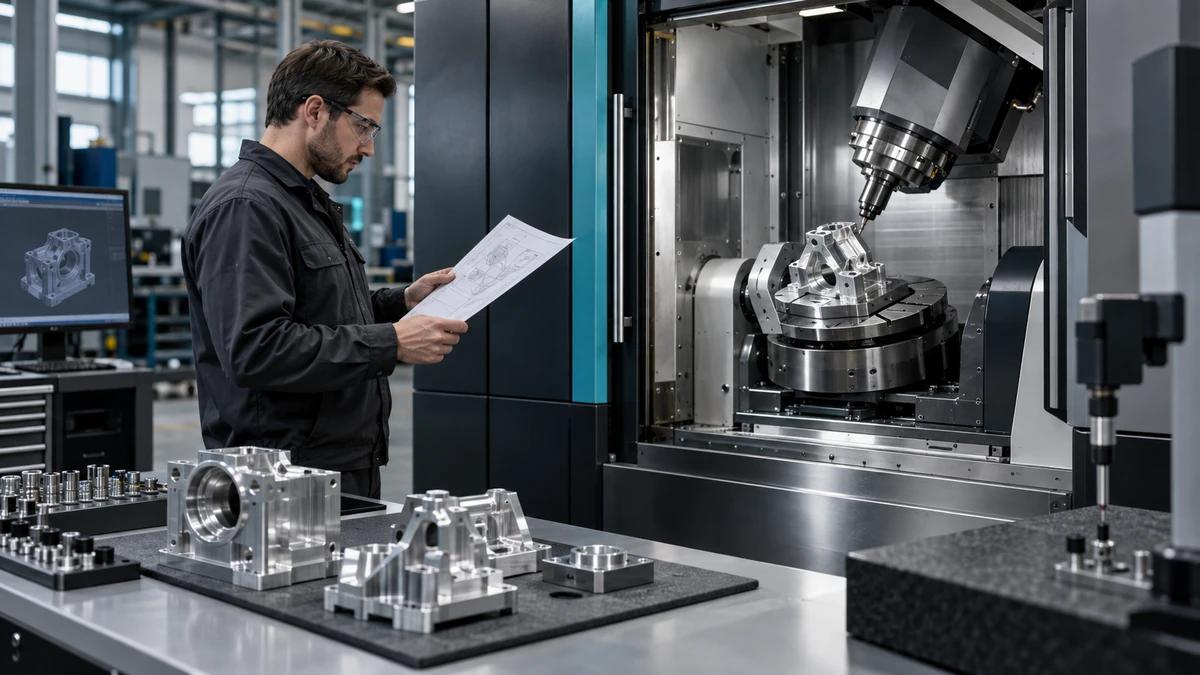
CNC Machining Center Quotation: Normalize the Scope Before Comparing Prices
Turn a CNC machining center quotation into a decision-ready scope by normalizing configuration, acceptance, delivery, training, warranty, and ownership assumptions.
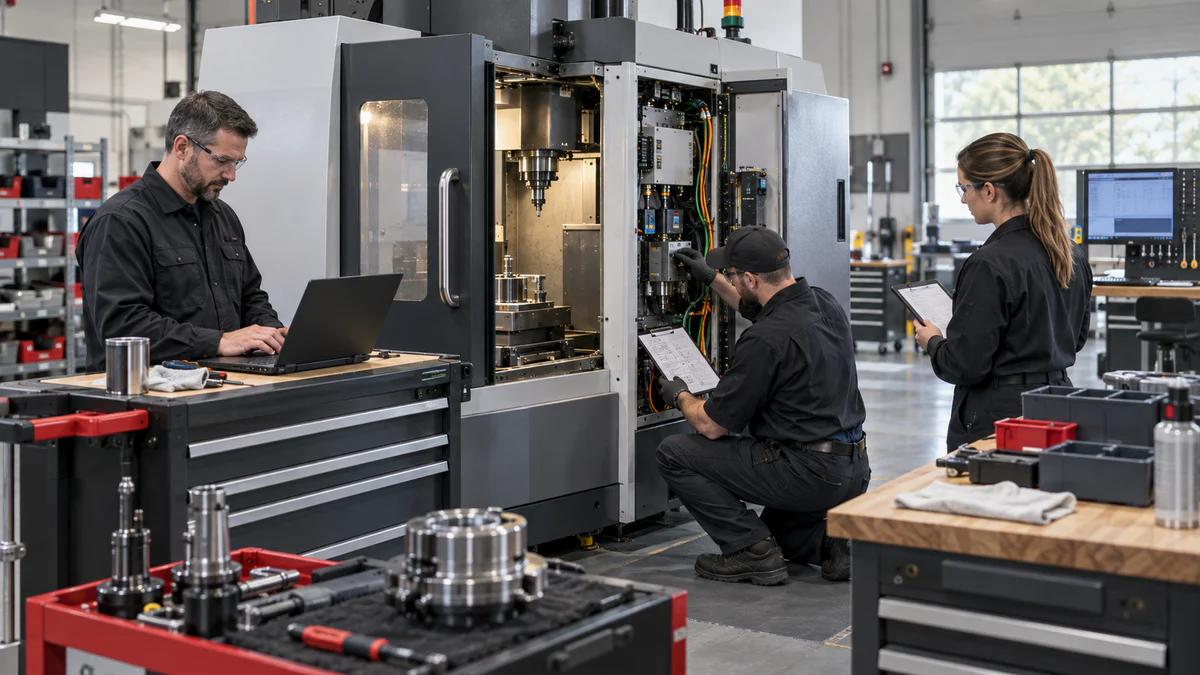
Before Territory Launch: A CNC Machining Center Distributor Service Drill
Test a CNC machining center distributor before territory launch with practical service drills for intake, escalation, spare parts, field work, and response quality.