Why a Custom CNC Automation Solution Matters Before You Buy the Machine
A custom CNC automation solution is not just about adding robots to a machining cell and hoping throughput improves. For most engineers and sourcing teams, the real question is simpler: how do you turn a standard CNC platform into a reliable production system that fits the part, the material, and the daily mix of work?
That matters because the wrong setup can create a machine that looks advanced on paper but is awkward in practice. Parts still need loading, chips still need clearing, and the control system still needs to match the operator’s workflow. If the automation layer is mismatched, the job shop gets more complexity without getting more output. That is the trap many buyers want to avoid.
Zhongshan Zhihe CNC Technology Co., Ltd., founded in 2018, works across vertical machining centers, horizontal machining centers, gantry machining centers, drilling and tapping centers, CNC milling machines, and five-axis machines. That range is useful because automation is rarely a one-size decision. A stable machine structure, sensible configuration choices, and support for selection, trial cutting, and after-sales service often matter as much as the label on the door.
What the Core Machine Brings to the Table
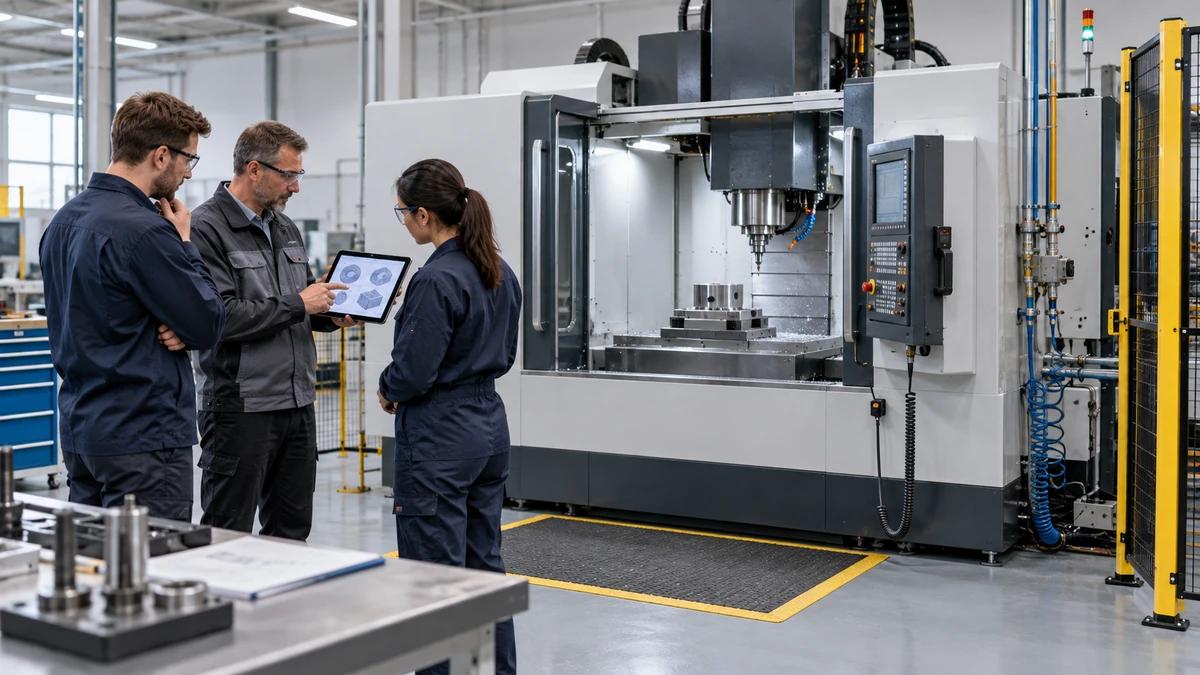
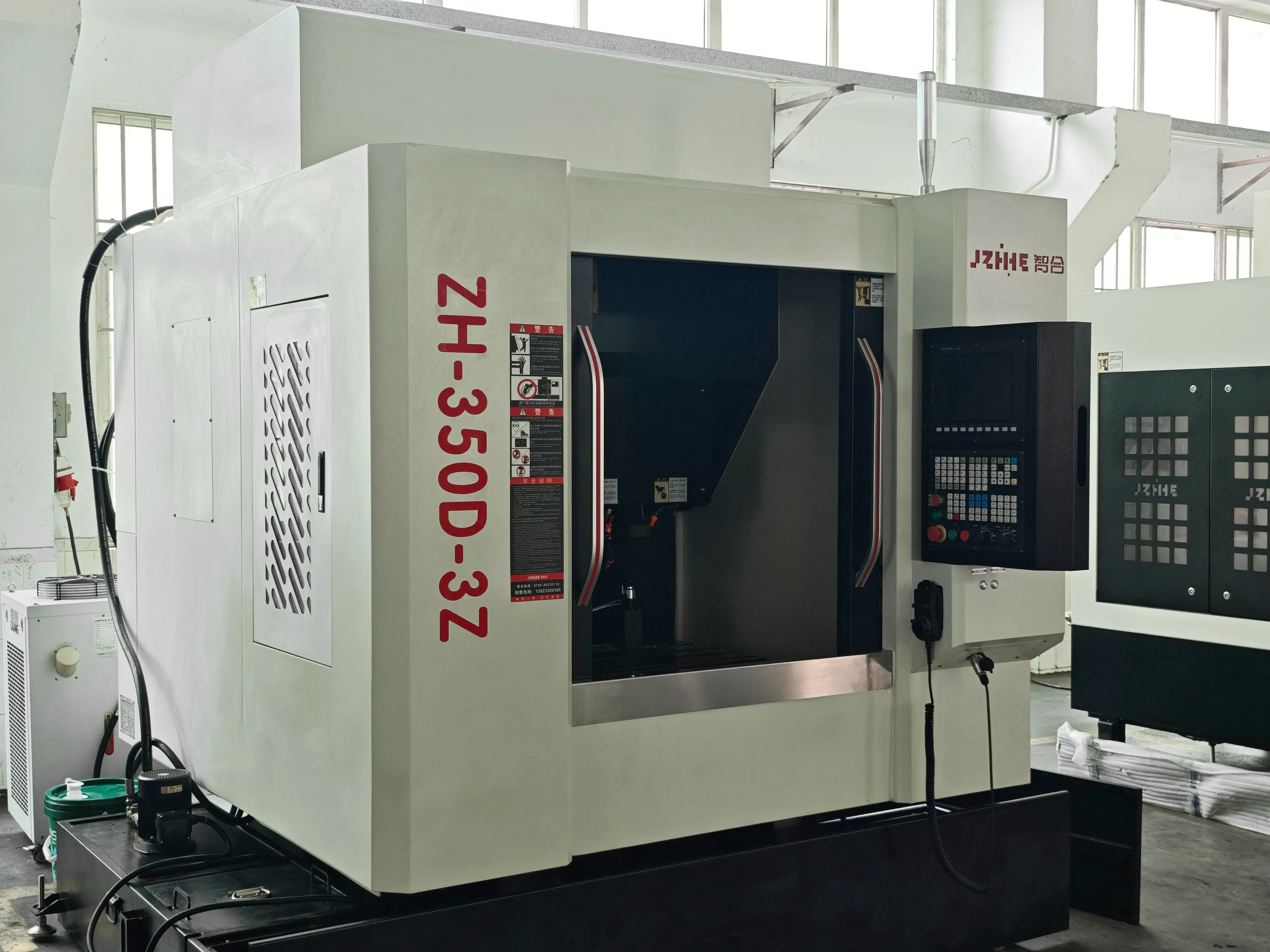
The visible equipment category here is an enclosed CNC vertical machining center. The enclosure is fully guarded, with a large front access door, a side-mounted control panel, and a floor-standing base on leveling feet. Those are not decorative details. They are the practical features that help contain chips and coolant, improve operator safety, and keep the machine steady during milling, drilling, tapping, and other subtractive operations.
The bridge-like top structure and enclosed work area suggest a machine built for production discipline rather than casual bench work. In real use, that usually means better containment, cleaner surrounding floors, and easier integration into a repeatable process. The exact axis count is not confirmed from the image, so it is safer to treat it as a vertical machining platform rather than assume a 3-axis or 5-axis configuration.
How to Think About CNC Automation Integration
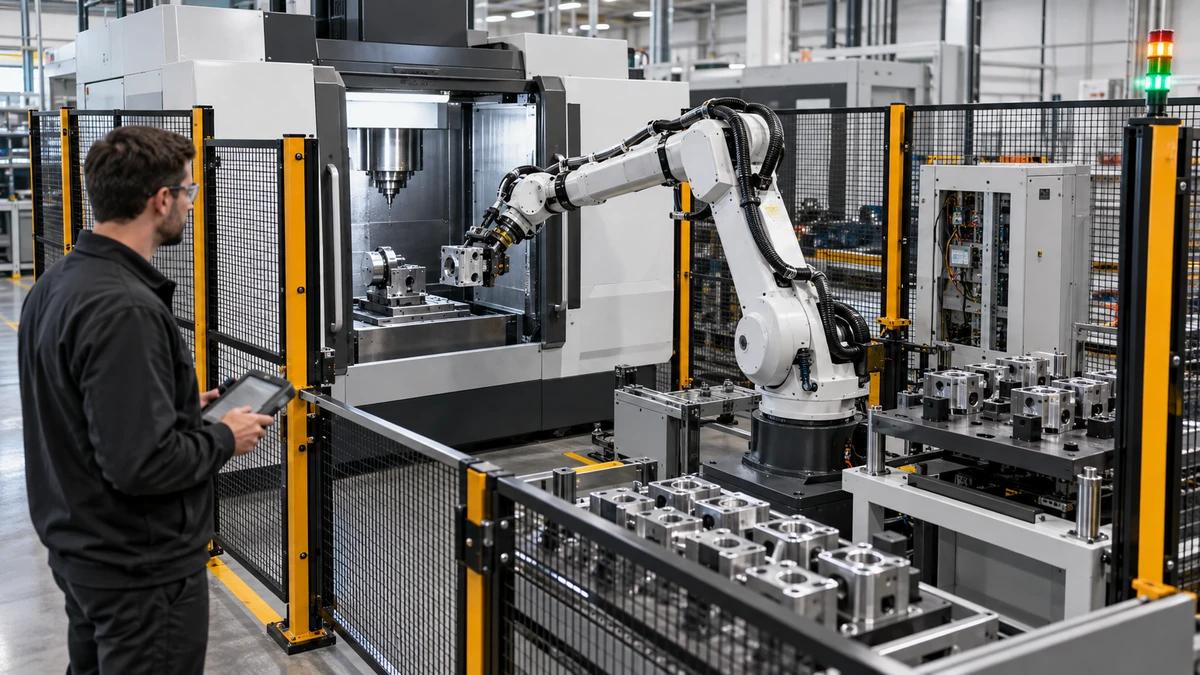
When buyers discuss CNC machining center integration, they often focus on the robot first. That is backward. Integration should begin with the workpiece. Ask what must be loaded, how it is oriented, what surfaces must remain protected, and how often the part family changes. A stable automation concept for aluminum housings is not the same as one for steel mold parts or mixed-quantity precision hardware.
A turnkey CNC machining center package can be attractive because it reduces the number of loose ends: machine selection, fixture support, control choice, and trial verification are handled together. That does not mean buyers should skip scrutiny. A turnkey package only works if the machine’s enclosure size, worktable arrangement, and controller layout fit the actual plant flow. If the part changeover is frequent, the cell should be designed for quick fixture swaps rather than maximum theoretical output.
Selection Criteria That Save Trouble Later
1. Match the machine to the part family
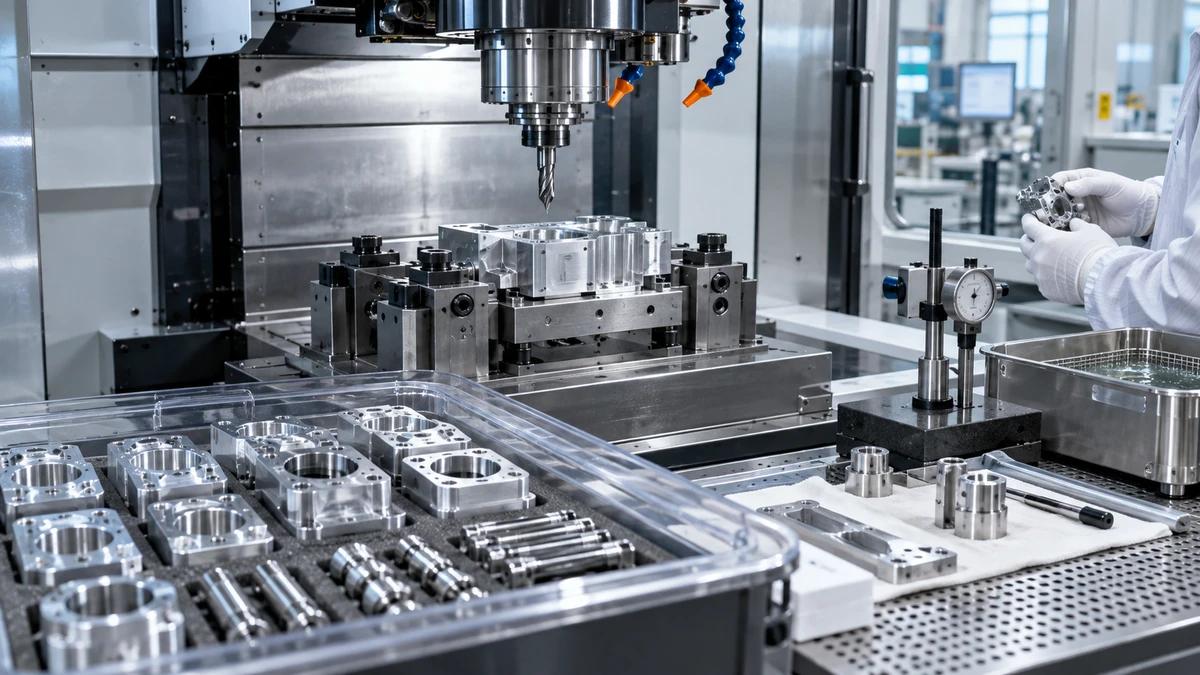
Automotive parts, 3C components, aluminum products, precision hardware, communication parts, molds, household appliances, and lithium battery equipment each place different demands on the machine. A good supplier should ask for drawings, material, dimensions, accuracy requirements, and expected capacity before recommending a model.
2. Do not overbuy axis complexity
Some jobs really do need five-axis capability. Many do not. Over-specifying the machine can raise cost and complicate maintenance without delivering a proportional gain. For a lot of batch production, a well-configured vertical machining center with stable fixtures and smart process planning is the more practical answer.
3. Check the support package, not just the metal
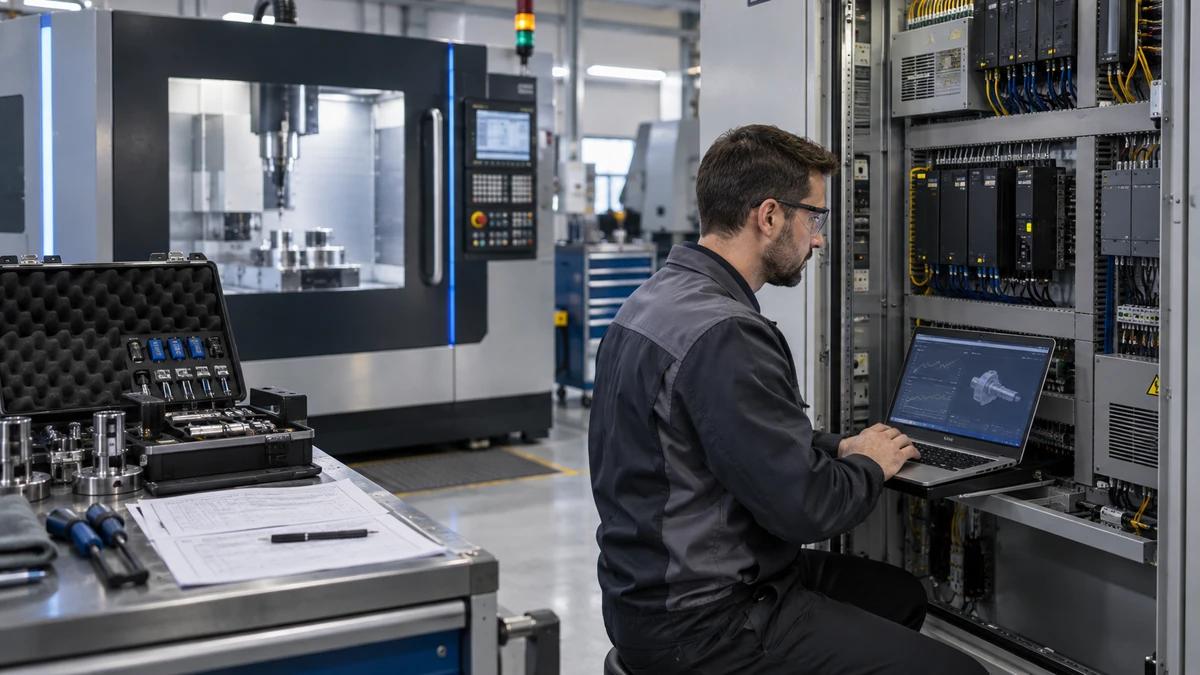
Zhihe CNC notes support for machine selection, control system options, clamping assistance, trial cutting, installation guidance, operator training, warranty service, and spare parts support. Those services are not side notes. In a production environment, they are often the difference between a line that settles in quickly and one that limps along for months.
Common Mistakes Buyers Still Make
One common mistake is treating automation as a bolt-on after the process is already unstable. If the part has poor datum strategy or inconsistent fixturing, automation will only scale the problem.
Another mistake is underestimating enclosure and chip management. A fully enclosed machine helps, but the real benefit depends on coolant flow, chip evacuation, and how often the operator must interrupt the cycle to clear buildup. That is a practical issue, not a marketing one.
Finally, some teams skip the trial run. Zhihe CNC’s mention of trial verification is worth paying attention to. A short test with real material usually exposes fixture issues, tool access limits, and cycle-time assumptions that are easy to miss in a meeting room.
Practical Buyer Advice for Engineers and Sourcing Teams
If you are evaluating a custom CNC automation solution, ask for three things early: the intended workpiece list, the control and fixture concept, and the handoff plan for installation and training. Those three items reveal whether the supplier is thinking in systems or just selling a machine.
Also, be cautious with vague promises about precision. Unless tolerances and test conditions are clearly stated, treat any performance claim as provisional. For industrial buyers, stable structure, repeatability, and service access usually matter more than heroic numbers no one can verify on the shop floor.
What to Request Before You Move Forward
Send part drawings, material details, size limits, accuracy targets, and capacity expectations. If you are buying for overseas deployment, packaging photos, shipping documents, and delivery support should also be part of the discussion. Zhihe CNC notes that it can support domestic and international transport coordination, which may help when the project needs more than just machine delivery.
If your team is planning a new cell or replacing an older machine, use the machine selection phase to define the whole workflow, not just the spindle. A good automation project is built around the workpiece, the fixture, the control, and the people who will run it every day.
Next Step
If you are comparing configurations for a custom CNC automation solution, gather your drawings and production targets first, then ask for a machine recommendation that includes control options, fixture support, and trial verification. That will usually tell you more than a brochure ever will.
For quotation support, the company contact information provided is Liu Xiaobang, zhcnclathe@gmail.com, and WhatsApp/WeChat +86 13620089178.