 How to Choose a Drilling and Tapping Center Supplier for Stable Production
When buyers search for a Drilling and Tapping Center Supplier, they are rarely looking for a machine catalog alone. The real purpose is usually to solve a production challenge: how to improve drilling consistency, reduce tapping defects, shorten cycle time, and keep repetitive machining tasks running smoothly.
For manufacturers producing automotive components, aluminum parts, precision hardware, brackets, fixtures, and general industrial components, a drilling and tapping center is often a key production machine. However, the machine itself is only one part of the decision. The supplier’s ability to understand the workpiece, recommend the correct configuration, provide technical support, and assist after delivery can directly influence long-term production performance.
A reliable supplier should not simply answer “which machine do you want?” Instead, the better question is:
What machine configuration actually fits your part, material, production volume, and process requirements?
Why Supplier Selection Matters More Than Buyers Expect
Many factories start their purchasing process by comparing machine prices and specifications. While those factors are important, they are not always the reason a machining project succeeds or fails.
A CNC drilling and tapping center can perform well in one factory and struggle in another because production conditions are different. Fixture design, operator experience, material type, chip management, tooling selection, and process planning all influence the final result.
For example:
| Buyer Situation | Recommended Focus |
|---|---|
| Large batch hole machining | Cycle time, tool change speed, stability |
| Aluminum parts production | Spindle response, chip removal, surface quality |
| Precision hardware parts | Position accuracy, repeatability, fixture support |
| Mixed production jobs | Flexibility, control system, setup convenience |
| Overseas machine purchase | Installation, training, spare parts support |
A professional Drilling Machining Center Supplier should understand these differences and recommend a solution based on production requirements rather than simply promoting one machine model.
Understanding the ZH-800T Style Drilling and Tapping Center
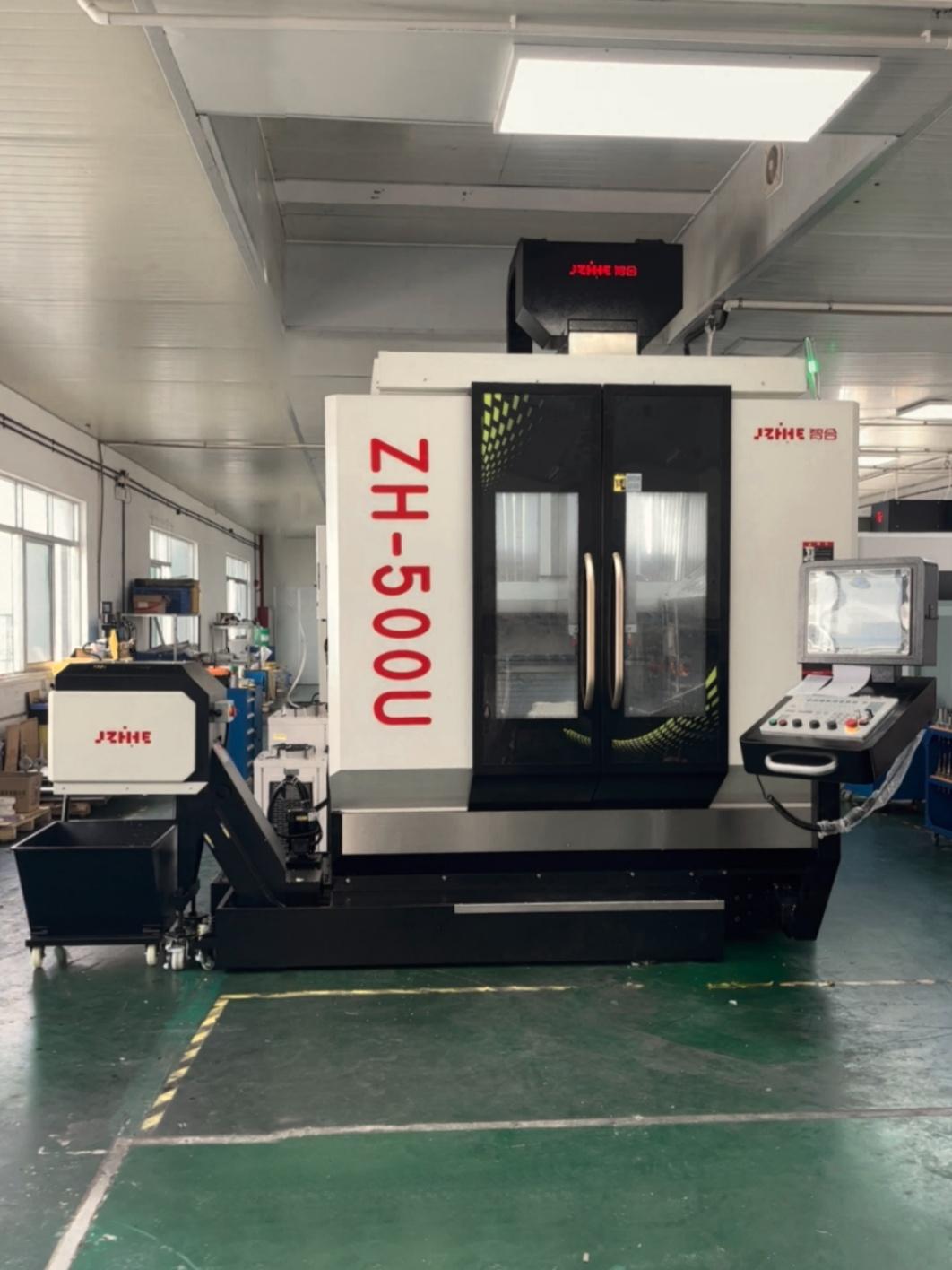
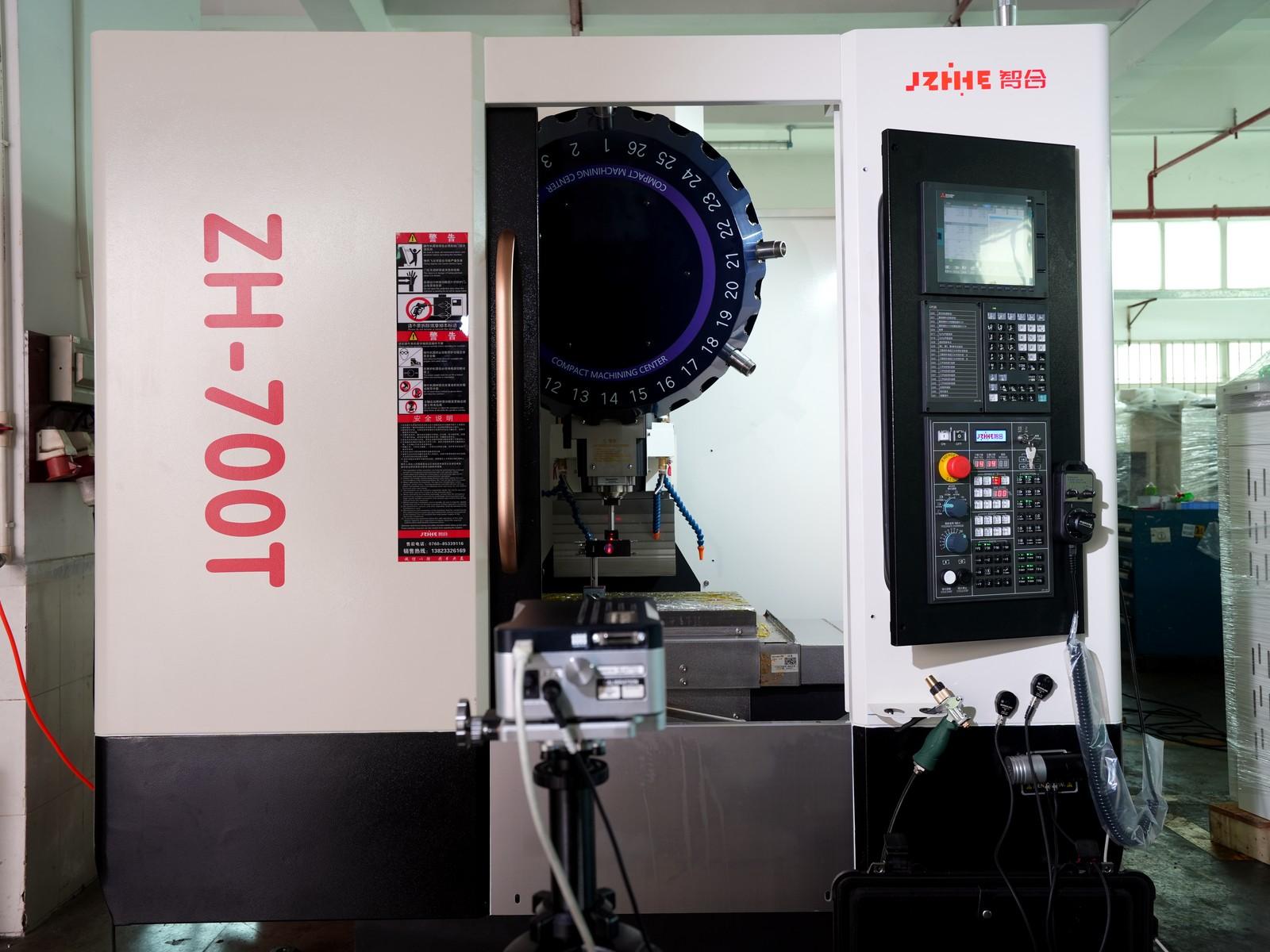
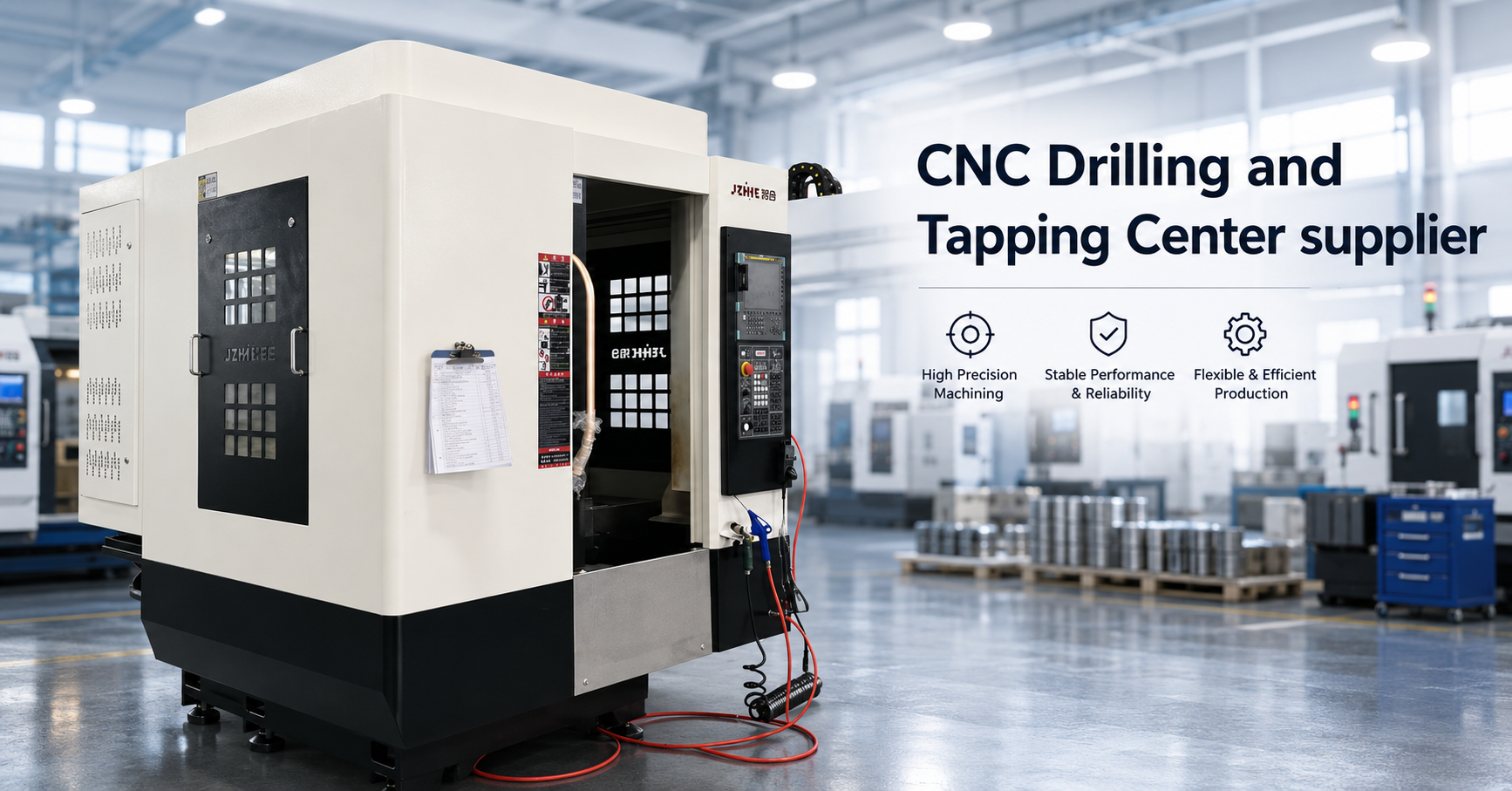
The ZH-800T represents the type of enclosed CNC drilling and tapping center many factories consider when they need repeatable hole-making and light machining operations.
The machine structure features an enclosed cabinet design, front access doors, a side-mounted CNC control interface, and a production-oriented layout. This type of construction helps separate the machining area from the operator environment, improving chip containment, coolant management, and daily operation safety.
For buyers, the value of an enclosed drilling and tapping center is practical:
-
Cleaner working environment
-
More controlled machining process
-
Easier operator workflow
-
Better suitability for batch production
The appearance of the machine should only be the starting point. Before purchasing, buyers should confirm the actual spindle configuration, axis travel, table capacity, controller system, tool magazine options, and machining capability.
What a Good Drilling and Tapping Center Supplier Should Provide
A strong supplier does more than manufacture equipment. The supplier should help buyers move through the complete purchasing process.
This includes:
| Supplier Support | Why It Matters |
| Machine recommendation | Ensures the model matches the application |
| Process evaluation | Helps avoid wrong machine selection |
| Fixture discussion | Improves machining stability |
| Trial cutting | Verifies real production performance |
| Installation guidance | Reduces commissioning problems |
| Operator training | Helps the machine reach expected output |
| Spare parts support | Protects long-term production |
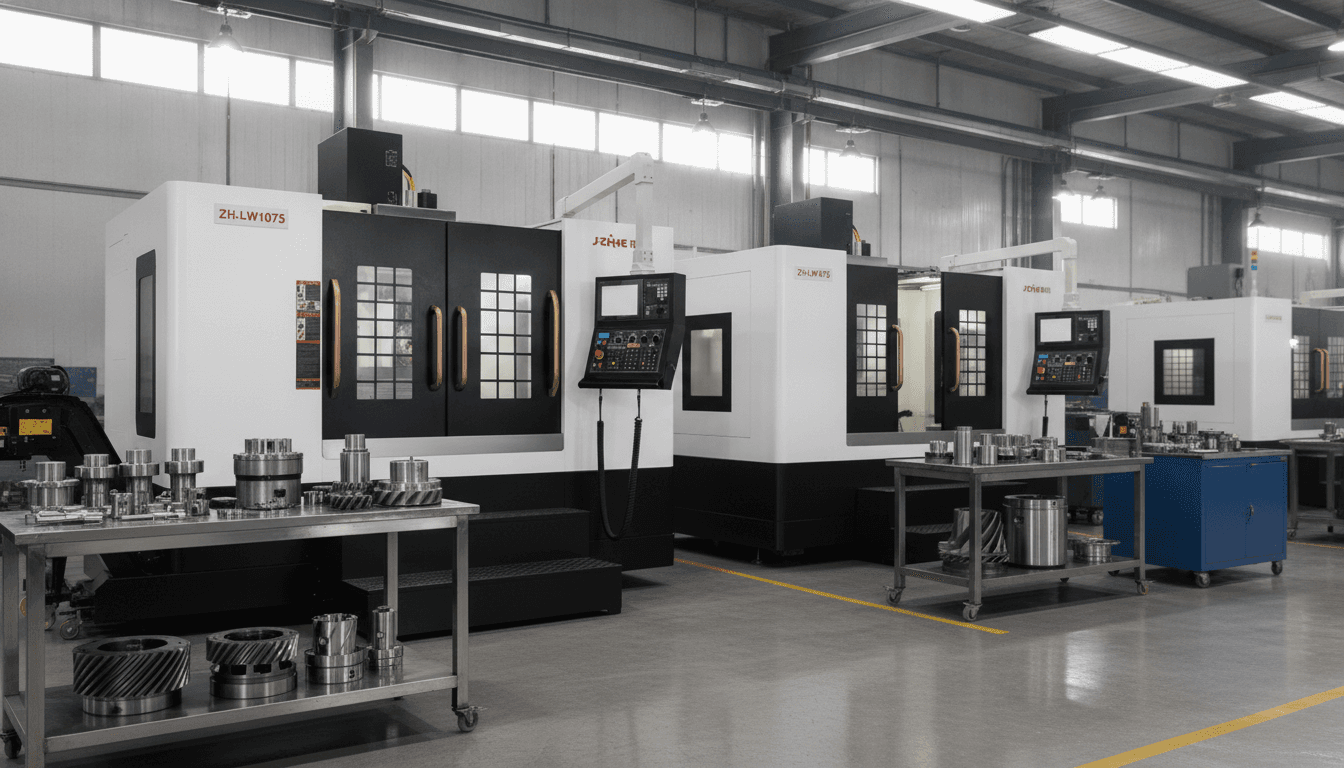
Zhongshan Zhihe CNC Technology Co., Ltd. provides CNC equipment including vertical machining centers, horizontal machining centers, gantry machining centers, drilling and tapping centers, CNC milling machines, and five-axis machining centers. This broader product range allows buyers to compare different machining solutions instead of forcing every application into one machine category.
How to Evaluate a CNC Drilling Machine Supplier
Before sending an RFQ, buyers should prepare clear production information.
A supplier should understand:
1. Workpiece Information
Provide:
-
Part drawings
-
Material type
-
Part dimensions
-
Hole quantity
-
Thread specifications
-
Required tolerance
Without this information, it is difficult to recommend the correct machine.
2. Production Requirements
Different factories have different priorities.
A high-volume production line may focus on:
-
Fast cycle time
-
Stable automation
-
Tool life
A job shop may care more about:
-
Flexible setup
-
Easy operation
-
Multiple part compatibility
3. Factory Conditions
Also consider:
-
Available floor space
-
Power requirements
-
Operator experience
-
Existing tooling system
-
Future automation plans
A machine should fit into the production environment, not create new problems.
Common Mistakes When Buying a Drilling and Tapping Center
Mistake 1: Choosing Only by Price
The cheapest machine is not always the lowest-cost option.
A machine with poor process matching can create:
-
More downtime
-
Higher tool consumption
-
More manual adjustment
-
Lower production efficiency
Mistake 2: Ignoring Application Support
A supplier should understand the actual machining process.
If the supplier cannot discuss:
-
Fixture design
-
Material characteristics
-
Tool selection
-
Trial cutting
then the recommendation may not be reliable.
Mistake 3: Assuming All CNC Machines Are Similar
Different CNC machines have different purposes.
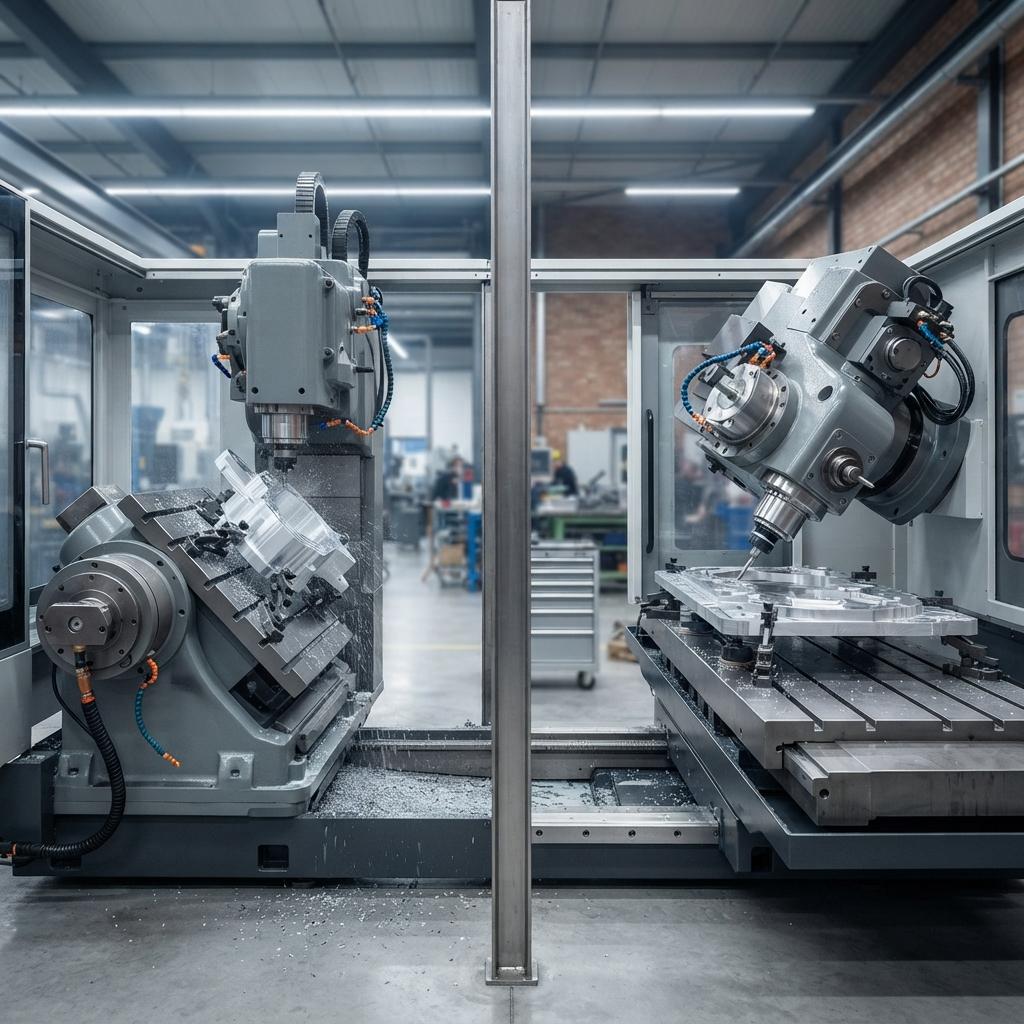
A drilling and tapping center is designed for efficient hole-making and related machining operations. It should not automatically be compared with heavy milling machines or five-axis machining centers.
The right machine depends on the part.
Why Production Teams Choose Enclosed CNC Drilling and Tapping Centers
For many factories, the biggest advantage is consistency.
A well-configured drilling and tapping center can help maintain:
-
Stable hole positioning
-
Repeatable thread quality
-
Predictable cycle times
-
Cleaner production workflow
This makes the machine suitable for industries such as:
-
Automotive components
-
3C electronics
-
Aluminum parts
-
Precision hardware
-
Automation equipment
-
General machinery
When production volume increases, process stability becomes just as important as machining speed.
Questions Buyers Should Ask Before Purchase
Before choosing a supplier, ask:
Machine Capability
Can this machine handle my actual part size, material, and machining process?
Configuration
What controller, spindle, tooling system, and options are included?
Production Verification
Can the supplier support trial cutting with my actual workpiece?
Service Support
What installation, training, and after-sales services are included?
Future Expansion
Can the machine support future production changes or automation upgrades?
These questions help separate equipment sellers from real machining solution providers.
FAQ: High-Conversion Questions from Buyers
1. How do I choose the right drilling and tapping center supplier?
Choose a supplier that can evaluate your workpiece, material, production volume, and process requirements. A good supplier should provide more than pricing; they should offer machine selection advice, technical support, and production recommendations.
2. What parts are suitable for a drilling and tapping center?
Drilling and tapping centers are commonly used for parts requiring repeated hole machining, threaded holes, and light milling operations, including aluminum components, brackets, precision hardware, automotive parts, and industrial components.
3. Should I buy a drilling and tapping center or a vertical machining center?
It depends on your workload. If your production mainly involves drilling, tapping, and repetitive hole patterns, a dedicated drilling and tapping center may be more efficient. If your parts require complex contour machining or heavier cutting, a larger machining center may be more suitable.
4. Can the supplier help with fixture design and trial production?
A professional supplier should be able to discuss fixture requirements, provide machining suggestions, and support trial cutting before final purchase. This helps reduce production risks after installation.
5. What information should I provide when requesting a quotation?
Prepare:
-
Part drawings
-
Material details
-
Dimensions
-
Precision requirements
-
Production quantity
-
Current machining problems
The more detailed the information, the more accurate the machine recommendation will be.
Final Recommendation for Buyers
Choosing a Drilling and Tapping Center Supplier is not only an equipment decision. It is a production strategy decision.
The right supplier helps you choose the correct machine, avoid unnecessary investment, reduce setup problems, and build a more stable manufacturing process.