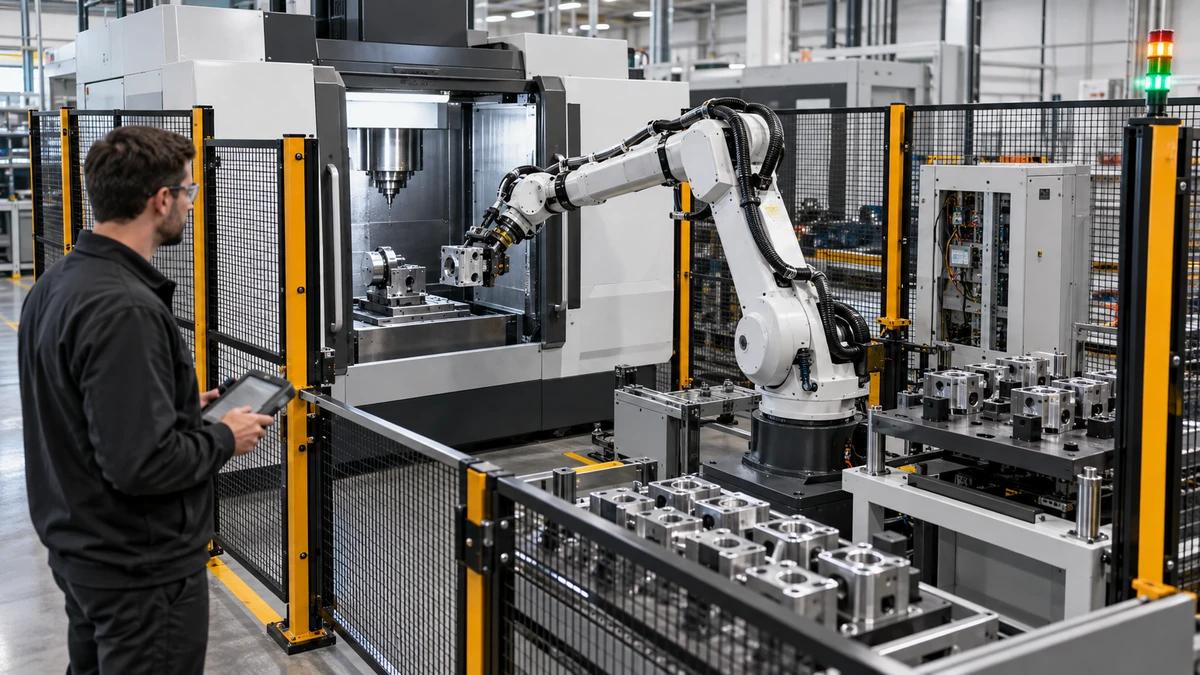
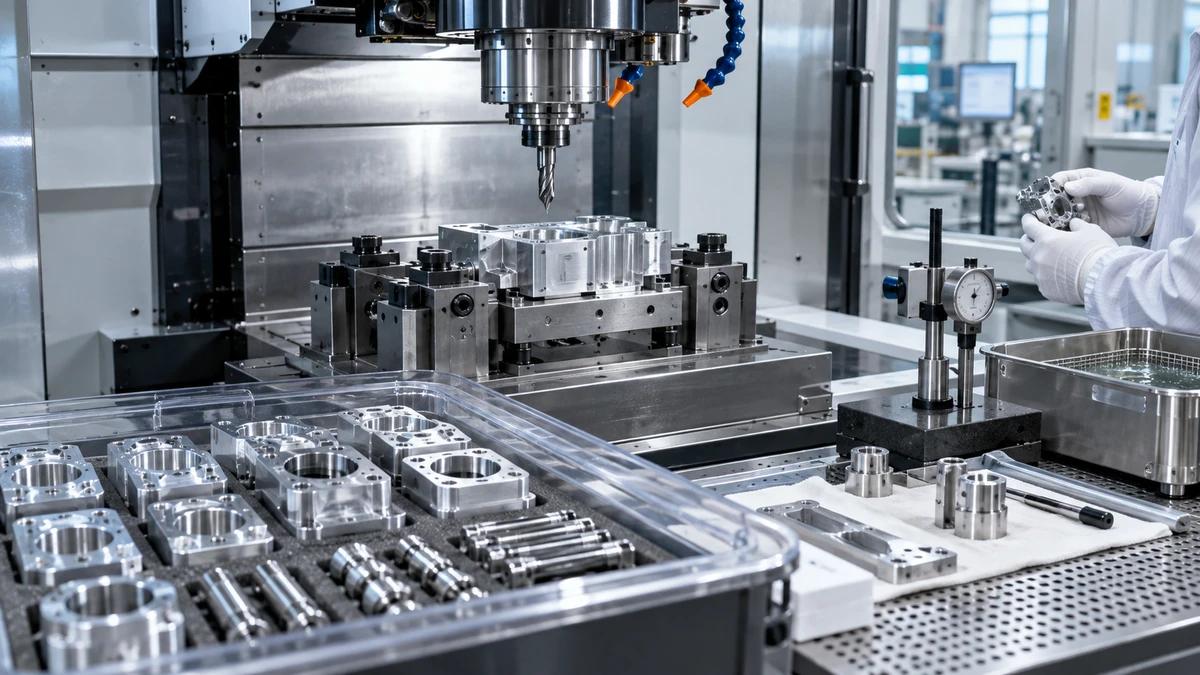
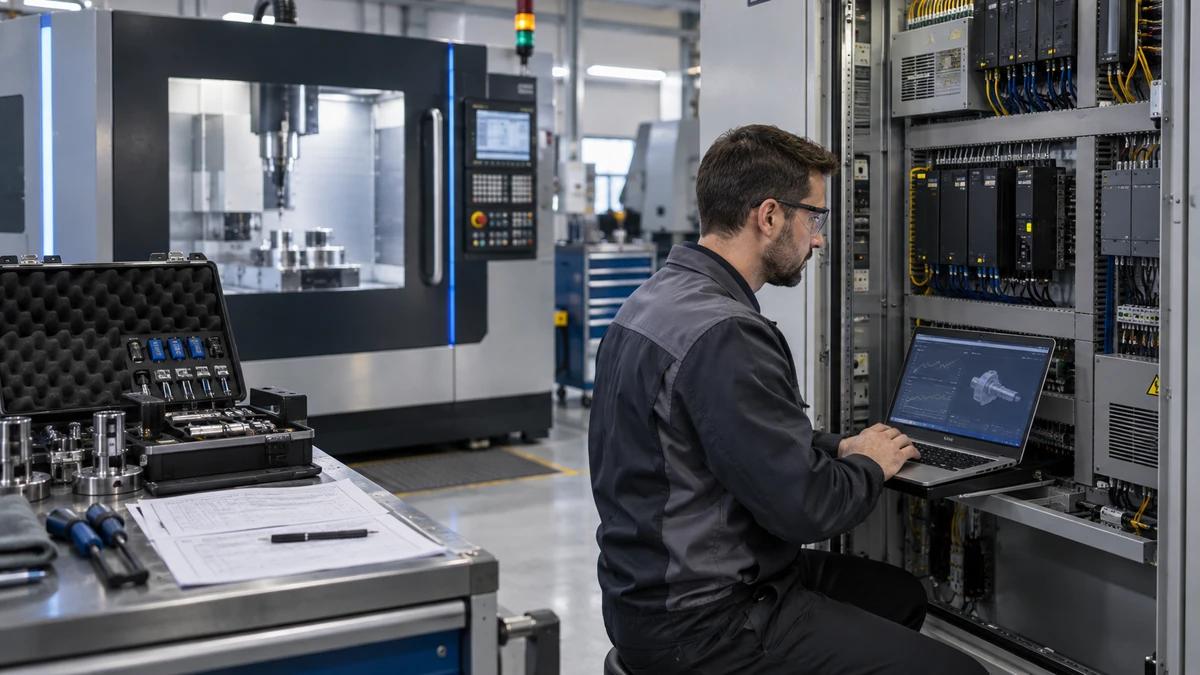
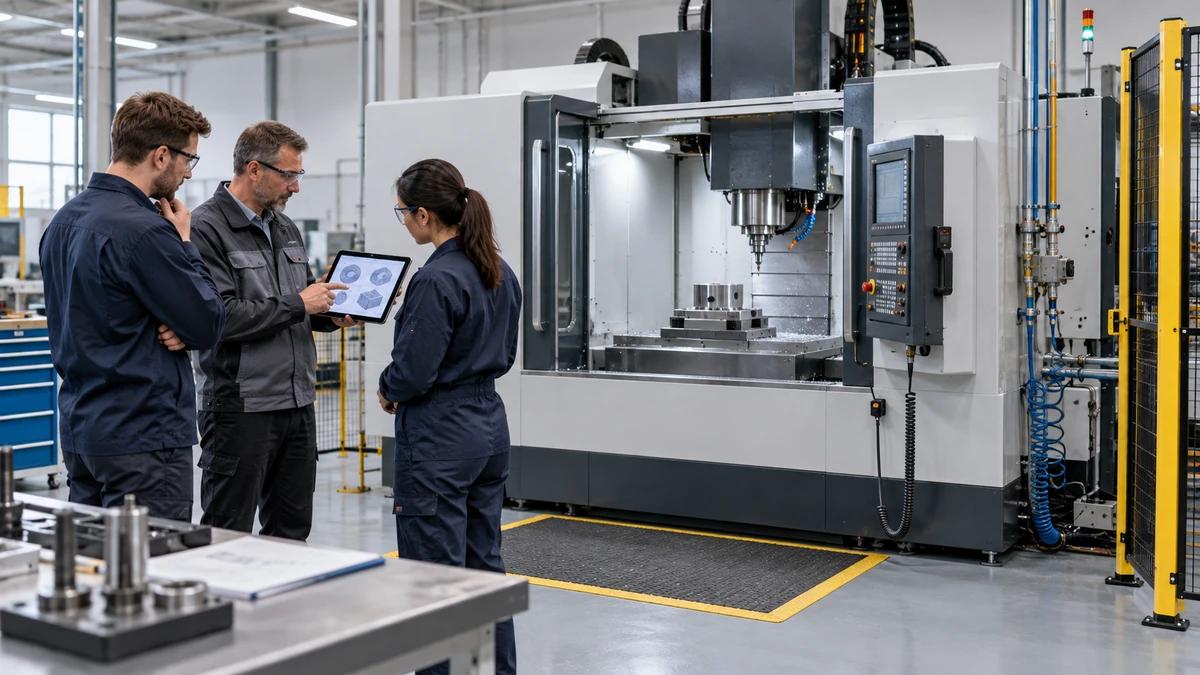
Gantry Machining Center for Heavy-Duty Precision Metal Processing: What Factory Buyers Should Know
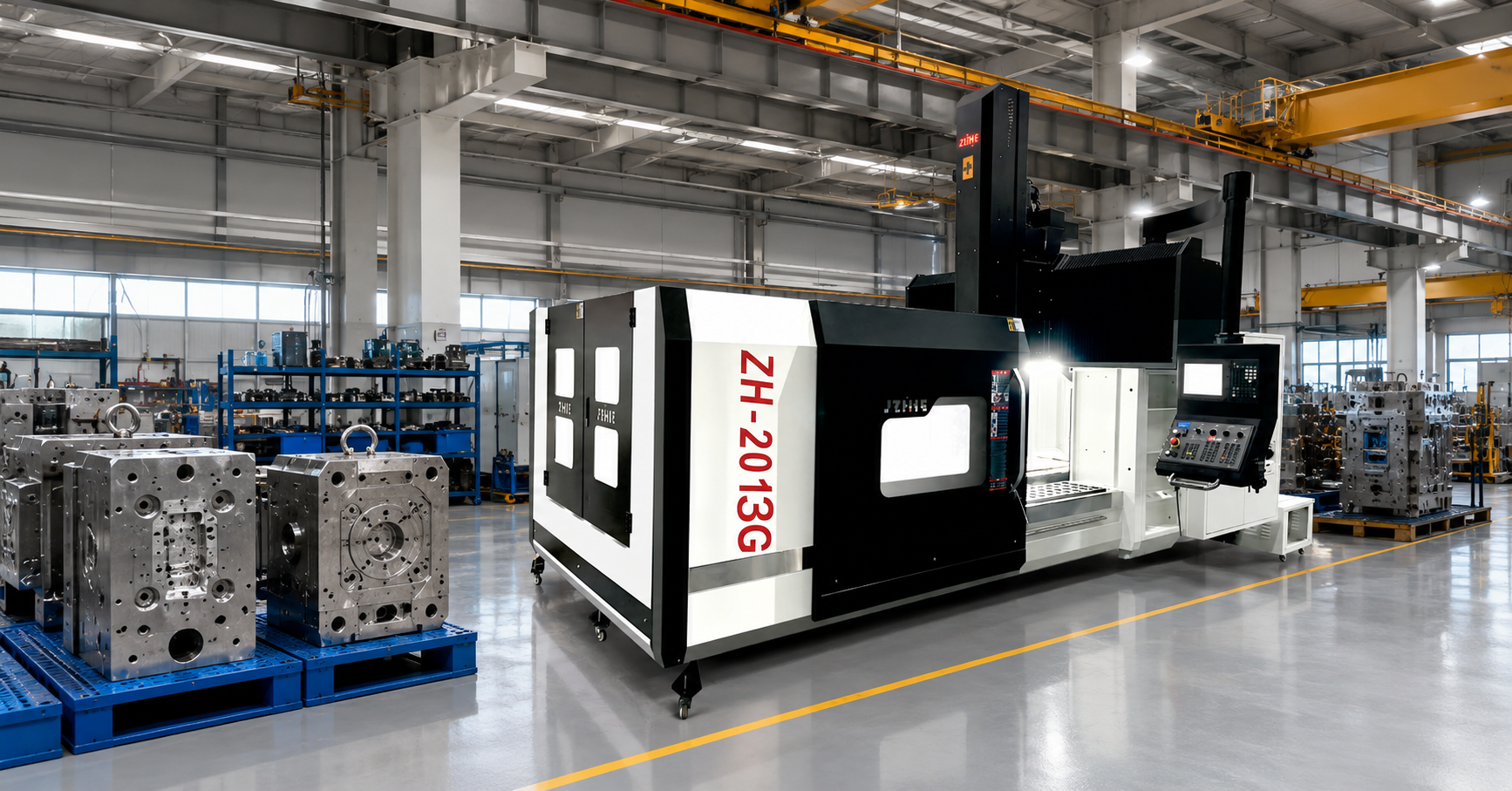
A gantry machining center is usually considered when ordinary machining capacity is no longer enough. The parts may be too large, too heavy, too deep, or too demanding for a standard vertical machining center. In many factories, the problem is not only that the workpiece is oversized. The harder issue is keeping cutting stability, geometry, surface consistency, and repeatable accuracy across long machining cycles.
Zhihe CNC’s product page positions this machine as a high-rigidity gantry machining solution for heavy-duty cutting and large-part precision machining. The page describes a fixed-beam structure, heavy-duty roller linear guides on X/Y axes, a four-sided rectangular hard rail on the Z-axis, and a hybrid guideway configuration intended to balance high-speed feed, heavy cutting, rough machining, and precision finishing. It also lists applications such as automotive engine blocks, transmission housings, wind power components, hydraulic equipment parts, heavy machinery structures, automation equipment bases, large precision molds, industrial metal fabrication, and energy equipment manufacturing.
For B2B buyers searching for a gantry machining center manufacturer, CNC gantry machining center supplier, or heavy duty CNC machining center, the main question is rarely “Which machine looks stronger?” A better question is: can this machine support the real part size, cutting load, fixture method, accuracy target, operator workflow, and long-term service model required by the factory?
Why Heavy-Duty Metal Processing Needs a Gantry Structure
Large metal parts create problems that smaller parts do not. Once a workpiece becomes wider, heavier, or structurally more complex, the machining process starts to depend heavily on machine rigidity and support geometry. A small part may be clamped quickly on a standard vertical machining center. A large mold, heavy plate, machine base, or structural component needs a different level of support.
A heavy duty gantry machining center is designed around this reality. The gantry layout gives the machine a broad working structure, and the workpiece can be supported on a large table. In the Zhihe product description, the columns and crossbeam remain stationary while the worktable moves along the X-axis. This fixed-beam architecture is intended to reduce thermal deformation and provide a stable foundation for high-precision, high-efficiency machining.
That detail matters. When the machine structure is not stable enough, problems can appear gradually. The cutter may chatter during heavy milling. Deep cavities may become harder to finish cleanly. Large surfaces may show inconsistency. Heavy workpieces may force the operator to reduce cutting parameters. Cycle time becomes longer, and accuracy becomes harder to defend.
A gantry machine is not bought because it looks impressive. It is bought because the part demands more support, more rigidity, and a more controlled machining environment.
What the Fixed-Beam Design Means for Buyers
The fixed-beam structure is one of the most important points in this product page. A fixed-beam gantry machining center keeps the columns and crossbeam stationary while the table moves along the X-axis. This architecture is useful when the buyer needs a rigid reference structure for heavy-duty cutting. Zhihe states that this design helps minimize thermal deformation and supports precision machining operations.
For factory buyers, this should lead to several practical questions.
How large is the workpiece?
How heavy is the workpiece?
How will it be loaded?
How much table support is required?
How aggressive is rough milling?
What finishing tolerance must be held after long cutting cycles?
Does the process involve deep cavities, interrupted cutting, or heavy side loads?
Will the machine run one-off large parts or repeated batch production?
These questions are not theoretical. They decide whether the gantry structure is truly suitable. A buyer should avoid treating “gantry” as a general upgrade word. The machine must be matched to actual part geometry and production method.
Guideway Configuration: Why It Deserves More Attention Than Many Buyers Give It
The product page describes an advanced guideway configuration: X and Y axes use high-rigidity heavy-duty roller linear guides, while the Z-axis adopts a four-sided embracing rectangular hard rail structure. Zhihe describes this as a “two linear guides + one hard rail” hybrid configuration that balances high-speed feed performance, heavy-duty cutting capability, stable rough machining, and precision finishing.
This matters because guideway design affects how the machine behaves under load. Heavy-duty metal processing is not always smooth and gentle. The tool may enter and exit material repeatedly. The cutter may remove large amounts of metal. Deep cavities and structural ribs may create interrupted cutting. Long tools can add leverage. In those conditions, the machine must resist vibration, torsion, and offset loads.
A factory buyer should not only ask whether the machine has “linear guide” or “hard rail.” The better question is how the guideway arrangement fits the cutting task. Roller linear guides can support responsive feed movement and load capacity. A rectangular hard rail on the Z-axis can support rigidity where vertical cutting force and offset load become more obvious. The value lies in the combination.
Main Technical Areas Buyers Should Compare
| Technical Area | What Buyers Should Check | Why It Matters in Heavy-Duty Machining |
|---|---|---|
| Machine Structure | Fixed beam, column rigidity, base support, table movement design | Determines whether the machine can stay stable with large parts |
| Guideway Configuration | X/Y roller linear guides, Z-axis hard rail, lubrication and protection | Affects feed response, rigidity, and resistance to cutting load |
| Spindle System | Power, torque, speed range, cooling, tool interface | Decides whether the machine can handle roughing and finishing needs |
| Work Envelope | X/Y/Z travel, table size, allowable workpiece dimensions | Ensures the machine fits actual parts, not only catalog expectations |
| Table Load | Maximum load, table support, loading method | Critical for molds, plates, castings, and structural components |
| Accuracy Verification | Laser calibration, ballbar test, trial cutting, inspection reports | Helps buyers verify repeatability and machine health before shipment |
| Fixture Strategy | Clamping method, datum recovery, crane access, setup space | Reduces setup time and avoids workpiece movement |
| Service Support | Installation, foundation advice, training, spare parts, remote support | Protects long-term machine uptime |
This table can be used as a first-stage sourcing checklist. Before asking for price, buyers should fill in the required values for each area based on their own workpieces.
Where This Gantry Machining Center Fits in Production
The Zhihe product page lists applications including automotive engine blocks, transmission housings, wind power components, hydraulic equipment parts, heavy machinery structural components, automation equipment bases, large precision molds, industrial metal fabrication, and energy equipment manufacturing.
These applications share one common need: stable metal removal on medium-to-large or heavy workpieces. The part may not always require ultra-high spindle speed. It may require rigidity, table support, tool stability, and a machine structure that can stay predictable during long processing cycles.
For automotive engine blocks and transmission housings, the buyer may care about consistency across mounting surfaces, bores, and reference planes. For wind power and energy equipment, the part size and weight may be the starting challenge. For hydraulic parts, surface geometry and hole-position consistency can affect assembly. For large molds, rough-to-finish stability is essential. A mold cavity that shifts dimensionally after long roughing will create problems in finishing and validation.
This is why the main keyword gantry machining center should be connected to process fit, not only machine size.
Rough Machining and Finish Machining Need Different Strengths
Heavy-duty production often includes both rough machining and finish machining. Rough machining requires material removal capability, rigidity, and resistance to vibration. Finish machining requires stable geometry, smooth movement, thermal control, and repeatability.
Zhihe’s product page specifically states that the hybrid guideway configuration is intended to handle rough milling, deep cavity machining, interrupted cutting, complex structural part processing, and precision surface finishing. This is an important point because many buyers make the mistake of thinking about only one side of the process.
A machine that is strong in roughing but unstable in finishing may save time early and lose it later during correction. A machine that finishes well but cannot remove material efficiently may not be economical for heavy workpieces. A strong large part machining center must support both stages in a balanced way.
Before buying, ask the supplier to discuss a typical roughing-to-finishing process for your part. What cutter diameter is expected? What depth of cut is realistic? What clamping method is recommended? What stock allowance should remain before finishing? How long will the machine run before final dimensional checks? These questions reveal whether the supplier understands real heavy-duty machining.
Accuracy Should Be Verified, Not Assumed
Zhihe’s homepage states that selected models can be inspected through laser interferometer calibration, ballbar testing, and trial cutting before delivery. It also states that selected models support positioning accuracy up to ±0.005 mm and repeatability up to ±0.003 mm depending on machine series, model, travel size, and configuration.
For a gantry machining center, buyers should be careful with accuracy claims. Large machines are more sensitive to installation, foundation, temperature, leveling, and load distribution. Accuracy on paper is useful, but it must be supported by a testing method.
ISO 230-2 specifies methods for testing and evaluating positioning accuracy and repeatability of numerically controlled machine tool axes by direct measurement. ISO 230-4 covers circular tests for numerically controlled machine tools. These standards show why professional buyers often request measurement reports rather than relying only on brochure wording.
A serious CNC gantry machining center supplier should be able to explain which tests are performed, what conditions apply, and how the buyer should interpret the results.
Factory Layout and Installation Planning
Large gantry machines need more planning than compact vertical machines. Buyers should think about the shop floor before the machine is ordered. Foundation quality, crane access, machine placement, operator space, chip handling, coolant management, electrical requirements, and maintenance clearance all affect daily use.
Zhihe’s website describes a workflow from workpiece information to recommendation, proposal, trial cutting, delivery, installation, training, and after-sales support. That workflow is useful for gantry machining projects because the machine is usually part of a larger production decision. A buyer may need to prepare the foundation, review loading routes, coordinate delivery, and train operators before production can begin.
In large-part manufacturing, installation mistakes can be expensive. Poor leveling, insufficient foundation, or awkward crane access can reduce machine performance before cutting even starts. That is why buyers should ask for foundation preparation guidance and installation planning early.
Supplier Capability Is Part of the Machine Value
A gantry machining center is not a simple catalog purchase. It often requires application review, part drawing discussion, process planning, delivery coordination, and after-sales support. Zhihe’s product page states that the machine is manufactured by Zhongshan Zhihe CNC Technology Co., Ltd., a national high-tech enterprise specializing in CNC machine tool R&D, manufacturing, sales, and customized industrial machining solutions. The homepage also states that the company manufactures vertical, horizontal, gantry, drilling and tapping, and five-axis machining centers for industries such as automotive, 3C electronics, lithium battery, photovoltaic, robotics, and precision metal parts manufacturing.
For B2B buyers, supplier capability affects risk. A weak supplier may send a quotation quickly, but may not support the buyer during foundation planning, trial cutting, fixture discussion, spare parts preparation, or operator training. A reliable gantry machining center manufacturer should be able to discuss the machine as part of a production system.
Common Buying Mistakes
One common mistake is choosing by machine size alone. A larger machine is not automatically better if the spindle, table load, guideway configuration, or fixture method does not match the part.
Another mistake is focusing only on rough cutting. Buyers sometimes ask whether the machine can remove material aggressively but forget that finishing quality decides whether the part passes inspection.
A third mistake is ignoring installation. A gantry machine installed on an unsuitable foundation may not perform as expected.
The fourth mistake is accepting accuracy claims without test evidence. For serious B2B purchasing, inspection reports, trial cutting, and calibration data matter.
The final mistake is comparing only the initial price. The cost of downtime, poor service, slow spare parts, rework, and part rejection can be much higher than a small difference in quotation.
FAQ
What is a gantry machining center used for?
A gantry machining center is used for machining large, heavy, or complex metal parts. Zhihe lists applications such as automotive engine blocks, transmission housings, wind power components, hydraulic equipment parts, heavy machinery structural components, large precision molds, and energy equipment manufacturing.
Why does the fixed-beam structure matter?
A fixed-beam structure keeps the columns and crossbeam stationary while the table moves along the X-axis. This supports rigidity and helps reduce deformation risk during heavy-duty machining.
What should buyers confirm before ordering?
Buyers should confirm workpiece size, weight, material, machining process, table load, travel, spindle torque, guideway configuration, accuracy verification, fixture method, foundation requirements, delivery plan, and after-sales support.
Is a gantry machining center better than a vertical machining center?
Not always. A gantry machining center is better when the workpiece is large, heavy, or structurally demanding. A vertical machining center may be more economical for small-to-medium parts.
Why should buyers request trial cutting?
Trial cutting helps confirm whether the machine can handle the buyer’s actual material, fixture method, cutting strategy, and accuracy requirement. It is more reliable than judging only by machine appearance or catalog text.
Conclusion
A gantry machining center is a practical choice when a factory needs stable machining for large molds, heavy plates, oversized parts, structural components, and demanding industrial metal work. The Zhihe product page emphasizes fixed-beam rigidity, X/Y heavy-duty roller linear guides, Z-axis four-sided rectangular hard rail structure, hybrid guideway balance, heavy cutting, rough milling, deep cavity machining, and precision surface finishing.
For B2B buyers, the best decision should begin with the workpiece, not the brochure. Define the part size, material, weight, accuracy target, process flow, fixture method, and production volume first. Then compare machine architecture, guideway design, spindle capability, accuracy verification, supplier support, and installation planning.
A reliable heavy duty gantry machining center should not only cut metal. It should help the factory create a more stable, repeatable, and predictable process for large-part production.