The Budget Is Larger Than the Machine
Gantry machining center price is the sum of a declared work envelope, machine configuration, site preparation, tooling, logistics, acceptance, training, service and operating risk. Zhihe CNC starts with the complete workpiece and delivery route. A headline figure is not comparable until both proposals include the same spans, travels, loads, spindle duty, controls, accessories and ownership boundaries.
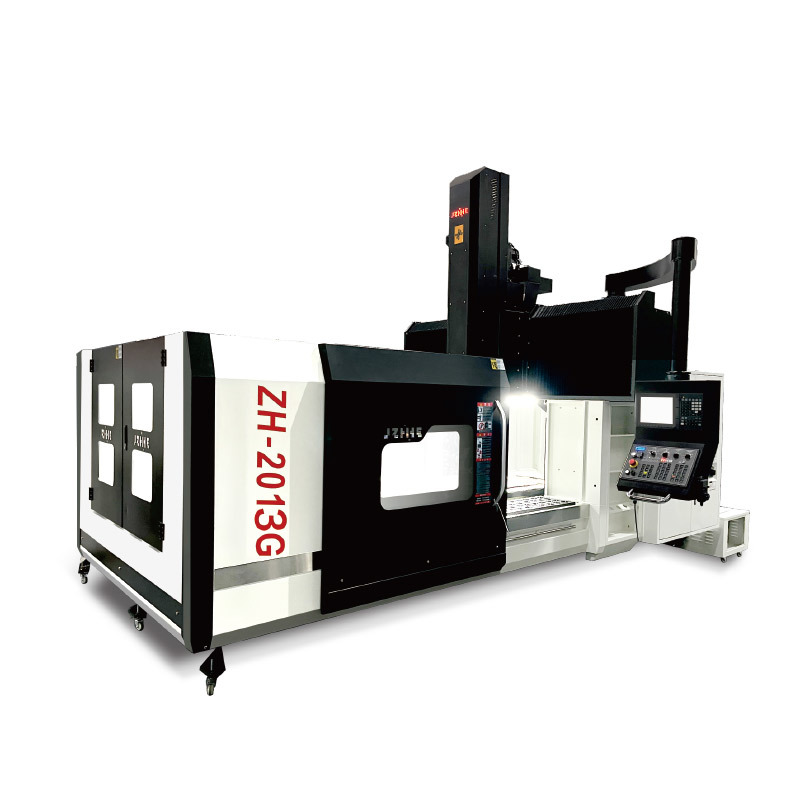
Open the Seven-Line Budget Ledger
| Budget line | Typical scope | Question before approval |
|---|---|---|
| Machine platform | Span, travels, table, load, spindle, controller and options | What exact configuration is priced? |
| Site and civil work | Foundation, utilities, drainage, environment and access | Who prepares and validates the site? |
| Process package | Fixtures, tools, probes, gauges, coolant and chip handling | What is needed for the target part? |
| Logistics | Packing, transport, lifting, insurance and placement | Where does supplier responsibility end? |
| Acceptance | Trial material, programming, inspection, travel and documents | What evidence releases payment? |
| People and service | Training, spares, support, maintenance and escalation | Who restores production? |
| Risk reserve | Changes, delays, rework and missing interfaces | Which assumptions remain open? |
Line 1: Price the Mounted Envelope
Define maximum and representative workpieces with fixtures, supports, clamps, lifting points, tool reach and service clearance. Price the span, axis travels, table and load needed by this envelope, not an oversized slogan. For gantry machining center price review, Zhihe CNC separates required capacity from optional headroom so buyers can see what each increment solves.
Line 2: Describe Spindle Duty
Record materials, stock condition, removal pattern, tool diameters, engagement, speed, torque need, tool length and surface requirements. A spindle selected for light finishing is not automatically equivalent to one configured for sustained heavy cutting. Price should connect to the declared duty and test, while avoiding unsupported claims about every material or cutting condition.
Line 3: Make Civil Work Visible
Foundation design, floor loading, anchors, power, air, coolant, drainage, temperature, access and safety interfaces can materially affect installed cost and schedule. Name the design owner, required site data, review dates and validation steps. Zhihe CNC recommends closing site questions before shipment because late civil changes can be more expensive than an early configuration decision.
Three Budget Scenarios
| Scenario | Value driver | Watch point |
|---|---|---|
| Minimum compliant | Meets declared envelope and acceptance | Little room for future parts |
| Balanced production | Adds useful tooling, chip, inspection and service capacity | Needs a realistic part mix |
| Expansion-ready | Reserves interfaces, load or automation space | Headroom must have a funded use case |
Compare scenarios against the same workpiece family and production horizon. More capacity is not automatically more value; less capacity is not automatically lower risk.
Line 4: Put Tooling and Inspection Beside the Machine
List fixtures, angle heads when relevant, holders, cutters, probes, presetting, gauges, alignment tools, coolant equipment and chip handling. State which items are production-ready and which are temporary trial equipment. Gantry machining center price can appear lower when the process package is moved outside the quote, so normalize responsibility before comparing totals.
Line 5: Trace the Delivery Route
Document packing dimensions, transport limits, permits, insurance, unloading, crane capacity, door and aisle clearances, placement, assembly and waste removal. Identify risk transfer and damage inspection points. For large machines, a delivery interface can stop installation even when the equipment itself is ready. Zhihe CNC includes logistics evidence in the commercial schedule.
Line 6: Budget Acceptance Work
Acceptance consumes sample material, programming, fixtures, tools, inspection capacity, travel, training and document preparation. Define factory and site tests, measurement methods, declared conditions, pass limits, held-work rules and correction ownership. ISO references can inform machine tests, but the buyer still needs a workpiece-specific acceptance file and payment logic.
Line 7: Price Service Continuity
Record response channel, remote support, on-site coverage, spare list, lead times, backups, preventive maintenance, training and escalation. State regional limits and third-party interfaces. A lower purchase figure can carry higher recovery risk if support is undefined. Zhihe CNC treats service as a priced ownership lane rather than a general promise.
Tie Payment to Evidence
- Configuration freeze: approved scope, drawings, interfaces and exclusions.
- Factory readiness: assembly and inspection records available.
- Factory acceptance: declared tests and open issues recorded.
- Delivery and installation: site, logistics and utilities confirmed.
- Site acceptance: workpiece and machine evidence accepted.
- Handoff: training, backups, spares and service route delivered.
Payment milestones should identify a document or result, not only a calendar date.
Model the Cost of Change
Preserve the baseline quote and record the delta when workpiece, fixture, spindle, controller, tool, site, logistics, gauge, schedule or service conditions change. Reprice only the affected lanes and name the evidence that must be repeated. This makes gantry machining center price changes understandable instead of allowing scope and cost to drift together.
Compare Risk-Adjusted Ownership
Review missing options, civil uncertainty, logistics exposure, tool life, inspection capacity, service lead time, spare availability and acceptance delay. Do not assign invented savings. Use a range or scenario tied to declared assumptions. Zhihe CNC supports a higher figure only when the evidence shows which risk, delay or operating cost is reduced and where the conclusion stops.
Buyer FAQ: Gantry Machining Center Price
Why can two gantry quotes differ greatly?
They may include different spans, travels, loads, spindles, controls, site work, process equipment, logistics, acceptance and service.
Should buyers request a fixed public price?
A reliable quotation usually requires workpiece, material, envelope, duty, site, logistics, acceptance and service information.
What site costs are commonly missed?
Foundation, utilities, drainage, environment, access, lifting, assembly space and validation can be overlooked.
How should tooling be compared?
Normalize fixtures, heads, holders, cutters, probes, presetting, gauges, coolant and chip handling.
Why budget acceptance separately?
Trials consume engineering, material, tools, inspection, travel, correction and document work.
What should payment milestones use?
Tie milestones to configuration, factory evidence, delivery, installation, site acceptance, training and handoff.
How should expansion capacity be judged?
Connect headroom to a defined future part, interface, time horizon and funded business case.
How does Zhihe CNC discuss price changes?
Zhihe CNC preserves the original scope and reprices the affected budget lanes with a documented reason.
Does machine price include product certification?
Not automatically. Machine acceptance and downstream product or regulatory approval are separate unless contracted and tested.
What should buyers send for a comparable quote?
Send workpiece envelopes, materials, duty, fixtures, tools, volumes, site, logistics, inspection and service requirements.
Run a Budget Sensitivity Review
Change one assumption at a time: workpiece envelope, table load, spindle duty, controller or head option, fixture scope, site readiness, transport route, crane availability, acceptance travel, spare package or service region. Record which budget lines move and why. Gantry machining center price is easier to approve when management can see the cost consequence of each requirement instead of receiving a revised total with no visible delta.
Use low, expected and constrained scenarios only when their conditions are explicit. Do not invent savings or payback. For example, a prepared foundation may reduce installation uncertainty, while a restricted transport route may add disassembly or lifting work. Zhihe CNC keeps scenario assumptions beside the number so a later change can be reconciled to the original commercial decision.
Create an Installed-Readiness Certificate
Before production release, confirm machine configuration, utilities, foundation records, alignment, guarding interfaces, tools, fixtures, programs, inspection, training, backups, spares, maintenance and service contacts. List open issues with owners, evidence and target dates. Installed readiness is not the same as physical arrival; it is the point at which the declared acceptance route can run and be supported.
After the first production window, compare planned and actual installation work, training gaps, service requests, tool consumption, inspection capacity and open limitations. This review improves the ownership model without rewriting the original baseline. It also shows whether a higher or lower quotation affected the interfaces that matter after the machine enters the plant. Record an owner, supporting document and next review date for each unresolved cost item.
Protect the Contingency With Triggers
A contingency allowance should not be a vague percentage. Tie each reserve to an open condition such as incomplete foundation data, uncertain transport access, pending fixture design, unconfirmed sample material, a third-party head, site power work or regional service travel. Give the condition an owner, evidence request, decision date and rule for releasing or consuming the reserve.
At each milestone, reconcile committed cost, remaining exposure and scope changes against the original ledger. Preserve credits as carefully as additions. This prevents contingency from becoming an automatic price increase and lets management see which uncertainty has actually been retired. The result is a living budget record that remains useful from quotation through installation and the first production review.
Open the Zhihe CNC Engineering Review
Send Zhihe CNC the controlled drawing or CAD model, material and stock condition, annual volume, batch mix, datum plan, fixture concept, tool constraints, inspection method, site utilities and service region. Review the Zhihe CNC machine portfolio, the company and manufacturing profile, and the engineering inquiry route. For gantry machining center price, request a dated configuration, trial boundary, acceptance record, open-assumption list and named service owner before commercial approval.
Standards and Safety Context
The ISO 230-2 positioning reference provides machine-test context, while the OSHA machine-guarding guidance provides an additional reference for testing or safeguarding. These references do not replace the buyer's drawing-specific acceptance plan, local risk assessment, product certification or legal obligations.