Gantry Machining Center vs Other CNC Machining Centers: How Buyers Should Choose for Heavy Parts
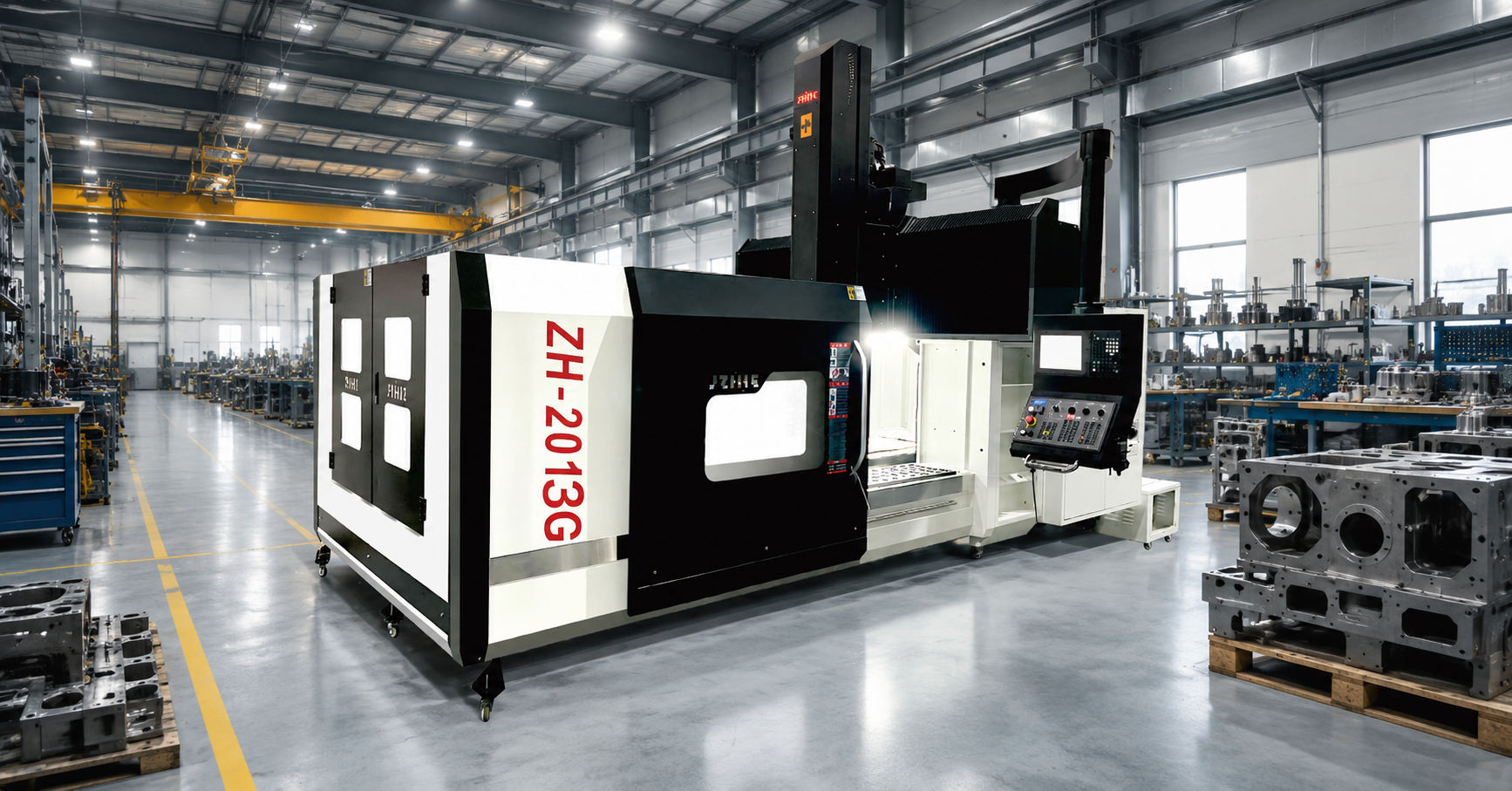
A factory does not choose a gantry machining center because the machine looks larger than other CNC equipment. It chooses one when the workpiece forces the decision. Large molds, heavy plates, oversized frames, automation bases, energy components, and heavy machinery structures can push a standard machine beyond its practical comfort zone. At that point, the buyer must compare machine architecture, not just catalog names.
Zhihe CNC manufactures vertical, horizontal, gantry, drilling and tapping, and five-axis machining centers for industries such as automotive, 3C electronics, lithium battery, photovoltaic, robotics, and precision metal parts manufacturing. Its homepage positions gantry machining centers as suitable for large molds, heavy plates, oversized parts, and structural components, with the key capability of heavy-duty gantry structure, strong cutting rigidity, and large workpiece stability.
The product page for Zhihe’s Gantry Machining Center for Heavy-Duty Precision Metal Processing focuses on a fixed-beam gantry structure, heavy-duty roller linear guides on X/Y axes, a four-sided rectangular hard rail on the Z-axis, and a hybrid guideway configuration designed for rough milling, deep cavity machining, interrupted cutting, complex structural part processing, and precision surface finishing.
For sourcing teams, this article explains how to decide when a gantry machining center makes more sense than other CNC machine types.
Start with the Part Family
The first decision is not the machine. It is the part family.
A small precision bracket may be machined efficiently on a vertical machining center. A box-type housing may benefit from a horizontal machining center. A small aluminum component with many holes may be better on a drilling and tapping center. A curved aerospace-style component may need five-axis machining. A large mold, heavy plate, oversized base, or structural component may point toward a gantry machining center.
Zhihe’s homepage provides a similar selection logic: small precision metal parts are matched with vertical machining centers; long aluminum profiles with vertical profile machining centers; large molds and plates with gantry machining centers; box-type parts with horizontal machining centers; high-volume drilling and tapping with drilling and tapping centers; and complex curved parts with five-axis machining centers.
That logic is useful because it keeps buyers from overgeneralizing. A gantry machine is not the best choice for every job. It is the right starting point when part size, weight, rigidity requirements, or support area become central.
Gantry Machining Center vs Vertical Machining Center
A vertical machining center is often the first production machine many buyers consider. It is flexible, widely used, and suitable for many small-to-medium metal parts, molds, plates, and precision components. But once the workpiece becomes too large or too heavy, a vertical machine may face practical limits.
The main difference is support. A gantry machining center is built around a broader structure and a larger work zone. Zhihe’s product page states that its gantry machine uses a fixed-beam structure where columns and crossbeam remain stationary while the worktable moves along the X-axis. This structure is designed to support rigidity and reduce thermal deformation during high-precision, high-efficiency machining.
A vertical machining center may still be the better choice when the part is smaller, setup is simple, floor space is limited, and the machine does not need to handle oversized loads. A gantry machining center becomes more relevant when the buyer must machine larger workpieces without forcing the machine beyond its stable cutting window.
Gantry Machining Center vs Horizontal Machining Center
A horizontal machining center is commonly used for box-type parts, multi-face machining, and continuous production. Zhihe’s homepage lists horizontal machining centers as suitable for box-type parts, automotive components, and multi-face machining, with stable multi-side processing and continuous production efficiency.
A gantry machining center solves a different problem. It is more focused on large workpiece support, heavy cutting rigidity, and machining of large molds, plates, and structural components. It may not offer the same multi-face access logic as a horizontal machining center, but it can be more practical when the part is broad, flat, heavy, or difficult to support in a horizontal configuration.
For example, a large mold base may fit better on a gantry table. A box-type housing that needs several faces machined in one setup may be better on a horizontal machining center. The buyer should not ask which machine is “better.” The buyer should ask which machine reduces setup risk and improves repeatability for the actual part.
Gantry Machining Center vs Drilling and Tapping Center
A drilling and tapping center is usually optimized for high-speed drilling, tapping, and light-to-medium machining on smaller parts. Zhihe’s homepage lists drilling and tapping machining centers as best for 3C parts, aluminum components, small brackets, and batch drilling and tapping, with high-speed spindle, fast tool change, and efficient light metal machining.
That is very different from a heavy duty CNC machining center. A gantry machine is not chosen because it is the fastest for small tapped holes. It is chosen because it can support large, heavy, or rigid workpieces under demanding cutting conditions.
If the buyer’s main task is high-volume drilling and tapping on aluminum parts, a drilling and tapping center may be more efficient and economical. If the buyer must machine large plates, structural bases, or heavy molds, a gantry machining center is more logical.
Gantry Machining Center vs Five-Axis Machining Center
Five-axis machining centers are used for complex curved surfaces, precision molds, and high-value components. Zhihe’s homepage lists five-axis machining centers as best for complex curved surfaces, precision molds, and high-value components, with multi-axis contour machining and complex part processing.
A gantry machining center and a five-axis machining center can overlap in some mold and structural applications, but their priorities differ. A five-axis machine focuses on tool orientation and complex surface access. A gantry machining center focuses on large workpiece support and heavy-duty cutting stability.
A buyer should consider five-axis machining when repeated setups are causing accuracy loss on complex surfaces, or when angled features and sculpted geometry require simultaneous multi-axis control. A buyer should consider gantry machining when the part size, weight, and cutting load are the primary challenge.
Some factories may eventually need both. Large mold shops, for example, may rough or semi-finish large components on a gantry machine and use specialized equipment for complex finishing depending on part geometry.
CNC Machine Type Comparison
| Machine Type | Best-Fit Workpieces | Main Strength | When It May Not Fit |
|---|---|---|---|
| Gantry Machining Center | Large molds, heavy plates, oversized parts, structural components | Strong support, heavy cutting rigidity, large workpiece stability | Not ideal for very small parts where a compact machine is faster and cheaper |
| Vertical Machining Center | Small-to-medium molds, plates, precision metal parts | Flexibility, compact layout, common process knowledge | Limited when parts become too large, heavy, or long |
| Horizontal Machining Center | Box-type parts, automotive components, multi-face parts | Multi-side processing, chip evacuation, continuous production | May not suit very broad plates or large flat molds |
| Drilling & Tapping Center | 3C parts, aluminum components, small brackets | High-speed drilling/tapping and fast tool change | Not suitable for heavy-duty large-part cutting |
| Five-Axis Machining Center | Complex curved surfaces and high-value components | Multi-axis contour machining and reduced setups | May be unnecessary for large flat parts or simple heavy plates |
This comparison helps buyers avoid choosing a machine based on brand image or machine size alone. Each architecture solves a different problem.
Why Gantry Machines Are Often Selected for Large Molds and Heavy Plates
Large molds and heavy plates create load, reach, and stability challenges. The cutter may need to travel across a large surface. The machine may need to rough out deep cavities. The workpiece may stay on the machine for long hours or even several shifts. The process may include roughing, semi-finishing, finishing, drilling, and tapping.
Zhihe’s gantry product page specifically mentions rough milling, deep cavity machining, interrupted cutting, complex structural part processing, and precision surface finishing. This combination fits the production reality of large mold and heavy plate machining.
In such applications, rigidity becomes a business issue, not just a technical word. Poor rigidity can slow cutting parameters, increase tool wear, reduce surface quality, and require additional finishing work. Stable structure can help the factory maintain more predictable cycle times and reduce rework.
What Buyers Should Check Before Choosing a Gantry Machine
A buyer considering a CNC machining center for heavy parts should collect part and process information before talking to suppliers.
Workpiece size and weight.
Main material.
Roughing stock allowance.
Finishing tolerance.
Surface finish requirement.
Tooling strategy.
Maximum cutter diameter.
Deepest pocket or cavity.
Number of setups.
Loading method.
Foundation condition.
Crane access.
Batch size.
Inspection method.
Then the buyer can discuss machine fit with a gantry machining center supplier.
Zhihe’s homepage describes a process where buyers send drawings or workpiece information, confirm material, size, and accuracy requirements, receive a machine recommendation, review proposal and quotation, perform trial cutting if needed, then proceed with delivery, installation, training, and after-sales support. This is a practical approach for heavy-part machine selection.
Accuracy Verification and Acceptance
Accuracy should be verified by evidence, especially for large CNC machines. Zhihe’s homepage states that machines can be checked through assembly, calibration, trial cutting, and final inspection before packing and shipment. It also lists quality checks such as machine bed inspection, spindle testing, assembly inspection, laser interferometer calibration, ballbar testing, trial cutting, final inspection, and packing and shipment.
For buyers, this is important because acceptance is easier when testing criteria are agreed before shipment. ISO 230-2 provides methods for evaluating positioning accuracy and repeatability of numerically controlled machine tool axes, while ISO 230-4 covers circular tests for CNC machine tools.
A buyer should ask the supplier to define:
Pre-shipment inspection scope.
Laser calibration report availability.
Ballbar test availability.
Trial cutting method.
Test material and part geometry.
Installation acceptance procedure.
Geometric accuracy check after installation.
Warranty and adjustment support.
This avoids later arguments about what “precision” means.
How to Think About ROI
A gantry machining center can be a significant investment. ROI should not be calculated only by machine price. The better calculation includes setup time reduction, heavier workpiece capability, roughing efficiency, finishing stability, fewer rejected parts, lower outsourcing dependence, and improved delivery reliability.
A factory machining large plates may benefit from larger table support and fewer setups. A mold manufacturer may benefit from more stable rough-to-finish processing. A heavy machinery supplier may benefit from machining parts that previously required several machines or outsourcing. An energy equipment manufacturer may benefit from predictable long-cycle machining.
The ROI question should be phrased clearly: What production problem will this gantry machining center solve that our current equipment cannot?
Buying Decision Table
| Buyer Situation | Better Machine Direction | Reason |
|---|---|---|
| Large molds and heavy plates are the main workpieces | Gantry machining center | Better support area and heavy cutting rigidity |
| Small precision metal parts dominate production | Vertical machining center | More economical and compact for smaller parts |
| Box-type components need multi-face machining | Horizontal machining center | Better access to multiple sides and continuous processing |
| Aluminum brackets need high-volume drilling and tapping | Drilling and tapping center | Faster for light metal drilling/tapping workloads |
| Complex curved parts require tool angle control | Five-axis machining center | Better for multi-axis contour machining |
| Large structural bases need roughing and finishing in one setup | Gantry machining center | More stable for broad and heavy workpieces |
Common Mistakes in Machine Architecture Selection
The first mistake is choosing by machine appearance. A large machine is not automatically the right machine.
The second mistake is comparing spindle speed without considering torque, rigidity, and workpiece support. For heavy cutting, speed alone does not solve the problem.
The third mistake is ignoring fixture and loading. Large parts often require crane access, custom supports, and careful datum planning.
The fourth mistake is not defining acceptance criteria. Buyers should agree on testing and inspection before shipment.
The fifth mistake is buying for today only. If the factory expects larger molds, heavier plates, or stricter customer requirements in the next two or three years, the selected machine should leave enough room for growth.
FAQ
When should a factory choose a gantry machining center?
A factory should consider a gantry machining center when workpieces are large, heavy, broad, or structurally demanding, and when stable roughing and finishing over a larger work envelope are required.
Is a gantry machining center better than a vertical machining center?
Only for the right workpieces. A gantry machining center is better for large molds, plates, oversized parts, and structural components. A vertical machining center may be better for smaller parts and more compact production.
How is a gantry machining center different from a horizontal machining center?
A gantry machine focuses on large workpiece support and heavy cutting stability. A horizontal machining center is usually stronger for box-type parts and multi-face machining.
What applications does Zhihe list for its gantry machining center?
Zhihe lists automotive engine blocks, transmission housings, wind power components, hydraulic equipment parts, heavy machinery structural components, automation equipment bases, large precision molds, industrial metal fabrication, and energy equipment manufacturing.
What should buyers request before ordering?
Buyers should request a technical proposal based on drawings, a machine configuration recommendation, foundation and installation guidance, accuracy inspection plan, trial cutting if needed, delivery schedule, training plan, and after-sales support details.
Conclusion
A gantry machining center is not the default choice for every CNC factory. It is the practical choice when part size, weight, rigidity, and long-cycle stability become the main constraints. Compared with vertical, horizontal, drilling and tapping, or five-axis machining centers, the gantry machine is most valuable when the workpiece needs large-area support and stable heavy-duty cutting.
Zhihe’s gantry product page emphasizes fixed-beam rigidity, low thermal deformation design, X/Y heavy-duty roller linear guides, a Z-axis four-sided rectangular hard rail, heavy cutting capability, rough milling, deep cavity machining, interrupted cutting, complex structural part processing, and precision surface finishing.
For B2B buyers, the decision should begin with the workpiece family and process bottleneck. Once the factory understands part size, material, load, tolerance, setup method, and production volume, machine architecture becomes much easier to compare.
The right industrial metal machining equipment should not only fit the factory floor. It should fit the way the factory actually cuts, measures, loads, maintains, and delivers heavy parts.