HMC-1000 horizontal machining center: Buyer Guide to Accuracy, Productivity and Total Cost
Primary keyword: HMC-1000 horizontal machining center
Buyer question: What machine structure is used to maintain rigidity in the bed, column and table?

An HMC-1000 horizontal machining center should be evaluated as a complete production system, not a list of isolated specifications. This buyer guide helps engineering and sourcing teams compare structure, thermal stability, workholding, accuracy, productivity, and lifecycle cost before an RFQ is released.
Start with the part family
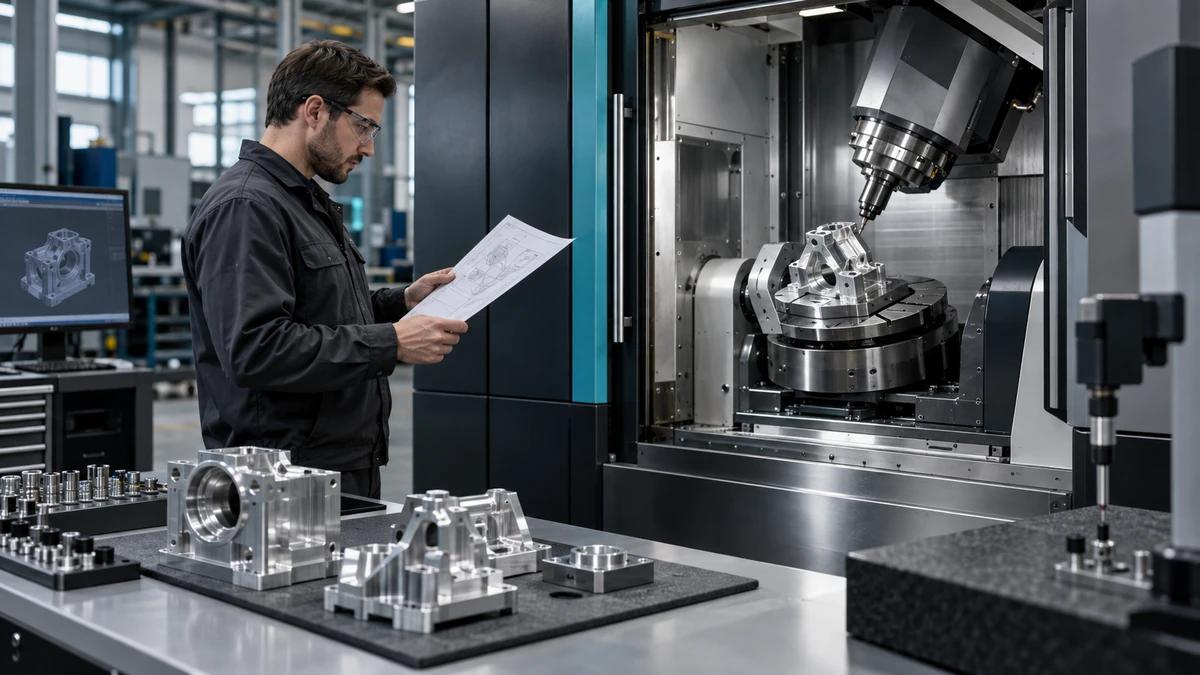
Map the complete HMC-1000 part family before comparing brochures. Record material, blank size, finished envelope, critical datums, tolerance bands, surface finish, wall thickness, annual volume, batch size, and shift pattern. Identify heavy roughing, deep bores, cross holes, interrupted cuts, and multi-face features. A useful machine recommendation explains how those features are reached, clamped, inspected, and repeated through a realistic production week. For an HMC-1000 horizontal machining center, record the evidence in the RFQ and make the supplier response traceable to the part family, production target, and acceptance plan.
Follow the load path
Bed, column, spindle head, table, pallet, fixture, and workpiece form one cutting system. Ask the supplier to describe support points, casting sections, guideway arrangement, ballscrew protection, bearing design, and table load path. Then compare those details against your heaviest cutter, longest tool overhang, deepest engagement, and maximum fixture mass rather than relying on a generic rigidity claim. For an HMC-1000 horizontal machining center, record the evidence in the RFQ and make the supplier response traceable to the part family, production target, and acceptance plan.
Verify thermal stability
Thermal movement changes with spindle speed, axis travel, coolant temperature, ambient conditions, and duty cycle. Require a warm-up routine, cooling description, compensation method, temperature monitoring approach, and an acceptance test that measures the datums that matter after representative cutting. A room-temperature positioning chart alone does not predict stable production on a long mixed-material shift. For an HMC-1000 horizontal machining center, record the evidence in the RFQ and make the supplier response traceable to the part family, production target, and acceptance plan.
Match spindle to work
Compare torque through the actual speed range, taper, drawbar force, bearing arrangement, cooling, balance limits, and through-spindle coolant. Aluminum production may need high speed and chip evacuation; steel and cast iron often need torque at lower speed. Ask for a test cut using the cutter diameter, radial engagement, axial depth, material condition, and tool extension that your process will use. For an HMC-1000 horizontal machining center, record the evidence in the RFQ and make the supplier response traceable to the part family, production target, and acceptance plan.
Plan workholding early
HMC-1000 productivity depends on tombstones, pallets, zero-point systems, hydraulic fixtures, datum repeatability, and safe loading access. Review clamp force, support locations, tool clearance, fixture weight, indexing sequence, and setup change time before the purchase order. A machine can be accurate in isolation yet produce unstable datums when the fixture permits deflection or obstructs critical faces. For an HMC-1000 horizontal machining center, record the evidence in the RFQ and make the supplier response traceable to the part family, production target, and acceptance plan.
Protect chip flow
Horizontal machining is valuable when chips can fall away from deep cavities, but chip flow still needs proof. Specify conveyor capacity, flush nozzles, coolant pressure, filtration, tank volume, mist control, access for cleaning, and recovery after a chip-heavy roughing cycle. Chip packing can damage finish, cause tool breakage, and make a fast cycle-time promise unusable in daily production. For an HMC-1000 horizontal machining center, record the evidence in the RFQ and make the supplier response traceable to the part family, production target, and acceptance plan.
Define accuracy evidence
Positioning accuracy and repeatability should be tied to your datums, inspection method, warm-up state, environmental conditions, and load condition. Agree whether the acceptance test uses a laser, ballbar, artefact, representative part, or a combination. Include a recheck after pallet change, tool change, probing cycle, and a realistic thermal soak so the result describes manufacturing performance. For an HMC-1000 horizontal machining center, record the evidence in the RFQ and make the supplier response traceable to the part family, production target, and acceptance plan.
Separate cycle-time components
A credible cycle estimate lists cutting, tool changes, probing, pallet or fixture exchange, loading, deburring assumptions, inspection, and recovery time separately. Compare accepted parts per shift rather than a single spindle-time claim. Ask for a simulation or process sheet and challenge every assumption that requires an operator decision, special tool, manual chip removal, or unplanned measurement. For an HMC-1000 horizontal machining center, record the evidence in the RFQ and make the supplier response traceable to the part family, production target, and acceptance plan.
Evaluate control and probing
Confirm the control supports program transfer, backups, tool life management, probing cycles, offset records, alarm history, and the recovery process used by your operators. Define which dimensions are measured in-process and which are verified offline. The best HMC-1000 configuration gives operators a clear response when a probe result, spindle load, vibration signal, or tool-life alarm begins to drift. For an HMC-1000 horizontal machining center, record the evidence in the RFQ and make the supplier response traceable to the part family, production target, and acceptance plan.
Review service as capacity
Commissioning, training, remote diagnostics, preventive maintenance, spare-parts availability, escalation contacts, response targets, warranty, and software backups belong in the commercial comparison. A lower purchase price can be outweighed by lost accepted parts when one wear component or parameter issue holds the machine. Request a documented support plan that names responsibilities before shipment, installation, first article, and ongoing production. For an HMC-1000 horizontal machining center, record the evidence in the RFQ and make the supplier response traceable to the part family, production target, and acceptance plan.
Compare total cost
Normalize freight, foundation, installation, utilities, tooling, fixtures, probing, training, service, energy, coolant, inspection, scrap, and planned maintenance before comparing suppliers. Use the same annual volume and utilization assumptions for every proposal. The goal is not the lowest machine price; it is a controlled process that produces accepted multi-face parts with predictable labor and recovery effort. For an HMC-1000 horizontal machining center, record the evidence in the RFQ and make the supplier response traceable to the part family, production target, and acceptance plan.
Run a representative acceptance
Freeze the drawing revision, material condition, fixture concept, tool list, program revision, cutting data, inspection plan, and acceptance limits before the factory test. Measure geometry, surface finish, cycle components, tool wear, chips, thermal state, probing results, and recovery actions. Retain the evidence so the site acceptance and first production batch can be compared against the same controlled baseline. For an HMC-1000 horizontal machining center, record the evidence in the RFQ and make the supplier response traceable to the part family, production target, and acceptance plan.
Prepare installation
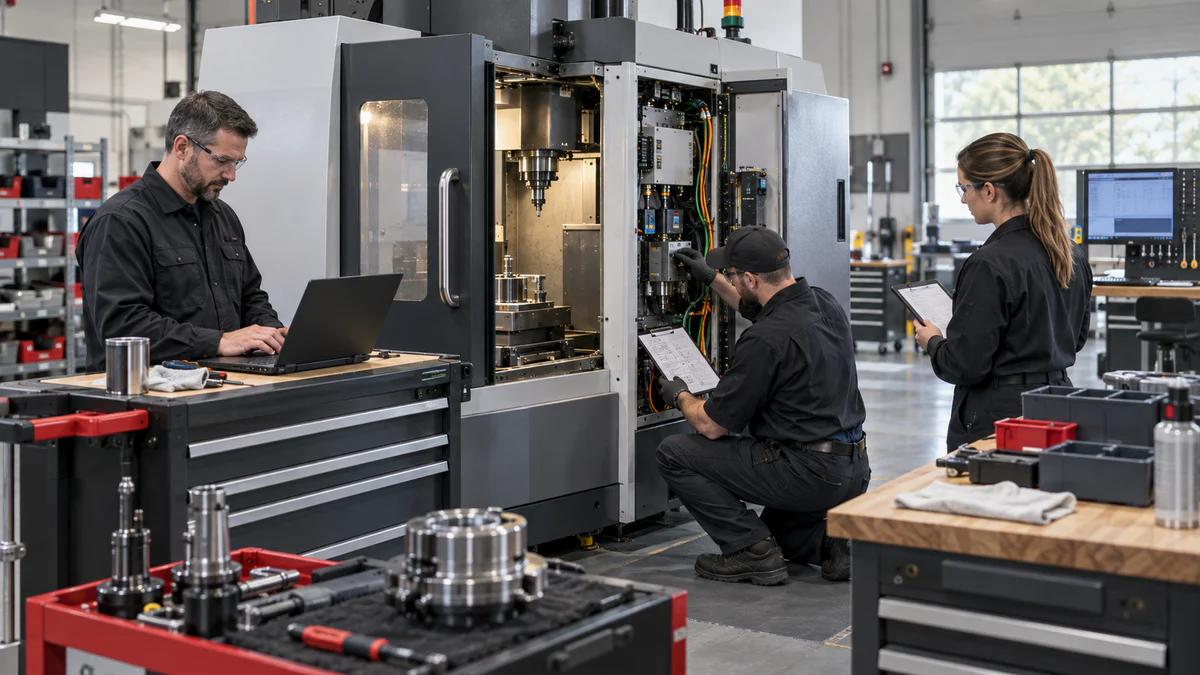
Plan unloading, foundation, leveling, power, air, coolant, guarding, lifting routes, network access, tool presetting, dry runs, and operator training before the machine arrives. Confirm that temperature swings, floor vibration, chip routes, and maintenance access are controlled. Installation discipline protects the geometry and reliability that the quotation promised, especially when the HMC-1000 will carry heavy fixtures or continuous shifts. For an HMC-1000 horizontal machining center, record the evidence in the RFQ and make the supplier response traceable to the part family, production target, and acceptance plan.
Use a launch review
At first article, review setup time, datum repeatability, tool runout, vibration, spindle load, thermal behavior, probing data, surface finish, chips, coolant, and operator actions. Record deviations, root causes, and corrective actions. Revisit the capacity model after the first quarter with actual utilization, accepted-part output, tooling consumption, maintenance hours, and response time data. For an HMC-1000 horizontal machining center, record the evidence in the RFQ and make the supplier response traceable to the part family, production target, and acceptance plan.
Create supplier comparison rules
Ask every supplier to answer the same questions: What structure supports the bed, column, and table? Which guideway architecture is used? What test demonstrates rigidity? How does the pallet repeat? What thermal controls are included? What tool and fixture assumptions support the quoted cycle? Consistent questions turn a marketing comparison into an engineering decision. For an HMC-1000 horizontal machining center, record the evidence in the RFQ and make the supplier response traceable to the part family, production target, and acceptance plan.
Start with the part family - Production Review 2
Map the complete HMC-1000 part family before comparing brochures. Record material, blank size, finished envelope, critical datums, tolerance bands, surface finish, wall thickness, annual volume, batch size, and shift pattern. Identify heavy roughing, deep bores, cross holes, interrupted cuts, and multi-face features. A useful machine recommendation explains how those features are reached, clamped, inspected, and repeated through a realistic production week. For an HMC-1000 horizontal machining center, record the evidence in the RFQ and make the supplier response traceable to the part family, production target, and acceptance plan.
Follow the load path - Production Review 2
Bed, column, spindle head, table, pallet, fixture, and workpiece form one cutting system. Ask the supplier to describe support points, casting sections, guideway arrangement, ballscrew protection, bearing design, and table load path. Then compare those details against your heaviest cutter, longest tool overhang, deepest engagement, and maximum fixture mass rather than relying on a generic rigidity claim. For an HMC-1000 horizontal machining center, record the evidence in the RFQ and make the supplier response traceable to the part family, production target, and acceptance plan.
Verify thermal stability - Production Review 2
Thermal movement changes with spindle speed, axis travel, coolant temperature, ambient conditions, and duty cycle. Require a warm-up routine, cooling description, compensation method, temperature monitoring approach, and an acceptance test that measures the datums that matter after representative cutting. A room-temperature positioning chart alone does not predict stable production on a long mixed-material shift. For an HMC-1000 horizontal machining center, record the evidence in the RFQ and make the supplier response traceable to the part family, production target, and acceptance plan.
Match spindle to work - Production Review 2
Compare torque through the actual speed range, taper, drawbar force, bearing arrangement, cooling, balance limits, and through-spindle coolant. Aluminum production may need high speed and chip evacuation; steel and cast iron often need torque at lower speed. Ask for a test cut using the cutter diameter, radial engagement, axial depth, material condition, and tool extension that your process will use. For an HMC-1000 horizontal machining center, record the evidence in the RFQ and make the supplier response traceable to the part family, production target, and acceptance plan.
Plan workholding early - Production Review 2
HMC-1000 productivity depends on tombstones, pallets, zero-point systems, hydraulic fixtures, datum repeatability, and safe loading access. Review clamp force, support locations, tool clearance, fixture weight, indexing sequence, and setup change time before the purchase order. A machine can be accurate in isolation yet produce unstable datums when the fixture permits deflection or obstructs critical faces. For an HMC-1000 horizontal machining center, record the evidence in the RFQ and make the supplier response traceable to the part family, production target, and acceptance plan.
Protect chip flow - Production Review 2
Horizontal machining is valuable when chips can fall away from deep cavities, but chip flow still needs proof. Specify conveyor capacity, flush nozzles, coolant pressure, filtration, tank volume, mist control, access for cleaning, and recovery after a chip-heavy roughing cycle. Chip packing can damage finish, cause tool breakage, and make a fast cycle-time promise unusable in daily production. For an HMC-1000 horizontal machining center, record the evidence in the RFQ and make the supplier response traceable to the part family, production target, and acceptance plan.
Define accuracy evidence - Production Review 2
Positioning accuracy and repeatability should be tied to your datums, inspection method, warm-up state, environmental conditions, and load condition. Agree whether the acceptance test uses a laser, ballbar, artefact, representative part, or a combination. Include a recheck after pallet change, tool change, probing cycle, and a realistic thermal soak so the result describes manufacturing performance. For an HMC-1000 horizontal machining center, record the evidence in the RFQ and make the supplier response traceable to the part family, production target, and acceptance plan.
Separate cycle-time components - Production Review 2
A credible cycle estimate lists cutting, tool changes, probing, pallet or fixture exchange, loading, deburring assumptions, inspection, and recovery time separately. Compare accepted parts per shift rather than a single spindle-time claim. Ask for a simulation or process sheet and challenge every assumption that requires an operator decision, special tool, manual chip removal, or unplanned measurement. For an HMC-1000 horizontal machining center, record the evidence in the RFQ and make the supplier response traceable to the part family, production target, and acceptance plan.
Evaluate control and probing - Production Review 2
Confirm the control supports program transfer, backups, tool life management, probing cycles, offset records, alarm history, and the recovery process used by your operators. Define which dimensions are measured in-process and which are verified offline. The best HMC-1000 configuration gives operators a clear response when a probe result, spindle load, vibration signal, or tool-life alarm begins to drift. For an HMC-1000 horizontal machining center, record the evidence in the RFQ and make the supplier response traceable to the part family, production target, and acceptance plan.
Review service as capacity - Production Review 2
Commissioning, training, remote diagnostics, preventive maintenance, spare-parts availability, escalation contacts, response targets, warranty, and software backups belong in the commercial comparison. A lower purchase price can be outweighed by lost accepted parts when one wear component or parameter issue holds the machine. Request a documented support plan that names responsibilities before shipment, installation, first article, and ongoing production. For an HMC-1000 horizontal machining center, record the evidence in the RFQ and make the supplier response traceable to the part family, production target, and acceptance plan.
Compare total cost - Production Review 2
Normalize freight, foundation, installation, utilities, tooling, fixtures, probing, training, service, energy, coolant, inspection, scrap, and planned maintenance before comparing suppliers. Use the same annual volume and utilization assumptions for every proposal. The goal is not the lowest machine price; it is a controlled process that produces accepted multi-face parts with predictable labor and recovery effort. For an HMC-1000 horizontal machining center, record the evidence in the RFQ and make the supplier response traceable to the part family, production target, and acceptance plan.
Run a representative acceptance - Production Review 2
Freeze the drawing revision, material condition, fixture concept, tool list, program revision, cutting data, inspection plan, and acceptance limits before the factory test. Measure geometry, surface finish, cycle components, tool wear, chips, thermal state, probing results, and recovery actions. Retain the evidence so the site acceptance and first production batch can be compared against the same controlled baseline. For an HMC-1000 horizontal machining center, record the evidence in the RFQ and make the supplier response traceable to the part family, production target, and acceptance plan.
Prepare installation - Production Review 2
Plan unloading, foundation, leveling, power, air, coolant, guarding, lifting routes, network access, tool presetting, dry runs, and operator training before the machine arrives. Confirm that temperature swings, floor vibration, chip routes, and maintenance access are controlled. Installation discipline protects the geometry and reliability that the quotation promised, especially when the HMC-1000 will carry heavy fixtures or continuous shifts. For an HMC-1000 horizontal machining center, record the evidence in the RFQ and make the supplier response traceable to the part family, production target, and acceptance plan.
Use a launch review - Production Review 2
At first article, review setup time, datum repeatability, tool runout, vibration, spindle load, thermal behavior, probing data, surface finish, chips, coolant, and operator actions. Record deviations, root causes, and corrective actions. Revisit the capacity model after the first quarter with actual utilization, accepted-part output, tooling consumption, maintenance hours, and response time data. For an HMC-1000 horizontal machining center, record the evidence in the RFQ and make the supplier response traceable to the part family, production target, and acceptance plan.
Create supplier comparison rules - Production Review 2
Ask every supplier to answer the same questions: What structure supports the bed, column, and table? Which guideway architecture is used? What test demonstrates rigidity? How does the pallet repeat? What thermal controls are included? What tool and fixture assumptions support the quoted cycle? Consistent questions turn a marketing comparison into an engineering decision. For an HMC-1000 horizontal machining center, record the evidence in the RFQ and make the supplier response traceable to the part family, production target, and acceptance plan.
Start with the part family - Production Review 3
Map the complete HMC-1000 part family before comparing brochures. Record material, blank size, finished envelope, critical datums, tolerance bands, surface finish, wall thickness, annual volume, batch size, and shift pattern. Identify heavy roughing, deep bores, cross holes, interrupted cuts, and multi-face features. A useful machine recommendation explains how those features are reached, clamped, inspected, and repeated through a realistic production week. For an HMC-1000 horizontal machining center, record the evidence in the RFQ and make the supplier response traceable to the part family, production target, and acceptance plan.
Follow the load path - Production Review 3
Bed, column, spindle head, table, pallet, fixture, and workpiece form one cutting system. Ask the supplier to describe support points, casting sections, guideway arrangement, ballscrew protection, bearing design, and table load path. Then compare those details against your heaviest cutter, longest tool overhang, deepest engagement, and maximum fixture mass rather than relying on a generic rigidity claim. For an HMC-1000 horizontal machining center, record the evidence in the RFQ and make the supplier response traceable to the part family, production target, and acceptance plan.
Verify thermal stability - Production Review 3
Thermal movement changes with spindle speed, axis travel, coolant temperature, ambient conditions, and duty cycle. Require a warm-up routine, cooling description, compensation method, temperature monitoring approach, and an acceptance test that measures the datums that matter after representative cutting. A room-temperature positioning chart alone does not predict stable production on a long mixed-material shift. For an HMC-1000 horizontal machining center, record the evidence in the RFQ and make the supplier response traceable to the part family, production target, and acceptance plan.
Match spindle to work - Production Review 3
Compare torque through the actual speed range, taper, drawbar force, bearing arrangement, cooling, balance limits, and through-spindle coolant. Aluminum production may need high speed and chip evacuation; steel and cast iron often need torque at lower speed. Ask for a test cut using the cutter diameter, radial engagement, axial depth, material condition, and tool extension that your process will use. For an HMC-1000 horizontal machining center, record the evidence in the RFQ and make the supplier response traceable to the part family, production target, and acceptance plan.
Plan workholding early - Production Review 3
HMC-1000 productivity depends on tombstones, pallets, zero-point systems, hydraulic fixtures, datum repeatability, and safe loading access. Review clamp force, support locations, tool clearance, fixture weight, indexing sequence, and setup change time before the purchase order. A machine can be accurate in isolation yet produce unstable datums when the fixture permits deflection or obstructs critical faces. For an HMC-1000 horizontal machining center, record the evidence in the RFQ and make the supplier response traceable to the part family, production target, and acceptance plan.
Protect chip flow - Production Review 3
Horizontal machining is valuable when chips can fall away from deep cavities, but chip flow still needs proof. Specify conveyor capacity, flush nozzles, coolant pressure, filtration, tank volume, mist control, access for cleaning, and recovery after a chip-heavy roughing cycle. Chip packing can damage finish, cause tool breakage, and make a fast cycle-time promise unusable in daily production. For an HMC-1000 horizontal machining center, record the evidence in the RFQ and make the supplier response traceable to the part family, production target, and acceptance plan.
Define accuracy evidence - Production Review 3
Positioning accuracy and repeatability should be tied to your datums, inspection method, warm-up state, environmental conditions, and load condition. Agree whether the acceptance test uses a laser, ballbar, artefact, representative part, or a combination. Include a recheck after pallet change, tool change, probing cycle, and a realistic thermal soak so the result describes manufacturing performance. For an HMC-1000 horizontal machining center, record the evidence in the RFQ and make the supplier response traceable to the part family, production target, and acceptance plan.
Separate cycle-time components - Production Review 3
A credible cycle estimate lists cutting, tool changes, probing, pallet or fixture exchange, loading, deburring assumptions, inspection, and recovery time separately. Compare accepted parts per shift rather than a single spindle-time claim. Ask for a simulation or process sheet and challenge every assumption that requires an operator decision, special tool, manual chip removal, or unplanned measurement. For an HMC-1000 horizontal machining center, record the evidence in the RFQ and make the supplier response traceable to the part family, production target, and acceptance plan.
Evaluate control and probing - Production Review 3
Confirm the control supports program transfer, backups, tool life management, probing cycles, offset records, alarm history, and the recovery process used by your operators. Define which dimensions are measured in-process and which are verified offline. The best HMC-1000 configuration gives operators a clear response when a probe result, spindle load, vibration signal, or tool-life alarm begins to drift. For an HMC-1000 horizontal machining center, record the evidence in the RFQ and make the supplier response traceable to the part family, production target, and acceptance plan.
Review service as capacity - Production Review 3
Commissioning, training, remote diagnostics, preventive maintenance, spare-parts availability, escalation contacts, response targets, warranty, and software backups belong in the commercial comparison. A lower purchase price can be outweighed by lost accepted parts when one wear component or parameter issue holds the machine. Request a documented support plan that names responsibilities before shipment, installation, first article, and ongoing production. For an HMC-1000 horizontal machining center, record the evidence in the RFQ and make the supplier response traceable to the part family, production target, and acceptance plan.
Compare total cost - Production Review 3
Normalize freight, foundation, installation, utilities, tooling, fixtures, probing, training, service, energy, coolant, inspection, scrap, and planned maintenance before comparing suppliers. Use the same annual volume and utilization assumptions for every proposal. The goal is not the lowest machine price; it is a controlled process that produces accepted multi-face parts with predictable labor and recovery effort. For an HMC-1000 horizontal machining center, record the evidence in the RFQ and make the supplier response traceable to the part family, production target, and acceptance plan.
Run a representative acceptance - Production Review 3
Freeze the drawing revision, material condition, fixture concept, tool list, program revision, cutting data, inspection plan, and acceptance limits before the factory test. Measure geometry, surface finish, cycle components, tool wear, chips, thermal state, probing results, and recovery actions. Retain the evidence so the site acceptance and first production batch can be compared against the same controlled baseline. For an HMC-1000 horizontal machining center, record the evidence in the RFQ and make the supplier response traceable to the part family, production target, and acceptance plan.
Prepare installation - Production Review 3
Plan unloading, foundation, leveling, power, air, coolant, guarding, lifting routes, network access, tool presetting, dry runs, and operator training before the machine arrives. Confirm that temperature swings, floor vibration, chip routes, and maintenance access are controlled. Installation discipline protects the geometry and reliability that the quotation promised, especially when the HMC-1000 will carry heavy fixtures or continuous shifts. For an HMC-1000 horizontal machining center, record the evidence in the RFQ and make the supplier response traceable to the part family, production target, and acceptance plan.
Use a launch review - Production Review 3
At first article, review setup time, datum repeatability, tool runout, vibration, spindle load, thermal behavior, probing data, surface finish, chips, coolant, and operator actions. Record deviations, root causes, and corrective actions. Revisit the capacity model after the first quarter with actual utilization, accepted-part output, tooling consumption, maintenance hours, and response time data. For an HMC-1000 horizontal machining center, record the evidence in the RFQ and make the supplier response traceable to the part family, production target, and acceptance plan.
Create supplier comparison rules - Production Review 3
Ask every supplier to answer the same questions: What structure supports the bed, column, and table? Which guideway architecture is used? What test demonstrates rigidity? How does the pallet repeat? What thermal controls are included? What tool and fixture assumptions support the quoted cycle? Consistent questions turn a marketing comparison into an engineering decision. For an HMC-1000 horizontal machining center, record the evidence in the RFQ and make the supplier response traceable to the part family, production target, and acceptance plan.
RFQ checklist
- Revision-controlled 2D and 3D drawings
- Material, hardness, blank size, critical datums, and finish
- Annual volume, batch size, shifts, and target accepted parts
- Tool list, fixture concept, probing, coolant, and chip handling
- HMC-1000 travel, table load, spindle, control, accuracy, and service requirements
- Factory and site acceptance tests with measurable limits
Request the right next step
Send Your Drawing for a part-family and fixture-access review. Request a Machine Recommendation for an HMC-1000 configuration shortlist. Request a Quote when the RFQ includes production, inspection, delivery, and service assumptions.
Frequently asked questions
What proves bed and column rigidity?
Ask for the support design, guideway arrangement, load limits, and a documented representative cutting test.
How should an HMC-1000 be acceptance-tested?
Use a controlled part or test piece with agreed datums, thermal state, cycle assumptions, inspection method, and documented limits.
What should be included in service scope?
Include commissioning, training, preventive maintenance, remote support, critical spares, response targets, warranty, and escalation contacts.