Horizontal Machining Center for Heavy-Duty Precision Manufacturing: A Practical Guide for Industrial Buyers
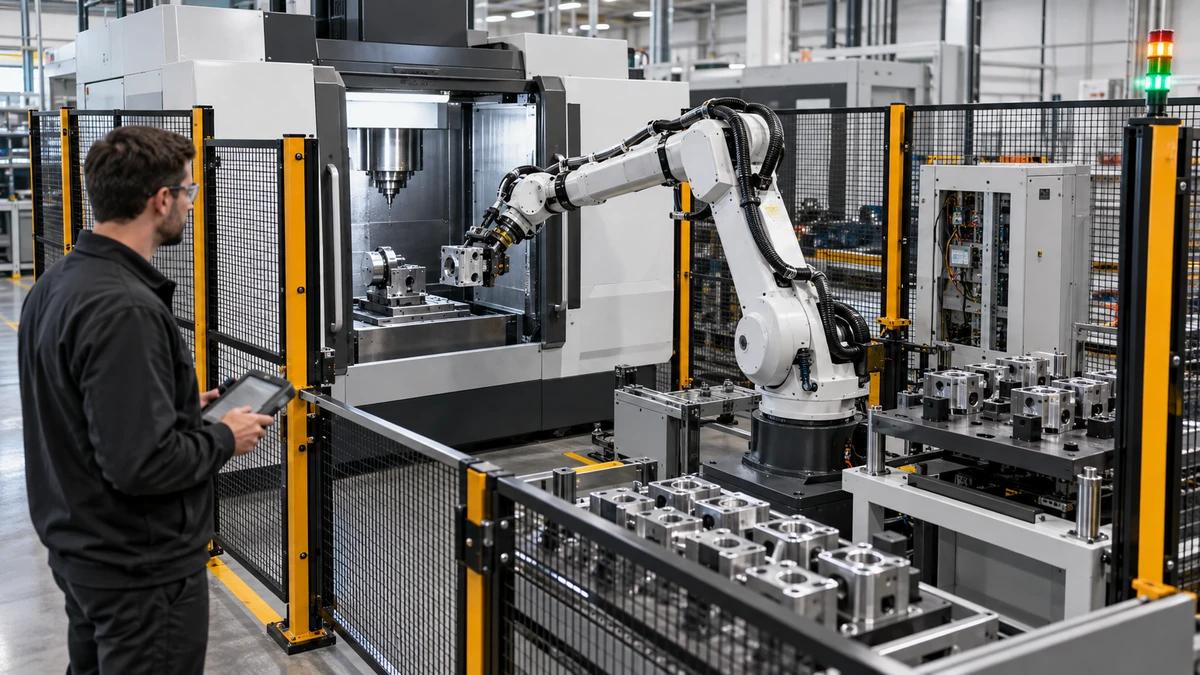
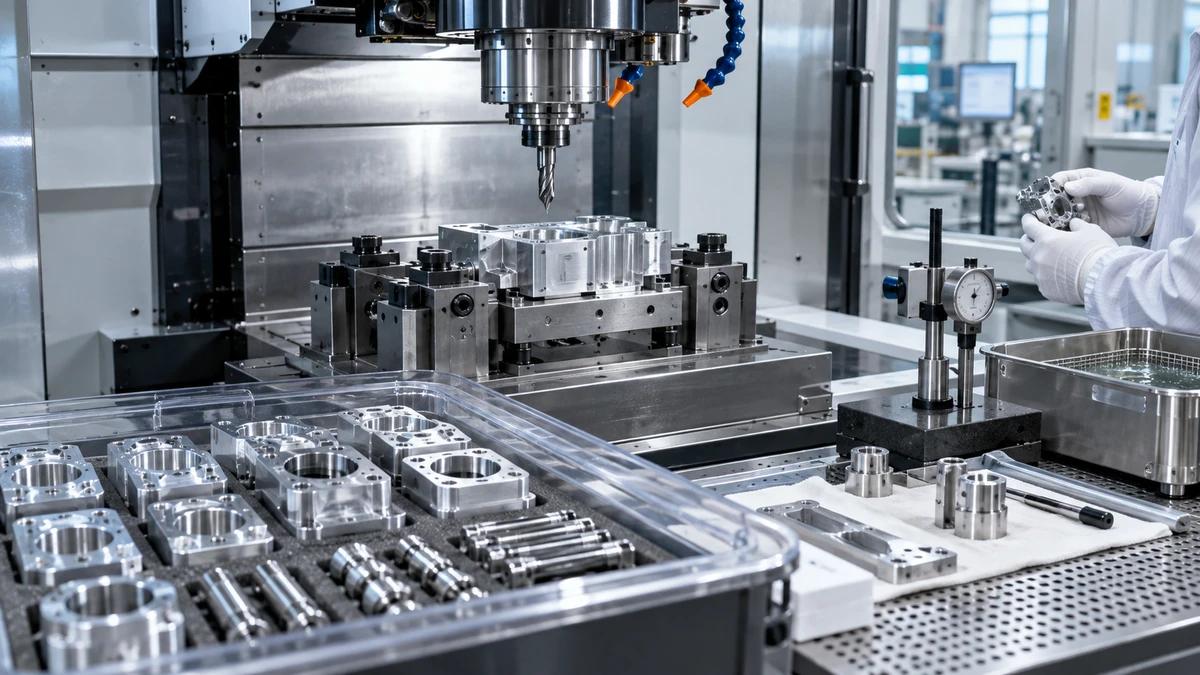
A horizontal machining center is usually considered when a factory needs more than basic milling and drilling. The parts are often box-shaped, multi-faced, heavy, or difficult to machine efficiently in repeated setups. Automotive housings, valve components, industrial enclosures, disk and sleeve parts, construction machinery components, high-end molds, and energy equipment parts all create similar pressure: the machine must remove material reliably, hold geometry, reduce setup changes, and help operators finish more surfaces in a controlled process.
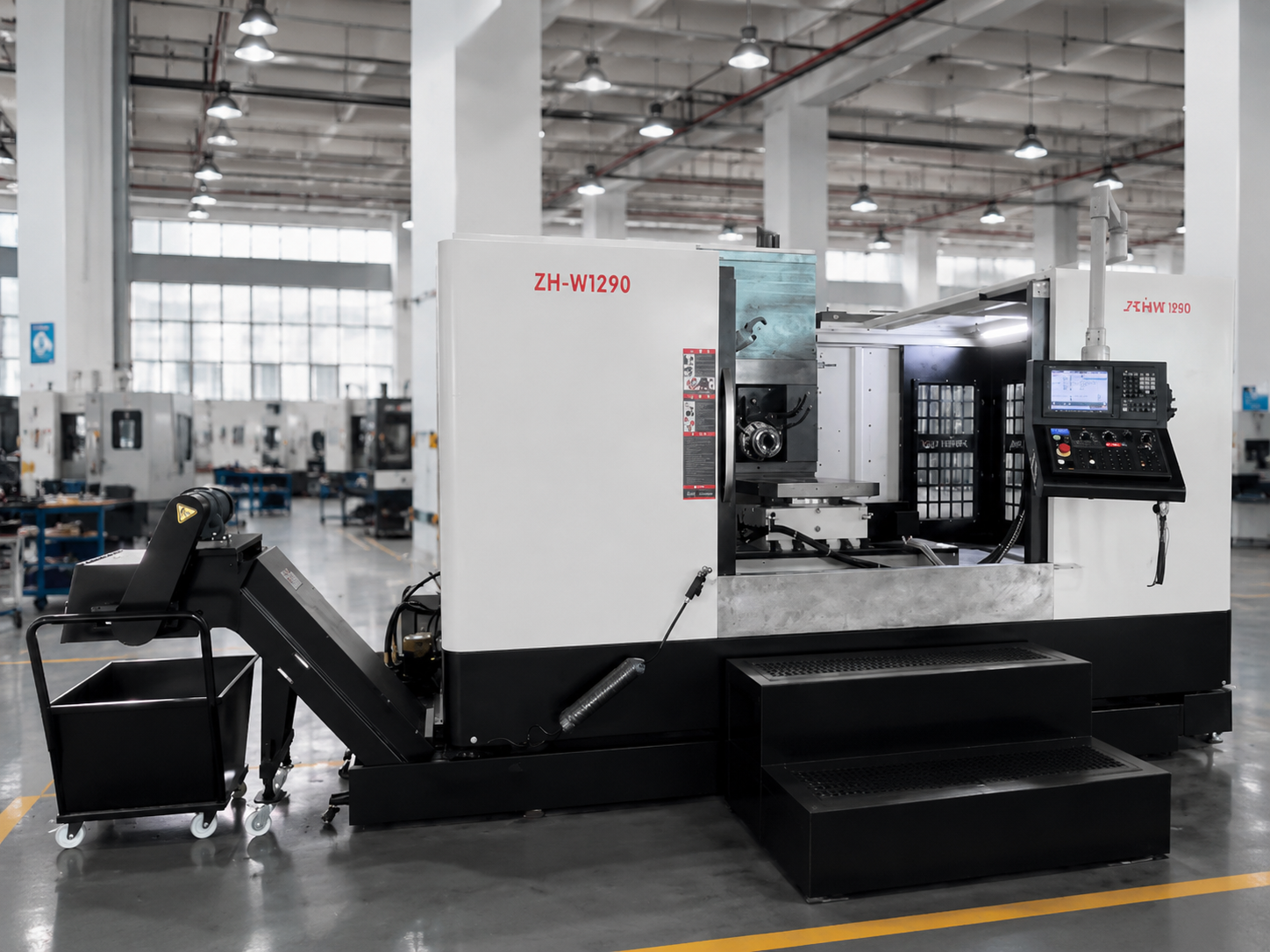
Zhihe CNC’s product page describes this machine as a high-rigidity horizontal machining solution. The structure combines a fixed-column integral layout with a cross-slide table, and the product page highlights an extra-large monolithic base, wide-span “A”-shaped column, high thermal stability, fully enclosed protection, a precision CNC rotary table, arbitrary angle positioning, optional five-axis linkage expansion, and single-setup multi-face composite machining capability.
For B2B buyers searching for a horizontal machining center manufacturer, CNC horizontal machining center supplier, or heavy duty horizontal machining center, the central question should not be “Which machine looks bigger?” A better question is: can this machine reduce repeated clamping, protect dimensional stability, improve multi-face machining efficiency, and support long-term factory production?
Why Horizontal Machining Centers Matter in Heavy-Duty Production
Many factories start with vertical machining centers because they are flexible and familiar. That works well for many plates, small molds, brackets, and general precision parts. But when the workpiece becomes more box-like, multi-sided, or difficult to reposition, a vertical setup may force the operator to clamp, rotate, re-indicate, and machine again. Every extra setup adds time. It also adds another chance for reference error.
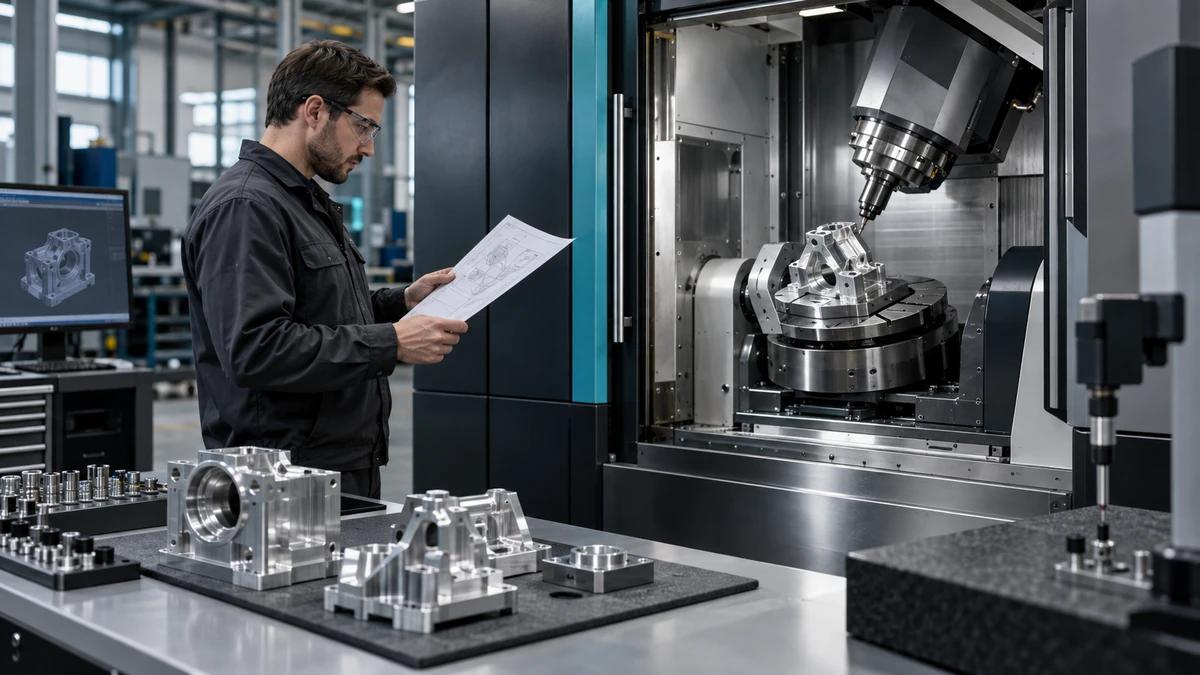
A horizontal CNC machine for box-type parts is designed around a different production logic. The spindle approaches the workpiece horizontally, while the rotary table allows the part to be indexed for several faces. This can reduce the need to remove and reclamp the workpiece between operations. In practical factory terms, fewer setups often mean better datum control, shorter handling time, and more stable batch consistency.
Zhihe’s product page specifically notes that the integrated high-precision CNC rotary table enables efficient multi-face and multi-process machining in a single setup, helping improve productivity while reducing repositioning errors. That is one of the main reasons buyers evaluate a multi-face machining center rather than a simpler machine.
Fixed-Column Integral Structure and Cross-Slide Table Layout
The product page states that this horizontal machining center adopts a fixed-column integral structure combined with a cross-slide table layout to support motion precision and dynamic stability. It also highlights the extra-large monolithic machine base as a feature that improves vibration resistance and load-bearing capacity for heavy-duty cutting and long-term high-precision machining operations.
For buyers, this is not just a machine-description paragraph. It points to the main engineering concern in heavy-duty machining: stability under load.
When a machine cuts cast iron, carbon steel, alloy steel, or heavy structural components, the process may include interrupted cutting, deep milling, drilling, boring, tapping, and finishing. If the base and column are not rigid enough, the machine may still run, but operators may need to reduce cutting parameters. Tool wear may rise. Surface finish may suffer. Part accuracy may become less predictable after long cycles.
A horizontal machining center must be evaluated as a full structure. The spindle, base, column, rotary table, slides, protection system, and control layout all work together. A strong spindle in a weak structure does not solve the production problem. A rigid body with poor service access also creates trouble. The best machine is the one that supports both cutting and daily operation.
Why the “A”-Shaped Column Deserves Attention
Zhihe’s product page describes a wide-span “A”-shaped column structure that improves overall rigidity and thermal stability while minimizing deformation during intensive machining processes. In heavy-duty manufacturing, column design matters because it affects how the machine resists cutting forces and how stable it remains during long machining cycles.
A box-type part may require several faces to be machined. The tool may enter cavities, machine pockets, open holes, finish reference surfaces, and process mounting locations. Cutting forces do not always act in one simple direction. The machine must hold geometry while the part, fixture, spindle, and table all interact.
Thermal behavior is also important. A horizontal machining center may run for long shifts. Temperature change can affect geometry, especially when the machine is expected to hold consistent results across repeated parts. Buyers should therefore ask the supplier not only about accuracy numbers, but also about thermal design, warm-up procedures, inspection method, and acceptance conditions.
What This Machine Is Best Suited For
The product page lists typical applications including medium and large-sized housings, valve components, industrial enclosures, disk and sleeve components, automotive powertrain parts, construction machinery components, high-end molds, energy equipment parts, and general industrial machinery. These applications share a practical need: stable machining across multiple surfaces or complex part geometry.
For example, automotive powertrain parts often need multiple reference surfaces and accurate hole positions. Valve components may require internal passages, flat sealing surfaces, and precise bores. Industrial enclosures may involve large openings, mounting features, and several faces that must align. Disk and sleeve components may need circular features, bore accuracy, and stable perpendicular relationships. Construction machinery parts may require strength, roughing capacity, and long-cycle reliability.
A precision manufacturing equipment buyer should look at these applications and compare them with their own parts. The right question is not whether the machine can theoretically process metal. The question is whether it matches the workpiece family, fixture method, accuracy target, material, and expected production volume.
Main Buyer Evaluation Points
| Evaluation Area | What Buyers Should Check | Why It Matters in Horizontal Machining |
|---|---|---|
| Part Geometry | Box-type parts, housings, valve bodies, enclosures, disk/sleeve components | Horizontal machines are valuable when multiple faces need stable processing |
| Machine Structure | Fixed-column design, base rigidity, column span, vibration resistance | Heavy-duty cutting depends on structural stability |
| Rotary Table | Indexing accuracy, arbitrary angle positioning, load capacity, clamping method | Multi-face machining depends on table stability and repeatable positioning |
| Spindle System | Torque, speed range, cooling, taper, tool interface | Roughing and finishing require different spindle behavior |
| Setup Strategy | Fixture design, datum planning, crane access, pallet preparation | Poor setup can remove the benefit of multi-face machining |
| Accuracy Testing | Laser calibration, ballbar testing, trial cutting, inspection report | Verifies performance before production acceptance |
| Enclosure Design | Chip and coolant containment, operator access, visibility, maintenance doors | Affects safety, cleanliness, and downtime |
| Supplier Support | Application review, installation, training, spare parts, remote support | Protects long-term machine use |
This checklist helps buyers move from “machine comparison” to “process comparison.” A horizontal machining center should be selected based on how it will be used every day.
Single-Setup Multi-Face Machining: Why It Affects ROI
One of the most important B2B selling points of a horizontal machining center is single-setup multi-face machining. Zhihe’s product page highlights single-setup multi-face composite machining capability as a key feature.
In many factories, setup time is a hidden cost. Operators may spend a large portion of the day aligning parts, checking datums, turning workpieces, and confirming the next operation. If the workpiece is heavy, each repositioning step may require a crane, fixture adjustment, or inspection pause. That slows production and increases dependency on skilled operators.
A rotary-table horizontal machining center can help reduce this issue by allowing several faces to be processed in one clamping cycle. This does not remove the need for good fixtures. In fact, fixture design becomes even more important. But once the setup is stable, the machine can process more features without unnecessary handling.
For B2B buyers, ROI should include reduced setup frequency, lower re-indicating time, fewer handling risks, more stable datum relationships, better operator utilization, and improved production flow. The machine price matters, but the lost time from repeated setup may cost more over the life of the equipment.
Fully Enclosed Protection and Shop-Floor Cleanliness
The product page states that the machine features a fully enclosed protection system for chip and coolant containment, operator safety, and a clean production environment. It also describes an ergonomic machine layout and accessible maintenance channels intended to improve operational efficiency and reduce maintenance downtime.
This is important because horizontal machining often produces a large volume of chips and coolant splash, especially during roughing, drilling, and boring. A poor enclosure can create housekeeping issues, increase safety risks, and make operators spend extra time cleaning around the machine.
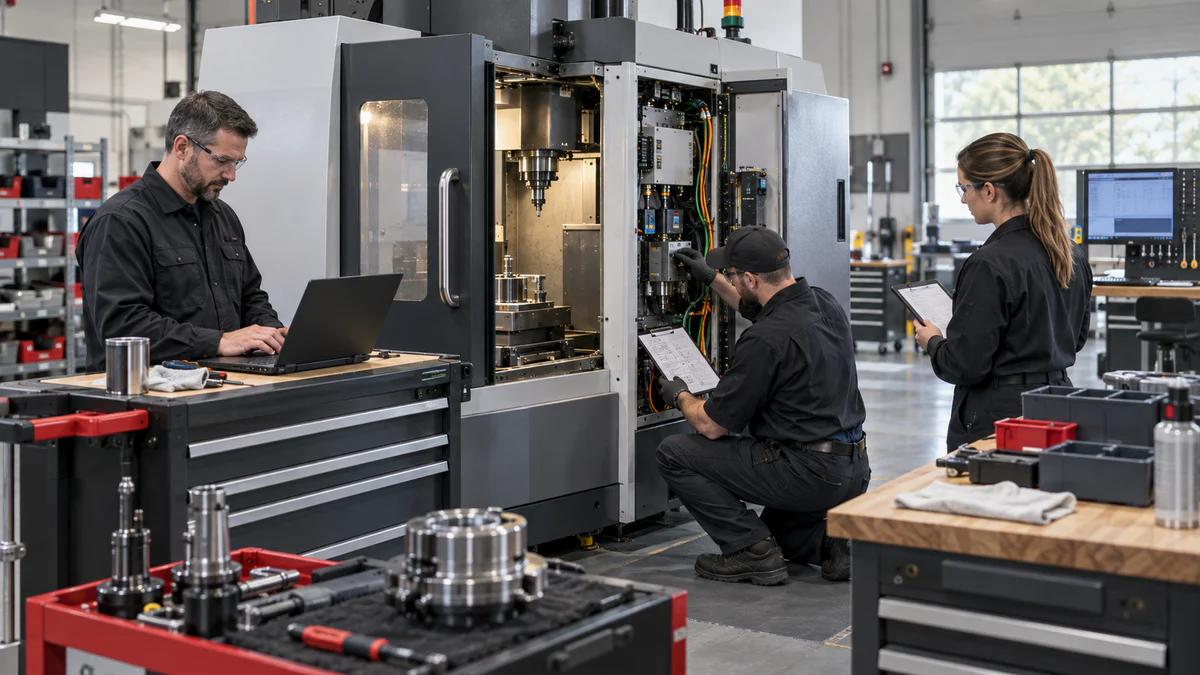
Enclosure design should not be treated only as a cosmetic feature. Buyers should check door access, visibility, chip conveyor configuration, coolant tank access, maintenance space, electrical cabinet position, tool-change area, and operator standing location. A machine that is powerful but difficult to clean or maintain may lose production time in small increments every day.
Optional Five-Axis Linkage Expansion
The product page lists optional five-axis linkage expansion. Buyers should not assume this is necessary for every project. Five-axis capability can be valuable when the workpiece requires complex angular features, reduced setups, or more advanced contouring. But if the main job is box-type housing machining with indexed faces, a standard horizontal machining center may already solve the major problem.
The better approach is to define the part first. Do you need simultaneous multi-axis contouring, or do you mainly need indexed multi-face access? Are your angled features simple enough for rotary table positioning, or do they require continuous coordinated motion? Is the programming team ready for more advanced five-axis workflows?
A reliable industrial CNC machine supplier should help the buyer make this distinction. Selling more capability than the process needs may increase investment without improving productivity.
Accuracy Verification and Acceptance Planning
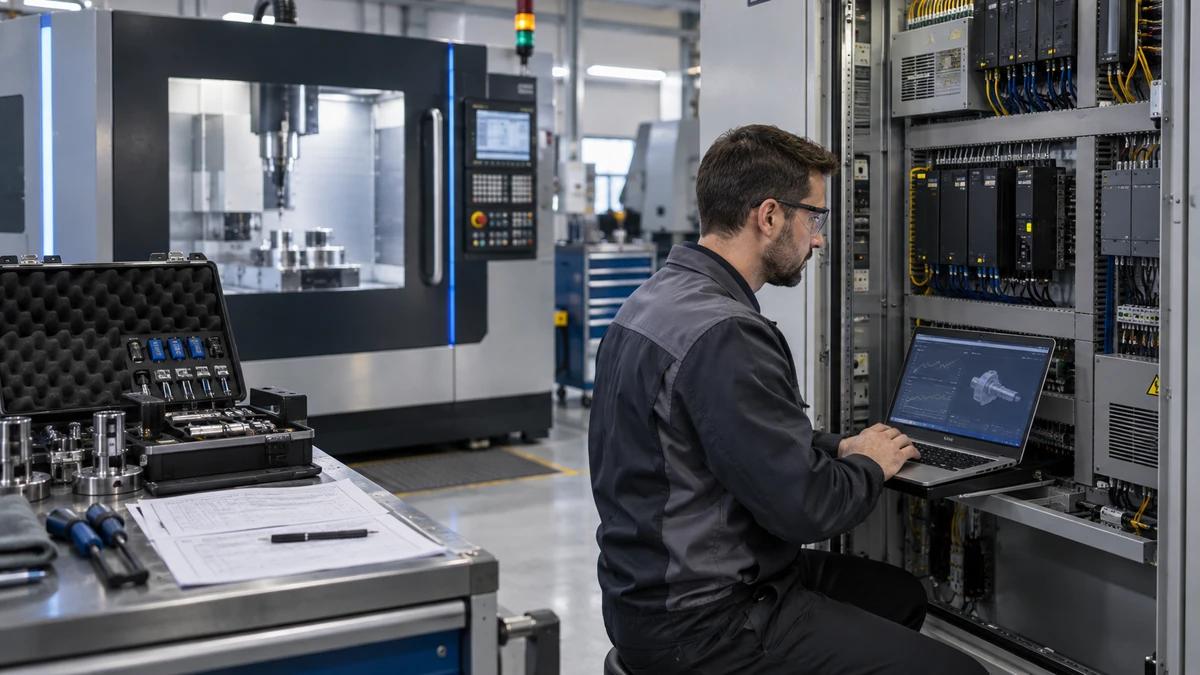
Zhihe’s homepage states that selected models support positioning accuracy up to ±0.005 mm and repeatability up to ±0.003 mm depending on machine series, model, travel size, and configuration. It also states that machines can be inspected through laser interferometer calibration, ballbar testing, and trial cutting before delivery.
For horizontal machining centers, accuracy should always be verified through agreed testing methods. ISO 230-2 specifies methods for testing and evaluating positioning accuracy and repeatability of numerically controlled machine tool axes by direct measurement of individual axes, and the methods apply to both linear and rotary axes.
This matters because acceptance is much easier when the buyer and supplier define measurement conditions before shipment. A professional purchase agreement should clarify whether laser calibration, ballbar testing, rotary table verification, trial cutting, and post-installation checks are included.
How to Prepare a Better Inquiry
Instead of sending only “Please quote a horizontal machining center,” buyers should provide useful process details:
Maximum workpiece size and weight.
Material and hardness range.
Main machining surfaces.
Roughing and finishing requirements.
Hole, bore, and face tolerance requirements.
Expected batch size and monthly output.
Current bottleneck in setup or machining.
Fixture method and crane availability.
Need for rotary table indexing or optional five-axis expansion.
Factory voltage, foundation, and installation conditions.
Inspection standard and acceptance requirement.
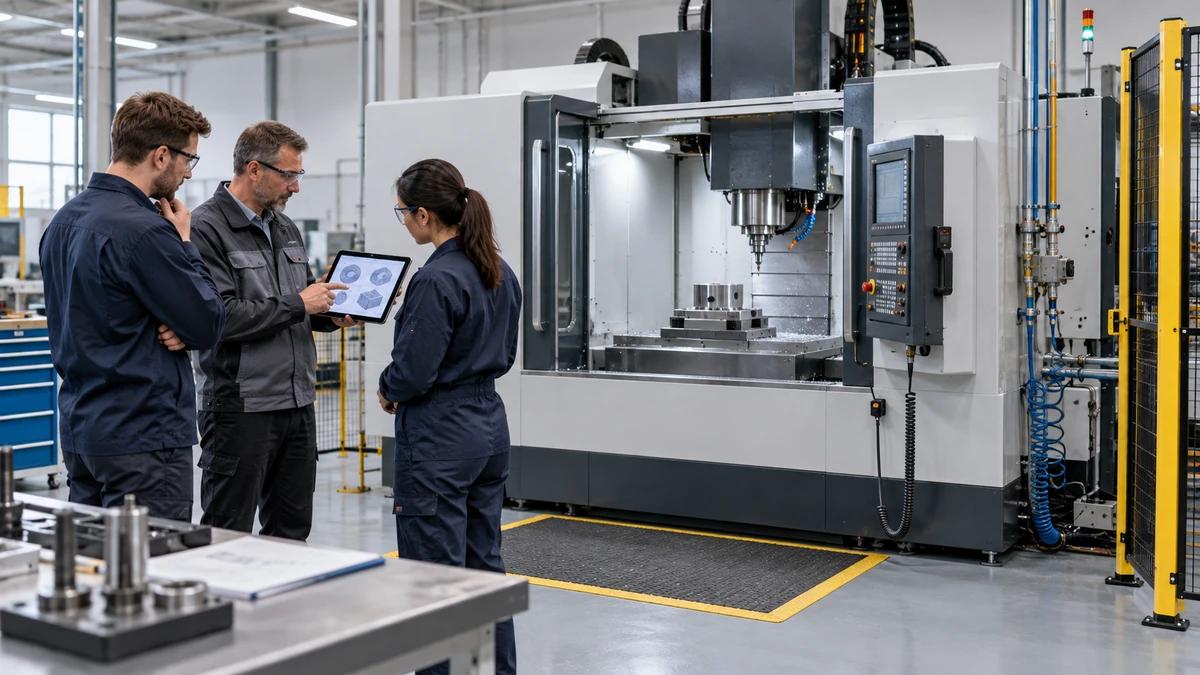
This information allows the horizontal machining center manufacturer to recommend a configuration based on real production needs.
Common Mistakes Buyers Should Avoid
The first mistake is buying based only on machine size. A large machine is not automatically suitable if the rotary table, spindle, structure, and fixture plan do not match the part.
The second mistake is ignoring setup time. A horizontal machining center is often purchased to reduce repeated setups, so fixture planning should be discussed early.
The third mistake is focusing only on rough cutting. Many parts also require stable finishing, boring, and surface accuracy.
The fourth mistake is accepting vague accuracy claims without reports or acceptance standards.
The fifth mistake is not discussing service. A machine may run for years, but spare parts, training, troubleshooting, and maintenance guidance determine whether it stays productive.
FAQ
What is a horizontal machining center mainly used for?
A horizontal machining center is used for multi-face machining, heavy-duty cutting, boring, drilling, milling, and finishing of box-type parts, housings, valve components, enclosures, disk and sleeve parts, automotive components, molds, and energy equipment parts.
Why does the rotary table matter?
The rotary table allows the workpiece to be positioned for multiple faces in one setup. This helps reduce repositioning errors and improves productivity in multi-process machining.
Is a horizontal machining center better than a vertical machining center?
Not always. A horizontal machining center is usually better for box-type, multi-face, or heavy-duty parts. A vertical machining center may be better for smaller plates, molds, and general precision parts.
What should buyers confirm before ordering?
Buyers should confirm workpiece size, material, weight, table load, spindle torque, rotary table capability, fixture strategy, tool requirements, enclosure design, accuracy testing, installation conditions, and after-sales support.
Why is sample machining useful?
Sample machining helps verify fixture stability, rotary table positioning, cutting parameters, surface quality, and accuracy under realistic production conditions.
Conclusion
A horizontal machining center is valuable when a factory needs stable multi-face machining, fewer setups, better datum control, and heavy-duty precision manufacturing capability. Zhihe’s product page emphasizes a fixed-column integral structure, cross-slide table layout, extra-large monolithic base, wide-span “A”-shaped column, high thermal stability, enclosed protection, precision CNC rotary table, arbitrary angle positioning, and single-setup multi-face composite machining capability.
For B2B buyers, the decision should begin with the workpiece family. If the factory processes box-type housings, valve bodies, automotive powertrain components, energy equipment parts, heavy enclosures, molds, or disk and sleeve components, a heavy duty horizontal machining center may reduce repeated setup and improve production stability.
The safest buying process is practical: share drawings, define tolerances, discuss fixture and rotary table needs, request accuracy testing, and confirm installation and after-sales support. A reliable CNC horizontal machining center supplier should not only sell a machine. It should help the factory build a more stable multi-face machining process.