How to Choose a Horizontal Machining Center Manufacturer for Heavy-Duty Industrial Parts
When buyers search for a horizontal machining center manufacturer, they are rarely looking for a machine photo alone. They are looking for confidence.
A heavy-duty horizontal machining center is a serious investment. It affects process layout, fixtures, tooling, operator training, maintenance, delivery planning, and long-term production capability. A low price may look attractive, but if the machine cannot hold accuracy, support the required workpieces, or receive proper service after installation, the buyer pays for that mistake later.
For sourcing teams, the real question is not simply, “Who can sell us a horizontal machining center?”
The better question is: which manufacturer can help us choose a machine that fits our parts, our material, our tolerance requirements, and our production rhythm?
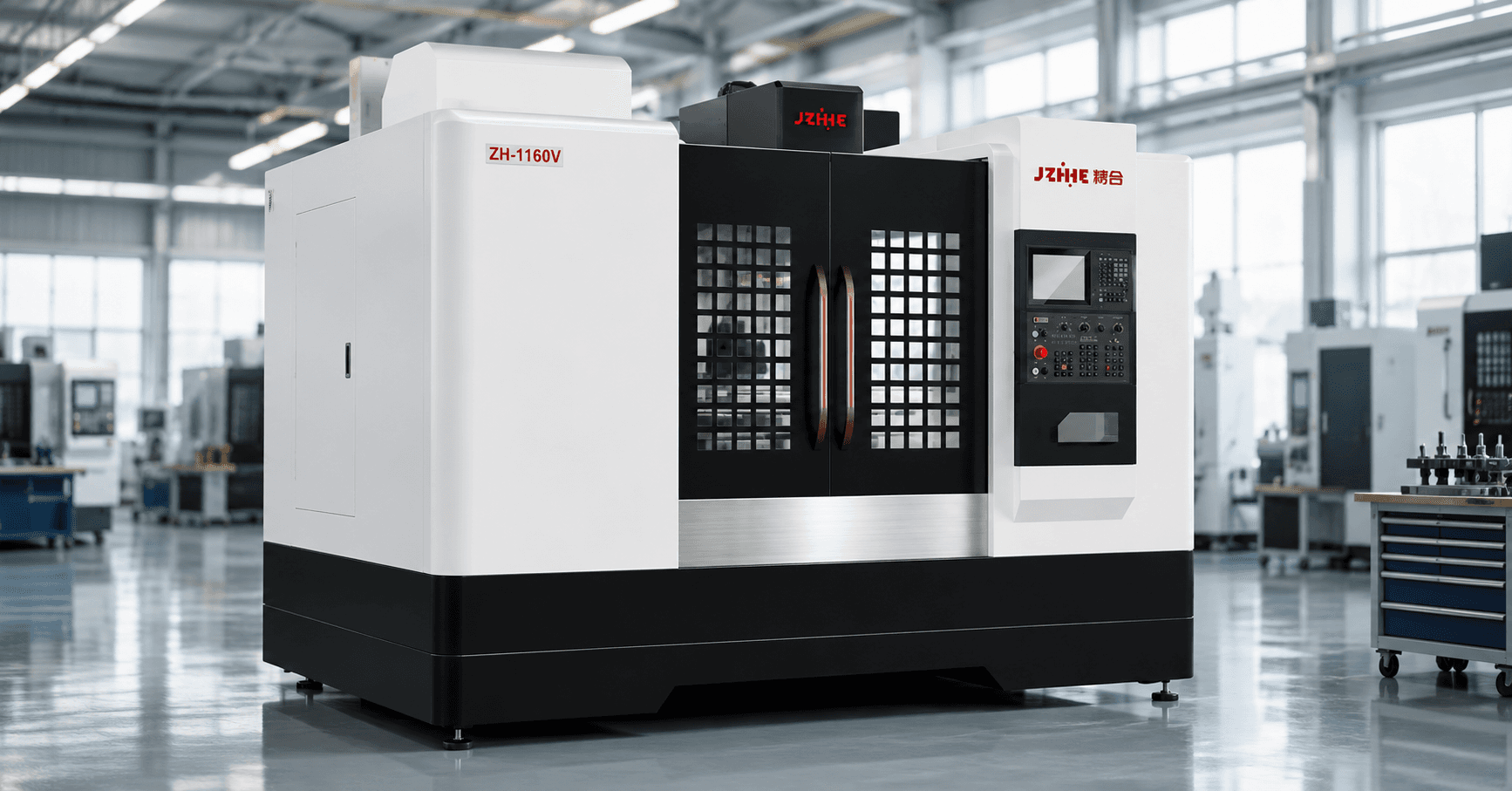
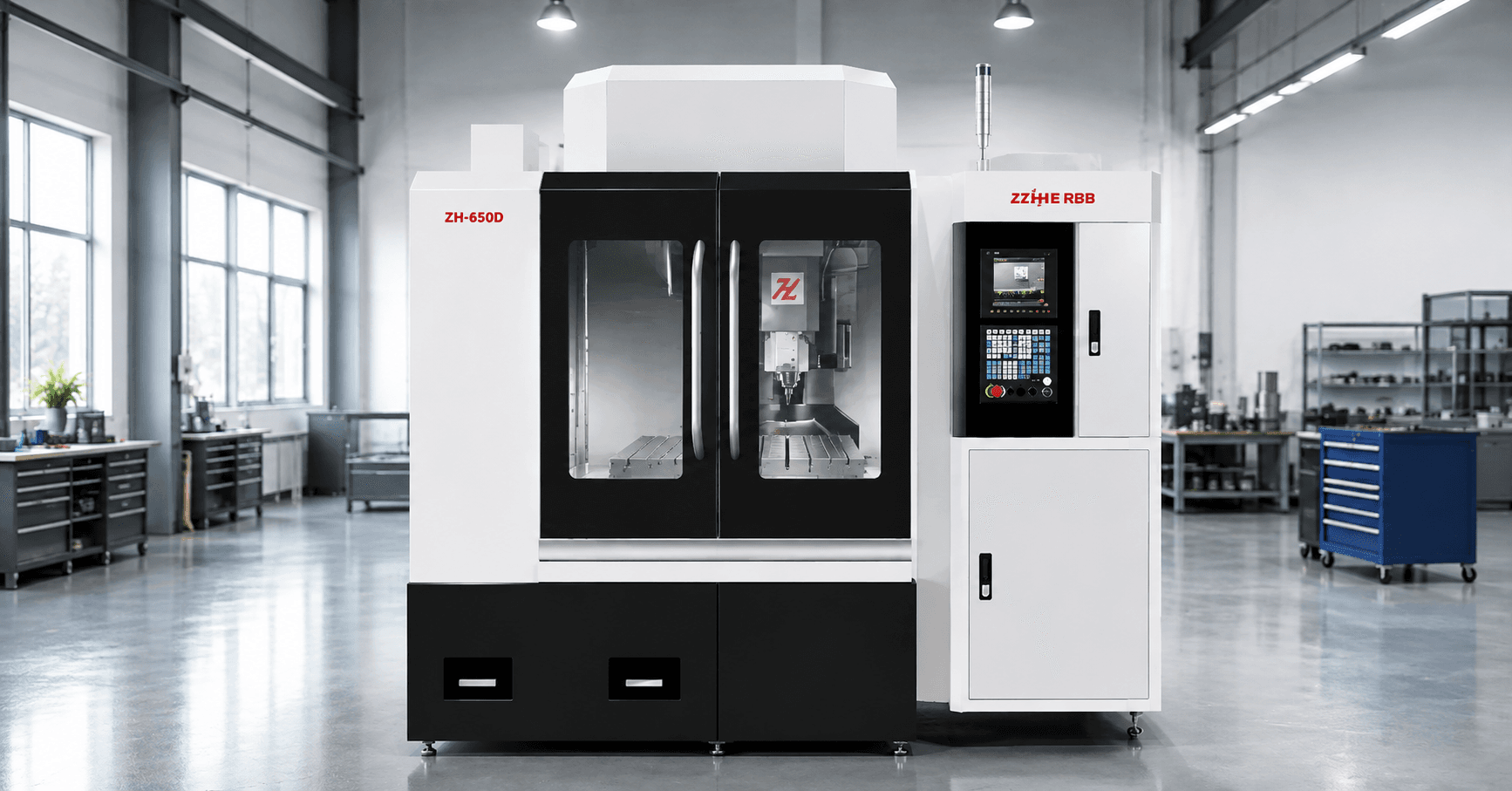
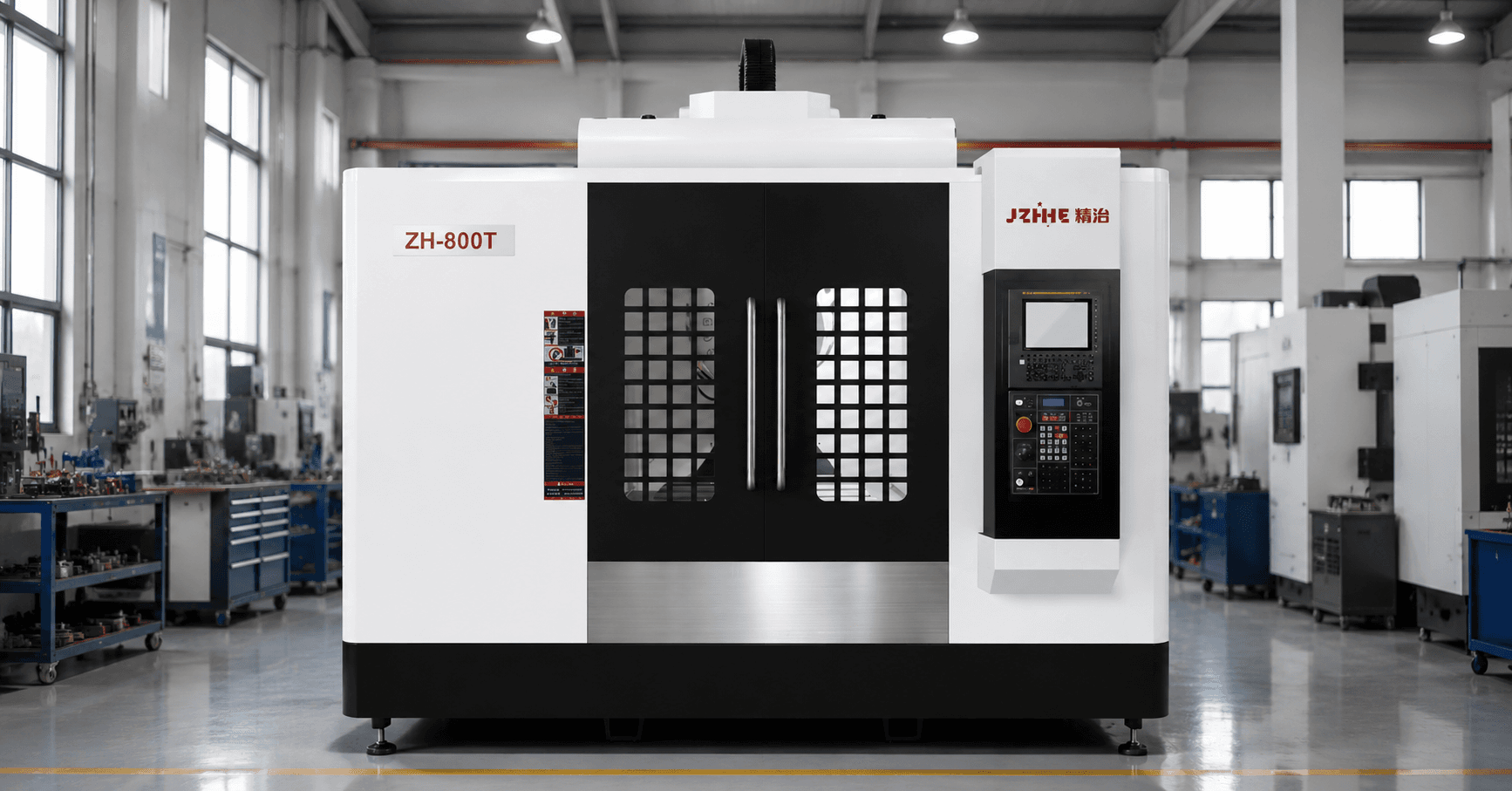
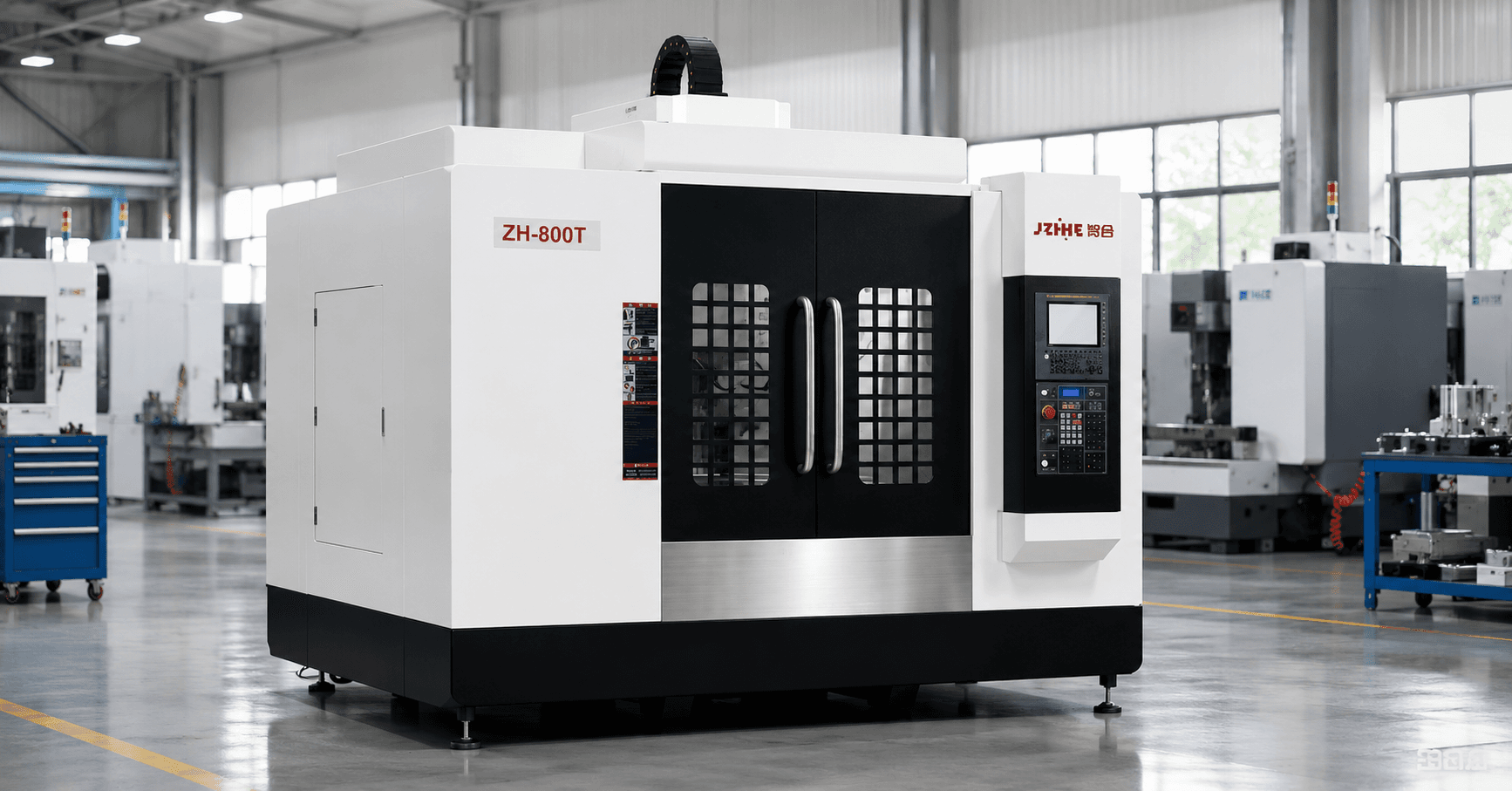
The Zhihe CNC product page identifies Zhongshan Zhihe CNC Technology Co., Ltd. as a national high-tech CNC machine tool manufacturer specializing in R&D, production, sales, and customized machining solutions for industrial manufacturing applications.
That manufacturer capability matters because heavy-duty machining is rarely solved by a generic recommendation.
Why Manufacturer Capability Matters
A horizontal machining center is not a simple commodity. Two machines may look similar in size, but behave differently under load.
One may be better for box-type parts. Another may support heavier fixtures. Another may have stronger thermal stability. Another may offer better maintenance access or rotary table capability.
A capable manufacturer should ask about the buyer’s workpiece before recommending a model. If a supplier only asks for budget and delivery time, the recommendation may be weak.
For heavy-duty industrial parts, the manufacturer should understand:
- Part geometry
- Workpiece weight
- Material behavior
- Number of machined faces
- Required accuracy
- Surface finish needs
- Fixture strategy
- Production volume
- Operator skill level
- Maintenance expectations
- Export packaging and service requirements
A buyer should expect this level of discussion before placing an order.
Evaluate the Machine Structure First
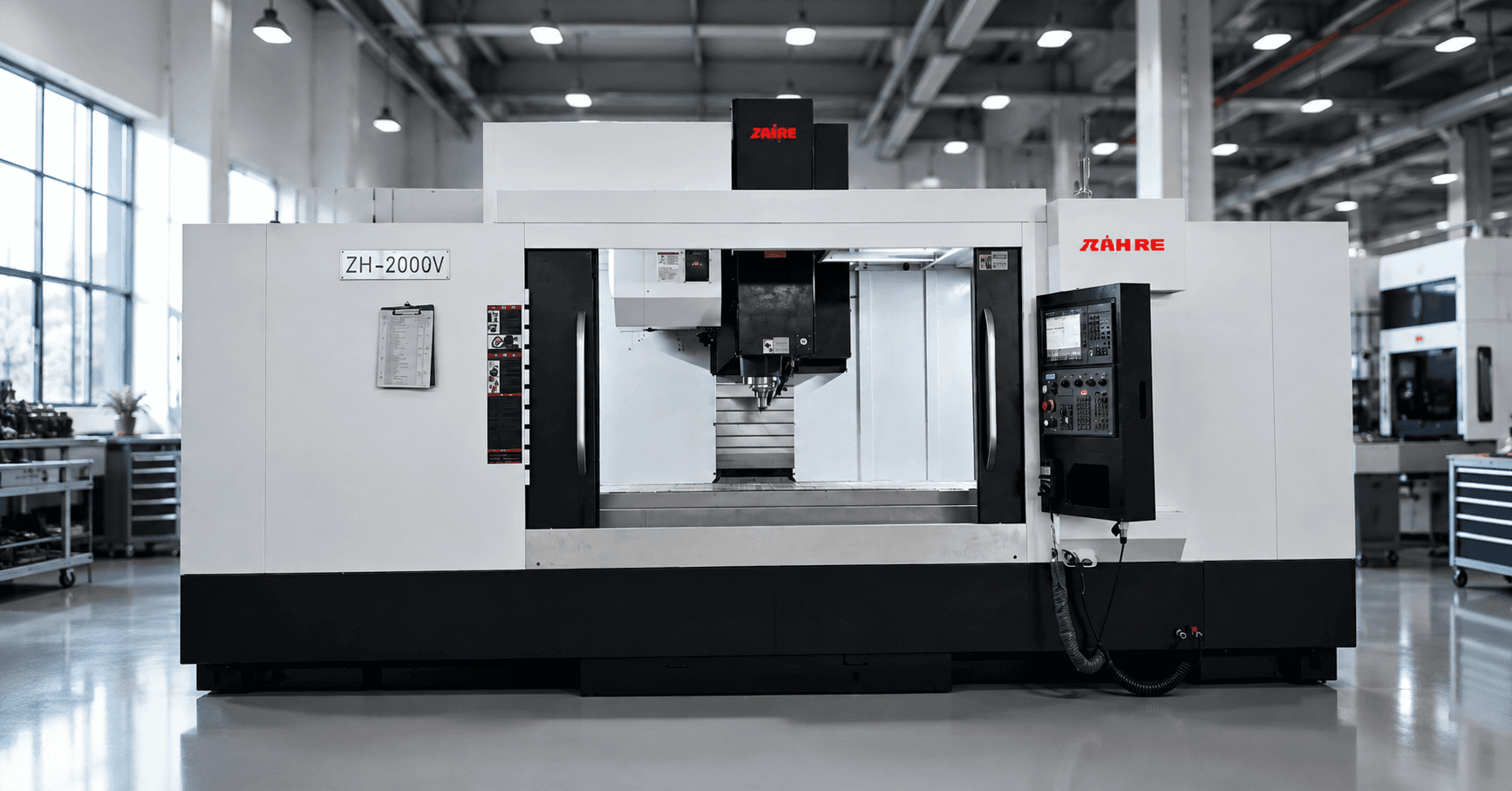
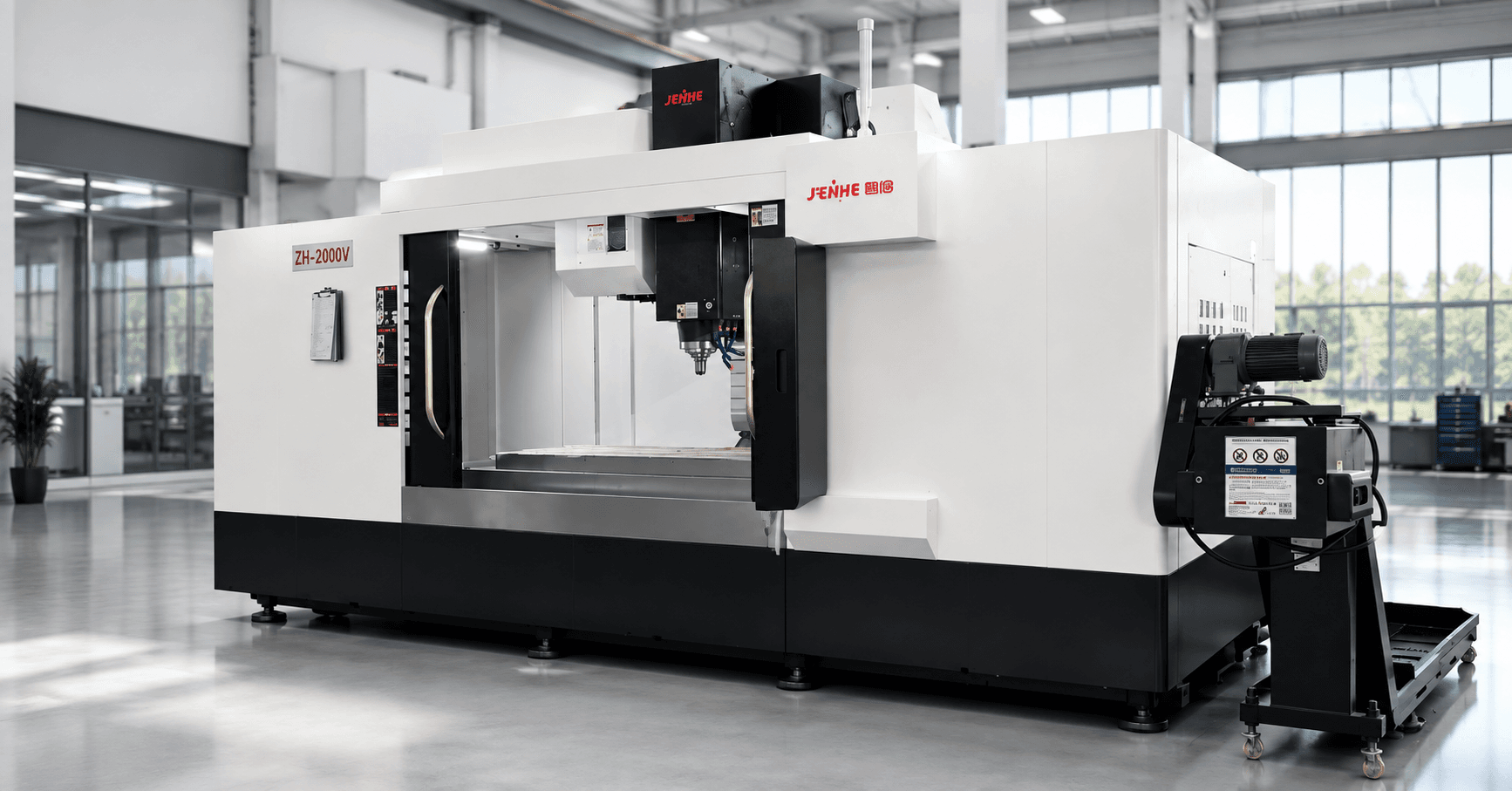
The Zhihe CNC horizontal machining center product page emphasizes a fixed-column integral structure, cross-slide table layout, extra-large monolithic base, and wide-span A-shaped column. These features are described as supporting motion precision, dynamic stability, vibration resistance, load-bearing capacity, rigidity, and thermal stability.
For buyers, this structure should be part of the manufacturer evaluation.
A serious manufacturer should be able to explain why the structure is suitable for heavy-duty industrial machining. How does the base support large workpieces? How does the column resist deformation? How does the cross-slide table layout improve movement stability? How does thermal stability affect long machining cycles?
If the supplier cannot connect machine structure to production results, the buyer should ask more questions.
Look at Multi-Face Machining Capability
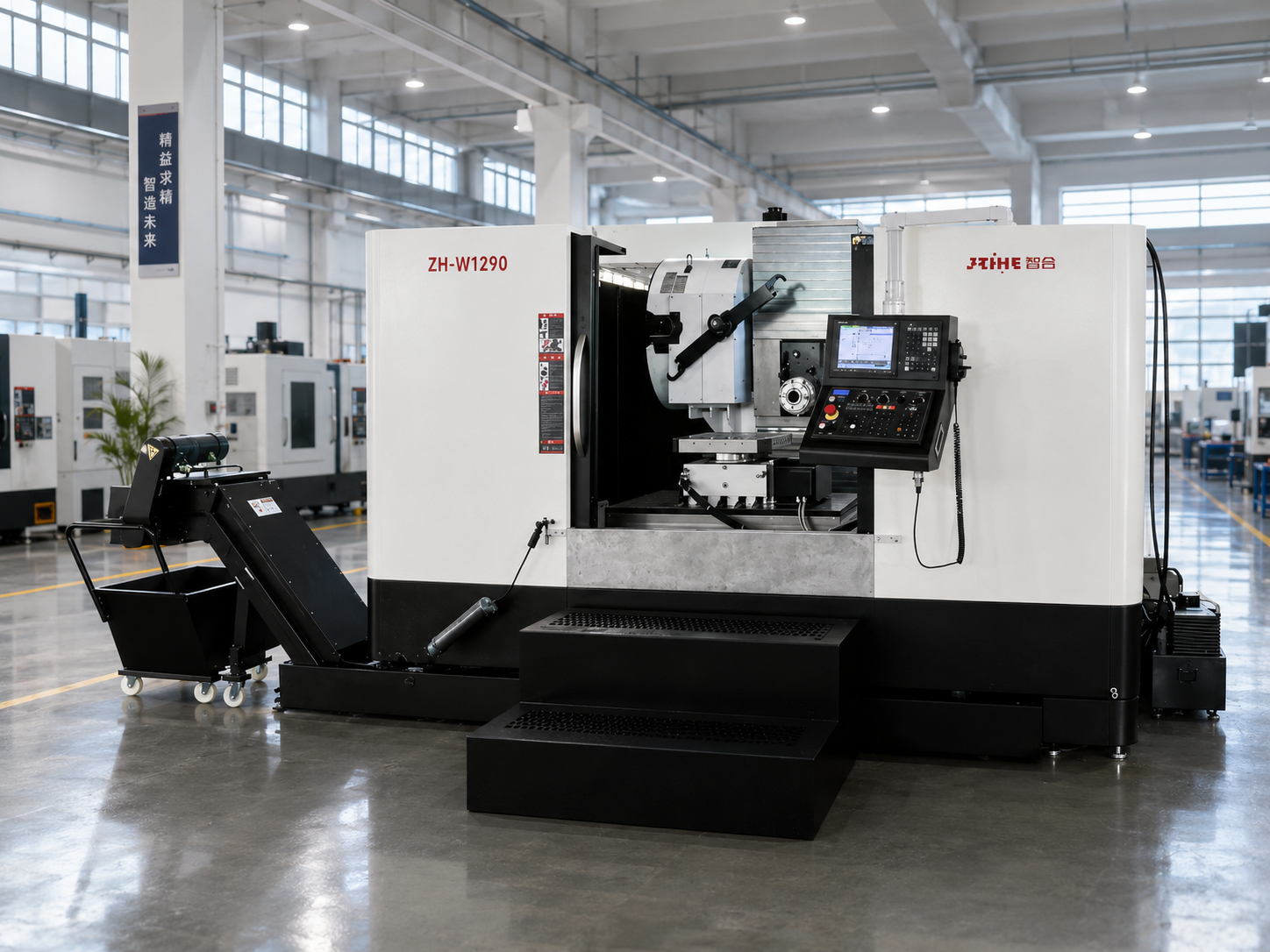
The product page highlights a precision CNC rotary table with arbitrary angle positioning, optional five-axis linkage expansion, and single-setup multi-face composite machining capability.
This is important because many buyers search for a horizontal machining center to reduce setup count. If the rotary table and fixture arrangement do not support the part family, the machine may not deliver the expected benefit.
Buyers should ask the manufacturer:
| Question | Why It Matters |
|---|---|
| Can the machine complete our key parts in fewer setups? | Shows real process value |
| What rotary table accuracy is available? | Affects multi-face alignment |
| Is arbitrary angle positioning supported? | Useful for varied industrial parts |
| Can five-axis linkage be added if needed? | Supports future capability planning |
| What fixture approach is recommended? | Determines loading and stability |
| Can sample machining be discussed? | Verifies process suitability |
The right manufacturer should answer these questions based on the buyer’s drawing, not only a standard specification sheet.
Application Experience Should Match the Buyer’s Industry
The Zhihe CNC product page lists applications including medium and large-sized housings, valve components, industrial enclosures, disk and sleeve components, automotive powertrain parts, construction machinery components, high-end molds, energy equipment parts, and general industrial machinery.
This application range is useful for B2B buyers because it shows the machine is positioned for heavy-duty industrial use rather than light general machining.
Still, buyers should not stop at the application list. They should ask whether the manufacturer has experience with similar parts, similar materials, or similar tolerances.
For example:
- A valve manufacturer should ask about bore accuracy and sealing surfaces.
- A powertrain supplier should ask about batch consistency and multi-face machining.
- A construction machinery supplier should ask about heavy workpiece handling.
- A mold manufacturer should ask about finish stability and long-cycle accuracy.
- An energy equipment buyer should ask about large component support and process repeatability.
A good manufacturer can turn a general machine into a more application-specific recommendation.
Operator-Friendly Design and Maintenance Access
Machine usability matters. A machine that is difficult to access, clean, or maintain can lose productivity quickly.
The Zhihe CNC page states that the machine features a fully enclosed protection system for chip and coolant containment, operator safety, and a clean production environment. It also highlights ergonomic layout and accessible maintenance channels that help improve operational efficiency and reduce maintenance downtime.
Buyers should ask about:
- Door access
- Loading method
- Fixture installation space
- Operator visibility
- Control interface position
- Maintenance channels
- Chip and coolant handling
- Daily inspection requirements
These details may not look dramatic, but they affect daily production. If operators struggle to load parts or maintenance staff struggle to access service points, the machine may lose time every week.
Customization and Future Expansion
The product page mentions customized machining solutions and optional five-axis linkage expansion.
For buyers, this can matter in two ways.
First, the current machine should fit today’s parts. Second, it should not block future work if the factory’s product mix changes.
A buyer may currently machine industrial enclosures, but future orders may include more complex powertrain parts. A valve manufacturer may later need improved angular positioning. A machinery component supplier may want to reduce setups further.
The manufacturer should help buyers understand what is standard, what is optional, and what can be customized.
This avoids two problems: overbuying features that are not needed now, and underbuying a machine that becomes limiting too soon.
What Buyers Should Include in an Inquiry
A useful inquiry should include enough technical detail for a meaningful recommendation.
Buyers should send:
| Required Information | Why It Helps |
|---|---|
| Part drawings | Shows geometry and machining faces |
| Material | Determines cutting load and tooling |
| Maximum workpiece size | Confirms machine envelope |
| Workpiece weight | Confirms table and fixture planning |
| Tolerance requirements | Helps evaluate precision needs |
| Current process | Shows where setup reduction is possible |
| Batch quantity | Helps judge productivity needs |
| Surface finish requirements | Affects spindle and vibration expectations |
| Automation needs | Influences loading and future expansion |
| Destination country | Affects packaging, delivery, and service planning |
A manufacturer that answers with a detailed process-based recommendation is usually more useful than one that only sends a price.
How Buyers Should Compare Suppliers
When comparing horizontal machining center suppliers, buyers can use a simple evaluation framework.
| Evaluation Area | What to Look For |
|---|---|
| Machine structure | Fixed-column design, monolithic base, column rigidity |
| Multi-face machining | Rotary table, indexing, fixture compatibility |
| Heavy-duty capability | Load-bearing, vibration resistance, thermal stability |
| Application fit | Similar parts and industries |
| Operator design | Enclosure, control interface, maintenance access |
| Customization | Options and future expansion |
| Service support | Installation, training, spare parts, after-sales |
| Communication quality | Clear technical answers, not vague claims |
This framework helps buyers avoid being distracted by price alone.
Common Mistakes in Manufacturer Selection
One common mistake is choosing the supplier with the fastest quote. Fast replies are good, but a fast quotation without technical review may not be reliable.
Another mistake is comparing machine models without comparing support. For heavy-duty machining, installation, training, spare parts, and maintenance guidance can affect uptime.
A third mistake is ignoring fixture planning. Even a good horizontal machining center will underperform if the fixture is poorly designed.
Some buyers also forget to discuss future part mix. If the machine will serve multiple customers or changing orders, flexibility matters.
Finally, do not rely only on marketing words such as “rigid” or “stable.” Ask how rigidity and stability are achieved in the machine structure.
FAQ
What should buyers look for in a horizontal machining center manufacturer?
Buyers should look for strong machine structure, rotary table capability, application experience, customization support, service capability, and clear technical communication.
Why is fixed-column structure important?
A fixed-column integral structure can support motion precision and dynamic stability, especially when paired with a strong base and rigid column design.
What industries can use this type of horizontal machining center?
The product page lists housings, valve components, industrial enclosures, disk and sleeve components, automotive powertrain parts, construction machinery components, molds, energy equipment parts, and general industrial machinery.
Should buyers ask for customization?
Yes, especially when workpieces are heavy, multi-face, accuracy-sensitive, or part of a changing production mix.
What is the best first step before requesting a price?
Send drawings, material, workpiece size, weight, tolerances, machined faces, current process problems, and expected output.
Conclusion
Choosing a horizontal machining center manufacturer is a production decision, not only a procurement task. The right supplier should help buyers match machine structure, rotary table capability, enclosure design, maintenance access, customization options, and application experience to real workpieces.
The Zhihe CNC horizontal machining center provides a strong reference point with its fixed-column integral structure, cross-slide table layout, extra-large monolithic base, wide-span A-shaped column, thermal stability, fully enclosed protection, precision CNC rotary table, optional five-axis linkage expansion, and single-setup multi-face machining capability.
For buyers machining large housings, valve components, industrial enclosures, powertrain parts, construction machinery components, high-end molds, or energy equipment parts, the best sourcing process begins with the part drawing. A good manufacturer will use that information to recommend a machine and process. A weak supplier will only quote a model.