An industrial CNC machining center must perform on three clocks: the seconds inside a cutting cycle, the hours that govern factory flow, and the months or years that determine readiness, recovery, and ownership cost. Zhihe CNC uses this three-clock model to prevent a fast demonstration cycle from being confused with dependable production capacity.
The model helps production managers, planners, process engineers, maintenance teams, and capital equipment buyers. It connects the part program to loading, tools, inspection, queues, staffing, maintenance, spares, backups, and improvement without pretending that every minute is spindle time.
Clock 1 Starts at the Cutting Edge
List operations, materials, tools, holders, projections, engagement, speed, torque, power, feed, coolant, chip form, surface objective, and duration. Separate roughing, drilling, tapping, semi-finishing, finishing, probing, and tool-change events.
Zhihe CNC recommends building a duty portfolio, not one average cycle. The operation that limits spindle, structure, tool life, temperature, or chip removal should be visible.
Read the Seconds as a Duty Trace
| Cycle segment | Evidence | Hidden risk |
|---|---|---|
| Load and locate | Repeatable method | Manual variation |
| Cut | Duty and tool data | Unsustainable peak |
| Tool event | Trigger and sister logic | Unexpected stop |
| Probe | Decision and response | Uncontrolled offsets |
| Unload | Accepted-part check | Defect passed forward |
The trace distinguishes value-creating cutting from necessary supporting time and recoverable loss.
Use a Thermal Window, Not a Warm-Up Guess
Record ambient range, idle history, spindle duty, axis movement, coolant condition, reference checks, compensation, and the time when critical features are accepted. The ISO 10791 series reference provides machining-centre test context, while the production thermal sequence remains application-specific.
An industrial CNC machining center should be tested under the work pattern expected on the floor.
Clock 2 Begins When the Job Enters the Queue
Map material readiness, fixture availability, program approval, tools, offsets, inspection plan, operator assignment, and machine status before a job is released. Measure time waiting for each prerequisite.
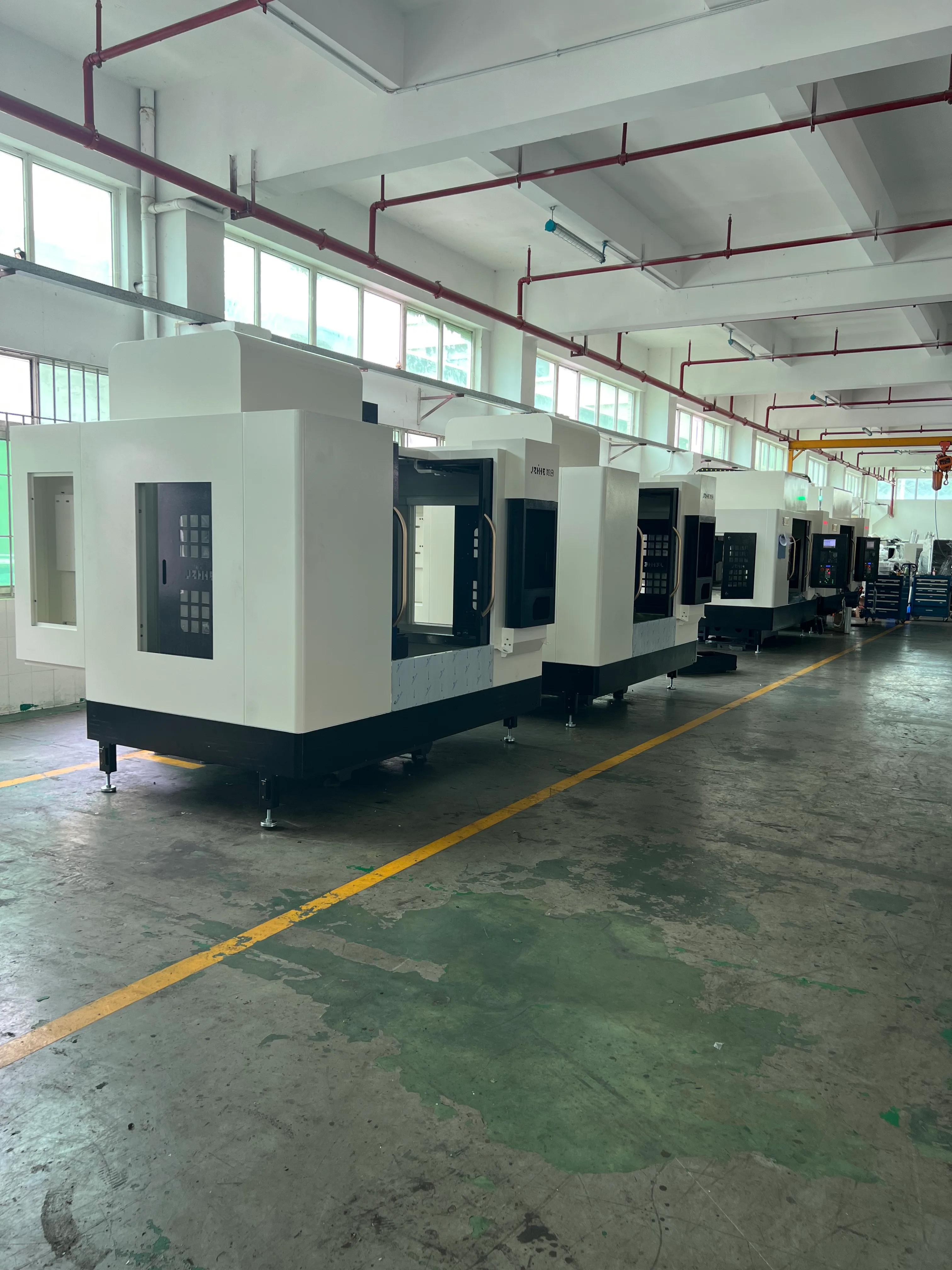
Build an Accepted-Time Waterfall
| Shift bucket | Measure | Owner |
|---|---|---|
| Scheduled time | Available minutes | Production planning |
| Planned stops | Setup and maintenance | Operations |
| Running time | Actual cycle and minor stops | Cell team |
| Quality time | Accepted versus reworked | Quality |
| Released output | Parts available to next step | Value stream |
Use actual samples and state uncertainty. Do not multiply an ideal cycle by shift length and call the result capacity.
Let Changeover Compete With Batch Size
Include fixture exchange, cleaning, tool loading, preset, program and revision checks, offsets, probing, first-piece inspection, approvals, and material staging. Compare changeover time with inventory, lead time, demand variation, and the risk of mixed revisions.
Zhihe CNC recommends separating one-time launch work from repeatable changeover work so improvement targets remain realistic.
Measure Chip and Coolant Time Outside the Program
Track chip escape, conveyor behavior, cavity cleaning, filter service, coolant concentration, top-up, temperature, mist or extraction tasks, disposal, and floor cleaning. Some losses occur while the spindle is stopped; others degrade tools and quality while the program continues.
The clock model assigns both kinds of loss to a controlled maintenance or process action.
Add Inspection as a Capacity Consumer
Record on-machine checks, offline measurement, sample frequency, instrument availability, environmental conditioning, report review, disposition, and recheck. An inspection bottleneck can make machine output invisible to the next operation.
An industrial CNC machining center capacity model should count accepted released parts, not parts merely removed from the table.
Clock 3 Tracks Evidence That Ages
Calibration, kinematic checks, backups, software versions, supplier status, service contacts, training, spare availability, foundation condition, coolant system health, and critical fixtures all have a useful life. Set expiry or review triggers.
Zhihe CNC recommends a calendar linked to risk and operating history rather than identical intervals for every task.
Time Preventive Maintenance by Failure Consequence
List lubrication, filters, coolant, spindle care, axis checks, air, electrical cabinet, chip system, guarding, probes, tool changers, fixtures, backups, and housekeeping. Define condition, interval, owner, evidence, and what happens when the task is overdue.
A short planned stop can protect a much longer production interruption when the task addresses a known failure path.
Rehearse a Clock Reset After a Fault
Select realistic events such as tool breakage, probe failure, power interruption, alarm, collision, software restore, or accuracy drift. Record safe state, fault data, diagnosis, authorization, repair, reference checks, program restart, stock condition, verification, and release.
Recovery time should end when accepted production resumes, not when the alarm disappears.
Bring Safety Into Every Clock
The OSHA machine guarding resource provides general context. Responsible teams must evaluate delivered guarding, doors, interlocks, ejection, chips, coolant, loading, fixtures, automation, maintenance, and local rules.
Never reduce a measured cycle by defeating a safeguard or moving a maintenance task into an uncontrolled production condition.
Audit the Industrial CNC Machining Center After 90 Days
Compare predicted and actual cutting duty, setup, minor stops, tool life, inspection, queues, quality losses, maintenance, faults, spare use, interventions, and accepted output. Update standards and the business case using evidence.
The industrial CNC machining center should become more predictable as the three clocks are linked. Zhihe CNC uses the audit to separate machine limitations from readiness, process, staffing, or support constraints.
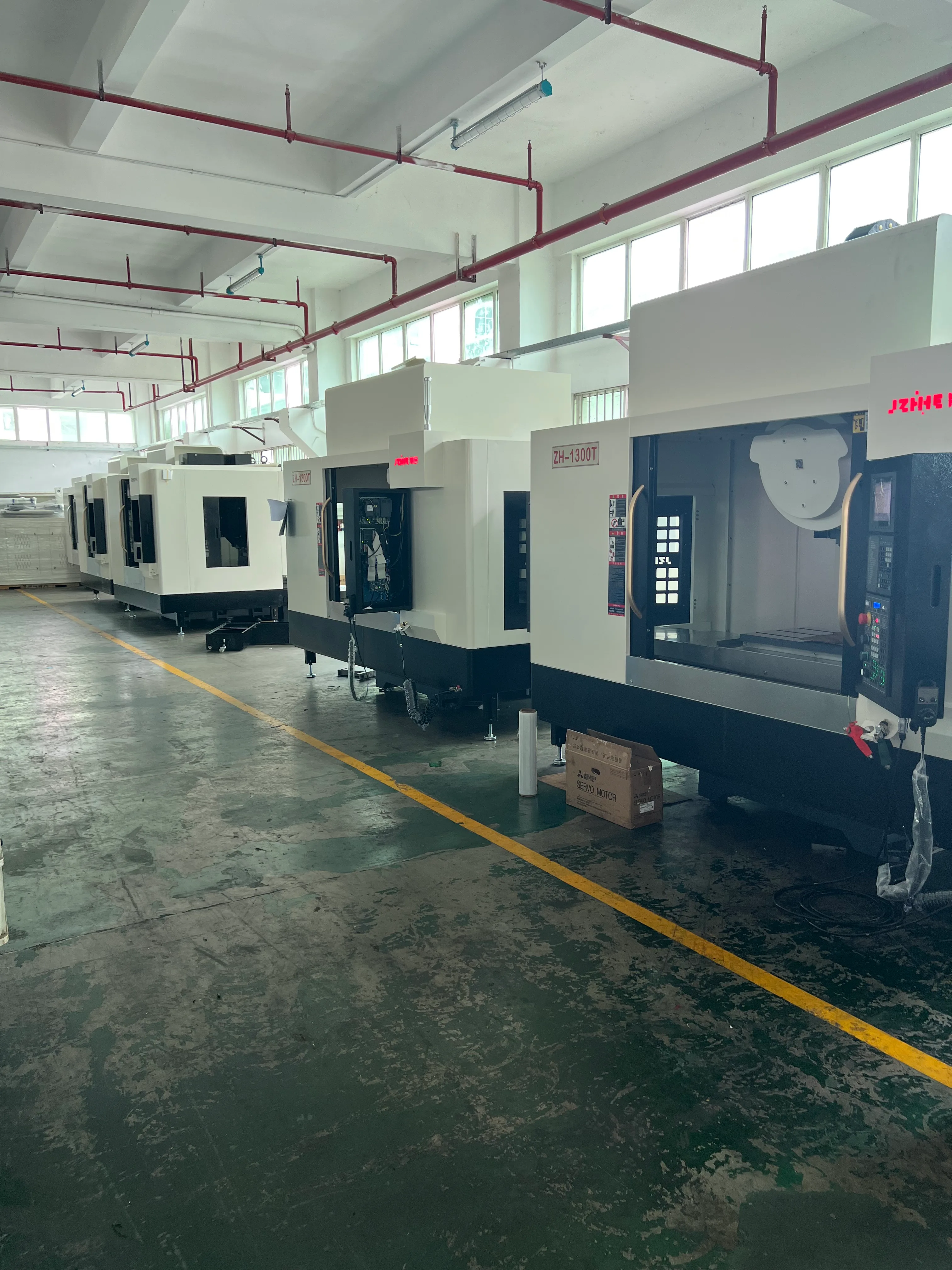
Make the Three Clocks Agree Before Capital Approval
Capital approval should show how seconds, shifts, and lifecycle events support one accepted-output objective. Begin with a representative part portfolio and identify the operation that limits cutting duty. Then add setup, tools, probing, cleaning, inspection, queues, maintenance, expected faults, recovery, staffing, and demand variation. State which values are measured, estimated, conditional, or not yet known.
Use three scenarios. The protected case uses conservative tool life, longer inspection, normal changeovers, and realistic recovery. The expected case uses current proven standards. The opportunity case includes improvements only when owners, investments, and evidence plans are identified. Do not present the opportunity case as guaranteed capacity.
An industrial CNC machining center proposal should also identify the clock that limits each shift. One product family may be cutting-limited, another may be fixture-limited, and a third may be inspection-limited. A single utilization percentage hides these different corrective paths.
Zhihe CNC recommends assigning leading indicators to each clock: spindle-duty exposure and tool events for Clock 1; readiness, queue age, changeover, and released output for Clock 2; overdue maintenance, backup age, skill coverage, spare risk, and recovery time for Clock 3.
Translate the model into staffing and infrastructure decisions. Identify who prepares tools, maintains fixtures, approves first pieces, services coolant, analyzes alarms, restores backups, and authorizes production after repair. Confirm that presetters, gauges, lifting devices, network access, utilities, and maintenance windows exist when the schedule expects them. Capacity that depends on unavailable support is only theoretical.
The approval meeting should end with a baseline, sensitivity range, data collection plan, and 30-, 60-, and 90-day review. If the three clocks disagree, resolve the constraint before adding more nominal machine capacity.
Know What the Three Clocks Cannot Promise
The model cannot guarantee demand, uptime, yield, cycle, tool life, or payback. Material, utilities, fixtures, programs, operators, maintenance, inspection, and management discipline influence results. It makes time losses and dependencies visible; it cannot remove every production uncertainty. Results from one part family, shift, season, or factory should not be copied to another without checking duty, environment, skills, supply, quality, and recovery assumptions. Use the clocks as a living decision model and update them when production conditions materially change, especially after new parts, new shifts, major maintenance, software changes, or process redesign across the factory.
FAQ
Why use three clocks instead of OEE alone?
The clocks expose application duty, factory flow, and lifecycle readiness before they are compressed into one indicator.
Which cycle should be used for planning?
Use a representative distribution including tool events, probing, minor stops, and accepted-quality outcomes.
Does a faster spindle guarantee more output?
No. Tool limits, chips, changeover, inspection, queues, maintenance, and demand can dominate capacity.
How should warm-up be planned?
Base it on feature risk, thermal behavior, operating pattern, reference checks, and verified production evidence.
What counts as accepted output?
Count parts that pass the agreed quality gate and are released to the next operation or customer.
When should changeover be improved?
Prioritize repeatable losses that constrain lead time, capacity, batch flexibility, or revision control.
How is recovery time measured?
Measure from interruption through safe diagnosis and repair until verified accepted production resumes.
Which evidence needs an expiry date?
Use expiry or triggers for calibration, software, backups, training, suppliers, spares, fixtures, and process baselines.
What belongs in a 90-day audit?
Review duty, setup, stops, tools, quality, queues, maintenance, faults, interventions, and released output.
Which data should be sent for Zhihe CNC capacity review?
Send part families, routes, cycles, batches, shifts, losses, staffing, inspection, maintenance, and output goals.
Map the Three Clocks With Zhihe CNC
To evaluate an industrial CNC machining center, send Zhihe CNC the part family, materials, process route, duty, setup, tool plan, inspection, batches, shifts, accepted output, maintenance, and recovery expectations. Explore the machine range, review the Zhihe CNC background, and use the contact page to build a three-clock capacity model.