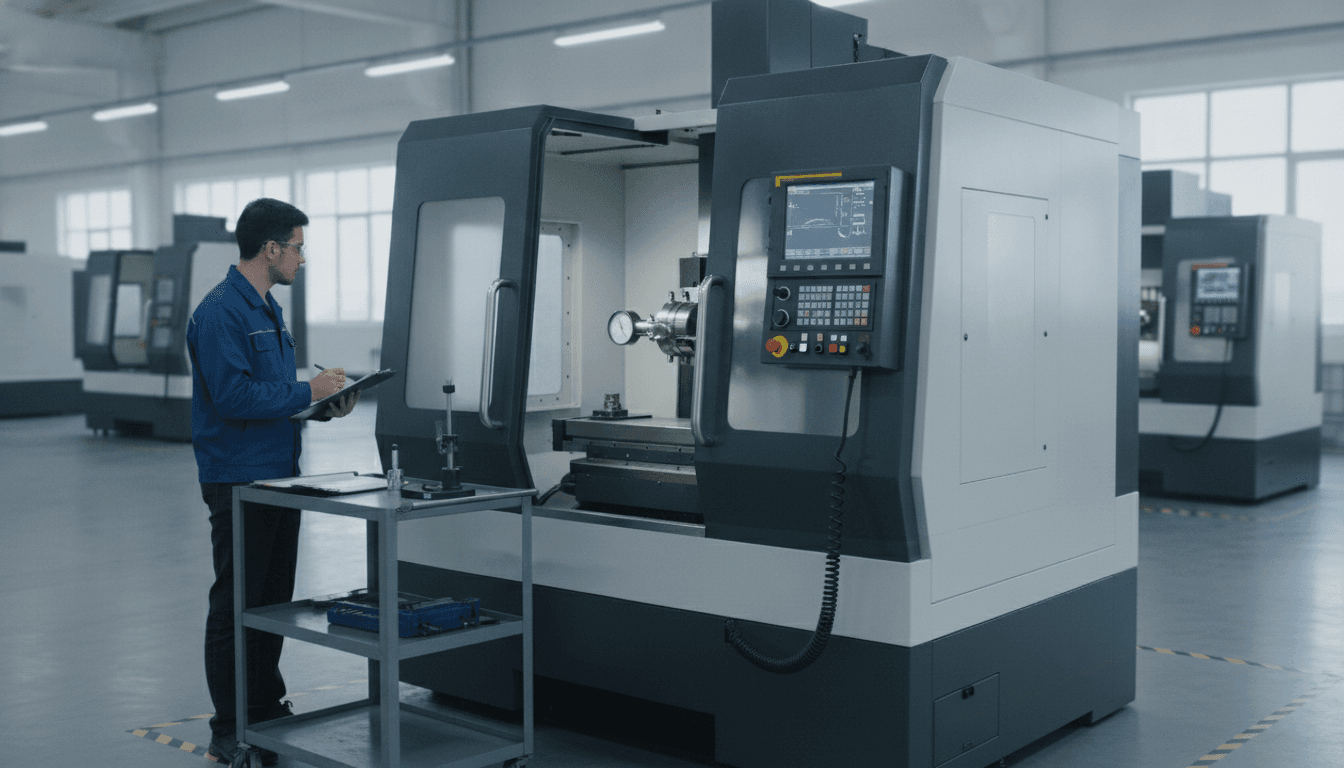
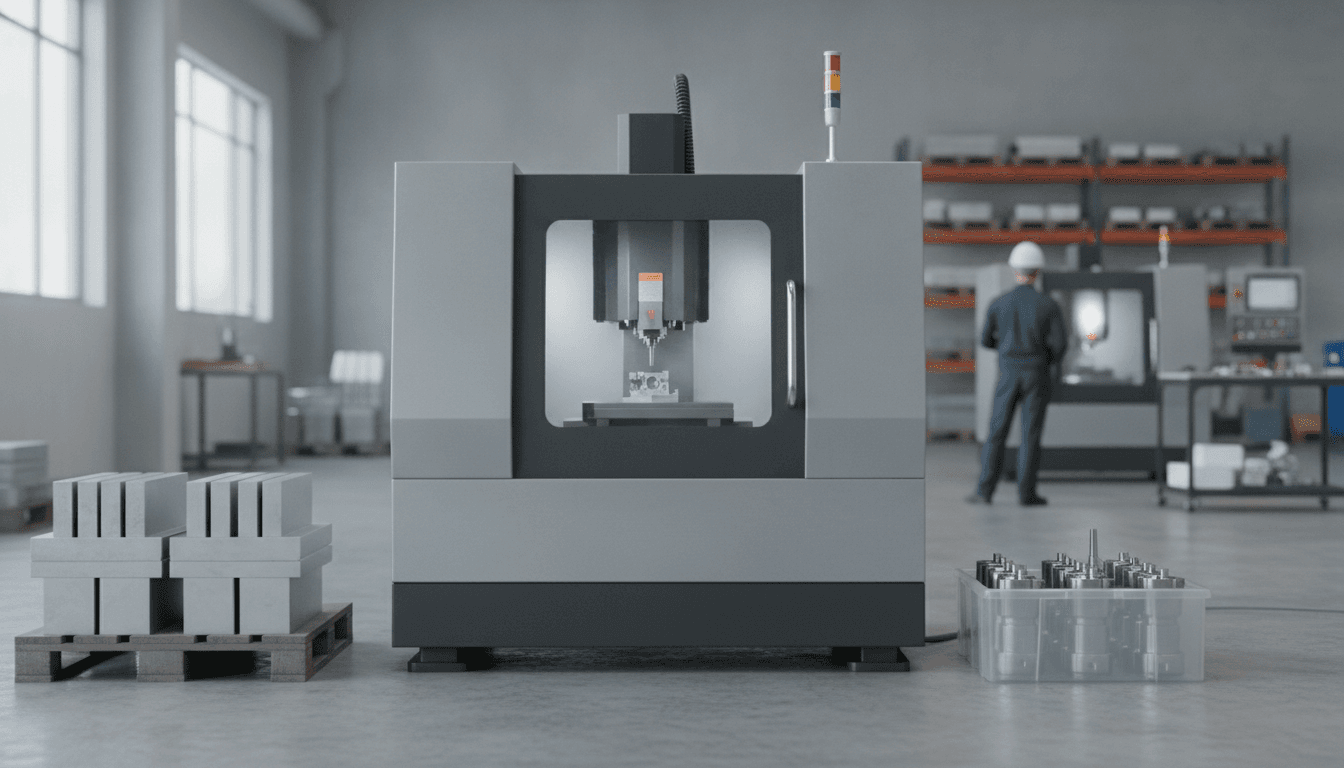
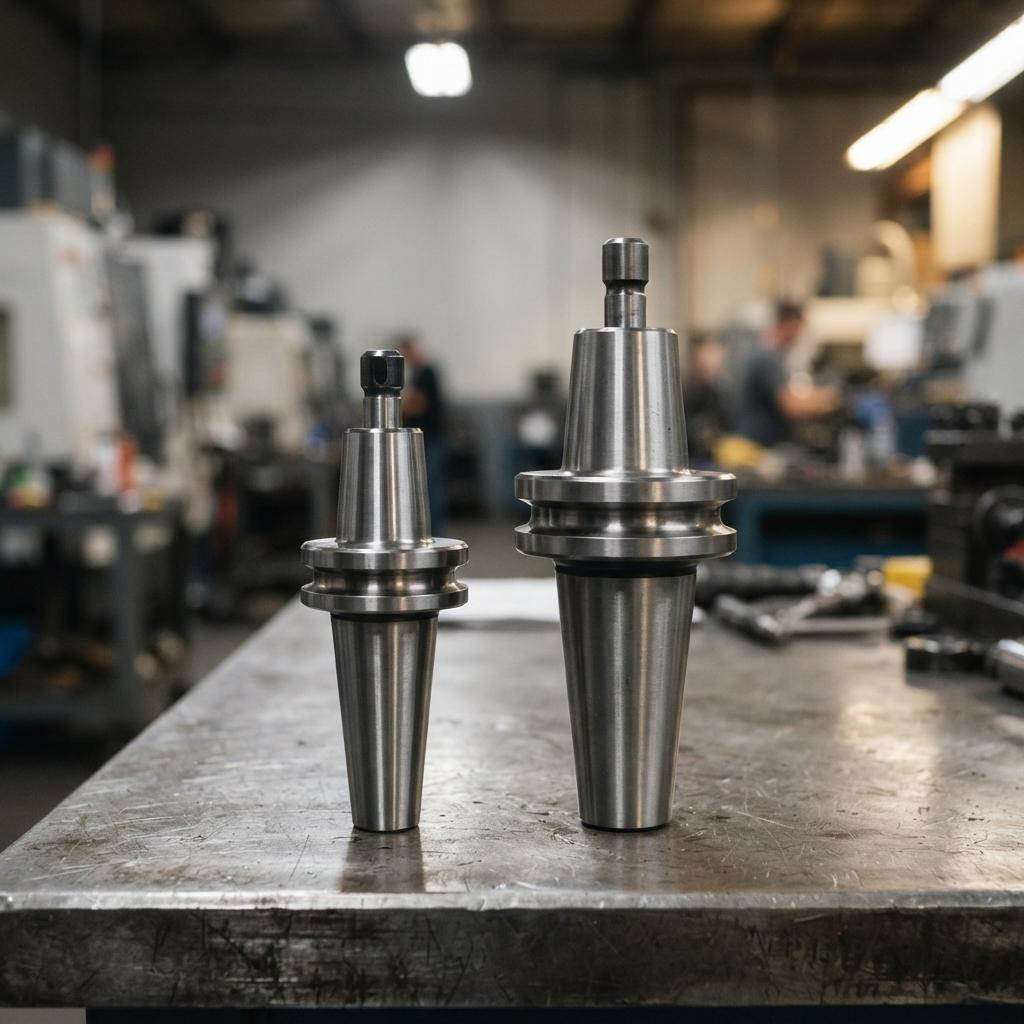
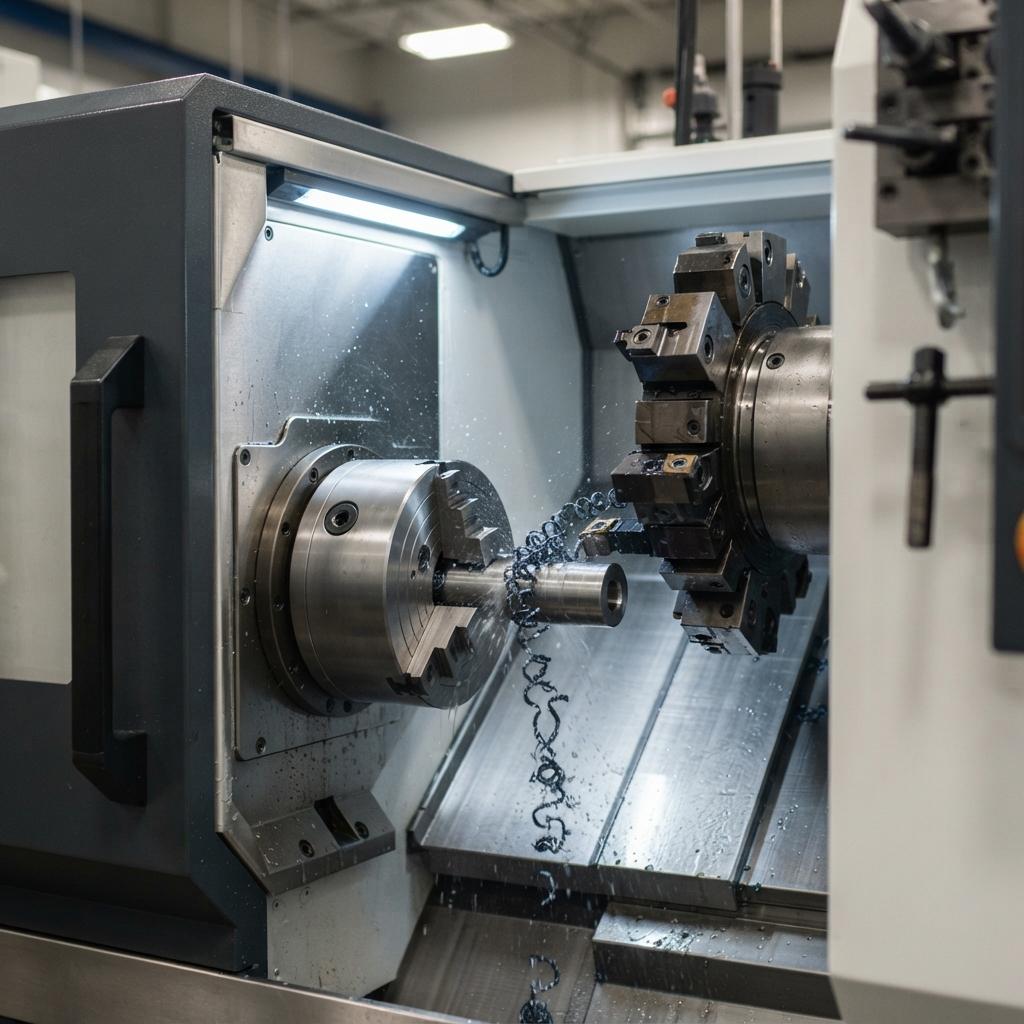
A small CNC machining center is a compact production machine built around small and medium-size parts: drilling, tapping, spot-facing, multi-step hole work and light milling. It is not a shrunken heavy vertical machining center. Buy one as if it were and your first deep pocket in 304 stainless will tell you so, loudly, at the spindle.
What decides the purchase isn't the spec sheet. It's your parts. Size the working envelope with the fixture bolted on, count the tools you cannot share between jobs, and weigh milling load against hole work. A small CNC machine for batch production earns its floor space on fast hole making and quick tool changes, not on cubic inches of metal removed per hour.
And most buyers here are really shopping for a CNC drilling and tapping center for small parts. Zhihe's ZH-600T, with a 20,000 rpm direct-drive spindle, is pitched at exactly that duty. Start from drawings. Argue about options later.
What Can a Small CNC Machining Center Take in a Job Shop?
Mostly holes. Holes, threads, spot-faced pads and the light milling around them. That's the honest job description of a small CNC machining center, and it's why the thing pays for itself so quickly on small work.
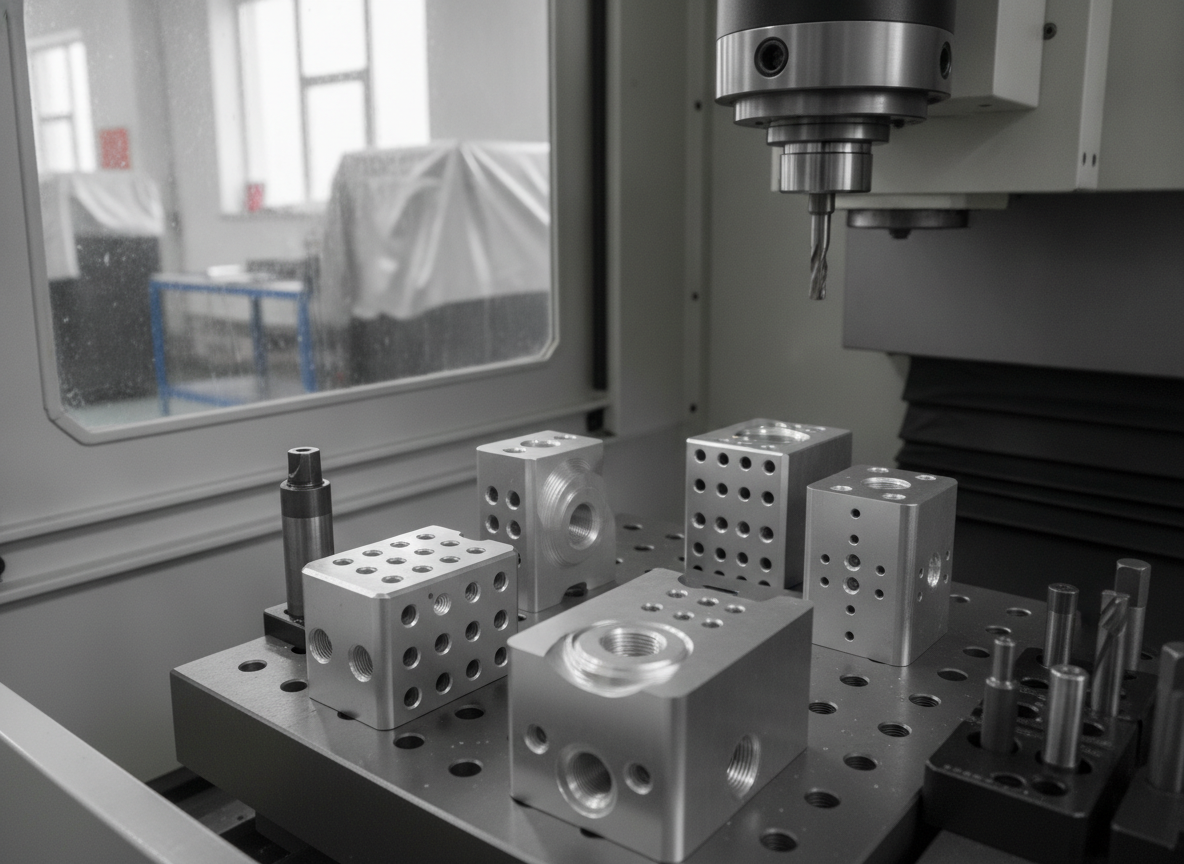
So what belongs on one? Treat the list below as engineering guidance on the work this class of machine handles well — not a tally of what other shops happen to run.
- Small and medium housings and brackets: a dozen holes on one face, tapped threads, one pad that must sit flat. Tool changes often cost more time than the cut, so indexing speed decides your cycle.
- Fixture plates and batch plate work. Repeated drilling rewards a solid fixture far more than extra spindle power ever will.
- Hardware and 3C parts — tiny tapped holes, counterbores, chamfers, engraving. The ZH-600T turns to 20,000 rpm for exactly this kind of work.
- Light milling: a 2 mm slot in aluminum 6061, a brass pocket, a shallow keyway in mild steel cut with a small sharp tool. Skip it if half the block has to come off.
Materials follow the same logic. Aluminum 6061 and brass run fast and forgive a small cutter. Mild steel drills and taps fine at modest depth, less so when you slot it. Plastics want sharp edges and chips that actually leave the hole.
What you're buying is fast hole making and an automatic tool changer that keeps the spindle in the cut. Not stock removal. Roughing a 100 × 100 block down to size is a different machine. Before you fix the tool list, read the cnc drilling and tapping center for small partsguide; tool count drives everything else.
What a Small CNC Machining Center Should Refuse
Compact does not mean small VMC. That assumption is the most expensive one in this category. A small CNC machining center such as the ZH-600T is a drilling and tapping platform with a 20,000 rpm direct-drive spindle, and it earns its keep on hole work, not on hogging metal. It will not out-machine a small vertical machining center on shoulders and pockets either.
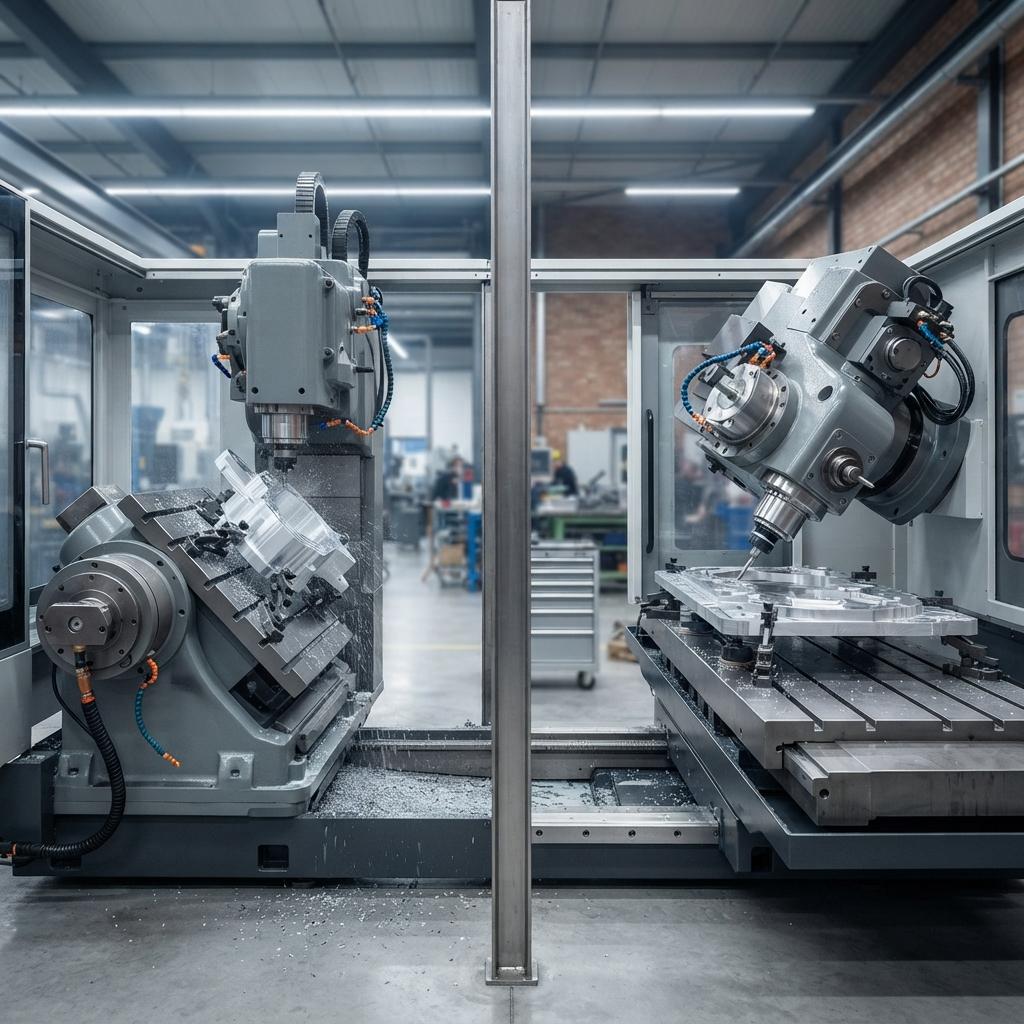
So refuse what it wasn't built for. Heavy face milling with a wide cutter. Deep pockets in stainless steel 304 or a chromoly block. Taps past about M12 in hard material, where torque demand climbs steeply. Long, slender tools that flex before the edge bites. Five-axis contours, unless you actually bought a cradle-type five-axis machine; Zhihe's compact model runs a 12,000 rpm electric spindle for medical, optical and impeller work, and even that is no mold hog.
Why be strict? A punished cut seldom fails loudly. The damage surfaces weeks later: linear guideway preload loaded the wrong way, spindle runout creeping past your tolerance band, a tap cutting two threads undersize somewhere in the third thousand parts. Geometry drifts, tool life shortens, and batch repeatability leaves with it.
Ask what your worst cut looks like, not your average one, and be honest about duty cycle. This guide on choosing a machine by how hard it workssays the same thing in more detail.
How Do You Size a Small CNC Machining Center From Real Parts?
Drawings beat brochures. Pull the ten parts that carry most of your revenue and measure the machine against them one at a time.
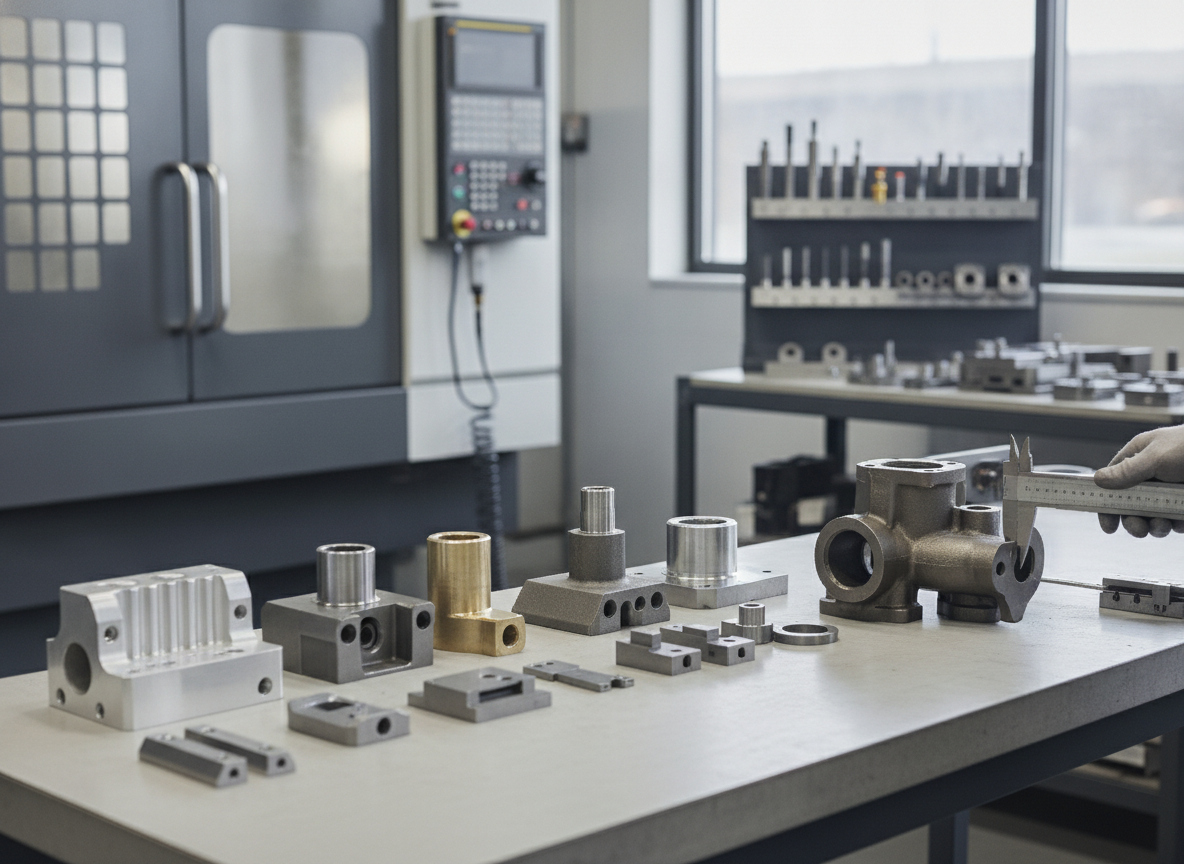
- Largest envelope, fixture included.Add the vise, fixture plate and tool clearance to your biggest part, not the bare part size. Plenty of machines fit the part and lose the job to the workholding.
- Feature mix.Count holes, threads, spot-faces and pockets separately. A part that's 90% hole work suits a drilling and tapping center; 40% pocketing pushes you toward a VMC.
- Tolerance stack.Hole position and thread depth usually decide the model, not the outer profile. Write down the tightest true position before you compare anything.
- Material.6061 and brass cut freely. The same part in 304 stainless raises torque demand and cycle time.
- The tool list you cannot share.Two features needing one cutter at different depths mean two stations. If tool capacity can't hold the whole set, you'll be resetting mid-batch.
- Cycle-time split.Log seconds per operation. When drilling and tapping eat 70% of the clock, buy speed there. Our longer piece on matching a machine to production workcovers that trade-off.
- Batch size and changeover.A 200-piece run justifies a dedicated fixture; a 20-piece mix doesn't. A small CNC machine for batch production earns its keep on repeat setups, not one-offs.
- Chip and coolant access.Swarf piles up where hands can't reach. Check that chips fall clear of the table, or the operator becomes the chip conveyor.
- CNC controller.Confirm macro programs, tool-life management and rigid tapping are standard, not paid options.
Small Vertical Machining Center vs Drilling and Tapping Center vs High-Speed Mill
Three machine types get quoted for the same part. They don't do the same work, and picking wrong shows up as scrap before it shows up as an invoice.
| Drilling and tapping center | Small vertical machining center | High-speed mill | |
|---|---|---|---|
| Part fit | Small and medium housings, plates, brackets with hole patterns. ZH-600T and ZH-700T sit here. | Boxier parts needing faces, pockets and shoulders in one setup | Thin walls, small features, 3C and optical work |
| Feature mix | Drilling, tapping, spot-facing, multi-step holes, light milling | Holes plus real milling, heavier fixtures | Fine contours, engraving, shallow milling at 24,000 rpm on Zhihe's high-speed milling machining center |
| Metal removal | Low. It's a hole machine. | Moderate, geometry stays put | Low depth of cut, high feed, small tools |
| Tool count | Count the taps and drills you can't share. That number sizes the magazine. | Drills plus end mills, so more stations | Many small tools, all short |
| Batch logic | Runs of hundreds to thousands, fast changeover | Mixed batches, lower volume per part number | High-volume small parts, or work no other spindle can reach |
Verdict: choose the drilling and tapping platform when the drawing is mostly holes and threads. ZH-600T and ZH-700T earn their keep there, and nothing else on this page taps a few hundred parts faster. Take the small vertical machining center when milling and holes share one setup. The high-speed mill wins when features are finer than anything bigger can hold. And contoured work beyond all three? That's a five-axis machining center.
What Do Spindle, Tooling, and Fixture Choices Change?
Everything that decides whether the machine earns its floor space. Take the spindle first.
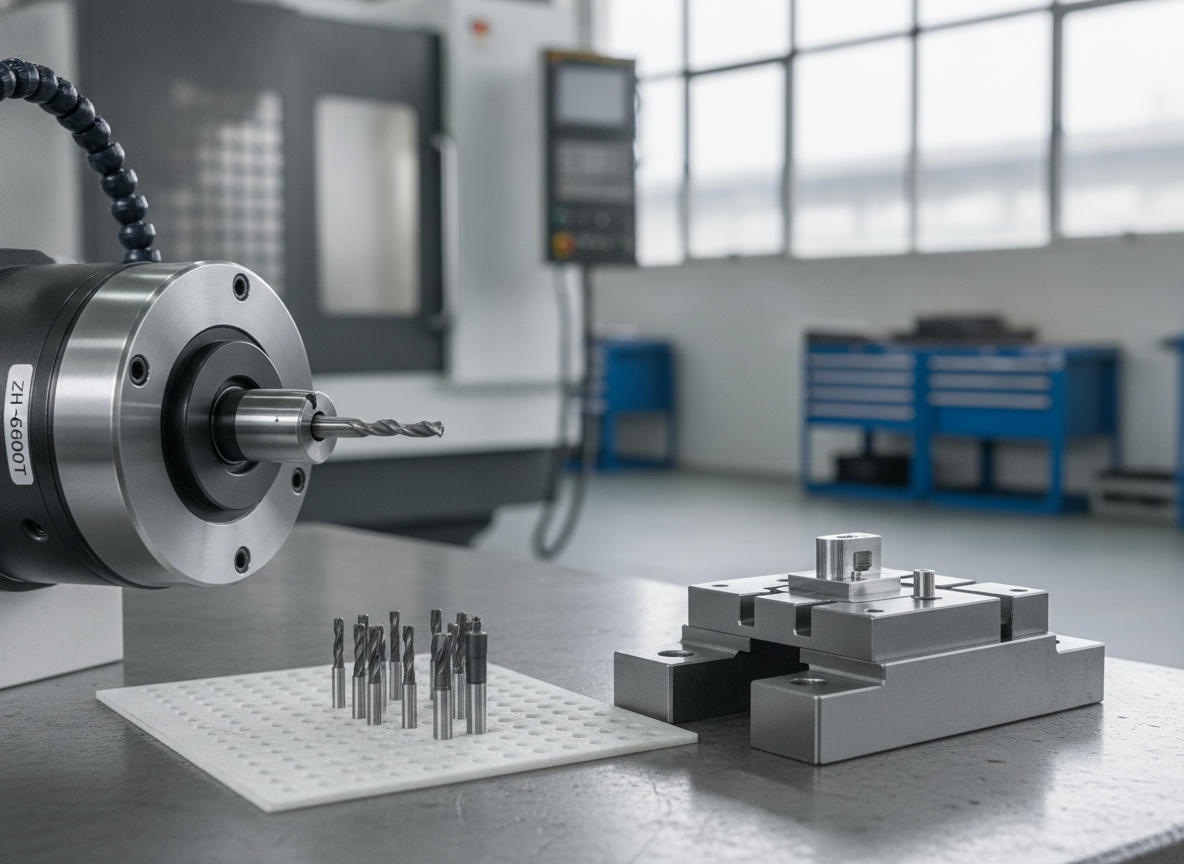
ZH-600T carries a 20,000 rpm direct-drive spindle — excellent with 3–6 mm drills and small taps, where speed is the entire point.
Ask that same spindle for low-speed torque behind a shell mill and you'll be disappointed. High rpm and low-end grunt pull against each other. Match the spindle spec to the operations on your part drawing, because no single spindle wins at both ends.
Then tool capacity. Count the tools you can't share between parts — the form tap, the chamfer tool, the spot drill nobody wants to swap mid-batch — and that number, not the changer's maximum, sets your real requirement. Extra stations buy changeover time. They don't buy accuracy. The counting method is laid out in this guide to CNC machining center tool capacity.
Repeatability is a chain, and it's only as strong as its weakest link: linear guideways, ball screws, the CNC controller's look-ahead, the automatic tool changer's return to position. Fixture rigidity and chip evacuation close the loop. A light milled slot holds tolerance when the part isn't ringing and the chips actually leave the cut. Slack in any one of those and the small CNC machining center takes the blame for what was really a setup problem.
A Real-Part Walk-Through: Sizing a Batch of Small Aluminum Housings
Prepared by the Zhihe Application Engineering Team. The customer is a 3C contract manufacturer; the name is withheld and the drawing is normalised. Figures below are a representative engineering example — the arithmetic the team works through when sizing a drilling and tapping centre — not a measured yield report from one customer's floor.
The part: a 6061-T6 aluminum housing, palm-sized at roughly 120 × 80 × 10 mm, six Ø4 mm through holes, two M5 tapped holes, one spot-faced pad and a 1.5 mm deep slot. Nothing exotic. One drawing like this settles the machine question faster than any brochure, and the lot size is where the argument actually gets made — 2,000 pieces, run in four releases a year.
| Drawing callout | What it demands | ZH-600T |
|---|---|---|
| Six Ø4 mm holes, one setup | Fast peck drilling, short hops between tools | 20,000 rpm direct-drive spindle, automatic tool changing |
| Two M5 tapped holes | Rigid tapping, go/no-go gauge on every tenth part | In range |
| Spot-faced pad | Flat, depth-controlled seat | Core duty |
| 1.5 mm slot in 6061 | Light milling, small cutter | Light milling is in scope |
| Two-up fixture on datum pins | Compact envelope, chip and coolant access | Compact machining range |
Now the numbers the team uses on this part family. Cutting time only, load and unload excluded:
| Planning item | Small VMC, two setups | ZH-600T, one setup |
|---|---|---|
| Cycle time per part | 3 min 50 s | 2 min 20 s |
| Fixture changes per 2,000-piece lot | Two, plus re-datum between ops | One |
| Cutting hours per lot | About 128 h | About 78 h |
| Hole and thread defect rate | 3.2% | 0.8% |
Where does 50 hours and roughly 48 fewer scrapped housings come from? Mostly the second setup disappearing. Re-clamping a thin-walled housing twice is where hole position drifts and M5 threads pick up burrs; a two-up fixture held on datum pins, tapped in the same cycle that drills, removes that whole class of error. The rest is spindle speed and tool-change count.
Read the second table as a routing decision, not a spec match. On this drawing the drilling and tapping centre takes the entire cycle — holes first, pad, slot last — with the tap and spot-face tool sitting in the changer so nobody re-tools mid-lot. Want the honest limit? Let the drawing grow a 12 mm deep pocket or a face mill that has to shift real metal, and quote it on a small VMC. Keep the ZH-600T drilling.
How Do You Prove the Machine on Your Parts Before It Earns Floor Space?
A showroom cut proves almost nothing. Any builder can skim a block of aluminum with a fresh tool and a warm spindle. What earns a small CNC machining center its floor space is your worst job: the deep tapped hole, the thin wall, the part that scrapped last time. Bring that one.
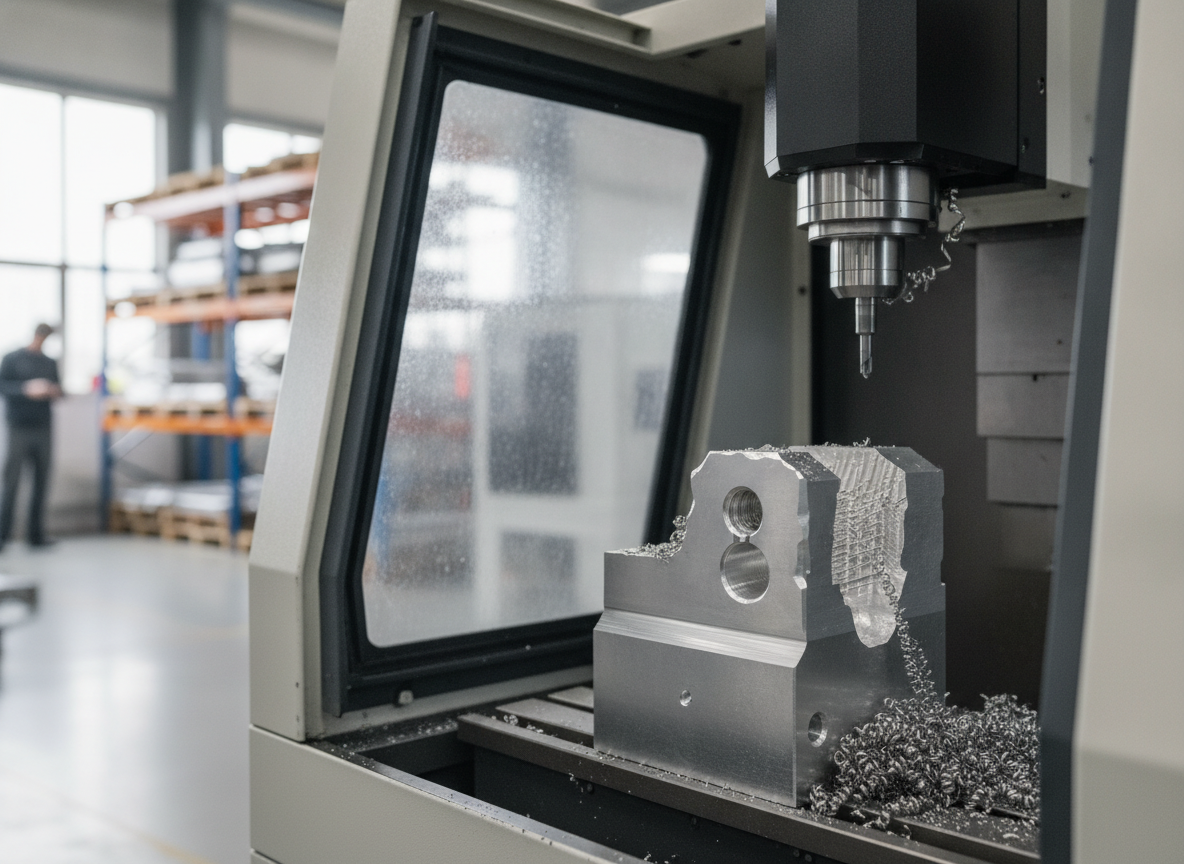
Write the acceptance plan into the purchase order before the machine ships, then stand at the control and watch every cut.
- Cut five parts from a single blank, not one. A good first-off can hide the thermal drift and tool wear that show up on part four.
- Check hole position and thread with a plug gauge and a thread gauge, logged by cavity and by tool. A hole that only fits the sample pin isn't a process.
- Run a capability study on the critical diameters, 30 pieces minimum. Cpk tells you whether the machine holds a tolerance band; hitting nominal once tells you nothing. The 1.33 threshold that buyers write into orders traces back to the Automotive Industry Action Group's SPC reference manual(2nd edition, 2005), and it only means something once the range chart is in control.
- Look at the light milled face under a lamp. Chatter shows there before it ever reaches a bore.
- Verify positioning accuracy and repeatability to ISO 230-2:2014, Test code for machine tools — Part 2: Determination of accuracy and repeatability of positioning of numerically controlled axes. For geometry, cite the right part of ISO 10791:2015, Test conditions for machining centres. Part 1:2015, Geometric tests for machines with horizontal spindle (horizontal Z-axis), is written for horizontal-spindle machines; Part 2 covers vertical-spindle machines; Part 3 covers machines with integral indexing or universal heads; Part 4 handles positioning of linear and rotary axes. A compact drilling and tapping machine normally falls under Part 2, so read the spindle configuration and name that part in the order. "ISO tested" on a spec sheet is not evidence of which part was run.
- Inspect with a coordinate measuring machine (CMM) wherever the drawing calls for true position or profile. A height gauge and a careful operator settle a drilled plate fine, but they won't resolve a position callout.
For tapped holes, work to a real routine such as this tapped-hole inspection procedure, not a hand-tapped sample waved through at the end.
Run the trial on a compact drilling and tapping machine loaded with your fixture, your tools and your program, not the demonstrator's. Zhihe's installation and training support helps your operators get to that point. It doesn't replace the proof cut, and that proof is the buyer's job.
What Does a Compact CNC Machining Center Cost to Run—and When Is OEM the Right Route?
Total cost on a small CNC machining center is purchase price plus tooling, fixtures, power, air, floor space, training, spares and scrap, summed over the years you actually run the machine.
Tooling and fixtures come first. A compact CNC machining center for job shop work often needs three or four fixture plates before it pays for itself, and those are yours to design and prove out.
Power and air stay modest. The 20,000 rpm direct-drive spindle on a ZH-600T draws far less than a heavy VMC.
Floor space isn't just footprint, either. Ask where the chip conveyor discharges and how you'll get at the coolant tank before anyone paints lines.
Then scrap. It creeps in when a buyer shaves cycle time to make the payback chart look good.
Training and spares deserve a real line in the budget, not a shrug. Zhihe ships installation and training with the machine, and the landed-cost model that puts freight, duty and commissioning on one sheetis worth reading before you sign.
So when is OEM the right route? When the part family repeats, the fixture repeats, and the automation repeats. A small cnc machine for batch production that runs the same housing every week is a fair candidate for custom CNC solutions and OEM CNC machine manufacturing. A one-off badge on a standard small cnc machining center isn't.
Three ways to start: request a quote on the model you're weighing, ask for a sample cut on your drawings, or contact a Zhihe application engineer with your part family and batch sizes. Send the drawings and the batch logic. That's the conversation worth having.
Key Takeaways for Sizing a Small CNC Machining Center
Sizing comes down to your parts.
- Start with the envelope, fixture included.A part that clears the guards but not the vise stops the job at setup.
- Count the tools you can't share.If a family needs nine, an eight-station changer forces a second op.
- Split hole work from milling.The ZH-600T earns floor space on drilling, tapping and spot-facing; heavy face milling belongs on a VMC.
- Cut your real family before you sign.Gauges and a capability run show whether hole position and thread hold across the batch.
- Compare landed cost, not price.Freight, fixture, tooling, training and spares decide payback.
Get that order right and the same machine still fits your work in year three. Zhihe builds the ZH-600T for this band of work — small and medium parts, drilling and tapping first, light milling second — and the ZH-700T buyer guide on the site covers the step up when your families grow.
Ready to move? Request a quote with your part list and annual volumes, send drawings for a sample evaluation, or contact an application engineer to walk through cycle times and fixturing. Do it before the purchase order, not after.
Frequently Asked Questions
What parts can a small CNC machining center handle?
Brackets, plates, small housings, hardware and 3C parts — the kind with a dozen holes, a few threads and a footprint you can hold in two hands. Aluminum 6061, brass, mild steel and plastics at light cutting loads all sit in range. What it wants is feature count, not cubic inches of steel to remove.
Can it replace a small vertical machining center?
Only for hole-and-thread work. A small vertical machining center carries the spindle torque and rigidity for pockets, shoulders and heavier face milling; a compact drilling and tapping machine does not. If 80% of your features are holes, the compact wins on cycle time and tool changes. If half your work is milling, buy the VMC.
How do I size one from real parts?
Start with the largest part plus its fixture, not the largest part alone. A vise and a subplate eat envelope fast. Then list the features, the tolerance stack, the material, and every tool you can't share between jobs. Splitting cycle time into hole work versus milling tells you which machine class you actually need.
Can a drilling and tapping center do light milling?
Yes: spot-facing, a shallow slot, a chamfer, a light face pass on aluminum. Depth and diameter set the limit, and stainless or alloy steel is where it stops being sensible. Push past that and you lose geometry, tool life and batch repeatability, not just one cut.
How many tools does the magazine need to hold?
Count your way to it. Write out the worst job you actually run: every drill, the spot or chamfer tool, one tap per thread size, any reamer, plus the face mill you'd like to leave loaded. A five-thread family from M3 to M8 is ten tools before you add anything else, because each tap brings its own drill. Add a spare for the taps and small drills that wear, then a pocket for a probe if you want in-machine verification. That total is your floor. Capacity below it means swapping tools mid-job, and you pay for it in setup time every cycle.
Magazine size on the ZH-600T and ZH-700T is configuration-dependent — the changer is one of the items specified per order, so the number that matters is the one printed in your quote, not a figure carried over from a catalogue page. Confirm these in writing: stations in the base configuration and the cost of a larger magazine, maximum tool diameter and weight, whether an oversized tool forces the neighbouring pocket to stay empty, tool-to-tool and chip-to-chip change times, and whether breakage detection and the controller's tool-data table come included or extra.
What thread and hole quality can it hold?
Tapped holes in aluminum and brass come out consistent when the tap, holder and coolant are right, and thread quality is mostly a process decision rather than a machine spec. Check with a thread gauge, go and no-go, plus a plug gauge on critical bores. The site's thread quality control article walks through the full plan.
What acceptance tests should I require?
Ask for geometric checks under ISO 230-1:2012 and positioning accuracy and repeatability to ISO 230-2:2014, then the machining-centre test conditions in the part of ISO 10791 that matches your spindle orientation — Part 1:2015 for horizontal spindle, Part 2 for vertical — with ISO 10791-6:2014 on speeds and interpolations and ISO 10791-7:2014 on the finished test piece. Add a runoff cut on your own part family, a capability study on critical diameters and a surface-finish check on the light milled face. One caveat, same as above: these standards define test methods and tolerances, not a grade the machine carries, and which parts apply to a drilling and tapping centre (and which axes get tested) is something you pin down in the purchase order. Get the signed records before shipment.
What drives the price?
Spindle type first — a 20,000 rpm direct-drive head costs more than a belt-driven one. Then tool capacity, controller and options, linear guideways and ball screws, and the fixture and tooling package that makes the machine productive on day one. Compare landed cost with freight and duty included, not the ex-works figure.
How long is lead time?
Break the calendar into three blocks and it stops being vague. Block one is the build slot. A standard drilling and tapping centre of this class typically runs 4 to 8 weeks ex-works with no unusual options; a custom or OEM build with fixture design, a non-standard controller package or automation typically runs 12 to 20 weeks, and fixture drawing approval is the step that slips. Block two is pre-shipment: a week or two for your acceptance runoff and export packing. Block three is the water. Port-to-port ocean transit from China runs roughly 14 to 18 days to the US West Coast, 30 to 35 to the US East Coast, and 30 to 40 to Rotterdam or Hamburg, before you add booking, inland haulage and import clearance at either end. Ask for build weeks and shipping weeks as two separate numbers, both quoted against a locked specification.
Is OEM CNC machine manufacturing worth it for a distributor?
When the part family, fixture and automation repeat, yes. A custom build pays back through cycle time and setup. For a one-off badge on a catalog machine, skip it. Zhihe builds custom CNC solutions and OEM machines, with installation, training and after-sales service behind them.