BT40 vs BT50 is a decision about how much cutting force your spindle interface has to carry, not about which taper is better. BT40, with a 44.45 mm gauge diameter, covers most milling, drilling and tapping where tools are moderate in size and spindle speed matters; BT50, at 69.85 mm, carries larger face mills and longer gauge lengths in heavy steel and cast iron work. The answer comes from your hardest representative cut, your tool list and your spindle hours — not from the model on the price list.
Buyers usually meet the BT40 vs BT50 question at the point where a shortlisted machine is offered in two spindle versions, or where a job that ran comfortably on a 40-taper machine starts demanding a 160 mm face mill in hardened steel. Both situations reward the same method: define the cut, then size the tool holder interface. This guide sets out what the two tapers change, where each pays for itself, and what to write into an acceptance agreement before you sign.
What BT40 and BT50 actually define
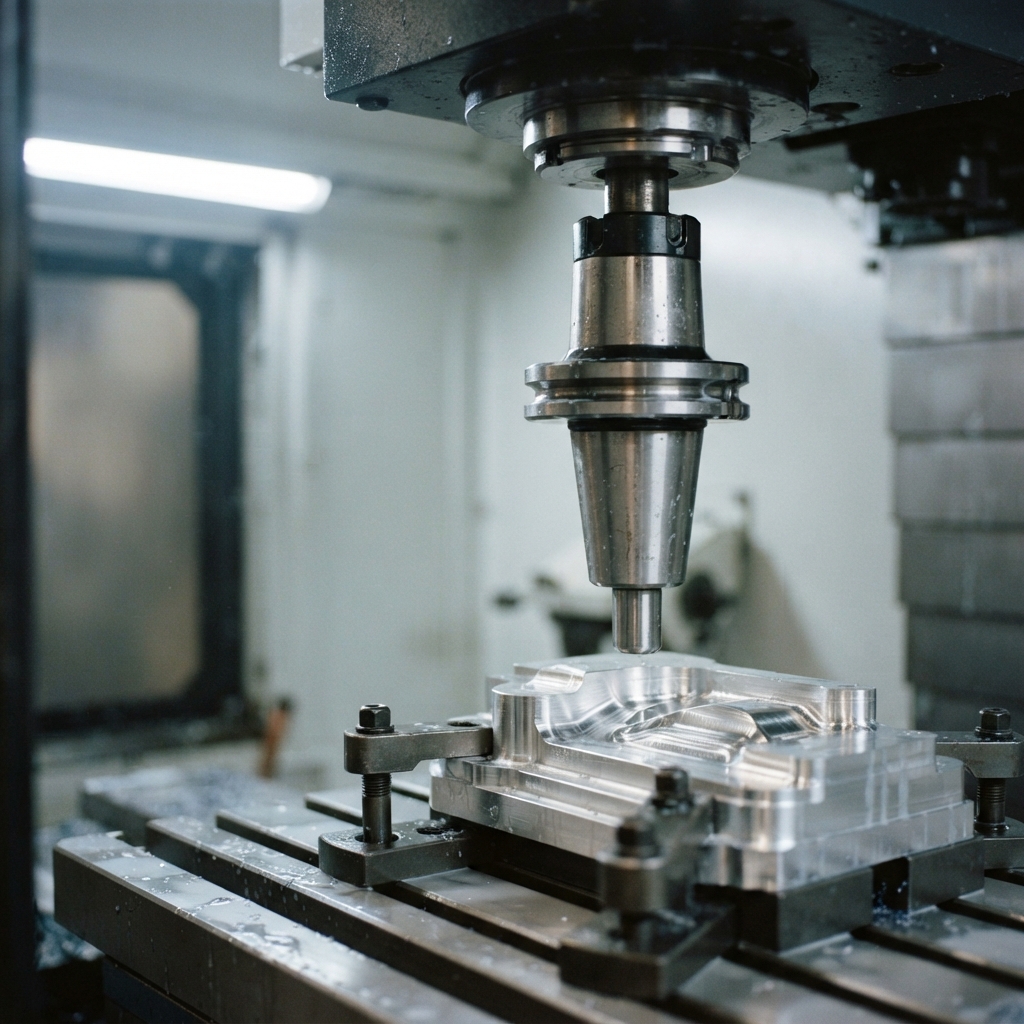
BT is a steep-taper tool holder family built on a 7/24 taper, standardised for automatic tool changers. The shank dimensions and designation are covered by ISO 7388-1:2007, which specifies tool shanks with a 7/24 taper for automatic tool changers. The number in BT30, BT40 and BT50 is a size designation tied to the taper gauge diameter, so the jump from 40 to 50 is a jump in every load-bearing dimension at once: taper diameter, flange diameter, pull-stud thread and the mass of the holder itself.
A spindle taper does three jobs simultaneously. It centres the tool, it transmits torque through friction, and it provides the stiffness that keeps the tool from deflecting under load. A larger taper improves all three, but it also adds spindle mass, tool-change time and holder cost. The practical BT40 vs BT50 question is where the extra stiffness stops paying for itself.
BT40 vs BT50 at a glance
The table below summarises the differences buyers feel on the shop floor. Values are typical industry practice for steep-taper machining centres, not a specification for any one model — confirm the exact figures with the machine builder for the configuration you are quoting.
| Item | BT40 | BT50 |
|---|---|---|
| Taper | 7/24 steep taper | 7/24 steep taper |
| Gauge diameter | 44.45 mm | 69.85 mm |
| Typical flange diameter | 63 mm | 100 mm |
| Typical pull-stud thread | M16 | M24 |
| Typical holder mass | Roughly 1–3 kg for common holders | Roughly 4–8 kg for common holders |
| Typical spindle speed band | 8,000–12,000 rpm standard; higher with built-in motors | 4,000–6,000 rpm typical for heavy cutting |
| Typical drive power band | 7.5–18 kW | 18–37 kW and above |
| Common machine types | Vertical machining centres, drilling and tapping centres, compact five-axis | Heavy vertical machining centres, large gantry and horizontal machines |
| Typical best work | Aluminium, mixed batches, mould finishing, small and medium parts | Steel and iron roughing, large dies, heavy stock removal |
| Main penalty | Less stiffness at long tool overhang | More spindle inertia, slower tool changes, higher running cost |
Where BT50 earns its extra mass
A BT50 spindle becomes the cheaper choice when the cut, not the part, sets the limit. Three situations repeat in buyer reviews, and each of them is a case where the BT40 vs BT50 comparison stops being close.
Large-diameter face and shell milling. A 160 mm face mill in steel removes material at a rate that a 40-taper interface struggles to hold without chatter, especially when the cutter is not perfectly seated. The larger flange and taper spread the load over a bigger contact area, so the same cut needs less spindle dexterity.
Long gauge length. Deep cavities, tall ribs and parts with restricted access force the tool further from the spindle nose. Deflection grows quickly with overhang, and the extra section of a 50-taper holder buys back stiffness that no programme can recover.
Heavy interrupted cutting. Castings with hard skin, flame-cut edges and weld beads produce impact loads. A larger taper tolerates those impacts better, and the heavier machine that normally carries a BT50 spindle is usually built with the rigidity to match.
The trade is real. A BT50 spindle assembly is heavier, needs more torque to accelerate, and usually runs at lower maximum speed. Tool change is slower because the holder is bigger, and every holder you buy costs more than its BT40 equivalent.
Where BT40 is the better business decision
For most job shops and component plants, a BT40 spindle is not a compromise; it is the correct interface. It supports 8,000–12,000 rpm as standard on many vertical machining centres, which is where aluminium, brass, plastics and finish milling of moulds actually run. Tool change is faster, holder inventory is cheaper, and the lower mass makes high-speed balance easier to hold.
BT40 also keeps the machine smaller. A 40-taper vertical machining centre can be built on a footprint that fits an existing cell, whereas a 50-taper machine usually brings a heavier foundation, a bigger crane requirement and a longer installation.
If your work is a mix of aluminium housings, plates, brackets and occasional steel parts, the deciding evidence is usually the hardest cut, not the average one. That is where the BT40 vs BT50 choice is genuinely settled: run the cut on both interfaces if a builder can demonstrate it, or ask for a cutting trial on your material with your cutter.
Dual-contact BBT40 changes the middle of the comparison
Dual-contact tooling — sold as BBT40 or Big Plus — adds flange-to-spindle contact to the taper contact. The result is a stiffer joint at the same nominal size, which is why BBT40 appears on high-speed five-axis machines that need both reach and speed. It narrows the stiffness gap to BT50 for medium-heavy work without the mass penalty.
Two conditions apply. The spindle must be machined for dual contact, and the holders must match; mixing standard BT40 holders into a BBT40 spindle gives up the benefit and can damage the flange face. If you plan to standardise on dual contact, budget for replacing the holder inventory, not just the machine.
BT30 vs BT40 vs BT50: where the boundaries sit
BT30 sits below BT40 and is normally found on drilling and tapping centres and light milling machines. It changes tools quickly and runs at high speed, but it is not built for heavy radial loads. In any BT30 vs BT40 vs BT50 comparison, the first boundary is whether the process includes real milling or only drilling, tapping and light contouring.
The second boundary, between BT40 and BT50, is set by cutting force and overhang. As a rule of thumb, if the largest cutter you routinely use fits comfortably within 40-taper capacity at the overhang your part demands, the extra stiffness of BT50 will not show up in your parts — it will only show up in your tooling bill and cycle time.
The costs that never appear on the specification sheet
The BT40 vs BT50 price difference on the machine is rarely the largest number in the decision. These items usually decide the total cost of ownership.
- Holder inventory. A 50-taper shop needs a full set of holders in the new size. That is a capital item, and it is often larger than the difference in machine price.
- Spindle warm-up and thermal behaviour. Heavier spindle assemblies take longer to reach a stable thermal state, which affects first-part timing.
- Tool handling. A loaded BT50 holder can be heavy enough to need a different loading routine, and in some cells a handling aid.
- Magazine size. Larger holders mean fewer tools in the same magazine footprint, which matters when a part family needs 30 or more tools.
- Power and air. Bigger spindles usually come with bigger electrical demand and higher compressed-air consumption for clamping and cleaning.
- Floor and lifting. A heavier machine changes the foundation and the rigging plan, and those costs land before the first chip.
Test the decision against one part
Instead of comparing brochures, walk one representative part through five questions and record the answers in writing. The same BT40 vs BT50 test can then be repeated for every part family you plan to run.
- What is the hardest cut? Name the material, cutter diameter, radial and axial engagement, speed, feed and coolant method. This single operation usually decides the taper.
- What is the longest gauge length? Measure from the spindle nose to the cutting edge at the deepest feature. Overhang, not part size, drives deflection.
- How many holders and how many tools? Count the tool list for the whole family, including sister tools and a probe. This decides magazine size and inventory cost.
- How often does the job change? High-mix work rewards faster tool change and cheaper holders; a long-running heavy job rewards stiffness.
- What acceptance evidence will you require? Agree the geometric test, the positioning test, the test piece and the part trial before the purchase order, not after delivery.
What acceptance evidence should say
Spindle interface size is only one variable in a machine's accuracy, and the BT40 vs BT50 decision should end in measurable clauses rather than adjectives. Two standards give buyers and builders a shared language. ISO 10791-1:1998 covers geometric tests for machining centres with horizontal spindle, and ISO 230-2:2014 defines how to determine and evaluate the accuracy and repeatability of positioning of numerically controlled axes. For cutting accuracy, ISO 10791-7 specifies standard test pieces cut under finishing conditions.
The holder side has its own reference. ISO 7388-1 defines the 7/24 tool shanks used in automatic tool change systems, so a holder that does not meet it is not interchangeable with one that does, regardless of the label on the box. For high-speed running, tool assembly balance should be specified by reference to ISO 1940-1 and stated at the spindle speed you actually use.
Write the agreement so it names the standard, the instrument, the ambient condition, the warm-up routine and the number of approach directions. Then add your own part: the features, the datums and the inspection method your assembly team will use. A machine can pass a geometric test and still fail your part if the fixture or the programme is wrong.
Which Zhihe CNC configurations use BT40
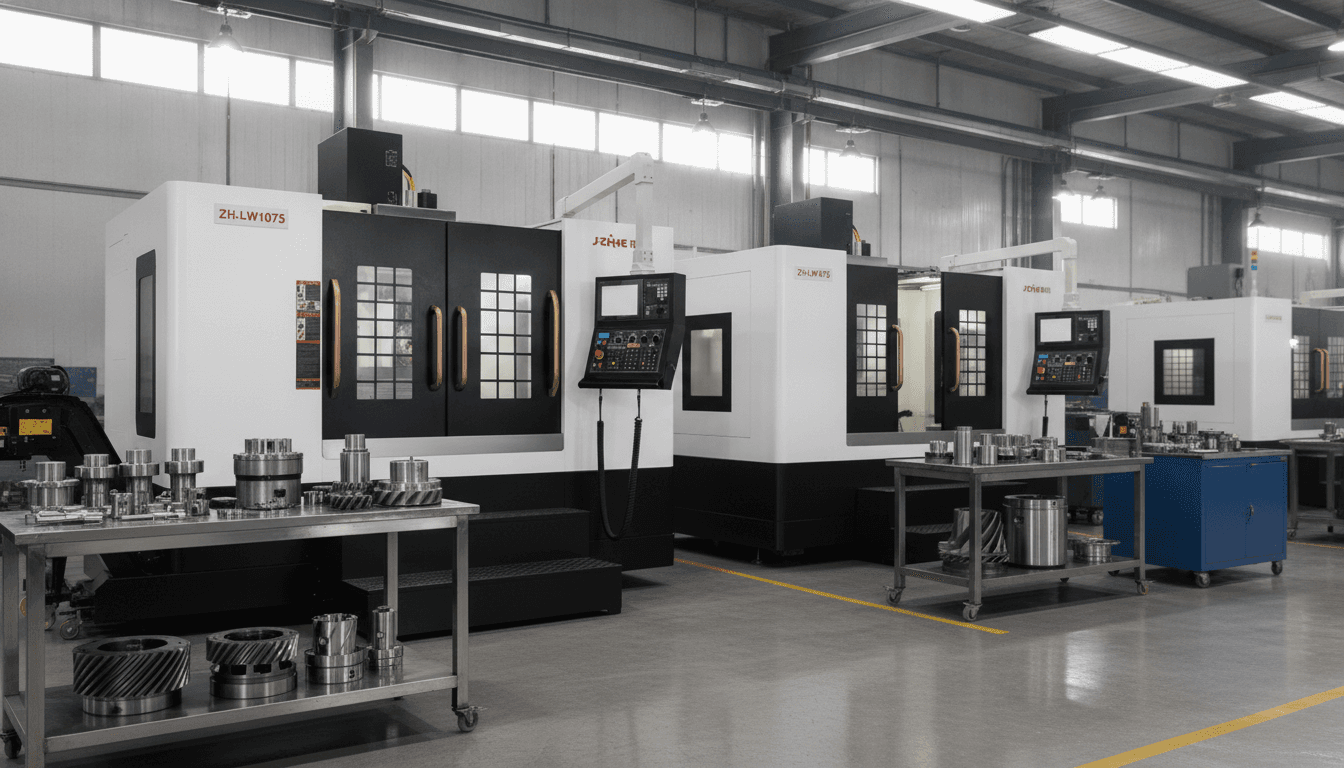
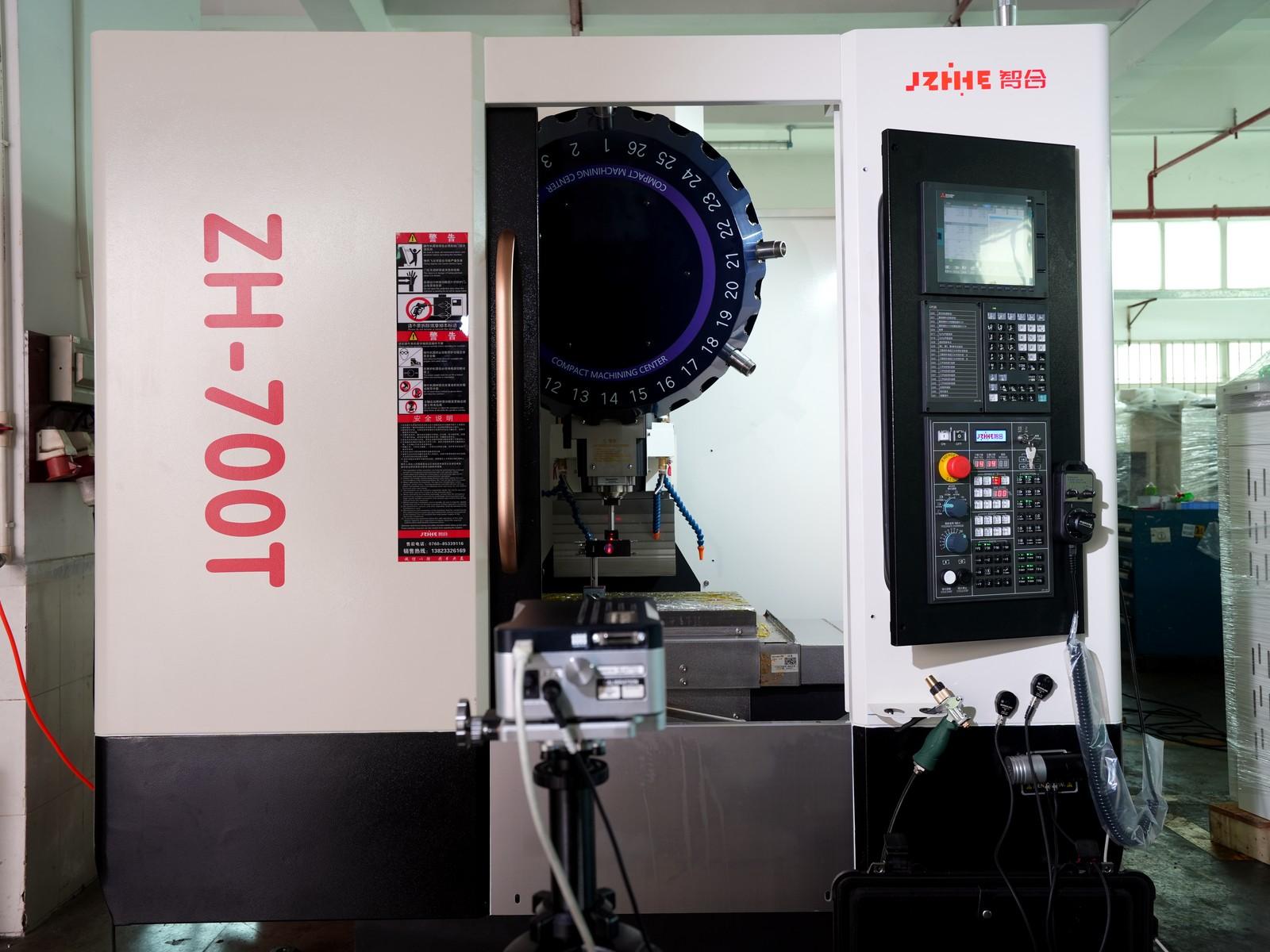
The Zhihe CNC vertical machining centre range is built around BT40, and the published model pages state the interface directly, which makes the comparison concrete rather than abstract.
The ZH-1370V vertical machining center is published as a BT40 belt-drive machine with 1300 × 700 × 700 mm travel, a 1400 × 700 mm worktable, a 1200 kg maximum table load, an 11 kW spindle motor, 8,000 rpm standard spindle speed and a 24-tool arm-type magazine. Its published positioning accuracy is ±0.005 mm per 300 mm and repeatability ±0.003 mm, with the buyer asked to confirm test method and thermal condition.
The ZH-1165L heavy-duty vertical machining center is also a BT40 belt-drive machine, published at 1100 / 650 / 600 mm travel, 10,000 rpm, 20 / 20 / 12 m/min rapid traverse and a Mitsubishi M80VB controller, for workpieces up to 1200 × 650 × 600 mm.
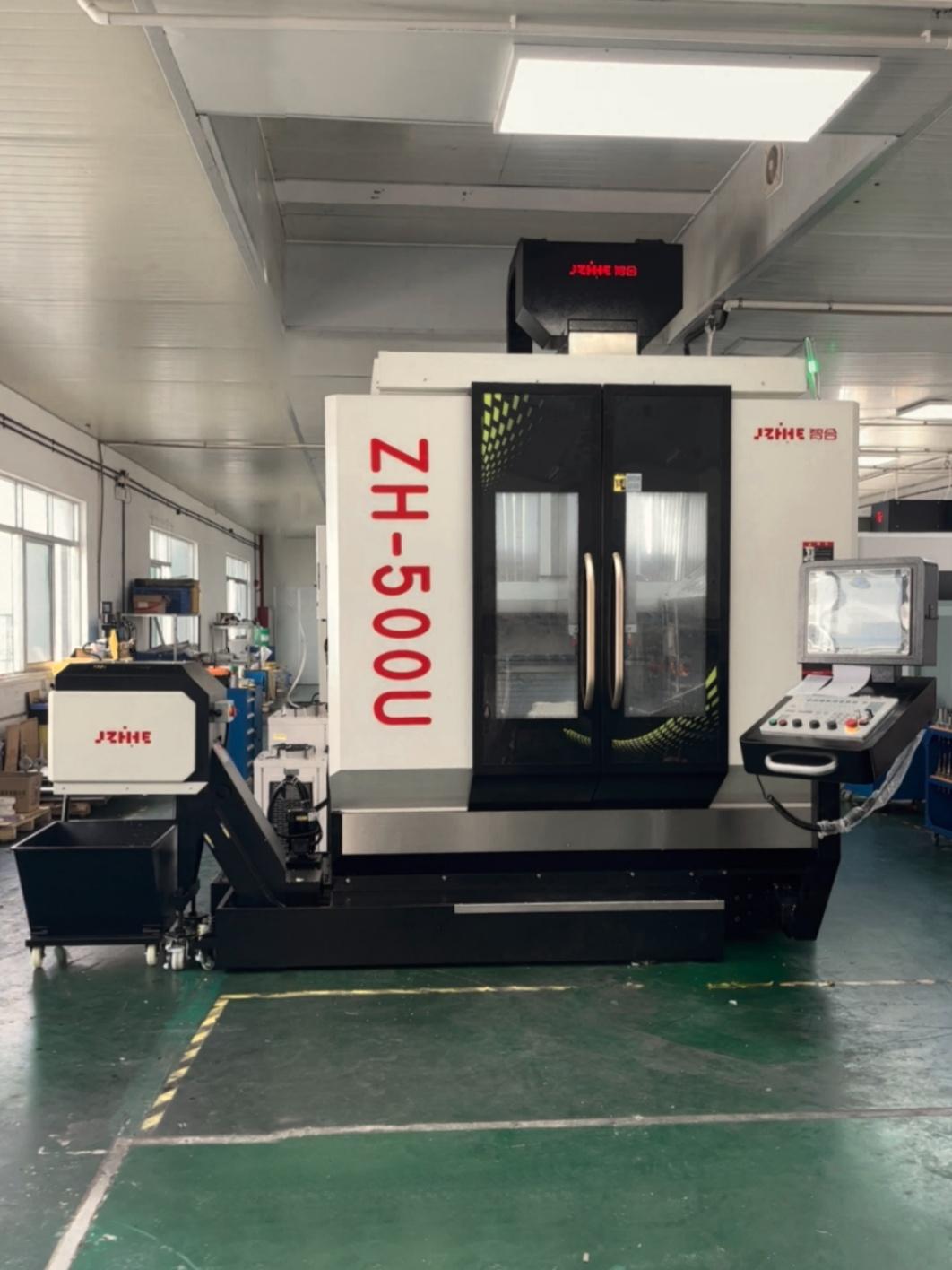
On the five-axis side, the ZH-500U 5-axis trunnion machining center uses a built-in BBT40 spindle at 20,000 rpm, with a trunnion table of Ø500 mm rated to 300 kg, A-axis ±110° and C-axis 360° direct drive at ±6 arcsec positioning accuracy, in a 750 / 880 / 600 mm envelope.
If your hardest cut points to a 50-taper class machine, say so at the enquiry stage rather than assuming a 40-taper model can be pushed to cover it. The engineering review should compare the cut and the part, not just the model name, and the configuration should be confirmed in the written quotation.
Common buying mistakes
- Choosing the taper from the part size. A small part in hard steel with a long tool can demand more from the interface than a large aluminium plate.
- Ignoring holder cost. The machine price difference is often smaller than the cost of replacing a full holder inventory.
- Buying speed you cannot use. A 12,000 rpm spindle is wasted if the largest cutter in the programme is limited by a 50-taper-style cut.
- Mixing dual-contact and standard holders. A BBT40 holder and a standard BT40 holder are not interchangeable in a dual-contact spindle.
- Treating published accuracy as a part guarantee. Machine-axis figures are references; the finished part depends on fixture, tool, thermal state and programme.
- Leaving acceptance vague. A purchase order that does not name the test, instrument and part trial gives you no basis to reject a machine that misses your requirement.
Frequently asked questions
Is BT50 always more rigid than BT40?
At the same overhang and with comparable holders, a 50-taper joint is stiffer, because every load-bearing dimension is larger. The advantage shrinks or disappears if the BT40 machine uses dual contact, a rigid fixture and short tools, while the BT50 machine is poorly set up or runs a badly balanced assembly.
Can I run a BT40 machine for steel roughing?
Yes, within limits. Define the cut first: face mill diameter, depth and width of cut, material hardness and overhang. Many steel roughing operations are comfortably within 40-taper capacity; the ones that are not usually involve large cutters, long overhang or high material removal rates.
What speed should I expect from a BT40 spindle?
Standard belt-drive BT40 vertical machining centres commonly publish around 8,000–10,000 rpm, with higher speeds available on built-in motor spindles. Confirm the ordered spindle, because the machine's maximum speed and the practical speed for a given holder and tool assembly are different numbers.
Does a bigger taper improve surface finish?
Indirectly. A stiffer joint reduces chatter and deflection, which usually improves finish on demanding cuts. On light finishing passes in aluminium, the limiting factor is more often spindle speed, balance and thermal stability than taper size.
Are BT40 and CAT40 holders interchangeable?
No. In a CAT40 vs BT40 comparison the taper gauge diameter matches at 44.45 mm, but the flange dimensions, pull-stud thread and clamping details differ. Use holders made for the spindle standard your machine was built to.
What is BBT40 and do I need it?
BBT40 is dual-contact tooling that contacts both the taper and the spindle flange. It is worth considering for high-speed five-axis work and for medium-heavy cuts where extra stiffness is valuable, provided the spindle and the whole holder inventory are dual contact.
How do I prove the BT40 vs BT50 choice before ordering?
Ask for a cutting trial with your cutter on your material, and agree an acceptance package that combines ISO 10791-1 geometric tests, ISO 230-2 positioning tests and a part trial. The spindle selection guide shows how to structure the cut data, and the ZH-1370V buyer qualification guide applies the same method to a specific model.
Conclusion
BT40 vs BT50 is settled by the hardest cut you actually run, the overhang it needs and the holder inventory you are willing to fund. BT50 buys stiffness for large cutters and long reach in steel and iron; BT40 buys speed, cheaper tooling and a smaller machine for the mixed, aluminium-heavy work most shops really do. Dual-contact BBT40 sits usefully between them.
Write the decision into the purchase documents — the cut data, the holder standard, the geometric and positioning tests, and the part trial — so the machine is judged on evidence. If you want the interface checked against a real drawing, send the part, material and tool list to the Zhihe CNC team and ask for the spindle configuration to be confirmed in writing before you compare prices.