Why Aluminum Profile Machining Needs the Right Machine, Not Just a Fast One
Choosing a vertical machining center for aluminum profiles is not simply about finding a CNC machine that can cut aluminum. Most machines can do that, at least in theory. The harder question is whether the machine can hold a long profile steadily, keep repeated features consistent, reduce re-clamping, and stay efficient when the production schedule becomes busy.
Aluminum profiles are easy to underestimate. Compared with steel, aluminum usually cuts faster and puts less load on the spindle. Yet profile work has its own problems: long workpieces, thin walls, burrs, vibration, hole-position errors, and visible surface marks. If the fixture is weak or the travel is too short, a part that looks simple on the drawing can turn into a slow, fussy job on the floor.
That is why buyers often compare an aluminum profile machining center with other CNC platforms before making a decision. A standard CNC vertical machining center may be flexible enough for many jobs. But when the workpiece is long, repeated, and accuracy-sensitive, the machine needs more than speed. It needs the right travel, enough support for fixtures, stable positioning, and a practical production layout.
What Makes Aluminum Profile Machining Different
Aluminum profile parts are often long and narrow. Some are used as 3C electronic frames. Some become lithium battery or PV aluminum structures. Others are used as robot guide rails, automation equipment beams, or automotive components. The ZH-2000V product page positions the machine for these exact industries, including 3C electronic frames, Li-ion/PV aluminum structures, robot guide rails, automotive, and automation equipment.
The challenge is not only part length. A long profile may need drilling along the full X-axis, rigid tapping, slotting, side milling, end-face machining, or repeated hole patterns. If the machine cannot handle the part in one stable setup, the shop may need segmented clamping. That creates more handling time and more chances for accumulated positioning error.
Aluminum also reacts quickly to poor support. A thin-wall extrusion can vibrate. A profile that is clamped too tightly can deform. A part that is not supported along its length may produce chatter during milling. In this kind of work, the fixture, datum strategy, and machine travel are just as important as the spindle.
Why the ZH-2000V Fits Long Aluminum and Steel Profiles
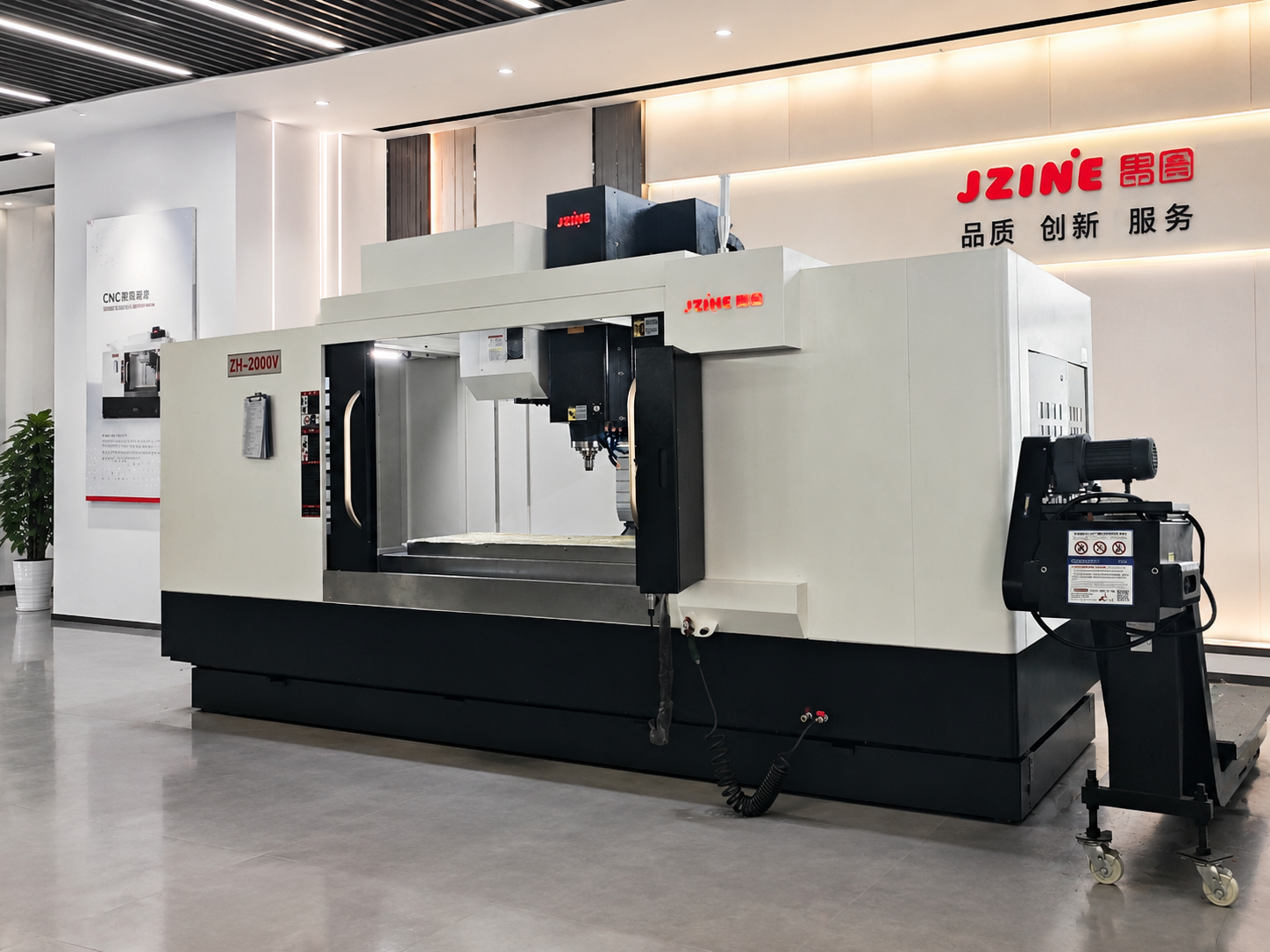
The ZH-2000V Vertical Machining Center is designed for high-precision milling, drilling, and rigid tapping of long-strip aluminum or steel profiles and medium-sized parts. Its key specifications include 2000 / 500 / 500 mm X/Y/Z travel, a 10,000 rpm belt-drive BT40 spindle, and a MITSUBISHI M80VB CNC controller.
For aluminum profile machining, the 2000 mm X-axis travel is the most important feature. It gives the machine room to process long profiles that would be inconvenient on a smaller vertical machining center. The product page also lists a 2000 × 500 mm worktable, 500 kg maximum table load, BT40 spindle taper, 7.5 kW spindle motor, and 24-tool arm-type magazine, which are useful details for buyers evaluating fixture space, tool capacity, and production flexibility.
This does not mean the ZH-2000V is only for aluminum. The page lists applicable materials including aluminum alloys, copper alloys, carbon steel, and low-carbon alloy steel. That broader material range matters for factories that machine aluminum profiles today but may also process steel beams, automation parts, or medium-sized industrial components later.
Speed Helps, But Travel and Stability Often Matter More
Many buyers first ask about spindle speed. It is a fair question. A faster spindle can help with aluminum milling, drilling, and finishing, especially when using smaller tools. But speed cannot correct a poor setup.
If the machine travel is too short, the operator may need to move the profile and re-clamp it. If the workholding is weak, vibration appears. If chips collect around clamps or holes, surface quality and cycle time suffer. A fast machine with an unstable process is not really fast; it is just busy.
The ZH-2000V page shows why long travel matters through a new energy battery tray aluminum profile case. The workpiece was 6061 aluminum alloy, with dimensions of 1800 × 300 × 80 mm. The original process had insufficient travel, segmented clamping, cumulative positioning error of ±0.08 mm, vibration during long-overhang cutting, and a cycle time of about 45 minutes per piece. The ZH-2000V solution used 2000 mm X-axis travel for one-time clamping, and the page reports cycle time reduced to 28 minutes, yield improved from 85% to 97%, and daily output increased from 12 to 20 pieces.
That example is useful because it does not treat speed as the only answer. The improvement came from changing the process: one-time clamping, better travel match, stronger rigidity, and more stable long-profile machining.
Machine Rigidity Is Still Important for Aluminum
Some buyers assume aluminum does not need much machine rigidity because it is softer than steel. That is only half true. Aluminum may reduce cutting load, but profile geometry can still make the process unstable.
A long part can vibrate. A thin section can deflect. A hole pattern can drift if the support points are poor. Once chatter starts, operators often slow down the cut, change tools earlier, or add manual finishing. The machine may still complete the job, but the real cost rises quietly.
For buyers comparing a long travel vertical machining center, rigidity should be evaluated together with travel. The ZH-2000V detailed configuration includes C3-grade ball screws with linear or roller guides, and the product page describes cross-slide structure and X/Y precision linear guides in its long beam case.
This matters because a long X-axis is only valuable when movement remains stable across the full stroke. A long machine that loses consistency is not a profile solution; it is a bigger problem.
Fixture Planning Can Decide Whether the Machine Works
A machine is only half the profile machining system. The fixture is the other half.
For aluminum profiles, the fixture must support the part without distorting it. It should locate the datum clearly, allow quick loading, leave access for tools, and prevent vibration during long milling or drilling. If the fixture blocks machining areas or forces the operator to re-clamp the part too often, the machine’s travel advantage becomes less useful.
Before buying a vertical machining center for aluminum profiles, buyers should ask practical fixture questions:
| Fixture Question | Why It Matters |
|---|---|
| Can the full profile be clamped in one setup? | Reduces accumulated positioning error |
| Are support points placed along the profile length? | Helps reduce vibration and sagging |
| Can operators reach clamps safely and quickly? | Improves loading efficiency |
| Does the fixture allow drilling, tapping, and milling access? | Prevents unnecessary re-clamping |
| Is there room for stops, side clamps, and custom supports? | Makes batch production easier |
This is where supplier support becomes useful. The ZH-2000V product page states that trial cutting can be performed before and after delivery, with pre-acceptance trial cutting at the supplier’s facility and final acceptance trial cutting after installation and commissioning at the buyer’s facility.
For profile machining, trial cutting is not a formality. It can reveal vibration, burrs, chip buildup, tool access problems, and real cycle time before the machine goes into production.
Accuracy Should Be Verified, Not Just Claimed
Long aluminum profile machining often depends on repeated hole positions and consistent datum control. If a part is used in battery trays, automation beams, robot guide rails, or 3C frames, small deviations may affect assembly later.
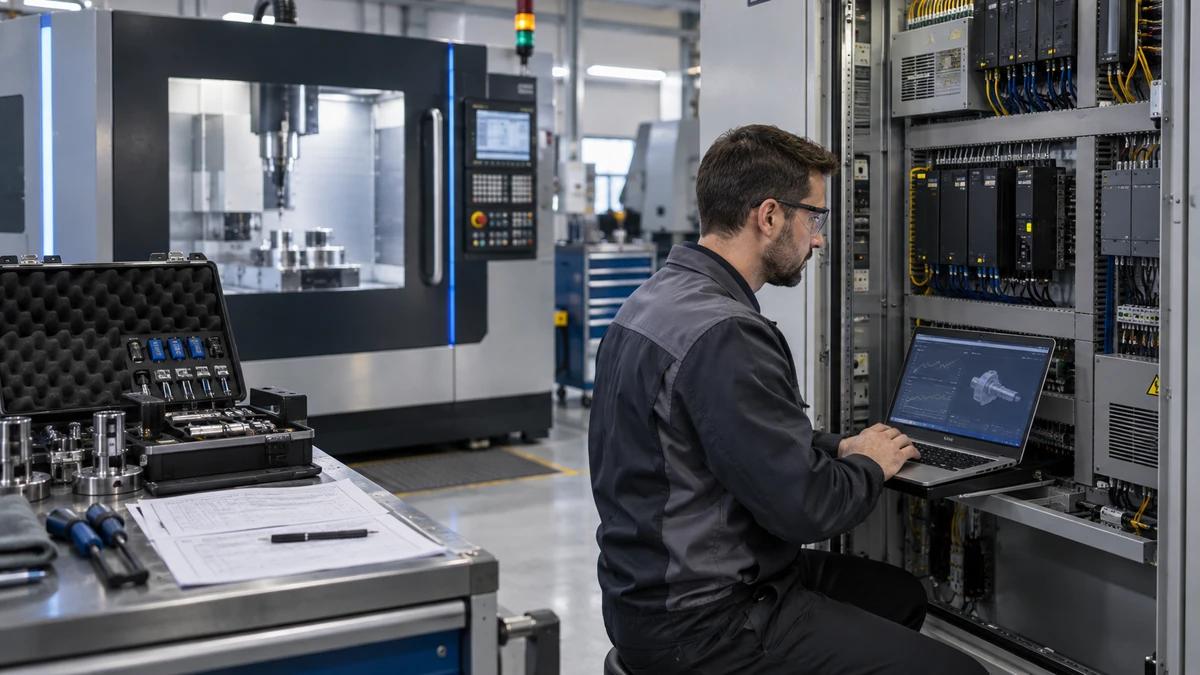
The ZH-2000V page lists ±0.010 mm positioning accuracy and ±0.005 mm repeatability, with laser interferometer verification for positioning accuracy and repeatability, plus ballbar testing for circularity and servo matching.
For B2B buyers, this is a useful point to discuss during acceptance. ISO 230-2 specifies methods for testing and evaluating the accuracy and repeatability of positioning of numerically controlled machine tool axes by direct measurement, so buyers can use it as a reference when discussing machine acceptance and verification requirements.
One small detail deserves attention: the ZH-2000V page lists 30 / 30 / 30 m/min rapid traverse in the key specifications, while the detailed technical table lists 48 / 48 / 48 m/min. Buyers should confirm the final configuration in the quotation and technical agreement before ordering.
Why Tool Capacity and Chip Handling Matter
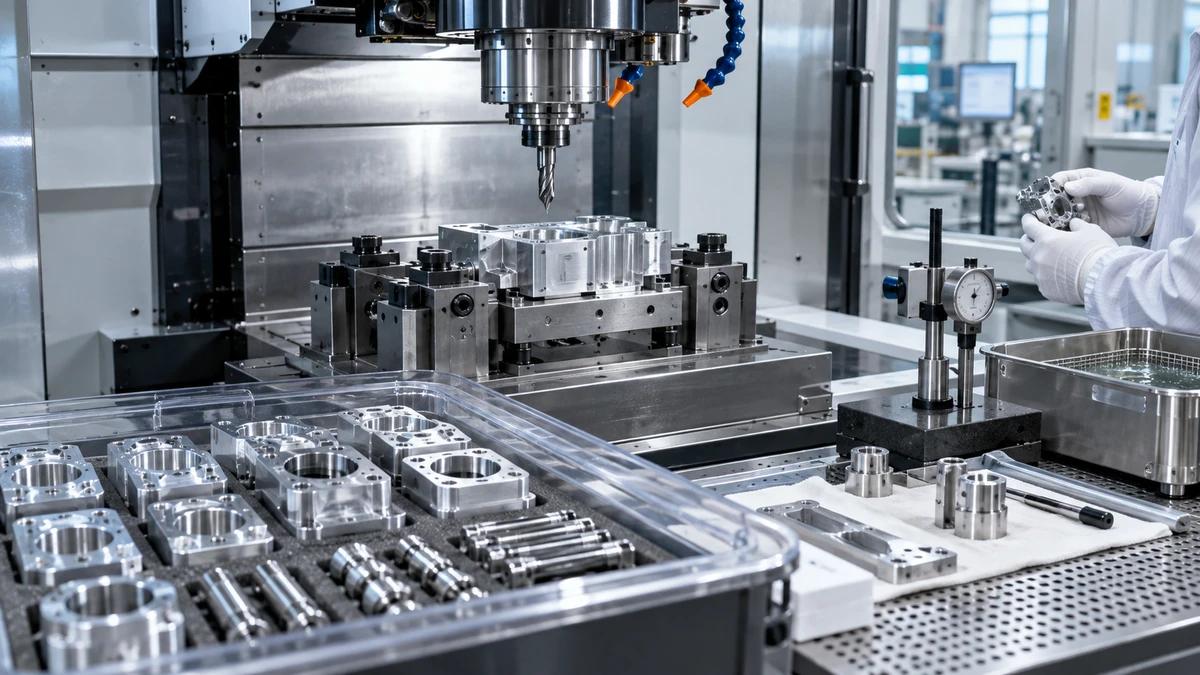
Aluminum profile machining can involve many tools: drills, taps, end mills, chamfer tools, slotting cutters, and finishing tools. If the machine has limited tool capacity, operators may interrupt production more often.
The ZH-2000V standard configuration includes a 24-tool BT40 arm-type magazine, which helps when one workpiece requires several operations in one cycle. The product page also lists a chain-type chip conveyor with chip cart, flood coolant, coolant tank, high-pressure wash gun, rear flush, and optional spindle center through-coolant.
These details are easy to overlook, but they affect daily output. Aluminum chips build quickly. If chips remain near clamps, slots, or holes, they can damage surfaces, slow down cleaning, and create unnecessary operator work. A machine that controls chips well often feels more productive than one with a slightly better headline speed but poor housekeeping.
When a Vertical Machine Is the Better Fit
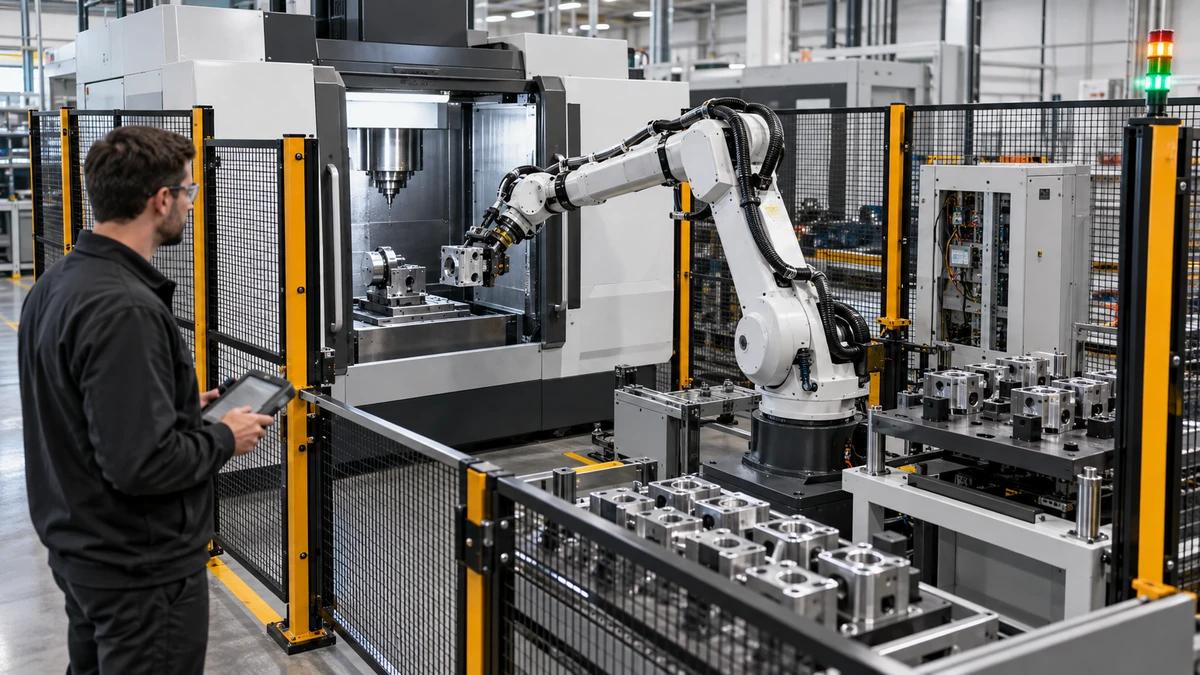
A CNC vertical machining center is often a strong choice when the shop needs easy access, simple loading, flexible programming, and frequent changeovers. For aluminum profiles, a vertical layout can work well when the main operations are top-side milling, drilling, tapping, slotting, and end-face machining.
The ZH-2000V is especially relevant when the shop needs vertical machining flexibility but also needs longer X-axis travel than a standard VMC. It is not a small compact machine for occasional bracket work. It is aimed at high-precision batch production of long-profile and medium-sized parts.
Horizontal machines may still be better for some jobs, especially where side access, chip fall, or multi-face machining dominates. But for long aluminum and steel profiles that can be efficiently fixtured from the top, a vertical profile-oriented machining center is often a practical answer.
A Second Case: Long Steel Beam Machining
The ZH-2000V page also includes a case for an automation equipment linear guide mounting beam made from 45# carbon steel, with dimensions of 1950 × 180 × 120 mm. The customer had problems with insufficient rigidity on a nearly 2-meter part, flatness deviation of 0.05 mm/m, too much non-cutting time from frequent tool changes, and batch precision fluctuation causing assembly hole misalignment.
The ZH-2000V solution used its cross-slide structure, precision linear guides, C3-grade ball screws, 24-tool BT40 magazine, and Mitsubishi M80VB system. The page reports flatness controlled within 0.02 mm/m, auxiliary time reduced by 65%, cycle time reduced from 52 minutes to 35 minutes, precision fluctuation held within ±0.008 mm after 100 consecutive pieces, and assembly pass rate improved to 99.2%.
Even though this case is steel rather than aluminum, it reinforces the same buying lesson: long-part machining needs travel, rigidity, tool capacity, and batch consistency. It is not only a spindle-speed problem.
Common Mistakes Buyers Should Avoid
One common mistake is choosing only by work envelope. A larger machine is not automatically better. Buyers should check whether the machine layout, table size, fixture access, and tool clearance fit the actual profile family.
Another mistake is assuming all aluminum applications behave the same. Thin-wall extrusions, battery tray profiles, 3C frames, and robot guide rails do not create identical cutting conditions. The machine and fixture strategy should match the real part mix.
A third mistake is skipping trial cutting because the drawing looks simple. Long profiles can deflect. Holes can drift. Burrs can appear around slots. Chips can trap around clamps. Trial cutting helps reveal these issues before full production begins.
The final mistake is treating supplier support as secondary. For overseas buyers, installation, training, warranty terms, packaging, shipping, and spare parts availability can affect the whole project. The ZH-2000V page lists approximately 45–60 working days delivery after down payment and signed contract, export wooden case packaging with moisture-proof, shock-proof, and rust-proof treatment, on-site installation and commissioning, 2–3 days free on-site training, a 12-month warranty, and long-term genuine spare parts supply.
Practical Buying Advice for Engineers and Sourcing Teams
Before requesting a quote, prepare the actual profile drawings. Do not only send a machine name. Send part length, material grade, wall thickness, tolerance requirements, hole patterns, tapping needs, side milling requirements, surface expectations, and expected output.
For the ZH-2000V, buyers should pay special attention to whether the 2000 mm X-axis travel and 2000 × 500 mm worktable can support the longest regular part plus fixtures. They should also confirm spindle speed configuration, rapid traverse configuration, tool magazine requirements, probe options, chip conveyor setup, coolant requirements, and trial cutting plan.
A good buying discussion should feel specific. Where are the datums? How will the part be clamped? Which surfaces are finished in one cycle? What is the acceptable cycle time? Which accuracy points matter most? Once these questions are answered, machine selection becomes much clearer.
FAQ
Is a vertical machining center always best for aluminum profiles?
No. It depends on part length, fixture access, machining faces, chip flow, and production volume. For many long aluminum profiles, a vertical machine with extended X-axis travel, such as the ZH-2000V, can be a strong fit.
Why does X-axis travel matter so much?
Long X-axis travel can allow full-length profile machining in one clamping. This reduces segmented clamping, lowers accumulated positioning error, and improves batch consistency.
Is spindle speed the most important factor for aluminum profile machining?
No. Spindle speed matters, but fixture stability, machine rigidity, travel length, chip control, and repeatability often decide whether the process is reliable.
Can the ZH-2000V machine steel parts too?
Yes. The product page lists aluminum alloys, copper alloys, carbon steel, and low-carbon alloy steel as applicable materials.
What should buyers provide before asking for a recommendation?
Buyers should provide drawings, material, dimensions, tolerance requirements, machining operations, fixture needs, current process problems, and target output.
Conclusion
A vertical machining center for aluminum profiles should be chosen for the way the part behaves in production, not for speed alone. Aluminum profiles need stable support, enough travel, reliable positioning, clean chip handling, and a fixture plan that avoids unnecessary re-clamping.
The ZH-2000V Vertical Machining Center is a practical reference for this type of work. Its 2000 mm X-axis travel, BT40 spindle, Mitsubishi M80VB controller, 2000 × 500 mm worktable, 24-tool magazine, accuracy verification, chip-handling options, and long-profile application cases make it suitable for buyers machining aluminum profiles, 3C frames, lithium battery/PV structures, robot guide rails, automation beams, and related medium-sized parts.
The right machine decision starts with the profile drawing, not the brochure. Once the buyer understands part length, fixture support, surface sequence, tolerance needs, and production volume, the best machine choice becomes easier to see—and much easier to justify.