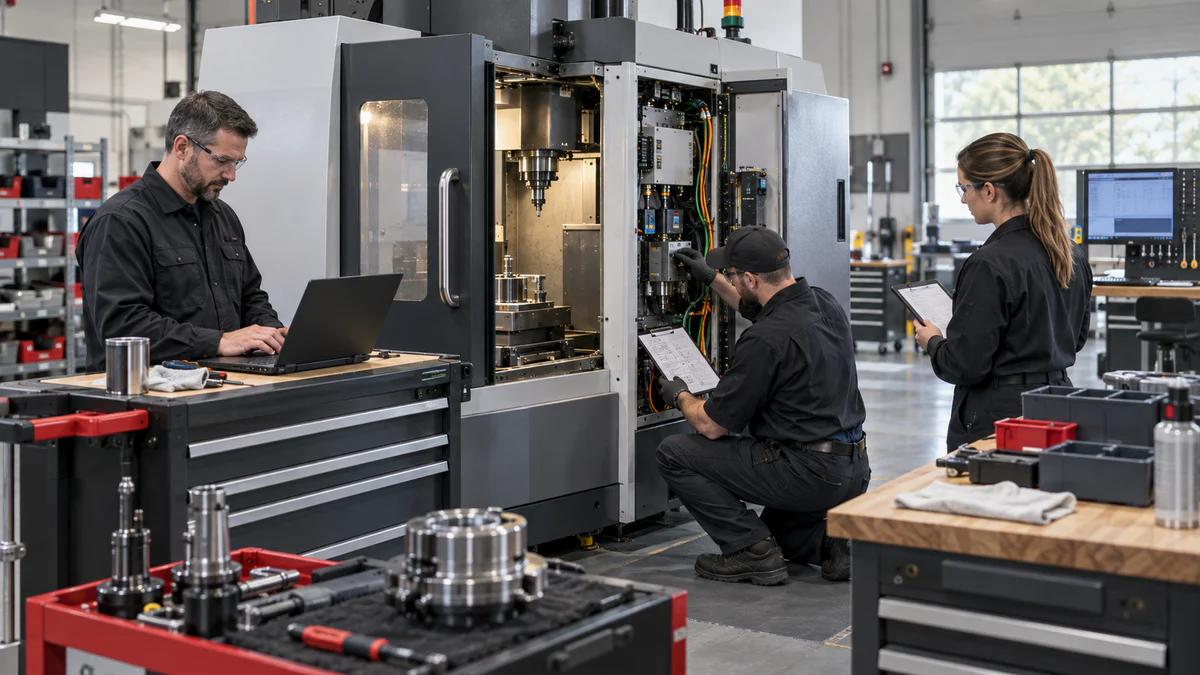
A vertical machining center supplier should be able to answer seven linked questions about the buyer's parts, process, evidence, and recovery path before price becomes the deciding line. Zhihe CNC uses these questions to expose whether a proposal is a real production fit or only a catalog match.
The scorecard is designed for job shops, component factories, engineering teams, and sourcing managers. Each answer must include a condition, an assumption, and proof. A confident statement without a drawing, calculation, controlled test, or responsibility owner receives no credit.
Question 1: What Is the Usable Work Zone?
Do not compare nominal X, Y, and Z travel alone. Add fixture height, clamps, rotary devices, probe clearance, tool length, holder diameter, spindle nose, door opening, table load, chip space, and safe approach. Test the largest and most difficult setup in CAD or with a controlled envelope model.
| Answer quality | Supplier response | Buyer action |
|---|---|---|
| Strong | Shows complete setup envelope | Verify against controlled CAD |
| Partial | Lists nominal travel only | Request collision and reach model |
| Weak | Says the part fits | Escalate before quotation ranking |
A vertical machining center supplier should state which dimensions are guaranteed and which depend on the selected fixture and tool assembly.
Question 2: Which Spindle Duty Matches the Cut?
Map material, cutter diameter, engagement, depth, speed, torque, power, duty duration, tool projection, finish requirement, and chip form. Compare the proposed spindle curve with roughing, drilling, tapping, finishing, and small-tool demands instead of ranking one maximum rpm number.
Zhihe CNC recommends a duty map that shows the operation limiting each spindle choice. If a higher-speed option reduces low-speed margin or changes maintenance, tooling, balance, or warm-up, document the tradeoff.
Read the First Red Flag: One Specification Answers Every Part
No machine characteristic is universally dominant. A short aluminum cycle, a long steel cut, a deep cavity, and a tight bore use different parts of the system. A supplier that repeats the same specification for every drawing may not have converted the work into a process route.
Question 3: How Will Thermal Behavior Be Controlled?
Ask about warm-up, idle history, spindle duty, ambient range, coolant condition, axis movement, reference checks, compensation, restart, and the time window for acceptance. Separate a cold geometry test from a warm production result.
The ISO 230-2 search reference gives context for positioning tests, but the buyer still needs an application-specific thermal sequence and feature measurement. Zhihe CNC should state the condition under which its evidence applies.
Question 4: Can Tools, Coolant, and Chips Sustain the Route?
List every tool assembly, pocket requirement, diameter conflict, life rule, sister-tool need, preset method, coolant demand, filtration need, chip type, cavity trap, cleaning task, and conveyor boundary. A tool magazine count means little if large adjacent pockets are blocked or if production needs more assemblies than the machine can manage.
Ask the vertical machining center supplier to demonstrate chip escape on the difficult orientation, not only conveyor movement after chips reach the pan.
Score the Tool-and-Chip Answer With a Route Table
| Route event | Proof request | Failure signal |
|---|---|---|
| Tool change | Complete pocket map | Unplanned manual swaps |
| Tool life | Trigger and sister logic | Operator memory |
| Deep pocket | Chip path and coolant plan | Repeated recutting |
| Mixed material | Cleaning and filtration rule | Cross-contamination |
| Recovery | Broken-tool response | No verification step |
The table turns accessory discussions into production evidence. It also reveals whether added options reduce a measured loss or merely enlarge the quotation.
Question 5: What Automation Is Actually Ready?
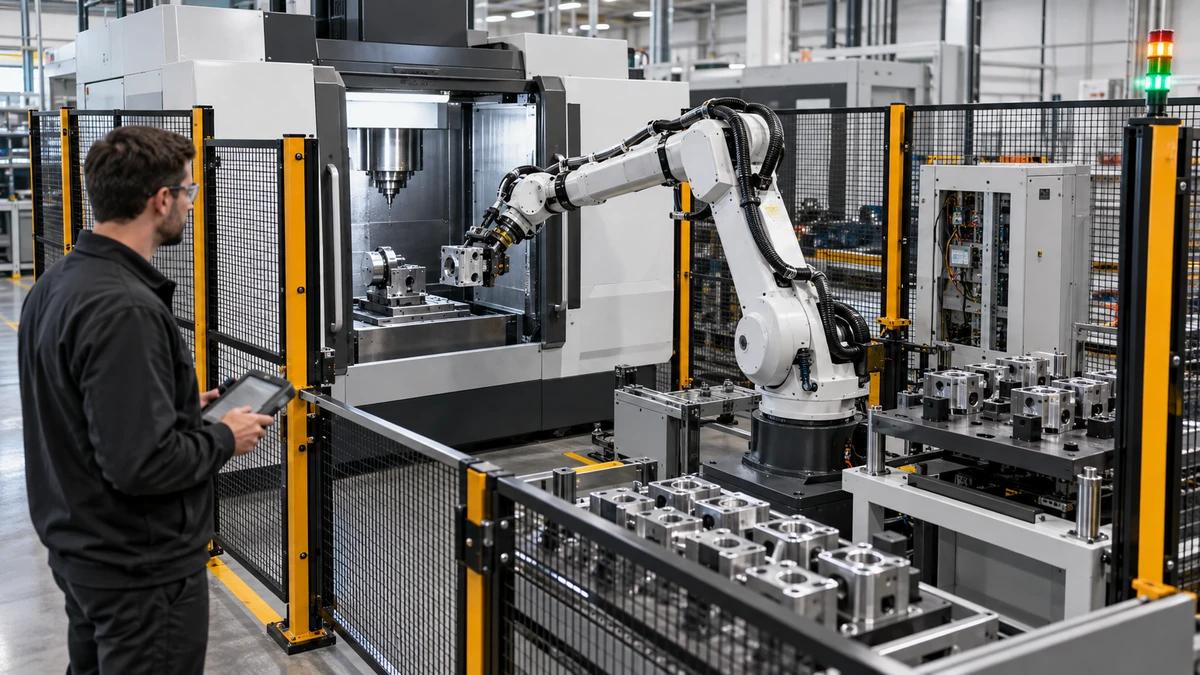
Separate future-compatible, interface-ready, simulated, factory-tested, and production-proven. Review robot or pallet access, door cycle, part presentation, fixture sensing, program selection, tool life, probing, chip control, rejection, traceability, network, restart, and safe manual recovery.
Zhihe CNC recommends validating the minimum closed loop that can run without hidden operator decisions. Automation should reduce defined handling or queue losses, not move unresolved process variation into a robot cell.
Question 6: How Will Acceptance Be Performed?
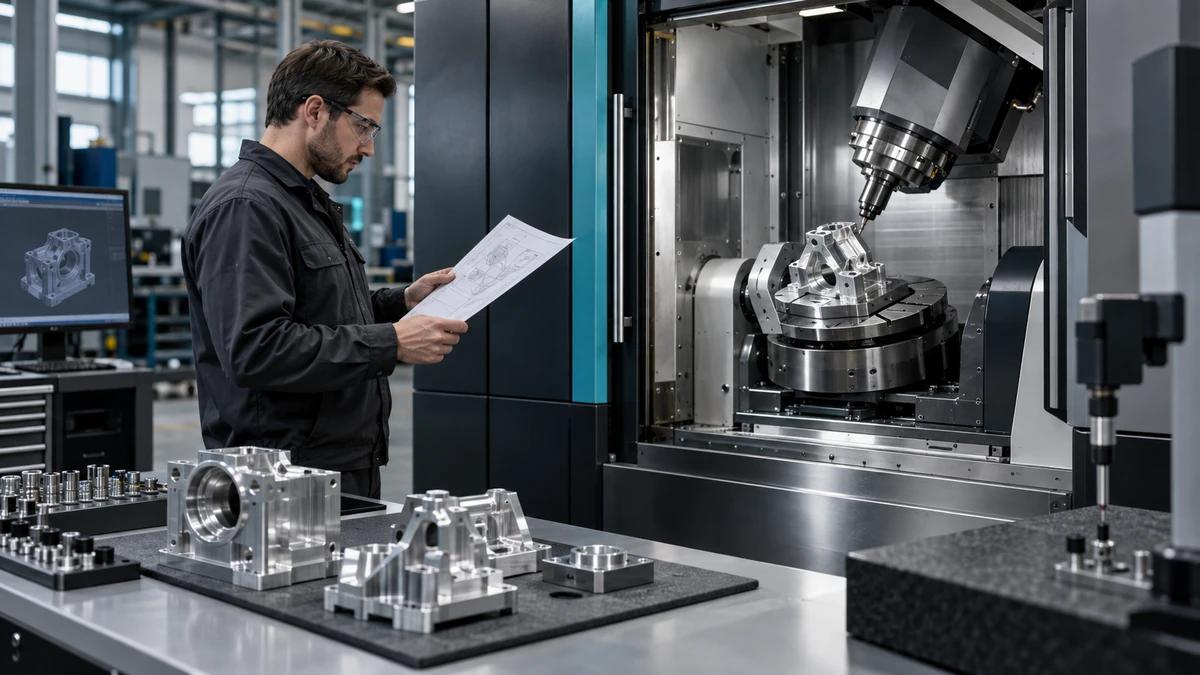
Freeze the machine configuration, test conditions, drawing revision, material, blank, fixture, tools, program, coolant, thermal state, sample count, inspection method, limits, exceptions, retest, and approval owners before the trial. Decide which results belong to machine geometry, which belong to the part process, and which belong to site installation.
A vertical machining center supplier should not be allowed to replace a failed agreed feature with an easier demonstration after the machine is built.
Separate Factory and Site Acceptance
Factory acceptance confirms the serial configuration and controlled supplier conditions. Site acceptance confirms transport, installation, utilities, leveling, local tools, training, and agreed production readiness. The two stages should share a baseline but not duplicate every test without reason.
Use open-issue classes: shipment blocker, site prerequisite, production blocker, controlled deviation, and future improvement. Every issue needs an owner and closure evidence.
Question 7: How Is the Approved Baseline Restored?
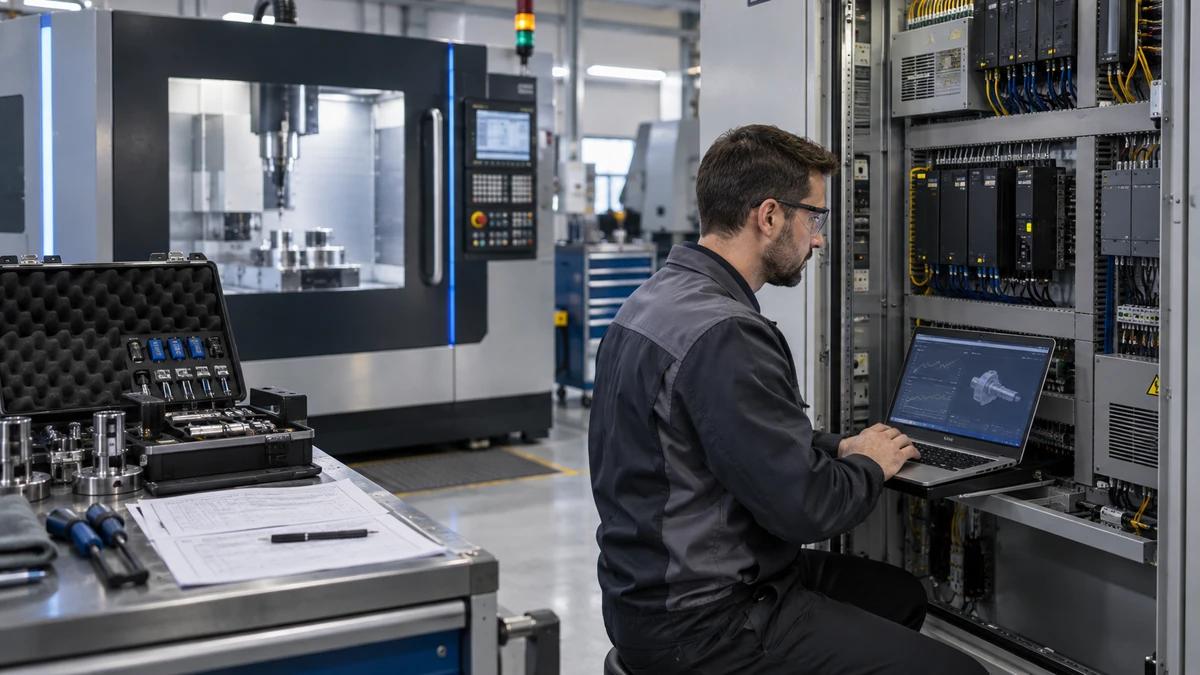
Request serial build data, parameters, PLC and NC backups, controller versions, options, compensation, manuals, electrical drawings, fixture and tool files, approved programs, inspection methods, maintenance tasks, spare identification, contacts, and escalation steps. Test who can access and restore the pack.
Service quality is measured by diagnosis and recovery discipline, not by broad promises of lifetime support.
Apply a Safety Question to Every Option
The OSHA machine guarding resource provides general guarding context. The responsible teams must evaluate the delivered machine and process, including doors, interlocks, loading, fixtures, robots, ejection, chips, coolant, observation, maintenance, and local requirements.
An option that changes access or motion also changes the questions a vertical machining center supplier must answer.
Compare Suppliers by Evidence Cost, Not Purchase Price Alone
Include tooling, fixtures, gauges, programming, postprocessor, foundation, rigging, utilities, coolant, filtration, chips, automation, training, inspection, spares, maintenance, expected downtime, and recovery. Mark costs as included, optional, buyer-supplied, estimated, or unknown.
Zhihe CNC uses this boundary to prevent a low quotation from transferring essential scope into the buyer's launch budget.
Set a 30-Day Answer Expiry Rule
Supplier answers can change when the drawing, model, spindle, controller, option, delivery date, source component, site, or acceptance plan changes. Reconfirm affected answers before deposit, design freeze, factory acceptance, and shipment.
When a Vertical Machining Center Supplier Deserves the Shortlist
A supplier deserves the shortlist when its seven answers form one consistent proposal. The usable envelope must match the same fixture assumed in the cycle model. The spindle duty must match the named material and tools. Thermal and accuracy evidence must use controlled conditions. Tool, chip, and automation claims must fit the production route. Acceptance and service must restore the same approved configuration.
A vertical machining center supplier should also disclose what is not yet proven. Zhihe CNC recommends an open-item register with risk, owner, due date, temporary assumption, evidence plan, and effect on quotation ranking. Honest boundaries are more valuable than a complete-looking response that hides unknowns.
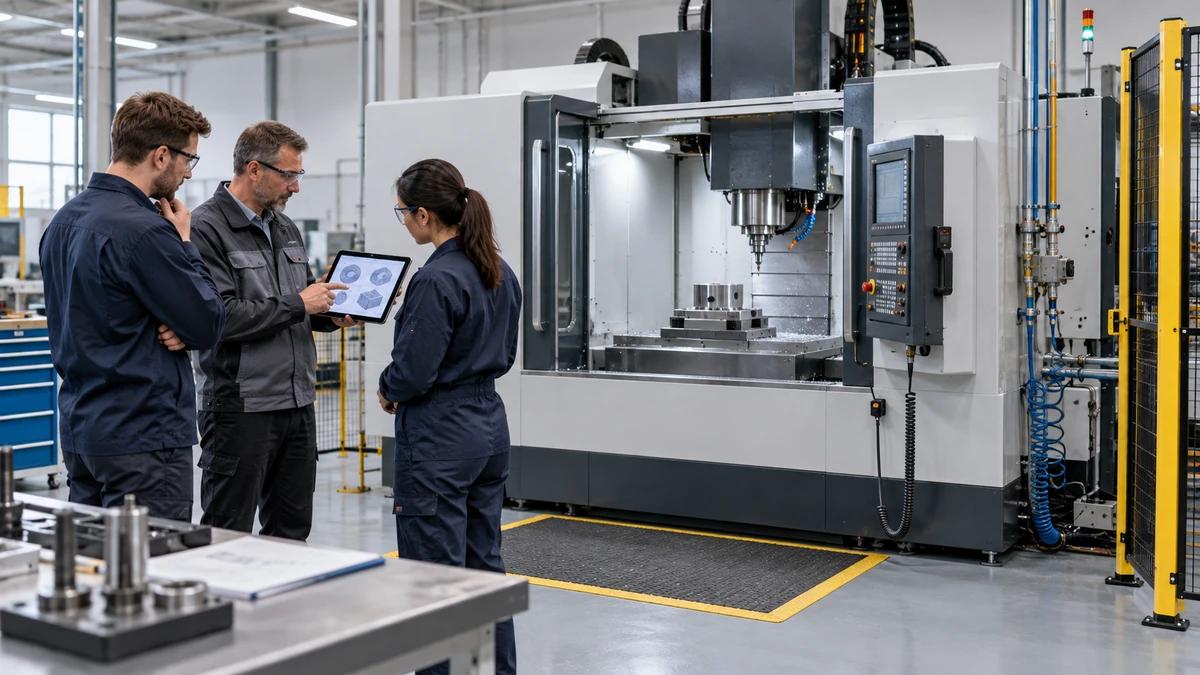
Before award, ask the vertical machining center supplier to explain one difficult part from loading through final inspection and fault recovery. The explanation should identify operators, files, signals, checks, decision points, and exclusions. That walk-through makes the seven-question score practical for production, not only procurement.
Know What Seven Questions Cannot Promise
The scorecard cannot guarantee cycle time, yield, uptime, surface finish, or payback under untested conditions. Material, blank variation, fixtures, tools, programs, operators, utilities, environment, maintenance, and inspection remain shared contributors. The questions improve decision quality; they do not replace application trials.
FAQ
Should price be discussed before the seven questions?
Yes, but treat early price as conditional until requirements, configuration, evidence, and responsibilities are controlled.
How many parts should be included in an RFQ?
Use a representative family covering the largest envelope, hardest access, highest load, tightest tolerance, and highest volume.
Is more travel always safer?
No. Extra travel can add cost and footprint while usable access still depends on tools, fixtures, doors, and spindle geometry.
What proves spindle suitability?
Use an operation duty map, spindle curve, tool assembly, material, engagement, duration, and representative cutting evidence.
Can factory accuracy data replace a part trial?
No. Machine tests and part trials answer related but different questions and should be linked, not substituted.
When is automation-ready meaningful?
Only when interfaces, signals, safety, process decisions, recovery, and responsibilities are defined and tested at the claimed level.
What belongs in site acceptance?
Include delivery condition, leveling, utilities, options, local safety, training, trial work, open issues, and production release.
How should supplier answers be scored?
Score requirement fit, assumption clarity, evidence quality, responsibility ownership, change control, and recovery.
Why preserve backups before production?
They establish the approved baseline and shorten diagnosis when software, parameters, compensation, or options change.
What should buyers send Zhihe CNC?
Send drawings, CAD, material, blank, volume, cycle, tools, fixtures, quality needs, utilities, destination, and schedule.
Plan the Seven-Question Review With Zhihe CNC
To compare a vertical machining center supplier, send Zhihe CNC the controlled part family, material, blank, setup concept, tools, tolerances, surfaces, production pattern, inspection, automation ambition, site data, and acceptance goals. Review the vertical machining center range, the company background, and the contact route before freezing the scorecard.