New energy and automation parts often look simple from the outside. A battery module mounting beam, equipment base, or aluminum structural part may seem like a straightforward milling and drilling job. In production, however, these parts can become difficult.
Flatness must be stable. Hole positions must remain consistent. Tapping must be reliable. Batch output must not drift after 100 or 200 pieces. When the factory is supplying assembly lines, a small machining error can create larger downstream problems.
The linked Zhihe CNC product page includes a case involving a 6061 aluminum alloy new energy battery module end plate mounting beam with dimensions of 1050 × 200 × 60 mm. The customer’s previous machine had Z-axis deflection under heavy cutting, flatness deviation up to 0.04 mm/m, precision degradation after 100 pieces, frequent rework, and excessive tool changes causing more than 35% non-cutting time per piece.
These problems are common in factories that move from simple machining to stable batch production.
Why Battery and Automation Parts Are Sensitive to Stability
A battery module component may not be extremely heavy, but it often has assembly requirements. The part may need accurate holes, milled faces, slots, and tapped features. If flatness is poor, the part may not sit correctly in the assembly. If holes drift, downstream installation slows down. If tapping quality varies, rework increases.
Automation components have similar requirements. Bases, brackets, and mounting beams often connect with linear rails, sensors, actuators, or frames. Their surfaces and hole patterns must remain consistent.
A machine that lacks rigidity may still cut the part, but it may require slower parameters, more inspection, and more manual correction. For a production buyer, that is where the real cost appears.
Product Features That Support Batch Production
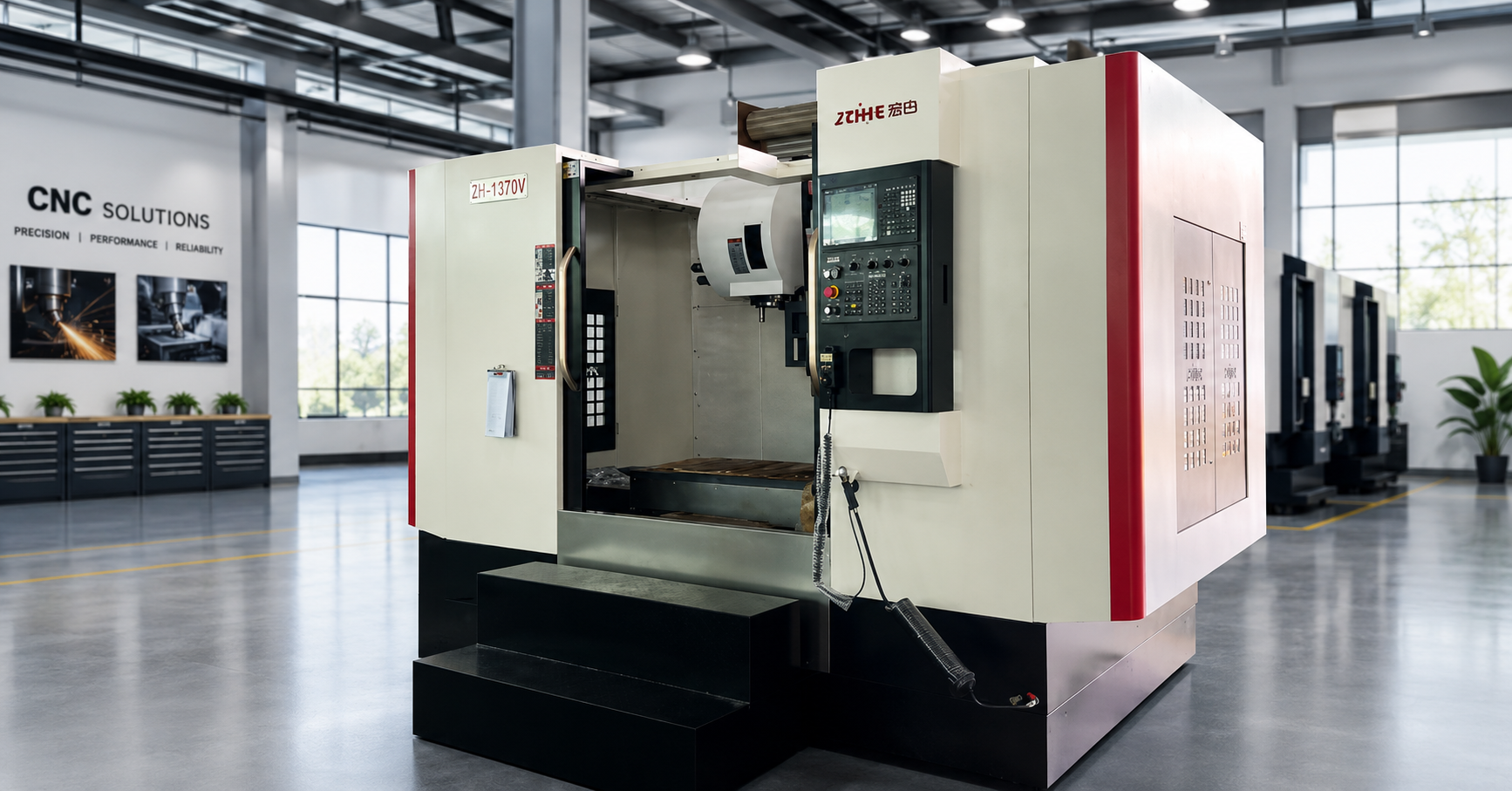
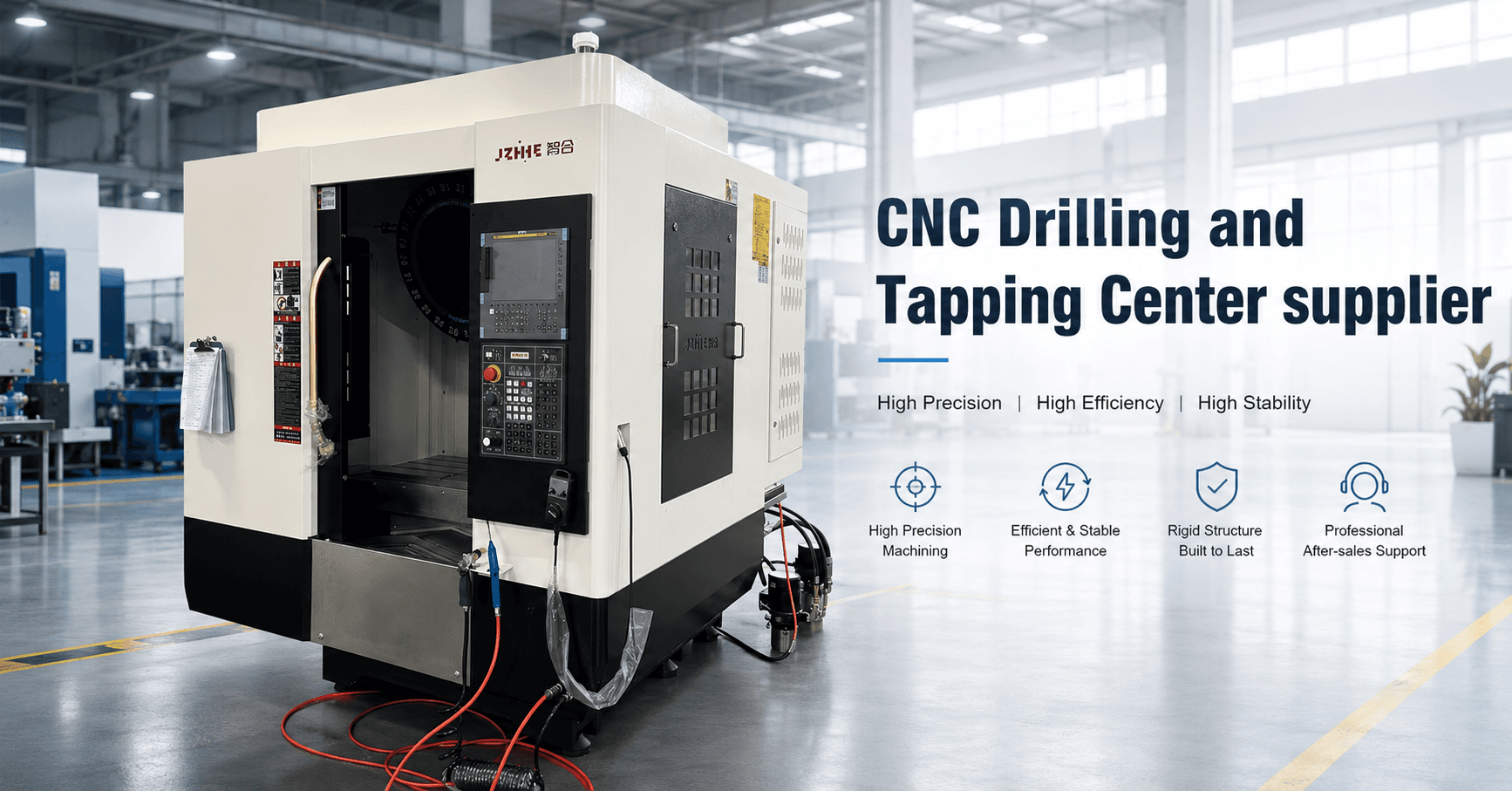
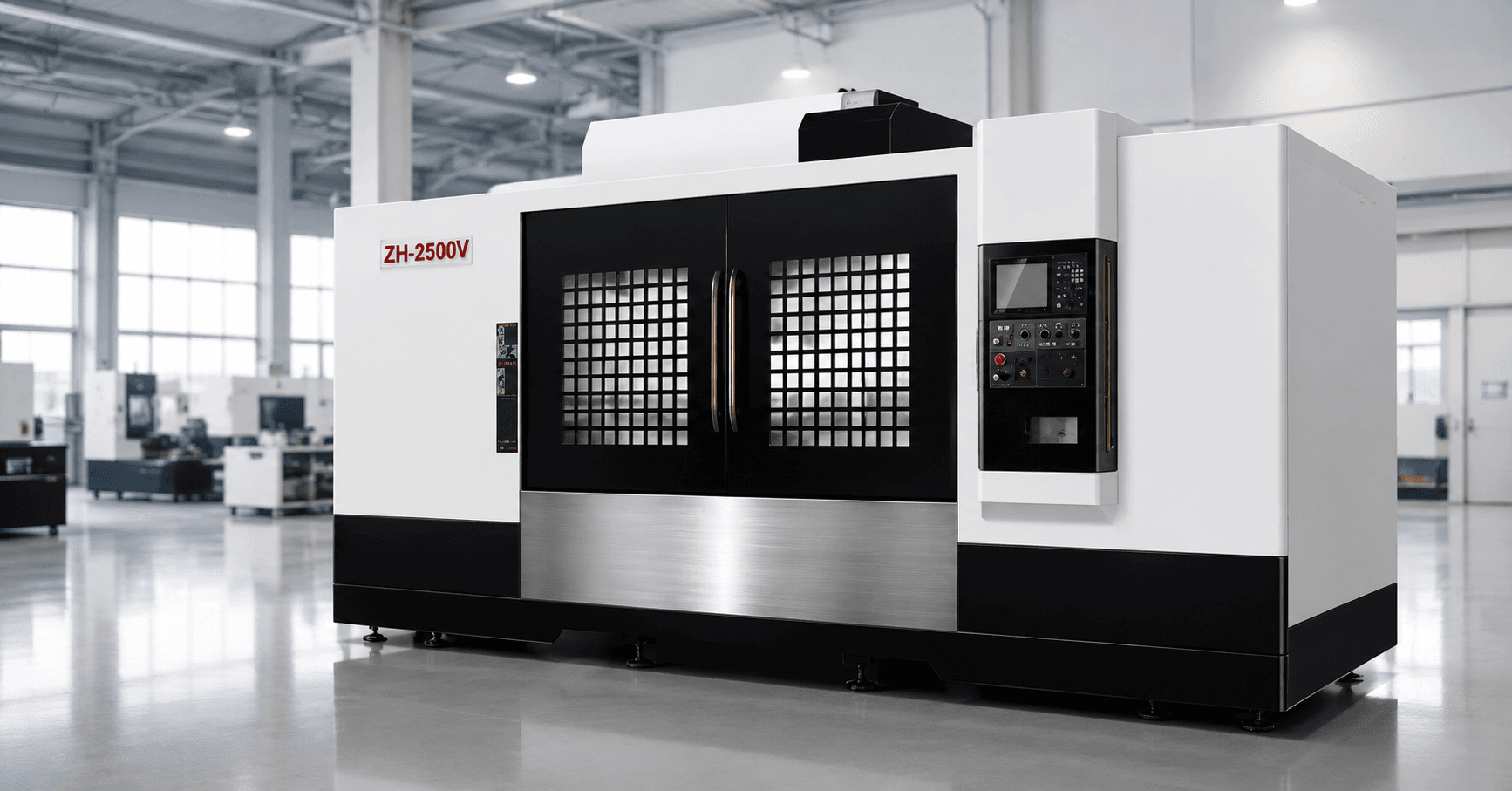
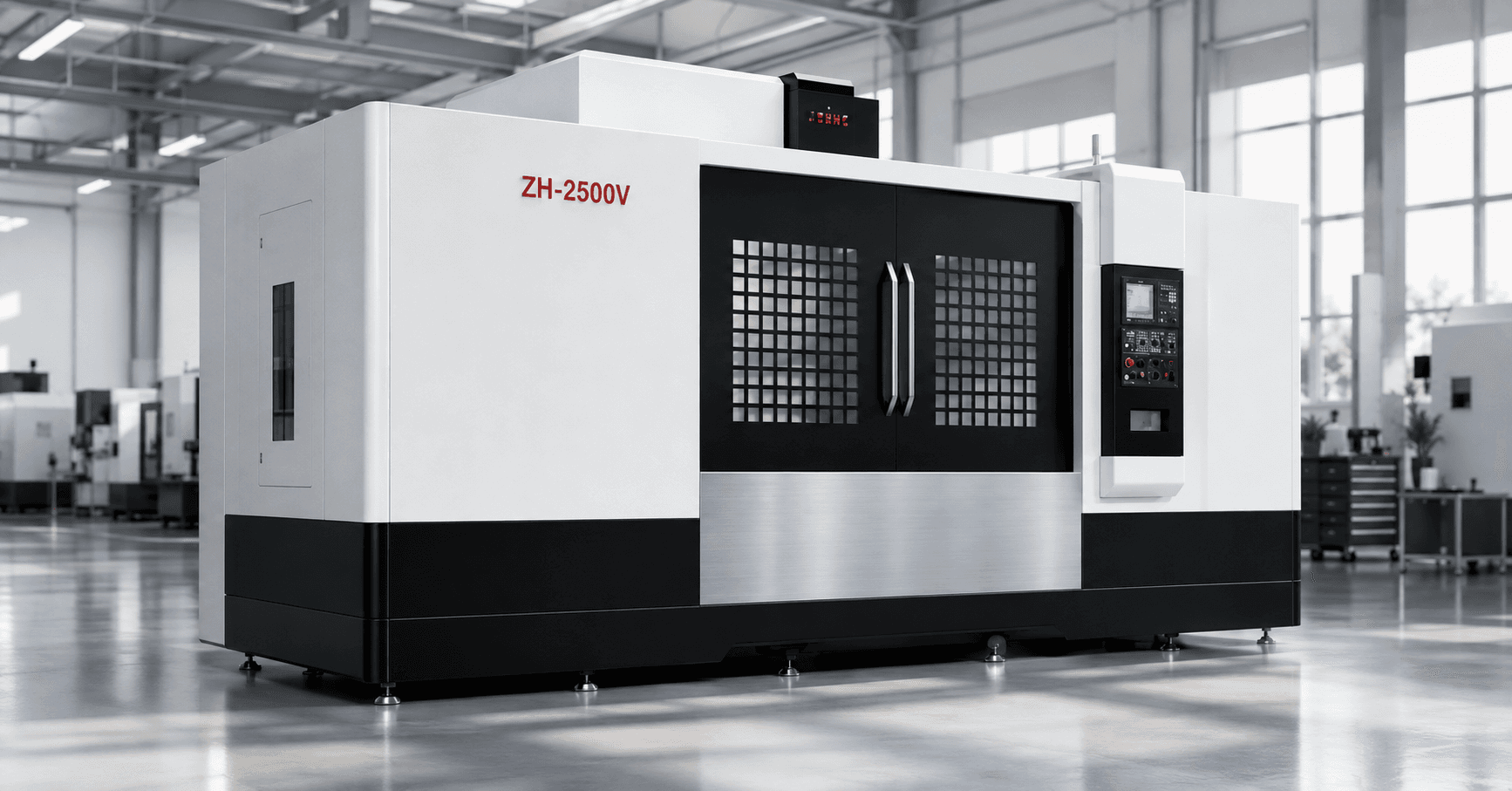
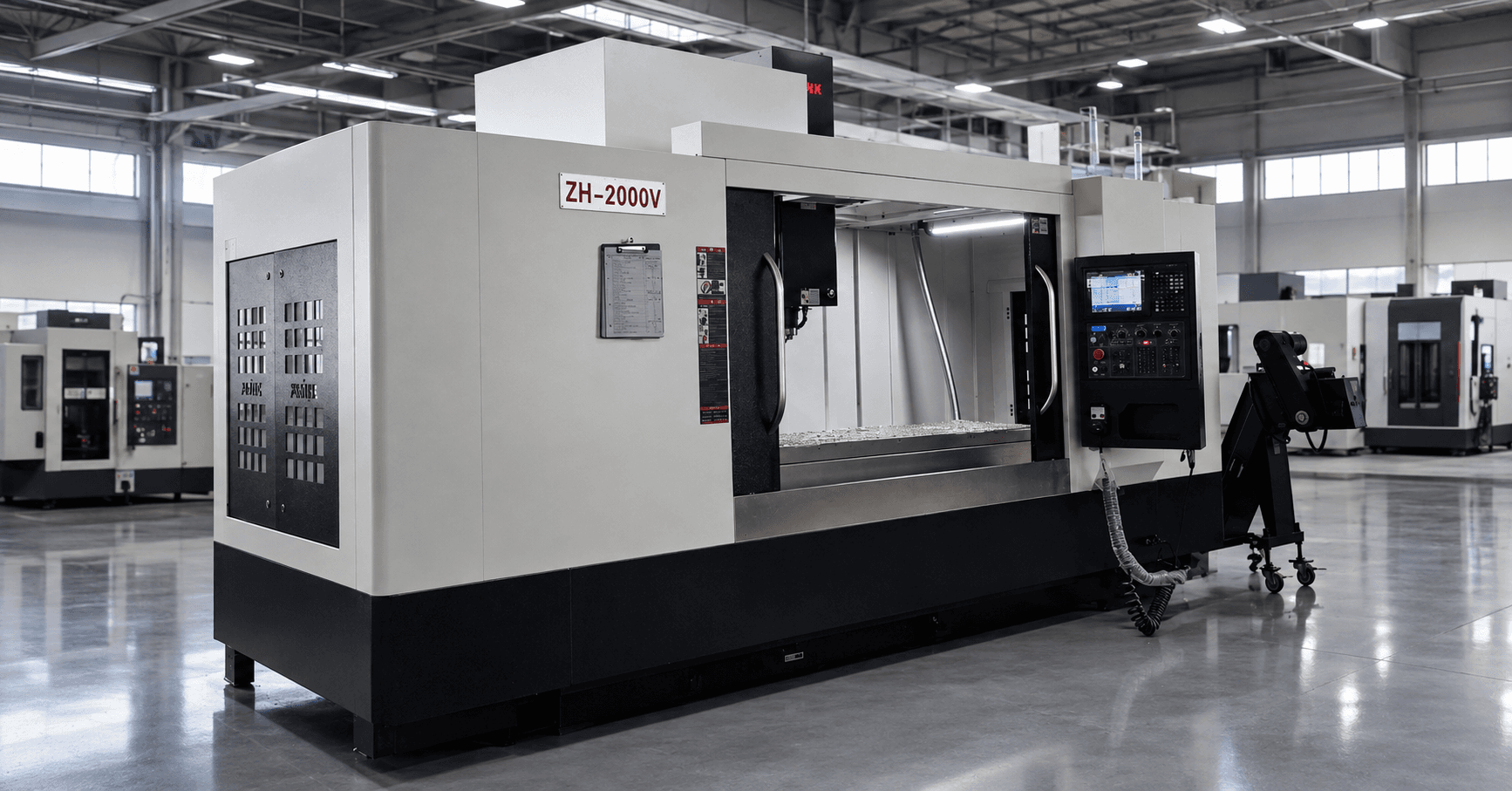
The linked machine combines several features that are useful for new energy and automation parts: 11 kW BT40 spindle, 24-tool arm-type magazine, MITSUBISHI M80VB controller, C3-grade ball screws, X/Y roller guides, Z-axis hard rail, rear discharge spiral chip conveyor, and coolant system with independent pumps.
| Production Need | Relevant Machine Feature | Practical Value |
|---|---|---|
| Stable flatness | Z-axis hard rail and rigid structure | Helps reduce deflection during cutting |
| Efficient multi-step machining | 24-tool magazine | Supports milling, drilling, tapping, chamfering, and finishing |
| Aluminum and steel machining | 11 kW BT40 spindle | Provides stronger cutting support than light-duty platforms |
| Batch repeatability | C3-grade ball screws and accuracy verification | Helps control repeated production |
| Rigid tapping | Mitsubishi CNC control | Supports more stable tapping operations |
| Cleaner production | Chip conveyor and coolant system | Reduces cleaning and interruption time |
These features should be evaluated together. No single specification guarantees good production results. The machine, fixture, tool, program, coolant, and inspection process all matter.
Case Reference: Battery Module Mounting Beam
The product case shows how a more rigid vertical machining platform can affect actual production.
The linked page reports that after using the Zhihe CNC solution, milling, drilling, and tapping were completed in a single setup. Flatness was controlled within 0.012 mm/m, precision fluctuation stayed within ±0.005 mm over 200 consecutive pieces, cycle time was reduced to 22 minutes, efficiency increased by 42%, and yield improved from 88% to 98.5%.
For buyers, these results are useful because they focus on measurable production outcomes rather than broad machine claims.
Why Tool Magazine Capacity Matters
Battery module beams and automation parts often require several tools in one program. A typical process may include face milling, slot milling, drilling, tapping, chamfering, and finishing.
If the tool magazine is too small or tool changes are inefficient, the machine may spend too much time not cutting. That was one of the problems in the product-page case, where excessive tool changes created more than 35% non-cutting time per piece.
A 24-tool magazine does not automatically solve every process problem, but it gives the programmer more flexibility. More operations can be completed in one setup, and operators do not need to interrupt production as often.
Advantages Over a Basic Machine
Compared with a basic vertical machining center, the linked heavy-duty machine is more suitable when the buyer needs batch stability and stronger cutting support.
| Comparison Area | Basic VMC Limitation | Heavy-Duty VMC Advantage |
|---|---|---|
| Z-axis stability | May deflect under heavier cuts | Hard rail structure improves damping |
| Tool changes | May create frequent interruptions | 24-tool magazine supports multi-step programs |
| Flatness control | May drift after continuous production | Rigid structure helps improve consistency |
| Production reliability | More dependent on operator correction | Better suited for repeat batch machining |
| Coolant and chip control | May require more manual cleaning | Rear flushing and chip conveyor support cleaner machining |
| Acceptance confidence | May rely on basic inspection only | Trial cutting and accuracy inspection improve verification |
The advantage appears when the part family needs repeatability. For one-off light parts, the benefit may be smaller. For repeat industrial production, the difference can become significant.
What Type of Companies Should Consider This Machine?
This type of machine is suitable for:
- New energy battery component suppliers
- Battery module structure manufacturers
- Aluminum mounting beam machining shops
- Automation equipment manufacturers
- Industrial frame and base suppliers
- Automotive component factories
- Contract machining shops with repeat batch orders
- General machinery component manufacturers
It is especially relevant when the current process has flatness deviation, unstable batch precision, frequent rework, tool-change delays, or poor cutting stability.
How Buyers Should Select a Machine for These Parts
Before selecting a vertical machining center, buyers should check:
- Can the part be completed in one setup?
- Is the table size enough for the fixture?
- Is the table load enough for the part and fixture combined?
- Is the Z-axis rigid enough for the cutting depth?
- Does the tool magazine support the complete process?
- Can the controller support rigid tapping and compensation?
- Is coolant and chip removal suitable for the material?
- Can trial cutting be performed with a representative part?
- How is accuracy checked before final acceptance?
A machine recommendation should be tied to the buyer’s actual part drawing and production target.
FAQ
Is this type of machine suitable for battery module parts?
Yes, when the part requires stable flatness, repeatable hole accuracy, efficient tool changes, and batch production. The product page includes a battery module mounting beam case with measurable improvements.
Why is Z-axis rigidity important for aluminum parts?
Even aluminum parts can suffer from flatness deviation if the Z-axis deflects during cutting. Rigidity helps reduce vibration and improves process consistency.
Does a 24-tool magazine always matter?
It matters when the part requires many tools in one setup. For simple one-tool machining, the benefit is smaller. For battery and automation parts, multi-tool operations are common.
What should buyers prepare before requesting a quote?
Buyers should prepare drawings, material, tolerance, flatness requirements, current cycle time, fixture plan, tool list, and batch volume.
Conclusion
Battery module beams and automation parts need more than basic CNC machining capacity. They require stable flatness, controlled hole accuracy, efficient tool use, and repeatable output across batches.
The linked Zhihe CNC machine provides a production-focused combination of BT40 spindle power, hybrid guideway structure, Z-axis hard rail, 24-tool magazine, Mitsubishi control, coolant and chip handling, and trial cutting support. The product-page battery module case shows improvements in flatness, cycle time, efficiency, and yield, which makes this type of machine relevant for buyers facing similar production issues.
CTA:
For battery module beams, automation bases, aluminum structural parts, or repeat industrial components, send your drawing and current machining issues to Zhihe CNC for a process-based recommendation.