Introduction
A standard vertical machining center can handle many daily milling, drilling, and tapping jobs. For small aluminum blocks, light brackets, simple plates, or prototype work, it may be enough.
The problem starts when the workpiece becomes heavier, wider, deeper, or more accuracy-sensitive. A housing may need several tools in one setup. A hydraulic valve block may require stable hole quality. A mold component may need deep cavity machining. An automation base may need flatness and repeated hole accuracy. At that point, a lighter machine can still cut the material, but it may not cut it efficiently or consistently.
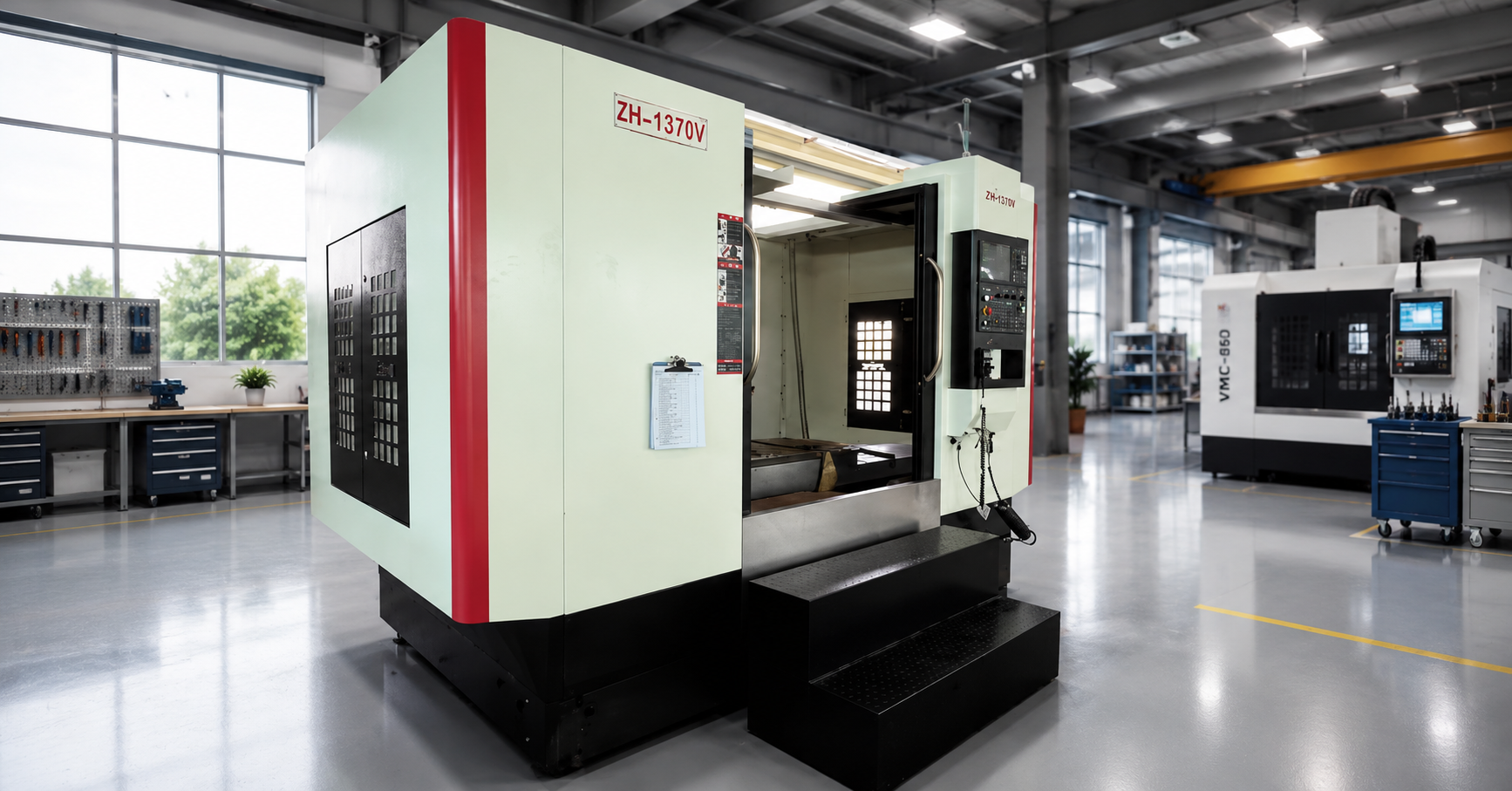
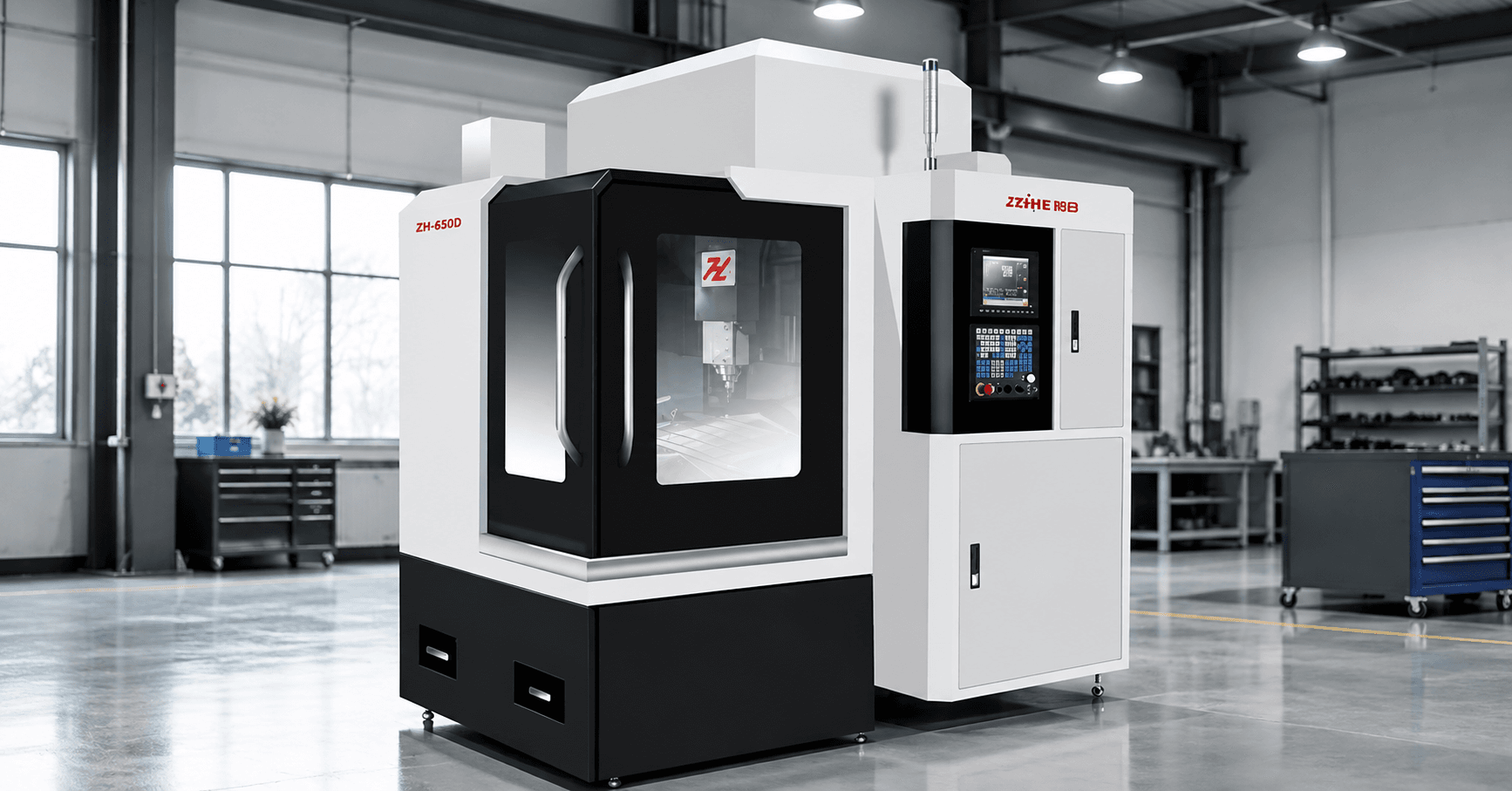
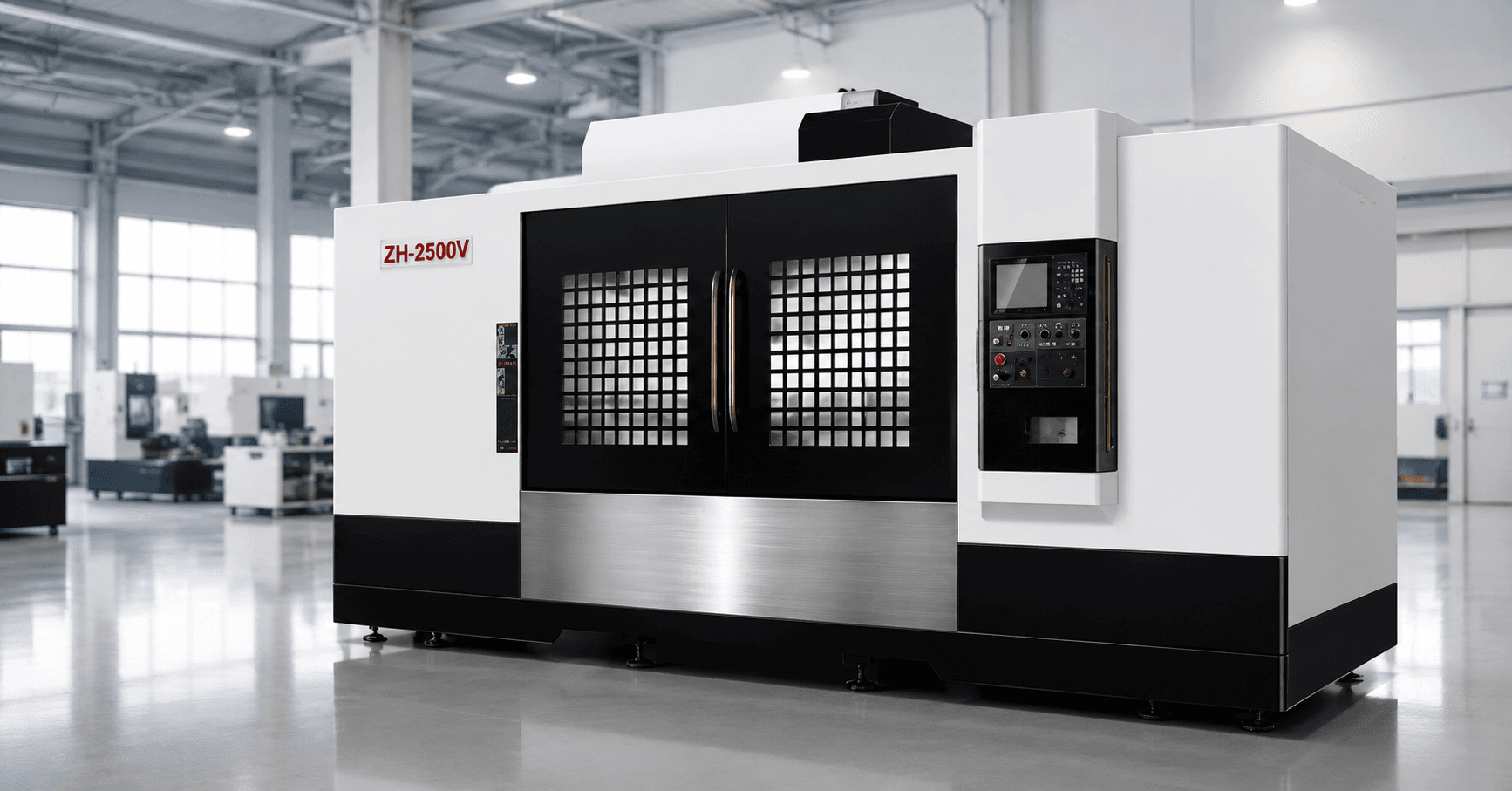
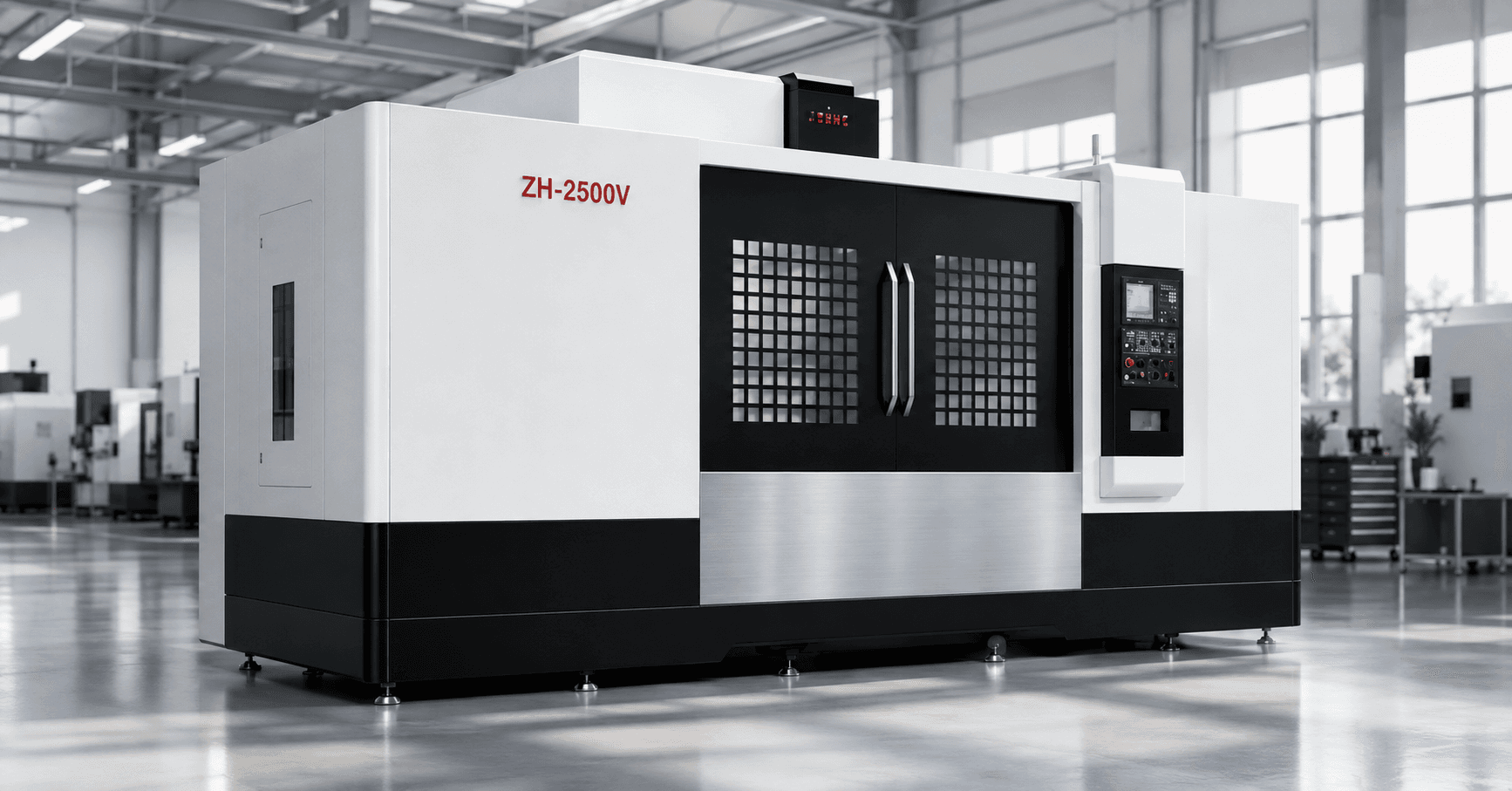
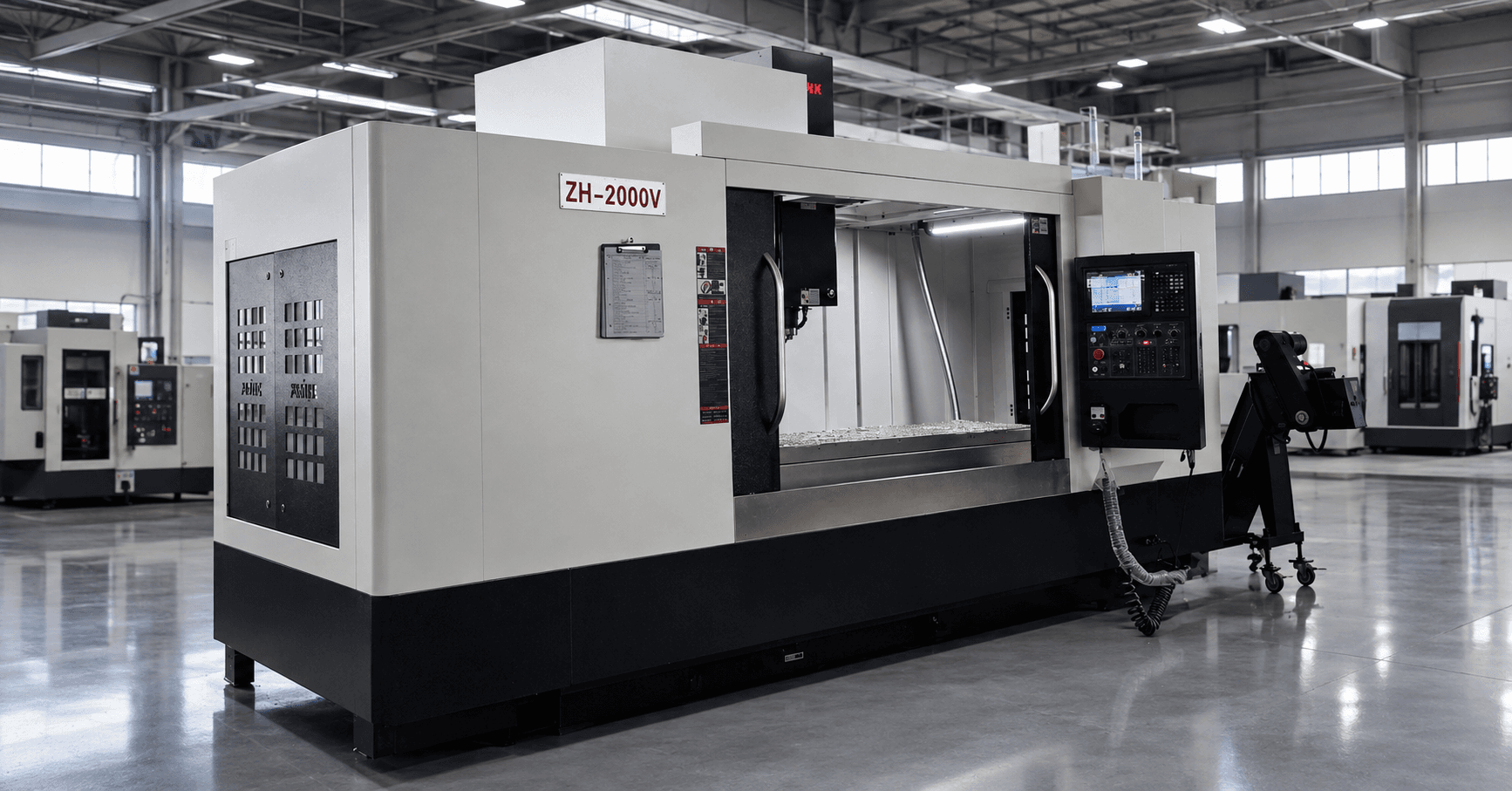
This is where a heavy-duty vertical machining center becomes a practical option. The linked Zhihe CNC model is listed with 1100 / 650 / 600 mm X/Y/Z travel, a 1200 × 600 mm worktable, 1000 kg maximum table load, BT40 spindle, 11 kW spindle motor, and MITSUBISHI M80VB CNC controller. Its product page positions it for medium-sized parts that need rigidity and accuracy retention, including general machinery components, automotive chassis and mold making, precision housings and boxes, automation equipment bases, and hydraulic valve blocks.
Why Factories Outgrow a Light-Duty VMC
Many factories do not need a heavier VMC at the beginning. A compact machine is easier to install, costs less, and works well for simple parts. But once production changes, the weak points become visible.
A small VMC may require slower feeds to avoid vibration. It may struggle when the fixture and workpiece weight increase. The Z-axis may deflect during deeper cuts. Tool life may become unstable. Operators may spend more time adjusting the process than cutting parts.
For a production buyer, this is not only a technical issue. It becomes a cost issue.
When cycle time increases, inspection becomes heavier, tool changes become more frequent, and rework rises, the lower initial machine price may no longer look attractive. A heavier VMC is not always necessary, but it becomes worth evaluating when the current machine creates hidden production losses.
Key Features Buyers Should Evaluate
| Buyer Concern | What to Check | Why It Matters |
|---|---|---|
| Workpiece size | X/Y/Z travel and table area | Confirms whether the part can be machined in one setup |
| Workpiece weight | Table load and fixture capacity | Prevents unstable clamping and overload risk |
| Cutting rigidity | Spindle power and guideway structure | Supports rough milling, drilling, tapping, and deep cavity work |
| Batch consistency | Positioning accuracy and repeatability | Helps maintain quality across repeated parts |
| Tool efficiency | Tool magazine capacity | Reduces manual tool change interruption |
| Future flexibility | 4th-axis interface and probe options | Supports more complex setups later |
For the linked machine, the product page lists ±0.005 mm positioning accuracy, ±0.003 mm repeatability, a 24-tool arm-type BT40 magazine, C3-grade ball screws, X/Y 45 mm roller guides, and a Z-axis hard rail. These details are especially relevant for buyers who need a balance between feed response, rigidity, and vibration damping.
Why the Guideway Structure Deserves Attention
Not all axes experience the same load. In many medium-part machining jobs, X/Y movement needs smooth and responsive feeding, while the Z-axis must handle stronger vertical cutting forces, tool overhang, and vibration during deeper machining.
The linked machine uses X/Y roller linear guides and a Z-axis hard rail. This type of hybrid structure is useful because it does not focus only on speed or only on rigidity. It aims to provide smoother feed movement on X/Y while improving damping and cutting stability on Z.
For factories machining valve blocks, housings, robot brackets, or mold components, this matters. A weak Z-axis may lead to chatter, poor surface finish, and shorter tool life. A machine that is too slow may reduce output. The practical goal is balance.
Production Use Cases
A heavy-duty VMC is often suitable for factories machining:
- Precision housings and boxes
- Hydraulic valve blocks
- Medium-sized mold components
- Automation equipment bases
- Automotive chassis components
- Robot support brackets
- New energy battery module parts
- General machinery components
The linked product page specifically lists aluminum alloys, copper alloys, carbon steel, and low-carbon alloy steel as applicable materials. That makes it relevant for shops working across different industrial part families rather than only one narrow material category.
Advantages Compared with a Standard Light VMC
A heavier vertical machining center is not automatically better for every factory. For small parts, a compact machine may still be more economical. The advantage appears when the production problem requires more rigidity, stronger table support, and better accuracy retention.
| Comparison Area | Light VMC May Be Enough When… | Heavy-Duty VMC Is More Suitable When… |
|---|---|---|
| Part size | Parts are small and easy to clamp | Parts are medium-sized, wide, or deeper |
| Fixture weight | Fixtures are simple and light | Fixtures are heavy or require strong support |
| Cutting load | Mostly light aluminum work | Steel, cast iron, or deeper cutting is common |
| Accuracy | Prototype or loose-tolerance work | Batch precision and repeatability matter |
| Tool changes | Few operations per part | Milling, drilling, tapping, boring, and chamfering are combined |
| Z-axis load | Shallow cuts | Deep cavities or long tools are used |
For buyers, the decision should come from the part family, not from machine appearance.
How to Decide Whether This Type of Machine Fits
Before requesting a quotation, buyers should prepare:
- Part drawings
- Material grade
- Maximum part size
- Part and fixture weight
- Required tolerance
- Surface finish target
- Current cycle time
- Current tool life
- Existing quality issues
- Batch volume
- Fixture method
- Need for probing or 4th-axis expansion
A supplier can only recommend a suitable configuration when the real production conditions are clear. A vague inquiry usually leads to a vague quote.
Service and Acceptance Considerations
For B2B buyers, installation and acceptance are part of the purchase risk. The product page lists inspection equipment including laser interferometer, ballbar, and spindle dynamic balancer. It also describes pre-acceptance trial cutting at the supplier’s facility and final acceptance trial cutting after delivery, installation, and commissioning at the buyer’s facility. The warranty period starts after final acceptance is confirmed.
This is important because a machine should not only pass a visual check. Buyers should confirm accuracy, cutting performance, and trial part results before putting it into full production.
FAQ
What type of factory should consider a heavy-duty vertical machining center?
Factories machining housings, boxes, mold components, hydraulic valve blocks, automation bases, automotive parts, and medium-sized industrial parts should consider this type of machine.
Is a heavier VMC always better than a standard VMC?
No. For small and simple parts, a standard VMC may be more cost-effective. A heavy-duty VMC is more suitable when rigidity, table load, deep machining, and batch accuracy are important.
What is the most important feature to check first?
Start with the workpiece. Check travel, table size, table load, fixture method, material, and required tolerance before comparing machine models.
Why does Z-axis rigidity matter?
The Z-axis carries cutting load during drilling, tapping, deep cavity machining, and vertical milling. Better damping can help reduce chatter, tool wear, and surface quality problems.
Conclusion
A heavy-duty vertical machining center should be purchased when the existing machine can no longer support the factory’s real production requirements. If the current process suffers from vibration, repeated tool wear, poor flatness, accuracy drift, or too much non-cutting time, a stronger VMC may provide measurable value.
The linked Zhihe CNC machine is positioned for medium-sized parts requiring rigidity and accuracy retention. Its travel, table load, BT40 spindle, 11 kW spindle motor, hybrid guideway structure, 24-tool magazine, accuracy inspection, and trial cutting process make it a practical option for factories machining housings, valve blocks, automation bases, mold components, and similar industrial parts.
CTA:
Share your drawings, material, part size, tolerance, and current machining problems with Zhihe CNC to evaluate whether this type of heavy-duty vertical machining center fits your production line.