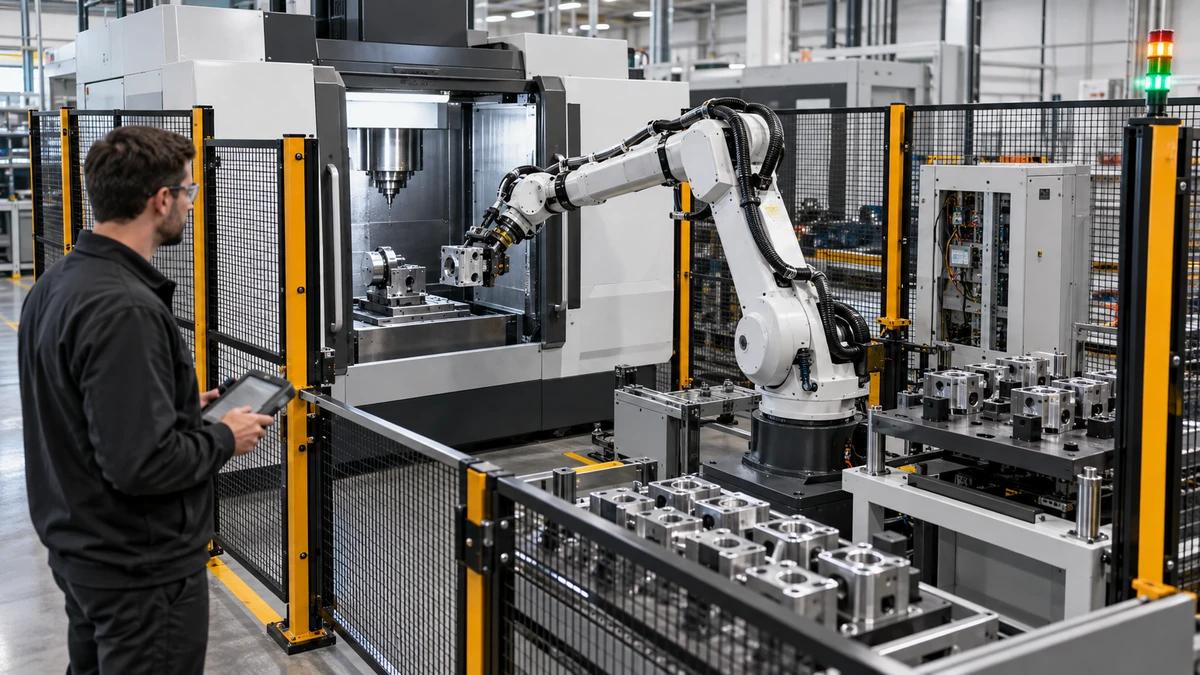
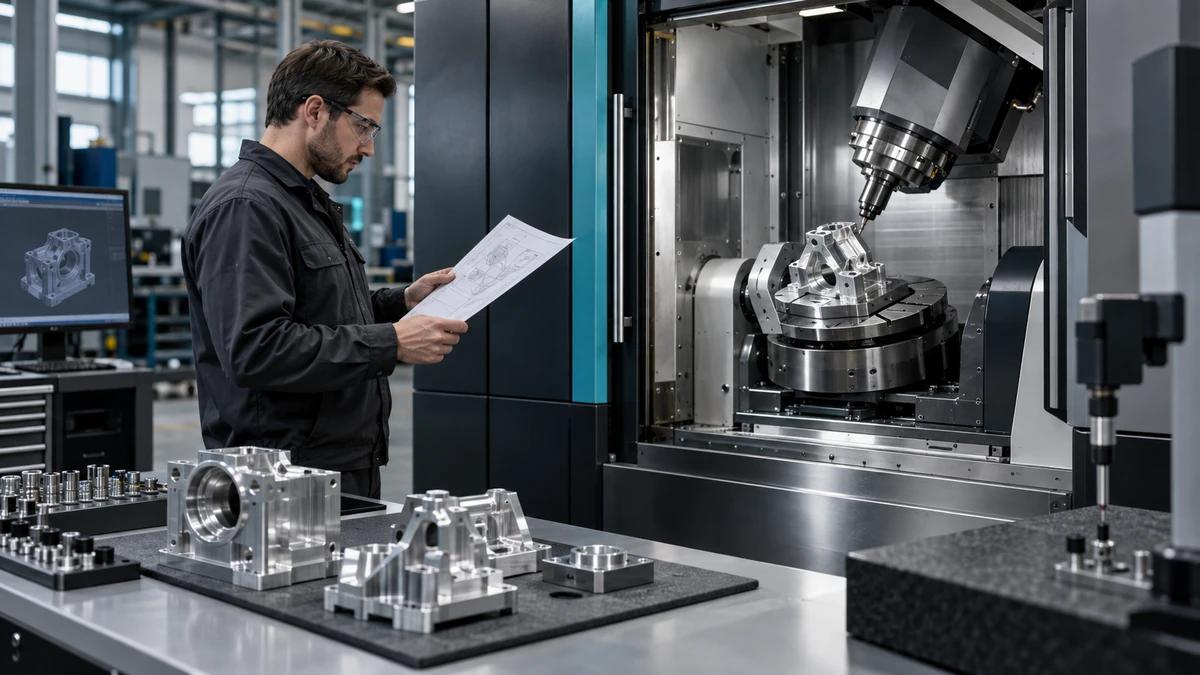
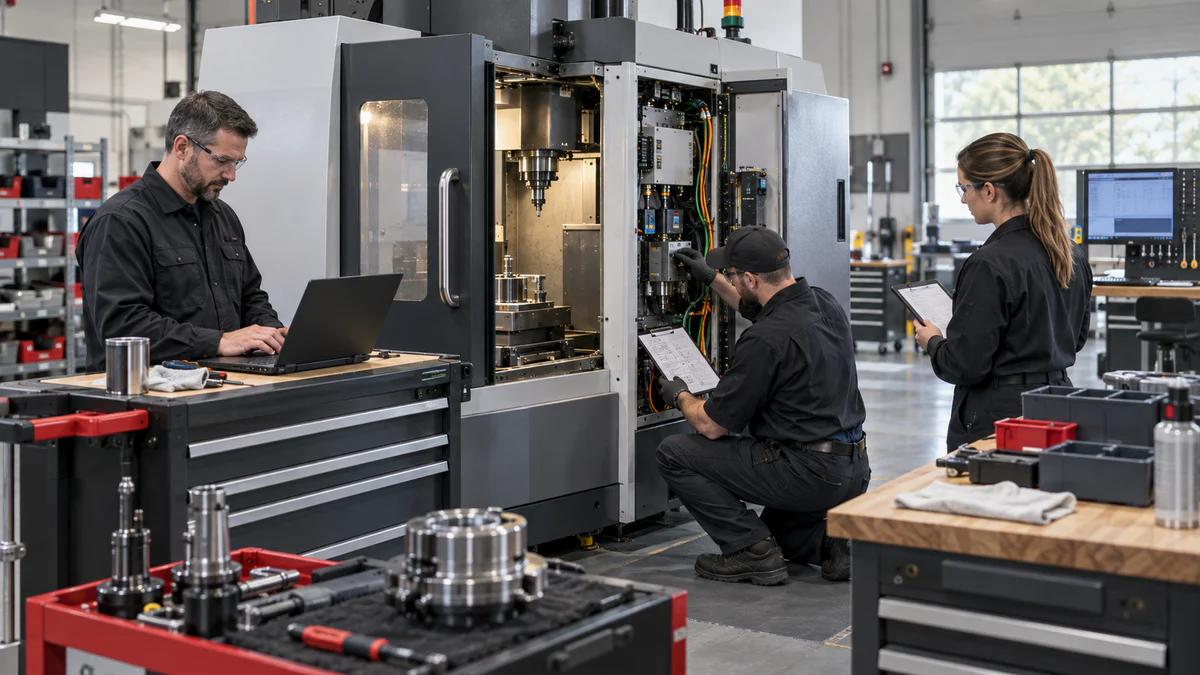
A 5 axis CNC milling machine creates value when orientation removes controlled setup debt without creating greater collision, stiffness, chip, datum, inspection, or recovery risk. Zhihe CNC tests that claim by making three fixture concepts compete on the same part family.
The challenge is designed for buyers, programmers, process engineers, quality teams, and production managers. It compares the familiar multi-setup route, an aggressive one-clamp concept, and a balanced fixture that preserves access while keeping support and recovery visible.
Define the Feature Route Before Designing Fixtures
Index every face, hole, bore, pocket, undercut, surface, datum, tolerance, tool approach, inspection requirement, deburring need, and protected area. Mark which features genuinely require orientation and which can be completed more simply.
Zhihe CNC separates simultaneous motion from indexed positioning because they create different programming, kinematic, tool, surface, verification, and acceptance demands.
Score the Three Fixture Concepts
| Concept | Potential gain | Primary debt |
|---|---|---|
| A: conventional setups | Familiar access and support | Datum transfers and handling |
| B: minimal one-clamp | Maximum exposure | Stiffness and collision risk |
| C: balanced access | Fewer setups with support | Fixture design and probing |
| Common baseline | Same controlled features | No borrowed assumptions |
All three concepts must use the same material, quality, volume, tools, inspection, and production boundaries.
Fixture A: Price the Familiar Setup Debt
Record loading, locating, clamping, indicating, program selection, offsets, first-piece inspection, handling, cleaning, queues, errors, and work-in-process for every setup. Measure accepted lead time, not only spindle cycles.
A 5 axis CNC milling machine does not automatically beat Fixture A; it must recover enough transfers and uncertainty to justify new programming, equipment, tooling, training, and maintenance demands.
Fixture B: Expose the Cost of Maximum Access
The smallest fixture may reveal more surfaces but reduce support, clamp authority, thermal path, vibration resistance, chip escape, and crash tolerance. Map the complete workpiece, fixture, screws, clamps, probe, tools, holders, spindle, table, trunnion, limits, doors, and safe retract positions.
Fixture C: Trade Exposure for Controlled Support
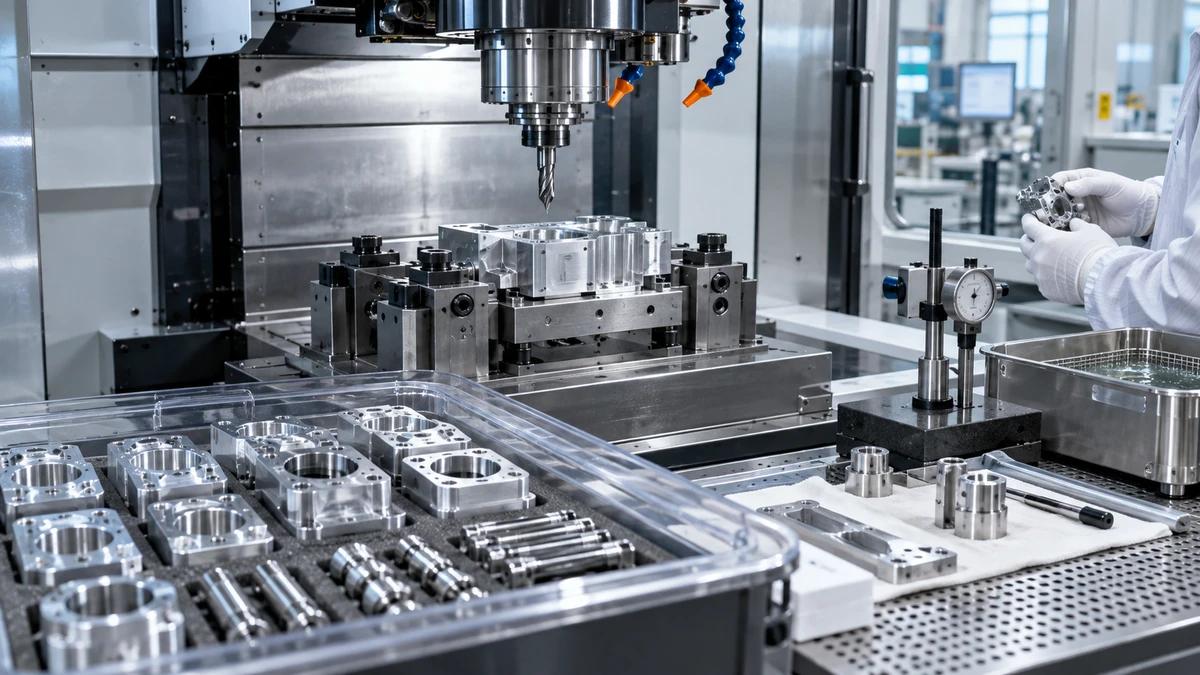
The balanced concept may use a pedestal, dovetail, modular base, soft jaw, subplate, or purpose-built locator. It gives up some theoretical access to improve rigidity, repeat loading, chip clearance, probing, maintenance, and recovery.
Zhihe CNC recommends documenting why each support and clamp exists and which feature, load, or recovery condition it protects.
Build the Digital Collision Constitution
Control machine model, rotary limits, fixture, workpiece, stock, tools, holders, extensions, probe, spindle, attachments, offsets, retracts, approach, simulation tolerance, controller functions, postprocessor, program revision, and operator changes.
Simulation must use the assemblies that production loads. A simplified cutter without the holder, stick-out, clamp, or machine limit can approve a path that the real system cannot execute safely.
Audit Datum Truth Through Orientation
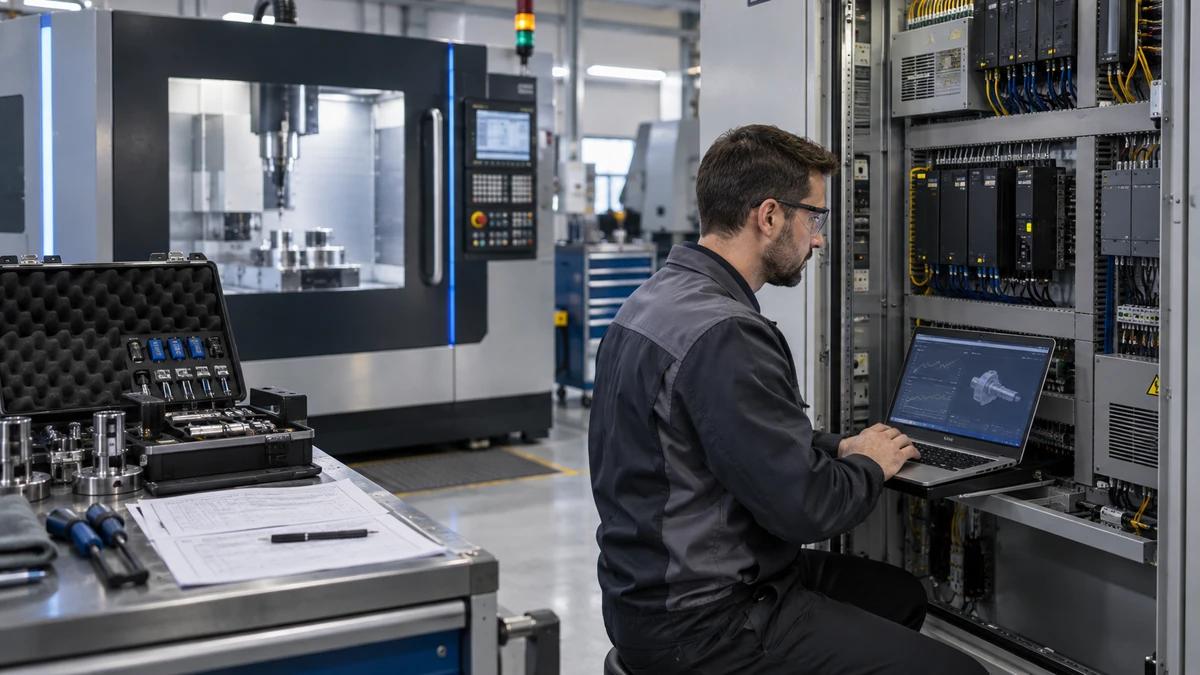
Define the primary datum, locating method, probe qualification, work-offset logic, rotary center, kinematic state, feature relationships, compensation authority, failed-check response, and independent inspection. Trace how orientation changes the path between machine coordinates and drawing intent.
Five-axis motion can reduce physical transfers while increasing dependence on controlled digital and kinematic relationships.
Compare Stiffness Where the Tool Actually Cuts
| Condition | Evidence to compare | Failure signal |
|---|---|---|
| Long reach | Assembly and surface map | Deflection or chatter |
| Tilted tool | Contact and force direction | Unexpected finish |
| Thin wall | Support and sequence | Free-state error |
| Interrupted cut | Engagement and fixture response | Load spikes |
| Rotary extreme | Axis state and clearance | Motion limit or blend |
Static fixture appearance cannot replace cutting evidence across the risky orientations.
Make Chips Follow Every Rotation
For each orientation, map gravity, pockets, blind cavities, fixture ledges, coolant direction, through-tool flow, air, recutting, washdown, conveyor, filtration, and safe cleaning. A position that improves tool access may create a chip trap or direct coolant away from the cut.
Observe the sequence, not one staged photograph.
Rehearse Interrupted-Program Recovery
Plan what happens after a tool alarm, probe failure, power interruption, program stop, quality hold, or manual intervention. Preserve stock state, completed operations, rotary position, active offsets, tool condition, safe retract, re-entry point, inspection, and authorization.
A 5 axis CNC milling machine process must recover without asking an operator to guess which orientation or digital state is safe.
Keep Safety Inside the Fixture Decision
The ISO 16090-1 search reference offers safety context for machining centres. Responsible teams must assess the complete delivered workholding, motion, access, doors, interlocks, ejection, tools, chips, coolant, loading, maintenance, recovery, and applicable local requirements.
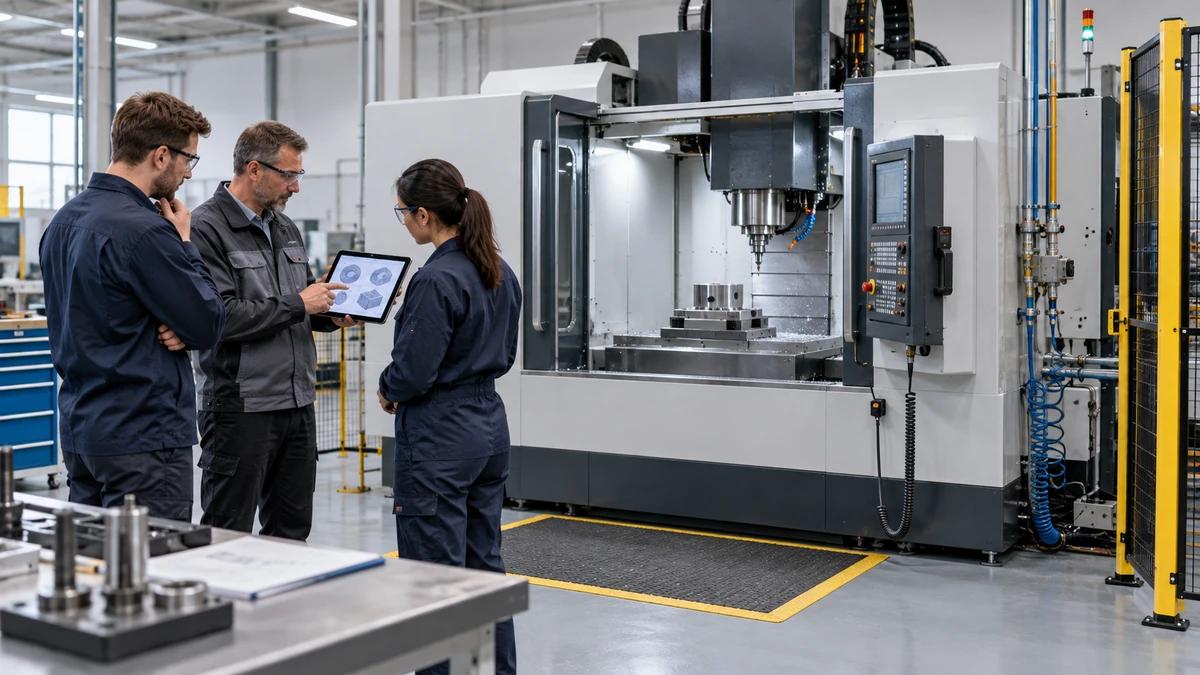
Run the Three-Fixture Acceptance Trial
Freeze workpiece, material, stock, fixture revisions, tools, holders, programs, postprocessor, controller, kinematic state, thermal sequence, coolant, inspection, limits, sample, exceptions, and retest. The ISO 10791 series reference provides machining-centre test context, while the challenge must prove the buyer's complete feature route.
Calculate Accepted Setup Value
Compare total handling, queue, setup, proving, tool change, cutting, chip clearing, inspection, rework, scrap, recovery, maintenance, and training for all three concepts. Credit a removed setup only when its datum transfer, inspection, and handling work truly disappear.
Zhihe CNC recommends separating pilot benefit from repeat-production benefit. Fixture B may win one demonstration and lose over time through vibration, chip cleaning, fragile access, or difficult recovery. Fixture C may deliver more stable accepted output despite one additional controlled handoff.
After launch, audit actual orientation changes, overrides, fixture wear, collisions or near misses, probe failures, tool events, surface variation, inspection delay, recovery time, and operator intervention. Feed the evidence into the next fixture revision.
Make the 5 Axis CNC Milling Machine Survive a Fixture Change
A fixture concept is not mature until production can remove, maintain, replace, and re-establish it without losing the approved feature route. Document base interfaces, locating surfaces, fasteners, torque, cleaning, inspection, wear limits, spare components, identification, storage, and the evidence required after reinstallation.
Plan a controlled change using two qualified fixture instances or one fixture removed and reinstalled according to the released method. Preserve the workpiece class, tools, program, postprocessor, controller state, kinematic condition, probing, thermal sequence, coolant, inspection, and limits. The 5 axis CNC milling machine should not borrow its result from offsets left by the earlier installation.
Check collision clearance and safe retracts again because a small assembly difference may matter near clamps, rotary limits, spindle, or enclosure. Confirm probe qualification and work-offset logic before cutting. Use a low-risk verification step where appropriate, then machine the features that reveal datum, stiffness, and orientation behavior.
Compare fixture repeat loading, feature relationships, surface, chip evacuation, intervention, and recovery time. A concept that needs extensive manual correction after every maintenance event carries setup debt even if the nominal cutting cycle is short.
Zhihe CNC recommends linking each correction to a reason and limit. Do not let an operator tune multiple offsets until the part passes without preserving what changed. If the 5 axis CNC milling machine process needs a revised locator, clamp, probe routine, model, or program, reopen collision and validation evidence.
Archive the approved replacement route with fixture drawings, spare list, maintenance, inspection, software, and training. This turns workholding from a prototype skill into a repeatable production asset that can survive people, shifts, and normal wear.
Know What the Three-Fixture Challenge Cannot Guarantee
The challenge cannot guarantee every material, stock, geometry, tool, fixture, program, thermal state, operator, maintenance condition, or inspection result. It validates defined concepts under controlled conditions. New part extremes, software changes, longer tools, alternate clamps, site differences, or expanded automation require renewed collision, safety, process, and acceptance review. Preserve rejected concepts and their evidence so future teams do not repeat an unsafe or uneconomic experiment. Assign an owner and review date to every open assumption.
FAQ
Why compare three fixtures?
Competing concepts reveal whether setup reduction is real value or merely transferred risk.
Does five-axis always mean one setup?
No. Access, stiffness, datums, chips, inspection, and recovery may justify more than one controlled setup.
What belongs in the collision model?
Include the machine, limits, fixture, workpiece, stock, tools, holders, spindle, probe, offsets, retracts, and program revision.
How is datum control different on five axes?
Fewer physical transfers can increase dependence on rotary center, kinematics, offsets, probing, and digital state.
Why test the longest tools?
Long or small assemblies often define collision, deflection, vibration, and surface limits.
How do rotations affect chips?
Gravity and coolant direction change, so a clear orientation can become a chip trap in the next position.
What should a recovery rehearsal include?
Preserve stock, completed operations, rotary state, offsets, tools, safe retract, re-entry, inspection, and authorization.
How is setup value calculated?
Compare total accepted-production time and risk, including handling, proving, inspection, recovery, rework, and maintenance.
Can a demonstration fixture approve production?
Only when its design, condition, tools, program, sample, inspection, and limits represent intended production.
Which fixture facts should Zhihe CNC receive?
Send the part family, feature route, datums, materials, tools, fixtures, production targets, and inspection needs.
Run the Three-Fixture Challenge With Zhihe CNC
To evaluate a 5 axis CNC milling machine, send Zhihe CNC your controlled CAD, drawings, material, stock, datums, feature access, tool assemblies, fixture concepts, tolerances, inspection, volume, and recovery expectations. Review the five-axis machining center range, the engineering profile, and the contact route before designing the trial.