5-Axis Machining Center for Aerospace Parts: How Buyers Evaluate Accuracy, Rigidity and Process Risk
A 5-axis machining center for aerospace parts is not selected because aerospace sounds impressive. It is selected because aerospace parts punish weak processes.
Thin walls move. Titanium alloys resist cutting. Curved surfaces expose vibration. Adjacent blade profiles must stay consistent. Inspection time can eat into production. Scrap is expensive, not only because of the material but because of the machining time already invested.
From the buyer’s side, this makes machine selection more cautious. Nobody wants a 5-axis machine that performs well in a demo but becomes unstable when machining real aerospace components.
That is why buyers need to look beyond “5-axis” as a label. They need to evaluate axis accuracy, dynamic response, spindle behavior, fixturing, coolant, inspection method, and whether the supplier can support trial cutting and final acceptance.
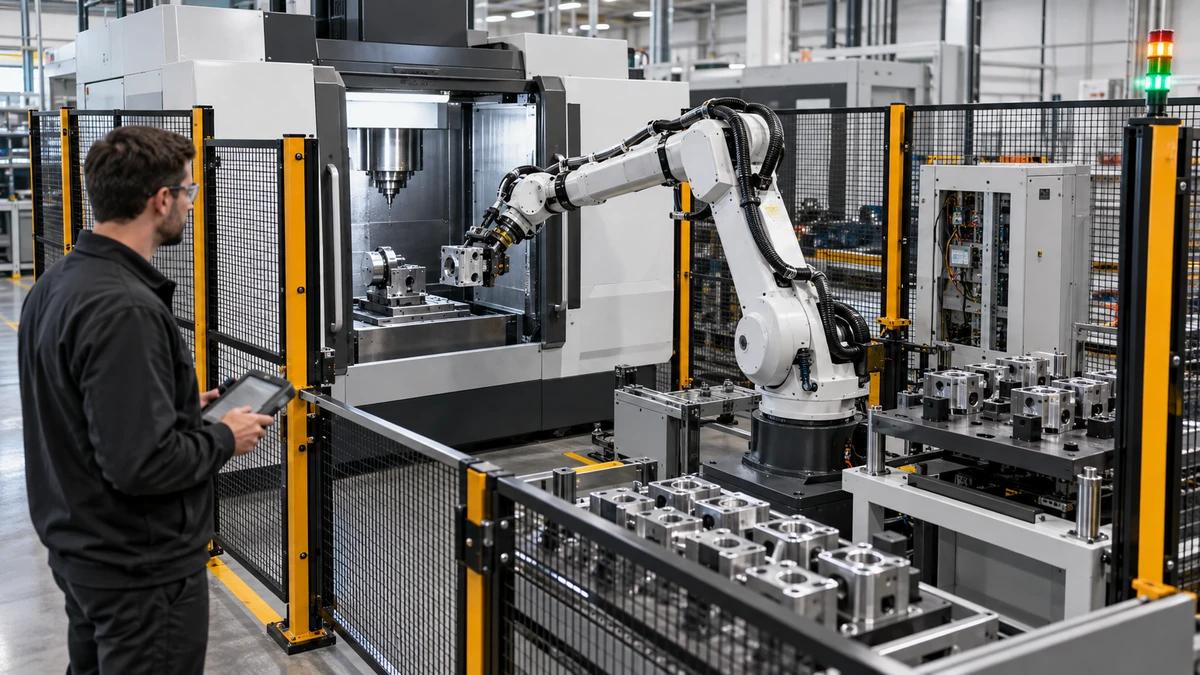
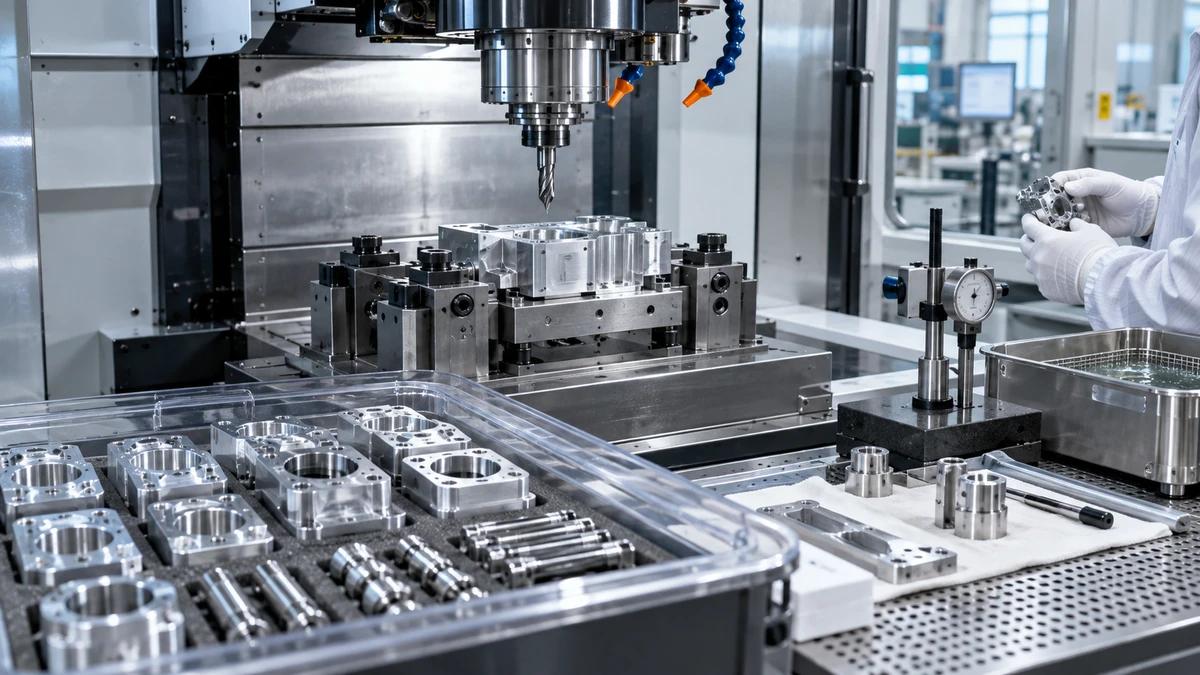
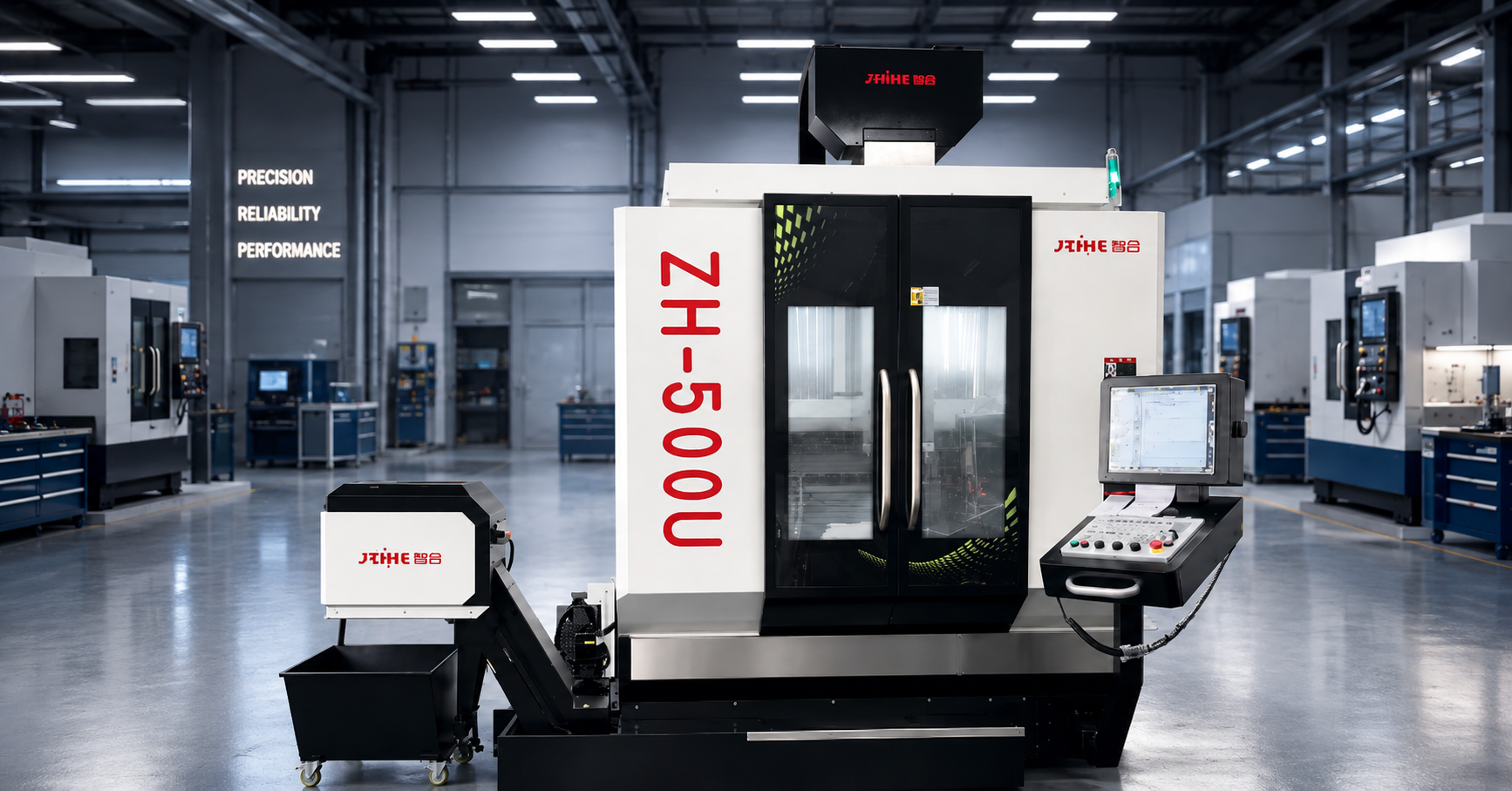
The ZH-500U 5-Axis Trunnion Machining Center is positioned for high-precision, multi-sided machining of complex components. Its product page lists aerospace among the target industries and includes a case involving a titanium alloy TC4 aerospace engine impeller, sized Φ350 × 150 mm.
That makes the product useful as a reference for aerospace buyers.
Why Aerospace Parts Are Different
Aerospace machining is difficult because the workpieces often combine three problems at once: expensive material, complex geometry, and tight accuracy expectations.
A standard machining center may remove material successfully, but that does not mean it can hold blade profile consistency, thin-wall stability, or multi-face alignment. With complex aerospace components, small errors can become batch-level problems.
For example, thin-walled blades may deform under cutting force. Tool vibration may leave chatter marks. If rotary axis motion is not smooth, adjacent blade profiles may lose consistency. If inspection requires frequent stops, the cycle time becomes harder to control.
This is why buyers often move toward a high precision 5-axis CNC machining center when aerospace part geometry becomes too demanding for simpler platforms.
The machine is not bought for status. It is bought to reduce production risk.
What the ZH-500U Offers for Aerospace-Type Work
The ZH-500U provides several features that aerospace buyers should review carefully:
| Product Feature | Buyer Value |
|---|---|
| A-axis ±110° | Allows tilted machining for complex surfaces |
| C-axis 360° DDR direct drive | Supports full rotary positioning and contour access |
| A/C positioning accuracy ±6" | Helps maintain angular consistency |
| A/C repeatability ±3" | Supports batch repeatability |
| 20,000 rpm BBT40 electric spindle | Supports high-speed finishing and precision contouring |
| 20 kW spindle motor | Balances speed with cutting capability |
| LYNUC 5-axis CNC system | Supports coordinated 5-axis machining |
| Laser interferometer, ballbar and arc-second calibration | Provides verification basis for acceptance |
These product details are listed on the ZH-500U product page.
For buyers, the important point is how these features work together. Aerospace machining does not depend on one specification. It depends on the complete chain: machine structure, spindle, rotary table, control system, tools, fixtures, coolant, inspection and operator skill.
Titanium Alloy Machining: Why Stability Matters
Titanium alloys are widely used in aerospace because of their strength-to-weight performance, but they are not easy to machine. They can generate heat, wear tools, and amplify vibration problems when the process is not stable.
The ZH-500U product page’s aerospace case involved a TC4 titanium alloy engine impeller. The customer challenges included easy deformation of thin-walled blades, insufficient dynamic response of existing equipment, obvious chatter, blade profile deviation exceeding 0.03 mm, low 5-axis linkage accuracy, poor consistency between adjacent blade profiles, batch yield rate of only 75%, frequent inspection downtime, and cycle time of about 120 minutes per piece.
This case reflects common buyer pain points. The issue was not only slow machining. It was instability: deformation, chatter, profile deviation, low consistency, inspection downtime, and low yield.
When buyers evaluate a 5-axis CNC machine for titanium parts, they should ask whether the machine can reduce these risks. A machine that simply reaches high spindle speed is not enough.
The Role of 5-Axis Linkage Accuracy
Aerospace parts often depend on surface relationships. An impeller is a good example. Blade profiles must remain consistent with each other. Adjacent surfaces must match. Tool contact must stay controlled as the part rotates and tilts.
The ZH-500U solution in the product-page aerospace case used the LYNUC 5-axis system with look-ahead preprocessing, paired with a DDR direct-drive rotary table for high-precision 5-axis linkage. It also used ±6" A/C axis positioning accuracy to support blade profile consistency.
The reported results were significant: chatter was eliminated, blade profile deviation was controlled within ±0.01 mm, inter-blade consistency error was held to ≤±0.005 mm, cycle time was reduced to 78 minutes, efficiency improved by 35%, yield increased to 94%, and per-piece processing cost was reduced by 28%.
For buyers, this is the kind of result that matters. The machine’s value appears through better yield, shorter cycle time, less inspection interruption, and lower per-part cost.
What Buyers Should Ask About Control Systems
A 5-axis control system matters because the machine must coordinate multiple axes smoothly. Poor motion planning can create hesitation marks, unstable cutting, or inconsistent surface transitions.
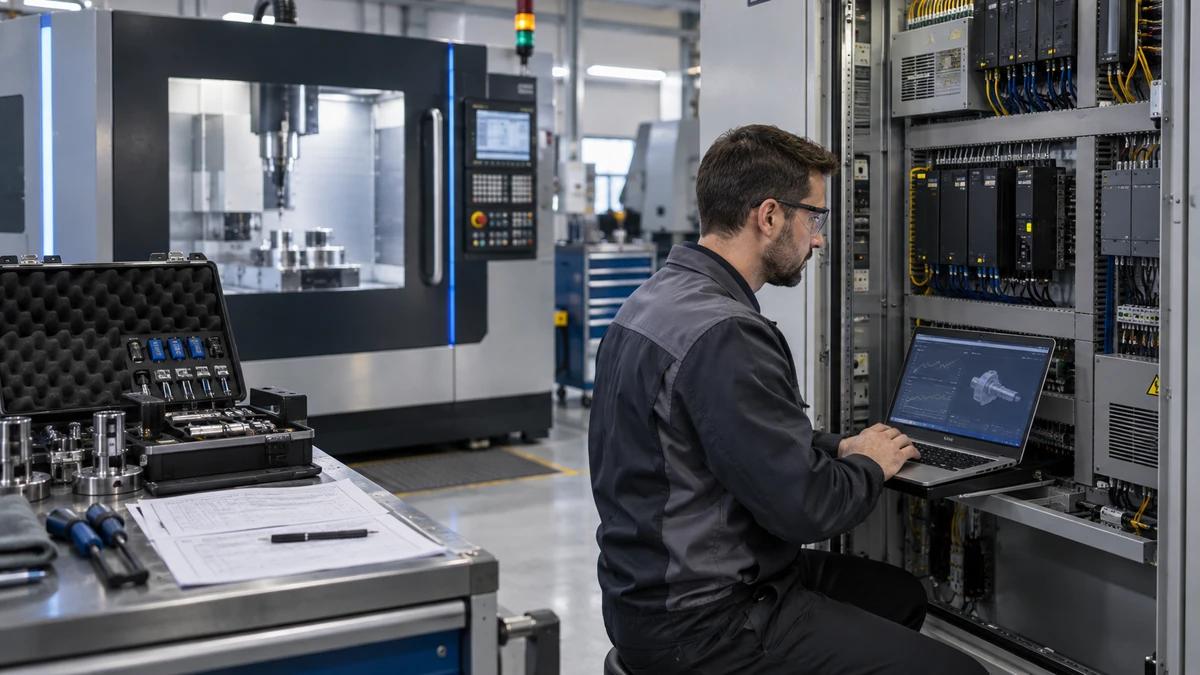
The ZH-500U uses a LYNUC 5-axis CNC system, and the aerospace case mentions look-ahead preprocessing.
Buyers should ask:
| Control Question | Why It Matters |
|---|---|
| Does the control support smooth 5-axis linkage? | Affects complex contour quality |
| Is look-ahead processing available? | Helps improve motion continuity |
| Are operators familiar with the system? | Reduces training burden |
| What CAM workflow is recommended? | Prevents programming mismatch |
| Can trial cutting verify the toolpath? | Confirms real process behavior |
A control system should not be treated as a small accessory. In aerospace work, it directly affects how the machine moves through complex surfaces.
Why Inspection and Acceptance Should Be Discussed Early
Aerospace buyers usually cannot rely on casual acceptance. The machine must be verified.
The ZH-500U page lists inspection equipment including laser interferometer for X/Y/Z positioning accuracy, repeatability and pitch error, ballbar for circularity and servo matching verification, and arc-second calibrator for A/C axis positioning accuracy and repeatability.
This gives buyers a basis for acceptance planning.
The product page also describes a trial cutting protocol: buyers may conduct pre-acceptance trial cutting at the supplier’s facility after assembly and commissioning, and final acceptance trial cutting after delivery, installation and commissioning at the buyer’s facility.
For aerospace work, this is especially important. Trial cutting can reveal whether the machine, fixture, tool, coolant, and program match the real part requirements.
A buyer should not wait until installation to discover that a titanium part chatters or a thin blade deforms. Those risks should be discussed before the order is finalized.
How Buyers Should Evaluate ROI
A 5-axis machining center is a major investment. Aerospace buyers usually evaluate return through process improvement, not only cycle time.
Key value areas include:
| Value Area | Why It Matters |
|---|---|
| Reduced setup count | Lowers datum error and labor time |
| Improved yield | Reduces expensive scrap |
| Shorter cycle time | Increases machine capacity |
| Less inspection downtime | Improves production flow |
| Better tool stability | Reduces tool cost and interruptions |
| Better surface consistency | Reduces rework |
| More complex job capability | Supports higher-value orders |
In the ZH-500U aerospace impeller case, the reported yield improved from 75% to 94%, cycle time dropped from about 120 minutes to 78 minutes, and per-piece processing cost was reduced by 28%.
Those are the numbers that matter to buyers. A more capable machine becomes valuable when it changes cost, quality, and throughput at the same time.
Common Mistakes Aerospace Buyers Should Avoid
One mistake is assuming all 5-axis machines are suitable for aerospace work. They are not. Five-axis movement is only useful if the machine has sufficient accuracy, rigidity, dynamic response, and process support.
Another mistake is choosing by maximum spindle speed alone. Aerospace work may need high speed, but it also needs torque, stability, cooling and correct tool strategy.
A third mistake is skipping fixture planning. Thin-walled aerospace parts need careful support. A poor fixture can create deformation even on a good machine.
Some buyers also underestimate programming. Five-axis machining depends heavily on CAM strategy, collision checking and operator experience.
Finally, do not ignore after-sales support. Aerospace parts often require stable long-term production. Service response, spare parts, training and maintenance support should be part of the purchasing discussion.
What Buyers Should Send Before Requesting a Quote
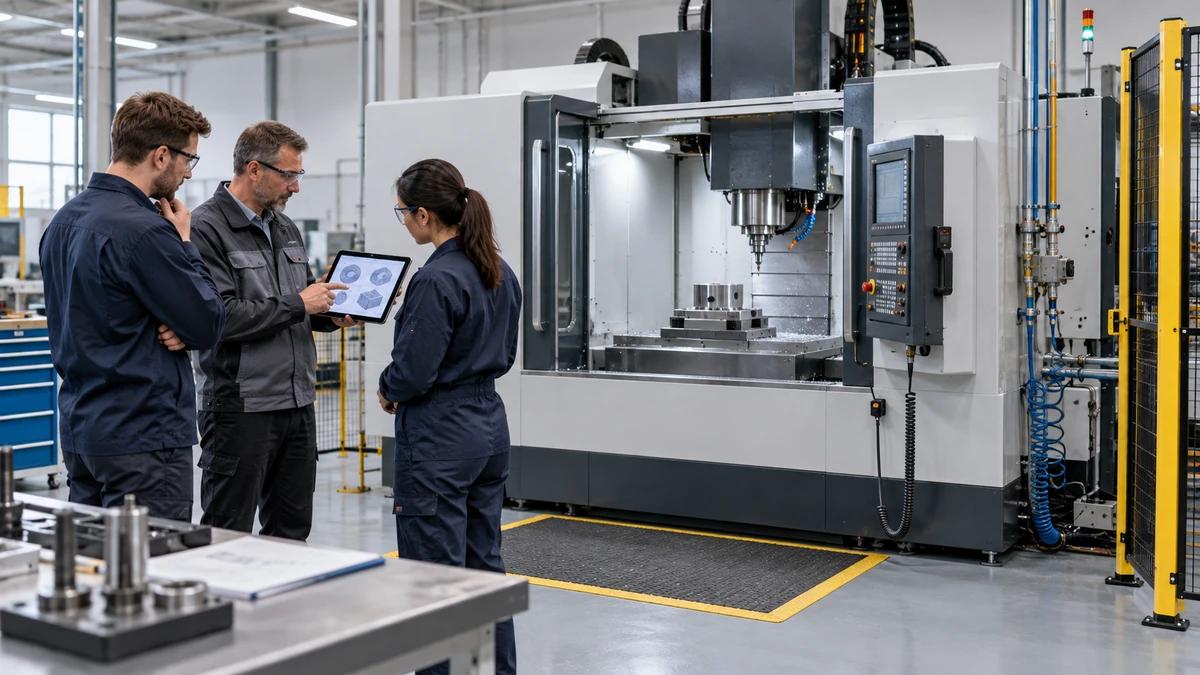
To get a useful machine recommendation, buyers should provide:
| Information | Why It Helps |
|---|---|
| Part drawing or 3D model | Shows geometry and tool access requirements |
| Material grade | Titanium, aluminum, stainless steel and superalloys need different strategies |
| Critical tolerance zones | Helps evaluate machine and rotary accuracy |
| Surface finish target | Affects spindle, tool and toolpath selection |
| Current process steps | Shows where setup reduction is possible |
| Current cycle time | Helps calculate improvement potential |
| Scrap or yield data | Shows where machine value can be measured |
| Inspection method | Helps plan acceptance |
| Expected batch size | Determines whether cycle time or flexibility matters more |
A good supplier should use this information to recommend a process, not just a model number.
FAQ
Why do aerospace parts often need 5-axis machining?
Because aerospace parts often include thin walls, curved surfaces, angled features, and tight relationships between multiple surfaces. Five-axis machining can reduce setup changes and improve tool access.
Is the ZH-500U suitable for titanium alloy aerospace parts?
The product page includes a case for a TC4 titanium alloy aerospace engine impeller, with reported improvements in chatter control, blade profile deviation, cycle time, yield and per-piece cost.
What is important besides spindle speed?
Rotary axis accuracy, machine rigidity, control system, toolpath planning, fixture design, chip control, inspection method and supplier support are all important.
Should buyers request trial cutting?
Yes. For aerospace parts, trial cutting is strongly recommended because it verifies the real relationship between machine, tool, fixture, material and program.
Conclusion
A 5-axis machining center for aerospace parts should be selected from the buyer’s risk perspective. The question is not only whether the machine can move in five axes. The question is whether it can control thin-wall deformation, reduce chatter, maintain blade or surface consistency, lower inspection downtime, improve yield, and reduce per-piece cost.
The ZH-500U offers a useful reference for this evaluation. Its DDR direct-drive A/C rotary table, ±6" A/C positioning accuracy, ±3" repeatability, 20,000 rpm BBT40 electric spindle, 20 kW spindle power, LYNUC 5-axis system, and verified inspection process match the type of factors aerospace buyers need to review.
The right purchasing process starts with the part, not the machine name. Once the drawing, material, tolerance, fixture method, and production target are clear, buyers can judge whether the machine will solve the real aerospace machining problem.