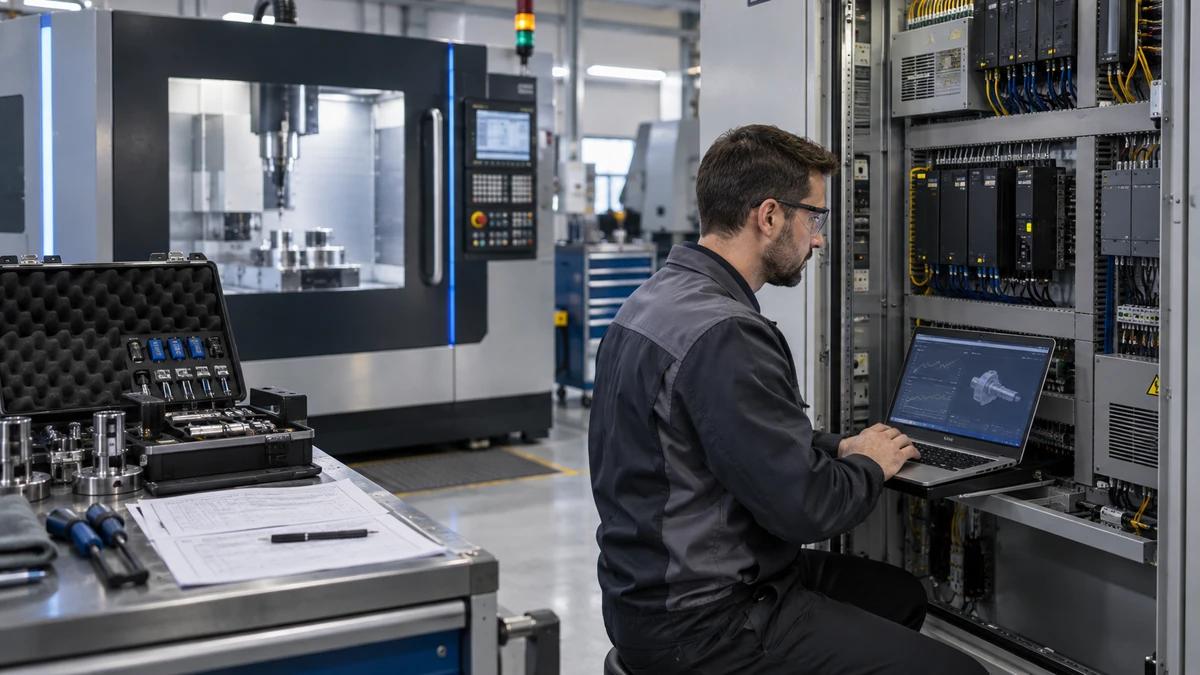
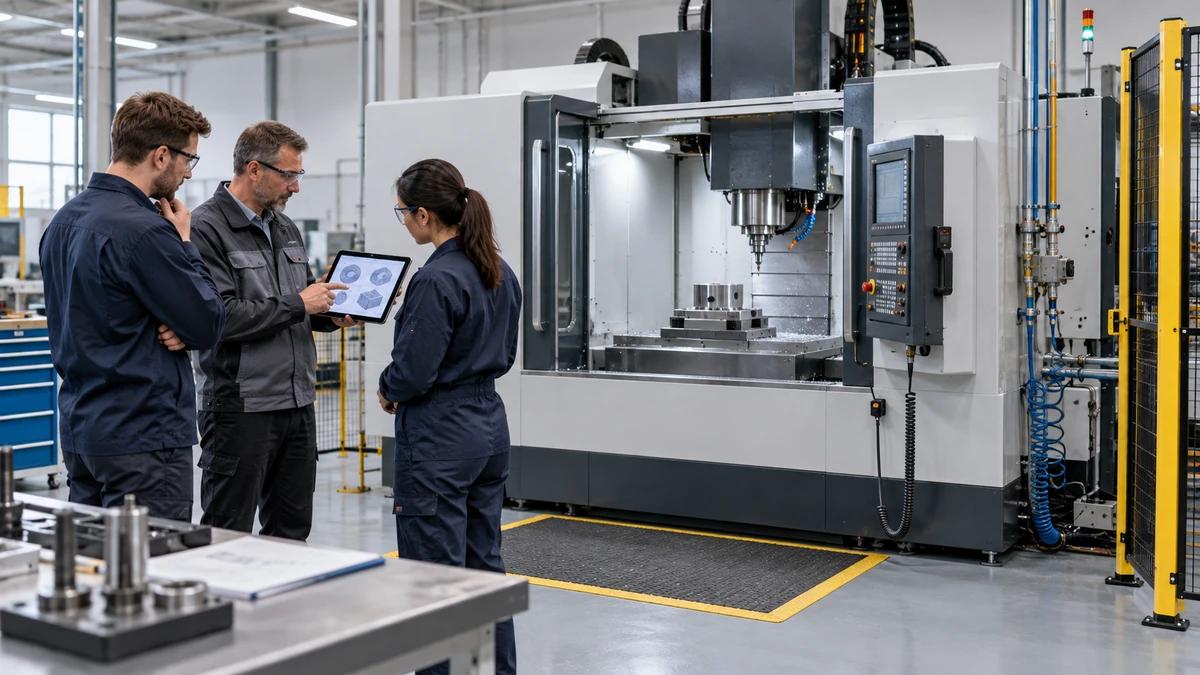
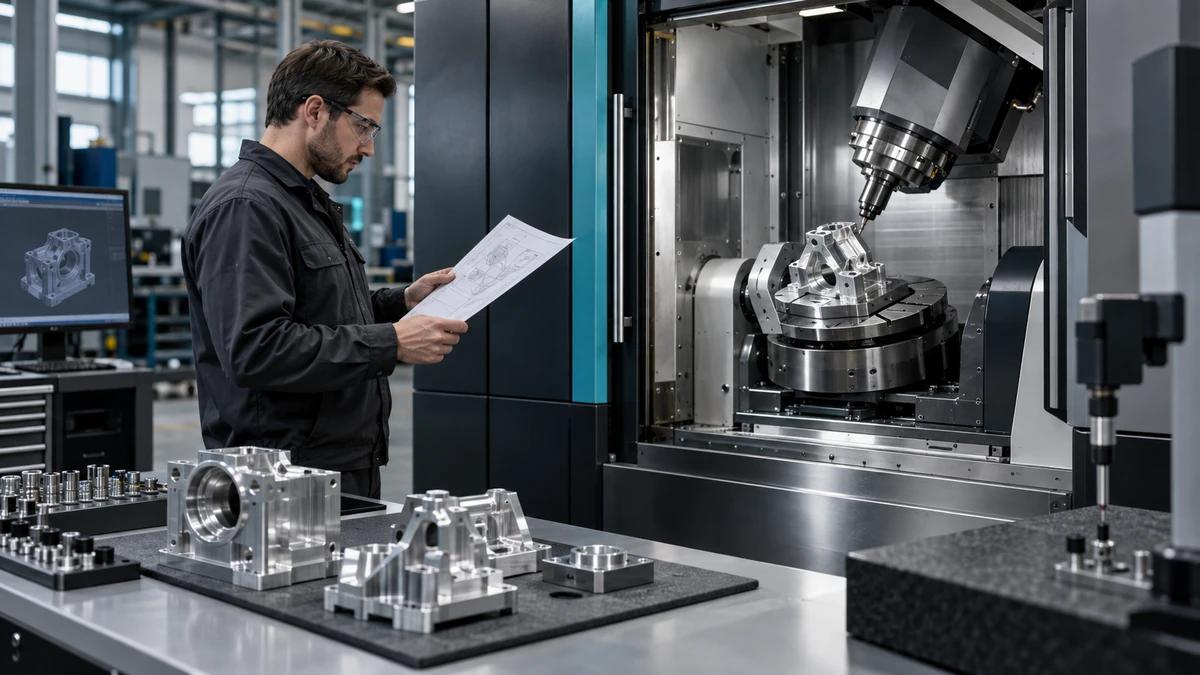
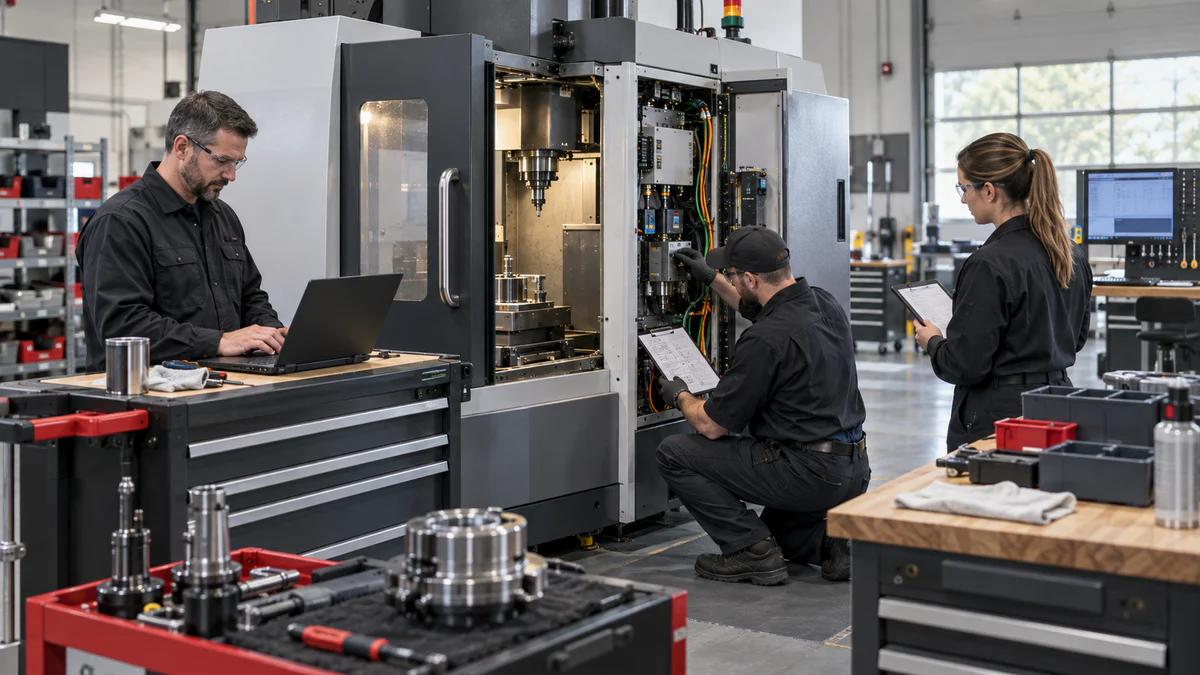
A CNC machine for cast iron parts should be evaluated with a foundry-to-geometry risk ledger, because nominal material and drawing dimensions do not reveal hard skin, scale, sand, stock variation, interrupted engagement, abrasive dust, or residual stress. Zhihe CNC closes each risk with representative evidence.
The ledger can support defined bases, housings, tables, brackets, manifolds, frames, and similar castings. Cast iron grades, foundry routes, sizes, heat treatment, geometry, tolerances, and production volumes vary, so no single configuration or cutting recipe fits every family.
Open the Ledger at Foundry Receipt
Index part and revision, material grade, foundry and lot, melt or heat identity where applicable, molding and core route, heat treatment, stress relief, repairs, dimensions, stock allowance, parting, gates, risers, draft, hardness, surface condition, preservation, quantity, and receiving inspection.
Zhihe CNC recommends sampling locator, heavy-section, thin-wall, bore, face, and suspected hard-skin regions. One certificate or nominal stock model cannot describe every local cutting condition.
Record Five Foundry Debits
| Debit | Production consequence | Closure evidence |
|---|---|---|
| Uneven stock | Load and datum shift | Stock map |
| Hard skin or scale | Tool wear and shock | Representative entry trial |
| Core or sand residue | Abrasive contamination | Receiving and cleaning check |
| Distortion or stress | Geometry moves after cutting | Sequence and free-state evidence |
| Repair or defect | Unknown local behavior | Approved disposition |
A debit remains open until evidence supports a production rule.
Choose Locators on Real Casting Skin
Map datum targets, pads, bosses, flash, draft, parting mismatch, surface waviness, support, clamps, and available stock. Define how the operator identifies the correct orientation and how questionable contact is held.
A CNC machine for cast iron parts cannot create repeatability from uncontrolled locator contact. Fixture design should accommodate declared variation without hiding a casting that exceeds its accepted range.
Price the First Tool Entry
Identify where each tool first meets skin, scale, interrupted stock, a parting line, gate region, or variable allowance. Record tool grade, geometry, holder, projection, runout, speed, feed, depth, engagement, direction, coolant or dry strategy, dust control, and stop signals.
Separate Dust, Chips, and Sludge
| Material state | Where it accumulates | Control question |
|---|---|---|
| Fine dry dust | Enclosure, ways, electrical areas | How is exposure contained? |
| Granular chips | Part, fixture, conveyor | How do chips reach removal? |
| Coolant sludge | Filters, tank, piping | How is condition maintained? |
| Embedded residue | Casting cavities and cores | How is blank cleanliness checked? |
| Mixed material carryover | Machine and tank | What changeover is required? |
The actual process determines which states matter and what equipment is appropriate.
Make Tool Life Feature-Specific
Track each assembly by casting lot, feature, stock condition, cutting length or time, load clues, wear mode, edge changes, surface, dimension, and replacement reason. Separate normal wear from shock, abrasion, hard spots, contamination, runout, or unstable workholding.
Zhihe CNC recommends a controlled sister-tool rule and a verification after change. A global tool-life number may mix easy finish passes with destructive first-entry conditions.
Balance Roughing With Stress Release
Plan stock removal by side, feature, and stage. Consider roughing, rest, unclamp or re-clamp, stress-relief handoff where specified, semi-finishing, and finishing. Define the datum state and inspection at each transition.
Observe free-state change where the part family is sensitive. Compensation applied while a casting is temporarily distorted in the fixture can create a result that moves after release.
Protect the Machine From Abrasive Carryover
Review way protection, seals, covers, spindle and tool interfaces, probing surfaces, coolant filtration, air quality, enclosure cleaning, conveyor, tank service, lubrication, and maintenance access. Establish inspections and triggers for abnormal contamination.
Machine suitability depends on the delivered configuration and maintenance system, not on a generic claim that one structure is designed for heavy cutting.
Run the Foundry-Representative Trial
Freeze casting grade and lot, stock condition, fixture, tools, programs, controller state, coolant or dry strategy, thermal sequence, dust and chip controls, inspection, sample size, limits, exceptions, and retest. The ISO 10791 series reference gives machining-centre test context.
Include genuine skin and stock variation rather than only a prepared ideal blank.
Keep Safety in the Risk Ledger
The OSHA machine-guarding resource provides general guarding context. Responsible teams must assess irregular castings, lifting, fixtures, tool failure, doors, interlocks, ejection, sharp chips, fine dust, coolant, cleaning, compressed air, maintenance, and recovery under applicable local requirements.
Do not create hazardous dust or failure conditions merely to demonstrate a trial.
Investigate One Hard-Spot Event Without Guessing
Use an actual controlled finding or a safe simulated information scenario. Preserve casting identity, location, stock, completed operations, tool and insert state, program, parameters, load clues, sound or surface observations, measurement, and affected quantity. Do not clear evidence through multiple simultaneous adjustments.
Review material and foundry information, tool condition, runout, engagement, workholding, and process state. Define containment, approved correction, inspection, retest, and release. If the cause remains uncertain, keep the affected work visible.
Audit the CNC Machine for Cast Iron Parts by Lot
For each lot, compare stock maps, first-entry conditions, tool use, dust and chip behavior, cleaning, dimensions, free-state change, surface, nonconformance, rework, scrap, maintenance, and accepted quantity. Look for local feature patterns rather than one averaged result.
Trace one accepted casting and one held casting through certificate, receiving, fixture, tools, programs, machine state, inspection, cleaning, disposition, and release. The record should connect to the physical item.
Zhihe CNC recommends reviewing filter, tank, enclosure, way protection, lubrication, probing, and tool-interface condition at declared intervals. Maintenance evidence belongs in process capability when abrasive contamination is a material risk.
Reopen the ledger after changes to foundry, grade, heat treatment, casting design, stock, fixture, tool, process, coolant, dust control, inspection, software, site, or maintenance. Preserve prior limits rather than silently broadening them.
Run a Three-Lot Challenge on the CNC Machine for Cast Iron Parts
Select three representative casting lots or production windows: one near the nominal stock condition, one at the declared high stock or hard-skin challenge, and one that reflects a different approved foundry or heat-treatment condition. Keep the part revision, fixture, tool assemblies, programs, machine configuration, inspection, and reporting method controlled.
Before cutting, map locator contact, allowance, surface condition, hardness information, visible residue, repair status, and any hold. During machining, align tool wear, load clues, sound, chips, dust, surface, dimensions, cleaning, and operator intervention with the actual feature and lot. After unclamping, measure any declared free-state characteristics.
The CNC machine for cast iron parts should demonstrate where one production rule remains valid and where a lot-specific response is required. Do not average a difficult lot into two easy lots. Compare tool use, filter or tank impact, enclosure cleaning, inspection delay, rework, scrap, and accepted quantity separately.
Close each lot with a debit status: demonstrated, conditional, outside range, or unresolved. A new foundry, grade, heat treatment, skin, stock allowance, or repair route must reopen relevant debits. This three-lot challenge prevents the CNC machine for cast iron parts trial from borrowing confidence from one unusually clean casting.
Keep representative chips, photographs, inspection files, tool-wear records, cleaning evidence, and maintenance findings where the buyer's system permits. Link every item to casting lot, feature, and test condition. The archive helps future teams distinguish a material shift from normal tool wear or machine condition.
Know What the Foundry Ledger Cannot Promise
The ledger cannot guarantee casting integrity, tool life, cycle, accuracy, finish, yield, uptime, or payback for every grade and lot. A CNC machine for cast iron parts demonstrates defined machining evidence under stated foundry, tool, fixture, machine, inspection, and maintenance conditions.
FAQ
Why use a foundry risk ledger?
It exposes stock, skin, sand, hardness, distortion, dust, and repair conditions that nominal CAD may hide.
Which castings fit the method?
Defined bases, housings, tables, brackets, frames, and related parts can use it when their conditions are declared.
Why test real casting skin?
Prepared blanks can remove the entry shock, scale, hard spots, and stock variation that production tools face.
How should tool life be recorded?
Link assembly, lot, feature, stock, cutting exposure, wear mode, result, replacement, and verification.
Does more clamping solve casting variation?
No. Locators, support, force, stock, and free-state behavior need a controlled fixture strategy.
Why separate dust and chips?
Fine dust, granular chips, coolant sludge, and embedded residue create different containment and maintenance needs.
What evidence belongs after a hard spot?
Preserve casting, feature, stock, tool, program, parameters, observations, measurement, containment, correction, and retest.
Can one trial approve every cast iron grade?
No. Grade, foundry route, heat treatment, skin, stock, geometry, and volume can change the process.
When should the ledger reopen?
Reopen affected risks after relevant foundry, material, casting, fixture, tool, coolant, inspection, site, or maintenance changes.
Which foundry evidence should open the Zhihe CNC discussion?
Send controlled castings, foundry route, grades, stock maps, datums, fixtures, tools, volumes, failure history, and inspection needs.
Open the Foundry Risk Ledger With Zhihe CNC
To evaluate a CNC machine for cast iron parts, send Zhihe CNC your controlled drawings, CAD, casting and foundry route, grades, heat treatment, stock maps, datums, fixtures, tools, cycle history, dust and chip conditions, volumes, and inspection plan. Review the gantry machining center range, the product portfolio, and the contact route before closing the first debit.