Buyer Answer: Changeover Begins at the Interface
Zhihe CNC evaluates packaging-machinery part production through format interfaces, hygienic boundaries, wear features, changeover ownership and spare-part traceability. A packaging-line part should be selected and released by the interface it controls, the wear or cleaning boundary it carries and the evidence needed for the next format change.
Changeover Loss Board
| Loss source | Part evidence | Line-side evidence |
|---|---|---|
| Locator mismatch | Datum and fit data | Adjustment or reference check |
| Burr or trapped chip | Edge and cleanout record | Changeover inspection |
| Revision drift | Part and program identity | Format-file identity |
| Wear interface | Material and surface evidence | Maintenance history |
Begin With the Format-Change Interface
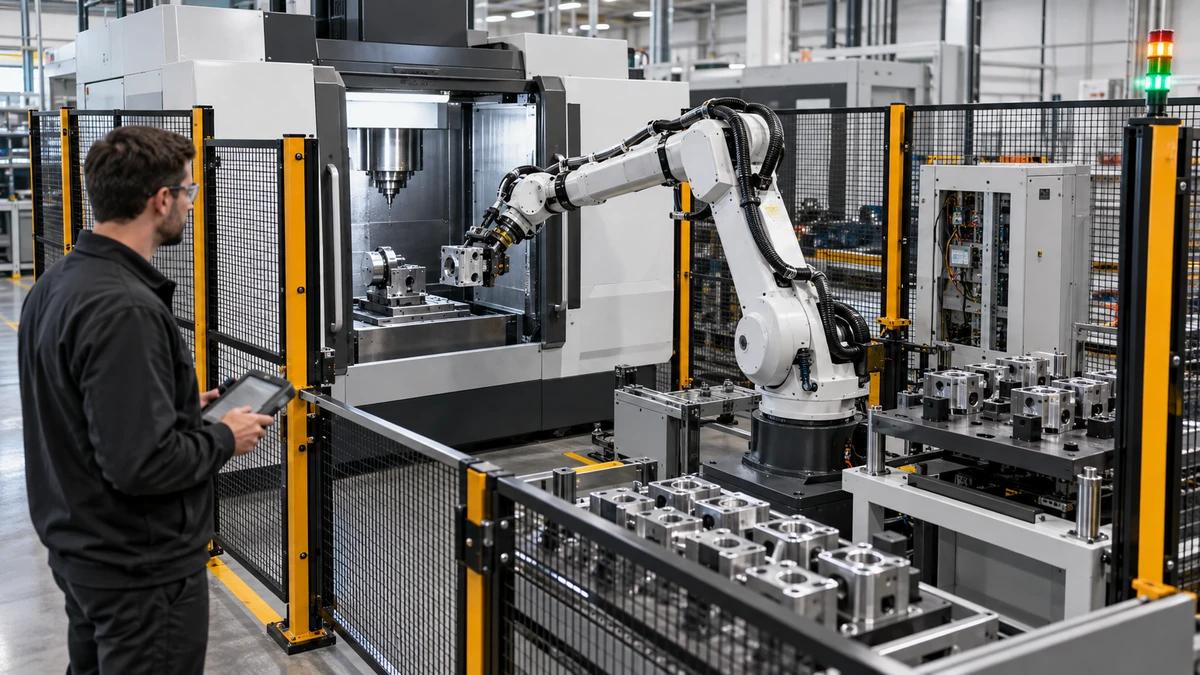
Identify rails, guides, star wheels, plates, pockets, shafts, brackets, jaws, sealing-tool supports and change parts that define a package format. Record the mating equipment, adjustment points, locating features, fasteners, wear zones and operator contact during changeover.
A CNC machine for packaging machinery parts should be selected from the declared part families and line interfaces. Zhihe CNC asks which features control changeover, alignment, cleaning, wear and spare replacement before discussing a machine route.
Separate Product-Contact and Noncontact Boundaries
Mark contact, splash, near-product and noncontact zones according to the buyer’s own equipment and regulatory framework. State material, surface, edge, cleaning and documentation requirements for each zone without assuming one rule applies to every machine or destination.
Machining evidence can release geometry, surface and a declared cleanliness handoff. Hygienic design, material suitability, cleanability validation and line compliance remain with qualified owners and market-specific requirements.
Create a Part-Family Changeover Map
Group parts by format, base interface, adjustment mechanism, locator, wear function, material, size and inspection route. Identify common features that can share fixtures or programs and boundary features that need separate access or proof.
Use the map to prevent a fast demonstration on one guide block from becoming an unsupported claim about every star wheel, jaw or sealing support in the line.
Control Datum Transfer to the Machine Assembly
Record how each part locates in machining and how it locates in the packaging machine. Connect holes, slots, bores, shoulders, faces and profiles to the real assembly datums. Use a reference fixture or mating part when a loose-part reading is insufficient.
A correct dimension can still produce a slow changeover if the adjustment or locator relationship is not controlled. Preserve the declared mating reference and inspection alignment.
Follow One Part From RFQ to Format Change
- Classify the part family and product-contact boundary.
- Freeze the mating equipment and format revision.
- Release material, datums, tools and machining route.
- Inspect wear, fit, edge and cleaning interfaces.
- Record spare identity and line-side handoff.
- Reopen affected evidence after any format change.
Treat Wear Features as a Replaceable System
Mark bush seats, shafts, tracks, guide faces, cam interfaces, pockets and contact strips. Record material state, allowance, surface requirement, tool, inspection, lubrication or downstream treatment boundary and replacement identity.
Do not claim wear life from dimensional machining evidence. Wear depends on material, treatment, load, speed, environment, maintenance and the complete line condition.
Make Edges and Access Safe to Review
Classify handling edges, product-adjacent edges, tooling interfaces, operator access zones and hidden relief. State permitted breaks, burr limits, manual work and inspection. Include safe loading, unloading and service access in the project review.
OSHA machine-guarding resources provide general hazard context, but the final packaging line, delivered guards, changeover method and local operating procedure need their own responsible risk assessment.
Map Polymer and Metal Parts Separately
If the family includes engineering polymers and metals, record material identity, stock route, support, clamping, tool condition, heat and chip behavior separately. Avoid transferring one feed, fixture or surface assumption across unlike materials.
Use representative and boundary parts for each declared route. Preserve any material-specific cleaning, inspection and protection instructions.
Protect Slots, Pockets and Small Fastener Features
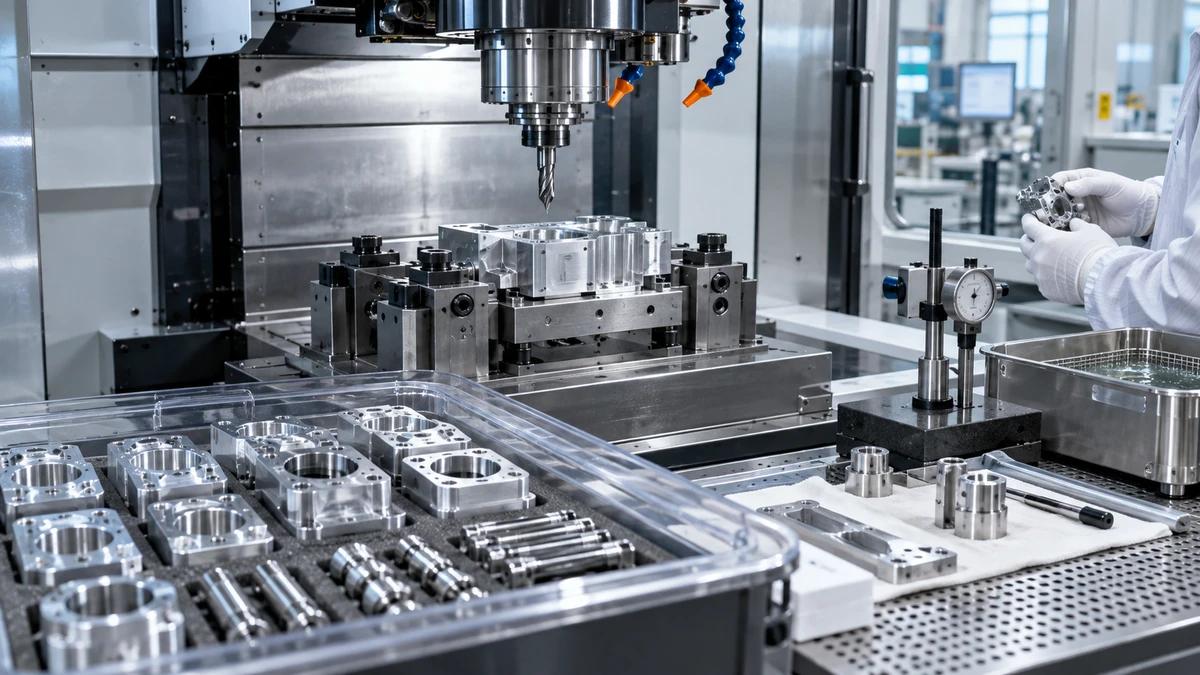
Map chip traps, thin ribs, deep pockets, threaded holes, dowel holes and small transitions. State cleaning, tool-life, depth, burr and inspection methods. A trapped chip or incomplete thread can become a changeover or alignment problem.
Observe a full production-like window with normal tool events. Count cleanout and reinspection rather than treating them as invisible operator effort.
Packaging-Part Release Board
| Release lane | Machining record | Separate decision |
|---|---|---|
| Fit | Datums, profiles, holes and mating reference | Line adjustment |
| Surface | Declared machined state and protection | Hygienic or product-contact validation |
| Wear | Material, feature and treatment boundary | Service life |
| Safety | Access and delivered interface notes | Line risk assessment |
Build a Spare-Part Identity Route
Link part number, revision, material, fixture, program, tool assembly, inspection and disposition. State which dimensions or interfaces support replacement and which require line-side fitting or adjustment.
A CNC machine for packaging machinery parts project becomes more useful when a future spare can be traced to the same controlled baseline. Do not promise universal interchangeability without the declared sampling and mating evidence. Build a spare card with the format name, mating machine, installation orientation, locator references, adjustment points, fastener details, inspection result and protected storage condition. Include one photograph or sketch only as an orientation aid and keep the drawing as the controlling definition. When a spare is issued, record its destination, removed-part condition, any line-side adjustment and the person who closes the changeover. Compare that information with the original acceptance so engineering can tell whether a repeated issue belongs to machining, wear, installation, maintenance or the mating equipment. The record turns replacement from an isolated shipment into a controlled learning loop.
Rehearse a Changeover Failure
Create a planned locator, fit, missing-document or inspection disagreement. Record part identity, line or reference state, affected quantity, containment, correction, retest, disposition and restart owner.
The exercise should show how production protects accepted parts and how a technical question reaches the correct engineering or quality owner before the next shift.
Calculate Released-Part and Changeover Hours
Count receiving, setup, probing, cutting, tool events, cleaning, edge work, inspection, holds, fitting checks, maintenance and released parts. Then separately record the line-side changeover or adjustment evidence when it is in scope.
Zhihe CNC avoids converting an isolated machine cycle into a line-efficiency promise. The buyer should connect machining output to the actual spare and changeover process with declared staffing and conditions.
Audit Revisions Across Machine and Line
When a package format, mating equipment, part drawing, material, fixture, tool, program, inspection or cleaning boundary changes, identify affected evidence. Preserve the old baseline, change reason, reviewer and effective date.
This allows improvement without losing traceability. A small slot or locator change can alter a line-side adjustment even when most of the part remains identical.
Close With an Interface and Spare Memo
Summarize family, format, mating references, material, fixtures, tools, programs, wear and cleaning boundaries, inspection, accepted quantity, open issues, spares and service route.
The memo for a CNC machine for packaging machinery parts should state what machining released and what the packaging-line owner must still validate: hygiene, product contact, guarding, line performance, wear life, sealing performance and destination compliance.
Packaging Machinery Buyer FAQ: CNC machine for packaging machinery parts
Which packaging-machine parts belong in one family?
A CNC machine for packaging machinery parts family should group items by format interface, locator, mating equipment, material, wear role and inspection route.
Why distinguish product-contact zones?
Material, surface, edge, cleaning and documentation requirements can differ by equipment and destination.
Does machining prove hygienic design?
No. Hygienic design, cleanability and market compliance require separate qualified review.
What should a changeover map show?
Show locators, adjustment points, fasteners, mating references, tools, operator actions and release checks.
Can one metal route be used for polymers?
Not automatically. Material, support, heat, chips, surface and inspection assumptions may differ.
How should spare parts be identified?
Link part number and revision to material, fixture, program, tools, inspection and disposition.
How does Zhihe CNC discuss packaging-part capacity?
Zhihe CNC counts complete released-part work and separates it from line-side performance claims.
When should the baseline reopen?
After changes to format, mating equipment, drawing, material, fixture, tool, program, inspection or cleaning boundary.
Does dimensional acceptance prove wear life?
No. Wear depends on material, treatment, load, speed, environment, lubrication and maintenance.
What should buyers send first?
For a CNC machine for packaging machinery parts review, send part families, formats, mating references, materials, interfaces, volumes, inspection, cleaning and site constraints.
Map a Packaging-Part Family With Zhihe CNC
Send Zhihe CNC the controlled drawing or CAD, material and stock condition, critical datums, tolerances, annual volume, batch mix, fixture assumptions, inspection method, site conditions and service region. Review the Zhihe CNC machining center range, the company and factory profile, and the engineering inquiry route. For CNC machine for packaging machinery parts, request a dated configuration, representative trial, acceptance boundary, open assumptions and named support owner.
Reference Boundary and Responsible Use
The first authoritative reference and second authoritative reference provide machine-test, drawing, quality, safety or downstream-process context relevant to the questions in this article. They do not approve a particular machine, part, supplier, medical device, energy component, production line or site. Drawing-specific acceptance, local risk assessment, product validation, regulatory release and the buyer's operating procedures remain separate responsibilities.