Why buyers search for a CNC machine tool supplier in China
Choosing a CNC machine tool supplier in China is rarely just a price decision. For most engineering and sourcing teams, it is a question of whether the supplier can support repeatable production, machine uptime, and a line layout that does not create headaches six months later. The wrong choice can show up as inconsistent part quality, weak after-sales support, or a machine that looks capable on paper but struggles once it is loaded into a real production schedule.
That matters most in batch manufacturing. A machine may be able to cut a test part well enough, but production work is a different standard. Buyers need stable cycle times, dependable loading and unloading, clear operator access, and a service partner that understands how the equipment fits into the rest of the factory.
What the equipment in this category is typically used for
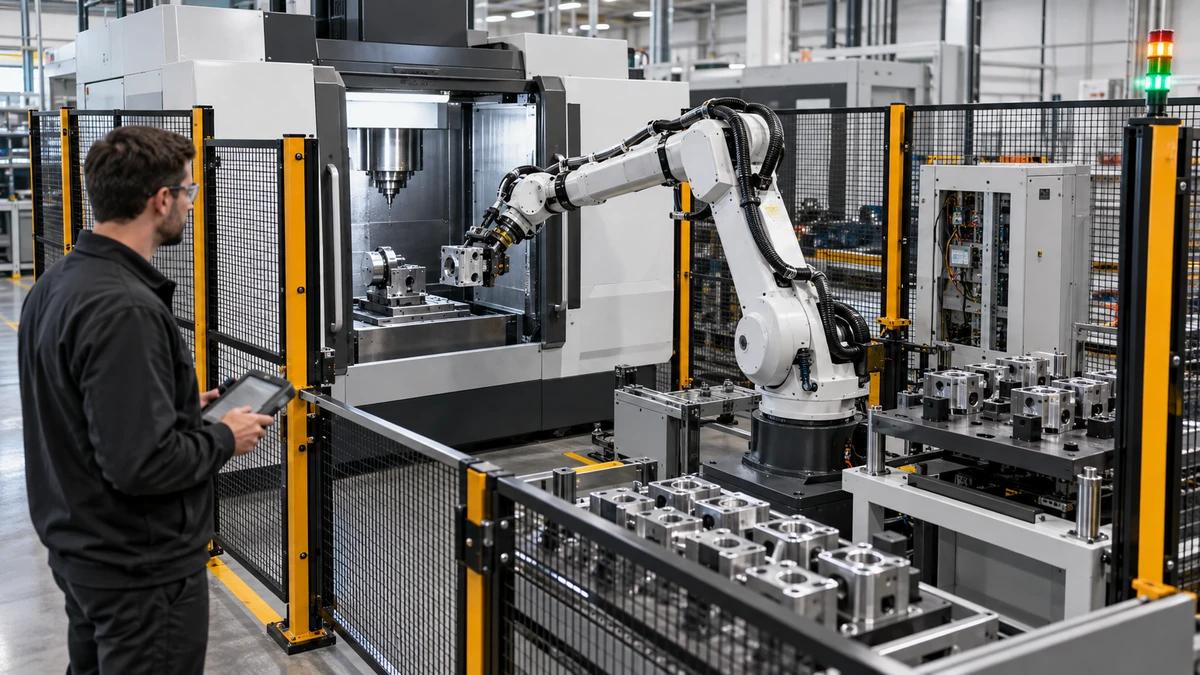
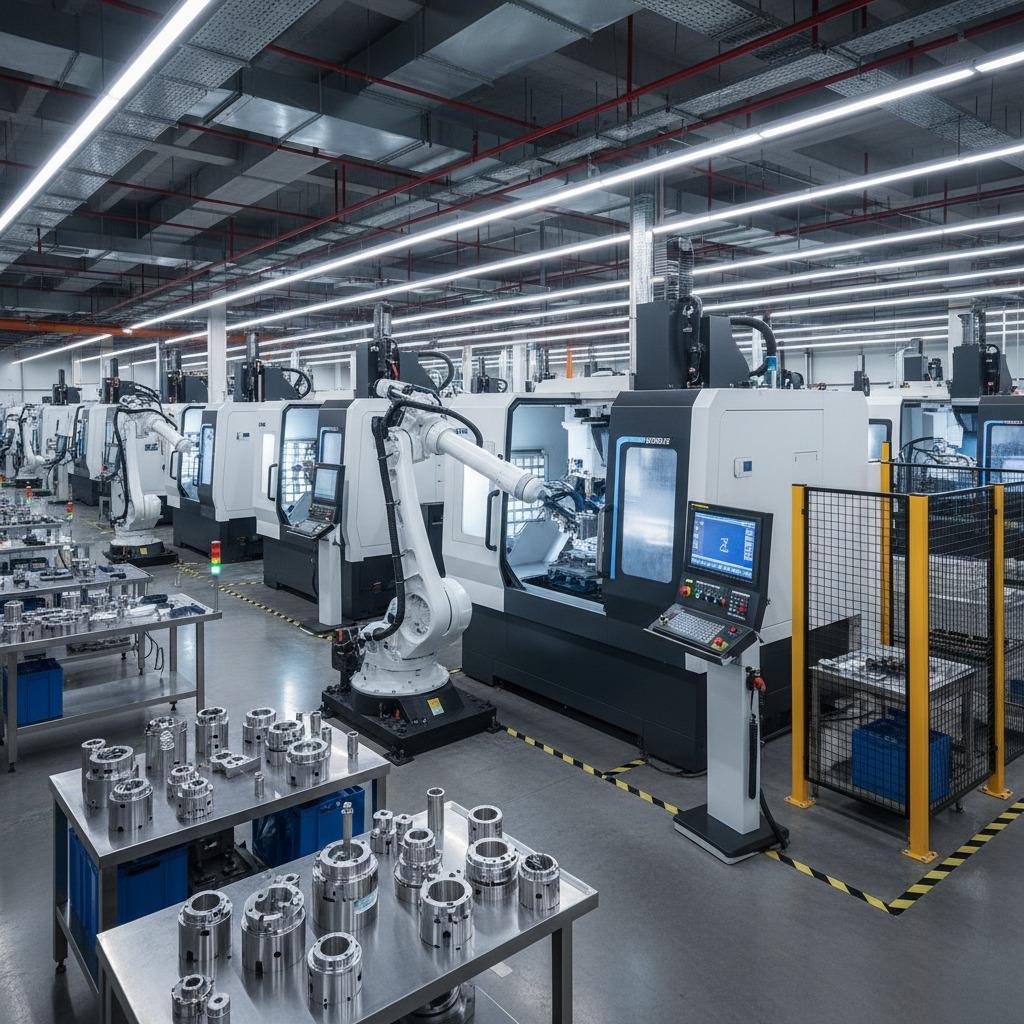
The visible product category here is a CNC machining center in an automated manufacturing line. The setup shows an enclosed machine body, a front control panel, a viewing window or door, and a robotic arm handling parts. That combination points to precision metal cutting tasks such as milling, drilling, and general machining of components that must be produced repeatedly.
In practical terms, this kind of line is often used for automotive parts, machinery components, industrial housings, fixtures, and other repeatable metal parts. The automation element is important. It reduces manual handling, supports more consistent part flow, and can help a factory maintain output across longer shifts. Still, automation is only useful when the upstream and downstream processes are organized well. A fast machine paired with poor material handling is still a bottleneck.
China CNC machine tool manufacturer or trading supplier?
Buyers often start with a broad search and then have to separate a China CNC machine tool manufacturer from a trading company or project integrator. That distinction is not academic. If you need technical changes, machine integration, or support for a multi-machine line, the supplier’s role matters as much as the hardware itself.
A direct manufacturer may be better suited to standard machine supply, configuration options, and factory-level communication. A CNC milling machine supplier that also handles automation integration may be more useful if your project includes robotic loading, guarding, or line coordination. Some buyers actually need both: a machine supplier for the base equipment and an integrator to connect the cells into a production system.
Quick points to check before you request a quote
1. What process is the machine really built for?
The phrase CNC machine tool sounds broad, but the application should be specific. Milling, drilling, and precision part finishing are not identical workloads. Ask how the machine is typically used in production, not just what it can do in a brochure.
2. How is loading handled?
The image suggests robot-assisted loading and unloading. That is a real advantage when labor stability or part consistency is a concern. Ask whether the automation is fully integrated or just demonstrated as a separate cell.
3. What does the layout look like on your floor?
A large floor-standing machine with enclosure and access doors needs space, service clearance, and a sensible material path. If the supplier cannot help think through line layout, that is a warning sign.
4. What is known, and what is not?
It is easy to overstate a machine from a photo. In this case, exact model, axis count, spindle details, controller brand, and machining tolerances are not visible. A careful buyer should treat those as open questions, not assumptions.
Common mistakes buyers make
One common mistake is buying on nominal capability alone. Another is ignoring service support because the first machine seems straightforward. A third is underestimating the practical demands of automation, especially part fixturing and changeover time. The robot is not the whole solution; it only works as well as the process around it.
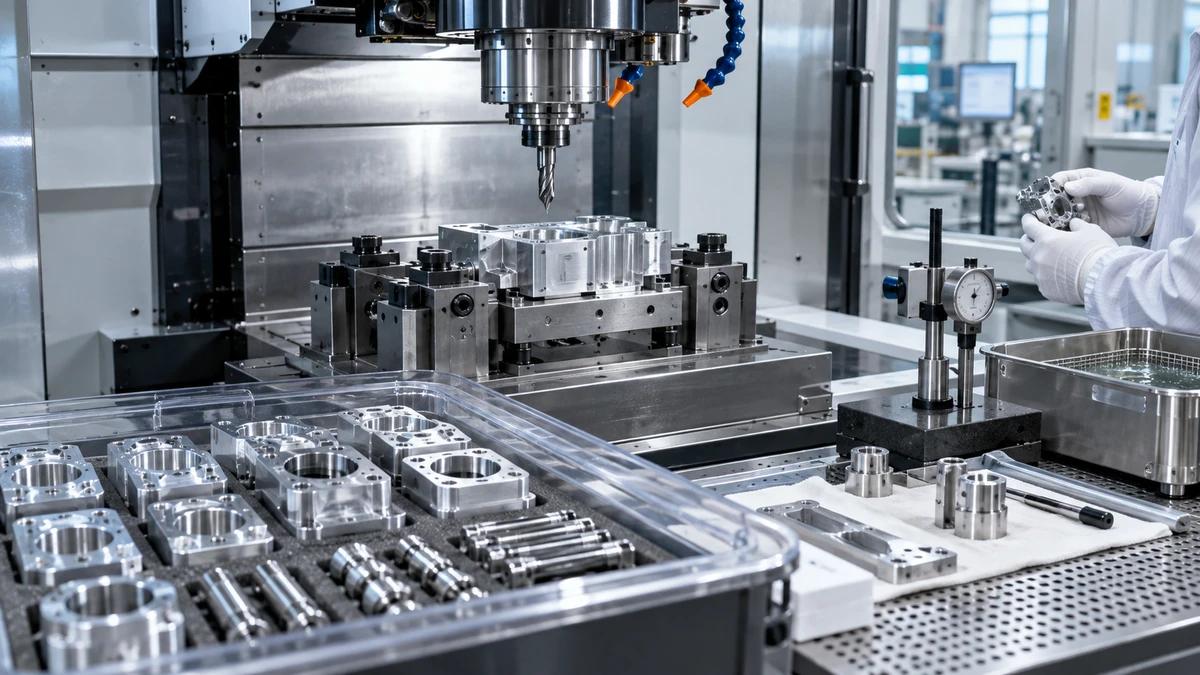
Buyers also sometimes focus too narrowly on the machine itself and forget the tooling, fixturing, and operator workflow. In production, those details often decide whether the line is efficient or merely expensive.
Practical buyer advice
If you are evaluating a CNC machine tool supplier in China, start by asking for application evidence that matches your work, not generic marketing claims. Request photos or videos of similar production setups, ask how the machine is serviced, and clarify what level of automation comes standard versus optional. If the project involves multiple machines, ask how the line is balanced and how the cells communicate.
For sourcing teams, it also helps to build a short comparison matrix. Include machine purpose, automation level, service response, layout fit, and the clarity of technical documentation. That is usually more useful than a long list of brochures.
What a good supplier conversation should cover
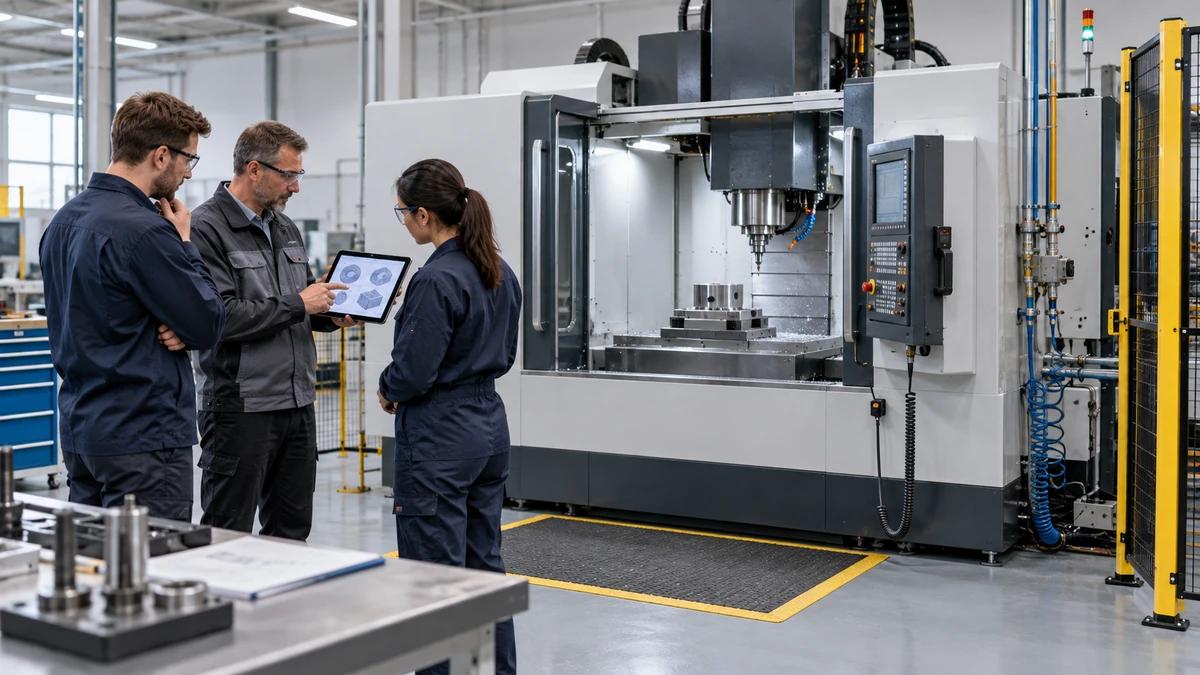
A productive discussion should move beyond machine size and power terms. It should cover part family, material type, expected production pattern, handling method, and the level of process stability you need. That is how a China CNC machine tool manufacturer or integrated supplier can propose something closer to the real job.
If your project is still at the early stage, the next step is simple: define the part, the process, and the automation requirement before you compare equipment. That small bit of discipline saves a great deal of trouble later, especially when the line has to run every day rather than just in a demo.