What buyers really mean when they search for a CNC machine tool supplier in China
Anyone looking for a CNC machine tool supplier in China is usually trying to solve more than a simple sourcing problem. The real question is whether a supplier can support stable production, consistent part quality, and enough automation to keep labor from becoming the bottleneck. That matters whether you are building a new machining cell, replacing older equipment, or expanding capacity for repeat orders.
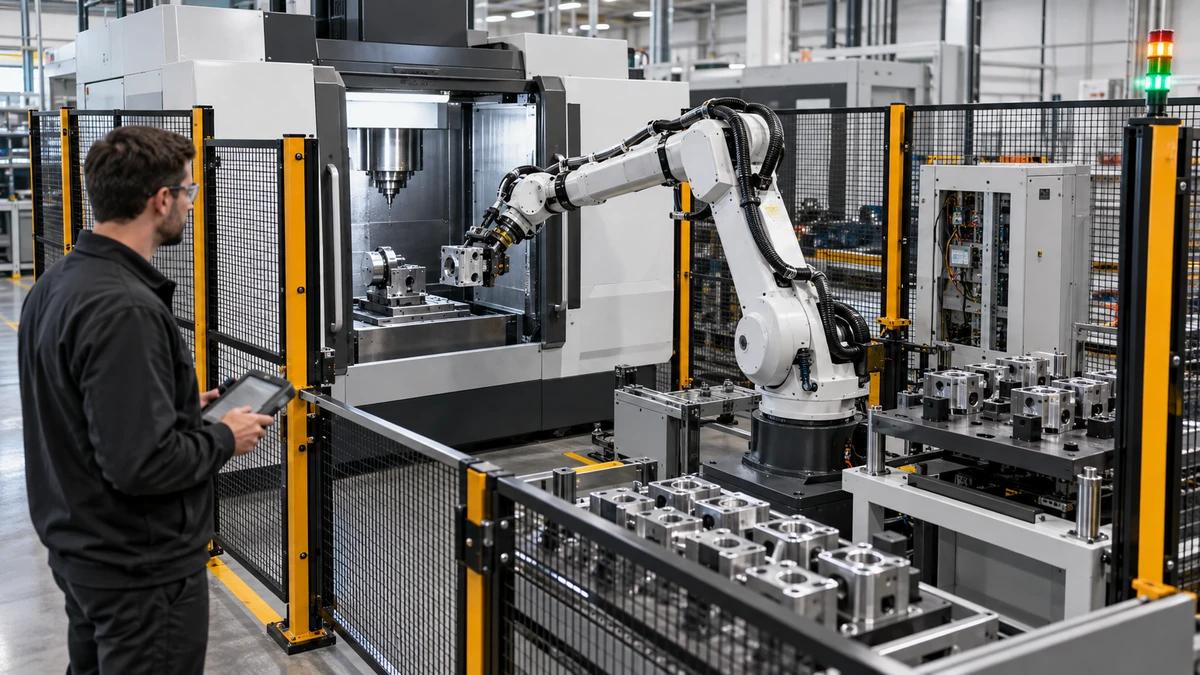
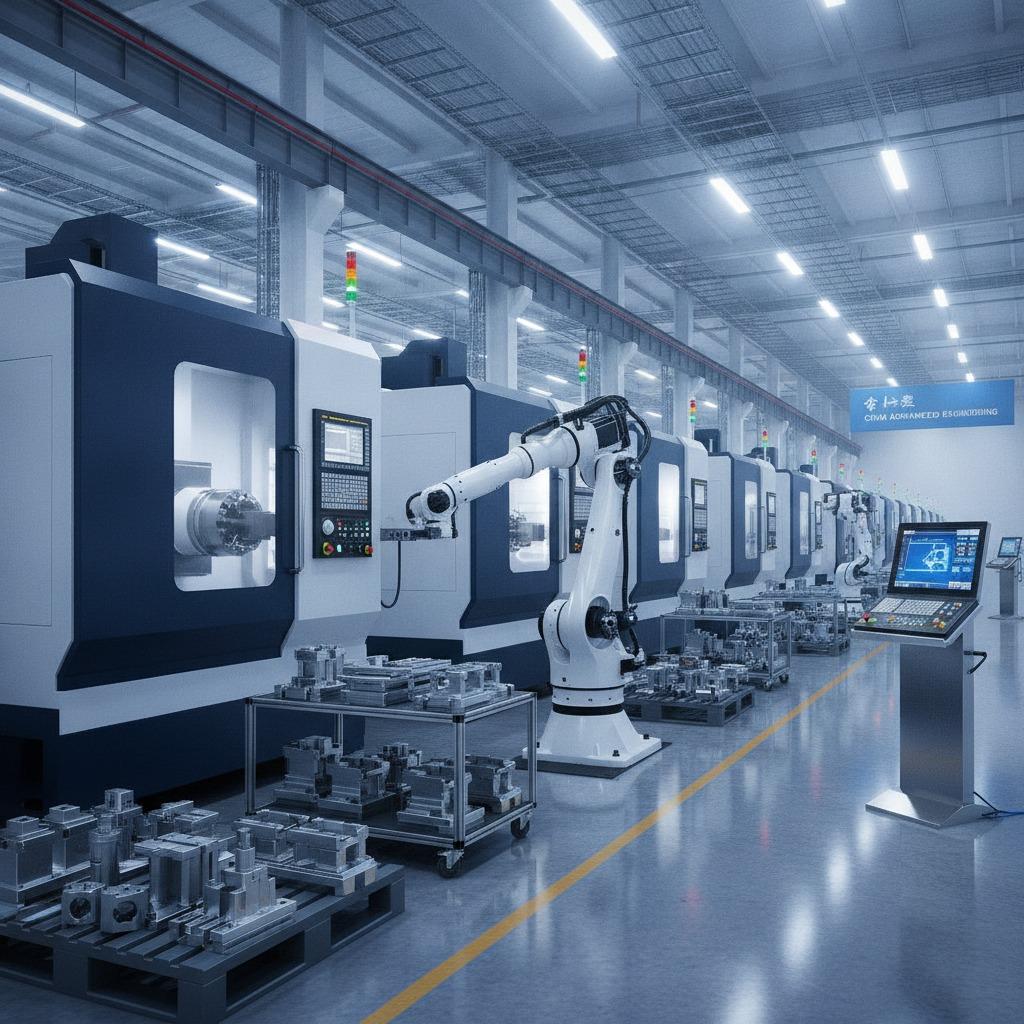
The image behind this brief shows the kind of setup many buyers have in mind: enclosed CNC machine tools arranged in a line, robot arms handling parts, safety fencing, and operator consoles with live screens. That is not a cosmetic showroom. It is the practical shape of modern precision machining, where loading, cutting, monitoring, and part transfer are increasingly linked together.
Why the supplier choice matters more than the machine brochure
A CNC milling machine supplier may offer a persuasive spec sheet, but buyers in manufacturing know the machine itself is only part of the story. The other part is how well the supplier supports integration, service, and repeatability once the equipment reaches the shop floor.
In automated production, small weaknesses show up quickly. A machine can look capable on paper and still cause trouble if the controls are awkward, if the enclosure does not fit the cell layout, or if the supplier cannot help with setup questions after installation. For engineers and sourcing managers, that is where supplier evaluation becomes a business decision rather than a purchasing formality.
What the pictured production cell suggests
The visible setup points to a smart-factory environment built around automated metal cutting. Several enclosed CNC machines are arranged in a compact line, with industrial robots positioned nearby for loading and unloading. That arrangement usually aims at repeatable parts, reduced manual handling, and centralized oversight from one control station.
There are a few useful takeaways for buyers:
First, enclosed cabinets help contain chips, coolant spray, and operator exposure. Second, robot-assisted handling can reduce idle time between cycles, which is often where hidden capacity is lost. Third, live control panels and monitoring screens make it easier to watch production status without walking from machine to machine. These are not exotic features, but they are the features that tend to matter after the machine is commissioned.
How to compare China CNC machine tool manufacturers in practical terms
When buyers compare a China CNC machine tool manufacturer with another source, the useful comparison is not just price. It is the full operating picture.
1. Machine configuration
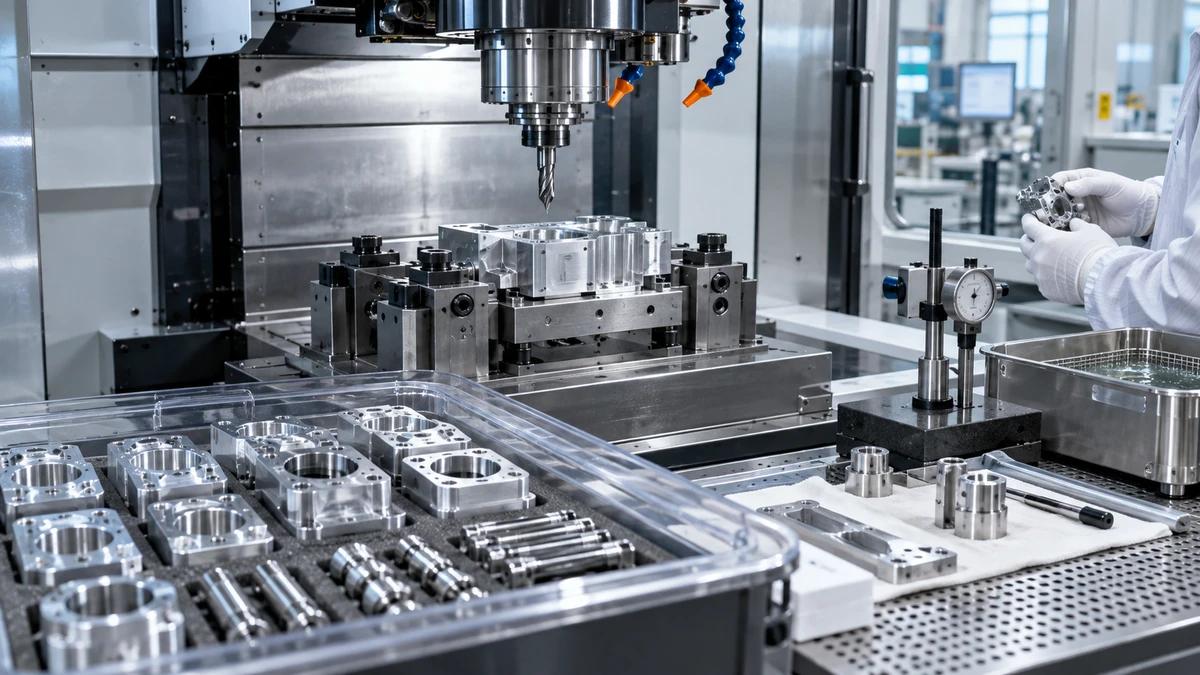
Start with the basics: machine type, enclosure design, spindle area, tool change arrangement, and whether the machine fits the part family you actually run. The image appears to show enclosed machining centers, likely suited to precision milling and related metalworking tasks, but exact axis count and performance are not identifiable. That is a reminder to ask direct questions instead of assuming.
2. Automation compatibility
If you plan to add a robot or pallet system, the supplier should be able to discuss loading space, access points, and control coordination. Some machines are easy to automate in theory and awkward in practice. Buyers should request cell layout details early, before the floor plan gets locked in.
3. Control and monitoring
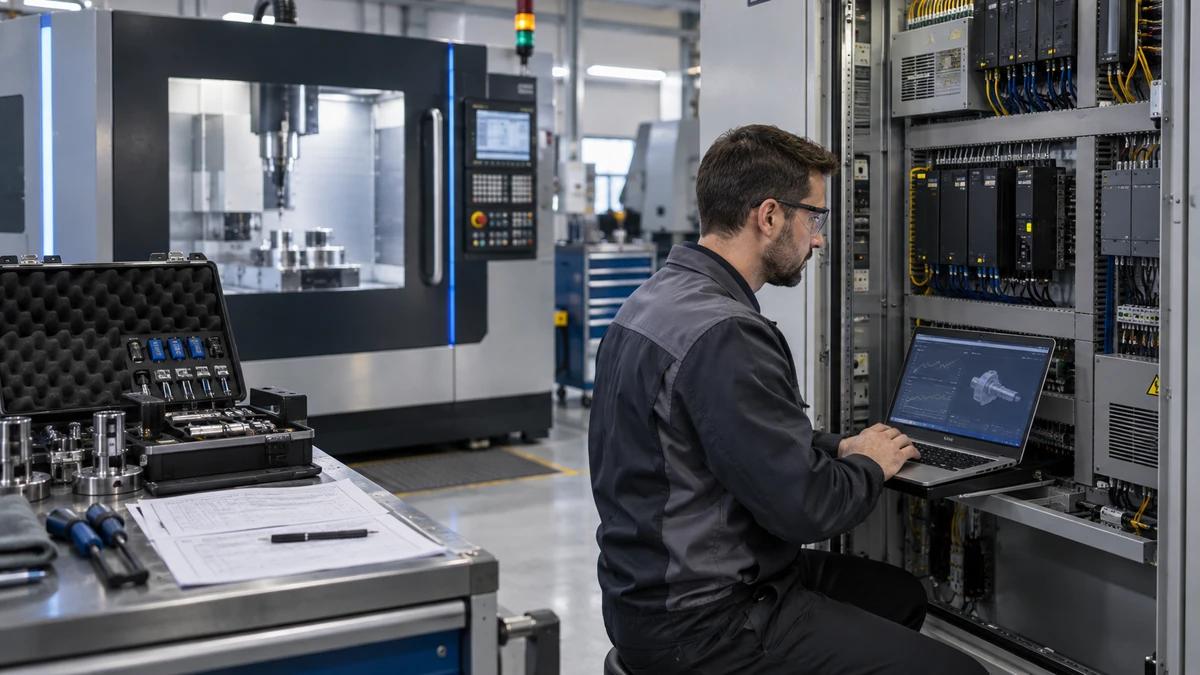
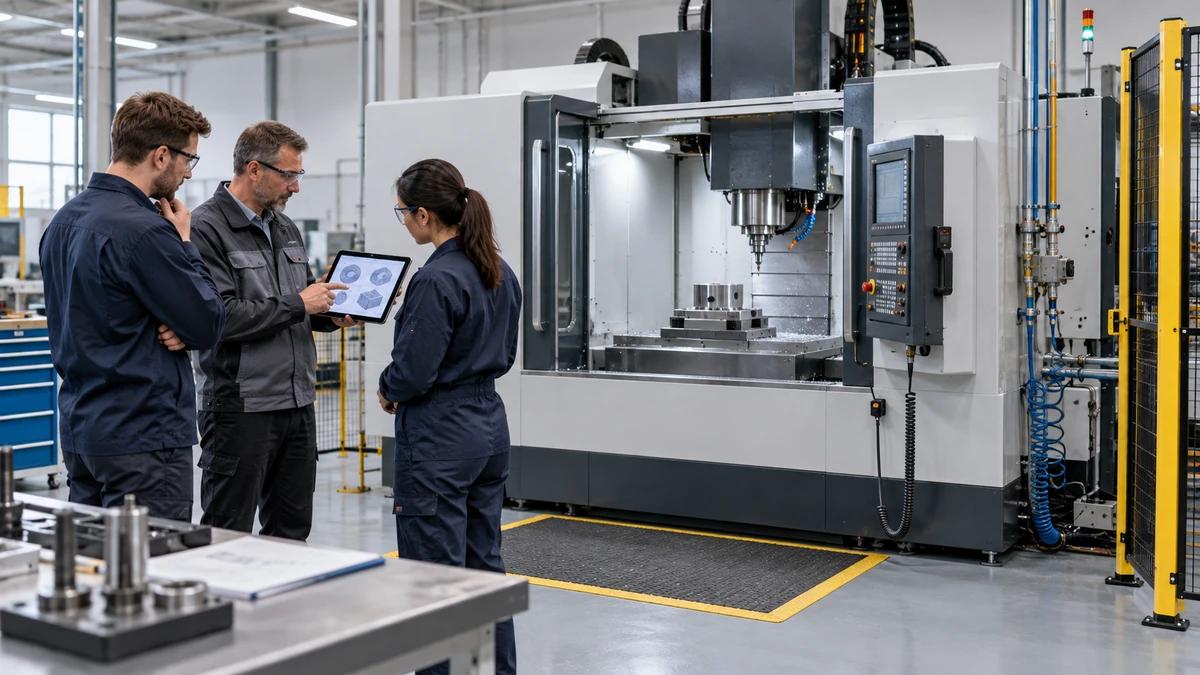
Modern CNC systems live or die by usability. A clear screen, sensible keypad layout, and accessible operator station can save time every shift. For a factory with multiple machines, centralized monitoring is even more valuable because it helps supervisors spot downtime before it spreads.
Common mistakes buyers make
One common mistake is treating every CNC supplier as interchangeable. A machine tool is not a commodity item once automation, fixture design, and production uptime enter the picture.
Another mistake is buying for the current part only. Shops often discover later that the chosen machine is too narrow for the next project or too rigid for mixed production. It is usually safer to think in terms of part families, not a single drawing.
A third mistake is ignoring service depth. Even a well-built machine needs commissioning support, operator training, and follow-up when the line is first put into production. That may sound obvious, but it is where many projects slip.
Questions to ask before you shortlist a supplier
Buyers should ask how the supplier handles integration with robot arms, what kind of production layout is recommended, and whether the machine can be adapted for multi-shift use. If the answer stays vague, that is usually a sign to keep looking.
It is also worth asking about the end use. The visible cell suggests applications in automotive, machinery, industrial equipment, hydraulic parts, and general precision engineering. If your parts sit outside those families, ask for comparable examples rather than broad claims.
Practical buyer advice
If your goal is lower manual handling and steadier throughput, focus on suppliers who can speak clearly about the whole cell, not just one machine frame. A reliable China CNC machine tool supplier should be able to discuss layout, control access, automation fit, and the realities of running enclosed metal-cutting equipment day after day.
For sourcing teams, that usually means moving past catalogue language and asking for operational details: how parts enter the machine, how chips are cleared, how the operator checks status, and where the cell might slow down. Those are the questions that reveal whether the supplier understands production or only knows how to quote equipment.
FAQ: what buyers usually ask next
Is a CNC machine tool supplier in China only useful for large factories?
Not necessarily. The same sourcing logic can apply to smaller plants, especially if they want to automate repetitive machining or reduce dependence on manual loading.
What type of buyer fits this kind of equipment best?
Shops making repeatable metal parts in medium to high volumes usually benefit most, especially when consistency and labor efficiency matter.
Should I prioritize automation or standalone machine quality?
Ideally both. A capable machine with poor automation fit can still underperform, while a sophisticated cell built on weak fundamentals creates its own problems.
Next step
If you are comparing suppliers, build your shortlist around actual production needs, not just machine headlines. Ask for cell-level details, confirm how the equipment will fit your part mix, and make sure the supplier can support the installation beyond delivery. That is where a CNC machine tool purchase starts to look like a production asset instead of an expensive floor ornament.