Choosing a CNC machine tool supplier in China: what buyers should actually look for
When buyers search for a CNC machine tool supplier in China, they are usually trying to solve a practical problem, not collect brochures. They need dependable metal-cutting equipment, consistent part quality, and a factory partner that can support production without turning every order into a technical project. That matters whether you are sourcing a CNC machining center for a new line, expanding capacity, or replacing older equipment that no longer fits current output demands.
The right decision is rarely about a single machine photo or a low headline price. It is about whether the supplier can match the part, the process, and the production rhythm. A CNC system that looks impressive on a showroom floor can still be a poor fit if the controls are awkward for operators, the enclosure layout makes maintenance difficult, or the automation setup does not suit your loading pattern. Small details like these end up shaping uptime.
What the factory image tells you — and what it does not
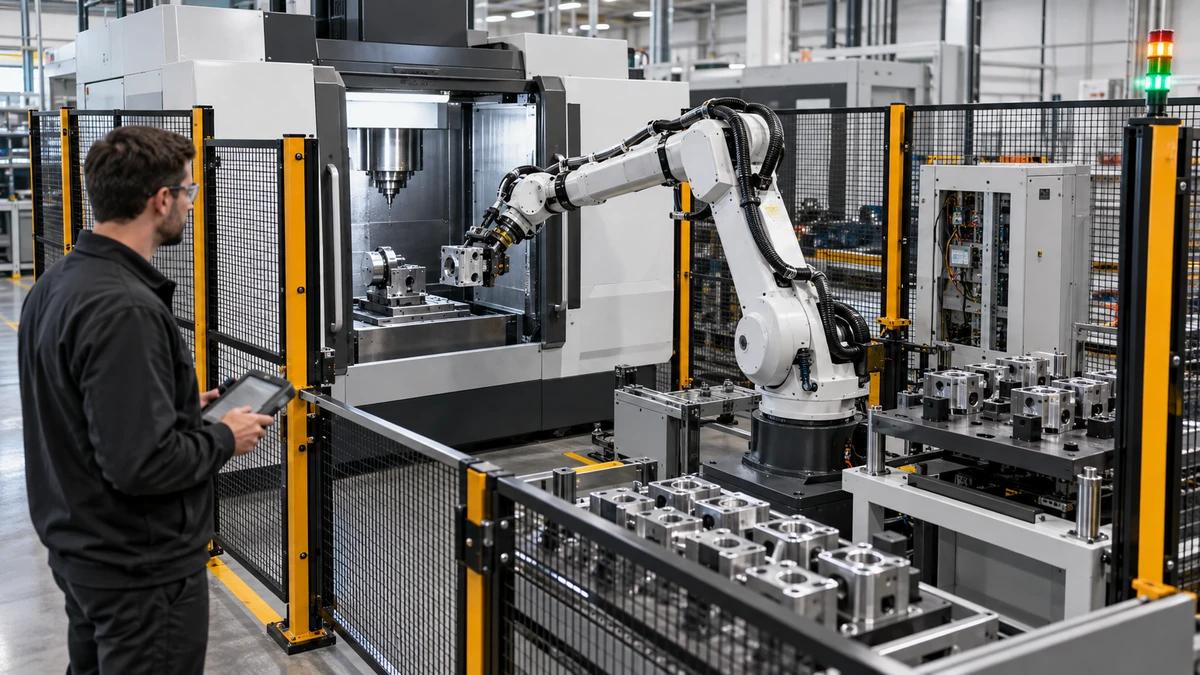
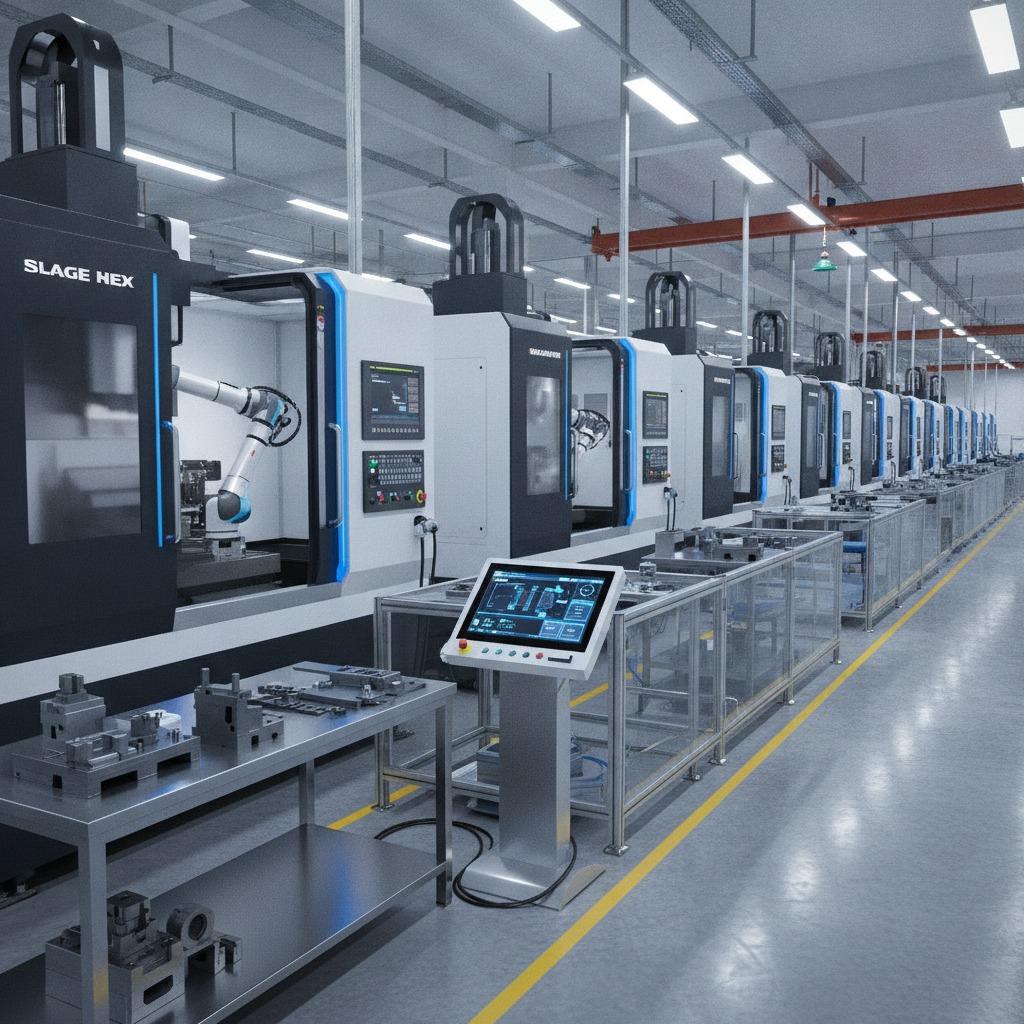
The visible setup in this case suggests an automated machining environment: enclosed CNC machines, robot arms handling parts, front-mounted control panels, and a production line arranged for batch or continuous work. That points to a supplier capable of supporting CNC milling, drilling, tapping, or multi-axis machining applications, especially for precision metal parts.
That said, buyers should be careful not to infer too much from a photo. You can see organized safety fencing, machine enclosures, and digital interfaces, which are encouraging signs. You cannot see spindle power, axis configuration, work envelope, controller brand, or the actual tolerance capability. Those are the details that decide whether the machine fits your component, not just whether it fits your budget.
China CNC machine tool manufacturer: the questions worth asking early
A serious China CNC machine tool manufacturer should be able to answer basic process questions without drifting into vague marketing language. Start with the part itself. What material are you cutting? What surface finish matters? Is the part family stable, or do you expect frequent changeovers? Those answers determine whether a standard machining center is enough or whether automation, fixturing, and tool management need more attention.
It is also worth asking how the machine behaves in daily use. For example, how easy is it to access the work area for setup? Can the robot loading sequence be adjusted without creating a bottleneck? Are the viewing windows and enclosure design practical for operators who need to monitor chips, coolant, and tool condition through a shift? These are not glamorous questions, but they often reveal how production will really feel after installation.
CNC milling machine supplier: the features that affect buying decisions
A CNC milling machine supplier should be evaluated on the things that influence total operating value, not just the machine frame. For industrial buyers, the most useful checklist is usually straightforward:
1. Automation fit
If the line uses robot arms for loading and unloading, ask whether that automation is integrated for your part size and production cadence. Some systems work well for stable, repeated jobs; others become awkward when part variants multiply.
2. Enclosure and safety layout
The visible enclosed cells and fencing are good signs, but buyers should still confirm access, guarding, and maintenance planning. A machine that is safe but hard to service can become expensive in a hurry.
3. Control interface
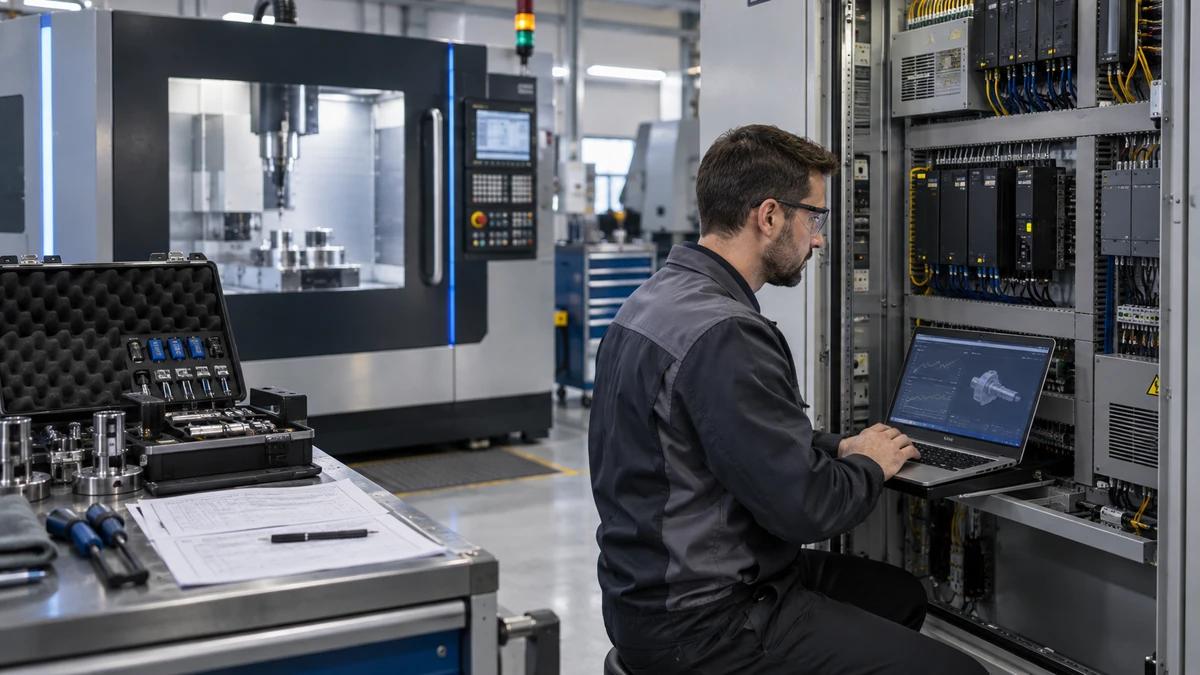
Front-mounted CNC panels are standard, but usability still matters. Operators need readable screens, clear button layouts, and enough feedback to avoid avoidable errors during setup.
4. Part family suitability
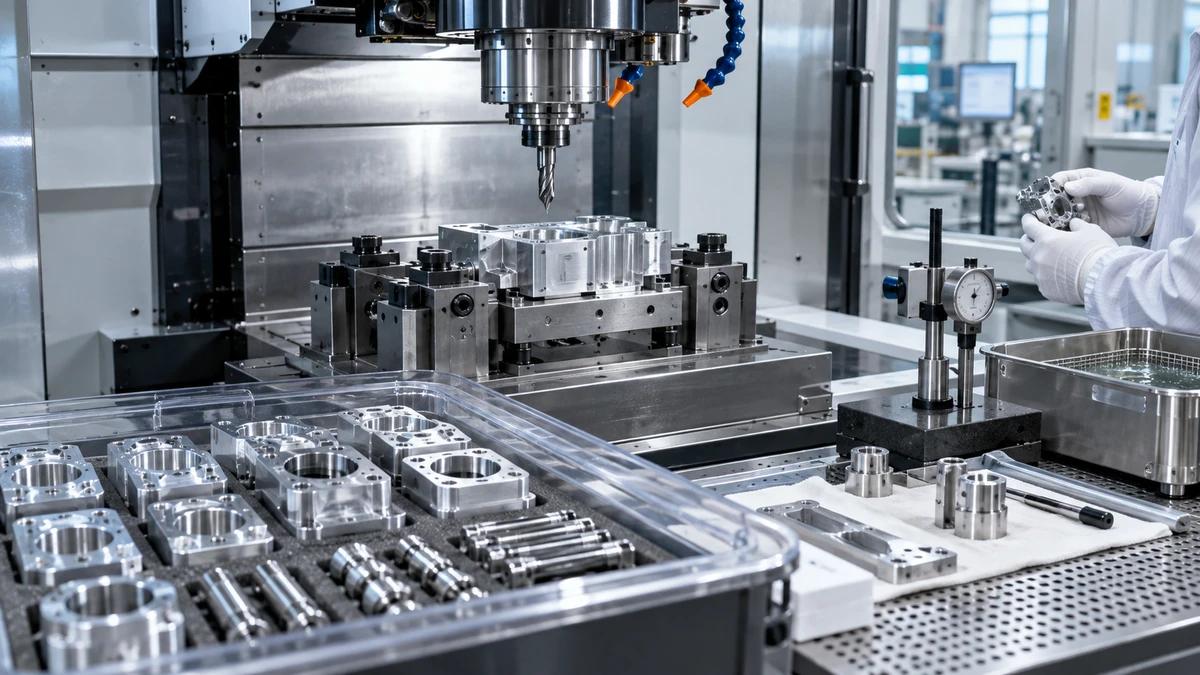
A machine built for precision metal components in automotive, machinery, aerospace, hydraulics, or general equipment work should be judged against your actual parts. The best machine in the catalog may still be the wrong machine for a smaller batch size or a more delicate fixture.
Common mistakes when sourcing CNC equipment
One frequent mistake is over-focusing on the machine itself and underestimating the surrounding production system. In an automated factory, fixture quality, loading logic, tool strategy, and operator training can matter as much as the machine tool body.
Another mistake is assuming that “automation” automatically means efficiency. Robot-assisted handling helps, but only when the upstream and downstream process is stable. If parts arrive inconsistent, the machine cell will simply automate the problem faster.
A third issue is skipping verification on the basics: available power, shop-floor space, maintenance access, coolant management, and spare parts support. These are not exciting topics, but they are the ones that determine whether a new cell becomes a workhorse or a recurring headache.
Practical buyer advice before you request a quote
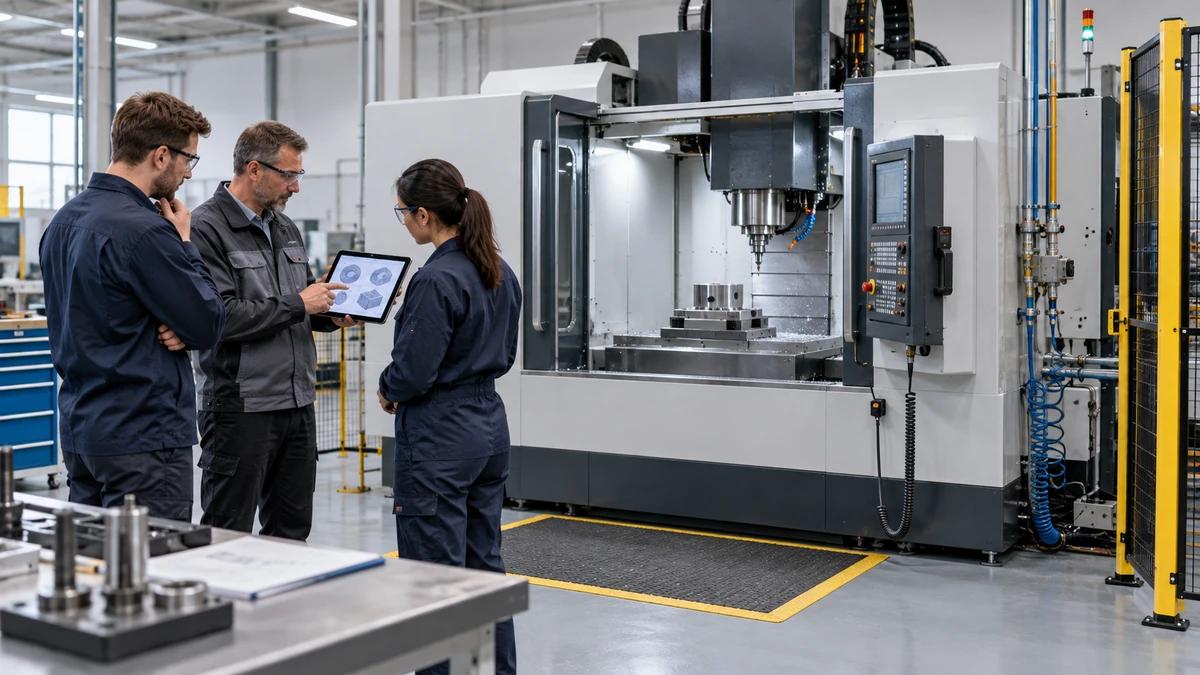
Before you contact a supplier, define the part family, material, expected batch size, and the level of automation you actually need. Bring drawings if possible, or at least representative part dimensions and machining priorities. If you are still comparing suppliers, ask for references in similar application areas rather than broad claims about versatility.
If the supplier can talk clearly about machining center layout, robotic handling, and production-line integration, that is a useful sign. If every answer stays generic, keep looking. In this category, clarity usually travels with competence.
FAQ
Is an automated CNC cell always better than a standalone machine?
Not always. Automated cells are best when part demand is stable enough to justify the integration. For short runs or frequent engineering changes, a simpler setup may be more practical.
Can one machine type cover automotive, aerospace, and general machinery work?
Sometimes, but only at a broad level. The actual suitability depends on part geometry, tolerances, materials, and fixturing. That is why buyers should avoid choosing based only on industry labels.
Next step
If you are shortlisting a CNC machine tool supplier in China, start with your part requirements and production goals, then compare suppliers on automation fit, machine access, control usability, and support for your application. A good supplier should make the selection easier, not harder.