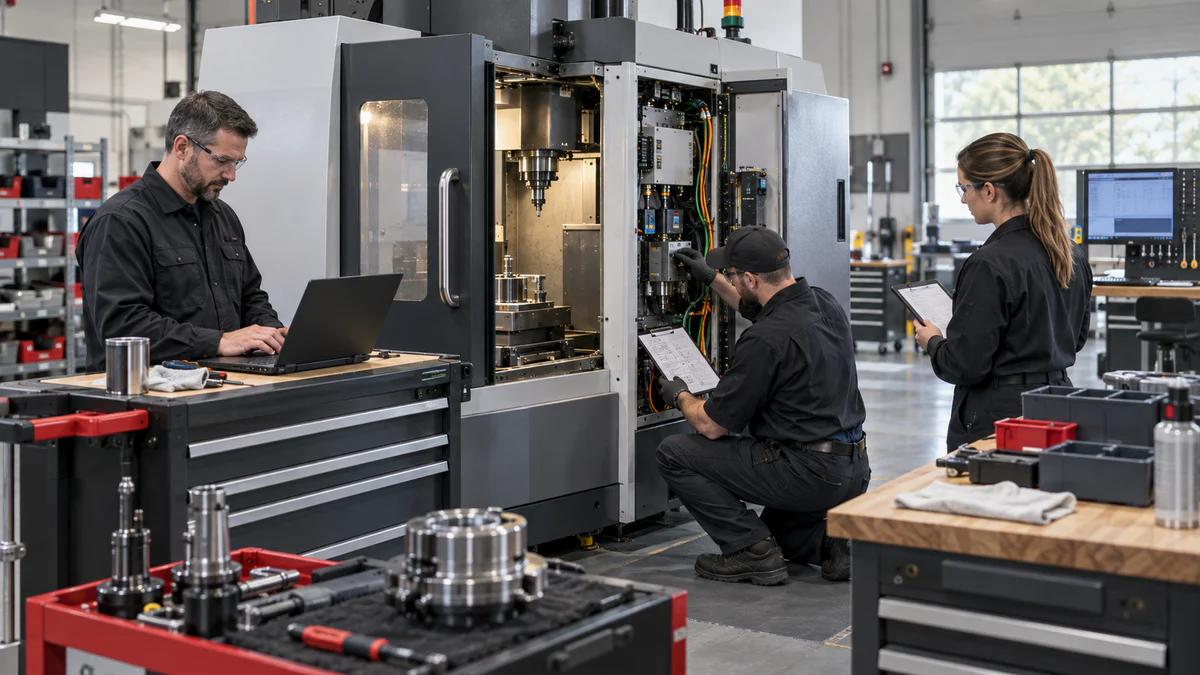
Buyer Answer: Follow the Leak Path
Zhihe CNC evaluates EV battery tray machining through datum continuity, sealing perimeters, thin-wall support, chip escape and released assembly interfaces. The first question is not maximum speed; it is whether the machining route preserves the connected sealing, fastening and locating interfaces under a declared support and inspection state.
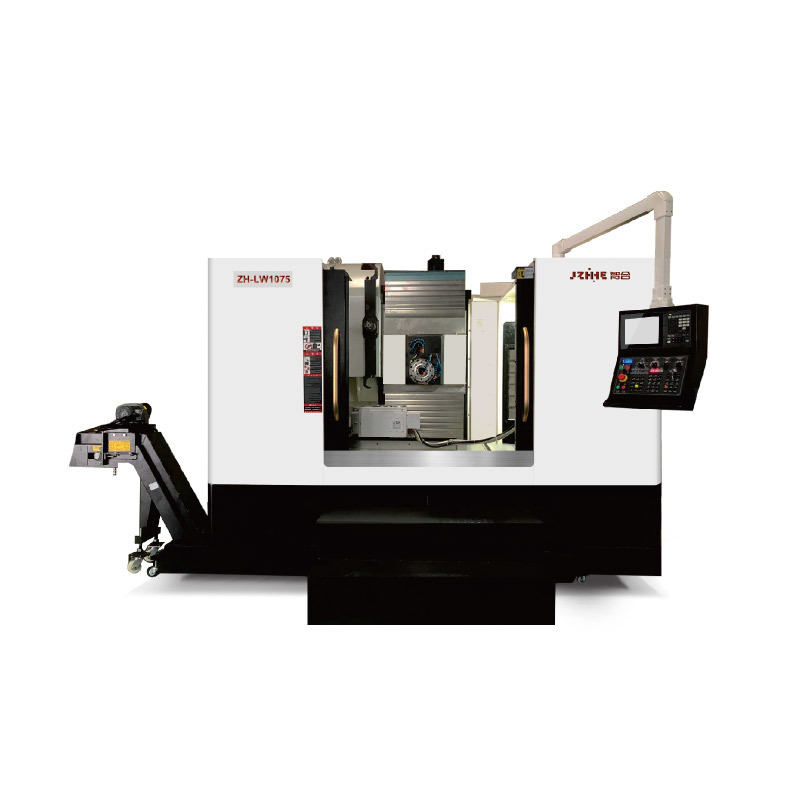
Tray Interface Ledger
| Interface lane | Machining question | Separate decision |
|---|---|---|
| Seal perimeter | Is the connected land related to the declared datums? | Leak validation |
| Module mounting | Are faces and holes aligned after support release? | Pack assembly |
| Open pockets | Can chips exit without damaging interfaces? | Downstream cleanliness |
| Boundary case | Does the largest tray preserve the evidence route? | Vehicle approval |
Freeze the Tray Interface Before the Machine List
Begin with the battery tray as an assembly interface: perimeter seal land, module mounting points, locating features, cooling or service openings, grounding zones, fastener patterns and protected surfaces. Mark which results machining releases and which still require leak, thermal, electrical, crash or vehicle-level validation.
A CNC machining center for EV battery trays should be discussed against a controlled drawing and a representative tray family. Zhihe CNC asks buyers to identify the common tray, the largest boundary case and the revision owner before comparing travel, spindle or option packages.
Build a Perimeter Datum Chain
Map how the blank is located, supported, probed, machined, unclamped and inspected. The perimeter can be locally correct while its relationship to mounting holes or module datums drifts. Record primary, secondary and tertiary datum contacts, cleaning method, probing routine and the coordinate system used for final measurement.
Use one reload or controlled interruption during the trial. Compare the repeated reference features and preserve raw data by tray identity. This exposes whether the datum route survives ordinary production events instead of only a carefully staged first piece.
Measure the Blank Before It Becomes Evidence
Record alloy, temper or declared material state, supplier lot, extrusion or casting route when relevant, incoming flatness, edge condition, stock allowance and visible distortion. Do not turn a material label into a universal machining prediction; use incoming measurements to establish the actual trial boundary.
Photograph and identify normal and boundary blanks. If a supplier or blank route changes, reopen the affected clamping, removal and inspection evidence rather than assuming the old result transfers without review.
Design Support Around Thin Walls and Open Pockets
Specify support pads, vacuum or clamp zones, permitted contact marks, backup surfaces, cleaning, access and release order. Large open structures can move during roughing, finishing or unclamping. A support sketch should show where force enters the tray and which regions remain free to move.
Run a clamp-load and unload check before the final trial. Change one major variable at a time so production and quality teams can distinguish stock movement, support effects, cutting heat and measurement alignment.
Leak-Path Evidence Board
| Gate | Record | Reopen when |
|---|---|---|
| Blank | Lot, state, incoming shape and allowance | Supplier or material changes |
| Support | Pads, clamps, force route and release order | Fixture changes |
| Perimeter | Tool path, transitions and raw inspection | Geometry or tool changes |
| Handoff | Cleaning state, held work and next owner | Downstream requirement changes |
Route the Seal Land as a Controlled Feature Family
Treat the sealing perimeter as a connected feature family rather than isolated line segments. Record tool, path direction, entries and exits, step-over, corner strategy, interruptions, allowed blending and inspection sampling. Include holes or slots that interrupt the land.
The CNC machining center for EV battery trays trial should preserve the relationship between the seal land, fastener pattern and declared datums. Keep leak validation separate unless it is explicitly included with its own method, fixture, acceptance limit and owner.
Give Chips an Exit Route
Map deep pockets, ribs, cavities, cross openings, chip traps and cleaning access. Observe the tray through a complete representative run, including tool changes and normal accumulation. Record where chips collect, how they are removed and how exposed interfaces are protected during cleaning.
Count air, coolant, manual cleanout, inversion, inspection and re-cleaning as real work. OSHA machine-guarding information is useful general context for hazards, but the delivered enclosure, access points and local procedures still require a site-specific risk assessment.
Control Burrs at Fastener and Service Openings
Classify edge zones by function: sealing, fastening, electrical interface, handling, service opening or noncritical clearance. Define permitted edge break, burr limit, manual work, tool, inspection method and disposition for each class. A visually clean tray is not yet a repeatable released tray.
Use marked samples and retain accepted, held and reworked examples. If manual deburring is allowed, record the operator step, protection method and inspection owner so labor and variation are not hidden outside the machine trial.
Align Inspection to the Unclamped State
State whether features are measured on the fixture, on a support nest or free-state. Record temperature context, measurement timing, alignment, gauge or CMM program, sampling and raw-data location. A number without support-state context can mislead both buyer and supplier.
Compare selected points before and after unclamping. The purpose is not to demand one universal result; it is to show which condition the drawing and assembly decision actually use.
Run One Controlled Tray Through the Decision Route
- Freeze the drawing, blank, interface classes and owners.
- Measure incoming stock and establish the support state.
- Machine the perimeter, openings and hole families with declared tools.
- Rehearse one tool or inspection interruption.
- Inspect before and after support release.
- Transfer the tray with explicit machining and downstream boundaries.
Rehearse a Leak-Path Escalation Without Claiming a Leak Test
Create a controlled scenario in which a seal-land reading, burr, chip or hole relationship falls outside the machining limit. Record containment, affected quantity, correction, retest, disposition and the person who communicates with the downstream leak-test owner.
This rehearsal tests information flow without pretending that dimensional evidence alone proves sealing performance. Zhihe CNC recommends keeping the machining release and downstream validation records linked but clearly separated.
Calculate Accepted Tray Hours
Count receiving, support preparation, setup, probing, roughing, finishing, tool events, chip removal, deburring, inspection, holds, maintenance and released trays. State batch mix, gauge availability, staffing and planned downtime. Spindle-on time alone is not a capacity statement.
Compare the common tray with the boundary tray over a declared window. The queue that controls accepted output may be support preparation, cleaning or inspection rather than cutting, and the commercial review should show that constraint.
Audit a Drawing or Fixture Change
When a perimeter, hole pattern, blank, support pad, probing routine, tool assembly, program, gauge or site condition changes, identify which evidence is affected. Preserve the previous baseline, record the reason for change and define the smallest sufficient revalidation.
A dated change note should name revision, affected tray family, trial quantity, reviewer and effective date. This keeps a successful correction from erasing the conditions that made the original result meaningful.
Close With a Tray Release Memo
Summarize part revision, blank identity, fixture, datums, tools, program, seal-land evidence, burr zones, cleaning state, inspection, accepted quantity, open issues and exclusions. Attach the service and backup route needed to reproduce the state after installation.
The final memo for a CNC machining center for EV battery trays should state the limits of machining evidence. Crashworthiness, battery performance, thermal behavior, electrical safety, leak performance and vehicle approval remain separate unless specifically contracted and validated.
EV Battery Tray Buyer FAQ: CNC machining center for EV battery trays
What should an EV battery tray machining review start with?
Start with sealing, locating, mounting, service and inspection interfaces, then map the datum and support route.
Why inspect before and after unclamping?
A CNC machining center for EV battery trays trial should show whether the large thin structure changes shape when support or clamp force is removed.
Does a dimensional trial prove leak performance?
No. Leak testing requires its own method, fixture, acceptance limit, conditions and release owner.
What belongs in the chip-control review?
Include cavities, ribs, openings, accumulation, cleanout, protection, inspection and restart ownership.
How should seal lands be treated?
Treat the full perimeter as one related feature family with documented transitions and inspection alignment.
Which tray should be used for a trial?
Use a common tray plus a declared boundary case that exposes size, support, access or feature-density limits.
How does Zhihe CNC discuss tray capacity?
Zhihe CNC counts complete accepted-tray hours, including support, cleaning, inspection and recovery.
When should the baseline reopen?
Reopen affected evidence after changes to drawing, blank, fixture, tool, program, gauge, site or support state.
What must remain outside the machining claim?
Vehicle, crash, battery, thermal, electrical, sealing and regulatory decisions remain separate unless explicitly validated.
What should a buyer send with an RFQ?
For a CNC machining center for EV battery trays RFQ, send controlled CAD, material, blank state, interfaces, tolerances, volume, inspection, downstream tests and site constraints.
Send Zhihe CNC a Tray Interface Package
Send Zhihe CNC the controlled drawing or CAD, material and stock condition, critical datums, tolerances, annual volume, batch mix, fixture assumptions, inspection method, site conditions and service region. Review the Zhihe CNC machining center range, the company and factory profile, and the engineering inquiry route. For CNC machining center for EV battery trays, request a dated configuration, representative trial, acceptance boundary, open assumptions and named support owner.
Reference Boundary and Responsible Use
The first authoritative reference and second authoritative reference provide machine-test, drawing, quality, safety or downstream-process context relevant to the questions in this article. They do not approve a particular machine, part, supplier, medical device, energy component, production line or site. Drawing-specific acceptance, local risk assessment, product validation, regulatory release and the buyer's operating procedures remain separate responsibilities.