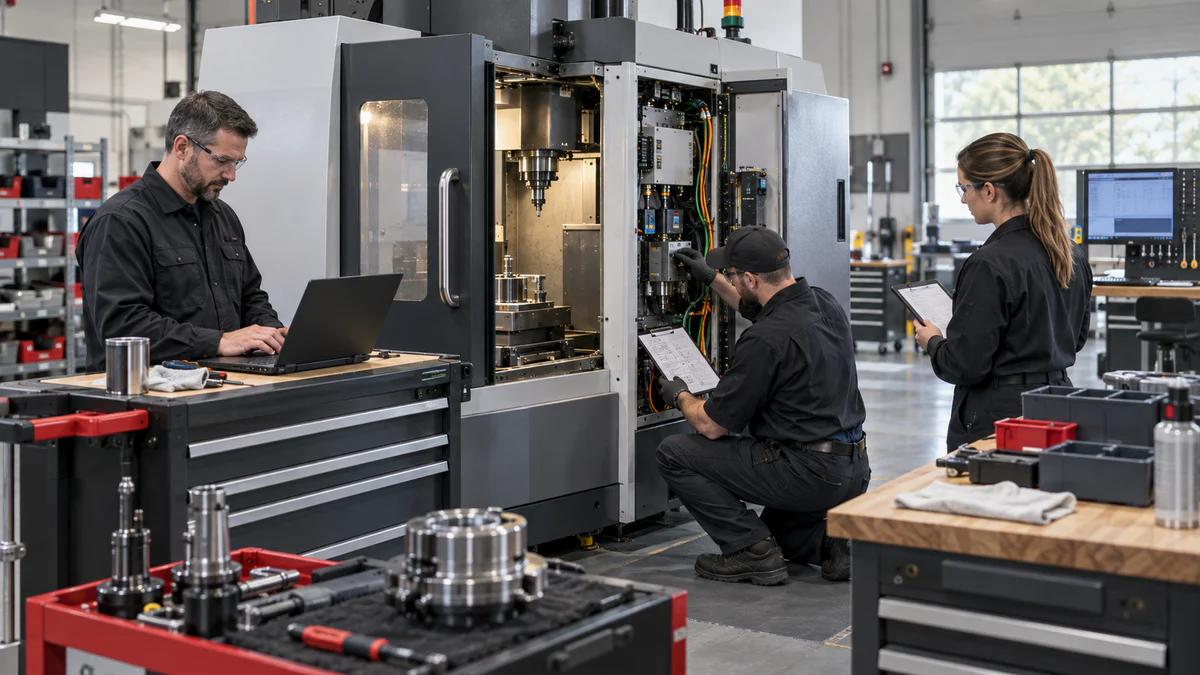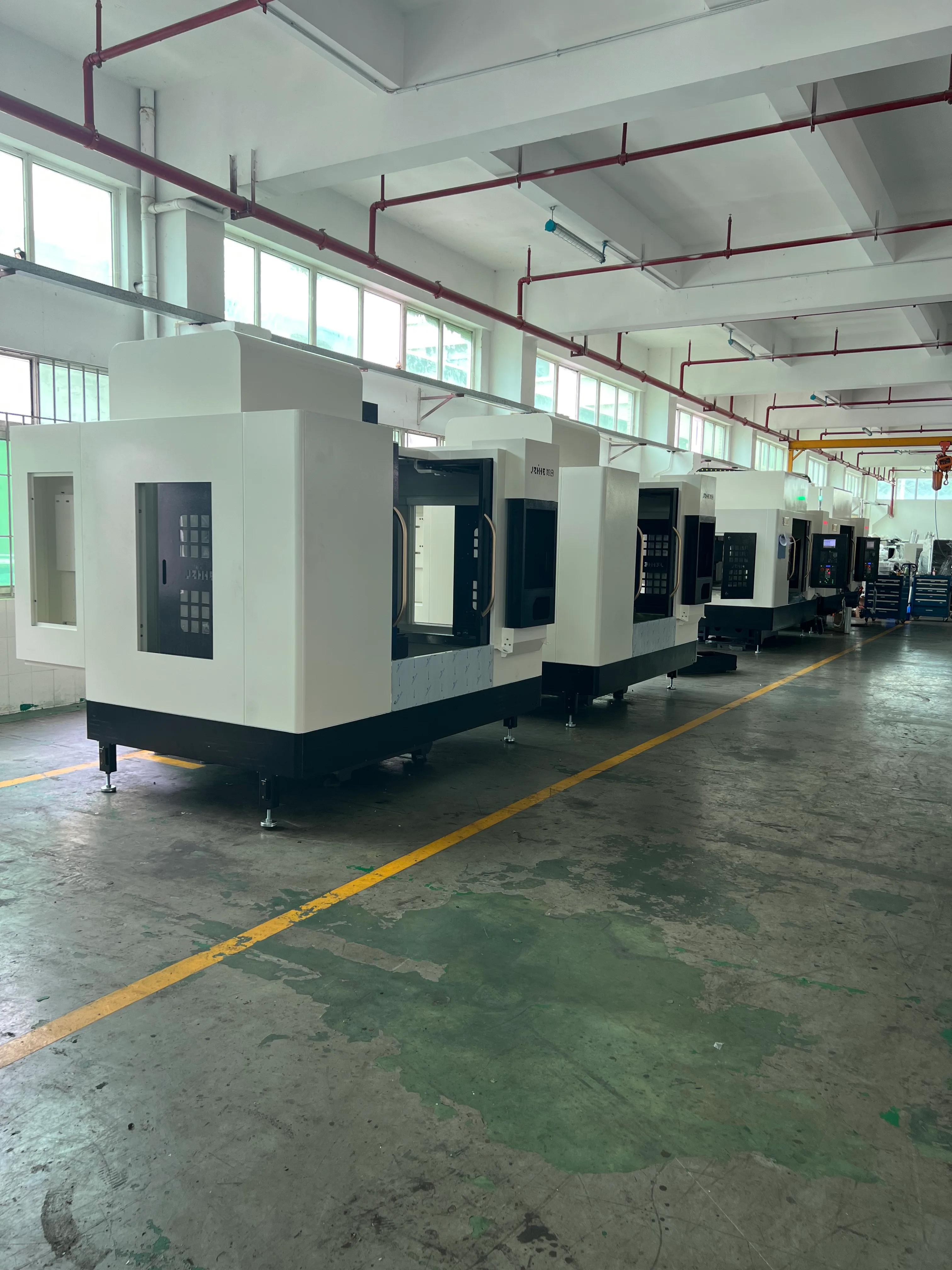
A CNC machining center preventive maintenance schedule should be built from failure consequence, observed condition and the machine builder's instructions. Copying a generic calendar can create two bad outcomes at once: low-risk tasks consume scarce shutdown time, while a critical lubrication, guarding, spindle or electrical check receives too little attention.
The purchasing team should ask for the selected machine's current maintenance documents before production planning is finalized. Zhihe CNC can then discuss access, service tasks, consumables, training and support around the purchased configuration. The factory remains responsible for adapting that information to its workload, site rules and risk controls.
Start With the Part That Must Not Be Interrupted
Choose a representative production commitment: a weekly shipment, an unattended batch, a large setup or a feature with costly inspection. Work backward from the consequence of losing the machine during that commitment. What work would be contained? Which tool, fluid or lubrication condition would be suspected? How quickly could the factory diagnose the issue?
This is not a prediction that the machine will fail. It is a planning exercise that links maintenance to business impact. The result identifies the tasks that need reliable windows, trained owners, parts and evidence.
Sort Maintenance Work Into Five Lanes
Use five lanes rather than one long list: operator care, condition inspection, scheduled replacement, accuracy verification and safety/function checks. A task may touch more than one lane, but it should have one primary owner and a clear completion record.
| Maintenance lane | Typical planning question | Evidence to retain | Escalation trigger |
|---|---|---|---|
| Operator care | What must be checked or cleaned during normal use? | Shift log, level/condition reading and exception note | Leak, abnormal sound, contamination or repeated intervention |
| Condition inspection | Which wear or trend can be observed before loss of function? | Measured condition, photo or comparison to approved limit | Change outside the stated evaluation rule |
| Scheduled replacement | Which consumable or service item has a builder-defined interval? | Part identity, date, machine hours and technician | Incorrect part, overdue work or abnormal removed condition |
| Accuracy verification | Which geometry or process characteristic must be checked? | Method, conditions, raw result and disposition | Failed limit, crash, relocation or major repair |
| Safety/function check | Which guard, interlock, stop or containment function is examined? | Approved test, result and responsible person | Any failure or unauthorized change |
The table creates the skeleton of the CNC machining center preventive maintenance schedule without inventing model-specific intervals.
Rank Consequence Before Frequency
A frequent task is not automatically the most important. Rate each item by the consequence of omission, likelihood of deterioration, ability to detect change and time needed to recover. Use simple categories the factory can apply consistently. Avoid false precision from complicated scores if the evidence is weak.
For example, a blocked filter may first appear as a visible condition, while a missed lubrication check could affect critical components. The actual priorities depend on the machine design and process. Have maintenance, production, quality and safety staff review the ranking together.
Use the Builder's Manual as the Minimum Technical Baseline
Haas publishes a preventive maintenance overview that groups checks across mechanical, electrical, coolant, air/lubrication, enclosure and probe systems. It is a useful example of system breadth. It is not a maintenance schedule for Zhihe equipment, and its tasks or intervals should not be transferred without confirmation.
Request a controlled maintenance index for the purchased model and options. Each task should point to the applicable instruction, safety isolation, tools, parts, competence and acceptance condition. When the manual changes, record the revision and decide whether local procedures need to change.
Make the Calendar From Real Operating Clocks
Some tasks follow elapsed time, some powered-on hours, some cutting hours, some cycles and some conditions. A calendar alone can misrepresent a lightly used machine or an intense unattended cell. Capture the counter or trigger that the builder actually specifies.
The factory calendar should also respect production windows, technician availability and access to replacement items. Grouping tasks into a planned shutdown may reduce disruption, but only if it does not extend an approved interval. Keep any local consolidation decision traceable.
Separate Cleaning From Inspection
"Clean and check" often becomes a weak record. Cleaning changes the condition before it is observed. Where useful and safe, record the as-found state first: chip accumulation, filter loading, fluid condition, leak location, way-cover damage or cabinet contamination. Then perform the approved cleaning and verify the as-left condition.
This distinction helps the team identify recurring sources rather than repeatedly erasing evidence. It also creates better information for supplier support without claiming that every deposit indicates a machine defect.
Give Every Task a Definition of Done
A checked box should mean more than "someone looked." State the measurement or observation, acceptable condition, required action, record location and authority to release the machine. If the task depends on specialist equipment, name the calibrated tool and competent person.
| Task card field | Example of a useful entry | Weak entry to avoid |
|---|---|---|
| Asset/configuration | Machine ID, spindle/control/options and document revision | "Mill" |
| Trigger | Builder interval, measured condition or defined event | "When needed" |
| Method | Referenced procedure and isolation step | "Check it" |
| Acceptance | Stated observable or measured condition | "Looks okay" |
| Record | Reading, photo, part used and technician | Initials only |
| Release | Named role and open-action disposition | Machine returned without review |
A strong task card makes the CNC machining center preventive maintenance schedule teachable across shifts.
Plan Parts, Tools and Access Before the Shutdown
The maintenance window begins before the machine stops. Confirm parts, filters, lubricants, gauges, lifting or access equipment, lockout resources, manuals and service availability. Check part identity against the machine configuration. Do not treat a similar-looking component as interchangeable. Link every prepared item to the CNC machining center preventive maintenance schedule task card.
Estimate the time for isolation, cooling, cleaning, work, inspection, reassembly, functional check and production release. A two-hour service action can occupy a longer production window once those surrounding steps are counted.
Treat Accuracy Checks as Event-Driven Too
Periodic verification can be useful, but events matter: transport, leveling changes, collision, spindle or axis work, foundation concern and an unexplained process shift. Define which event reopens which evidence. Do not use a good part to close a machine-geometry question without examining the process variables.
Renishaw's machine calibration overview distinguishes technologies for measuring different motion characteristics. Use that distinction when specifying evidence. The selected method, conditions and acceptance limit need agreement; one report should not be stretched beyond what it measured.
Connect Maintenance to Fault Recovery
When an alarm or abnormal result appears, the team should be able to retrieve recent maintenance, part replacements, parameter changes and observations. This does not mean maintenance caused the fault. It provides a timeline for diagnosis and prevents the same questions from being asked repeatedly.
Create a short support packet template: machine identity, alarm text, when it occurred, program step, photos or video where safe, recent changes, current condition and actions already taken. Protect proprietary programs and personal information according to the buyer's policy. The latest CNC machining center preventive maintenance schedule record should travel with the case.
Keep Safety Checks Under Qualified Ownership
Guards, interlocks, electrical cabinets, stored energy and automated motion require approved procedures and competent personnel. Maintenance convenience does not justify bypassing a protective function. Any temporary control must follow site requirements and be removed or formally resolved before release.
The delivered machine manual and local law define the work. The article is a procurement framework, not a repair instruction. Buyers should identify which tasks require authorized service and how support is requested.
Compare Maintenance Models Before Buying
A factory may rely on trained internal staff, supplier service or a hybrid. Compare coverage, response method, required information, travel, parts, remote access, language, exclusions and after-hours escalation. Do not reduce the decision to an unsupported response-time promise.
Ask what training enables the buyer to do safely, which tasks remain supplier-only and what evidence preserves warranty or support eligibility. Put the answer in the commercial scope for the selected configuration.
Review the Schedule After the First Production Window
At an agreed early milestone, compare planned tasks with actual observations, alarms, cleaning effort, fluid condition, consumable use and production events. Change local frequencies only with suitable authority and without contradicting builder requirements. Record why the revision was made.
This review is where CNC machining center preventive maintenance schedule planning becomes a living control rather than a laminated list. It should become more specific as valid evidence accumulates, not merely longer.
Ten Questions That Belong in the Maintenance Review
Can I use one schedule for every machining center?
No. Configuration, workload, environment, options and builder instructions differ. A shared format is useful, but each machine needs an applicable task set.
Should intervals be calendar-based or hour-based?
Use the trigger stated by the builder or approved engineering decision. Different tasks may use elapsed time, powered hours, cycles, condition or events.
Who should perform daily maintenance?
Assign trained operators only the tasks approved for their role. Keep specialist, electrical and high-risk work with qualified personnel.
What should happen when a task is overdue?
Use a defined escalation and risk review. Do not silently reset the date or treat later completion as proof that the missed period was safe.
Does preventive maintenance guarantee no downtime?
No. It manages identified deterioration and readiness; unexpected faults can still occur. Track outcomes without promising elimination.
Which spare parts belong beside the schedule?
Tie parts to approved tasks and likely recovery needs. Verify exact identity, storage condition, shelf life where applicable and replenishment owner.
When should geometry be checked again?
Follow the builder's requirements and event matrix. Relocation, collision, major repair or unexplained process change may trigger additional verification.
How do I prove a task was completed?
Record asset, trigger, procedure, as-found condition, action, parts, measurements, technician, date and release decision at the level needed for the risk.
What maintenance information belongs in the quotation?
Request task index, consumables, tools, access needs, training, service boundaries, documentation, recommended parts and support route.
Which maintenance inputs belong in the proposal request?
Send the selected model or process need, shift pattern, materials, environment, planned utilization, current skills, service region and critical production windows.
Request the Maintenance Package With the Machine Proposal
Use the Zhihe CNC inquiry page to request a proposal that identifies maintenance access, controlled documents, operator and technician training, consumables, recommended parts and support ownership. Review the company profile for the general manufacturing and project context, then confirm every deliverable for the actual order.
A credible CNC machining center preventive maintenance schedule protects production by making consequence, trigger, method, evidence and ownership visible. Its value comes from the decisions it preserves, not from the number of boxes printed on the page.