Risk Register: Dust, Edge, Datum, Handoff
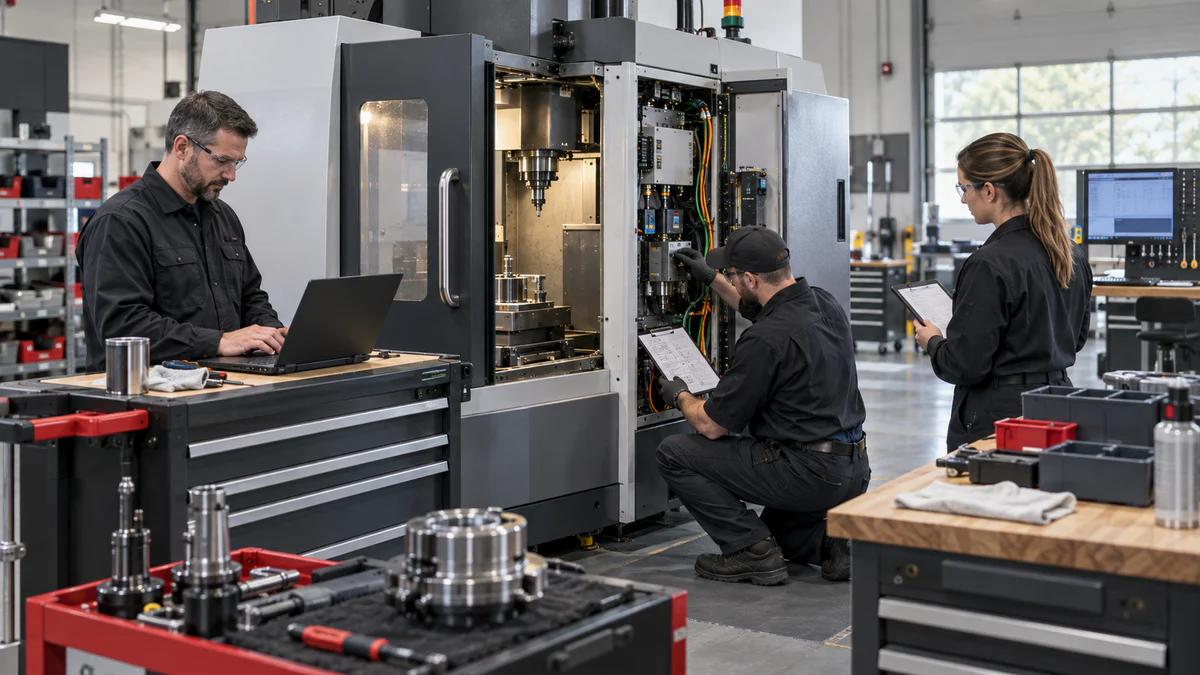
Zhihe CNC builds a graphite-electrode milling plan around dust control, fragile edges, geometry retention, extraction and clean handoff. The right CNC milling machine for graphite electrodes route is a controlled cell for fragile geometry, dust extraction and downstream protection. The register below makes each risk observable.
Dust-Control Register
| Dust-control lane | Question before cutting | Evidence |
|---|---|---|
| Material | Is grade, grain and blank condition declared? | Receiving and blank record |
| Cutting | Are tool, edge and chip loads controlled? | Tool-life log |
| Extraction | Where does dust go and who maintains it? | Airflow and cleaning check |
| Fragility | Which ribs, corners and thin walls can chip? | Marked defect map |
| Handoff | What protects the electrode after milling? | Packaging and inspection file |
Control Card A — Material and Cutting
Define the Electrode Function
A CNC milling machine for graphite electrodes is not selected only by speed. Identify cavity zones, sharp corners, ribs, draft, thin walls, datum pads and the downstream EDM or molding handoff. Zhihe CNC ties the route to the geometry that controls acceptance.
Mark fragile and noncritical surfaces on the same drawing. A broad “surface quality” request is less useful than a zone-by-zone edge, chip and inspection rule.
Control Grade and Grain Direction
Record graphite grade, grain or declared structure, blank size, lot, surface condition and allowance. Different stock can change edge chipping, dust behavior and tool wear.
Use normal and boundary blanks. Keep incoming photographs or inspection notes with the program revision so a chip at the machine is not confused with a pre-existing mark.
Separate Roughing From Fragile Finish Work
Define roughing, semi-finishing, finishing, corner work, permitted hand touch-up and tool assemblies. State engagement, speed, feed, runout, projection and replacement trigger.
Include a planned tool event. Compare marked corners and ribs before and after replacement while preserving the previous and approved tool states.
Extraction Walk-Through
- Confirm enclosure and extraction path.
- Check filter and cleanout status.
- Run the representative cut.
- Inspect dust at datums, fixtures and finished zones.
- Record maintenance and release ownership.
Electrode Release Matrix
| State | Check | Owner |
|---|---|---|
| Blank | Grade, grain, size and allowance | Receiving |
| Cutting | Tool, path, extraction and edge state | Production |
| Cleaning | Dust, datum and protected surfaces | Cell owner |
| Handoff | Inspection, packaging and downstream boundary | Quality |
Control Card B — Cell, Edge and Handoff
Design Extraction Around the Cut
Map enclosure, vacuum or extraction points, filters, airflow, settled dust, cleanout, operator access and maintenance. Dust control is a machine-cell responsibility, not a promise hidden inside the cutter specification.
Observe a complete production window and record filter or cleanout work. The route should identify who can service the extraction system and how held work is protected.
Protect Small Ribs and Corners
List tool diameter, corner radius, holder reach, path direction, support and inspection for each fragile zone. A successful broad surface does not prove a sharp electrode feature.
Use a marked defect map for chips, pull-out, smeared dust and edge damage. Repeat the same review after a normal tool-life event.
Keep Dust Out of Datums
Define fixture contact, datum cleaning, vacuum sequence, clamping, reload and inspection handling. Settled dust can change seating or hide a small defect.
Trial load and unload the blank and finished electrode. Record contact points, cleaning tools and the person who releases the datum before measurement.
Make Cleaning Claims Specific
State what machining verifies: visible chips, burr-like fragments, dust removal, protected surfaces and packaging condition. Keep particle, chemical or customer cleanroom requirements in their own acceptance lane.
A CNC milling machine for graphite electrodes should show the actual cleaning method and timing. Avoid promising a cleanliness class that was not tested.
Run a Controlled Dust Hold
Use a planned extraction alarm, filter change, inspection hold or chipped-edge event. Record machine state, part identity, affected quantity, containment, correction and retest.
Demonstrate safe recovery with extraction restored and the correct program, tool and inspection state. Keep held electrodes separate from released work.
Package the Electrode Handoff
Transfer datum map, geometry record, dust or cleaning note, protected faces, packaging, inspection results, program, tools and open limitations to the downstream user.
Ask the EDM or molding owner to confirm which surfaces and dimensions control the next process. Record any rework boundary before transfer.
Calculate Clean-Released Hours
Count blank inspection, setup, extraction checks, cutting, tool events, cleanout, inspection, holds, packaging and released electrodes. State staffing, batch and filter assumptions.
Compare a standard cavity electrode with a fragile boundary electrode. Zhihe CNC uses clean-released output rather than an ideal dry-cut number.
Check Electrode Repeatability
For a CNC milling machine for graphite electrodes, repeat the same datum, cavity zone, edge sample and inspection route across more than one blank. Record tool state, extraction condition, cleaning, packaging and downstream handoff.
Compare the first, middle and last released electrodes in the declared window. If a result drifts, isolate material, support, tool, dust, measurement or handling before changing the process.
Audit a Changeover
When the electrode family, graphite grade, fixture, tool set, filter, program or downstream handoff changes, use a short impact review. Preserve the prior baseline and list which evidence must be repeated.
Give the change a reviewer, effective date and release boundary. The CNC milling machine for graphite electrodes record should make a new shift as safe and predictable as the original prove-out.
Graphite Electrode Buyer FAQ: CNC milling machine for graphite electrodes
What makes graphite electrode milling different?
Dust, fragile edges, grain, tool wear and downstream cleanliness interact with geometry.
Is high speed enough?
No. Extraction, tool condition, support, inspection and handoff also control output.
Why mark fragile zones?
Ribs, corners and thin walls can fail while broad surfaces look acceptable.
How should extraction be evaluated?
Review enclosure, airflow, filters, settled dust, cleanout, maintenance and safe access.
Does machining prove cleanroom suitability?
No. Customer particle or chemical requirements need separate evidence.
How does Zhihe CNC count capacity?
Zhihe CNC includes extraction checks, cleanout, inspection, packaging and released electrodes.
What belongs in a dust hold?
Machine state, part identity, affected quantity, containment, correction, retest and owner.
Why test a tool replacement?
It shows whether edges, offsets, dust and inspection remain controlled through normal production.
When should the graphite baseline reopen?
After changes to grade, grain, blank, fixture, tool, extraction, program or packaging.
What should buyers send?
Send electrode CAD, grade, fragile zones, tolerances, volume, extraction needs and handoff rules.
Turn the Review Into a Zhihe CNC Decision
Send Zhihe CNC the controlled drawing or CAD, material and stock, critical features, annual volume, batch mix, fixture concept, tool constraints, inspection method, site conditions and service region. Review the Zhihe CNC product portfolio, the company and factory profile, and the engineering inquiry route. For CNC milling machine for graphite electrodes, ask for a dated configuration, representative trial, acceptance boundary, open assumptions and named support owner.
Reference Boundary and Responsible Use
The first reference and second reference offer method, safety or quality context. They do not replace drawing-specific acceptance, local risk assessment, product certification, regulatory release, customer specifications or the buyer's operating procedures.